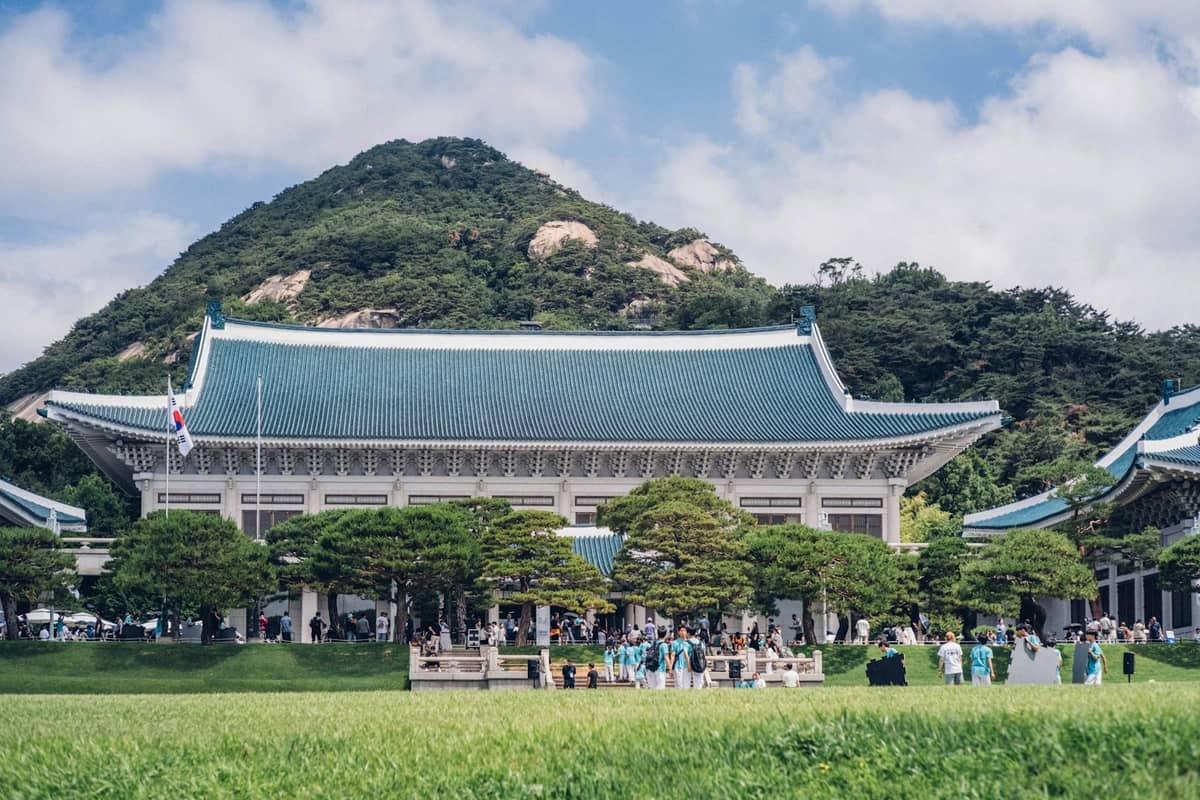
Jongno and Bukchon form the historic core of Seoul, where royal palaces, centuries-old shrines, and tightly packed hanok neighborhoods sit within walking distance of each other. This is the historic district that predates modern Seoul by centuries, and it shows in every sloped roofline and stone-paved alley.
Jongno and Bukchon occupy the original center of Seoul, the zone that Joseon Dynasty planners laid out over 600 years ago around royal palaces and government offices. Today, the area holds many of the city’s major historical monuments, alongside one of the largest surviving concentrations of traditional Korean hanok architecture in the country. It is serious Seoul, in the best possible sense.
Orientation
Jongno-gu is Seoul's central administrative district, covering 23.92 km² in the northern half of the city's historic core. The name Jongno refers to the main boulevard, Jongno (Bell Street), which has served as a central artery since the Joseon Dynasty. The district runs roughly from Gyeongbokgung Palace in the northwest to the Dongdaemun area in the east, and from the slopes of Bugaksan mountain in the north down to Cheonggyecheon stream in the south.
Bukchon sits within this district, occupying the elevated residential ground between Gyeongbokgung Palace to the west and Changdeokgung Palace to the east. The name means 'northern village,' which describes its position north of Cheonggyecheon and Jongno. Its sub-neighborhoods include Gahoe-dong, Gye-dong, Samcheong-dong, Wonseo-dong, Jae-dong, and Palpan-dong, all bounded by Yulgok-ro to the south and Samcheong Park rising to the north.
The wider Jongno area connects directly south into Jung-gu and the shopping corridors of Myeongdong. Walk west along Sajik-ro and you reach Seodaemun-gu. To the northeast, the Ikseon-dong alley district and Dongmyo flea market extend the historic zone into more unexpected territory. Insadong and Seochon sit immediately to the south and west of Bukchon, and the four neighborhoods together form the most historically dense walking zone in Seoul.
Character & Atmosphere
Early mornings in Jongno belong to the regulars. Around Gwanghwamun and the palace gates, elderly residents do tai chi in the open squares as the light comes low and golden over the Bugaksan ridge. The air carries the smell of sesame oil and doenjang jjigae from small restaurants that have been opening before 7am for decades. The streets feel genuinely quiet at this hour, which makes them the best time to photograph the palace walls and the city wall remnants without a crowd in frame.
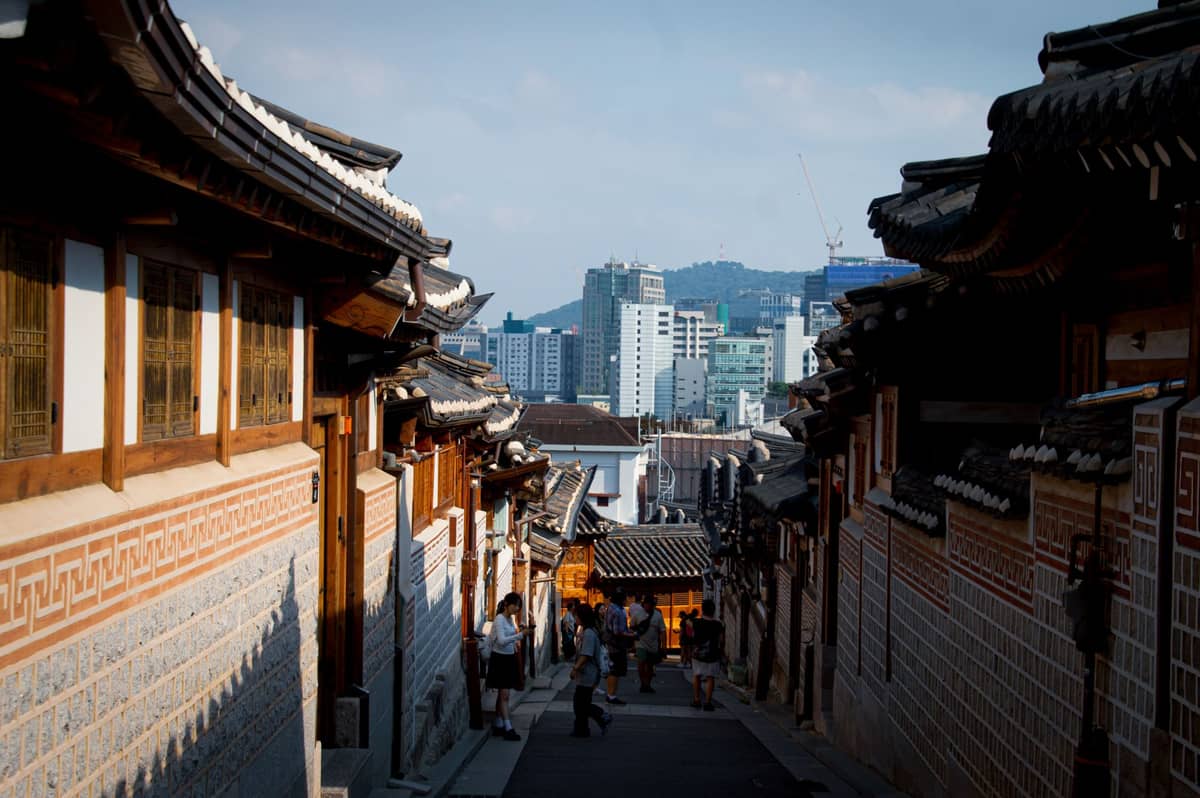
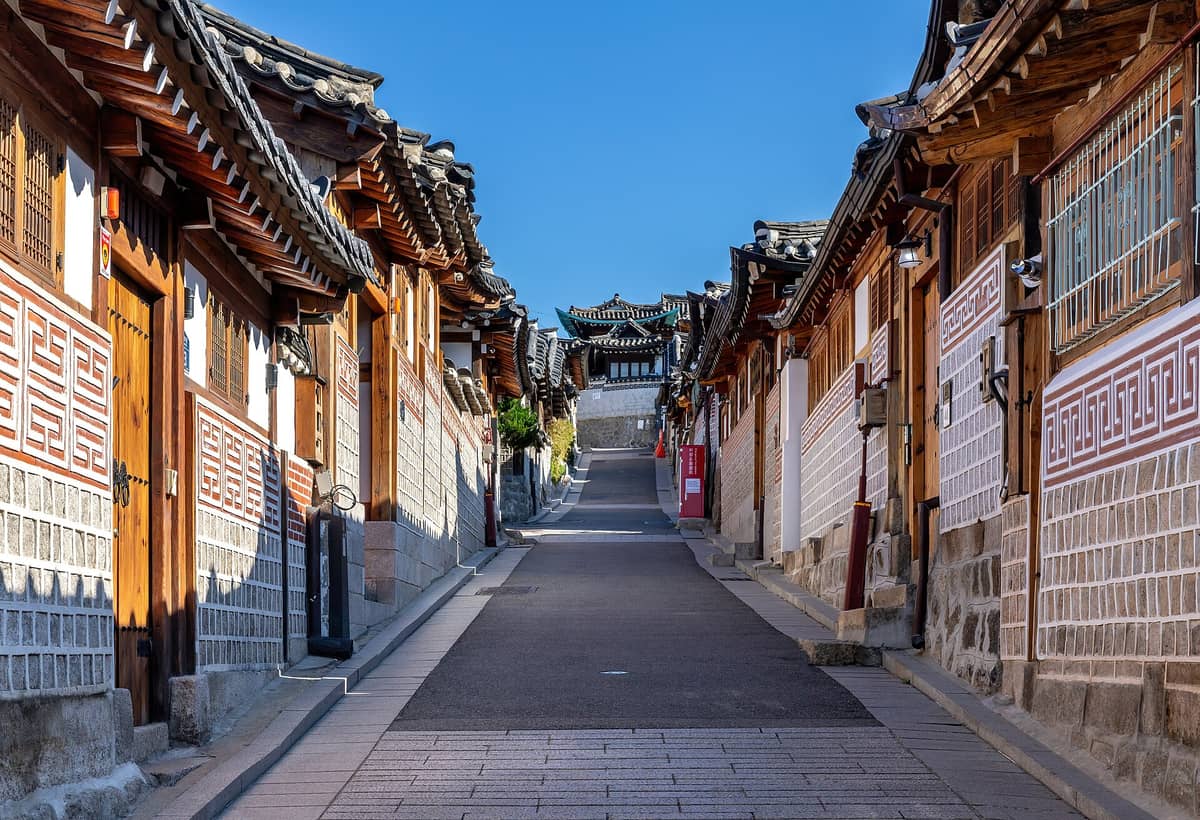
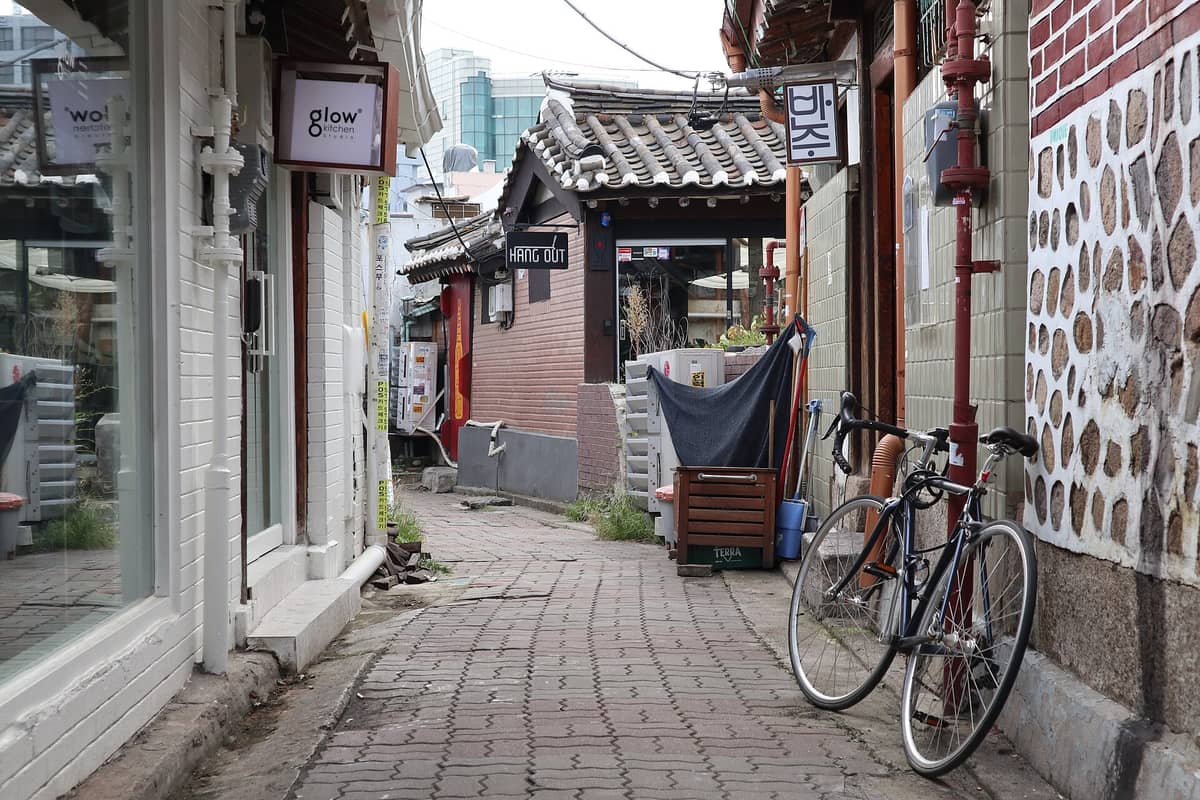
By mid-morning, the tourist rhythm takes over, particularly in Bukchon. The lanes around Gahoe-dong fill steadily after 10am, and Bukchon Hanok Village becomes one of the most photographed spots in Seoul. The streets here are steep, narrow, and lined on both sides by the curved tile rooflines of hanok houses. Many of these buildings are still occupied by residents, which is exactly why the area enforces quiet hours: visiting the restricted areas is prohibited from 17:00 until 10:00 the next day. Outside those hours, you are walking through a living neighborhood, not a theme park.
⚠️ What to skip
Bukchon Hanok Village is a residential area, not a managed tourist site. Keep noise low, do not enter private courtyards, and respect the restricted-hours rule. Visitors who ignore these guidelines have created real friction with residents, and Seoul city authorities have posted signage throughout the lanes asking for consideration.
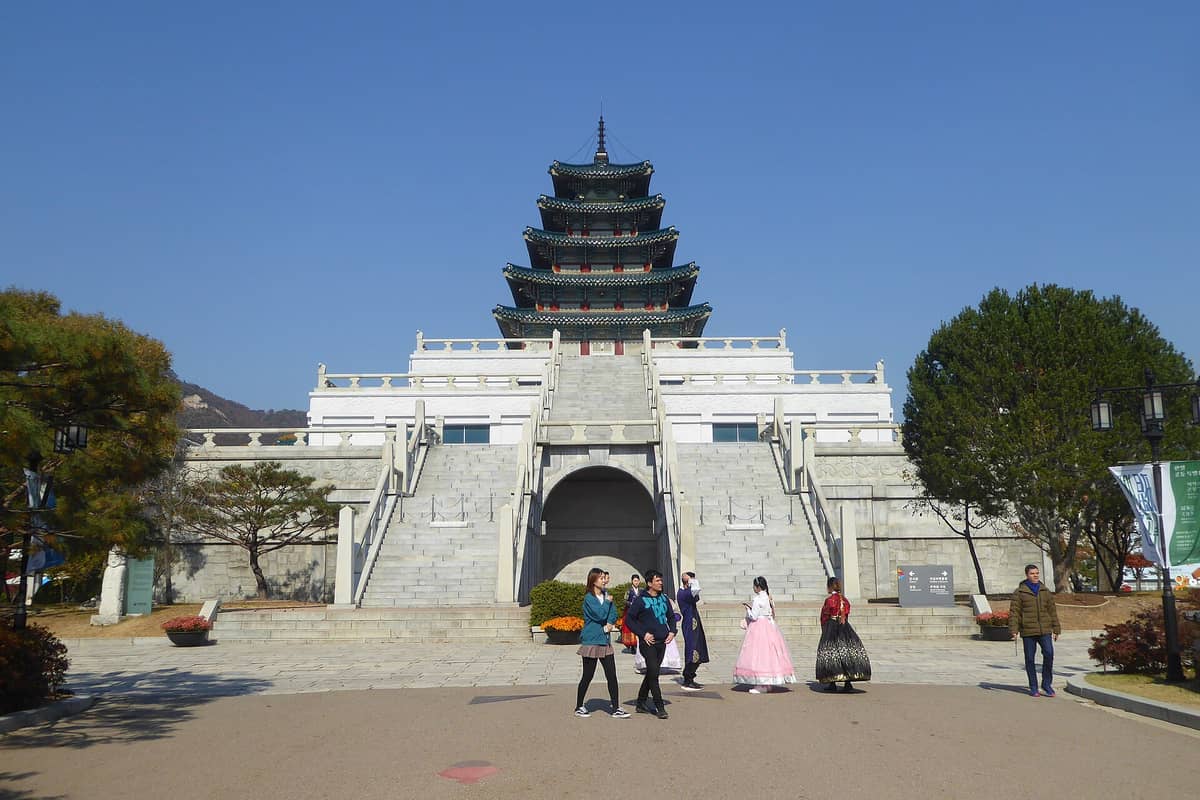
Samcheong-dong, the street that runs north from the National Folk Museum up toward Samcheong Park, has a different character again. The slope is gentler, the gallery density is high, and the café rhythm is more relaxed. In autumn, the ginkgo trees along this corridor turn a hard yellow that cuts sharply against the grey stone walls. In spring, the cherry trees around the palace moats draw crowds that nearly match the summer festival season. Both are worth the extra foot traffic.
After dark, the Jongno 3-ga area around Pimatgol alley and the pojangmacha tent bars takes on a different personality entirely. This is old Seoul drinking culture: grilled meat, makgeolli, and crowds of office workers and students that spill out into the side streets. The contrast with the daytime palace district, just a few hundred meters away, is one of the more interesting things about spending a full day in Jongno.
What to See & Do
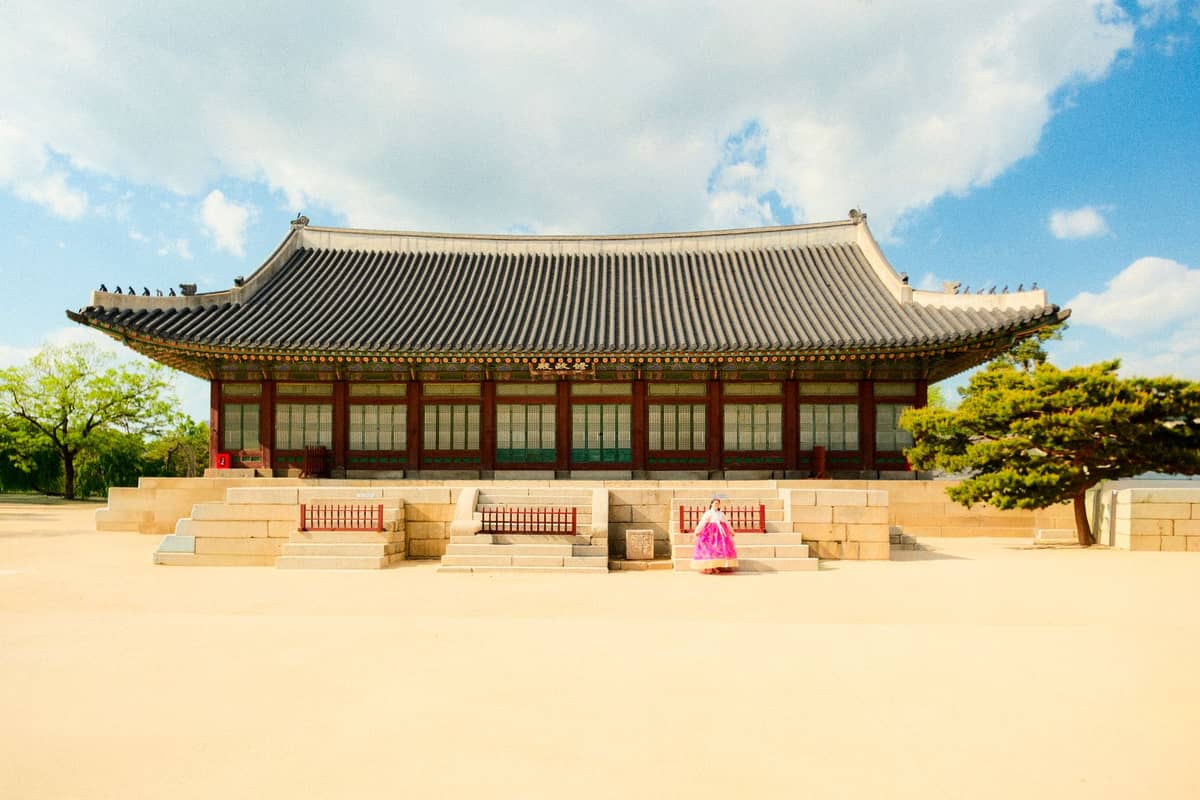
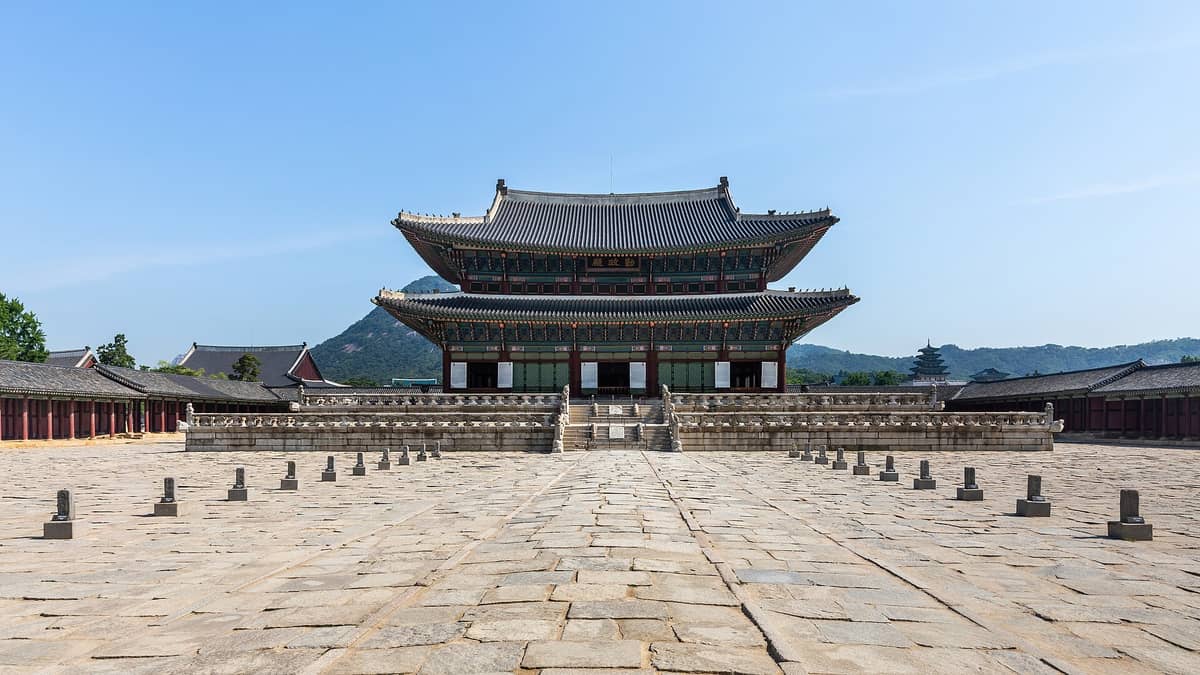
The anchor of the entire district is Gyeongbokgung Palace, the largest and most formal of Seoul's five grand Joseon palaces. The main gate, Gwanghwamun, faces south down the ceremonial axis of the city, and the changing of the royal guard ceremony at the gate is one of the most choreographed public performances in Seoul. Plan at least two hours to walk the main palace grounds properly, including the rear Hyangwonjeong pavilion.
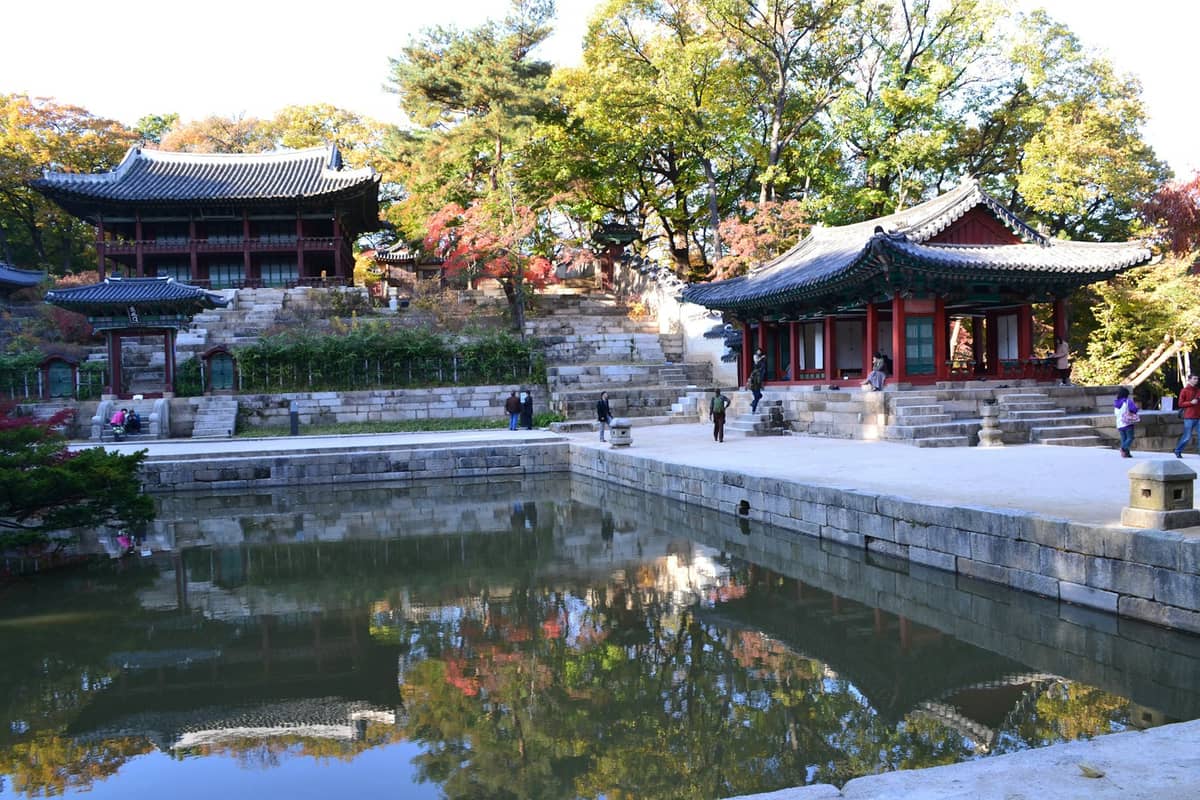
East of Bukchon, Changdeokgung Palace is arguably the more atmospheric of the two main palaces. Its Secret Garden (Huwon), a 78-acre rear garden of ponds, pavilions, and forest paths, requires a separate ticket and timed entry. The UNESCO World Heritage designation here reflects the degree to which the landscape and architecture have been preserved as an integrated whole. It rewards a slower visit than Gyeongbokgung.
Bukchon Hanok Village: the concentrated hanok streetscape around Gahoe-dong, best visited at 10:00 opening or mid-afternoon on weekdays (the photo alleys are closed to tourists before 10:00 and after 17:00)
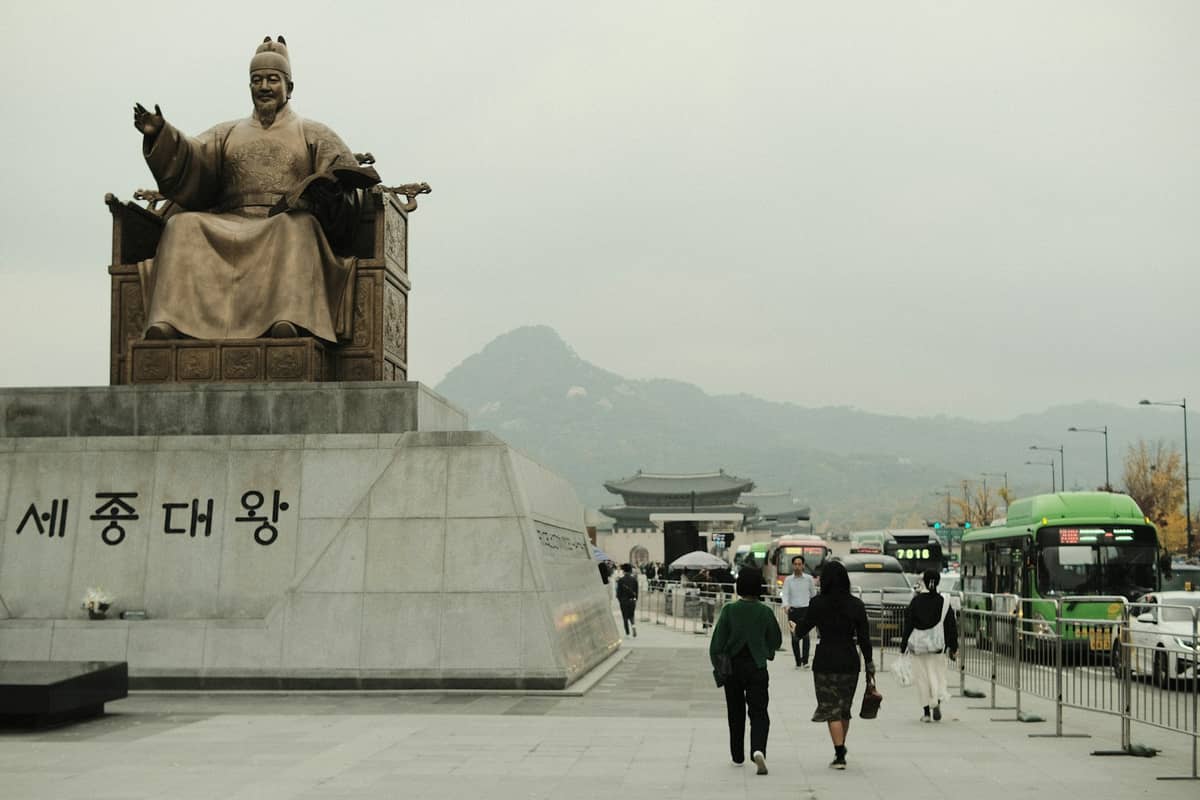
Gwanghwamun Square: the wide civic plaza in front of Gyeongbokgung, with the statues of King Sejong and Admiral Yi Sun-sin
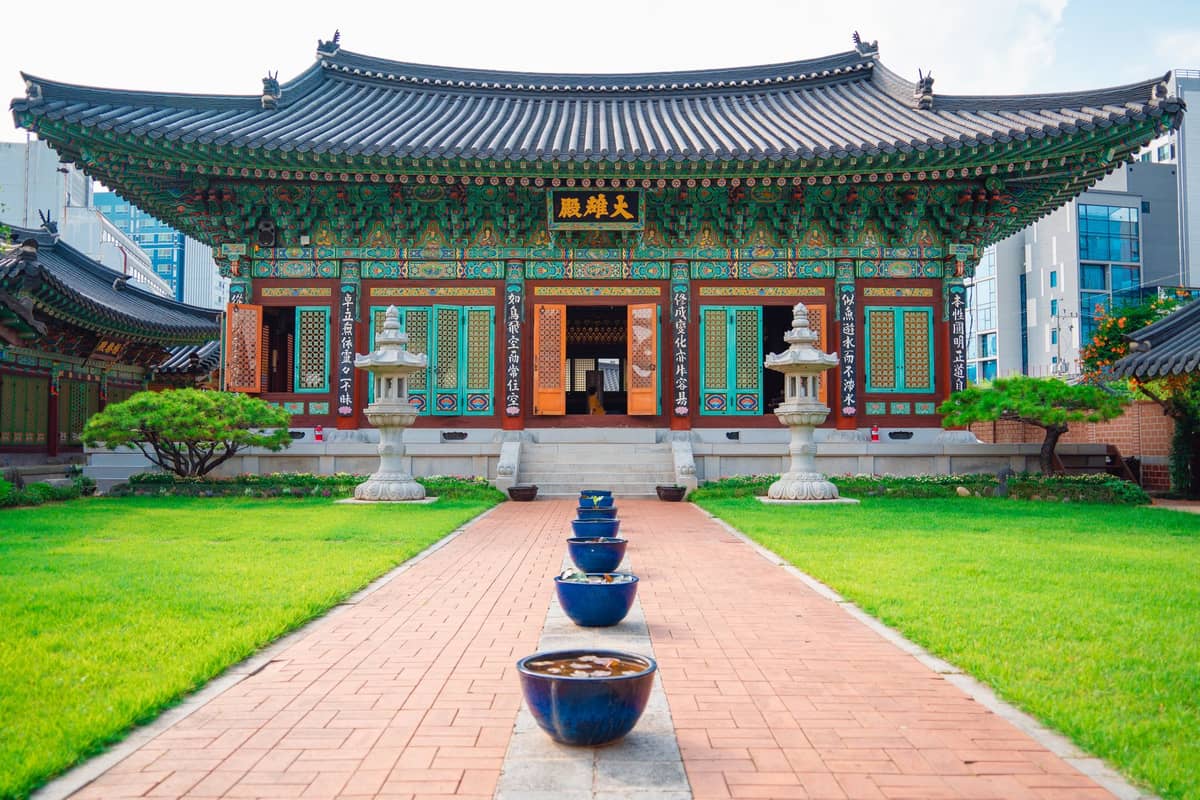
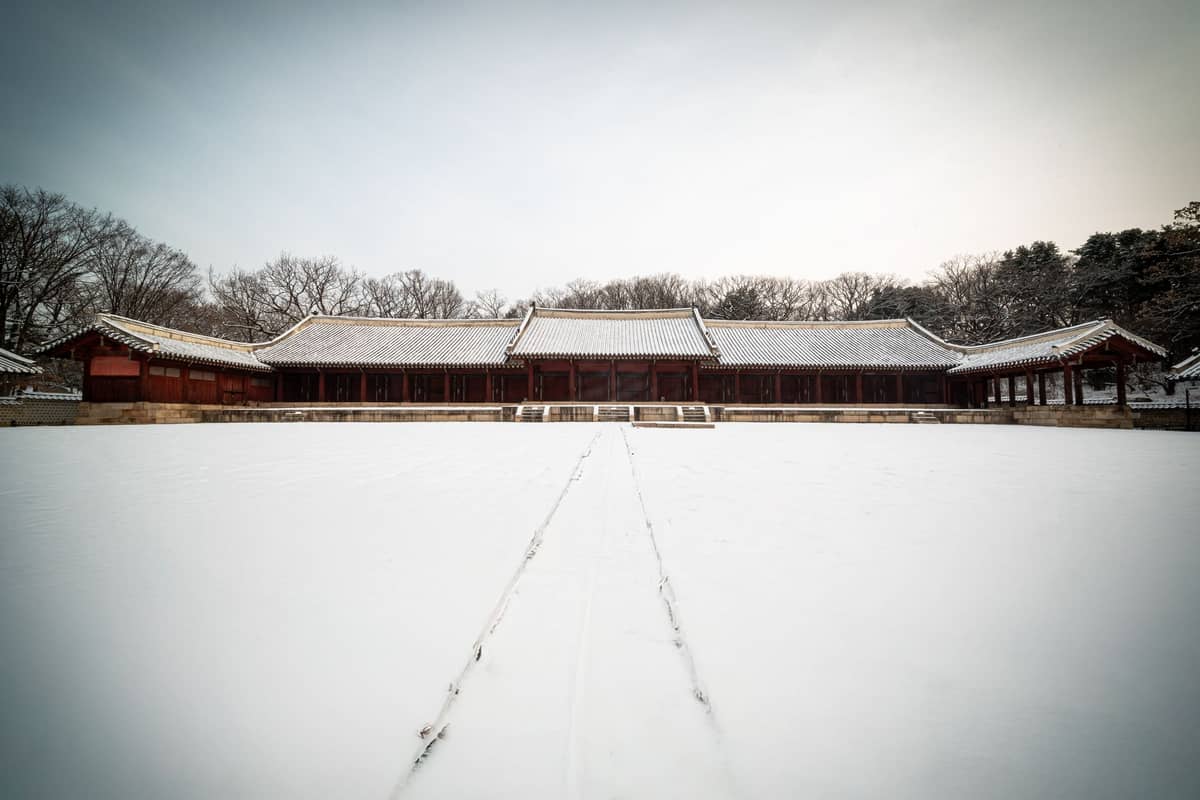
Jongmyo Shrine: the royal ancestral shrine south of Changdeokgung, one of the oldest intact Confucian royal shrines in the world
Ikseon-dong Hanok Village: a smaller, more commercially active hanok cluster converted into cafés, bars, and restaurants
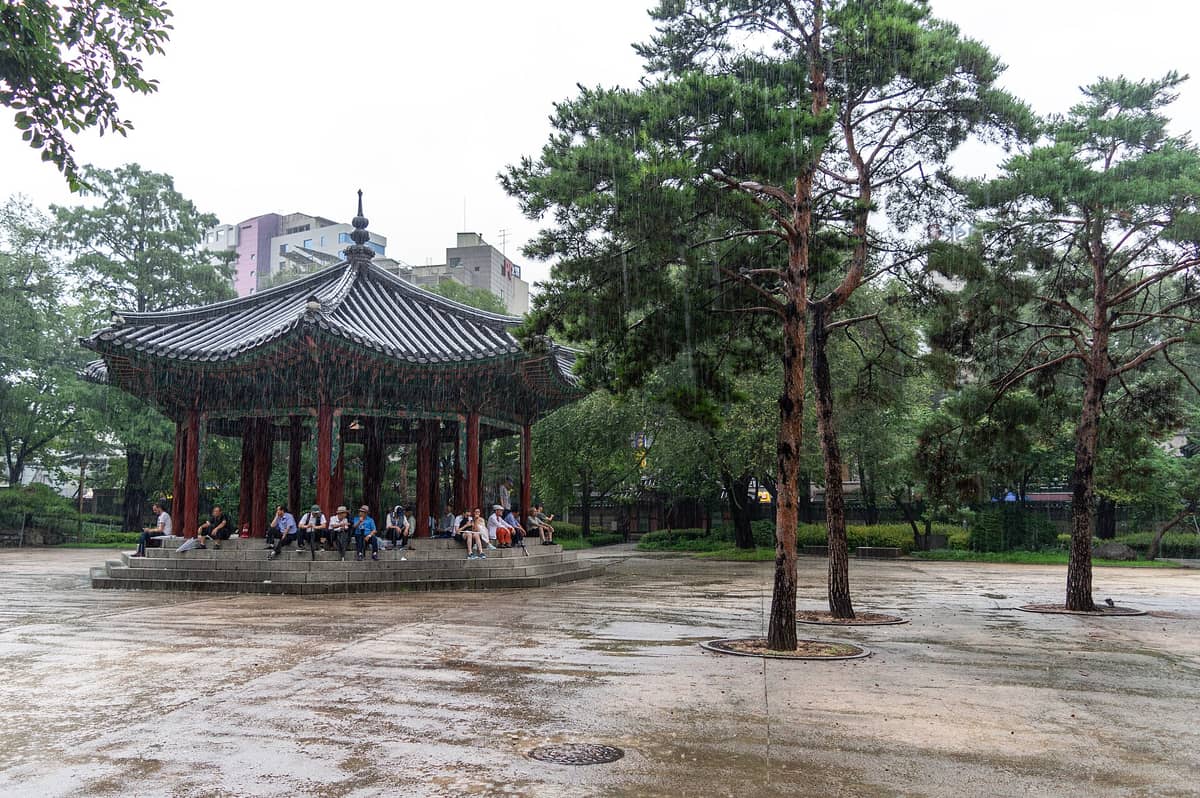
Tapgol Park: the first Western-style public park in Korea, with important 3.1 Movement independence history
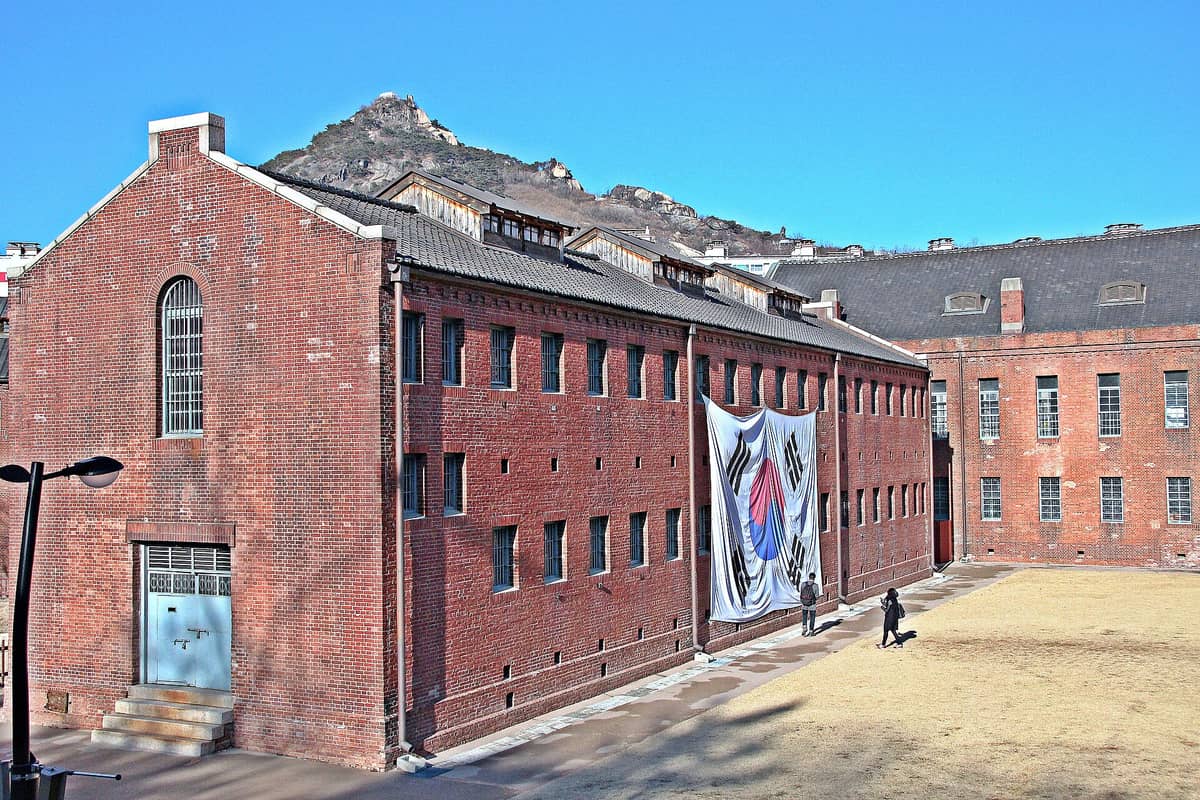
Seodaemun Prison History Hall: northwest of the main palace zone, a sobering museum of the Japanese colonial period
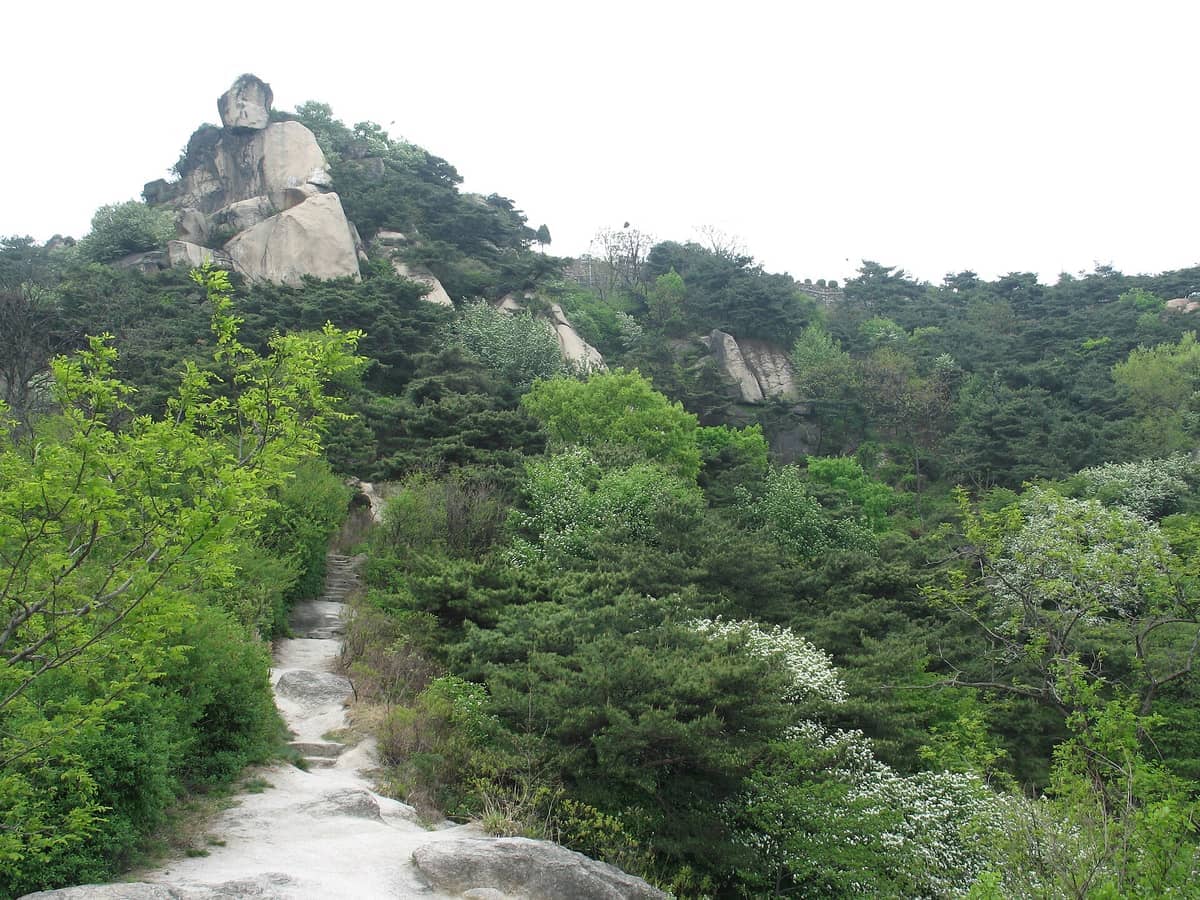
Inwangsan Mountain shamanist shrines: a short hike above the district with a genuinely different cultural atmosphere
The Jongmyo Shrine is frequently skipped by visitors doing the palace circuit, which is a mistake. The complex is one of the longest continuous Confucian memorial sites in East Asia, and the annual Jongmyo Jerye ritual in May, with its accompanying ancient court music, is genuinely unlike anything else in the city. The grounds have a stillness that the palace crowds cannot match.
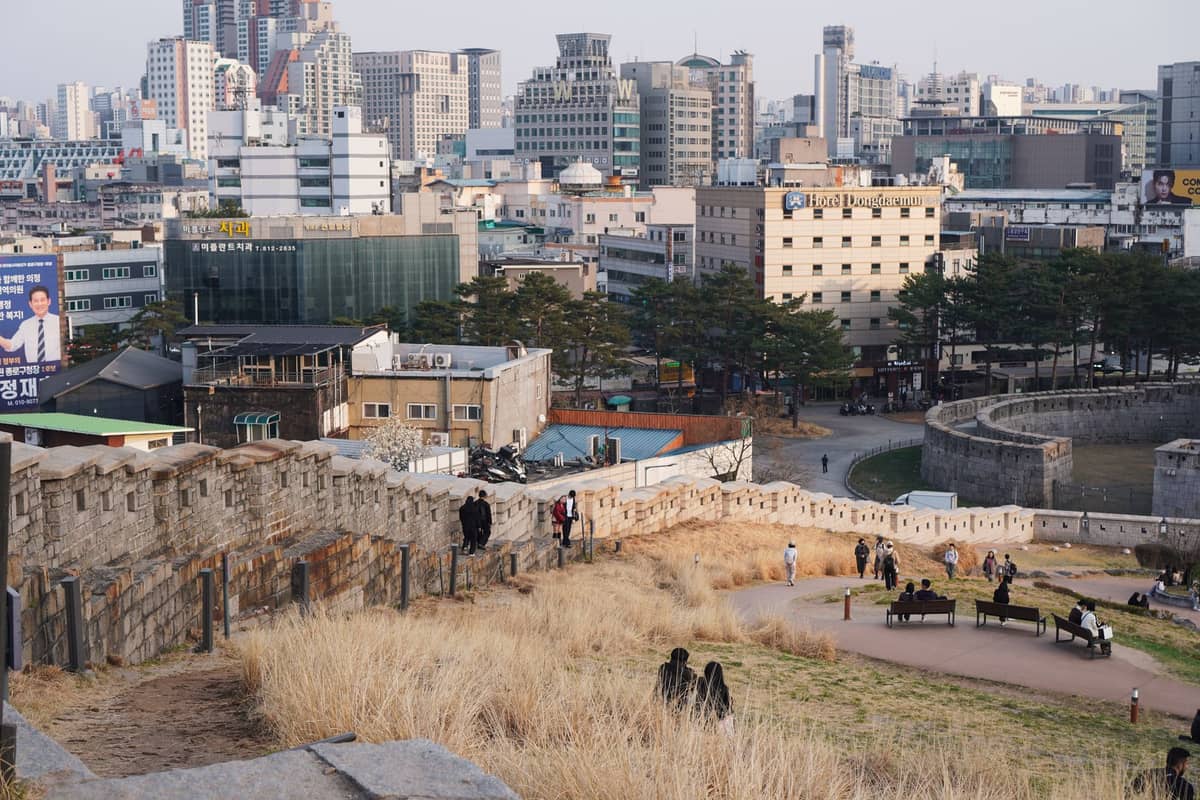
For a broader view across the district, the Hanyangdoseong Seoul City Wall traces the original perimeter of the Joseon capital. The section running east from Naksan Park offers a ridge-line walking path with panoramic views over the hanok rooftops and down into the modern city below. It connects pedestrian interest with genuine topographic drama.
💡 Local tip
The National Museum of Korean Contemporary History is near Gwanghwamun, and the National Folk Museum is located inside the Gyeongbokgung compound; both are included with the palace ticket. Budget extra time: both are larger than they appear from the map.
Eating & Drinking
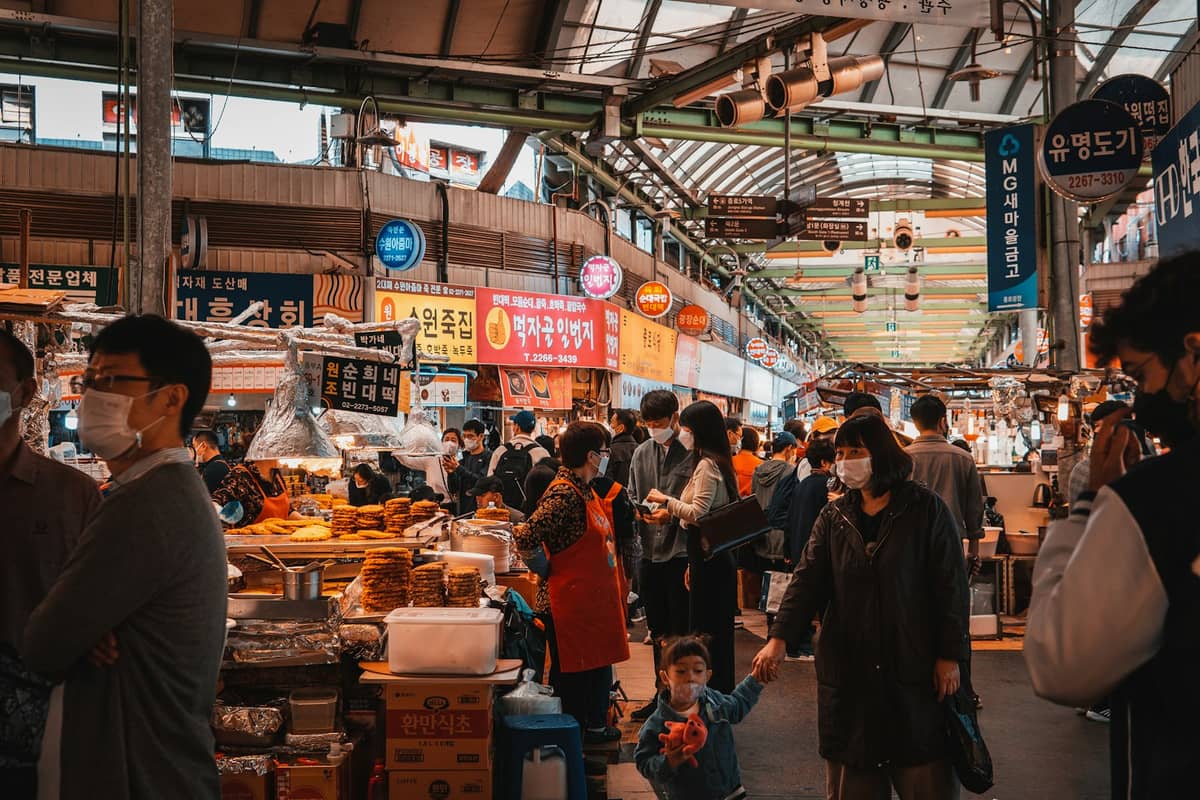
Jongno's food scene runs across a wide spectrum, from market stalls that have operated for decades to refined Korean cuisine restaurants near the palace district. The reference point for traditional market eating is Gwangjang Market on the southeastern edge of the district, where vendors serve bindaetteok (mung bean pancakes), mayak gimbap, and yukhoe (Korean beef tartare) from tight rows of stalls. The covered market hall fills with steam and the sizzle of oil by mid-morning and stays busy until late evening.
Samcheong-dong has the highest concentration of independent cafés in the Bukchon area, many of them set inside converted hanok buildings with interior courtyards. Coffee here is priced at Seoul standard rates (roughly 5,000 to 8,000 KRW for a specialty drink), and the settings are genuinely considered. The street food vendors along Insadong-gil, the pedestrian street just south of Bukchon, sell hotteok (sweet pancakes), dalgona candy, and twisted potato skewers that are as much about the experience of eating them as the food itself.
For evening dining, the streets around Ikseon-dong have developed into one of the more interesting restaurant clusters in this part of the city. Small Korean tasting menu restaurants, wine bars, and makgeolli-focused spots operate inside renovated hanok houses, making the setting part of the meal. Prices range from budget to mid-range, depending on whether you are at a traditional pojangmacha or a ten-seat chef's counter.
Gwangjang Market: bindaetteok, yukhoe, mayak gimbap, and raw silkworm larvae (beondegi) for the adventurous
Tongin Market: a traditional local market near Gyeonghuigung with the coin-based dosirak (lunchbox) eating concept
Samcheong-dong cafés: hanok-interior coffee shops and patisseries along the main northbound street
Pimatgol alley: the historic back lane parallel to Jongno with tent bars, grilled meats, and makgeolli culture
Ikseon-dong: evening dining in converted hanok buildings, ranging from casual to reservation-required Korean cuisine
The Tongin Market near Gyeonghuigung Palace offers a coin-based lunchbox system where you exchange money for tokens and use them to select banchan from individual stalls, then eat at communal tables upstairs. It is one of the more approachable ways to sample a wide range of Korean side dishes at low cost, and it runs from morning until mid-afternoon.
Getting There & Around
The primary transit hub for Bukchon and the northern palace district is Anguk Station on Seoul Metro Line 3 (the orange line). Exit 3 from Anguk Station puts you roughly a 10-minute walk from the main Bukchon Hanok Village viewpoint on Gahoe-dong. Exit 1 points you west toward Changdeokgung Palace, and Exit 2 is convenient for the National Folk Museum and Gyeongbokgung approach from the east.
Gyeongbokgung Palace has its own station, Gyeongbokgung Station, also on Line 3, serving the south side of the palace. Gwanghwamun Station on Line 5 (the purple line) deposits you at the north end of Sejong-daero and is the natural approach for Gwanghwamun Square. Jongno 3-ga Station is a three-line interchange (Lines 1, 3, and 5) that anchors the eastern part of the district and provides access to Ikseon-dong and the Jongno commercial strip.
ℹ️ Good to know
The Jongno and Bukchon area is unusually walkable for Seoul, but the terrain is hilly. Bukchon itself sits on elevated ground between two palaces, and the lanes rise steeply in places. Wear comfortable shoes, and note that the route from Anguk Station up through Gahoe-dong involves a sustained uphill stretch before leveling off near Samcheong-dong.
Walking between the major sites is practical during mild weather. Gyeongbokgung to Changdeokgung via Bukchon takes roughly 30 to 40 minutes on foot, depending on pace and photo stops. Adding Jongmyo Shrine to the route adds another 15 to 20 minutes southeast. For a full-district walking itinerary, see the 3 days in Seoul guide, which maps out a logical route through the historic core without excessive backtracking.
City buses cover the main avenues including Yulgok-ro and Samcheong-ro, and are useful for moving between the palace district and areas like Seochon to the west or Dongdaemun to the east. Taxis are readily available on Jongno and the main roads, and the Kakao T app is the standard way to hail one with an app interface. The inner lanes of Bukchon are too narrow for vehicles in most sections, which means the only way to explore them is on foot.
Where to Stay
Jongno and Bukchon are among the better-positioned neighborhoods for first-time visitors to Seoul who want walkable access to historic sites, though the accommodation mix here is different from the international hotel concentrations in Gangnam or Itaewon. The area has a strong supply of guesthouses, boutique hotels in converted buildings, and a small but growing number of hanok stay (hanok minbak) options where guests sleep in traditional rooms on ondol heated floors.
The Samcheong-dong and Anguk area is the most desirable subzone for accommodation: quiet at night, close to the palaces, with easy metro access. Ikseon-dong and the Jongno 3-ga area offer a livelier nighttime scene but more ambient noise. Travelers who prioritize being close to the Gyeongbokgung corridor and Bukchon should target properties between Anguk and Gyeongbokgung Stations on Line 3.
Budget travelers will find reasonable guesthouses and small hotels throughout the district at prices generally lower than equivalent rooms in Gangnam. For a full comparison of accommodation zones across the city, the where to stay in Seoul guide lays out the tradeoffs between each major neighborhood clearly.
Know Before You Go
Spring (April to May) and autumn (September to October) are the strongest seasons to visit Jongno and Bukchon. Cherry blossoms around the palace moats in April are genuinely impressive, and the ginkgo corridor on Samcheong-dong turns gold in late October. For context on seasonal conditions across the city, see the best time to visit Seoul guide.
Most major palace sites charge a small admission fee (typically 3,000 KRW for adults at Gyeongbokgung; fees can vary and change, so verify at the gate). Wearing hanbok, the traditional Korean formal dress, grants free entry to several royal palaces under the standard palace policy, which has made hanbok rental shops a common feature near every palace entrance. Lines for rental can be long on weekends.
The one honest drawback of Bukchon as a destination: it has become extremely well-known, and the combination of a small geographic area with very high visitor numbers means the Gahoe-dong viewpoint can feel crowded during peak morning hours on weekends. If you arrive after 11am on a Saturday in April, you will be sharing the lane with hundreds of other people. The solution is timing: weekday visits right at 10:00 opening offer a calmer experience of the same streets.
💡 Local tip
Many visitors combine the Jongno palace circuit with a hanbok experience. Rental shops cluster near Gyeongbokgung's south gate and near Anguk Station. Rentals typically run for 2 to 4 hours, which is enough time for the palace and Bukchon. Book ahead on weekends and during cherry blossom season.
TL;DR
Jongno and Bukchon form Seoul's most historically significant district, with several Joseon palaces, a UNESCO-listed royal shrine, and about 860 traditional hanok houses concentrated in a walkable area.
Best visited on weekday mornings, especially in Bukchon where residential quiet hours restrict access between 17:00 and 10:00 and daytime crowds peak on weekend afternoons.
Anguk Station (Line 3, Exit 3) is the main access point for Bukchon; Gyeongbokgung Station serves the main palace; Jongno 3-ga is the district's eastern transit hub.
The food range spans Gwangjang Market street stalls and Tongin Market coin lunchboxes to evening hanok-restaurant dining in Ikseon-dong, with most options at budget to mid-range prices.
Ideal for travelers interested in Korean history, architecture, and traditional culture; less suited to those whose primary interest is nightlife, modern shopping, or K-pop culture, which are better served by Hongdae or Gangnam.
Three days is enough to get a real feel for Seoul, if you plan by neighborhood instead of trying to crisscross the city. This itinerary covers historic Joseon-era Seoul, the commercial and cultural center, and the newer districts that define the city's contemporary identity, with practical logistics at every step.
Five days is enough to experience historic Seoul, its modern neighborhoods, and at least one compelling excursion beyond the city. This guide organizes each day by district to minimize transit time, with a clear take on what's worth it and what isn't.
Seoul has a deep museum scene, from Korea's vast national collection in Yongsan to cutting-edge contemporary art spaces and sobering historical sites. Whether you have a day or a week, these are the essential museums to put on your itinerary.
Seoul rewards visitors differently depending on the season. Spring brings cherry blossoms and mild temperatures, autumn delivers golden foliage and clear skies, summer is hot and monsoon-affected, and winter is cold but cheap. Here is exactly what to expect, month by month.
Seoul rewards those who look up, climb high, and stay out past sunset. This guide covers the city's finest panoramic viewpoints — from paid observation decks at record-breaking towers to free hilltop parks where locals gather at dusk to watch the city lights come on.
Bukhansan National Park sits inside Seoul's city limits yet delivers genuine mountain terrain, granite ridges, and a 836-meter summit. This guide covers the best trails, transit access, seasonal closures, and practical tips for first-timers and returning hikers alike.
Seoul's location in northwestern South Korea makes it a surprisingly strong base for day trips. From UNESCO fortresses reachable by subway to ancient capital cities served by KTX, this guide covers the best options with honest travel times, costs, and seasonal advice.
The Demilitarized Zone is one of the most visited sites in South Korea, yet most travelers arrive underprepared. This guide covers tour types, current prices, booking logistics, what you'll actually see, and the honest drawbacks before you commit.
Seoul is one of the most rewarding cities in the world to explore on a tight budget. From UNESCO-listed palaces and ancient city walls to world-class museums and sprawling riverside parks, an enormous amount of what makes Seoul great costs absolutely nothing to experience.
Seoul has one of the most efficient urban transit networks in the world, covering virtually every corner of the city by subway and bus. This guide breaks down fares, card options, airport connections, and the practical details that make the difference between a smooth trip and an expensive mistake.
Gwangjang Market is one of Seoul's oldest and most celebrated food destinations, known for bindaetteok, mayak gimbap, and raw beef yukhoe. This guide covers every dish worth ordering, how much to pay, when to go, and how to navigate the market like someone who has been there before.
Renting a hanbok in Seoul is one of the most photogenic things you can do in the city, and it costs less than a decent lunch. This guide covers where to rent, how much to pay, what to expect, and how to get the most out of your few hours in traditional dress.
Seoul preserves several distinct hanok districts, each with its own character. This guide covers the main options, practical logistics, seasonal crowd patterns, and a clear picture of what to expect before you visit.
Seoul rewards curious travelers who look past the obvious. This guide covers the city's lesser-visited neighborhoods, transformed industrial spaces, street art villages, and local markets — with practical logistics, seasonal advice, and a clear take on what's worth your time.
Seoul is one of the few world capitals where you can summit a real mountain, walk a 600-year-old fortress wall, and be back in the city for dinner. This guide covers the best trails for every level, from challenging granite peaks to gentle hilltop park strolls.
Seoul's jjimjilbangs are far more than bathhouses. They are all-hours social institutions where locals come to soak, sweat, eat, sleep, and decompress. This guide covers how they work, what everything costs, the unwritten rules of etiquette, and how to make the most of your visit whatever the season.
Seoul is the global epicenter of skincare innovation, and shopping for beauty products here is a genuinely different experience from buying Korean brands abroad. This guide covers the best stores, the smartest districts, what to prioritize buying, and how to avoid the common traps that leave tourists overpaying at airport duty-free.
Korean BBQ in Seoul is one of the city's defining food experiences, but navigating it well takes more than just showing up hungry. This guide covers the best restaurants by type, how to order confidently, what everything costs, and the etiquette mistakes that mark out first-timers.
Seoul is the undisputed capital of K-pop, but knowing where to actually go matters more than the hype suggests. This guide covers free landmarks, fan-friendly museums, live show recordings, shopping districts, and bookable experiences — with a clear take on what's worth your time.
From palatial five-star hotels in the historic north to slick Gangnam towers, this guide covers where to stay, eat, and spend at the top end — with a clear take on what's special and what's just expensive.
Seoul nightlife runs later, harder, and more diversely than almost any other city in Asia. From Hongdae's student club strips to Gangnam's bottle-service mega-clubs and Itaewon's underground electronic scene, this guide breaks down every major district, what to expect, and how to navigate a night out without the rookie mistakes.
Noraebang are private karaoke rooms at the heart of Seoul's nightlife culture. This guide covers the difference between coin and standard noraebang, where to find the best venues, what to expect, and how to get the most out of the experience without overpaying.
Seoul preserves five Joseon-era royal palaces within its city limits, each with a distinct character and history. This guide covers all five in depth, plus the essential sites, shrines, and neighborhoods that complete a palace-focused visit to the city.
Seoul's café scene is one of the most developed in Asia, divided across distinct neighborhoods where each district has its own personality. This guide breaks down the best coffee districts and concept cafés by area, with honest advice on timing, crowds, and what to actually order.
Seoul offers far more romantic depth than its reputation for K-pop and street food suggests. This guide covers the best things to do in Seoul for couples, from iconic landmarks and scenic parks to low-key neighborhood strolls, with seasonal advice and practical logistics throughout.
Autumn is widely considered the best time to visit Seoul, with crisp temperatures, golden ginkgo avenues, blazing maple trails, and a packed cultural calendar. This guide covers peak foliage timing, the top spots to see autumn color, seasonal festivals, practical logistics, and what most visitors overlook.
Spring is Seoul's most photogenic season, with cherry blossoms peaking in early April and festivals filling the city's parks and riversides. This guide covers bloom timing, the best viewing locations, what the weather is really like, and how to plan around the crowds.
Seoul winters are cold, dry, and genuinely rewarding for travelers who come prepared. From palace snow views to late-night pojangmacha street food, this guide covers everything you need to know about visiting Seoul from December through February.
Seoul's market scene spans centuries and neighborhoods, from ancient covered halls serving mung bean pancakes to weekend flea markets spilling out under highway overpasses. This guide covers the best traditional, flea, and night markets in the city, with practical details on what to buy, what to eat, and when to go.
Seoul is far more affordable than most people expect. This guide breaks down real daily costs, the cheapest ways to get around, where to eat well for under ₩10,000, and which world-class attractions cost nothing at all.
Seoul ranks among the safest major cities in the world for international visitors, but that does not mean zero risks. This guide covers emergency contacts, common scams, neighborhood dynamics, seasonal hazards, and practical precautions so you can travel confidently in Seoul Special Metropolitan City.
Seoul's street food scene is one of the best reasons to visit the city. This guide breaks down the top markets, the snacks worth lining up for, what things actually cost, and the practical details that most guides skip.
Seoul holds a remarkable concentration of sacred sites within its modern boundaries. This guide covers the city's finest Buddhist temples, Confucian shrines, shamanist sites, and other places of spiritual significance — from the lantern-lit courtyards of central Jogyesa to the granite ridges of Inwangsan.
The Seoul to Busan corridor is one of the most-traveled routes in South Korea. This guide breaks down every realistic option, from the KTX high-speed train to intercity buses and flights, with fares, journey times, and practical booking advice.
Seoul is one of Asia's most practical cities for family travel, with a deep mix of free outdoor parks, indoor rainy-day backups, cultural experiences, and full-day theme parks. This guide covers the top family activities across every age group, with real advice on pricing, crowd timing, and seasonal planning.
Seoul's shopping scene is one of the most varied in Asia, spanning underground mega-malls, centuries-old traditional markets, and indie streetwear boutiques. This guide breaks down every major district by what you'll actually find there, how much to spend, and when to go.
Seoul rewards first-time visitors and repeat travelers equally. This guide covers the city's essential experiences across history, food, neighborhoods, and nature, with practical details on costs, timing, and what to skip.
Seoul is one of the world's great eating cities, and knowing what to order makes all the difference. This guide covers the essential Korean food you need to try, from market snacks under ₩5,000 to slow-cooked soups worth planning your day around.
Choosing where to stay in Seoul shapes your entire trip. This guide breaks down the top neighborhoods by traveler type, covering transit access, hotel options, price ranges, and the trade-offs so you can pick the right base before you book.