Seoul in Winter: What to Expect & Best Cold-Weather Activities
Seoul winters are cold, dry, and genuinely rewarding for travelers who come prepared. From palace snow views to late-night pojangmacha street food, this guide covers everything you need to know about visiting Seoul from December through February.
Plan and book this trip
Tools from our partner Travelpayouts help you compare flights and hotels. If you book through them, we may earn a commission at no extra cost to you.
Flights
Hotels map
TL;DR
- Seoul winter runs December to February, with January as the coldest month. Average highs are 2–5°C; cold snaps with wind chill can push the feel to -15°C or below.
- Snow falls but rarely settles for long. Expect a few light events per season, not persistent snowpack.
- Winter is low season, which means fewer crowds at major sites like Gyeongbokgung Palace and better hotel rates across the city.
- Layer up, protect against wind, and keep a T-money card loaded. The subway is your best friend in the cold.
- Winter is excellent for indoor culture: museums, jimjilbangs, noraebang, and Seoul's remarkable café scene all hit differently when it's freezing outside.
Seoul Winter Weather: The Honest Picture
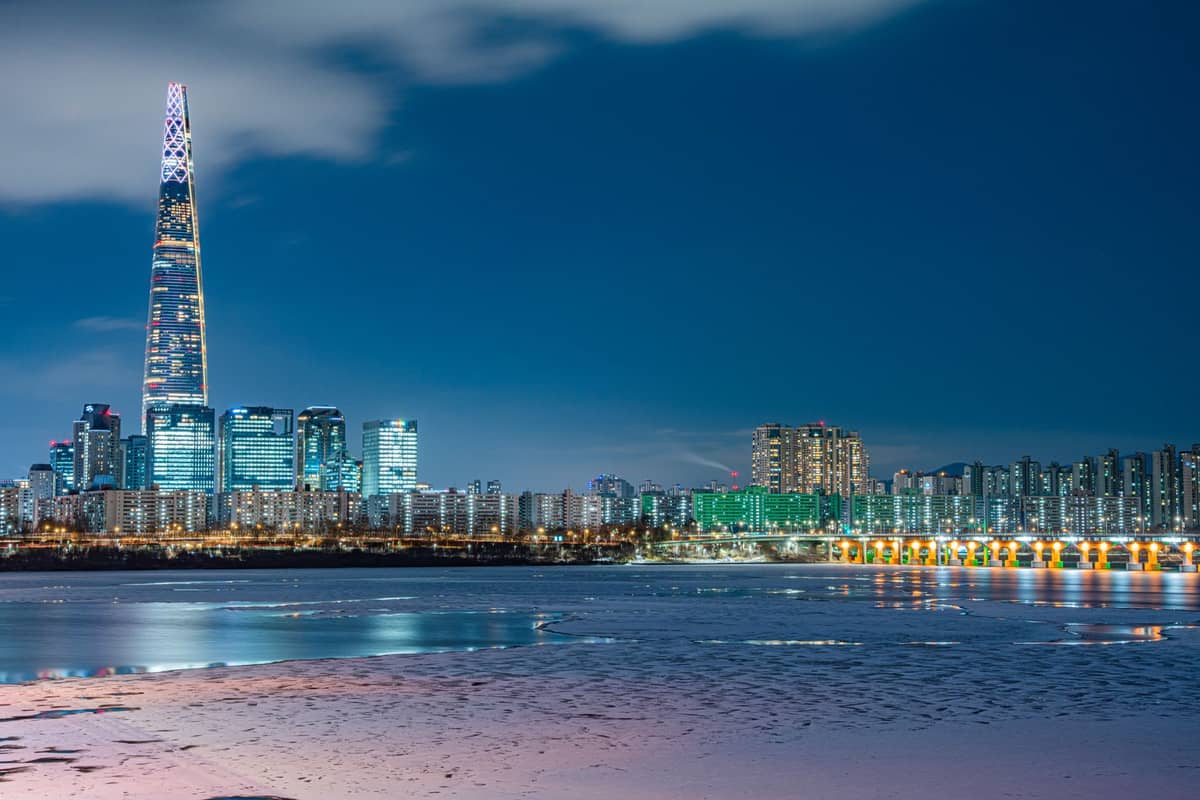
Seoul's winter climate is shaped by cold, dry northwesterly winds sweeping down from the Siberian high-pressure system. That means the city gets less snow than you might expect but significantly more wind chill. Average daytime highs run between 2°C and 5°C through December and February, dropping to near or just below 0°C in January. Overnight lows regularly fall to -7°C to -3°C, and during the coldest cold snaps, the wind chill can push the perceived temperature to -15°C or even -20°C for a day or two at a time.
Snowfall averages around 25 cm across the whole winter, spread over several light events. Seoul is not a city that gets buried in powder. When snow does fall, it's usually a dusting that turns to slush within 24 hours on main streets, though quieter alleys and hilltop areas like Bukchon can look genuinely beautiful for a morning or two after a snowfall. December is relatively mild by Seoul winter standards, January is the peak of the cold, and February gradually softens but still bites.
ℹ️ Good to know
January is consistently the coldest month, not December. If you're trying to avoid the worst of the cold, early December or late February are the shoulder windows within the winter season. By early March, temperatures start climbing but winter coats are still necessary.
One thing that surprises first-time winter visitors is how sunny it is. Seoul in winter is often brilliantly clear — the dry continental air means far more blue-sky days than the gray overcast many visitors expect from a Northeast Asian winter. That brightness is deceptive, though. A clear, sunny day in January can still feel bitterly cold once the wind picks up, so don't leave the coat at the hotel just because it looks pleasant through the window.
What to Pack for Seoul in Winter
Packing for Seoul winter is about layering and wind protection more than simply 'thick coat.' The cold here is a wind-chill cold, so a good outer layer that blocks the wind matters more than raw insulation. A mid-weight down jacket paired with thermal base layers handles most days fine. For a January trip or anyone particularly sensitive to cold, a heavier down coat rated to around -10°C is worth it.
- Outer layer A windproof down jacket or wool overcoat. Longer coats that cover the thighs are notably warmer on windy days when you're walking between subway exits and attractions.
- Base layers Thermal or merino wool underlayers for everything — tops, leggings under trousers. Korean convenience stores (GS25, CU, 7-Eleven) sell decent thermal layers cheaply if you forget.
- Extremities Gloves, a beanie or warm hat, and a scarf are non-negotiable for January. Ear protection matters on very windy days.
- Footwear Waterproof, non-slip boots or shoes with grip. Seoul sidewalks get icy near gutters and shaded alleys. Stylish but thin-soled shoes will make you miserable.
- Indoor shoes Many traditional restaurants and some temple areas require removing shoes. Slip-on layers or clean socks you're comfortable showing are practical.
💡 Local tip
Myeongdong and Dongdaemun have pharmacies and clothing shops selling hand warmers (핫팩, hotpack) for around 500–1,000 KRW each. Stock up — they're a genuinely useful backup for extended outdoor sightseeing in January.
Best Cold-Weather Activities in Seoul
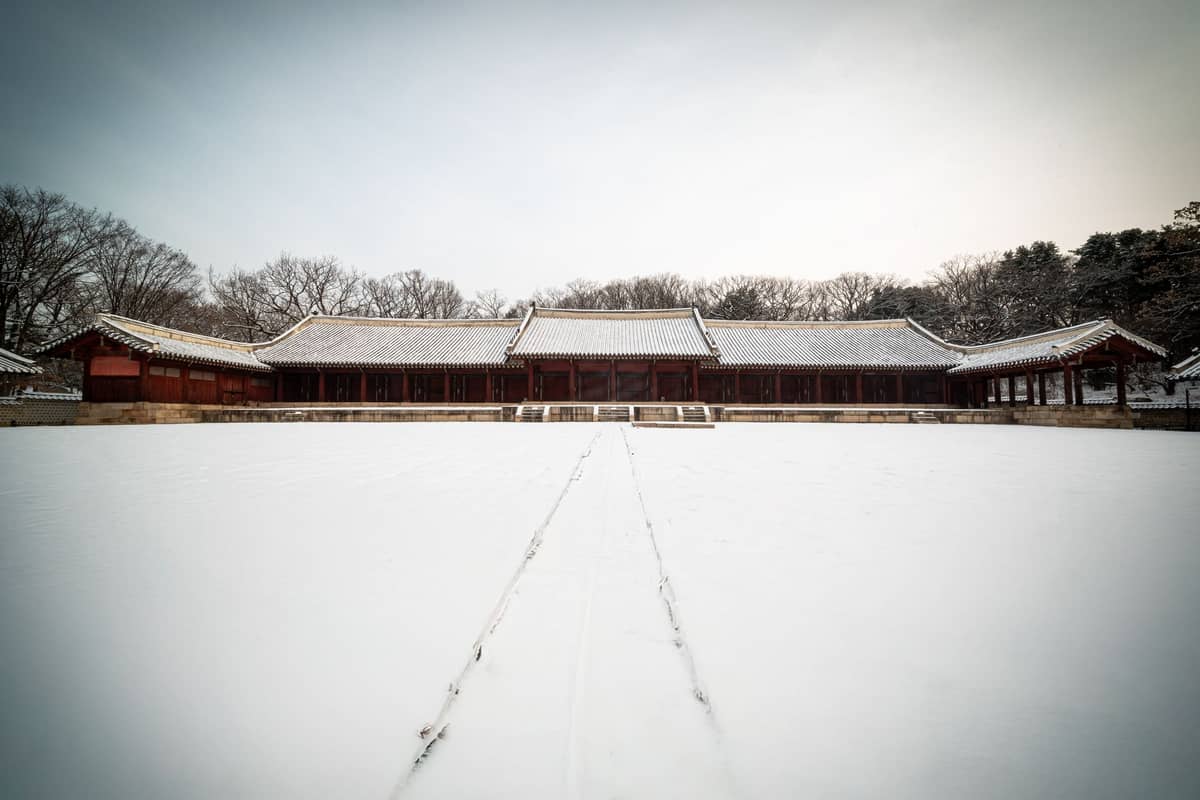
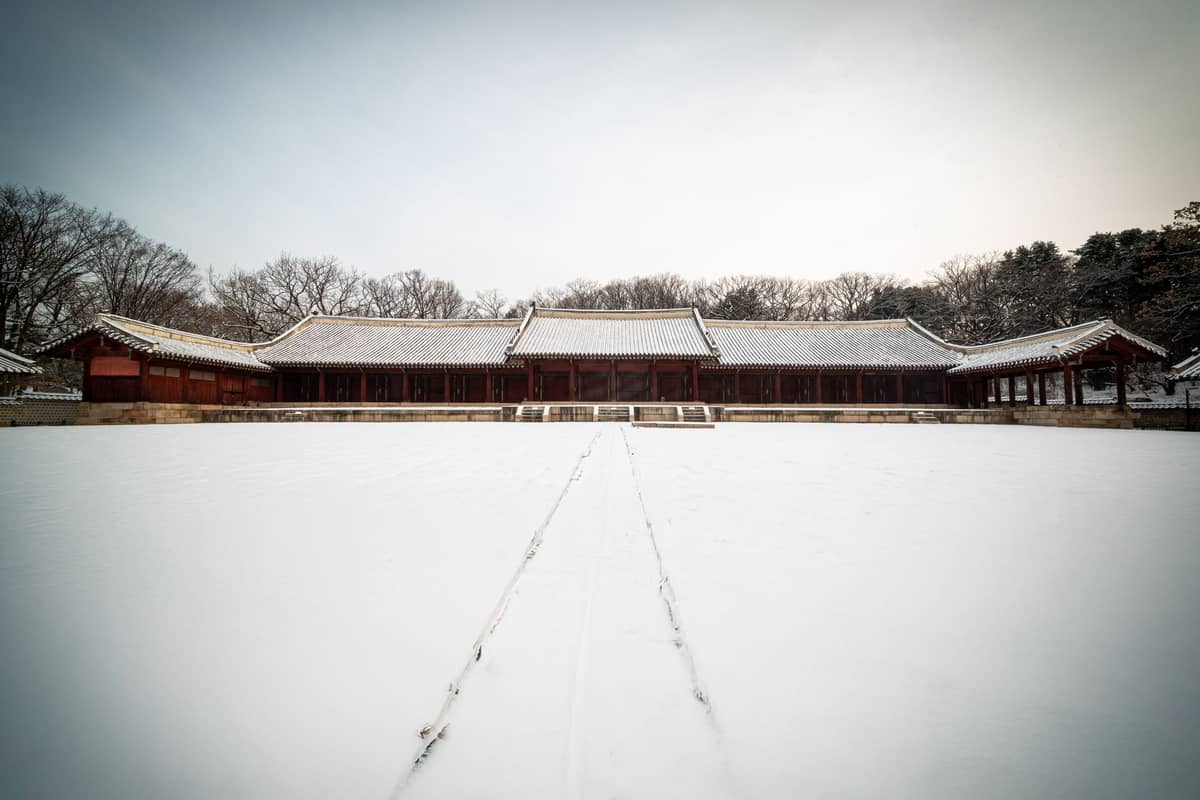
Winter reveals a different side of Seoul. Crowds at major attractions thin out considerably compared to spring cherry blossom season and autumn, which means you can actually walk around Gyeongbokgung or Changdeokgung at a comfortable pace. The palaces look genuinely dramatic under a light dusting of snow, and the reduced foot traffic makes photography much easier.
Indoor culture is where Seoul winter really earns its reputation. The National Museum of Korea in Yongsan is free to enter for the permanent collection and could easily fill half a day without feeling rushed. The museum scene across Seoul is extensive and genuinely world-class — this is the season to actually spend time inside rather than treating museums as rain-day backup plans.
- Palace visits with light snow Gyeongbokgung and Changdeokgung are at their least crowded and most atmospheric in winter. Check opening hours in advance — Gyeongbokgung closes on Tuesdays and the other palaces typically close on Mondays; winter hours may be shorter.
- Jimjilbang (찜질방) Korean sauna bathhouses are the definitive winter activity. A full session including sauna floors, hot pools, and a rest area costs around 10,000–15,000 KRW. It's an entirely legitimate, affordable way to spend 3–4 hours warming up.
- Noraebang (노래방) Private karaoke rooms are perfect for a cold night. Rooms rent by the hour, typically 15,000–25,000 KRW per hour for a small group, and you can order food and drinks in most places.
- Café hopping in Seongsu or Insadong Seoul's café culture is a serious proposition year-round, but warming up with a flat white or dalgona latte in a beautifully designed space hits differently at -5°C outside.
- Indoor markets and food halls COEX Mall's food floor, Tongin Market, and Gwangjang Market are good winter destinations — covered, walkable, and food-heavy.
- Ice skating rinks Seoul City Hall Plaza and several other locations set up outdoor ice skating rinks in winter. Skate rental and entry typically run around 10,000–15,000 KRW combined. Check the Seoul Metropolitan Government site for current locations and hours.
For serious hikers, Bukhansan National ParkBukhansan takes on a completely different character in winter. Snow-dusted granite peaks and quiet trails make it worth the cold, but crampons (아이젠, aizen) are recommended after any snowfall and can be rented at trail entrances for a few thousand won. The views from Baegundae peak on a clear January day are exceptional.
Eating and Drinking in Seoul Winter
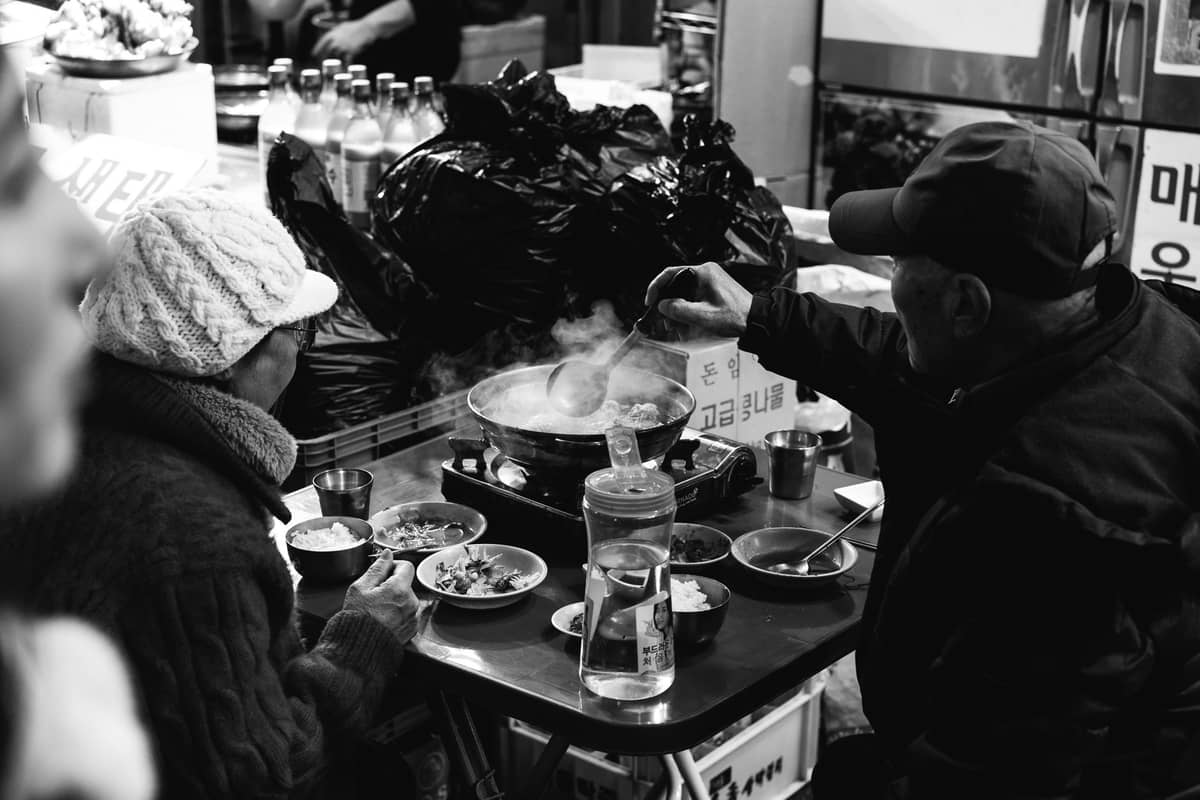
Seoul's winter food culture is one of the season's genuine highlights. Hot pot restaurants (jeongol, 전골), Korean army stew (budae jjigae), and spicy sundubu (soft tofu stew) become go-to meals when temperatures drop. Korean winter foodSeoul leans heavily into warm, communal, broth-based dishes — exactly what you want after a few hours outdoors.
Pojangmacha (포장마차), the covered street food tent stalls, are a classic cold-weather experience. They're scattered across the city but concentrated near major transport hubs and in areas like Jongno. Tteokbokki (spicy rice cakes), eomuk (fish cake skewers served in hot broth), and hotteok (sweet filled pancakes) are the winter staples. A full snack run at a pojangmacha rarely costs more than 5,000–8,000 KRW.
Korean BBQ is also notably better in winter — the tabletop grill keeps you warm while you eat, which feels absurdly logical once you're sitting in front of one. Korean BBQ in SeoulKorean BBQ ranges from affordable local spots around 15,000 KRW per person to premium beef restaurants in Gangnam pushing well above 50,000 KRW per person. The mid-range sweet spot, samgyeopsal (pork belly) or dak galbi (spicy chicken), gives you the full experience without the markup.
✨ Pro tip
Gwangjang Market's indoor food stalls are an excellent winter option — fully covered, perpetually warm from all the cooking, and serving some of Seoul's best bindaetteok (mung bean pancakes) and mayak gimbap. Arrive before noon on weekdays to avoid the worst of the tour group rush.
Practical Winter Travel Tips for Seoul
Getting around Seoul in winter is straightforward because the subway system is extensive, heated, and runs until around midnight. Keep a T-money card (available at any convenience store or subway station, top up at machines) for smooth transfers between metro, bus, and even some taxis. Walking distances between subway exits and attractions can be longer than they look on a map — in the cold, this matters.
Hotel prices drop noticeably in winter compared to spring and autumn peaks. If budget flexibility is a priority, winter is one of the best times to access mid-range and higher-end hotels at reasonable rates. Check where to stay in Seoul for a full breakdown by neighborhood and budget. Staying near a major subway interchange (Seoul Station, Jongno 3-ga, or Gangnam Station) reduces cold-weather walking time significantly.
- The subway is heated and reliable — it's your primary tool for managing cold days. Download the Kakao Metro app for real-time navigation.
- Convenience stores (GS25, CU, 7-Eleven) are on nearly every block and sell hot canned drinks, instant noodles, and heated snacks. They're legitimately useful warming stops.
- Air quality in Seoul can drop in winter due to fine dust (미세먼지, misemeonji) drifting from the continent. Check AirVisual or IQAir before outdoor-heavy days and carry a KF94 mask if you're sensitive to air quality.
- Many outdoor attractions like Namsan Tower and Bukchon Hanok Village are fully viable in winter but require wind-appropriate clothing. Sunset comes early — around 5:15–5:30 PM in December and January.
- Tipping is not customary in South Korea. Don't tip in restaurants, cafés, or taxis — it's not expected and can create awkward moments.
- The emergency number for police is 112; fire and ambulance is 119. The Korea Tourism Organization operates a 24-hour tourist helpline at 1330 with English-language support.
⚠️ What to skip
Fine dust days (high PM2.5) are more frequent in winter and early spring, often without warning. On bad air quality days, outdoor exercise and extended sightseeing on exposed ridgelines (like Bukhansan) should be reconsidered. The 1330 Korea Tourism Helpline can also provide current conditions advice.
Is Winter Actually Worth It? Who Should Go
Winter is not Seoul's most photogenic season for outdoors content, and it's not the time to plan a trip primarily around outdoor exploration or street photography in golden hour light. But it suits certain types of travelers very well. If you're drawn to cultural depth over Instagram aesthetics, winter delivers: fewer tourists at historic sites, more genuine interaction at local restaurants and markets, and a pace that's easier to navigate without fighting crowds.
Travelers who specifically enjoy food culture, wellness experiences like jimjilbang, or urban exploring through cafés and neighborhoods will find winter underrated. It's also a strong season for anyone doing Seoul on a budget since accommodation rates are at seasonal lows and most free attractions, including palaces with the free hanbok entry benefit, remain open throughout winter.
Families with young children or anyone with cold sensitivity should weigh the trade-offs carefully. The cold is manageable with proper preparation, but multi-hour outdoor days with kids in January require significant planning around warming stops. For that demographic, spring or autumn remain the more comfortable choices.
FAQ
How cold does Seoul get in winter?
Average daytime highs in December and February are 2–5°C, dropping to near 0°C in January. Overnight lows regularly reach -7°C to -3°C. During cold snaps, wind chill can make it feel as low as -15°C to -20°C for short periods. January is the coldest month, not December.
Does it snow in Seoul in winter?
Yes, but not heavily. Seoul averages around 25 cm of snow across the whole winter season, usually spread over several light events. Snow rarely settles for more than a day or two on main streets, though quieter areas and elevated spots can look scenic after a fresh snowfall.
What should I wear in Seoul in winter?
Layering is essential. A windproof down jacket or heavy coat, thermal base layers, warm socks, gloves, a hat, and waterproof boots with grip for icy pavements. Wind protection matters more than raw insulation — the cold here is wind-driven. Hand warmers (hotpack) are sold cheaply at convenience stores throughout the city.
Is winter a good time to visit Seoul?
For the right traveler, yes. Crowds at major attractions are thinner, hotel rates are lower, and the city's indoor culture (jimjilbang, noraebang, museums, cafés, hot pot restaurants) is excellent. It's not ideal for outdoor-focused trips or travelers highly sensitive to cold, but culturally it's a rewarding season.
What are the best indoor activities in Seoul in winter?
Jimjilbang (Korean sauna bathhouses) top the list for genuine local experience. Major museums like the National Museum of Korea are free for permanent exhibitions and very high quality. Noraebang (private karaoke), café hopping in Seongsu or Insadong, COEX Mall, and indoor markets like Gwangjang Market are all solid cold-weather options.