Seoul on a Budget: How to Visit Without Breaking the Bank
Seoul is far more affordable than most people expect. This guide breaks down real daily costs, the cheapest ways to get around, where to eat well for under ₩10,000, and which world-class attractions cost nothing at all.
Plan and book this trip
Tools from our partner Travelpayouts help you compare flights and hotels. If you book through them, we may earn a commission at no extra cost to you.
Flights
Hotels map
TL;DR
- Shoestring travel in Seoul is realistic at ₩50,000–₩70,000 per day; a comfortable private-room budget runs ₩80,000–₩100,000 per day.
- The T-money card and Climate Card tourist pass keep transit costs minimal — most rides cost under ₩2,000, and Seoul's public transport network covers virtually every corner of the city.
- Street food, convenience stores, and market food stalls are your best weapons against restaurant prices — full meals under ₩5,000 are genuinely common.
- Many of Seoul's best experiences are free or nearly free: palaces, hiking trails, markets, and river parks. See the full list in our guide to free things in Seoul.
- Tipping is not customary in South Korea. Don't do it — it can cause confusion and adds nothing to your daily spend.
What Does Seoul Actually Cost Per Day?
Seoul on a budget is achievable in a way that genuinely surprises most first-time visitors. The city has a reputation for being expensive, largely because of its high-end Gangnam hotels and premium department stores. But the everyday economy tells a different story. A careful traveler can cover accommodation, food, transport, and a couple of sightseeing stops for ₩50,000–₩70,000 per day (roughly $38–$53 USD at 2026 rates). Stretch to ₩80,000–₩100,000 and you get a private room, occasional cafe stops, and paid attractions.
- Accommodation Hostel dormitories run ₩15,000–₩30,000 per night in most neighborhoods. Guesthouses with private rooms start around ₩40,000–₩60,000. Budget business hotels and clean mid-range options in areas like Jongno or Hongdae typically cost ₩70,000–₩120,000 per night.
- Food Convenience store meals (GS25, CU, 7-Eleven) cost ₩3,000–₩7,000. Street food and market snacks range from ₩1,000–₩5,000. A sit-down meal at a local Korean restaurant runs ₩8,000–₩15,000. Mid-range restaurants and western food push costs to ₩15,000–₩30,000 per meal.
- Transport Individual subway and bus rides cost ₩1,550–₩2,000 with a T-money card. A one-day Climate Card pass starts at around ₩5,000; a 7-day pass costs approximately ₩20,000. Most days, even heavy transit use won't exceed ₩6,000–₩8,000.
- Sightseeing Palace entry fees run ₩3,000–₩5,000 each, and a combined ticket covering all four main palaces plus Jongmyo Shrine is available. Many top attractions — Hangang Park, hiking trails, Bukchon Hanok Village streetscapes, and most markets — are free.
ℹ️ Good to know
All transport fares, pass prices, and attraction entry fees are subject to change. Verify current costs on the Seoul Metropolitan Government website (english.seoul.go.kr) or the AREX/Korail official sites before finalizing your travel budget.
Getting Into Seoul Without Overspending
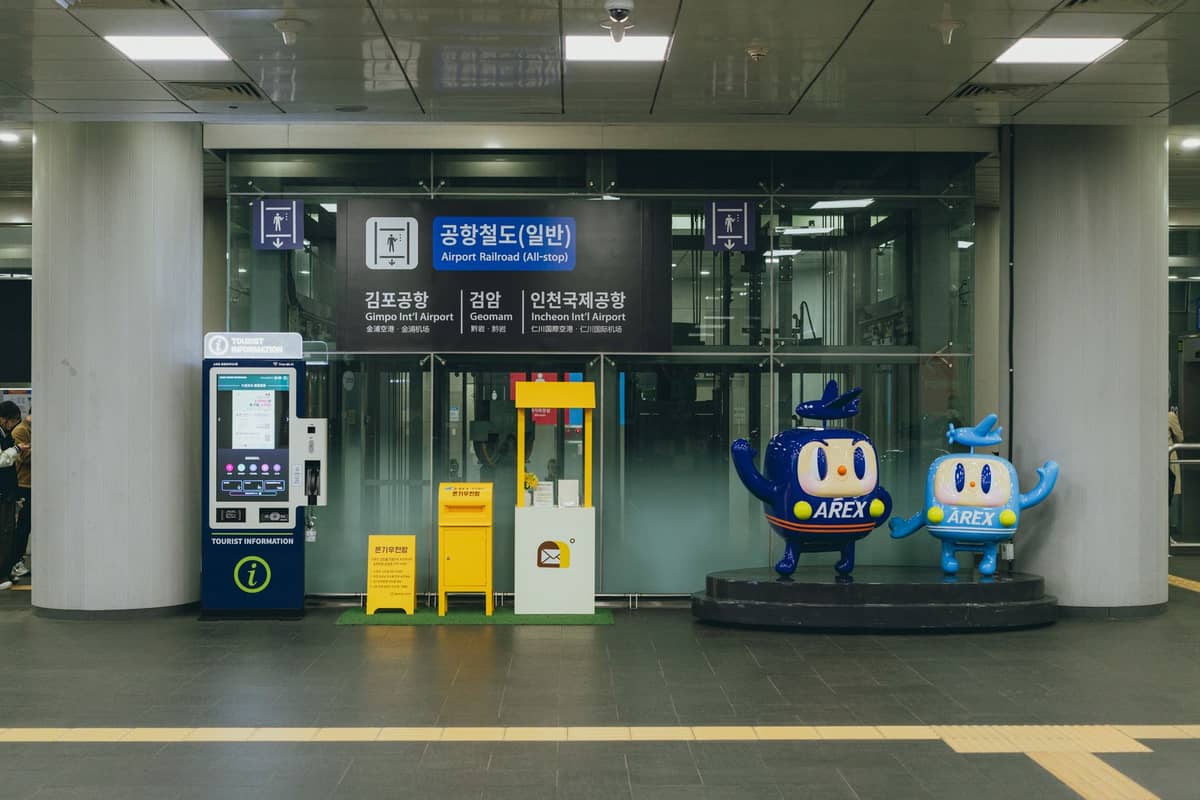
Most international travelers arrive at Incheon International Airport (ICN), located roughly 50–60 km west of central Seoul. The journey into the city takes 50–90 minutes depending on transport and traffic. The smart option is the Airport Railroad Express (AREX). The all-stop service to Seoul Station takes about 43 minutes and costs a fraction of a taxi fare. The express train (direct, no stops) is faster but pricier. For most budget travelers, the all-stop service hits the right balance. At Seoul Station, you connect directly to subway lines covering most of the city. If your accommodation is deep in a neighborhood not easily reached by subway, the airport limousine bus network offers direct coach routes to major districts and hotel clusters — useful if you're staying in Hongdae, Gangnam, or Itaewon.
The smart option is the Airport Railroad Express (AREX). The all-stop service to Seoul Station takes about 59 minutes and costs a fraction of a taxi fare. The express train (direct, no stops) is faster but pricier. For most budget travelers, the all-stop service hits the right balance. At Seoul Station, you connect directly to subway lines covering most of the city. If your accommodation is deep in a neighborhood not easily reached by subway, the airport limousine bus network offers direct coach routes to major districts and hotel clusters — useful if you're staying in Hongdae, Gangnam, or Itaewon.
💡 Local tip
Pick up or load your T-money card at Incheon Airport before boarding the AREX. It works on all Seoul subway lines, buses, and even some convenience store purchases. Top it up at any subway station or GS25/CU convenience store throughout your trip.
Eating Well on a Seoul Budget
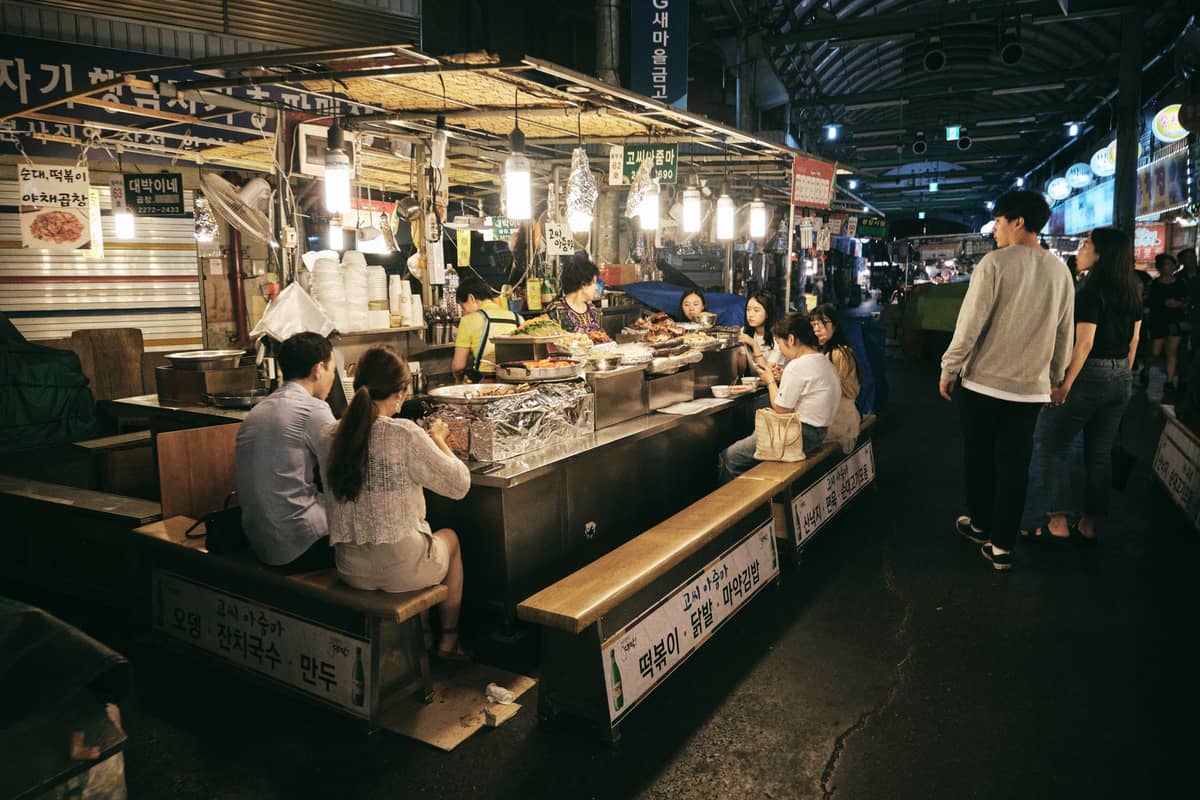
Food is where Seoul's budget credentials really shine. The city's street food scene is one of the best in Asia, and it's cheap. Tteokbokki (spicy rice cakes), hotteok (sweet pancakes), and kimbap rolls from street stalls typically cost ₩1,000–₩3,000 per item. Combine three snacks and you've eaten a filling meal for under ₩10,000.
Markets are the best places to eat like a local. Gwangjang MarketMarkets are the best places to eat like a local. Gwangjang Market in Jongno is one of Seoul's oldest food markets, famous for bindaetteok (mung bean pancakes) and mayak gimbap (addictive sesame-oil rice rolls). Stalls here serve generous portions for ₩4,000–₩8,000. See the for the specific stalls worth queuing at., famous for bindaetteok (mung bean pancakes) and mayak gimbap (addictive sesame-oil rice rolls). Stalls here serve generous portions for ₩4,000–₩8,000. See the Gwangjang Market food guide for the specific stalls worth queuing at.
Korean convenience stores deserve serious consideration as a budget dining option. GS25, CU, and 7-Eleven branches are on virtually every block in Seoul. Their ready-made rice sets, ramen stations, triangle kimbap, and hot foods like corn dogs and fried chicken cover breakfast through late-night snacking. A solid convenience store meal lands around ₩4,000–₩7,000. It's not a compromise — it's part of how Seoulites actually eat.
- Gimbap restaurants (분식집, bunsikjip) serve full rice rolls, ramen, and Korean snacks for ₩3,000–₩8,000 per dish — among the most reliable cheap-eat spots in any neighborhood.
- Naengmyeon (cold noodles) and doenjang jjigae (soybean paste stew) at local restaurants typically come in under ₩10,000 with rice included.
- University neighborhoods like Hongdae (Mapo-gu) and Sinchon have intensely competitive food pricing because of their student population — great hunting ground for cheap lunches.
- Avoid restaurants with English menus displayed prominently in tourist-heavy zones like Myeongdong or Insadong's main strip. Prices often reflect the foot traffic, not the food quality.
- Skip bottled water: Seoul tap water is treated to high standards and is widely considered safe to drink, which saves a small but consistent daily cost.
Free and Low-Cost Things to Do in Seoul
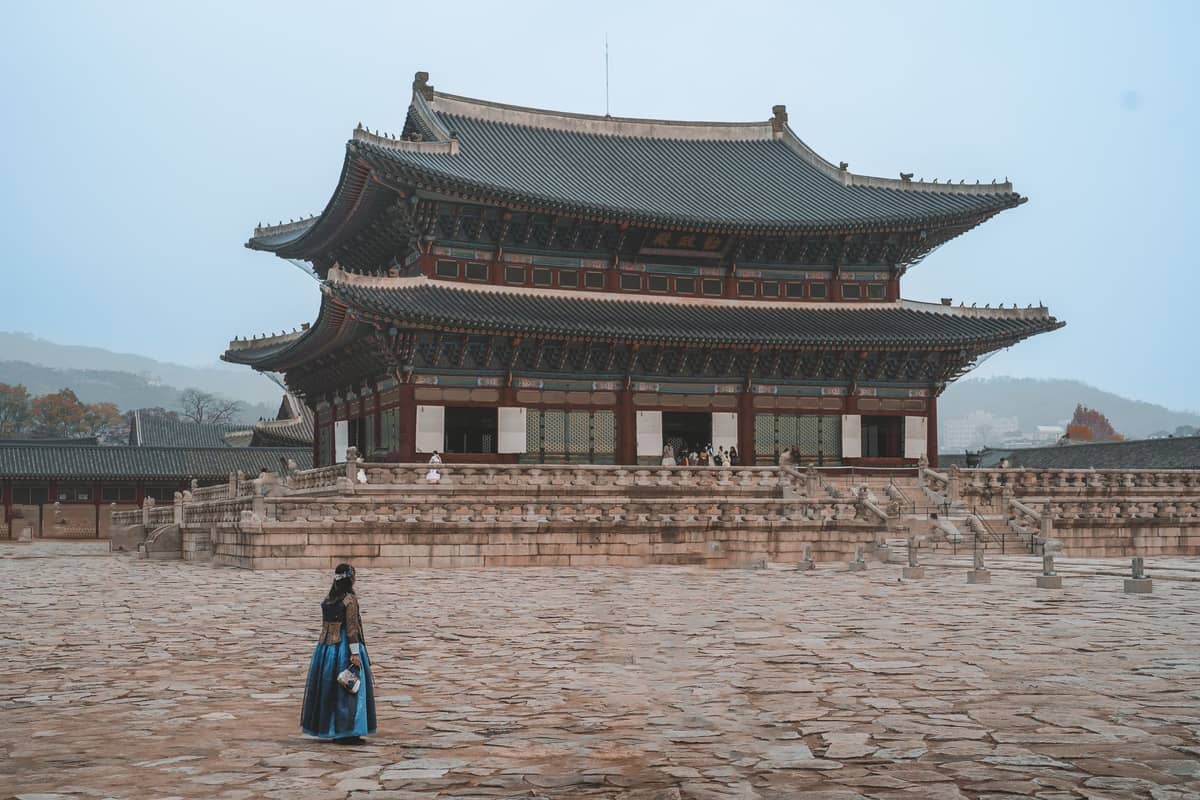
Seoul's biggest advantage for budget travelers is that its most iconic sights cost little or nothing. The five grand Joseon-era palaces are a good example: individual entry fees run ₩3,000–₩5,000, and Gyeongbokgung Palace — the largest and most dramatic of them — is free if you wear a hanbok (traditional Korean dress). Combined palace tickets reduce the per-site cost further. See the full guide to Seoul's palaces for entry details and which ones are worth prioritizing.
Hiking is another category where Seoul punches far above its weight for free activities. Bukhansan National ParkHiking is another category where Seoul punches far above its weight for free activities. Bukhansan National Park sits within the city boundaries and offers granite peak trails with views over the entire metropolis. Entry is free; only some designated cultural sites within the park charge small fees. For a full breakdown of routes and difficulty levels, the covers everything from beginner loops to the main Baegundae summit trail. and offers granite peak trails with views over the entire metropolis. Entry is free; only some designated cultural sites within the park charge small fees. For a full breakdown of routes and difficulty levels, the Bukhansan hiking guide covers everything from beginner loops to the main Baegundae summit trail.
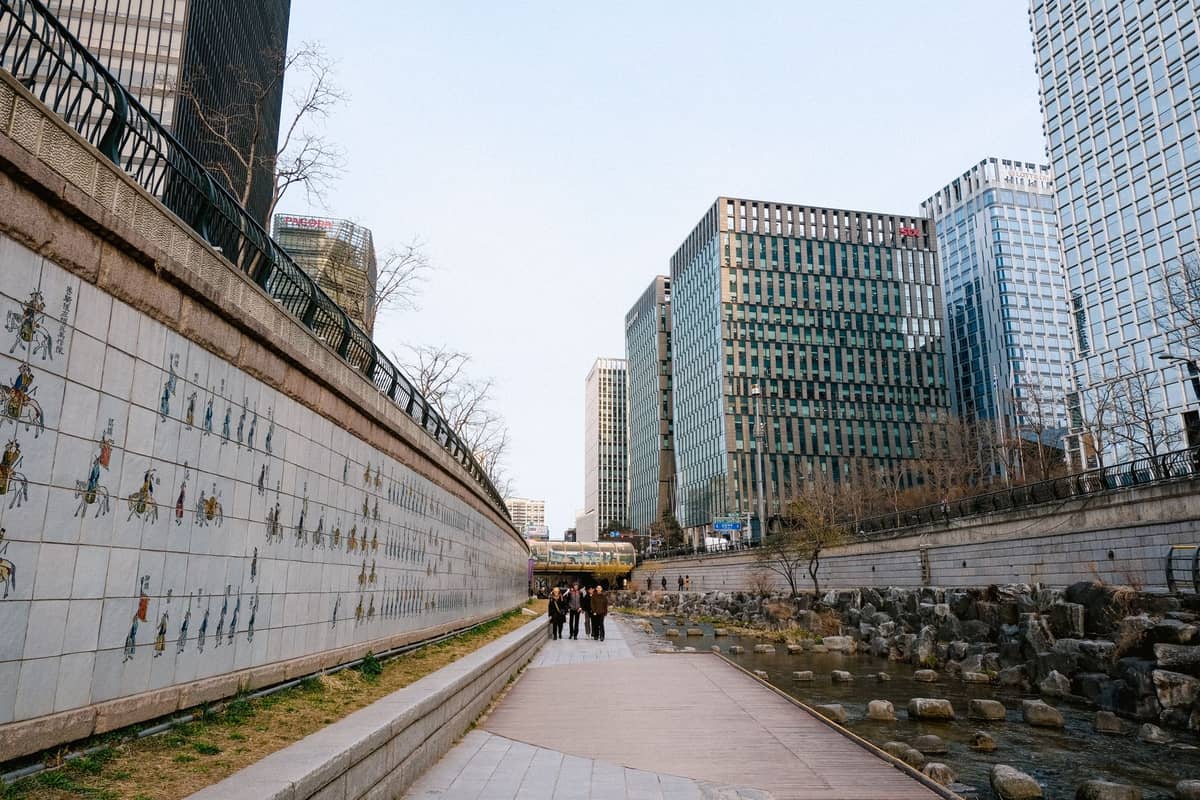
Neighborhoods like Bukchon Hanok Village and the area around Insadong and Seochon reward slow walking with well-preserved alleyways, traditional architecture, and independent shops — none of which costs anything to explore. The Cheonggyecheon Stream running through the city center is a free linear park used heavily by locals for evening walks. Hangang Park, stretched along both banks of the Han River, is free to enter and a genuine local leisure hub — especially popular for riverside cycling, picnics, and the famous Banpo Bridge rainbow fountain shows.
✨ Pro tip
The National Museum of Korea (Yongsan) has free permanent exhibition entry and is one of the largest museums in Asia. The MMCA Seoul (National Museum of Modern and Contemporary Art) has free admission to its exhibitions on a regular basis, though some special programs may charge a fee. Both are far better value than most paid tourist attractions in the city.
Accommodation: Where to Stay Without Overpaying
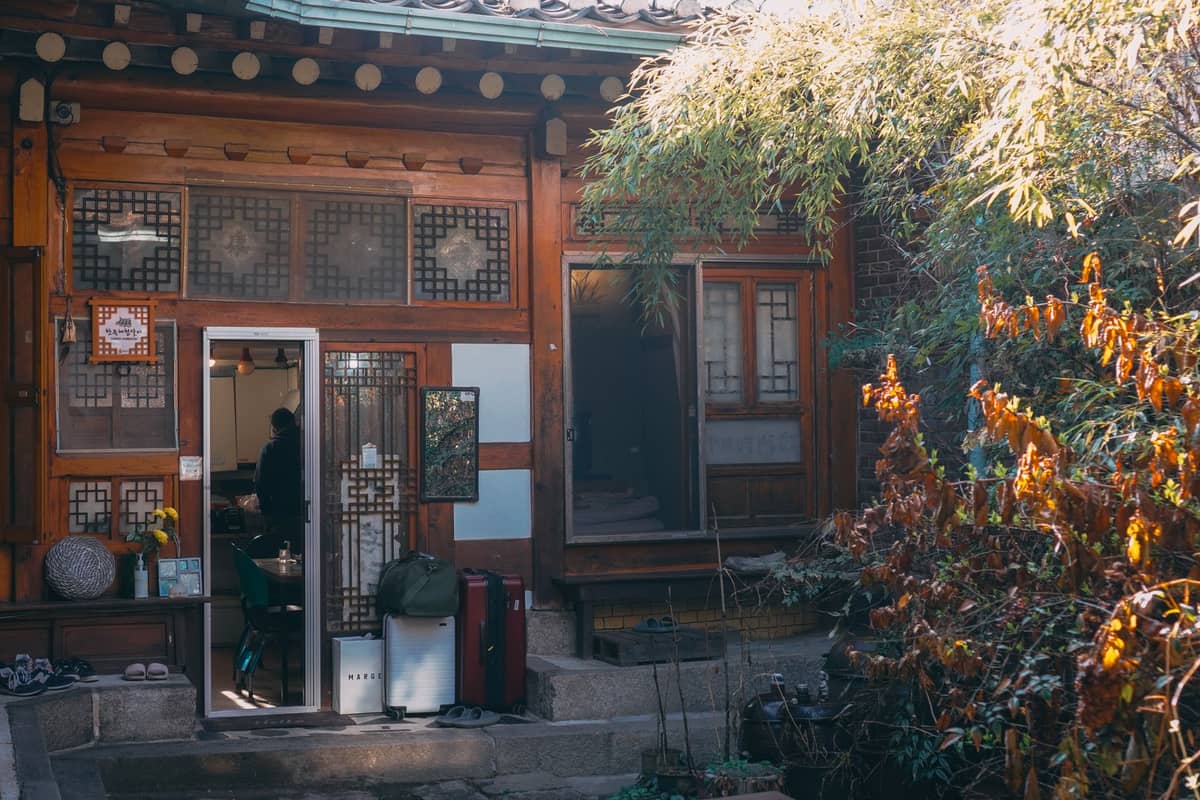
Location matters more than category when choosing budget accommodation in Seoul. A cheap guesthouse in a well-connected neighborhood like Hongdae, Jongno, or near Dongdaemun will serve you better than a slightly cheaper option in an outer district that adds two subway transfers to every journey.
Hongdae (in Mapo-gu) has the highest concentration of budget guesthouses and hostels for young travelers, with strong transport links and a 24-hour food and nightlife scene. Jongno is better if your focus is historical sightseeing — it puts you within walking distance of palaces, markets, and traditional neighborhoods. Itaewon suits travelers who want international food options and a mixed expat-local atmosphere, though accommodation prices here have risen with gentrification.
- Book accommodation for weekdays first; Seoul weekend rates (Friday and Saturday nights) are noticeably higher, especially in guesthouses near nightlife areas.
- Jjimjilbang (24-hour Korean bathhouse-saunas) can technically serve as overnight accommodation for ₩10,000–₩15,000 in a pinch — not comfortable long-term, but a genuine option for a night. Read the full breakdown in the jimjilbang guide before committing.
- Avoid booking non-refundable rates unless you're certain of your dates — cancellation windows in Seoul guesthouses can be strict, especially around public holidays and cherry blossom season (late March to mid-April).
- Airbnb-style apartment rentals can undercut hotel prices per night for stays of three or more days, but verify the host's legal operating status — Seoul has had periodic crackdowns on unlicensed short-term rentals.
Seasonal Timing and When Costs Spike
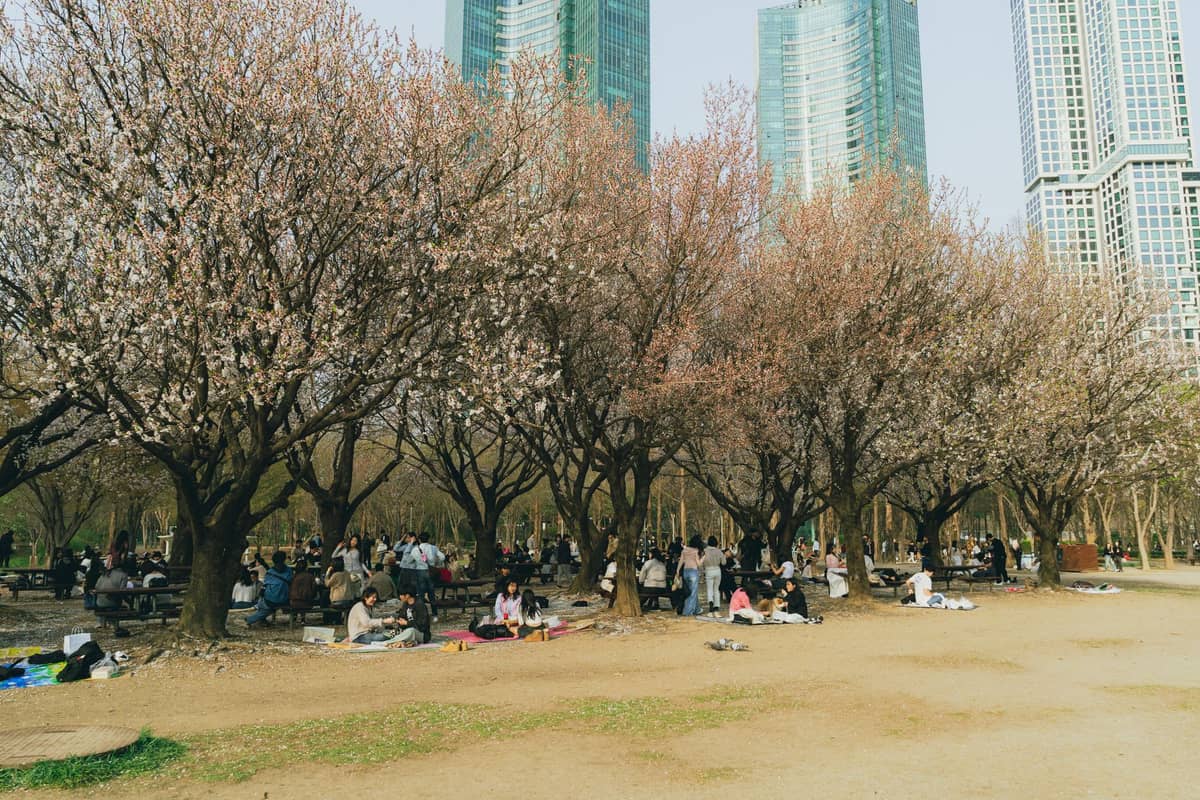
The best time to visit Seoul from a weather perspective — spring (April to May) and autumn (September to October) — overlaps with peak domestic and international demand. Cherry blossom season in particular drives accommodation prices up sharply across the entire city. If your budget is tight, consider visiting in late May or early November, when the weather is still pleasant but the tourist surge has passed.
Winter (December to February) is Seoul's most affordable season for accommodation. Temperatures regularly drop below 0°C and the city sees far fewer tourists, which translates to lower guesthouse rates and uncrowded attractions. Budget travelers who can handle the cold often find winter excellent value — indoor experiences like jimjilbangs, museum visits, and cafe culture feel especially well-suited to the season. Summer (June to August) is hot, humid, and subject to the jangma monsoon season from June to July, which keeps some visitor numbers down mid-season despite the heat.
⚠️ What to skip
Korean public holidays (Chuseok in September/October and Seollal in late January/February) cause significant price spikes and transport crowding. If your trip overlaps with these dates, book accommodation at least 4–6 weeks in advance and expect higher rates. Many local restaurants also close during these periods.
FAQ
How much money do I need per day in Seoul?
Shoestring travelers spending carefully can manage on ₩50,000–₩70,000 per day (approximately $38–$53 USD), covering a hostel dorm, street food and convenience store meals, and public transport. A more comfortable budget with a private room and occasional paid activities runs ₩80,000–₩100,000 per day. These figures exclude flights and major shopping.
Is Seoul public transport cheap for tourists?
Yes, it's one of Seoul's strongest budget advantages. Individual subway and bus rides cost ₩1,550–₩2,000 with a T-money card. The Climate Card tourist pass offers unlimited rides from around ₩5,000 for one day or ₩20,000 for seven days. Fares are subject to change — verify current rates at english.seoul.go.kr before your trip.
What is the cheapest way to get from Incheon Airport to Seoul city center?
The AREX all-stop airport railroad is the most reliable budget option. It runs from Incheon Airport to Seoul Station in about 43 minutes and costs significantly less than a taxi. At Seoul Station, you connect directly to the subway network. The airport limousine bus is useful if your accommodation is far from a subway station, with routes covering major neighborhoods and hotel areas.
Are there good free things to do in Seoul?
Genuinely, yes. Bukhansan National Park hiking is free. Bukchon Hanok Village, Cheonggyecheon Stream, Hangang Park, and most Seoul markets cost nothing to explore. The National Museum of Korea has free permanent exhibition entry. Palace entry runs ₩3,000–₩5,000 per site but can be free if you wear a hanbok. A full list of zero-cost activities is covered in the guide to free things to do in Seoul.
Should I tip in Seoul?
No. Tipping is not customary in South Korea and can sometimes create awkward situations. Service charges are included at higher-end establishments. At street stalls, market vendors, casual restaurants, and taxis, simply pay the listed price. Not tipping is a genuine and meaningful daily saving compared to destinations where 15–20% gratuity is standard.