Gwangjang Market Food Guide: What to Eat and How to Visit
Gwangjang Market is one of Seoul's oldest and most celebrated food destinations, known for bindaetteok, mayak gimbap, and raw beef yukhoe. This guide covers every dish worth ordering, how much to pay, when to go, and how to navigate the market like someone who has been there before.
Plan and book this trip
Tools from our partner Travelpayouts help you compare flights and hotels. If you book through them, we may earn a commission at no extra cost to you.
Flights
Hotels map
TL;DR
- Gwangjang Market is at 88 Changgyeonggung-ro, Jongno-gu, Seoul. Take Line 1 to Jongno 5-ga Station (Exit 8) for the most direct access to the food hall.
- The four dishes every visitor should try: bindaetteok (mung-bean pancakes), mayak gimbap, kalguksu (knife-cut noodle soup), and yukhoe (Korean raw beef).
- Most dishes cost ₩3,000–₩10,000. Yukhoe is the splurge item at ₩20,000–₩30,000 per plate. Budget ₩20,000–₩30,000 total for a solid eating session.
- Go on a weekday between 11:00 AM and 2:00 PM to avoid the worst crowds. Evenings and weekends are significantly busier and seats become scarce.
- Cards and mobile payments are widely accepted, but carry some cash as a backup. This is not a reservation market — everything is walk-in. See our full Seoul street food guide for context on eating your way through the city.
What Gwangjang Market Actually Is
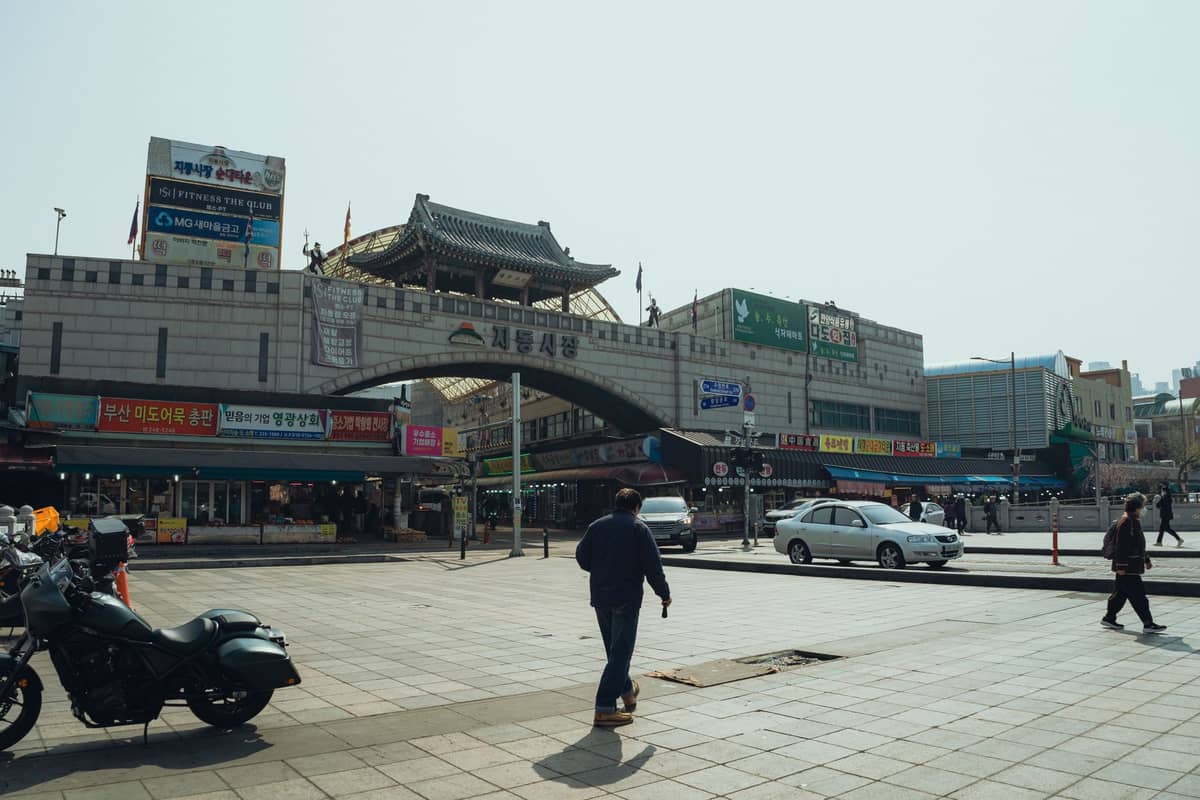
Gwangjang Market (광장시장) opened in 1905, making it one of the oldest continuously operating markets in South Korea. It started as a textile and dry-goods market in the Jongno district, and that fabric trade still dominates the upper floors and outer aisles today. The food hall is a different world entirely: a covered indoor corridor lined on both sides with stalls serving hot, cheap, made-to-order Korean food. The vendors are mostly older women who have worked the same stall for decades, and the recipes have not changed much.
The market occupies a large block in Jongno, one of Seoul's most historically significant neighborhoods. You are walking distance from Changgyeonggung Palace and the Cheonggyecheon Stream. The food hall runs through the center of the building and connects to several street-level entrances. There is no single 'main entrance' — most visitors arrive through the Jongno 5-ga side, which drops you almost directly into the food corridor.
ℹ️ Good to know
Gwangjang Market is not a food hall with uniform stall hours. Each vendor operates independently, which means arriving at 8:30 AM will find some stalls open and others dark. The food corridor hits full operation by around 10:00–11:00 AM and most stalls stay open until 9:00–11:00 PM. Some textile vendors close on Sundays; food stalls vary, with certain ones closed on Mondays. Confirm on arrival.
The Dishes That Matter: What to Order at Gwangjang
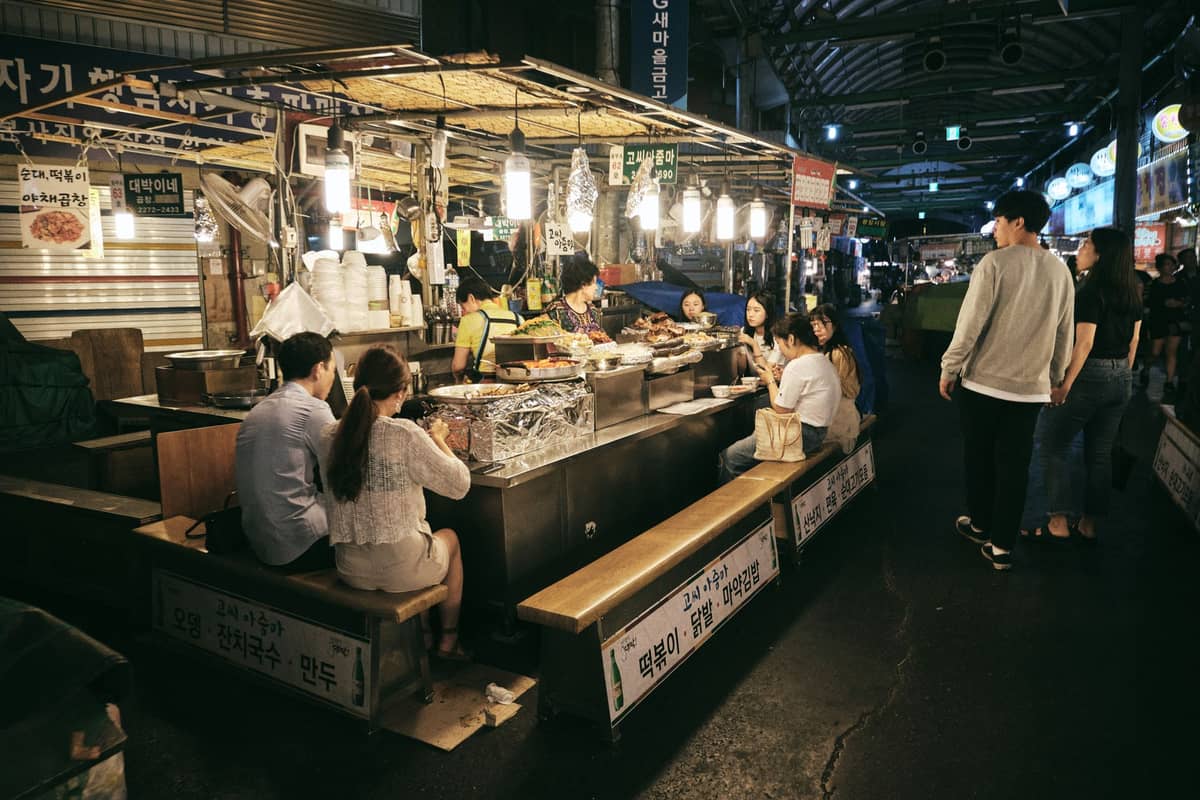
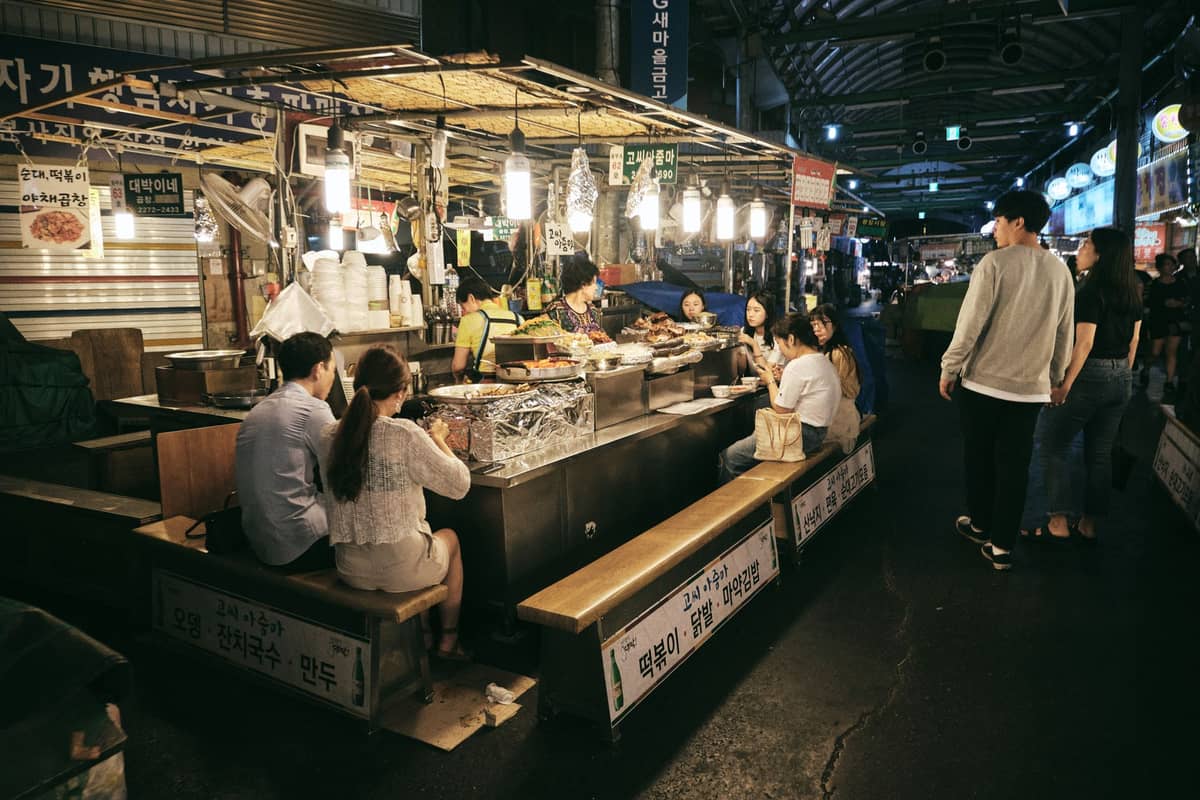
Korean food culture rewards specificity, and Gwangjang is a good example of why. Each stall tends to specialize in one or two items rather than offering a broad menu. The result is that the best way to eat here is to graze — pick a dish at one stall, eat standing or perched on a low stool, then move to the next. Here are the dishes that justify the visit.
- Bindaetteok (빈대떡) Thick mung-bean pancakes fried in lard on a flat iron griddle. The exterior crisps up while the center stays dense and savory. Served with a light soy-vinegar dipping sauce. Cost: around ₩4,000–₩6,000 per pancake. This is the market's signature item and the smell of bindaetteok frying is essentially the smell of Gwangjang.
- Mayak Gimbap (마약 김밥) Small, tightly rolled rice-and-vegetable rolls, roughly thumb-sized, served with a mustard-soy dipping sauce. The name translates loosely to 'narcotic gimbap' because they are reportedly hard to stop eating. A full portion (around 10 pieces) costs ₩3,000–₩4,000, making this the best value in the market.
- Yukhoe (육회) Korean-style raw beef, sliced thin and dressed with sesame oil, garlic, soy, and a raw egg yolk. This is fresh, clean, and notably different from the heavily sweetened yukhoe found at many restaurants. Shared plates cost ₩20,000–₩30,000 and are designed for 2–3 people. Not for everyone, but serious eaters should not skip it.
- Kalguksu (칼국수) Hand-cut wheat noodles in a mild anchovy or shellfish broth. Filling, warming, and cheap at around ₩7,000–₩9,000 a bowl. Best ordered in colder months when a hot broth is exactly what you want after walking the market.
- Tteokbokki and Soondae Both are common additions to a Gwangjang meal. Tteokbokki (spicy rice cakes) and soondae (Korean blood sausage filled with glass noodles) are often sold together from the same stall. Expect ₩4,000–₩6,000 per portion. The combination plate is worth trying if you want a single stall that covers a lot of ground.
⚠️ What to skip
Raw beef yukhoe carries food safety considerations, especially in warmer months. The market vendors serving it have long track records, but if you are immunocompromised, pregnant, or cautious about raw meat, skip it or order a cooked alternative. The dish is prepared to order and the beef turnover is high — but risk still exists.
How to Navigate the Market Without Getting Overwhelmed
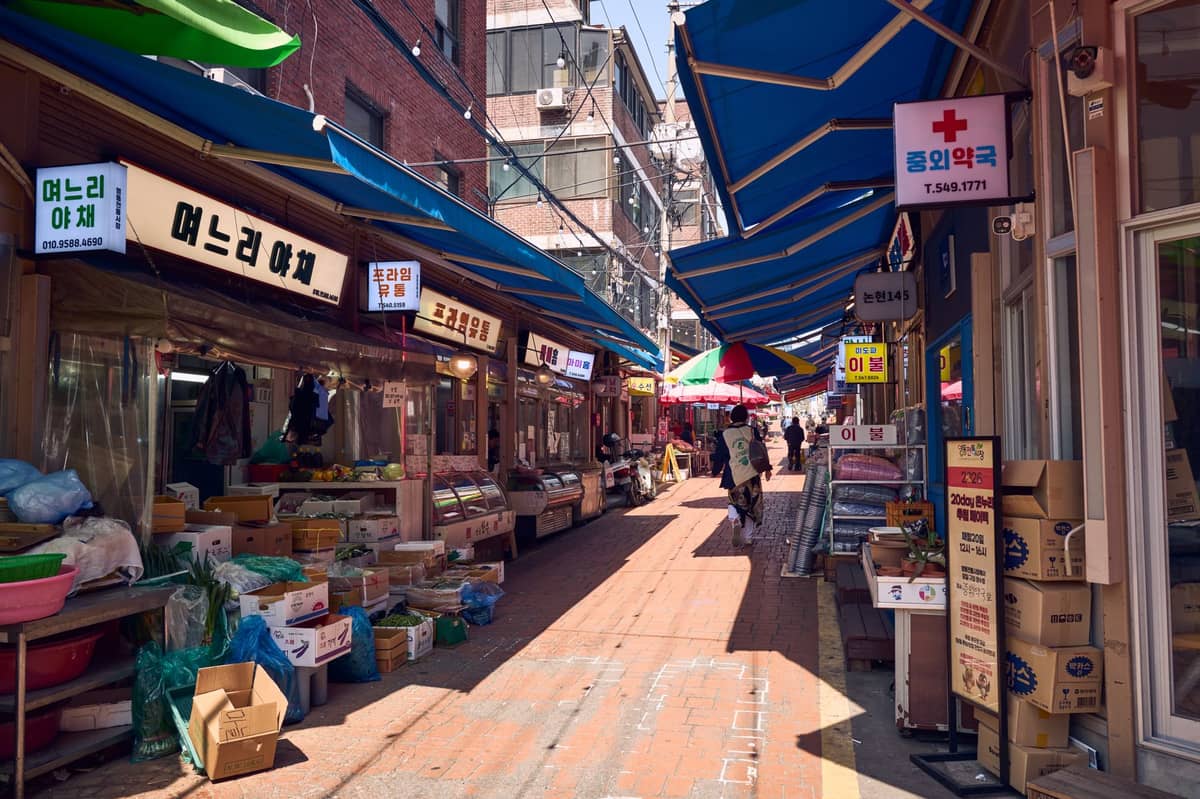
The food hall can disorient first-time visitors. The central corridor is lined with stalls that look nearly identical: elderly women behind sizzling griddles, laminated menus with photos and Korean text, plastic stools crammed along counters. Vendors will call out to passersby, which is not aggressive — it is standard market behavior. You are under no obligation to sit down after looking.
The practical approach is to do one full walk-through before buying anything. The corridor is not long — The corridor is not long — maybe a short walk end to end — and scanning the whole thing first lets you compare prices and see which stalls are busiest. Local crowd density is a reasonable quality signal here. Then go back and choose your spots.
- Arrive via Jongno 5-ga Station, Line 1, Exit 8. This places you on the eastern side of the market, closest to the main food corridor.
- The market address is 88 Changgyeonggung-ro, Jongno-gu. The food hall is inside the covered building, not on the street stalls outside.
- Seating is communal and tight. Expect to share a counter with strangers. This is normal.
- Payment: Payment: cards and mobile payments are accepted at many stalls, but some older vendors may prefer cash. Carry some cash as a backup.
- No reservations exist anywhere in the market. Busy periods mean waiting for a stool to open up.
- Weekday mid-morning to early afternoon is the calmest time. Evenings from 5:00 PM onward and all-day weekends can be genuinely crowded.
✨ Pro tip
If you want to try yukhoe, ask specifically which stalls are known for it — there are a handful of vendors in the upper section of the market who have been serving it for decades. These stalls often have refrigerated display cases with the beef visible. The quality difference between a specialist and a general stall is noticeable.
When to Go: Timing, Seasons, and Crowd Patterns
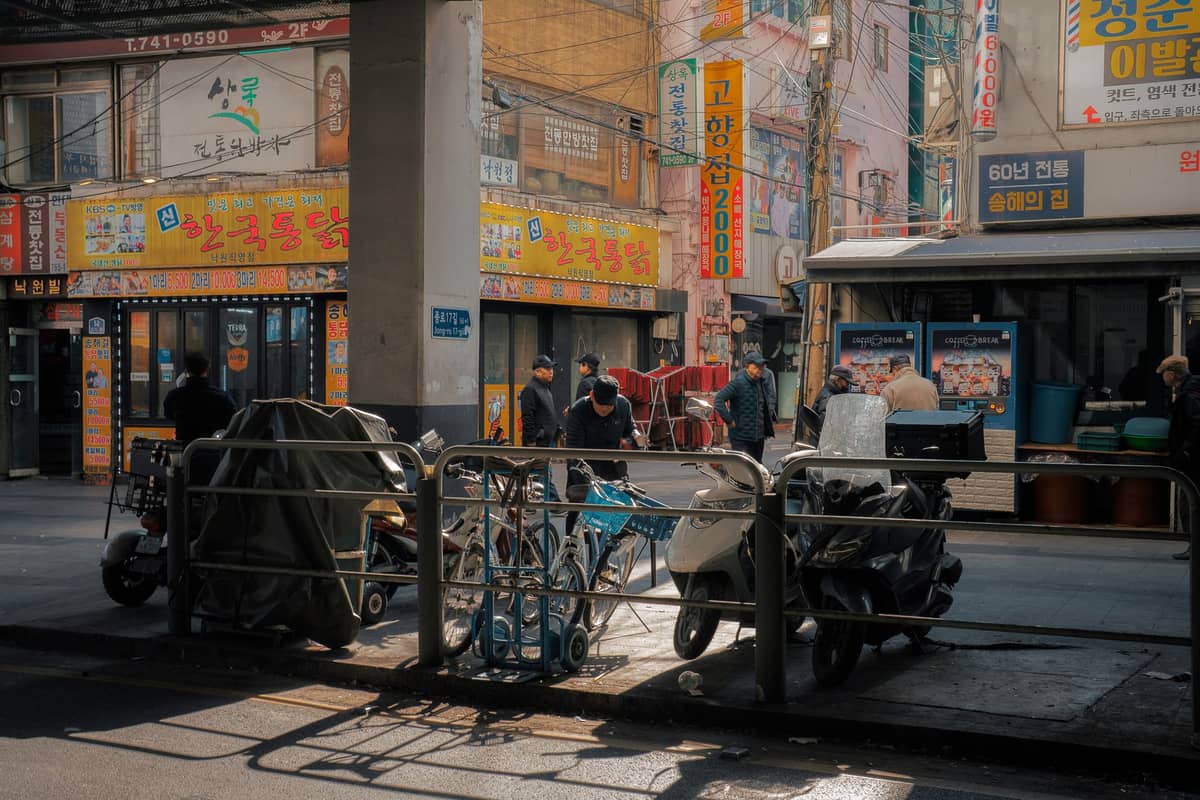
Gwangjang operates year-round, which means it works across all four of Seoul's distinct seasons. That said, timing your visit makes a real difference in both comfort and experience. Seoul's summers are hot and humid (Gwangjang operates year-round, which means it works across all four of Seoul's distinct seasons. That said, timing your visit makes a real difference in both comfort and experience. Seoul's summers are hot and humid, and the covered market amplifies the heat from cooking griddles. Winters can drop near or below 0°C, which makes the enclosed food hall genuinely appealing — a bowl of kalguksu on a cold January afternoon is one of the better ways to warm up in this city.), and the covered market amplifies the heat from cooking griddles. Winters drop near or below 0°C, which makes the enclosed food hall genuinely appealing — a bowl of kalguksu on a cold January afternoon is one of the better ways to warm up in this city.
The best months to visit Seoul broadly, including Gwangjang, are April to May and September to October. Spring brings mild temperatures and the streets around Jongno are pleasant for walking between attractions. Combine a Gwangjang visit with Jongmyo Shrine and the Cheonggyecheon area for a half-day in the historic core of the city. and the streets around Jongno are pleasant for walking between attractions. Combine a Gwangjang visit with Jongmyo Shrine and the Insa-dong area for a half-day in the historic core of the city.
Within the week, weekday mornings and early afternoons are the most manageable. Evenings after 6:00 PM and all-day Saturdays bring a notable surge in visitors — both Korean locals and tourists. Sunday sees some vendor closures in the textile sections, though the food corridor stays largely active. Always confirm at the stall level since each vendor sets their own hours.
Gwangjang in the Context of Seoul's Food Scene
Gwangjang is frequently referenced as the most famous market food destination in Seoul, which means it now draws significant tourist traffic alongside its local customer base. That is worth acknowledging honestly: on a Saturday evening, the central food corridor will have tourists photographing bindaetteok from every angle. If that bothers you, the early-morning weekday version of Gwangjang is a different experience. If you want more context on how to eat affordably across the city, the Seoul on a budget guide is a useful companion read.
For comparison: Namdaemun Market is larger and covers more food categories but lacks the concentrated atmosphere of Gwangjang's food corridor. Gwangjang wins specifically on bindaetteok and yukhoe. If you are building a broader market itinerary across the city, the Seoul markets guide lays out how to structure visits to multiple markets in a single trip.
The textile sections of the market are genuinely interesting as a secondary experience. Gwangjang is still a working wholesale fabric market, and the upper floors are stacked with bolts of silk, linen, and traditional hanbok material. Many visitors walk straight through without noticing this exists. If you have time, the contrast between the tourist-facing food corridor and the entirely Korean-facing fabric trade upstairs is worth 20 minutes of your attention.
Practical Logistics: Getting There, Paying, and Planning Your Visit
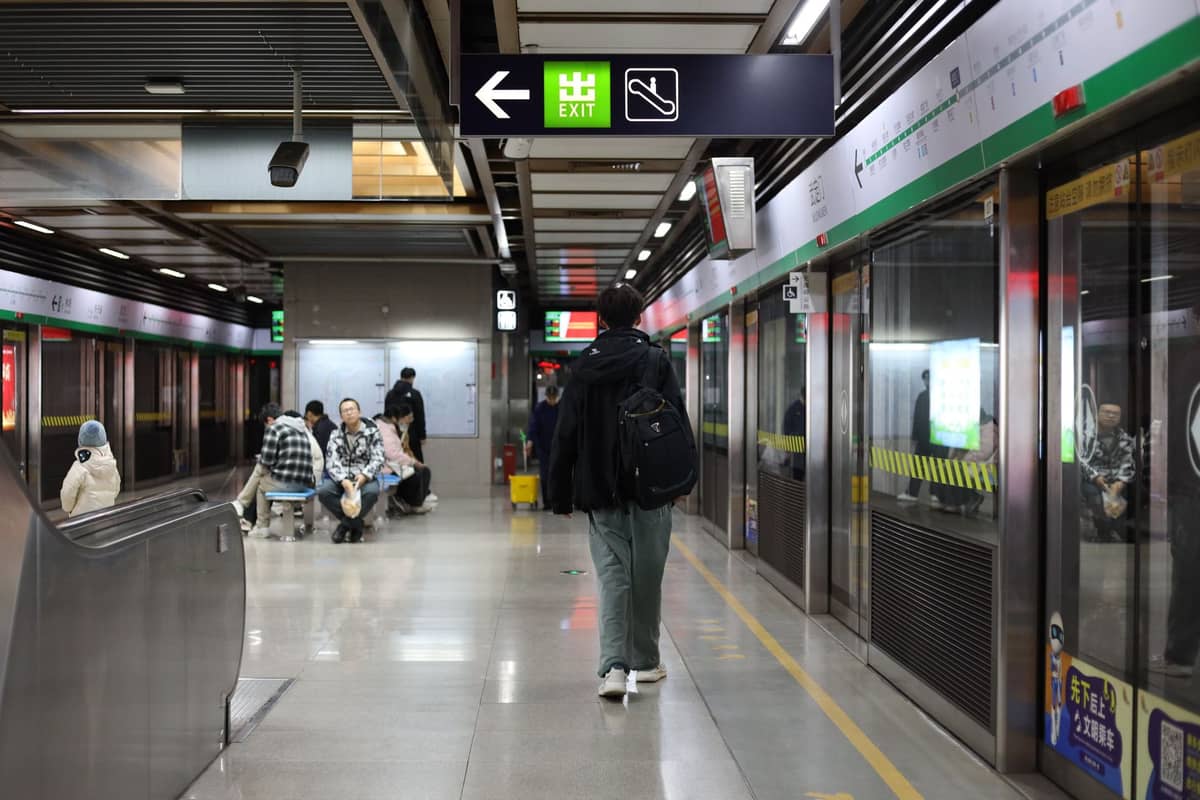
The market is at 88 Changgyeonggung-ro, Jongno-gu, Seoul. The clearest transit option is Line 1 (dark blue) to Jongno 5-ga Station, Exit 8 or 9, which places you at the eastern entrance of the market. Euljiro 4-ga Station (Lines 2 and 5) is also walkable but adds several minutes.
- T-money card or Korean transit app: use a T-money card loaded with KRW for seamless subway access.
- Taxi: Kakao T is the standard ride-hailing app in Seoul. Type '광장시장' or 'Gwangjang Market' as your destination.
- Walking from nearby attractions: Changgyeonggung Palace is a short walk away. Cheonggyecheon Stream can be followed west-to-east to reach the market area.
- Budget for the food: ₩15,000–₩25,000 per person covers bindaetteok, mayak gimbap, and a shared dish comfortably. Add extra if you want yukhoe.
- Food stalls are generally open from late morning into the evening, with some variation. Textile vendors are open approximately 8:30 AM–6:00 PM and may close Sundays.
💡 Local tip
If you are combining Gwangjang with other Jongno-area sights, consider visiting the market for lunch, then walking to Changgyeonggung Palace or Jongmyo Shrine in the afternoon. Both are nearby and the area around them is much quieter than the market corridor. This sequencing also means you arrive at Gwangjang before the lunch rush peaks.
FAQ
What is Gwangjang Market best known for eating?
Gwangjang Market is most closely associated with bindaetteok (mung-bean pancakes), mayak gimbap (small sesame-dressed rice rolls), yukhoe (Korean raw beef), and kalguksu (knife-cut noodle soup). Bindaetteok is the dish most visitors come for specifically — the smell of them frying on flat griddles in lard is essentially the signature of the market.
How much does it cost to eat at Gwangjang Market?
Most individual dishes cost ₩3,000–₩10,000. Mayak gimbap is around ₩3,000–₩4,000 for a full portion. Bindaetteok runs ₩4,000–₩6,000. Yukhoe is the most expensive item at ₩20,000–₩30,000 per shared plate. A reasonable budget per person for a thorough eating session is ₩20,000–₩30,000.
What time does Gwangjang Market open and close?
The textile and dry-goods sections of the market typically open around 8:30 AM and close around 6:00 PM, with some vendors closed on Sundays. The food stalls operate on their own schedules, generally opening late morning and staying open into the evening. Individual stall hours vary — the market does not operate on a single unified schedule.
Is Gwangjang Market cash only?
No. Cards and mobile payments are widely accepted at most food stalls. However, individual vendors vary, and carrying cash as a backup is still advisable.
How do I get to Gwangjang Market by subway?
Take Seoul Metro Line 1 (dark blue line) to Jongno 5-ga Station and use Exit 8 or 9. Euljiro 4-ga Station on Lines 2 and 5 is an alternative but requires a slightly longer walk.