Namdaemun Market: Seoul's Largest Traditional Market
Namdaemun Market (남대문시장) Namdaemun Market (남대문시장) has operated in the heart of Seoul's Jung-gu district since 1414, making it the largest traditional market in South Korea. Spread across a dense network of alleys and covered arcades, it sells everything from wholesale eyewear and kitchenware to street food and children's clothing — and it barely sleeps.
Quick Facts
- Location
- 21 Namdaemunsijang 4-gil, Jung-gu, Seoul (near Sungnyemun Gate)
- Getting There
- Seoul Subway Line 4, Hoehyeon Station — Exits 5, 6, or 7
- Time Needed
- 1.5–3 hours depending on how much you shop
- Cost
- Free entry; costs depend entirely on purchases
- Best for
- Street food, wholesale goods, local market atmosphere
- Official website
- http://namdaemunmarket.co.kr
What Namdaemun Market Actually Is
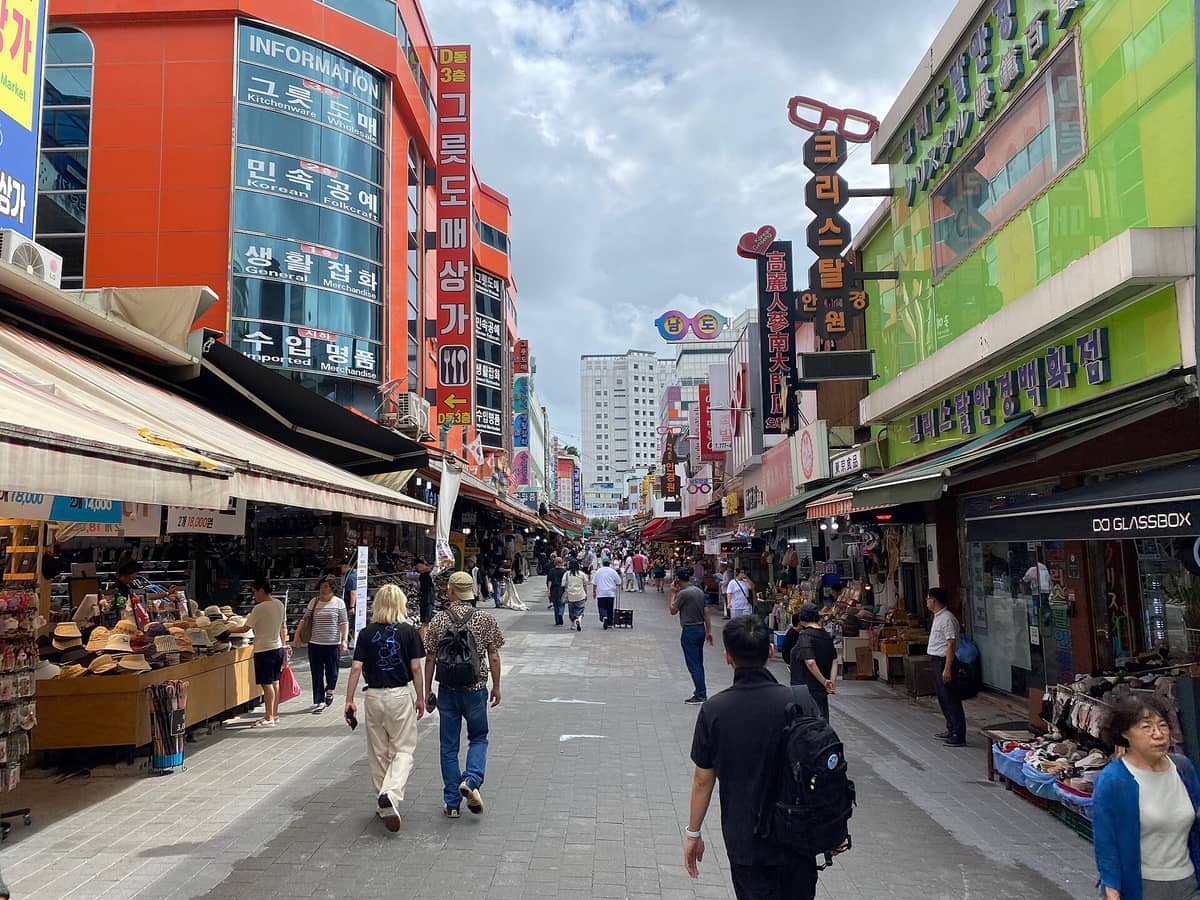
Namdaemun Market is not a single building or a themed food court. It is a sprawling, semi-organized labyrinth of stalls and shops packed into a grid of narrow streets and covered passages in central Seoul. The official address places it in Jung-gu, a few minutes' walk from the historic Sungnyemun Gate, the ancient stone gate that gives the market its name — 'Namdaemun' literally means 'Great South Gate.'
Since opening in 1964, the current market has grown into what Visit Korea describes as the largest traditional market in the country. The category spread is remarkable: eyewear shops line one section, imported goods fill another, children's clothing dominates an entire arcade, and kitchenware stalls stack pots and colanders floor to ceiling. Walking the full circuit without stopping takes nearly 30 minutes. With stops, you could spend half a day.
The market sits in the Myeongdong and Jung-gu area, which means it connects easily to nearby attractions. Myeongdong's cosmetics street is a 10-minute walk northeast; Sungnyemun Gate is visible from the market's southern end; and the historic Deoksugung Palace is under 15 minutes on foot. This makes Namdaemun a natural stop within a broader Jung-gu itinerary rather than a standalone destination.
How the Market Changes Through the Day
The market's hours are unusual enough to warrant careful attention. General trading runs roughly 00:00 to 23:00 on weekdays, with most stalls closed on Sundays. An overnight section, active from approximately 23:00 to 04:00, caters primarily to wholesale buyers restocking their own shops. If you arrive during this overnight window expecting a full retail experience, you will find only a fraction of the market active.
⚠️ What to skip
Most stalls close on Sundays. If you plan to visit on a Sunday, you will find the market largely shut. Confirm with individual shops if you have a specific purchase in mind.
Early mornings, roughly 06:00 to 09:00, are when the wholesale energy peaks. Merchants with trolleys and carts move fast, stalls are being restocked, and the atmosphere is entirely utilitarian. Retail visitors at this hour get the market to themselves in terms of tourist crowds, but some shop owners are still setting up.
The sweet spot for a general retail visit is between 10:00 and 14:00. Stalls are fully open, the food alleys are serving hot food, and navigation is easier before afternoon crowds build. By late afternoon, the cooking smells intensify and the foot traffic peaks, which can make the narrow covered alleys feel genuinely claustrophobic. If you are sensitive to crowds, aim for a weekday morning.
Tickets & tours
Hand-picked options from our booking partner. Prices are indicative; availability and final rates are confirmed when you complete your booking.
DMZ and Lake Majang Suspension Bridge Tour from Seoul
From 57 €Instant confirmationFree cancellationHalf Day DMZ Tour from Seoul, 3rd Tunnel, Observatory and More
From 47 €Instant confirmationFree cancellationSeoul zombie city exploration game and private tour
From 10 €Instant confirmationFree cancellationLuggage Storage in Seoul
From 7 €Instant confirmationFree cancellation
The Food Alleys: What to Eat and Where to Find It
The food section of Namdaemun is among the most concentrated street food experiences in central Seoul. The most photographed item is galchi jorim, braised cutlassfish served with rice in small stalls where you eat at communal tables with no pretense of formality. The smell of the braising sauce, a combination of gochujang, soy, and garlic, drifts into the surrounding alleys and works as an effective navigation tool.
Kalguksu, hand-cut noodle soup, is served at multiple stalls and is particularly popular during cooler months. Hotteok — chewy sweet pancakes filled with cinnamon sugar and nuts — are sold fresh off flat iron griddles and are hard to walk past without buying one. They are best eaten immediately while the filling is still liquid.
Namdaemun's food scene is comparable in spirit, if not in variety, to Gwangjang Market in Jongno. Gwangjang tends to attract more tourists specifically for food and has wider international recognition; Namdaemun's food stalls are more incidental to a shopping trip. If eating is your primary goal, Gwangjang may be the better choice. If you want food as part of a broader market day, Namdaemun delivers.
What to Buy: The Market's Specialties
Namdaemun is organized loosely by product category, though signage is mostly in Korean. The eyewear section, located near the main entrance area, carries prescription frames, sunglasses, and reading glasses at prices well below what you would pay in a standalone optician. Bring your prescription if you want lenses fitted; many shops offer same-day or next-day service. Verify this directly with individual stalls, as it is not a market-wide policy.
The kitchenware and houseware alleys are popular with locals and tourists alike. Bamboo steamers, cast iron cookware, Korean earthenware bowls (dolsot), and large stockpots are stacked in configurations that feel structurally improbable. Prices are wholesale-adjacent, meaning noticeably lower than department stores, but bargaining is not universal — fixed pricing is common in the covered arcades.
The imported goods section stocks a mix of European chocolates, international snacks, and specialty food items that can be difficult to find in regular Seoul supermarkets. It functions as a kind of informal import shop for Seoulites looking for specific products. The children's clothing section is vast and skewed toward wholesale minimums, though individual pieces can be purchased at retail.
💡 Local tip
Many vendors here operate primarily for wholesale buyers. If a stall displays a minimum quantity sign or seems uninterested in single-item sales, it is not rudeness — it is a wholesale operation. Move to an adjacent stall that is more retail-oriented.
Getting There and Navigating the Market
The most direct route is Seoul Subway Line 4 to Hoehyeon Station, Exit 7. From Myeongdong Station (also Line 4), the market is reachable on foot in under 15 minutes through streets that pass a concentration of cosmetics shops if that interests you. The station itself is clean, accessible, and connects easily to the rest of the city center. From Myeongdong Station (also Line 4), the market is reachable on foot in under 15 minutes through streets that pass a concentration of cosmetics shops if that interests you.
For context on getting around the broader city, the guide to getting around Seoul covers transit card options and subway navigation in detail. An T-money card, loaded at any convenience store or station, covers subway and bus fares and is the simplest way to move through the city.
Inside the market, navigation is genuinely difficult without some preparation. The alleys are not numbered in any obvious tourist-facing way, and landmarks are inconsistent. A practical approach: enter from one of the Hoehyeon Station exits, follow the main covered arcade toward the center, and let the product categories guide you. Most of the food stalls cluster in a concentrated section; follow the smell or the crowds of older Koreans sitting down for lunch.
ℹ️ Good to know
The market occupies multiple buildings and street levels. The covered indoor arcade sections are cooler and slightly easier to navigate; the outdoor street sections offer more variety but are exposed to weather. In summer, the indoor sections provide relief from the heat.
Honest Assessment: Who This Market Is For
Namdaemun Market is a functioning wholesale and retail market, not a curated tourist experience. The stalls are not designed to be photogenic in the way that Bukchon's hanok rooftops are photogenic, and vendors are generally focused on transactions rather than conversation. Signage is almost entirely in Korean. That is not a criticism — it is what makes the place feel genuinely local rather than tourist-facing.
Visitors who come expecting a sanitized, bilingual food market experience may be underwhelmed. Visitors who come ready to wander, eat at a communal table, and handle some navigational uncertainty will find Namdaemun rewarding. It is particularly well-suited to travelers with a specific shopping agenda, whether that is kitchenware, eyewear, or wholesale textile items.
Travelers focused primarily on traditional culture and architecture should note that the market's historical significance is mostly contextual: it sits near the Sungnyemun Gate and carries a long commercial history, but the buildings themselves are functional rather than heritage structures. For a market experience with stronger visual character, Ikseon-dong Hanok Village nearby offers a completely different aesthetic, albeit with higher prices and a more tourist-centric tone.
First-time visitors to Seoul on short itineraries who want to check off a 'traditional market' experience might find Gwangjang Market more immediately accessible given its clearly defined food hall layout and international recognition. Namdaemun rewards a second visit, or a first visit with someone who knows it.
Insider Tips
- The kalguksu stalls in the food section operate on a first-come basis with shared seating. If a stall looks full, wait one to two minutes — turnover is fast and a seat will open. Do not try to order multiple dishes; one bowl per person is the rhythm here.
- The eyewear section near the main entrance is one of the most underrated shopping stops in Seoul for travelers who wear glasses. Frames that retail elsewhere for significantly more can be found here in quantity. Bring your prescription from home.
- Wholesale pricing becomes more accessible if you show genuine buying intent. For kitchenware stalls especially, handling items and asking about multiple quantities often prompts a lower price, even for single items.
- The overnight wholesale section (roughly 23:00 to 04:00) gives you an entirely different market: quieter, faster-paced, and populated almost entirely by Korean merchants and delivery workers. It is worth a short visit if you are in the area late at night, even just to see how a major wholesale market operates.
- Stalls are closed on Sundays market-wide. This is not universally advertised, and visitors regularly arrive on Sunday mornings to find shuttered gates. Plan accordingly.
Who Is Namdaemun Market For?
- Travelers looking for practical, low-cost shopping in kitchenware, eyewear, or clothing
- Food explorers who want to eat at a market that locals actually use on weekdays
- Budget travelers who want to cover a lot of ground in one area without spending much
- Photographers interested in working, functional markets rather than tourist-facing set pieces
- Repeat Seoul visitors who have already covered the main sights and want something less curated
Nearby Attractions
Other things to see while in Myeongdong & Jung-gu:
- Cheonggyecheon Stream
Cheonggyecheon Stream is an 11-kilometer restored waterway cutting through central Seoul, offering a rare ground-level escape from the city's elevated streets. Free to access around the clock in normal conditions, it draws early-morning joggers, evening strollers, and weekend families in equal measure.
- Deoksugung Palace
Deoksugung Palace sits in the heart of Jung-gu, surrounded by modern Seoul yet preserved as a rare meeting point of Joseon tradition and early 20th-century Western architecture. At 1,000 KRW and open until 9pm (last admission at 8pm), it is one of the few palaces you can visit after work or after dinner.
- Gyeonghuigung Palace
Once a secondary palace for Joseon kings, Gyeonghuigung stands today as Seoul's least-visited royal site, which is precisely what makes it worth your time. Free to enter and rarely crowded, it offers a grounded, unhurried encounter with Korean dynastic architecture in the heart of the city.
- Myeongdong Cathedral
Myeongdong Cathedral is Seoul's most historically significant Catholic church and one of the city's finest examples of Gothic brick architecture. Founded in 1892 and completed in 1898, it sits on a hilltop above the commercial noise of Myeongdong, offering a rare moment of calm in the middle of one of Seoul's busiest districts. Entry is free.