Ikseon-dong Hanok Village: Where Seoul's Past Meets Its Most Creative Present
Ikseon-dong Hanok Village is a compact district of 1920s Korean timber houses in central Jongno, now occupied by independent cafes, cocktail bars, and small restaurants. Free to wander and open year-round, it offers one of the most atmospheric street-level experiences in the city.
Quick Facts
- Location
- Ikseon-dong, Jongno-gu, Seoul (17, Donhwamun-ro 11ga-gil)
- Getting There
- Jongno 3-ga Station (Lines 1, 3, 5) – Exit 4 (approx. 141 m) or Exit 6 (approx. 2-min walk)
- Time Needed
- 1–2 hours for a relaxed wander; longer if you stop for food or drinks
- Cost
- Free to enter; individual shops and cafes charge separately
- Best for
- Architecture lovers, cafe-hoppers, couples, evening strollers
- Official website
- hanok.seoul.go.kr/front/eng/town/town09.do
What Is Ikseon-dong Hanok Village?
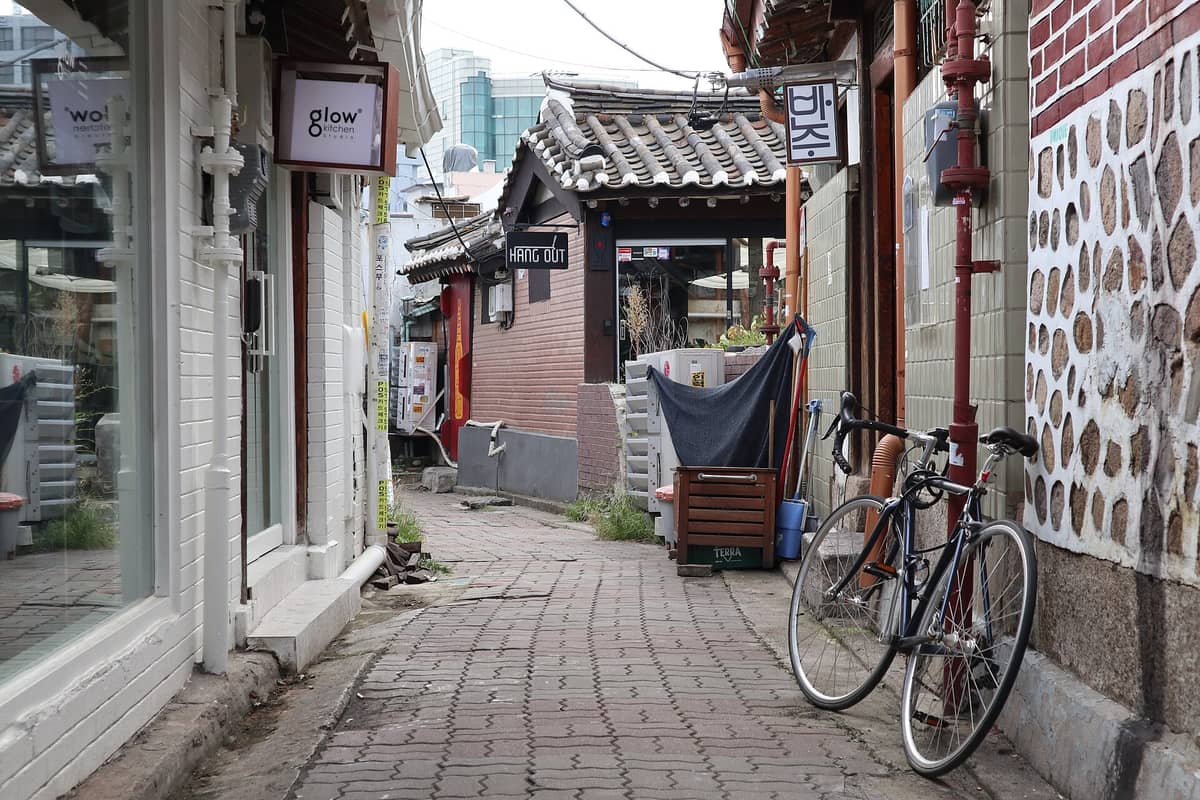
Ikseon-dong Hanok Village is a preserved cluster of traditional Korean hanok houses in the heart of Jongno-gu, occupying roughly 801 metres of narrow alleyways. Unlike Bukchon, which sits on a hillside and functions largely as a residential showcase, Ikseon-dong is flatter, denser, and genuinely occupied by working businesses. Most of the structures date to the 1920s, when the district was developed as one of Seoul's earliest planned housing estates during the Japanese colonial period.
What makes Ikseon-dong distinct is the tension between its architecture and its tenants. The low tiled rooflines, dark timber beams, and stone-paved courtyards now frame specialty coffee bars, Korean fusion restaurants, cocktail lounges, and small boutiques. The result feels less like a museum and more like a neighborhood that decided its old bones were worth keeping.
The Architecture: What You're Actually Looking At
A hanok is a traditional Korean wooden structure built around a central courtyard, with the roof being its most recognizable feature: curved clay tiles that sweep upward at the corners. In Ikseon-dong, the hanok are mostly urban row versions rather than the grander estate-style houses you see in Bukchon. They sit close together, separated by alleys narrow enough that two people walking side by side will brush shoulders with the walls.
The district survived Seoul's waves of demolition largely through neglect followed by later protection. By the 2010s, low rents attracted a first wave of young entrepreneurs who saw the low-slung courtyards as something worth designing around rather than tearing down. The Seoul Metropolitan Government has since formally recognized the area as a hanok preservation zone, listed under Seoul's Hanok Village program.
For architectural context, it helps to visit Bukchon Hanok Village before or after Ikseon-dong. Bukchon's houses are larger, more formal, and more obviously historic. Ikseon-dong's are scrappier and more intimate, and for many visitors that's the more memorable experience.
Tickets & tours
Hand-picked options from our booking partner. Prices are indicative; availability and final rates are confirmed when you complete your booking.
DMZ and Lake Majang Suspension Bridge Tour from Seoul
From 57 €Instant confirmationFree cancellationHalf Day DMZ Tour from Seoul, 3rd Tunnel, Observatory and More
From 47 €Instant confirmationFree cancellationSeoul zombie city exploration game and private tour
From 10 €Instant confirmationFree cancellationLuggage Storage in Seoul
From 7 €Instant confirmationFree cancellation
How the Village Feels at Different Times of Day
In the morning, before noon, Ikseon-dong is one of the quieter corners of central Seoul. Foot traffic is light, delivery workers navigate the alleys on small motorcycles, and a few cafes open early for the weekday crowd. This is the best time to photograph the architecture without people filling every frame, and the soft morning light catches the texture of the tiled rooftops well.
By early afternoon, the lanes fill steadily. On weekends, expect genuine crowds from around 1 PM onward, particularly along the main alley closest to the subway exit. The density can feel significant given how narrow the streets are, and some of the most popular cafes develop queues. The smell of roasted coffee and frying Korean snacks mixes with occasional whiffs of incense from older shopfronts.
The evening shift, from roughly 6 PM onward, changes the character of the village entirely. Fairy lights string across the alleys, the cocktail bars open fully, and the pace slows from sightseeing to socializing. Candles appear on courtyard tables. The tiled rooflines glow faintly against the Seoul skyline. This is genuinely the most atmospheric version of Ikseon-dong, and it's worth planning at least one evening visit.
💡 Local tip
Weekday evenings (Tuesday to Thursday) offer a significantly less crowded experience than weekends, while still catching the full atmosphere of the lit-up alleys.
Eating and Drinking in the Village
Food and drink are the primary reason most visitors linger. The options skew toward specialty coffee, Korean-inflected fusion menus, and craft cocktails rather than traditional Korean cuisine. You'll find a higher concentration of well-designed spaces per square metre here than almost anywhere else in the city: roasted barley lattes served in ceramic cups inside a courtyard; modernist takes on tteok (rice cake) at a narrow counter; natural wine lists in a room with exposed rafters.
Traditional Korean food is not the default here, so if you want authentic Jongno-area dining, the older establishments along the surrounding streets offer more grounded options. Ikseon-dong's culinary identity is creative and photogenic rather than historically rooted.
If you want a deeper dive into traditional food culture in this part of Seoul, Gwangjang MarketIf you want a deeper dive into traditional food culture in this part of Seoul, Insa-dong is a short walk away and offers one of the most authentic street-food experiences in the city, with a very different crowd and atmosphere.
Getting There and Getting Around
Ikseon-dong Hanok Village sits roughly 141 metres from Jongno 3-ga Station Exit 4, served by Subway Lines 1, 3, and 5. From Exit 6, it is approximately a 2-minute walk. The station is one of Seoul's major interchange points, so connections from most parts of the city are straightforward. The T-money card accepted across Seoul's subway and bus system works seamlessly here.
The area around Ikseon-dong is extremely walkable and connects naturally with nearby Jongno destinations. Changdeokgung Palace is a short walk north, and the browsing streets of Insadong are close by to the west. A half-day circuit combining all three is one of the most rewarding ways to spend time in this part of Seoul.
⚠️ What to skip
The alleys in Ikseon-dong are narrow, uneven in places, and not all sections are wheelchair accessible. Official sources do not list specific accessibility facilities for the village. Visitors with mobility considerations should approach cautiously, particularly on weekends when crowds narrow passage further.
Honest Assessment: Is It Worth Your Time?
Ikseon-dong earns its reputation, but with caveats. On a busy Saturday afternoon, the alleys can feel uncomfortably packed, the photography opportunities diminish sharply, and the wait times at popular cafes can eat into whatever relaxed wandering you had in mind. The village spans roughly 801 metres, which means on a crowded day you will cover the main routes in under 30 minutes of walking.
The value is highest for visitors who treat it as an atmosphere destination rather than a sightseeing checklist item. Come in the evening, sit down somewhere with a drink, and let the streetscape do its work. That experience is genuinely good. Come for a quick look between palace visits on a Saturday midday and you may leave underwhelmed.
Visitors traveling with young children may find the evening bar-focused character less suitable, and the narrow alleys with weekend crowds can be difficult with strollers. For a family-oriented traditional neighborhood experience, the hanok streets of Seochon Village offer more space and a quieter pace.
ℹ️ Good to know
The village is open year-round and free to enter at any hour. Individual businesses set their own hours, and some cafes close earlier than the bars. Check specific venues before making a dedicated trip.
Photography Tips
The best light for architectural photography falls in the hour after sunrise and the 30 minutes before dusk. The tiled rooftops photograph well against soft sky, and the compressed alley perspectives reward a slightly wider lens. At night, the warm light from paper lanterns and window candles creates a very different set of compositions, lower contrast and more intimate.
Be thoughtful when photographing interiors: many small businesses actively manage their spaces for social media traffic and may ask you not to photograph guests. Shooting upward at rooflines and alley perspectives from street level rarely causes friction and often produces stronger images than interior shots anyway.
Insider Tips
- The secondary alleys branching off the main lane are significantly less crowded and often contain more interesting independent shops. If the main street feels packed, turn into any side alley and walk further in.
- Several of the courtyard cafes require reservations on weekends, especially for evening seating. Check the venue's social media or Naver reservation page before arriving.
- The area directly around Jongno 3-ga Station has several older pojangmacha (street food tents) operating in the evening. These are worth visiting before or after Ikseon-dong as a contrast to the more designed interiors of the village.
- Ikseon-dong sits within a few minutes walk of Jongmyo Shrine, a UNESCO World Heritage Site that most visitors to the hanok village skip entirely. The contrast between the ancient royal ancestral hall and the trendy village makes for an unusually complete afternoon.
- Rain makes the stone alleys glassy and reflective at night, and the village empties enough that you can photograph without crowds. A light rain on an evening visit is worth embracing rather than avoiding.
Who Is Ikseon-dong Hanok Village For?
- Architecture and design enthusiasts who want to see how traditional Korean structures adapt to contemporary use
- Couples looking for an atmospheric evening out with distinctive bar and cafe settings
- Photographers, particularly those visiting around dusk or after dark
- Travelers combining a Jongno palace circuit with a food and drink stop
- Anyone curious about Seoul's urban preservation story beyond the better-known tourist hanok zones
Nearby Attractions
Other things to see while in Jongno & Bukchon:
- Bukchon Hanok Village
Bukchon Hanok Village (북촌한옥마을) is a preserved residential district of roughly 860 traditional Korean hanok houses in central Seoul, situated between Gyeongbokgung and Changdeokgung palaces. Unlike a museum or theme park, it is a real neighborhood where people still live, which shapes every aspect of visiting it. Entry is free, but access to certain alleys is restricted to protect residents.
- Changdeokgung Palace & Secret Garden
Changdeokgung Palace is the best-preserved of Seoul's five Joseon-era royal palaces, and its rear garden — the Huwon, known as the Secret Garden — remains one of the most atmospheric green spaces in the entire city. Together, they form a UNESCO World Heritage Site that rewards visitors who plan ahead.
- Changgyeonggung Palace
One of Seoul's five grand Joseon-era palaces, Changgyeonggung Palace sits in Jongno-gu and offers a quieter royal grounds experience. With late evening opening hours, low admission, and centuries of layered history, it rewards visitors who arrive without high expectations and leave with quiet satisfaction.
- Gwanghwamun Square
Gwanghwamun Square stretches 40,300 square meters through the center of Seoul, framed by Gyeongbokgung Palace to the north and the distant peaks of Bugaksan beyond. It is free, open 24 hours, and carries more historical weight than most visitors realize on first pass.