Insa-dong: Seoul's Traditional Culture Street Worth Slowing Down For
Stretching roughly 700 meters through Jongno-gu, Insa-dong is Seoul's most concentrated stretch of traditional galleries, antique dealers, calligraphy shops, and tea houses. It's free to explore, car-free on weekends, and far more layered than its reputation as a tourist corridor suggests.
Quick Facts
- Location
- Insa-dong, Jongno-gu, Seoul
- Getting There
- Anguk Station (Line 3) Exit 6 or Jongno 3-ga Station (Lines 1/3/5) Exit 5
- Time Needed
- 1.5 to 3 hours; longer if you browse galleries or stop for tea
- Cost
- Free to enter; individual shops, galleries, and restaurants charge separately
- Best for
- Culture seekers, first-time Seoul visitors, shoppers looking for Korean crafts and antiques
- Official website
- english.visitseoul.net/shopping/Insa-dong/ENP000080
What Insa-dong Actually Is
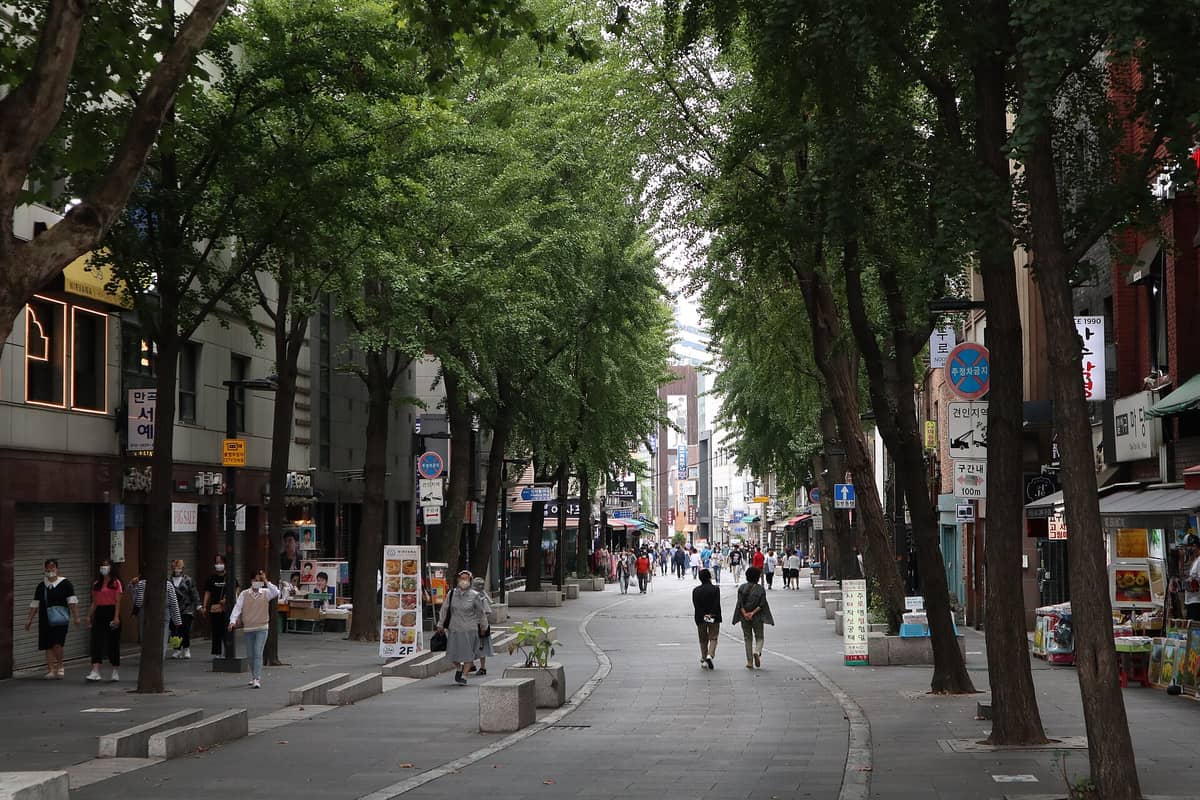
Insa-dong is a neighborhood streetscape in Jongno-gu, not a single ticketed attraction. The main artery, Insadong-gil, runs approximately 700 meters from the 63 Insa-dong end down to 136 Gwanhun-dong, and off it branch narrower alleys packed with everything from antique furniture dealers to contemporary ceramics studios. The area has served as a trading ground for art, antiques, and cultural goods for well over a century.
What sets Insa-dong apart from most shopping districts in Seoul is the density of galleries and traditional craft vendors per block. Alongside souvenir stalls aimed at tourists, you will find dealers in celadon pottery, ink-brush calligraphy supplies, hanji (traditional Korean paper), and vintage scrolls. The mix can be uneven, but the concentration of cultural content is real. Alongside souvenir stalls aimed at tourists, you will find serious dealers in celadon pottery, ink-brush calligraphy supplies, hanji (traditional Korean paper), and vintage scrolls. The mix can be uneven, but the concentration of genuine cultural content is real.
ℹ️ Good to know
The main street is pedestrianized every Saturday from 14:00 to 22:00 and every Sunday from 10:00 to 22:00, when vehicle traffic is banned and the street opens up fully to foot traffic. This is generally the best time to visit for atmosphere, though it does mean larger crowds.
How the Street Changes Through the Day
Arriving on a weekday morning before 10:00 gives you a very different Insa-dong from the one most visitors see. The gallery gates are just opening, shop owners are arranging displays, and the smell of roasting corn and hotteok (sweet stuffed pancakes) begins drifting from the first street stalls. The light at this hour hits the low tiled rooftops of the older buildings at a shallow angle, and the street is quiet enough to actually read the signboards above each shop. If you want photographs without crowds in the frame, this window is worth the early start.
By late morning the tour groups arrive, many of them entering from the Anguk Station end near Bukchon. The corridor from roughly Anguk down to Ssamziegil fills quickly, and the narrower side alleys become the better option for browsing at a reasonable pace. Afternoon on weekends, once the pedestrianization kicks in, sees street performers and occasional cultural demonstrations added to the mix. The energy is higher but the experience is less focused.
Evenings on Insa-dong are underrated. By 19:00 on weekdays many shops have closed, but the tea houses and small restaurants stay open, and the street takes on a quieter, more local character. Some of the courtyard restaurants tucked behind wooden gate facades are best experienced after dark, when the paper lanterns strung between buildings are lit.
Tickets & tours
Hand-picked options from our booking partner. Prices are indicative; availability and final rates are confirmed when you complete your booking.
DMZ and Lake Majang Suspension Bridge Tour from Seoul
From 57 €Instant confirmationFree cancellationHalf Day DMZ Tour from Seoul, 3rd Tunnel, Observatory and More
From 47 €Instant confirmationFree cancellationSeoul zombie city exploration game and private tour
From 10 €Instant confirmationFree cancellationLuggage Storage in Seoul
From 7 €Instant confirmationFree cancellation
What to Look for Beyond the Main Street
The main drag of Insadong-gil is the obvious route, but the real texture of the neighborhood is in its side alleys. Some branches lead toward nearby Jongno heritage districts, while others connect toward neighboring blocks of cafes and independent shops. Spending time in these offshoots is what separates a genuine exploration from a photo-walk.
Ssamziegil, located mid-street, is the most architecturally distinctive spot on Insa-dong. Built around an open courtyard with a spiraling walkway, it houses small independent retailers selling handmade jewelry, stationery, and clothing. It is not subtle in its commercial intent, but the layout is genuinely pleasant. Read more about it in the full . it houses small independent retailers selling handmade jewelry, stationery, and clothing. It is not subtle in its commercial intent, but the layout is genuinely pleasant. Read more about it in the full Ssamziegil guide.
Gallery density on this street is high, with many galleries free to enter and displaying contemporary Korean art alongside traditional ink and ceramic work. They are rarely crowded, staff rarely apply pressure, and browsing is perfectly acceptable. If you have any interest in Korean visual arts, budget at least 30 minutes for two or three of them. Most galleries are free to enter and display contemporary Korean art alongside traditional ink and ceramic work. They are rarely crowded, staff rarely apply pressure, and browsing is perfectly acceptable. If you have any interest in Korean visual arts, budget at least 30 minutes for two or three of them.
For context on how Insa-dong fits into Seoul's broader traditional culture landscape, the hanok villages guide covers the architectural and historical connections between this area, Bukchon, and Seochon in useful depth.
The Food and Tea Scene
Insa-dong has an established reputation for traditional Korean sweets and tea, and that reputation is largely earned. Traditional rice cakes, sweets, and Korean teas are sold from small storefronts throughout the street. Street food is concentrated near the Tapgol Park end of the corridor, where vendors typically set up from mid-morning onward.
The tea houses here are some of the few in Seoul where the traditional concept of a tea room, a low wooden table, ceramic cups, and a list of Korean herbal and fermented teas rather than espresso, is still the main offering. Prices are moderate. Queues form at the most photographed spots, but alternatives one block off the main street are often just as good and much less crowded.
💡 Local tip
If you want a proper traditional Korean meal rather than street snacks, look for the restaurants tucked inside courtyard buildings accessed through unmarked wooden gates. Many serve hansik (Korean table meals) with multiple side dishes. The less visible the entrance, the more likely you are eating somewhere that still caters to a local clientele.
Historical and Cultural Context
Insa-dong's identity as an art and antiques district took shape through the 20th century, when dealers in Korean cultural goods began concentrating along this corridor. During the Japanese colonial period (1910 to 1945), the area became a place where Korean cultural artifacts and art were traded, Insa-dong's identity as an art and antiques district took shape through the 20th century, when dealers in Korean cultural goods began concentrating along this corridor. During the Japanese colonial period (1910 to 1945), the area became a place where Korean cultural artifacts and art were traded. After independence and through the decades of rapid urbanization, Insa-dong remained one of the few central Seoul neighborhoods where traditional Korean aesthetic culture stayed commercially viable alongside modern development.
The street sits within walking distance of several of Seoul's most significant historical sites. Gyeongbokgung Palace is roughly 10 minutes north on foot. Jogyesa Temple, the headquarters of the Jogye Order of Korean Buddhism, is less than five minutes' walk west and makes a natural pairing with any Insa-dong visit. Tapgol Park, at the southern end of the street, is the site of the March 1st Independence Movement declaration in 1919 and contains the oldest surviving pagoda in Seoul.
The area's designation as a cultural preservation zone by the Seoul city government has slowed but not entirely stopped the encroachment of chain stores. Certain building modification rules apply. The result is a streetscape that retains more visual coherence than most central Seoul commercial areas, even if the retail mix inside has grown more tourist-oriented over the past two decades. certain building modification rules apply. The result is a streetscape that retains more visual coherence than most central Seoul commercial areas, even if the retail mix inside has grown more tourist-oriented over the past two decades.
Getting There and Getting Around
The most straightforward subway approach is Anguk Station on Line 3, Exit 6, which deposits you at the northern end of the street near Bukchon. From here you walk south through the full length of Insadong-gil toward Tapgol Park. Alternatively, Jongno 3-ga Station, served by Lines 1, 3, and 5, Exit 5, brings you to the southern end. Jonggak Station on Line 1, Exit 3, is also within reasonable walking distance., which deposits you at the northern end of the street near Bukchon. From here you walk south through the full length of Insadong-gil toward Tapgol Park. Alternatively, Jongno 3-ga Station, served by Lines 1, 3, and 5, Exit 5, brings you to the southern end. Jonggak Station on Line 1, Exit 3, is also within reasonable walking distance.
If you are combining Insa-dong with a broader Jongno itinerary, the 3-day Seoul itinerary places this neighborhood logically within a morning that also takes in Gyeongbokgung Palace and Bukchon Hanok Village before heading south.
The district is almost entirely flat and navigable on foot. Wheelchair accessibility on the main street is reasonable, particularly during weekend pedestrianization, though some side alleys have uneven paving or steps. Shops and galleries vary considerably in their interior accessibility.
⚠️ What to skip
On weekend afternoons in spring and autumn, the pedestrianized main street can become genuinely difficult to move through in sections near Ssamziegil. If you have mobility concerns or simply dislike crowds, a weekday morning visit is a notably more comfortable experience.
Honest Assessment: Who This Is For and Who Should Skip It
Insa-dong rewards people who like to browse without a fixed agenda. If you enjoy walking into small galleries with no obligation to buy, handling ceramics to check the weight of them, or sitting in a tea house for 45 minutes with no particular destination afterward, this street delivers. First-time Seoul visitors consistently find it a useful orientation point for traditional Korean aesthetic culture before visiting the palaces or temples nearby.
It is fair to note that the street's reputation has attracted a significant volume of souvenir shops selling goods that have little connection to Korean craft tradition. T-shirts, K-pop merchandise, and generic snack packaging share space with the genuine dealers. Filtering this out requires some attention, but it is not difficult. The more superficial layer is visible and easy to walk past.
Visitors primarily interested in contemporary Korean culture, design, or youth street life will likely find more of interest in other neighborhoods. Seongsu and Hongdae serve those interests more directly. Insa-dong is also not the right destination if you are focused on food variety: for that, Gwangjang Market offers far greater depth and is only a short distance east.
Insider Tips
- The best small galleries are usually on upper floors reached by narrow staircases. Ground-floor commercial space is expensive, so some of the most interesting exhibitors are one or two floors up with no street-level signage. Look for handwritten boards at ground level.
- Hanji (traditional Korean paper) shops on Insa-dong sell sheets, notebooks, and wrapping paper that pack flat and make for one of the most distinctive and lightweight souvenirs you can find in Seoul. The better shops let you feel the texture before buying.
- The weekend pedestrianization transforms the street, but arriving at the very start of the Sunday window (10:00) rather than the peak afternoon hours means you get the car-free open space without the crowd concentration that builds from noon onward.
- Several of the courtyard buildings have inner gardens accessible through narrow passages. Locals use these as cut-throughs. Following a Korean-looking local who turns off the main street often leads somewhere worth finding.
- If visiting in autumn, Insa-dong is within a five-minute walk of Jogyesa Temple, which hosts lantern displays and cultural events around the Buddhist calendar. Checking the temple schedule before your visit can add a significant element to an Insa-dong day.
Who Is Insa-dong For?
- First-time Seoul visitors wanting an accessible introduction to traditional Korean art and craft culture
- Shoppers looking for ceramics, hanji, calligraphy supplies, or antique Korean goods rather than mass-market items
- Travelers on a budget who want cultural content without entrance fees
- Anyone combining a Jongno cultural day with Gyeongbokgung Palace, Bukchon Hanok Village, or Jogyesa Temple
- Photography-focused visitors who want architectural texture and street detail over skyline shots
Nearby Attractions
Other things to see while in Insadong & Seochon:
- Seochon Village
Seochon Village occupies the narrow alleys west of Gyeongbokgung Palace in Jongno-gu, where Joseon-era hanok architecture survives alongside independent cafes, small galleries, and artist studios. The neighborhood is free to enter, walkable in two to three hours, and noticeably calmer than the tourist corridors on the palace's eastern flank.
- Ssamziegil
Ssamziegil (쌈지길) is a free-entry craft and culture complex in the heart of Insa-dong, built around an open spiral walkway that winds past independent boutiques, ceramic studios, and Korean artisan shops. Opened in 2004, it offers a genuinely different shopping experience from Seoul's malls and department stores.
- Tongin Market
Tongin Market is a traditional neighborhood market in Jongno-gu where visitors exchange Korean won for vintage brass coins and use them to buy small dishes from stalls across the market. It sits at the foot of Inwangsan Mountain, minutes from Gyeongbokgung Palace, and offers one of the most tactile and genuinely local food experiences in central Seoul.