Hanok Villages in Seoul: A Guide to Traditional Korean Architecture
Seoul preserves several distinct hanok districts, each with its own character. This guide covers the main options, practical logistics, seasonal crowd patterns, and a clear picture of what to expect before you visit.
Plan and book this trip
Tools from our partner Travelpayouts help you compare flights and hotels. If you book through them, we may earn a commission at no extra cost to you.
Flights
Hotels map
TL;DR
- Bukchon Hanok Village is Seoul's most iconic hanok district, but it's a working residential neighborhood: tourist access to restricted alleys is allowed 10:00–17:00 and prohibited outside those hours. Read the rules before you go.
- There are at least four hanok areas worth knowing in Seoul: Bukchon, Namsangol, Seochon, and Eunpyeong. They are very different experiences.
- Weekday mornings are significantly quieter than weekend afternoons at Bukchon. Timing your visit correctly changes the experience entirely.
- If you want cultural programming, performances, and costumed guides rather than a walk through a real neighborhood, Namsangol Hanok Village is the more curated option.
- Combine a hanok visit with nearby palaces: Gyeongbokgung Palace and Changdeokgung Palace bracket Bukchon on either side.
What Is a Hanok, and Why Does It Matter in Seoul?
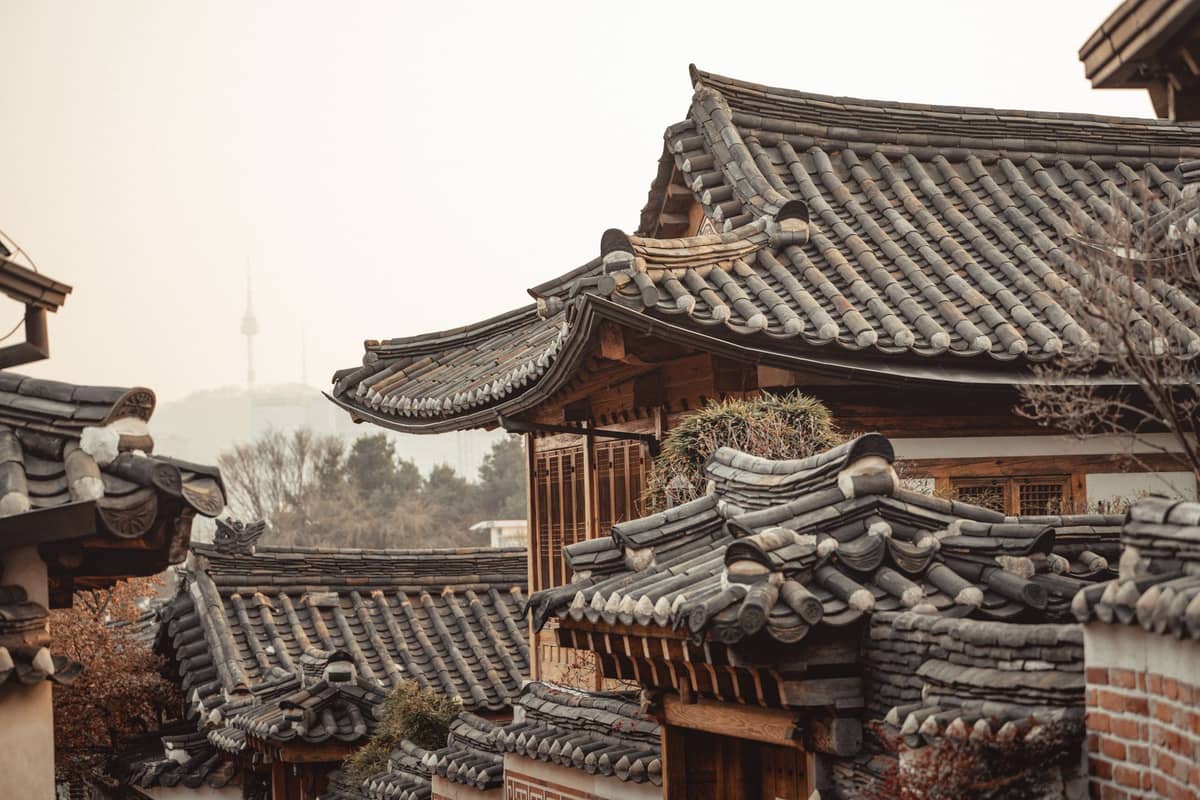
A hanok (한옥) is a traditional Korean house built using a set of design principles developed over centuries. The defining features are a curved, overhanging tile roof (giwa), wooden structural frames, and an ondol underfloor heating system that draws warm air beneath the floor. Walls are often made from hanji (Korean paper) stretched over wooden lattice frames, and the layout separates inner and outer courtyards by gender and social role. These are not just aesthetically distinctive buildings. They represent a specific philosophy about how heat, light, and space interact with the Korean climate.
Seoul's rapid modernization through the second half of the 20th century demolished the majority of its historic hanok stock. What remains is largely concentrated in a handful of protected zones, most of them in Jongno-gu, the historic northern core of the city. Visiting these areas gives you direct contact with an urban fabric that largely disappeared elsewhere. It also explains why these neighborhoods carry cultural weight well beyond their square footage.
ℹ️ Good to know
The term 'hanok village' (한옥마을) can be misleading. In Seoul, it refers to multiple distinct areas ranging from open-air museums to functioning residential streets. Knowing which type you're visiting shapes the experience entirely.
Bukchon Hanok Village: Seoul's Most Famous Hanok District
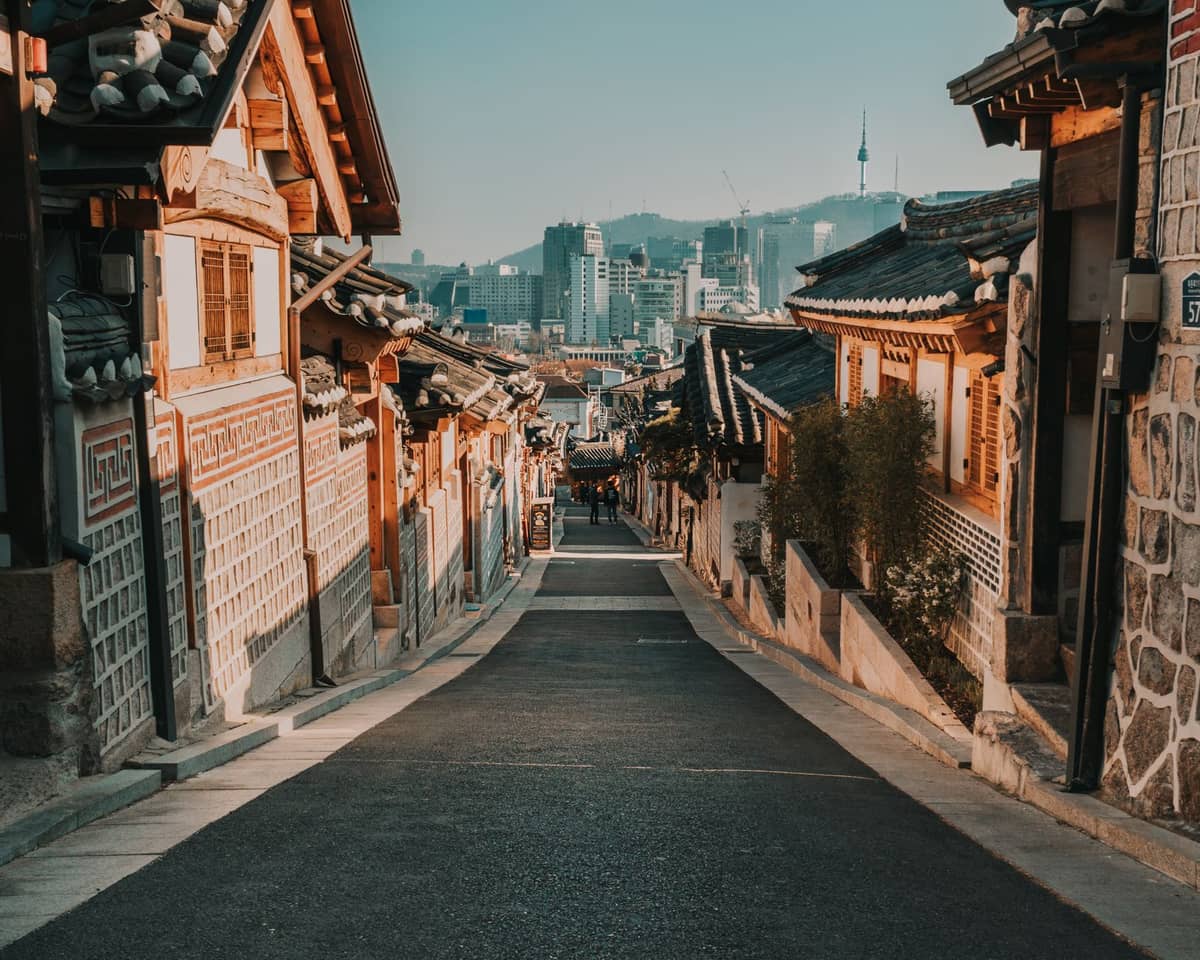
Bukchon sits in Jongno-gu between two of Seoul's most significant royal palaces: Gyeongbokgung Palace to the west and Changdeokgung Palace to the east. The name translates roughly to 'northern village,' a reference to its position north of Cheonggyecheon Stream. During the Joseon Dynasty (1392–1897), this area was home to high-ranking government officials, and the density of quality hanok here reflects that elevated social status.
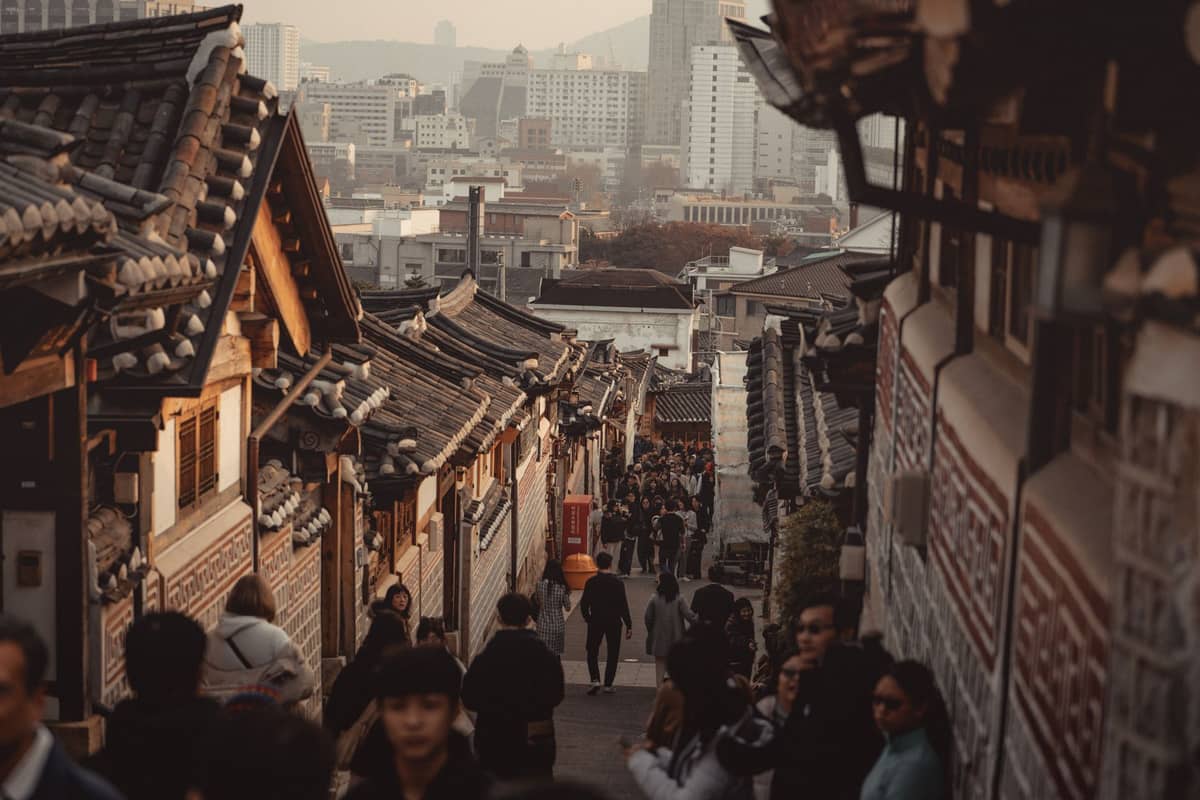
The most-photographed spot is Gahoe-dong, specifically a narrow alley with a long descending row of tile rooftops visible from a single elevated viewpoint. This image is reproduced on countless travel posts, which contributes to the crowd problem: on weekend afternoons, visitor density at this particular spot becomes genuinely unpleasant, both for tourists trying to take photos and for residents trying to go about daily life. Seoul City has responded by implementing time-based restrictions in certain sections of Bukchon, with entry prohibited in restricted areas outside official hours of 10:00 to 17:00.
⚠️ What to skip
Bukchon is a residential neighborhood, not a theme park. Residents have formally complained about tourist noise, photography into private courtyards, and after-hours visitors. Keep your voice down, do not enter private gates, and follow posted signs. Ignoring these norms is both disrespectful and counterproductive to the preservation efforts that keep the area open to visitors at all.
To reach Bukchon, take Seoul Metro Line 3 to Anguk Station (안국역) and use a nearby exit. From there, it is about a 10-minute uphill walk to the main village area. The terrain is hilly, so wear appropriate footwear. Entry to the streets is free. The best strategy is to arrive on a weekday morning before 10:30, when crowds are at their thinnest and the quality of the light for photography is also better. The terrain is hilly, so wear appropriate footwear. The walk itself passes several small galleries, tea houses, and the edge of Changdeokgung's outer walls. Entry to the streets is free. The best strategy is to arrive on a weekday morning before 10:30, when crowds are at their thinnest and the quality of the light for photography is also better.
- Best time to visit Weekday mornings, especially before 10:30. Autumn (September to November) offers comfortable temperatures and falling ginkgo leaves that contrast well with the dark roof tiles.
- Crowd level Weekend afternoons from spring through autumn are extremely crowded. The Gahoe-dong photo alley becomes near-impassable at peak times.
- Getting there Anguk Station (Line 3), Exit 2. About 10 minutes on foot uphill.
- Cost Free to walk the streets. Some individual cafes, galleries, or hanok accommodations inside the village charge separately.
- Restricted hours Entry to restricted zones is limited to 10:00–17:00. Check current signage on arrival.
Namsangol Hanok Village: Curated Culture South of the Mountain
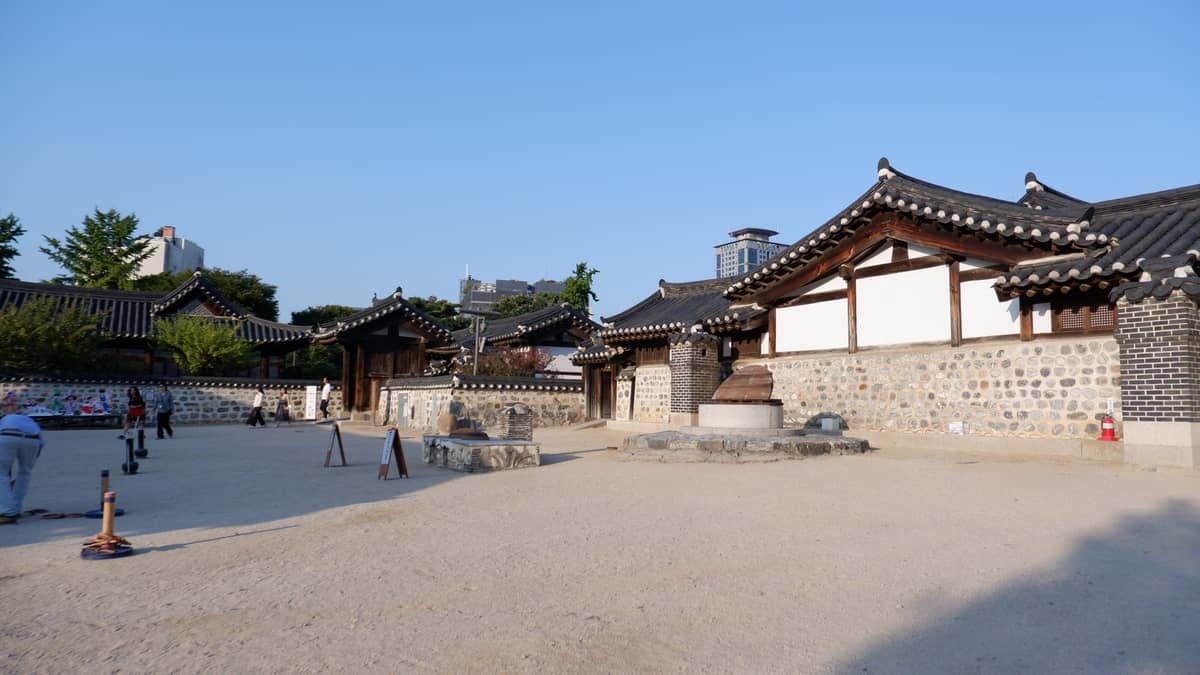
Namsangol Hanok Village opened in 1998 as a purpose-built cultural preservation site, making it a fundamentally different experience from Bukchon. Located in Jung-gu at the northern foot of Namsan Mountain, the complex contains five restored hanok relocated from elsewhere in Seoul, a traditional garden, a performance pavilion, and a time capsule plaza where a millennium capsule was buried in 1994 to be opened in 2394. Nobody lives here. It is an open-air museum designed for public education and cultural events.
This makes Namsangol more accessible and less fraught than Bukchon. You can walk freely through the interiors of some structures, attend scheduled cultural performances, and see how different social classes lived based on house size and courtyard layout. It pairs well with a visit to Namsan Seoul Tower directly above, or with the Cheonggyecheon Stream a short walk north. The nearest subway station is Chungmuro (Lines 3 and 4).
💡 Local tip
Namsangol hosts regular cultural programming including traditional music performances and craft demonstrations, particularly on weekends and public holidays. Check the official Seoul tourism website for the current schedule before your visit, as times vary by season.
Seochon and Ikseon-dong: The Neighborhoods Worth Comparing
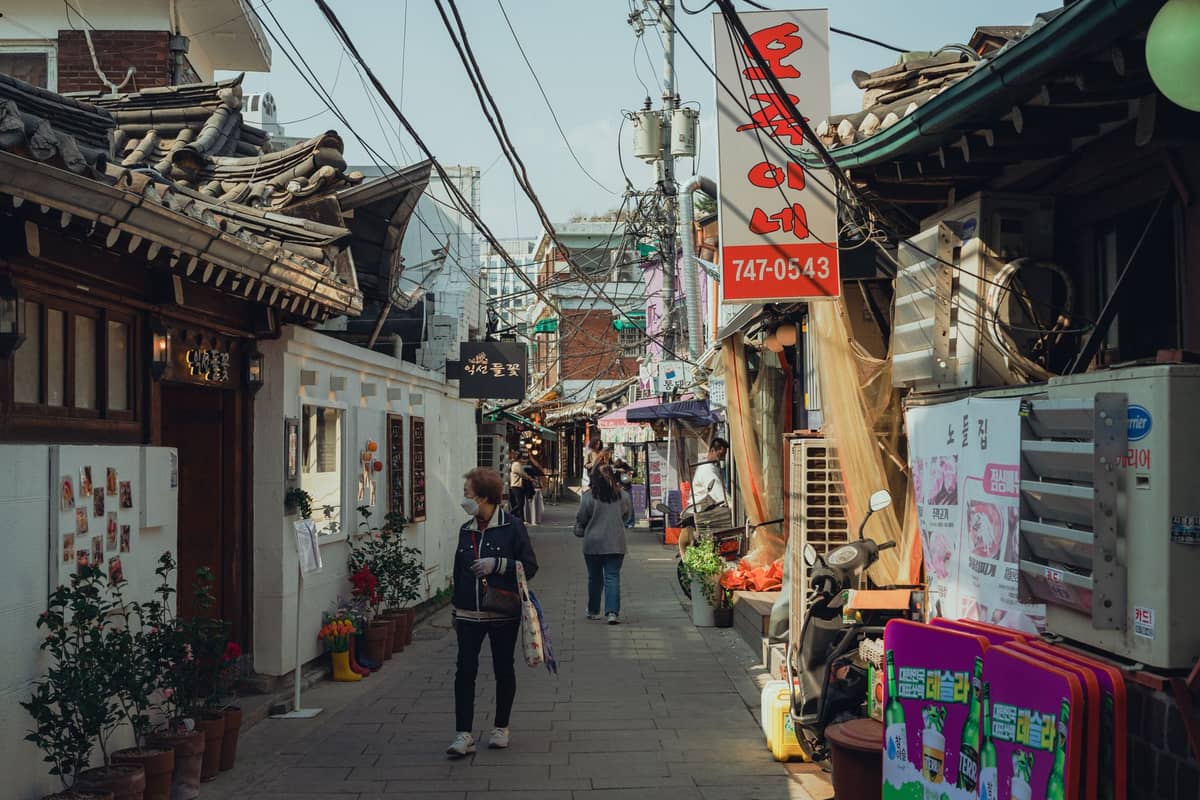
Seochon (서촌, 'western village') sits immediately west of Gyeongbokgung Palace and offers a quieter, more genuinely inhabited hanok experience than Bukchon. The streets are narrower and less mapped in tourist guides, which works in your favor. Seochon Village has a higher concentration of indie cafes, independent bookshops, and small galleries occupying hanok interiors, which means the traditional architecture exists alongside creative businesses rather than souvenir shops. It attracts a local Seoul crowd alongside tourists, and the residential character feels more intact.
Ikseon-dong (익선동) is technically a hanok alley district in Jongno-gu rather than a village, but it deserves mention because of how thoroughly it has been commercialized. The low-rise hanok structures here have been converted into bars, fusion restaurants, and photo-concept cafes targeting the Instagram generation. It has its own appeal, and the food and drink quality is genuinely good, but if you arrive expecting traditional architecture in a heritage context, you will find branding and cocktails instead. It is close to Ikseon-dong Hanok Village and worth an evening visit for those who want the hanok aesthetic with a more contemporary social atmosphere.
Eunpyeong Hanok Village (은평한옥마을) in the northwestern part of Seoul is newer and less frequently covered in English-language travel content. Unlike Bukchon or Seochon, it was purpose-built in the 2010s as a contemporary hanok residential district rather than preserved from existing stock. The result is architecturally interesting: modern hanok design principles applied to new construction, with mountain views toward Bukhansan. It is not a tourist attraction in the conventional sense, but it shows how the hanok tradition continues as a living architectural form rather than just a museum piece.
Visiting Hanok Areas Practically: Logistics and Timing
All of Seoul's main hanok areas sit within the well-served northern and central districts of the city. The Seoul Metropolitan Subway covers them reliably: Anguk Station (Line 3) for Bukchon and Seochon, Chungmuro Station (Lines 3/4) for Namsangol, and Jongno 3-ga (Lines 1, 3, 5) for Ikseon-dong. For a full overview of navigating the city, the getting around Seoul guide covers subway and bus logistics in detail.
Spring (April to May) and autumn (September to October) are peak seasons for hanok visits, with crowds significantly higher than in winter. That said, winter visits to Bukchon are underrated: snow on tile rooftops and fewer other tourists produce far better photography conditions and a more reflective atmosphere. Summer visits mean high humidity and intense heat in the unshaded alleys; bring water. The best time to visit Seoul breaks down seasonal conditions in full.
- Wear comfortable, closed-toe walking shoes. Bukchon involves significant uphill walking on uneven stone paths.
- A T-money card loaded with subway credit makes transport between sites straightforward and cheap.
- Most cafes and small shops in hanok districts accept card payment, but some traditional tea houses remain cash-preferred.
- Photography: shooting from public alleys is acceptable. Pointing a camera through a private gate or into a courtyard is not.
- Mobile data or downloaded offline maps are useful; Wi-Fi is not universal in the residential alleys.
For visitors interested in wearing hanbok while exploring, the palaces and Bukchon are the most natural pairing. Several rental shops operate near Anguk Station and Gyeongbokgung. The hanbok experience guide covers what to expect from rental shops, pricing, and where hanbok wearers get free or discounted palace entry.
What to Combine with a Hanok Visit
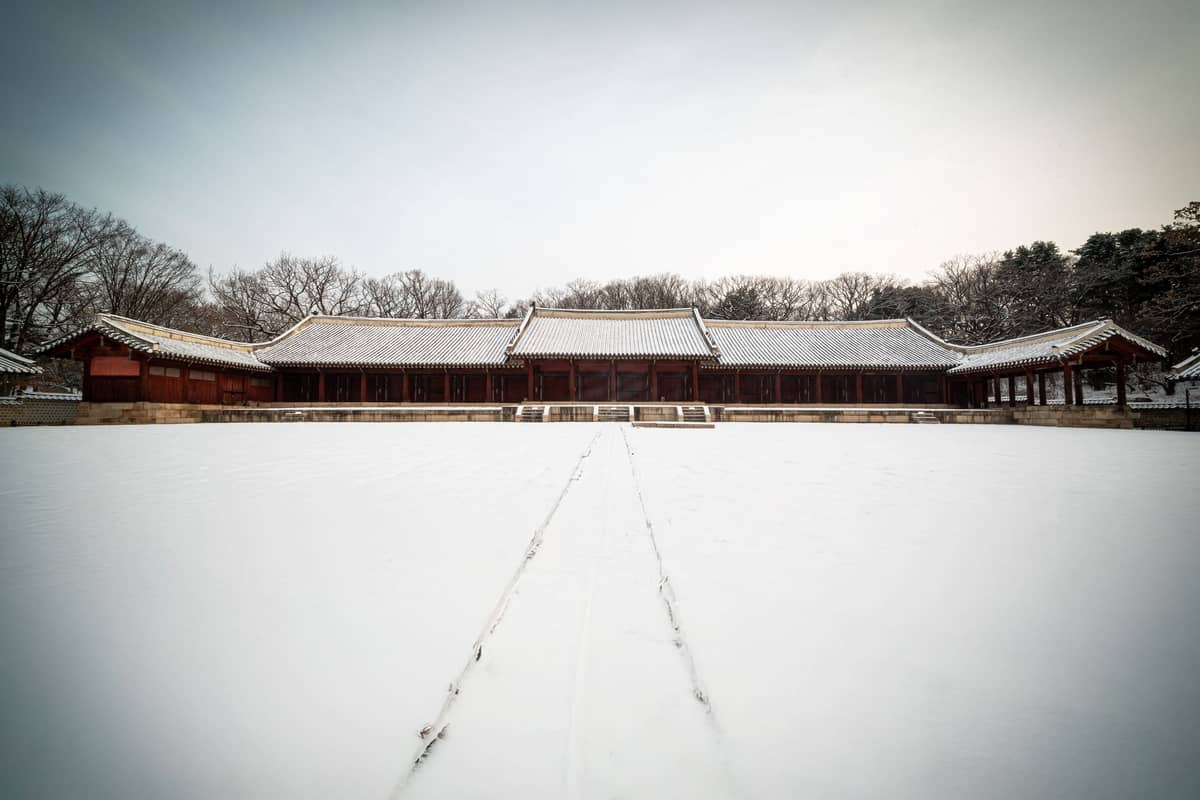
The Jongno-gu cluster of hanok areas sits within walking distance of several major Seoul attractions. Jongmyo Shrine is a 15-minute walk from Bukchon and provides direct historical context: it is the royal ancestral shrine of the Joseon Dynasty and one of the best-preserved Confucian ceremonial complexes in East Asia. Gyeongbokgung directly anchors the western edge of Bukchon and can absorb two to three hours on its own.
Insadong, a short walk south of Bukchon, offers traditional crafts, tea, and galleries in a more commercial but culturally oriented environment. The area connects naturally into a full northern Seoul day that includes Insa-dong galleries, the hanok alleys, and the palaces. If you are building a multi-day itinerary, the 3-day Seoul itinerary allocates a full day to this northern district.
✨ Pro tip
The Bukchon Hanok Village Information Center (inside the village near Gahoe-dong) offers free self-guided walking route maps in English. These mark the eight official viewpoints across the village, which is more useful than trying to navigate from generic tourist maps that emphasize only one or two spots.
FAQ
Is Bukchon Hanok Village free to visit?
Walking the streets and alleys of Bukchon is free. The village is a public residential area, so there is no entrance fee. Individual hanok cafes, galleries, or guesthouses inside the village charge separately for their services. Note that certain restricted areas have access hours of 10:00 to 17:00; entry outside these hours is prohibited in those zones.
What is the difference between Bukchon and Namsangol Hanok Village?
Bukchon is a functioning residential neighborhood where people live in traditional houses. It can be walked through on public streets, but visitors are expected to respect residents' privacy and follow noise restrictions. Namsangol is an open-air museum with five restored hanok on a landscaped site in Jung-gu. Nobody lives there, and it offers more structured cultural programming, making it easier to explore without concerns about intruding on residents.
When is the best time to visit Bukchon Hanok Village to avoid crowds?
Weekday mornings before 10:30 are significantly less crowded than weekend afternoons. Spring and autumn weekends see the highest visitor numbers. If you visit in winter, you will find far fewer tourists, and snow on the tile rooftops makes for memorable photography. The trade-off is colder temperatures, often near or below 0°C.
How much time do I need at Bukchon Hanok Village?
A focused walk through the main Gahoe-dong area takes around 45 minutes to an hour. If you explore the full eight-viewpoint walking route, stop for tea, and browse a gallery or two, plan for two to three hours. Combining it with Gyeongbokgung Palace or Changdeokgung on the same day is very manageable.
Are there other hanok villages in Seoul besides Bukchon?
Yes. Seoul has several hanok districts with different characters. Seochon, west of Gyeongbokgung, is quieter and more residential. Ikseon-dong is a converted hanok alley with bars and restaurants, better suited to evenings than cultural exploration. Eunpyeong Hanok Village in northwestern Seoul is a newer purpose-built hanok residential area offering contemporary hanok architecture with mountain views. Namsangol is the main open-air museum option near Namsan Mountain.