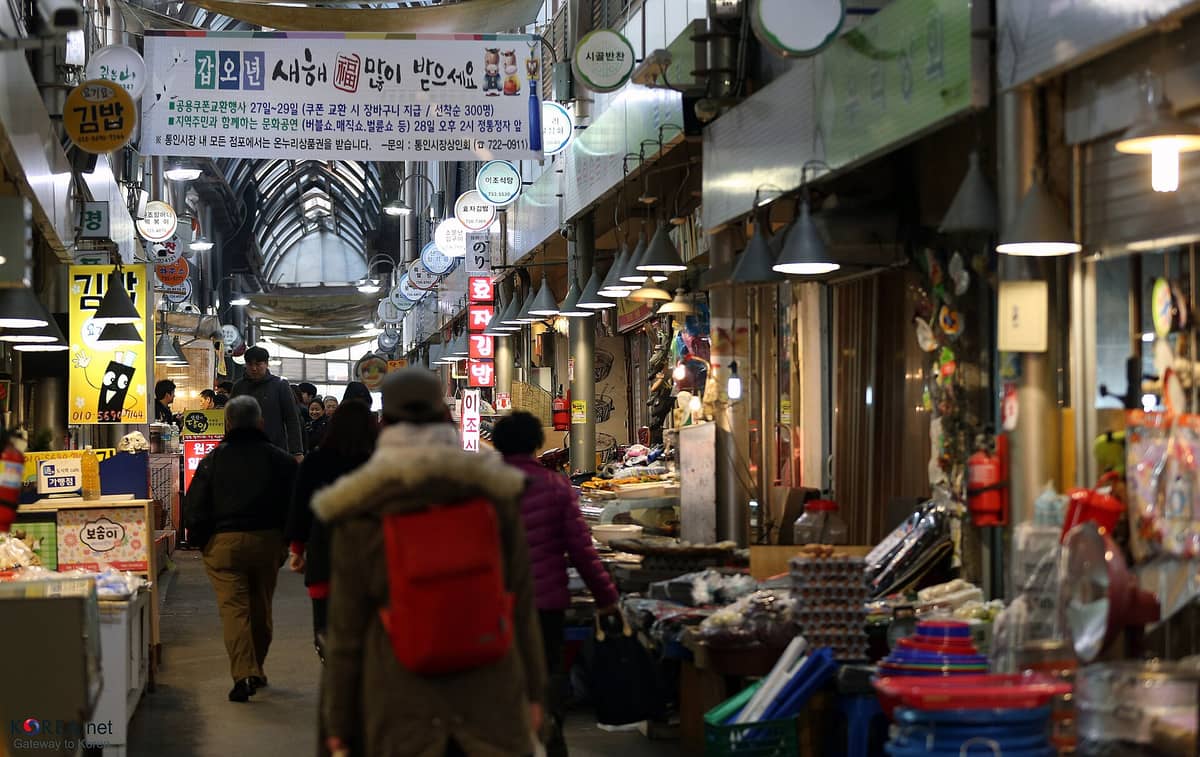
Insadong and Seochon sit at the cultural heart of Seoul's historic Jongno-gu district, where antique shops and calligraphy galleries line narrow lanes just minutes from the city's greatest royal palaces. Insadong draws visitors with its well-known craft strip and temple proximity, while Seochon rewards those willing to explore its quieter alleys at the foot of Inwangsan mountain.
Insadong and Seochon occupy the historic core of Jongno-gu, offering a concentration of traditional Korean culture, royal palace access, and independent café streets that no other part of Seoul quite replicates. Where most of the city races forward, these two neighborhoods have held on to older rhythms, older materials, and older ways of spending an afternoon.
Orientation
Both neighborhoods sit in Jongno-gu, Seoul's historic northern district, roughly in the center of the city's old walled core. Insadong is the more easterly of the two: its spine is Insadong-gil, a roughly 700-meter pedestrian-friendly street running between Jongno to the south and the edge of Bukchon to the north. The area is bounded to the west by Jogyesa Temple and Gwanghwamun Plaza, and to the east by Donhwamun-ro, the broad boulevard leading toward Changdeokgung. The whole strip is compact enough to walk end to end in under fifteen minutes.
Seochon, which translates loosely as 'west village,' sits on the opposite side of Gyeongbokgung Palace. Its eastern boundary is the palace's western wall, its western boundary is the slopes of Inwangsan mountain, its southern edge is Sajikdan-ap-gil (also known as Sajik-ro 8-gil), and it stretches north toward Changuimun Gate and the ridgeline of Bugaksan. The two neighborhoods are only about a 15-minute walk from each other — cut through or around the palace grounds, or take the short walk along Sajik-ro.
Together they form a natural pairing for a full day of exploration. Insadong is the more overtly touristic of the two, with higher foot traffic and a main street that fills quickly on weekends. Seochon is quieter, more residential, and rewards slower movement. Understanding this difference helps you plan your time: do Insadong on a weekday morning, and save Seochon for the afternoon when its cafés are at their most relaxed.
Character & Atmosphere
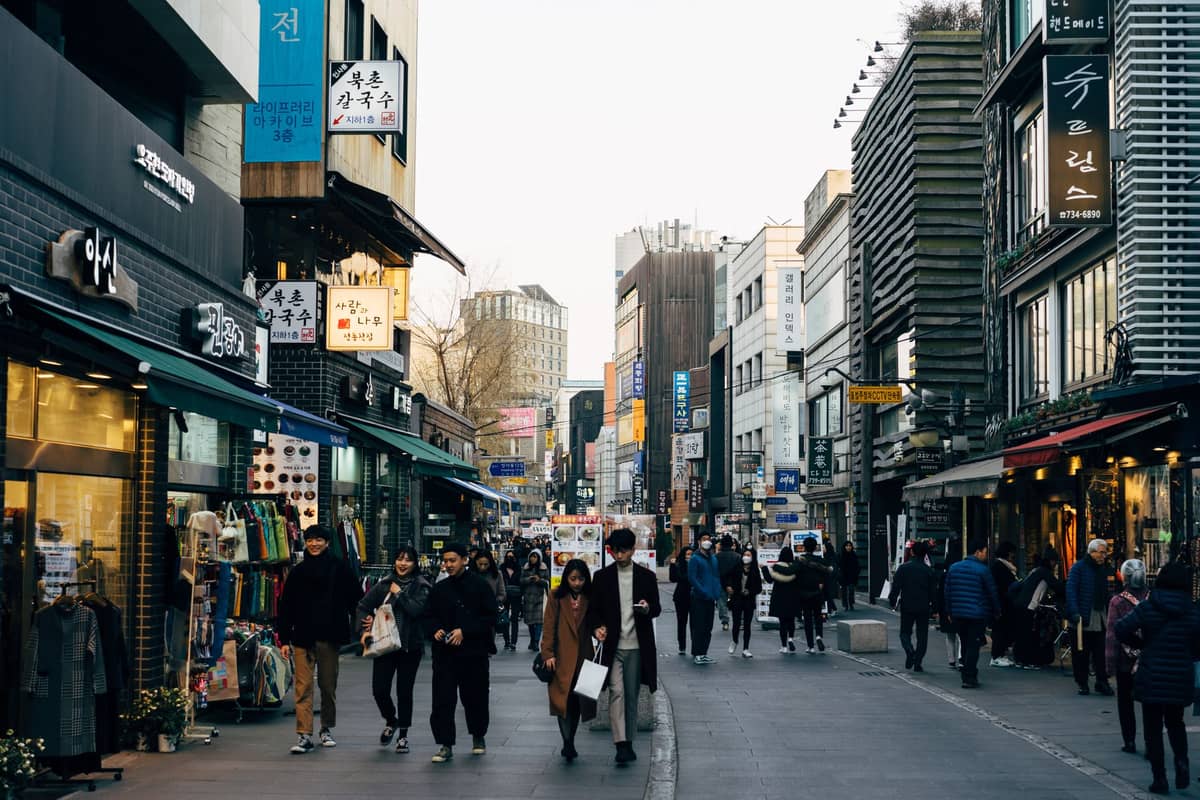
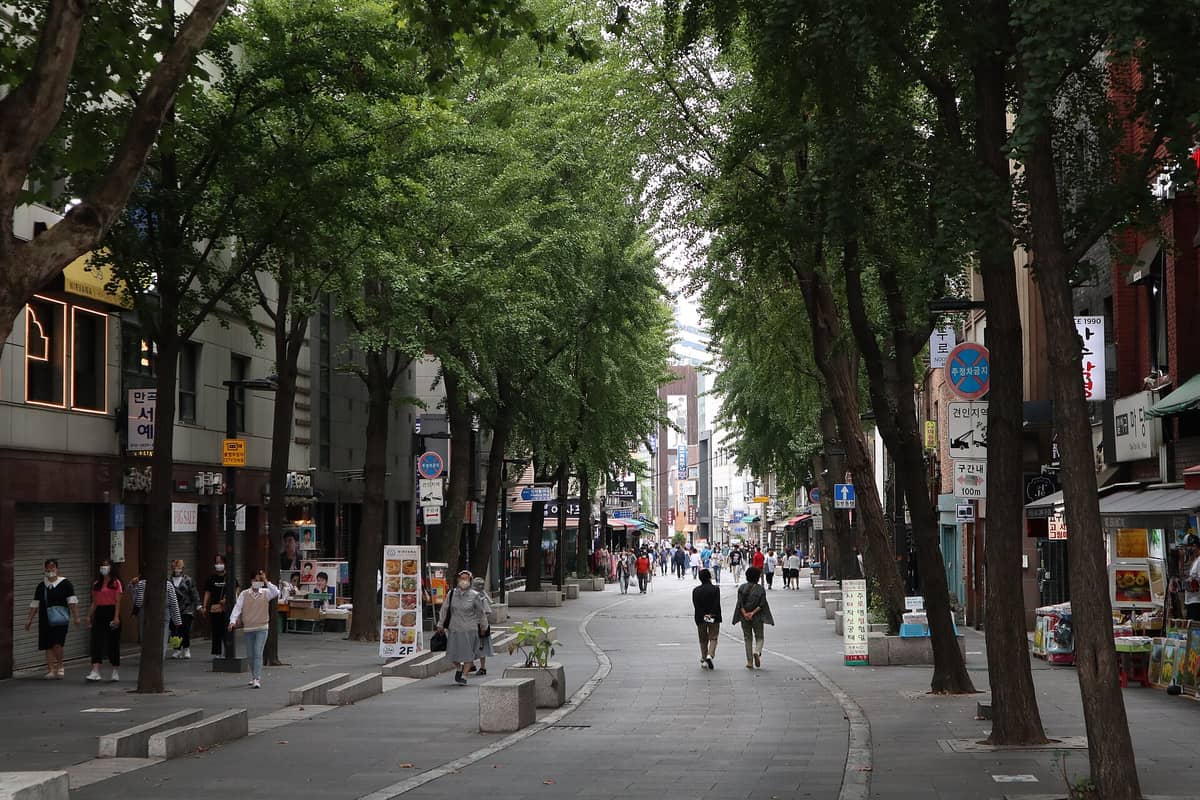
On a weekday morning, Insadong-gil has a particular calm that its afternoon crowds quickly erase. The art supply shops open their shutters around nine, the tea houses set out their wooden signs, and the occasional gallery owner sweeps the pavement in front of lantern-lit entrances. The street is paved with light-colored stone that reflects cool morning light, and the low-rise shopfronts — most only two or three stories, many in restored hanok style — give the whole strip an unusual sense of horizontal openness for central Seoul.
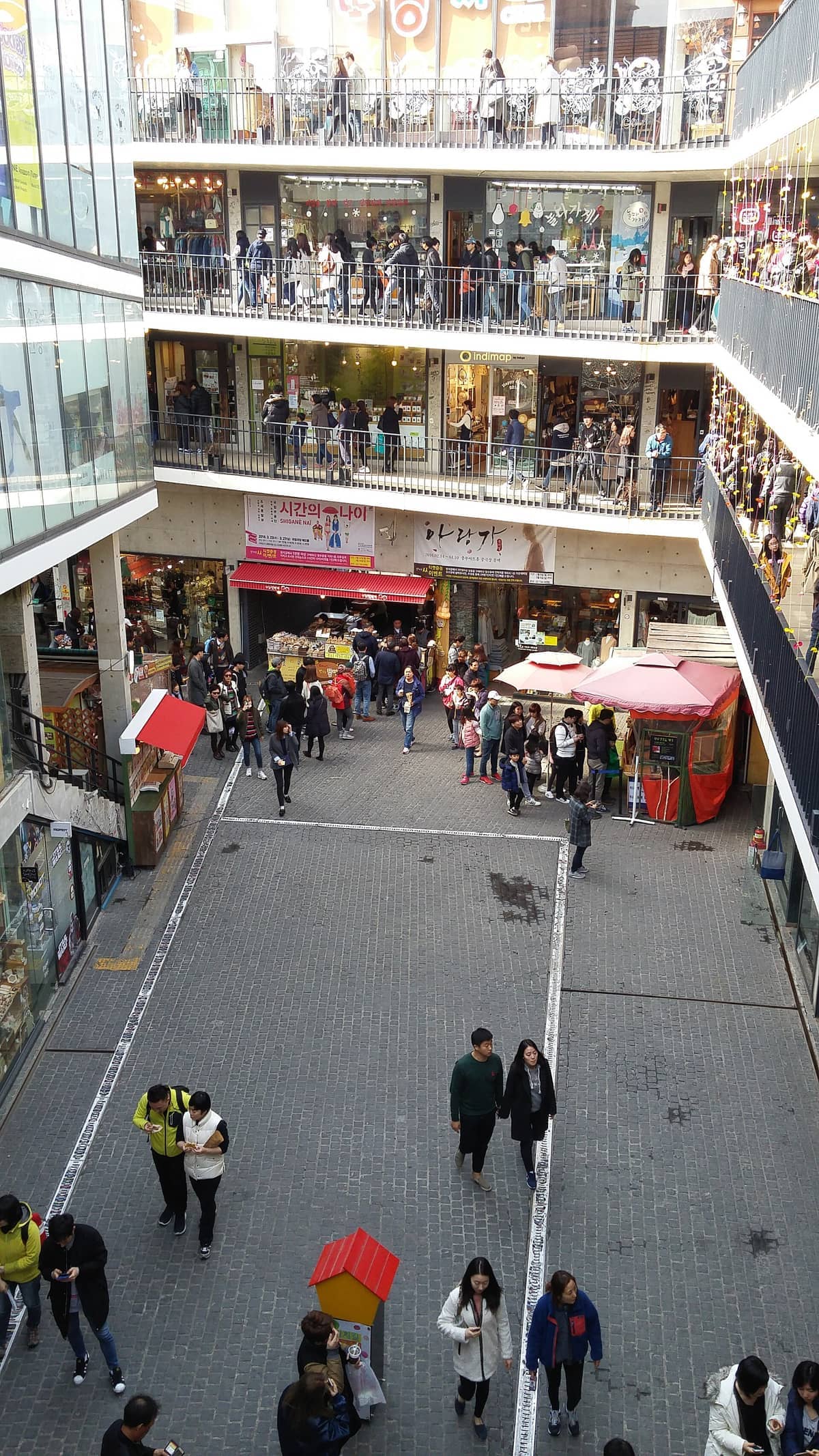
By midday, Insadong-gil is crowded, particularly on weekends and during cherry blossom season in April. The souvenir shops selling hanji paper goods, traditional pottery, and name-stamp carvings attract both Korean and international visitors, and the narrow alleys branching off the main street — leading to courtyards like Ssamziegil, a spiral-courtyarded shopping complex opened in 2004 — become genuinely congested. This is peak Insadong, simultaneously its most lively and its most commercial.
After dark, the mood shifts. Many of the souvenir shops close by seven or eight in the evening, but the tea houses and smaller restaurants stay open later, and the streets take on a quieter, lantern-lit quality. It is not a nightlife district in the way that Hongdae or Itaewon are — see the nightlife guide for Seoul if that's your priority — but it is a pleasant place to walk after dinner.
Seochon operates at a different register entirely. The streets here are narrower, many of them following the old irregular lot patterns of a neighborhood that has been continuously inhabited for centuries. Around Jahamun-ro and its side alleys, independent bookshops, single-origin coffee roasters, and small galleries occupy converted low-rise buildings. There is genuine residential life here: families, older residents, students from nearby universities. The presence of Seochon Village as a recognized cultural zone has brought more visitors in recent years, but the neighborhood has not yet tipped into the kind of saturation visible on Insadong-gil on a Saturday afternoon.
In autumn, both neighborhoods benefit from the foliage on the surrounding hillsides. Inwangsan's slopes above Seochon turn ochre and rust from mid-October, and the palace grounds adjacent to both areas look their best in the long amber light of late afternoon. Spring brings the opposite palette: pale pink and white blossom from cherry trees along the palace walls and in Sajik Park, which sits on Seochon's southern edge.
What to See & Do
The single most obvious starting point for any visit is Gyeongbokgung Palace, which anchors both neighborhoods and is reachable on foot from either. The palace is Seoul's largest and most visited royal complex, and the changing of the guard ceremony at Gwanghwamun Gate — the southern entrance — runs at regular intervals during the day. If you have more time for the palace circuit, Seoul's palaces guide covers the full set, including Changdeokgung and Deoksugung, all of which are within reasonable walking distance.
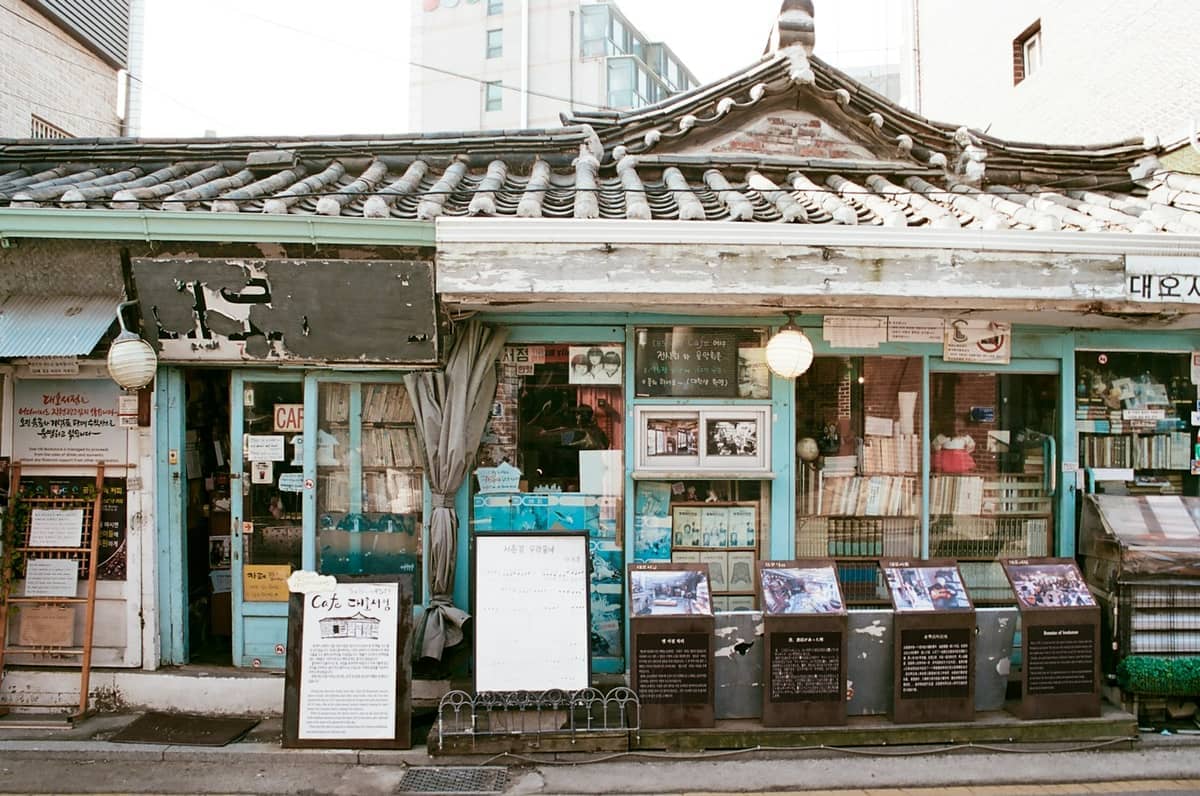
Within Insadong itself, Jogyesa Temple is the most significant cultural site: it is the head temple of the Jogye Order of Korean Buddhism and sits just west of Insadong-gil along Ujeongguk-ro. The temple grounds are open daily, free to enter, and feel genuinely separate from the commercial activity of the main street. Paper lanterns hang in enormous cascades from the trees during the Buddha's Birthday celebrations in May. The nearby Ikseon-dong hanok village, a few minutes east, is a dense cluster of early 20th-century hanok buildings now occupied by small restaurants and cafés — it is one of the most photographed streets in central Seoul.
In Seochon, the experience is more about wandering than ticking off specific landmarks. The neighborhood's alleys between Jahamun-ro and Gyeongbokgung's western wall contain small galleries, independent design shops, and the occasional old residence that has become a cultural center. The Inwangsan mountain trail begins at the top of the neighborhood, where the streets give way to the Seoul City Wall; the hike is manageable in under two hours and provides views back over the palace rooflines toward the Han River. Lower down, Sajik Park occupies the southern corner of Seochon and contains the Sajikdan altar, a historic ritual site used for state ceremonies during the Joseon dynasty.
Gyeongbokgung Palace and Gwanghwamun Gate: the anchor attraction for the whole area
Jogyesa Temple: active Buddhist temple with free entry, particularly impressive during lantern festivals
Ssamziegil: courtyard complex off Insadong-gil with independent shops and regular craft markets
Ikseon-dong hanok village: preserved alley district a short walk east of Insadong-gil
Seochon Village alleys: best explored on foot without a fixed route
Inwangsan mountain trail: accessible hike with Seoul City Wall sections
Sajik Park: historic ritual grounds and good autumn foliage at Seochon's southern edge
National Museum of Modern and Contemporary Art (MMCA Seoul): located just north of Gyeongbokgung inside the old Giwon Garden grounds
💡 Local tip
The first and third Sunday of each month, Insadong-gil is closed to vehicle traffic entirely and given over to street performances and outdoor markets. The street is busier than usual, but the absence of cars makes it significantly more pleasant to walk. Check Seoul's official tourism calendar for exact dates, as the schedule can shift around public holidays.
Eating & Drinking
Insadong is one of the best areas in Seoul to explore traditional Korean tea culture. The tea houses along and just off Insadong-gil serve barley tea, omija berry tea, yuzu tea, and a range of herbal preparations in rooms furnished with low wooden tables and floor cushions. These are genuinely restful places, not tourist performances, and the price of a pot of tea is usually very reasonable by Seoul standards. For a broader look at how café culture works across the city, the Seoul café culture guide provides useful context.
Street food is available along Insadong-gil, particularly toward the southern end nearer Jongno. Hotteok (sweet pancakes filled with brown sugar, nuts, and cinnamon), tteok (rice cakes in seasonal flavors), and various skewered snacks appear at small stalls. The quality is generally good and the prices are low — this is casual, quick food rather than destination dining.
For sit-down meals, the alleys branching off Insadong-gil contain a range of Korean restaurants serving doenjang jjigae (fermented soybean paste stew), bibimbap, and set lunch menus. Prices in Insadong proper can run slightly higher than equivalent restaurants elsewhere in Jongno due to the tourist foot traffic, so locals often duck into the streets one or two blocks east or west of the main strip for better value.
Seochon has a notably different food scene: smaller, more independent, and more oriented toward the neighborhood's resident population. The cafés here tend to be single-owner operations with carefully sourced beans and minimal signage. Bakeries and wine bars have appeared in converted hanok buildings along Jahamun-ro and its side streets. It is a good place to find a slow breakfast or a late-afternoon coffee without competing with tour groups.
ℹ️ Good to know
Several restaurants in Insadong and Seochon display menus only in Korean. Staff at larger establishments near the main tourist strip usually have some English, but venturing further into Seochon's alleys, a translation app on your phone is genuinely useful. Google Translate's camera function works well on printed Korean menus.
Getting There & Around
Insadong is well served by three subway stations, all on the northern half of the city's subway network. Anguk Station (Line 3, Exit 6) puts you at the northern end of Insadong-gil in about a two-minute walk. Jonggak Station (Line 1, Exit 3) approaches from the south, closer to Jongno. Jongno 3(sam)-ga Station (Lines 1, 3, and 5) sits at the southeastern corner of the area and is useful if you are combining Insadong with a visit to Changdeokgung or Ikseon-dong.
Seochon is most conveniently reached via Gyeongbokgung Station (Line 3, Exit 2), which deposits you at the palace's main southern entrance. From there, walk around the palace's western side along Sajik-ro to enter Seochon from the south, or continue along the palace wall northward to reach the neighborhood's upper alleys. Anguk Station (Line 3) also works if you are walking from Insadong through the palace area. Full transit options across the city are covered in the getting around Seoul guide.
Several bus routes serve Insadong-gil directly, including routes 100, 101, 103, 270, and 370, which connect the area to other central Seoul districts. Taxis and Kakao T rides are easy to arrange from either neighborhood, though traffic on Sajik-ro during rush hours can be slow. Within Insadong and Seochon themselves, walking is the only practical way to navigate: the alleys are too narrow for vehicles in many places, and the density of things worth seeing at street level makes driving or cycling counterproductive.
💡 Local tip
The T-money card (a rechargeable transit card available at any convenience store or subway station) works across all buses and subway lines in Seoul and provides a small discount per ride compared to single-journey tickets. If you are visiting from another part of Seoul, loading a T-money card before your trip to Insadong removes any friction from transfers.
Where to Stay
Staying in or near Insadong puts you within easy reach of central Seoul's most concentrated cluster of historic sites. The neighborhood itself has a range of accommodation options, from guesthouses in converted hanok buildings to business-class hotels on the broader streets of Jongno-gu. For travelers whose main interest is Seoul's royal palaces and historic districts, this is arguably the best base in the city: Gyeongbokgung, Changdeokgung, and Deoksugung are all reachable on foot or by a single subway stop.
Hanok guesthouses in the Insadong and Seochon area offer a distinct experience: traditional wooden architecture, ondol (underfloor-heated) rooms, and shared courtyard spaces. These are not luxury options in the conventional sense, but they provide an authenticity of atmosphere that a standard hotel cannot match. Availability is limited and they book out quickly, particularly during spring and autumn. A broader look at accommodation across Seoul is available in the where to stay in Seoul guide.
Seochon has fewer hotels than Insadong but is a quieter base. The trade-off is a slightly longer walk or short taxi ride to the nearest subway stations. For travelers who want to be near Gyeongbokgung but away from the weekend crowds of Insadong-gil, Seochon's southern edge near Sajik Park offers the right balance. Note that accommodation options here are limited in number, and booking several months in advance is advisable for popular travel seasons.
Insadong is not ideal for travelers whose primary goal is shopping and nightlife: Myeongdong and Hongdae are better suited for those priorities. It also sits north of the Han River, which means extra transit time to reach Gangnam or the southern districts. For first-time visitors interested in Korean history and culture, however, few locations in Seoul offer this density of relevant sites within walking distance of each other.
Honest Drawbacks
The main strip of Insadong-gil is, at peak times, genuinely overcrowded. On spring and autumn weekends, the pedestrian density from Anguk Station southward can make leisurely browsing difficult, and some of the shops have leaned heavily into tourist-oriented merchandise at the expense of the authentic craft culture the street was known for a generation ago. The souvenir category has expanded; the antique and art gallery category has contracted somewhat. This is not unique to Insadong, but it is worth knowing before you arrive expecting an undiscovered artisan enclave.
Seochon is quieter but not without its own version of this tension. The neighborhood's reputation has grown considerably over the past decade, and some of the café and boutique streets now attract weekend day-trippers in numbers that sit uneasily with the residential character the area is known for. The best solution is timing: both Insadong and Seochon are significantly more pleasant on weekday mornings than on weekend afternoons.
⚠️ What to skip
Several shops along Insadong-gil sell items labeled as 'traditional' or 'handmade' that are mass-produced imports. If authentic Korean craft is important to you, look for shops that display the craftsperson's name and credentials, and expect to pay more. The government-certified shops in the area typically have signage in both Korean and English indicating their craft designation.
TL;DR
Best for: travelers focused on Korean history, palace visits, traditional culture, and independent café exploration.
Insadong-gil is worth visiting but requires realistic expectations: the main street is commercial and crowded on weekends, while the alleys and courtyards off it reward those who look beyond the souvenir shops.
Seochon is one of Seoul's most atmospheric residential neighborhoods, best experienced slowly on a weekday with no fixed agenda.
Transit access is excellent: Line 3 connects both areas directly, and the major royal palaces are walkable from either neighborhood.
Not ideal for: travelers prioritizing nightlife, cutting-edge fashion, or Gangnam-side attractions — the journey south across the Han River adds time to any day trip.
Three days is enough to get a real feel for Seoul, if you plan by neighborhood instead of trying to crisscross the city. This itinerary covers historic Joseon-era Seoul, the commercial and cultural center, and the newer districts that define the city's contemporary identity, with practical logistics at every step.
Five days is enough to experience historic Seoul, its modern neighborhoods, and at least one compelling excursion beyond the city. This guide organizes each day by district to minimize transit time, with a clear take on what's worth it and what isn't.
Seoul has a deep museum scene, from Korea's vast national collection in Yongsan to cutting-edge contemporary art spaces and sobering historical sites. Whether you have a day or a week, these are the essential museums to put on your itinerary.
Seoul rewards visitors differently depending on the season. Spring brings cherry blossoms and mild temperatures, autumn delivers golden foliage and clear skies, summer is hot and monsoon-affected, and winter is cold but cheap. Here is exactly what to expect, month by month.
Seoul rewards those who look up, climb high, and stay out past sunset. This guide covers the city's finest panoramic viewpoints — from paid observation decks at record-breaking towers to free hilltop parks where locals gather at dusk to watch the city lights come on.
Bukhansan National Park sits inside Seoul's city limits yet delivers genuine mountain terrain, granite ridges, and a 836-meter summit. This guide covers the best trails, transit access, seasonal closures, and practical tips for first-timers and returning hikers alike.
Seoul's location in northwestern South Korea makes it a surprisingly strong base for day trips. From UNESCO fortresses reachable by subway to ancient capital cities served by KTX, this guide covers the best options with honest travel times, costs, and seasonal advice.
The Demilitarized Zone is one of the most visited sites in South Korea, yet most travelers arrive underprepared. This guide covers tour types, current prices, booking logistics, what you'll actually see, and the honest drawbacks before you commit.
Seoul is one of the most rewarding cities in the world to explore on a tight budget. From UNESCO-listed palaces and ancient city walls to world-class museums and sprawling riverside parks, an enormous amount of what makes Seoul great costs absolutely nothing to experience.
Seoul has one of the most efficient urban transit networks in the world, covering virtually every corner of the city by subway and bus. This guide breaks down fares, card options, airport connections, and the practical details that make the difference between a smooth trip and an expensive mistake.
Gwangjang Market is one of Seoul's oldest and most celebrated food destinations, known for bindaetteok, mayak gimbap, and raw beef yukhoe. This guide covers every dish worth ordering, how much to pay, when to go, and how to navigate the market like someone who has been there before.
Renting a hanbok in Seoul is one of the most photogenic things you can do in the city, and it costs less than a decent lunch. This guide covers where to rent, how much to pay, what to expect, and how to get the most out of your few hours in traditional dress.
Seoul preserves several distinct hanok districts, each with its own character. This guide covers the main options, practical logistics, seasonal crowd patterns, and a clear picture of what to expect before you visit.
Seoul rewards curious travelers who look past the obvious. This guide covers the city's lesser-visited neighborhoods, transformed industrial spaces, street art villages, and local markets — with practical logistics, seasonal advice, and a clear take on what's worth your time.
Seoul is one of the few world capitals where you can summit a real mountain, walk a 600-year-old fortress wall, and be back in the city for dinner. This guide covers the best trails for every level, from challenging granite peaks to gentle hilltop park strolls.
Seoul's jjimjilbangs are far more than bathhouses. They are all-hours social institutions where locals come to soak, sweat, eat, sleep, and decompress. This guide covers how they work, what everything costs, the unwritten rules of etiquette, and how to make the most of your visit whatever the season.
Seoul is the global epicenter of skincare innovation, and shopping for beauty products here is a genuinely different experience from buying Korean brands abroad. This guide covers the best stores, the smartest districts, what to prioritize buying, and how to avoid the common traps that leave tourists overpaying at airport duty-free.
Korean BBQ in Seoul is one of the city's defining food experiences, but navigating it well takes more than just showing up hungry. This guide covers the best restaurants by type, how to order confidently, what everything costs, and the etiquette mistakes that mark out first-timers.
Seoul is the undisputed capital of K-pop, but knowing where to actually go matters more than the hype suggests. This guide covers free landmarks, fan-friendly museums, live show recordings, shopping districts, and bookable experiences — with a clear take on what's worth your time.
From palatial five-star hotels in the historic north to slick Gangnam towers, this guide covers where to stay, eat, and spend at the top end — with a clear take on what's special and what's just expensive.
Seoul nightlife runs later, harder, and more diversely than almost any other city in Asia. From Hongdae's student club strips to Gangnam's bottle-service mega-clubs and Itaewon's underground electronic scene, this guide breaks down every major district, what to expect, and how to navigate a night out without the rookie mistakes.
Noraebang are private karaoke rooms at the heart of Seoul's nightlife culture. This guide covers the difference between coin and standard noraebang, where to find the best venues, what to expect, and how to get the most out of the experience without overpaying.
Seoul preserves five Joseon-era royal palaces within its city limits, each with a distinct character and history. This guide covers all five in depth, plus the essential sites, shrines, and neighborhoods that complete a palace-focused visit to the city.
Seoul's café scene is one of the most developed in Asia, divided across distinct neighborhoods where each district has its own personality. This guide breaks down the best coffee districts and concept cafés by area, with honest advice on timing, crowds, and what to actually order.
Seoul offers far more romantic depth than its reputation for K-pop and street food suggests. This guide covers the best things to do in Seoul for couples, from iconic landmarks and scenic parks to low-key neighborhood strolls, with seasonal advice and practical logistics throughout.
Autumn is widely considered the best time to visit Seoul, with crisp temperatures, golden ginkgo avenues, blazing maple trails, and a packed cultural calendar. This guide covers peak foliage timing, the top spots to see autumn color, seasonal festivals, practical logistics, and what most visitors overlook.
Spring is Seoul's most photogenic season, with cherry blossoms peaking in early April and festivals filling the city's parks and riversides. This guide covers bloom timing, the best viewing locations, what the weather is really like, and how to plan around the crowds.
Seoul winters are cold, dry, and genuinely rewarding for travelers who come prepared. From palace snow views to late-night pojangmacha street food, this guide covers everything you need to know about visiting Seoul from December through February.
Seoul's market scene spans centuries and neighborhoods, from ancient covered halls serving mung bean pancakes to weekend flea markets spilling out under highway overpasses. This guide covers the best traditional, flea, and night markets in the city, with practical details on what to buy, what to eat, and when to go.
Seoul is far more affordable than most people expect. This guide breaks down real daily costs, the cheapest ways to get around, where to eat well for under ₩10,000, and which world-class attractions cost nothing at all.
Seoul ranks among the safest major cities in the world for international visitors, but that does not mean zero risks. This guide covers emergency contacts, common scams, neighborhood dynamics, seasonal hazards, and practical precautions so you can travel confidently in Seoul Special Metropolitan City.
Seoul's street food scene is one of the best reasons to visit the city. This guide breaks down the top markets, the snacks worth lining up for, what things actually cost, and the practical details that most guides skip.
Seoul holds a remarkable concentration of sacred sites within its modern boundaries. This guide covers the city's finest Buddhist temples, Confucian shrines, shamanist sites, and other places of spiritual significance — from the lantern-lit courtyards of central Jogyesa to the granite ridges of Inwangsan.
The Seoul to Busan corridor is one of the most-traveled routes in South Korea. This guide breaks down every realistic option, from the KTX high-speed train to intercity buses and flights, with fares, journey times, and practical booking advice.
Seoul is one of Asia's most practical cities for family travel, with a deep mix of free outdoor parks, indoor rainy-day backups, cultural experiences, and full-day theme parks. This guide covers the top family activities across every age group, with real advice on pricing, crowd timing, and seasonal planning.
Seoul's shopping scene is one of the most varied in Asia, spanning underground mega-malls, centuries-old traditional markets, and indie streetwear boutiques. This guide breaks down every major district by what you'll actually find there, how much to spend, and when to go.
Seoul rewards first-time visitors and repeat travelers equally. This guide covers the city's essential experiences across history, food, neighborhoods, and nature, with practical details on costs, timing, and what to skip.
Seoul is one of the world's great eating cities, and knowing what to order makes all the difference. This guide covers the essential Korean food you need to try, from market snacks under ₩5,000 to slow-cooked soups worth planning your day around.
Choosing where to stay in Seoul shapes your entire trip. This guide breaks down the top neighborhoods by traveler type, covering transit access, hotel options, price ranges, and the trade-offs so you can pick the right base before you book.