Seoul in Autumn: Foliage, Festivals & Best Experiences
Autumn is widely considered the best time to visit Seoul, with crisp temperatures, golden ginkgo avenues, blazing maple trails, and a packed cultural calendar. This guide covers peak foliage timing, the top spots to see autumn color, seasonal festivals, practical logistics, and what most visitors overlook.
Plan and book this trip
Tools from our partner Travelpayouts help you compare flights and hotels. If you book through them, we may earn a commission at no extra cost to you.
Flights
Hotels map
TL;DR
- Peak autumn foliage in Seoul typically falls between late October and mid-November, with ginkgo trees turning before maples.
- Top foliage spots include Changdeokgung Secret Garden, Bukhansan National Park, Seoul Forest, Namsan Park, and Olympic Park — check our best time to visit Seoul guide for a full seasonal breakdown.
- Mountain elevations like Bukhansan peak earlier than city-center parks, so plan accordingly if you want to catch both.
- Temperatures range from around 5°C to 20°C across September to November — layering is essential.
- Crowds and hotel prices spike during peak foliage weekends; booking accommodation and popular tours at least two to three weeks ahead is strongly recommended.
When Does Autumn Actually Peak in Seoul?
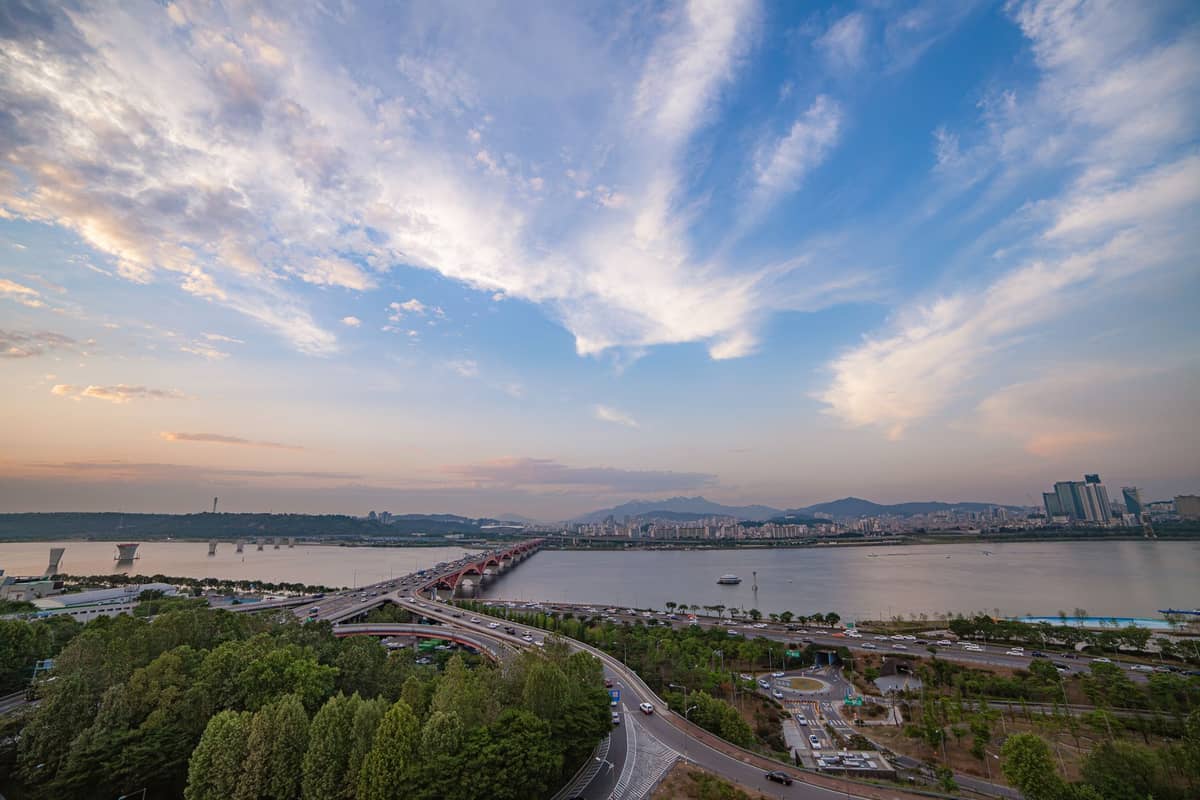
Seoul's autumn season runs from roughly mid-September through late November, but the timing splits into two distinct phases. The first phase covers the cooler shoulder weeks of September and early October, when daytime highs are still comfortable. This is excellent weather for walking and outdoor dining, even though foliage hasn't turned yet. The second phase, the one most visitors come for, is the color peak: early to mid-November.
Ginkgo trees turn a deep, saturated yellow before maples shift to orange and red. The ginkgo-lined streets of Gyeonghuigung Palace and the university avenues of Yonsei and Ewha tend to hit peak color earlier, often in late October. Maple foliage at higher elevations, including Bukhansan and the slopes of Namsan, peaks a few days earlier than the city floor. Urban parks and palace grounds, including Changdeokgung and the Cheonggyecheon streamside plantings, typically peak in the first two weeks of November. The Korea Meteorological Administration publishes annual foliage forecast maps in late September — these are far more reliable than any fixed calendar date.
💡 Local tip
The single most common timing mistake: visitors arrive in early October expecting full color and find mostly green leaves. If autumn foliage is your primary goal, target late October for ginkgos and the first two weeks of November for maples. Check the Korea Meteorological Administration's annual foliage map before booking.
The Best Spots for Autumn Foliage in Seoul
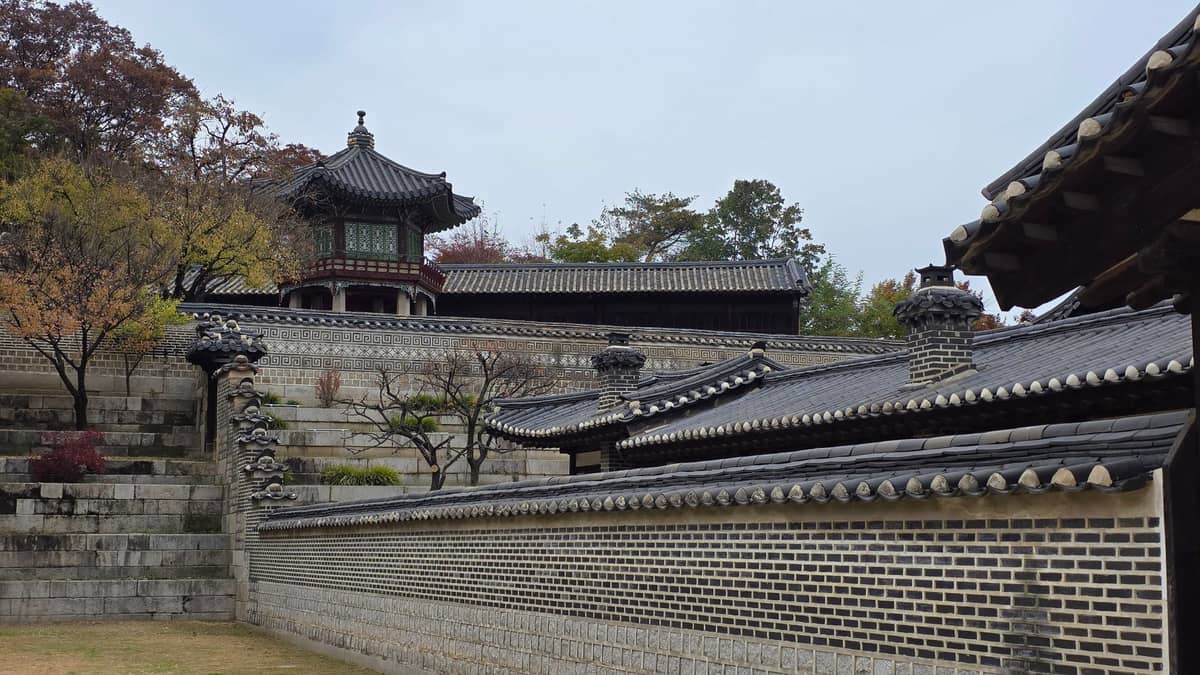
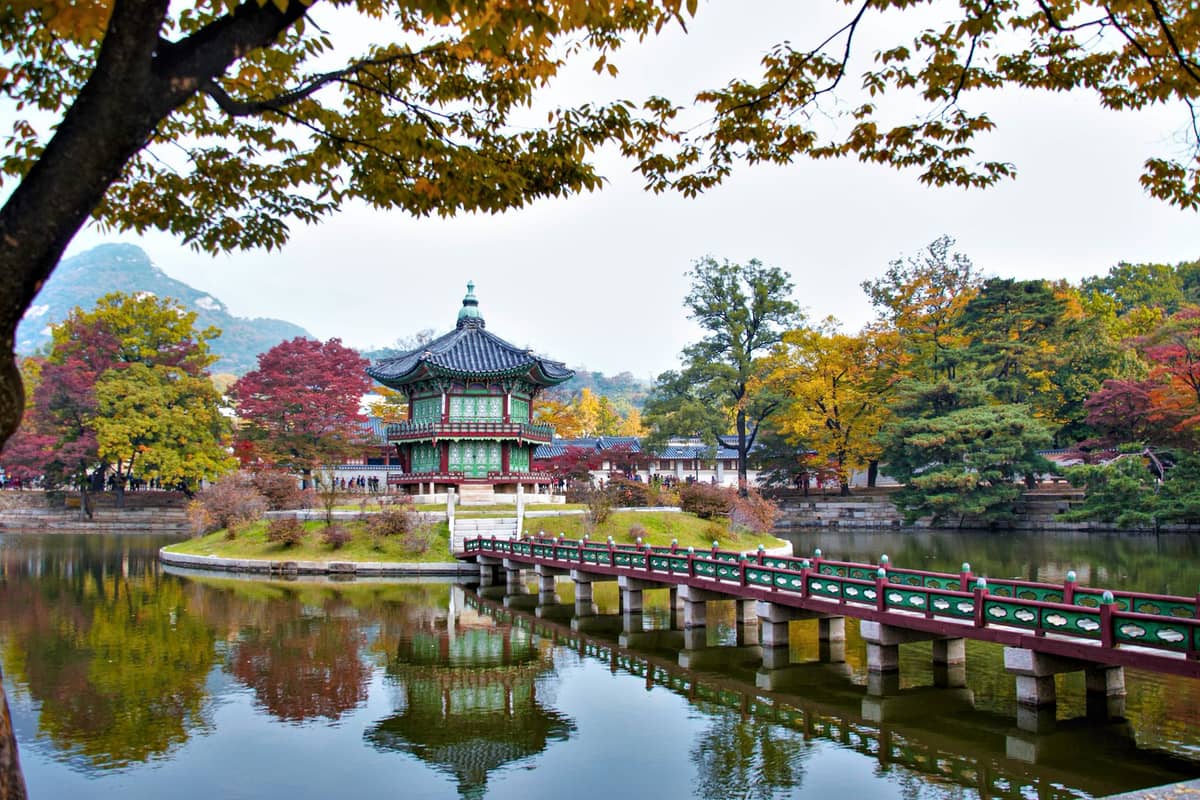
Seoul's autumn color is spread across the entire city, not concentrated in one landmark. Changdeokgung PalaceChangdeokgung Palace and its Secret Garden (Huwon) are consistently rated among the top urban foliage destinations in the country. The garden covers approximately 316,000 square meters of forested hillside behind the main palace complex, and in peak season the canopy of maples, ginkgos, and oaks turns the paths into something worth planning your whole trip around. Entry to the Secret Garden requires a separate timed ticket on top of the palace admission fee, and slots sell out on weekends. Book through the official Changdeokgung ticketing page at least a week in advance during November.
Bukhansan National ParkBukhansan sits at the northern edge of the city and offers the highest-elevation autumn color in Seoul. The mountain trails peak earlier than the city parks, which means early-to-mid November for the upper ridgelines and city parks later in the season. The Bukhansanseong trail and Baegundae summit route are the most dramatic, but also the most crowded on autumn weekends. For a less congested alternative, the Jingwan-dong entry offers solid foliage with significantly fewer visitors.
- Changdeokgung Secret Garden Best maple and mixed-forest color in central Seoul. Timed entry required; book ahead. Peak: early-to-mid November.
- Bukhansan National Park Best mountain foliage and panoramic color. Peaks earlier than city parks. Wear proper hiking shoes; the trails are steep.
- Namsan Park and N Seoul Tower Accessible by cable car or a 40-minute walk. The ridge trail offers sweeping city views framed by autumn maples. Peak: late October to early November.
- Seoul Forest (Ttukseom) A wide, flat park in Seongdong-gu with dense ginkgo and zelkova groves. Very photogenic for golden-hour shots. Easily reached by subway.
- Olympic Park (Songpa-gu) One of Seoul's largest parks with extensive walking paths, cosmos flower fields in early October, and strong maple color through early November.
- Cheonggyecheon Stream The urban stream corridor running through central Seoul lines up ginkgos and river birches that turn gold from late October. Easy to combine with Gwanghwamun and Insadong visits.
Don't overlook the palace grounds at Gyeongbokgung Palace and Deoksugung Palace. Deoksugung is particularly accessible — it sits in the heart of Jung-gu, surrounded by office buildings, and its compact grounds fill with yellow ginkgo leaves that carpet the stone pathways by early November. The contrast of the traditional stone architecture with modern Seoul framing it makes for a strong visual. Admission is around 1,000 KRW and the palace stays open most evenings.
✨ Pro tip
Haneul Park in Mapo-gu is famous for its silver grass (억새, eokssae) fields, which peak in mid-to-late October — earlier than most foliage. The hilltop views over the Han River on a clear autumn afternoon are exceptional and the crowds, while present on weekends, dissipate on weekday mornings.
Autumn Festivals and Cultural Events
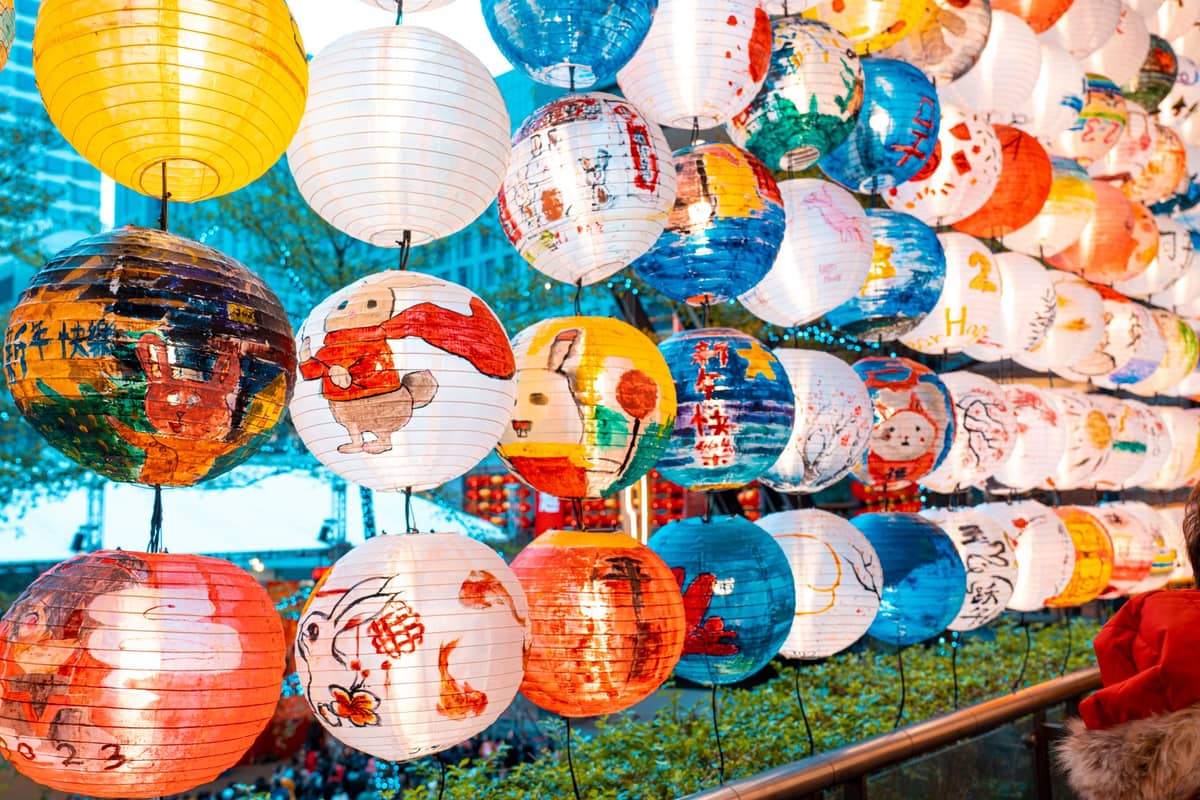
October and November are among Seoul's most event-dense months. The Seoul Lantern Festival (Seoul Deungbul Chukje) typically takes place along the Cheonggyecheon Stream in November, drawing large crowds for its scale and craft. The exact dates and routes shift year to year, so check the Seoul Metropolitan Government's official events calendar for current information before planning around it.
The Jongmyo Royal Ancestral Rite (Jongmyo Jerye) is one of South Korea's most significant intangible cultural heritage events and takes place at Jongmyo Shrine in the first Sunday of May and again in autumn. If it falls during your visit, this is a rare chance to witness authentic royal court music (jongmyo jeryeak) and ceremonial processions. Entry to the shrine itself is free on the day of the ceremony. The palaces and historic sites guide covers Jongmyo and the other major palace complexes in detail.
Many of Seoul's palaces also run special autumn evening admission programs, allowing visitors inside after standard closing hours to see the grounds lit up against the foliage. Gyeongbokgung and Changdeokgung both offer these programs in October and November, but slots are limited and sell out quickly. These are managed through the official palace ticketing sites and are worth checking as soon as your travel dates are confirmed.
- Seoul Lantern Festival: Cheonggyecheon, November (dates vary annually)
- Special autumn evening palace admission: Gyeongbokgung and Changdeokgung, autumn (book in advance)
- Haneul Park Silver Grass Festival: mid-to-late October, World Cup Park in Mapo
- Jongmyo Shrine autumn ceremony: typically held in autumn; check the official Jongmyo schedule
- Seoul Performing Arts Festival (SPAF): October, multiple venues across the city
What to Eat and Drink in Autumn Seoul
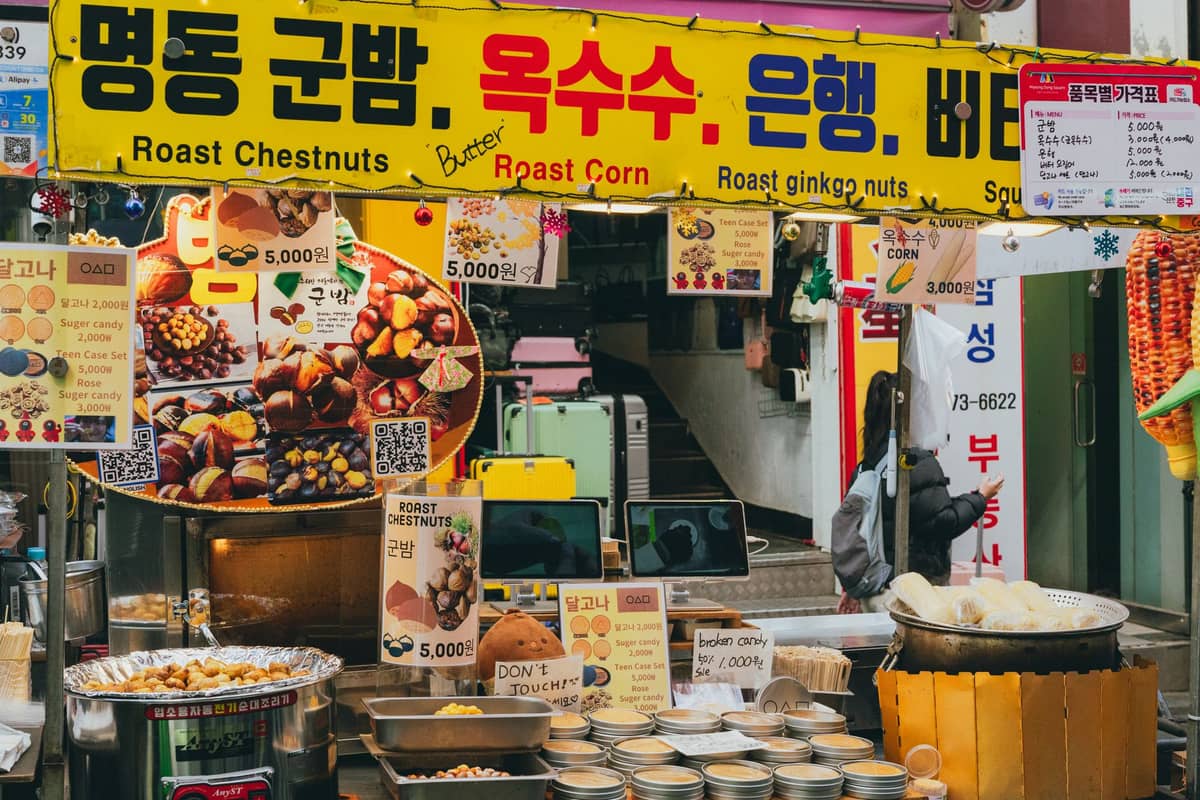
Autumn is arguably the best season for eating in Seoul. The harvest season brings chestnuts (밤, bam), persimmons (감, gam), and sweet potatoes to market stalls, and these appear in everything from street-side roasted snacks to elaborate patisserie displays. Roasted chestnuts sold from street carts are one of the most distinctively autumn foods in the city — look for vendors near major transit hubs and tourist districts from October onward. For a deeper look at what to eat throughout the year, the Seoul food guide covers the full range of Korean cuisine worth trying.
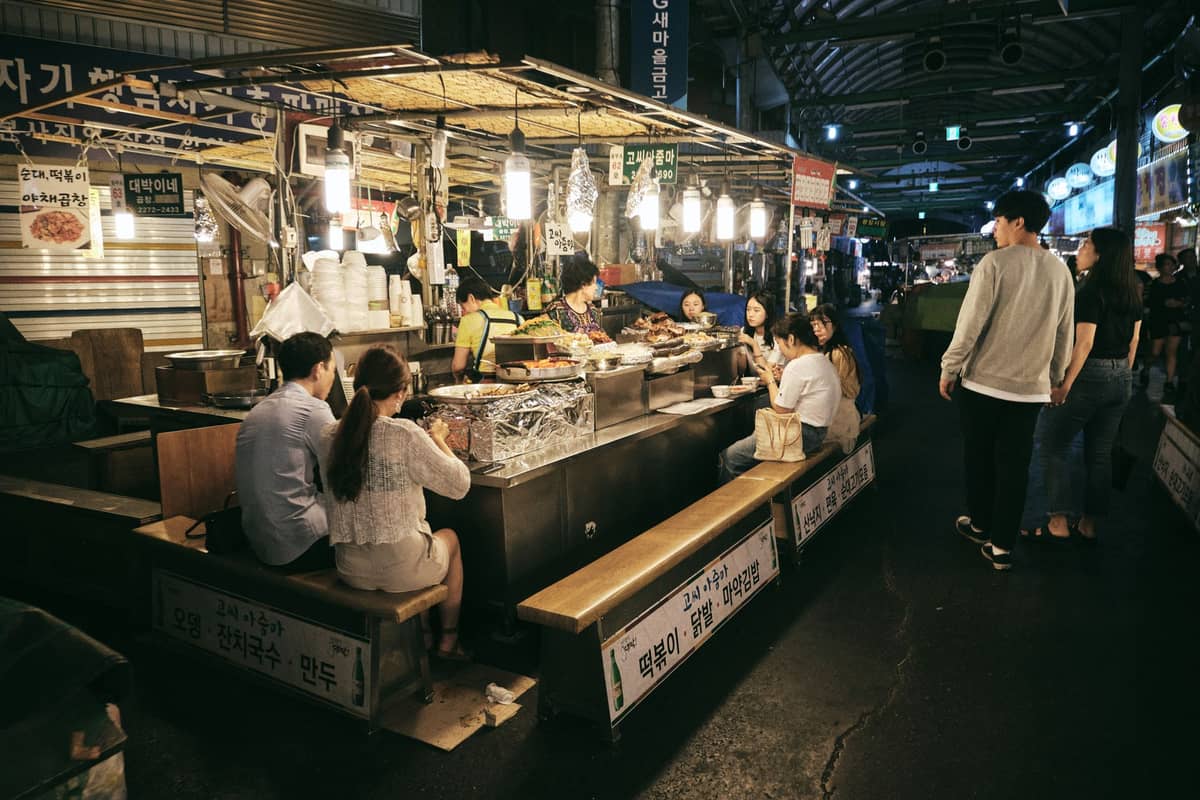
The cooler temperatures from October onward make Korean BBQ and hot pot (jeongol) far more enjoyable than in summer. Korean BBQ is a social, multi-hour meal that suits the pace of an autumn evening. Doenjang jjigae (fermented soybean paste stew) and sundubu jjigae (soft tofu stew) are also peak comfort food in this weather. For market eating, Gwangjang Market in Jongno is one of the best places in the city for bindaetteok (mung bean pancakes), mayak gimbap, and yukhoe (beef tartare) at covered stalls that become especially cozy once the temperature drops.
ℹ️ Good to know
Autumn is sweet potato season in Korea. Look for 군고구마 (gun-goguma), charcoal-roasted sweet potato, sold from modified oil-drum carts on cool evenings — particularly around Insadong, Hongdae, and Myeongdong. At around 2,000–4,000 KRW depending on size, it's one of the most satisfying budget snacks the city offers.
Practical Logistics: Getting Around and What to Pack
Autumn temperatures in Seoul range from cool nights in late November to warm October afternoons. Layering is the only practical strategy. A light down jacket or wool coat is sufficient for most of October; by mid-November, something heavier is useful for evenings. Most foliage-viewing involves significant walking on uneven surfaces, particularly at palace grounds and mountain parks, so comfortable shoes with ankle support are worth prioritizing over style. For a complete overview of navigating the city's subway, bus, and taxi systems, see the getting around Seoul guide
Seoul's subway system (Seoul Metropolitan Subway) reaches virtually every major foliage spot on this list. The T-money transit card, available at convenience stores and station kiosks, works across subway lines, buses, and some taxis. Single-ride fares on the subway start at around 1,550 KRW for many journeys within central Seoul. Bukhansan requires getting to a northern line station (Gupabal or Dobongsan, depending on the entry point) and then a short bus or taxi connection to the trailhead.
Accommodation prices and availability tighten significantly during peak foliage weekends in late October and early November. If your dates are fixed, book accommodation at least three to four weeks in advance. The areas around Jongno and Bukchon put you within walking distance of Changdeokgung, Gyeongbokgung, and Insadong, making them strong bases for foliage-focused itineraries. For a full breakdown of neighborhoods and where to sleep, see the where to stay in Seoul guide.
⚠️ What to skip
Peak foliage weekends — typically two or three weekends in early November — bring extremely high visitor volumes to Changdeokgung Secret Garden, Namsan, and Bukhansan. If you visit these spots on a Saturday morning, expect queues, sold-out timed tickets, and limited parking. Weekday mornings, particularly Tuesday to Thursday, offer a dramatically different experience.
Autumn Itinerary Ideas: How to Structure Your Visit
A focused three-day autumn visit to Seoul can cover the main foliage zones without feeling rushed. Day one works well as a historic-core day: Gyeongbokgung in the morning, then the Cheonggyecheon Stream walk through to Gwangjang Market for lunch, and Changdeokgung in the afternoon (Secret Garden timed entry permitting). Day two can be an elevated-parks day: take the cable car or walk up Namsan in the morning for mountain foliage and city views, then head to Seoul Forest in Seongsu for afternoon golden-hour photos. Day three works as a mountain day for hikers: an early start at Bukhansan for the trail color, returning to the city by early afternoon for a palace district café crawl. For a structured five-day version of this kind of itinerary, see the 5 days in Seoul guide.
If hiking is not your priority, autumn Seoul rewards slow walking more than most seasons. The Bukchon Hanok Village and the nearby Seochon neighborhood both have narrow alleys lined with persimmon trees and tiled rooftops that frame autumn color in a way that feels entirely specific to Seoul. These areas are best explored on weekday mornings before the tour groups arrive. For couples specifically, the autumn season is one of the stronger reasons Seoul ranks as a romantic destination — the Seoul for couples guide includes seasonal recommendations alongside the year-round options.
FAQ
When is peak autumn foliage in Seoul?
Peak foliage in Seoul typically falls between late October and mid-November. Ginkgo trees generally turn before maples, with mountain elevations like Bukhansan peaking a week or two before city-center parks and palace grounds. The Korea Meteorological Administration publishes annual foliage forecast maps in late September that give the most accurate year-specific timing.
What is the weather like in Seoul in autumn?
Autumn in Seoul is the most comfortable season weather-wise. September and early October bring mild daytime highs with relatively low humidity. By November, daytime temperatures drop noticeably and nights turn cold. Rain is relatively infrequent in autumn compared to the summer monsoon season. Pack layers and a medium-weight jacket for evenings.
Do I need to book the Changdeokgung Secret Garden in advance?
Yes, strongly recommended during autumn. The Secret Garden operates on a timed-entry ticketing system separate from the main palace admission. Slots on peak foliage weekends often sell out in advance. Book through the official Changdeokgung website or the Heritage of Korea ticketing portal.
Is autumn a good time to hike in Seoul?
Autumn is the best season to hike in Seoul. Temperatures are ideal for sustained exertion, the mountain forests are at their most photogenic, and the monsoon mud of summer has dried up. Bukhansan National Park is the premier destination, with several trail options ranging from moderate ridge walks to steep summit routes. Go on a weekday if possible, as weekend crowds on popular trails can be significant in peak foliage season.
What autumn festivals should I look for in Seoul?
The Seoul Lantern Festival (along Cheonggyecheon and the Han River) and special evening admission programs at major palaces like Gyeongbokgung and Changdeokgung are the headline events. The Haneul Park Silver Grass Festival in Mapo is another autumn highlight. Exact dates change annually, so verify on the Seoul Metropolitan Government's official events calendar and the Korea Tourism Organization site before planning around any specific event.