Bukhansan National Park: Seoul's Granite Wilderness Above the City
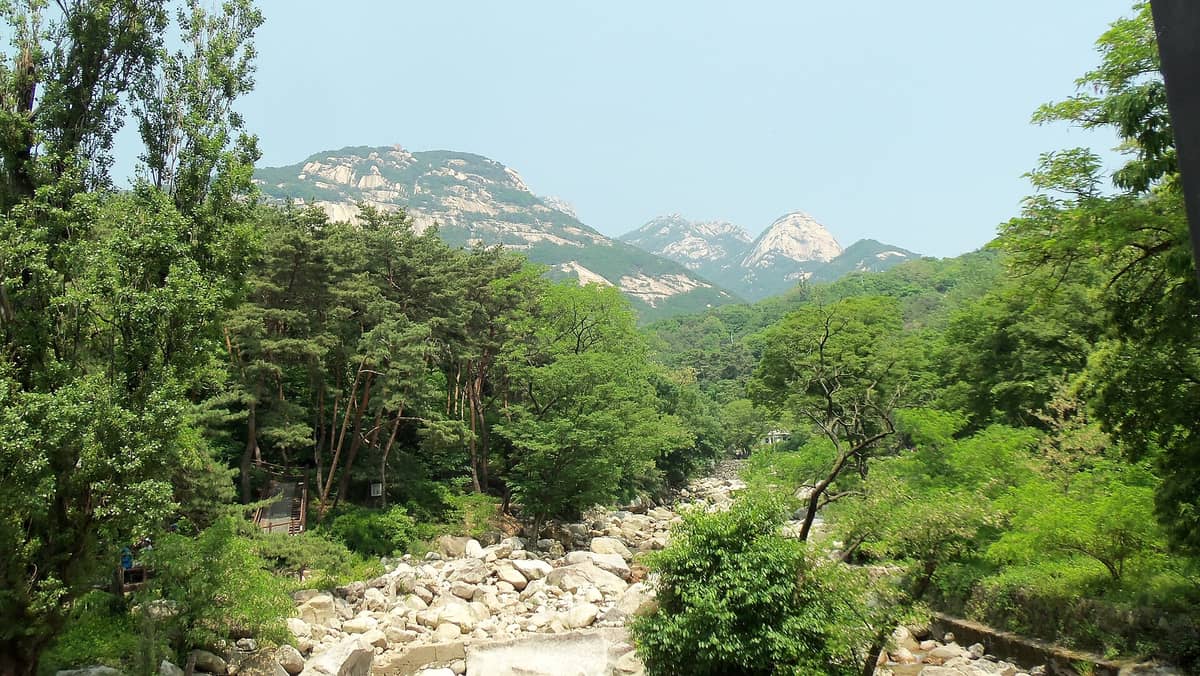
Bukhansan National Park sits on Seoul's northern edge, offering granite ridgelines, forested valleys, and ancient fortress walls within the city limits. Free to enter and accessible by subway and bus, it is one of the most visited national parks in the world relative to its size, attracting seasoned trekkers and casual walkers alike., attracting seasoned trekkers and casual walkers alike.
Quick Facts
- Location
- 215 Bogukmun-ro, Seongbuk-gu, Seoul (Ecological Culture Center)
- Getting There
- Line 5 to Gwanghwamun Station (Exit 2), then Bus 1020 to Bukhansan National Park Entrance
- Time Needed
- 2–6 hours depending on trail choice
- Cost
- Free (KRW 0)
- Best for
- Hikers, nature seekers, photographers, anyone wanting to escape the urban density
- Official website
- www.knps.or.kr
What Bukhansan National Park Actually Is
Bukhansan National Park covers Bukhansan National Park covers 80.699 square kilometers of granite mountains, forested ridges, and rocky summits along Seoul's northern boundary. Officially designated a national park in 1983, it straddles the border between Seoul and Gyeonggi Province. The park contains three principal peaks: Baegundae (835.6 m), the highest point in the park; Insubong (810.5 m), a dramatic bare granite dome popular with rock climbers; and Mangyeongdae (799.5 m). Together these summits form what Koreans call the Samgaksan range, a name still used informally by locals. of granite mountains, forested ridges, and rocky summits along Seoul's northern boundary. Officially designated a national park in 1983, it straddles the border between Seoul and Gyeonggi Province. The park contains three principal peaks: Baegundae (836.5 m), the highest point in the park; Insubong (810.5 m), a dramatic bare granite dome popular with rock climbers; and Mangyeongdae (799.5 m). Together these summits form what Koreans call the Samgaksan range, a name still used informally by locals.
The official name in Korean is 북한산국립공원. Bureaucratically it sits under the Korea National Park Service, the same body that manages Seoraksan and Jirisan. What makes Bukhansan unusual in global terms is its density of visitors relative to its size: What makes Bukhansan unusual in global terms is its density of visitors relative to its size, which is a remarkable statistic given that it is ringed by one of the largest urban populations on the planet., which is a genuinely remarkable statistic given that it is ringed by one of the largest urban populations on the planet.
ℹ️ Good to know
Trail hours are typically 04:00–17:00 (March–November) and 04:00–16:00 (December–February); check KNPS before you go. Admission is free.
The Experience by Time of Day
Arrive at the main Bukhansan-ui entrance area before 8:00 on a weekday and the atmosphere is close to meditative. The air smells of pine resin and damp rock, particularly on mornings after rain. Birdsong, mostly Korean magpies and various warblers, fills the lower tree line. The first 20 minutes of any trail from this entrance are deceptively gentle, wide gravel paths shaded by oak and pine, before the gradient starts to assert itself.
By 10:00 on weekends the picture changes completely. Hiking is a serious cultural pursuit in Korea, and the trails reflect that: you will see groups of hikers in color-coordinated technical gear moving at a determined pace. The trails toward Baegundae fill up significantly by late morning on Saturdays and Sundays, and the final scramble to the summit can form a slow queue near the steel rope sections. If a crowded summit is not your idea of mountain time, a weekday visit is strongly recommended.
Autumn afternoons, roughly mid-October through mid-November, produce a different kind of spectacle. The ridgelines turn amber, orange, and burgundy as the forest shifts, and the contrast against the bare granite is particularly sharp in low afternoon light. This is also when the park is at its most photogenic and most crowded simultaneously. Early morning arrivals in autumn earn the best light with far fewer people.
💡 Local tip
Weekday mornings between 07:00 and 09:00 offer the calmest experience. Weekend afternoons in good weather are the park's most crowded window — plan accordingly.
Tickets & tours
Hand-picked options from our booking partner. Prices are indicative; availability and final rates are confirmed when you complete your booking.
DMZ and Lake Majang Suspension Bridge Tour from Seoul
From 57 €Instant confirmationFree cancellationHalf Day DMZ Tour from Seoul, 3rd Tunnel, Observatory and More
From 47 €Instant confirmationFree cancellationSeoul zombie city exploration game and private tour
From 10 €Instant confirmationFree cancellationLuggage Storage in Seoul
From 7 €Instant confirmationFree cancellation
Trails and What to Expect on Each
The park has multiple entry points and trail networks. Three routes see the majority of foot traffic:
- Baegundae Summit Trail (from Bukhansan-ui entrance): The classic route, gaining around 530 m in elevation over roughly 3.5 km one way. The upper section involves hands-on scrambling over bare granite slabs with steel rope assistance. Return time is typically 4–5 hours including the summit. Fit hikers find it challenging but not technical.
- Dobongsan Trails (Dobongsan area, northern section): Technically within Bukhansan National Park, Dobongsan offers its own character. Jaunbong, Mangjeongbong, and Seoninbong are rougher and rockier than the Baegundae approach, with some exposed ridge walking. Accessible via Dobongsan Station on Line 1 and Line 7.
- Bukhansanseong Fortress Loop: A lower-elevation circuit that follows sections of the Bukhansanseong Fortress wall, a defensive structure with origins in the Baekje period and substantially rebuilt during the Joseon dynasty. This route rewards visitors interested in history as much as elevation. The stonework along the ridgeline is impressive and the views over the northern districts of Seoul are wide.
The fortress wall trail connects naturally to broader themes around Seoul's historical defensive infrastructure. If that interests you, the Hanyangdoseong Seoul City Wall in the city center covers a different section of the capital's ancient perimeter and makes a good pairing for history-focused visitors.
Getting There and Practical Logistics
The Korea National Park Service and Visit Seoul both list a specific route: take Line 5 to Gwanghwamun Station (Exit 2), then board Bus 1020 and ride to the Bukhansan National Park Entrance stop. This drops you near the Bukhansan-ui area, the most commonly used entry point for the Baegundae summit trail.
For Dobongsan, the logistics are simpler: Dobongsan Station on subway Lines 1 and 7 places you directly at the entrance to the northern trailheads. This is a faster and easier approach if you are coming from central or eastern Seoul.
Taxis and Kakao T can bring you closer to the entrance from nearby districts, which is useful for early starts before buses are running at full frequency. Parking exists near some entrances but fills quickly on weekends; public transit is the sensible default.
⚠️ What to skip
The park's last entry cutoff is 16:00 in summer and 15:00 in winter. Rangers enforce descent requirements, and some upper trail sections close seasonally or during dry fire-risk periods. Check the Korea National Park Service website before visiting.
What to Wear and Bring
Korean hikers treat Bukhansan seriously, and their equipment choices reflect that. Proper hiking footwear is not optional on the upper trails: the granite slabs become slick in rain or morning dew, and the descent from Baegundae on wet rock requires grip. Sneakers are manageable on the lower forest paths but become a liability above the treeline.
Water is available at fountains near the lower entrance areas but not on the upper trails. Carry at least 1.5 liters per person. Sun exposure on the bare granite summit ridge is significant in summer; sunscreen and a hat matter more than many visitors anticipate. In winter, gloves and microspikes are useful: the steel ropes on the Baegundae approach ice over and become genuinely dangerous without traction devices.
Spring and autumn are the most comfortable seasons for hiking. For a broader view of when to time your Seoul visit around outdoor activities, the best time to visit Seoul guide covers seasonal conditions across the city in detail.
Historical and Cultural Context
The mountains of Bukhansan have been significant in Korean culture for over a millennium. The Bukhansanseong Fortress, the stone defensive wall that runs along much of the ridge, was originally constructed during the Three Kingdoms period and substantially reinforced during the Joseon dynasty in the early 18th century as a defensive measure. Walking its walls today, you are following the same ridgeline that Joseon military planners mapped and stonemasoners built by hand.
Several Buddhist hermitages and small temples are scattered through the park's valleys. Doseonam, Munsubawiam, and Hwagyesa are among the most visited, the last of these being a working temple. These are active religious sites, not tourist props, and visitor conduct should reflect that.
If Buddhist temple architecture and mountain monasteries interest you, Seoul has several significant examples closer to the city center. Jogyesa Temple in Jongno is the head temple of Korean Buddhism's Jogye Order and worth visiting before or after a Bukhansan trip.
Photography Conditions and Viewpoints
The Baegundae summit offers the most complete panoramic view of Seoul available from within city limits. On a clear day, the Han River is visible to the south and the full spread of Seoul's high-rise districts extends across the basin below. Haze, which is common in spring and summer due to a combination of humidity and regional air quality, can reduce visibility significantly. Autumn and winter days after rain or wind produce the sharpest air and the best long-distance views.
The Insubong rock face catches early morning light from the east and is a compelling subject in its own right, particularly when climbers are visible on the routes. A telephoto lens picks up the rope lines and human figures against the bare granite in a way that conveys the scale of the wall better than a wide shot can.
Bukhansan's summit views are genuinely competitive with Seoul's best observation decks. For a comparison of urban viewpoints, the best views in Seoul guide covers rooftop platforms and mountain perspectives across the city.
Who Should Think Twice Before Going
Bukhansan is not a casual attraction in the way that a palace or a market is. The summit trails involve real elevation gain, loose rock, and exposure. Visitors with limited mobility or young children who cannot manage steep terrain independently will find the upper trails frustrating and potentially unsafe. The lower forest paths are pleasant but short, and without the ascent, the park's main appeal is reduced.
Visitors looking for a quick 30-minute stop will likely feel the trip is not worth the transit time. The bus journey from Gwanghwamun adds meaningful travel time on top of subway time, and the park rewards those who commit at least half a day. If your Seoul itinerary is tightly packed with urban attractions, Bukhansan is best saved for a dedicated day.
For those planning multiple days in Seoul with a mix of outdoor and urban experiences, the 5 days in Seoul itinerary suggests how to fit Bukhansan alongside the city's major cultural sites without feeling rushed.
Insider Tips
- The Dobongsan entrance on subway Lines 1 and 7 is faster from most parts of Seoul than the Gwanghwamun bus route. If the Baegundae summit is not your priority, Dobongsan's trails are equally rewarding and often slightly less crowded.
- Small convenience stores and pojangmacha (street food stalls) cluster near the main entrance areas. Stock up on snacks and extra water here before starting the ascent rather than bringing everything from central Seoul.
- If you arrive and the Baegundae trail is packed, the Bukhansanseong Fortress loop is a genuinely different experience that most weekend crowds skip. The stonework sections on the upper ridge offer good views with far less foot traffic.
- Hwagyesa Temple, inside the park near the Ui-dong entrance, hosts templestay programs for visitors interested in spending a night in a working Buddhist monastery within Seoul's city limits. Reservations are required well in advance.
- Trail conditions after heavy rain, especially on the granite slabs above the treeline, can make the descent significantly more difficult than the ascent. If weather is uncertain, start the summit attempt early enough to descend before any afternoon showers arrive.
Who Is Bukhansan National Park For?
- Hikers wanting a genuine mountain experience within a major city
- Photographers seeking dramatic granite landscapes and wide Seoul panoramas
- History and culture travelers interested in Joseon-era fortress architecture
- Visitors with a full free day and good footwear
- Autumn foliage seekers in October and November
Nearby Attractions
Combine your visit with:
- Banpo Bridge Rainbow Fountain
The Banpo Bridge Rainbow Fountain holds the Guinness record as the world's longest bridge fountain, stretching 1,140 metres along the Han River. Running April through October, the free nightly shows combine 380 water jets, colour-changing LEDs, and the open Seoul skyline into one of the city's most photogenic spectacles.
- Noryangjin Fish Market
Noryangjin Fisheries Wholesale Market is Seoul's largest and most active seafood trading floor, open around the clock every day of the year except major holidays. From pre-dawn wholesale auctions to late-night sashimi dinners eaten directly above the tanks, it offers an experience that blends raw commerce with genuine culinary culture.
- Seoul Grand Park & Zoo
Seoul Grand Park (서울대공원) is a vast leisure complex in Gwacheon that houses Korea's first zoo, a theme garden, and kilometers of forested paths along a reservoir. It rewards families and nature-seekers willing to leave the city center for a full-day escape that most tourists overlook.