Seoul Grand Park & Zoo: What to Expect at Seoul's Biggest Day Out
Seoul Grand Park (서울대공원) is a vast leisure complex in Gwacheon that houses Korea's first zoo, a theme garden, and kilometers of forested paths along a reservoir. It rewards families and nature-seekers willing to leave the city center for a full-day escape that most tourists overlook.
Quick Facts
- Location
- 102, Daegongwongwangjang-ro, Gwacheon-si, Gyeonggi-do (just south of Seoul)
- Getting There
- Subway Line 4 to Seoul Grand Park Station, Exit 2
- Time Needed
- 3–6 hours depending on how much of the park you cover
- Cost
- Zoo: ₩5,000 adults / ₩3,000 youth / ₩2,000 children (individual rates). Theme Garden: ₩2,000 / ₩1,500 / ₩1,000. Park grounds free.
- Best for
- Families with children, picnic-seekers, nature walks, and visitors wanting a genuine local day out
- Official website
- grandpark.seoul.go.kr
What Seoul Grand Park Actually Is
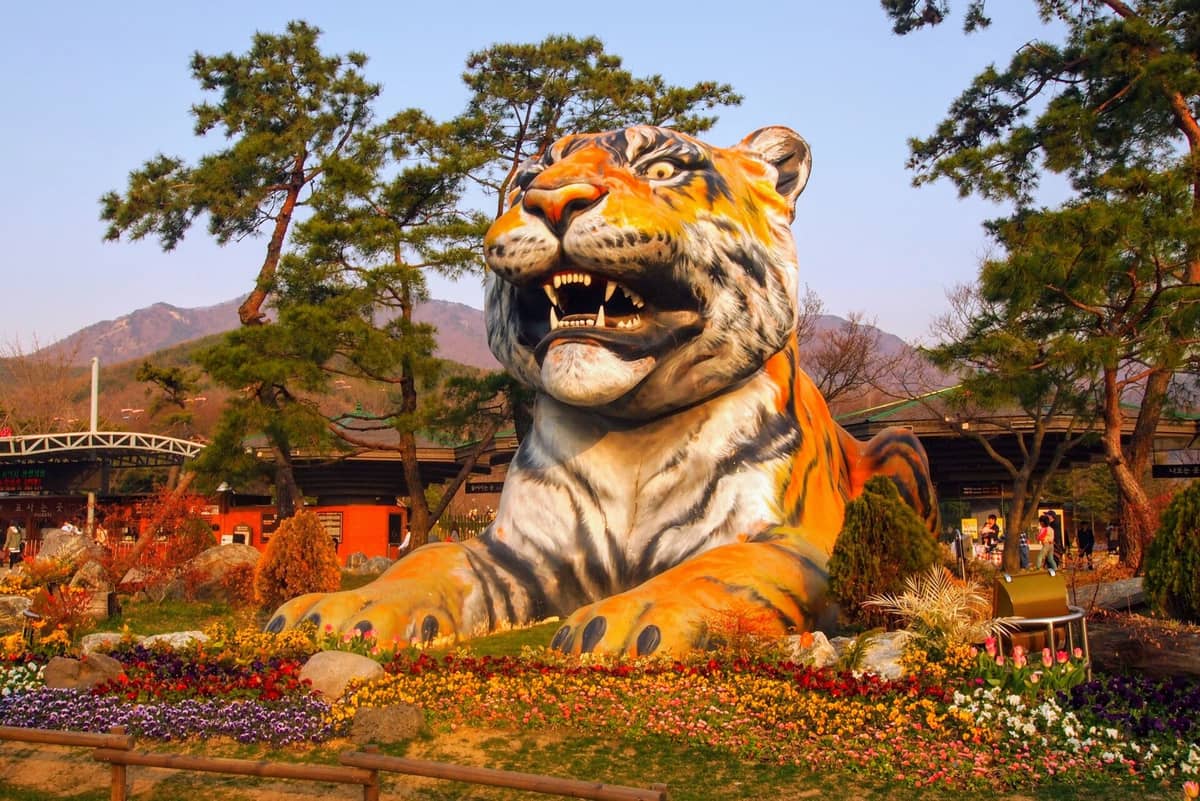
Seoul Grand Park (서울대공원) is not a theme park and not just a zoo. It is a sprawling public leisure complex covering several square kilometers in Gwacheon, a satellite city that sits directly south of Seoul. The complex is organized around a large reservoir and contains the Seoul Zoo (서울동물원), described by Korea Tourism Organization as the first zoo in Korea, a Theme Garden with rose beds and botanical displays, and a separately managed amusement facility. Most of the park's outer walking paths and picnic grounds are free to enter.
The park opened in 1984 and has been a fixture of Korean family life for four decades. On a weekday morning, it feels almost meditative: the paths are lined with ginkgo and pine, the reservoir reflects the forested ridgeline behind it, and the only sounds are birdsong and the occasional cable car humming overhead. On a weekend afternoon in spring or autumn, it transforms into something closer to a school field trip multiplied by a thousand, with families claiming every picnic blanket spot along the lakefront.
💡 Local tip
The park is open 365 days a year, but the zoo and Theme Garden close seasonally at different times. Last entry is 1 hour before closing. Plan your arrival accordingly, especially in winter when the zoo closes at 17:00.
Opening Hours and Admission
The Zoo and Theme Garden operate on a seasonal schedule. From March to April and September to October, they open 09:00 to 18:00. From May to August, hours extend to 19:00. From November to February, they close at 17:00. The outer park grounds are accessible outside these windows, though most visitors come specifically for the zoo.
Zoo admission for individual (non-group) visitors is ₩5,000 for adults, ₩3,000 for youth, and ₩2,000 for children. Group rates are lower. The Theme Garden charges separately: ₩2,000 for adults, ₩1,500 for youth, and ₩1,000 for children. If you plan to visit both, budget accordingly. By Seoul standards, this is genuinely low-cost, which is part of why the park attracts such enormous crowds on public holidays.
Tickets & tours
Hand-picked options from our booking partner. Prices are indicative; availability and final rates are confirmed when you complete your booking.
DMZ and Lake Majang Suspension Bridge Tour from Seoul
From 57 €Instant confirmationFree cancellationHalf Day DMZ Tour from Seoul, 3rd Tunnel, Observatory and More
From 47 €Instant confirmationFree cancellationSeoul zombie city exploration game and private tour
From 10 €Instant confirmationFree cancellationLuggage Storage in Seoul
From 7 €Instant confirmationFree cancellation
The Zoo: Korea's First, and Still One of Its Largest
The Seoul Zoo covers a substantial portion of the park and holds several hundred species across mammals, birds, reptiles, and marine life. The animal enclosures are organized by geographic region and habitat type, which means you will do a fair amount of walking between exhibits. Comfortable shoes are not optional; this is a place where unprepared visitors in fashion footwear visibly regret their choices by mid-afternoon.
The African savanna section tends to draw the longest crowds, particularly around the giraffe and elephant enclosures. In the quieter morning hours, before tour groups arrive around 10:30, it is possible to spend unhurried time at exhibits that would otherwise require patience. The bird garden is often overlooked but consistently quieter than the main mammal zones.
Families traveling with young children will find this a better fit than many of Seoul's more urban attractions. For other family-friendly ideas across the city, the Seoul with kids guide covers a broader range of options suited to different ages and energy levels.
⚠️ What to skip
The zoo is large enough that small children will tire well before covering all of it. Strollers are practical here, and the terrain is mostly paved, though some paths near forested areas involve inclines.
The Theme Garden and Seasonal Highlights
The Theme Garden section focuses on ornamental plantings, rose beds, and sculpted landscape displays. It is not a conventional botanical garden with labeled species and scientific detail; it is more of a manicured leisure garden designed for leisurely walks and photography. Its peak period is late spring, typically late May into June, when the rose garden reaches full bloom. During this window, the scent along the main rose path is noticeable from several meters away and the contrast with the surrounding pine forest is striking.
Autumn is the other standout season. The forested hills surrounding the park turn amber and red from mid-October, and the reservoir reflects the color of the treeline in the early morning before foot traffic picks up. For context on timing across the city, the Seoul in autumn guide explains where and when foliage peaks across different parts of Seoul and its surrounds.
Getting There and Getting Around the Park
Seoul Grand Park is served directly by Subway Line 4. Exit 2 at Seoul Grand Park Station deposits you within walking distance of the main entrance. From the city center, journey times are typically 30 to 45 minutes depending on your starting point.
Within the park, a land train (elephant train) operates as a paid shuttle between the entrance and the zoo entrance, which saves time given the distance involved. A cable car runs from near the main park entrance toward the upper park area near the zoo and museum facilities on the grounds. Neither the train nor the cable car is included in zoo admission and both carry separate fares.
If you are planning to visit multiple destinations in a single day, understanding Seoul's transit system in advance will save significant time. The guide to getting around Seoul covers T-money card setup, line transfers, and how to navigate stations with luggage or strollers.
ℹ️ Good to know
The park address is in Gwacheon-si, Gyeonggi-do, not within Seoul's administrative city limits. This causes brief confusion for some visitors using map apps. Search for 'Seoul Grand Park Station' on Line 4 and follow Exit 2.
How the Experience Changes by Time of Day
Early morning, roughly 09:00 to 10:30, is when the park is at its most atmospheric. The reservoir mist burns off gradually, the zoo animals are active before the day heats up, and the paths have almost no foot traffic. This is the window for photography: the light is directional, the backgrounds are clean, and animals are not yet retreating to shade.
By late morning on weekends and public holidays, especially during spring cherry blossom season and autumn foliage, the park fills significantly. The main entrance plaza can become crowded enough that the elephant train has a queue. Families stake out picnic spaces along the lakefront from around 11:00. The zoo animal enclosures become harder to approach closely from around noon.
Late afternoon, two hours before closing, sees a second quieter window as day-trippers begin leaving. This is a reasonable time to revisit any exhibit you found crowded earlier. The lakefront in the final hour before sunset, particularly in autumn, is worth staying for even if you are done with the zoo itself.
What to Bring and Practical Logistics
The park is large enough that you should bring water. Vending machines and small food kiosks are present within the park, but they are not always positioned conveniently relative to where you will be when you need them. Bringing snacks is standard practice among Korean visitors, who often arrive with full picnic setups. The lakefront grass areas are designed for exactly this.
Sunscreen and a hat matter more here than at most Seoul attractions because much of the zoo path is open to direct sun. In summer, the heat on the main paved zoo paths between 12:00 and 15:00 is significant. The forested outer trails offer more shade but involve more elevation change. In winter, the outer paths can be slippery after frost; the main zoo paths are generally maintained.
The park does not charge entry for the outer grounds, making it one of Seoul's more accessible large-format nature destinations. For other low-cost or free experiences in the city, the free things to do in Seoul guide is worth consulting before you finalize your itinerary.
Who This Park Is Not For
Visitors on a short Seoul trip of two or three days are unlikely to find Seoul Grand Park the best use of their time. The park's distance from the historic center, combined with the hours required to do it justice, makes it a poor fit alongside palace-hopping or market visits. It also lacks the concentrated cultural density that draws most international tourists to Seoul in the first place.
Animal welfare-conscious travelers may find the zoo facilities dated compared to modern international zoo standards. Some enclosures are spacious and well-maintained; others feel less generous. The park has evolved since 1984 but has not been comprehensively redesigned. This is worth knowing before you make it a centerpiece of a trip with children who may have strong opinions.
Insider Tips
- Arrive when the zoo opens at 09:00, especially on weekends. The first 90 minutes are the least crowded and the best time to photograph animals before they retreat from the growing heat or noise.
- The MMCA Gwacheon (National Museum of Modern and Contemporary Art's Gwacheon branch) sits within the park complex. If contemporary Korean art interests you, combining both in one trip makes the journey worthwhile and avoids a separate transit trip.
- The cable car is a shortcut to the upper park area and gives an overhead view of the reservoir and forested hills that is genuinely useful for orienting yourself. It also reduces leg fatigue if you have children who have already walked through the zoo.
- Spring weekends during cherry blossom season see the park at its most crowded. If you visit during this window, aim for Tuesday through Thursday to avoid the weekend surge. The blossoms along the reservoir path are among the less-photographed in Seoul.
- Food options inside the zoo are limited and not particularly memorable. Picking up kimbap or other portable food from a convenience store near the subway station before entering is what many regular visitors do.
Who Is Seoul Grand Park & Zoo For?
- Families with children aged 3 to 12 who want a full-day, low-cost outing
- Visitors spending five or more days in Seoul who have already covered the main central attractions
- Nature walkers and picnickers seeking green space on a scale that central Seoul parks cannot provide
- Photography enthusiasts interested in wildlife, seasonal foliage, and reservoir landscapes
- Travelers pairing the park with the MMCA Gwacheon for a full cultural and natural day trip
Nearby Attractions
Combine your visit with:
- Banpo Bridge Rainbow Fountain
The Banpo Bridge Rainbow Fountain holds the Guinness record as the world's longest bridge fountain, stretching 1,140 metres along the Han River. Running April through October, the free nightly shows combine 380 water jets, colour-changing LEDs, and the open Seoul skyline into one of the city's most photogenic spectacles.
- Bukhansan National Park
Bukhansan National Park sits on Seoul's northern edge, offering granite ridgelines, forested valleys, and ancient fortress walls within the city limits. Free to enter and accessible by subway and bus, it is one of the most visited national parks in the world relative to its size, attracting seasoned trekkers and casual walkers alike., attracting seasoned trekkers and casual walkers alike.
- Noryangjin Fish Market
Noryangjin Fisheries Wholesale Market is Seoul's largest and most active seafood trading floor, open around the clock every day of the year except major holidays. From pre-dawn wholesale auctions to late-night sashimi dinners eaten directly above the tanks, it offers an experience that blends raw commerce with genuine culinary culture.