Seoul with Kids: The Best Family-Friendly Activities
Seoul is one of Asia's most practical cities for family travel, with a deep mix of free outdoor parks, indoor rainy-day backups, cultural experiences, and full-day theme parks. This guide covers the top family activities across every age group, with real advice on pricing, crowd timing, and seasonal planning.
Plan and book this trip
Tools from our partner Travelpayouts help you compare flights and hotels. If you book through them, we may earn a commission at no extra cost to you.
Flights
Hotels map
TL;DR
- Children's Grand Park is free to enter and covers a zoo, rides, and playgrounds — one of the best value family days in the city.
- Lotte World, COEX Aquarium, and KidZania are ideal for rainy days or the extreme heat of summer — see our full Seoul activity guide for broader context.
- Spring (April–May) and autumn (September–October) offer the best outdoor conditions; plan indoor-heavy days during the June–July rainy season.
- Seoul's subway covers most family destinations and accepts T-money cards — children under a certain age ride free (verify current age threshold before travel).
- Family travel here is not age-restricted to older kids — Seoul Forest and Han River parks work well even for toddlers and babies in strollers.
Why Seoul Works Well for Families
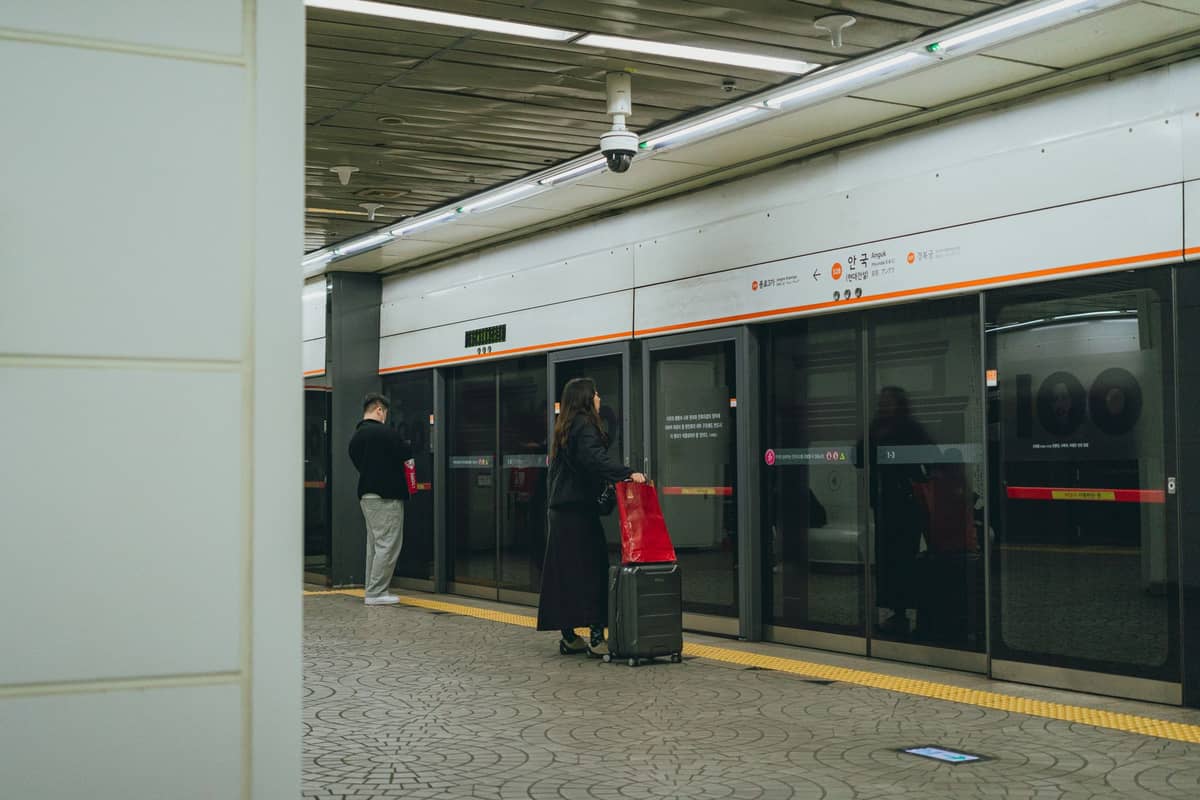
Seoul has a reputation as a city for solo travelers and foodies, but it handles family travel surprisingly well. The subway system is extensive, most stations have elevators, and a large proportion of attractions are either free or have low-cost entry. The city also has a strong culture of child-friendliness in public spaces — you will rarely feel unwelcome with a stroller or a noisy toddler.
The main practical advantage is variety. On a single trip, you can balance a morning at Gyeongbokgung Palace with an afternoon at an indoor aquarium if the weather turns. Free parks absorb the budget, while paid attractions like Lotte World or KidZania justify the cost for a full-day experience. Families staying a week will rarely run out of options across different age groups.
💡 Local tip
Load a T-money card at any convenience store or subway station. It covers the metro, buses, and even some taxis. Children under a certain age (currently under 6) may ride free — confirm the current age policy with SMRT or the Seoul Metro website before travel, as it can change.
Best Free and Low-Cost Outdoor Options
Children's Grand Park (어린이대공원) in Gwangjin-gu is the single best free family destination in Seoul. Entry to the park itself is free; you pay only for specific rides, the zoo, and a few indoor attractions inside the grounds. The zoo is large enough to keep children engaged for two to three hours, and the open green spaces around it are good for picnics and running around. The park is accessible from Eorinnidaegongwon station on Line 5 and is most enjoyable on weekday mornings before school groups arrive.
Seoul Forest in Seongsu is a 1.16 km² park along the Han River with a deer habitat where children can feed deer at close range. There are also well-maintained playgrounds, insect gardens, and wide cycling paths. Entry is free, and the park connects easily to the Seongsu neighborhood for a coffee stop for parents. Weekends are busy but manageable; arrive before 10am if you want the deer feeding area without crowds.
The Han River parks stretch along both banks of the Han River and are genuinely excellent for families with younger children. Rent bikes (tandems and child seats available at most rental points), visit the splash zones in summer, or just use the wide lawns. Yeouido and Ttukseom sections are the most family-friendly, with rental facilities and convenience stores nearby. Both are free to access.
- Children's Grand Park Free entry to the park grounds; paid zoo and rides. Best on weekday mornings. Accessible via Line 5.
- Seoul Forest Free. Deer feeding, playgrounds, cycling paths. Great for toddlers and primary-school-age kids. Seongsu area.
- Han River Parks (Yeouido, Ttukseom) Free. Bike rental, splash zones in summer, flat open lawns. Easy to combine with a picnic.
- Haneul Park Free. Silver grass fields, hilltop views, accessible trails. Best in autumn for the grass season (late September to November).
- Naksan Park Free. Short walls walk, good views, low effort — manageable for older toddlers in a carrier.
Indoor Attractions Worth the Admission Cost
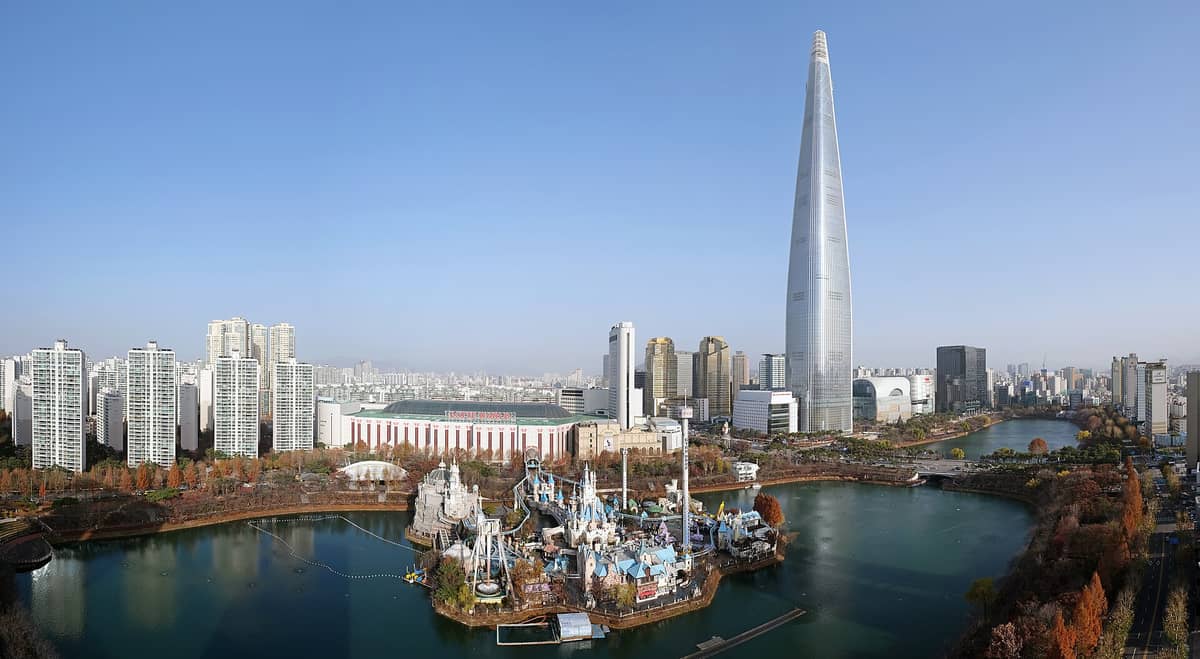
For rainy days or the intense heat of July and August, Seoul's indoor family attractions are genuinely good. Lotte World Adventure in Jamsil is the most complete option: part of it is indoors (the main Adventure park) and part is an outdoor lake-side zone (Magic Island). Prices are on the high side — expect to pay in the range of 50,000–70,000 KRW per adult depending on the entry type — but it covers a full day with rides across all age groups, from gentle carousel-style attractions to roller coasters. Booking online in advance is cheaper than the gate price.
COEX Aquarium, located inside the COEX Mall in Gangnam, is the most convenient indoor aquarium in central Seoul. It houses around 650 species and works well for children aged 2 and up. The practical advantage of COEX is that it sits inside a massive underground mall with dozens of restaurants and a large bookstore — you can extend the day without going outside. Admission is around 29,000–33,000 KRW for adults; children's rates are lower. Avoid weekend afternoons when school groups and weekend crowds peak.
KidZania Seoul, located in the Times Square mall in Yeongdeungpo, is a role-play city where children aged roughly 4–12 take on job roles — pilot, doctor, chef, banker — and earn the in-world currency. It requires at least half a day to do properly, and children typically want a full day. Adults wait in a supervised lounge area while kids move through the exhibits semi-independently, which many parents find genuinely relaxing. It is one of the few attractions that works better as children get older (ages 7–12 get the most from it). Prices and session times vary; book in advance online.
⚠️ What to skip
Some attractions marketed online as 'Seoul with kids' are actually outside Seoul city limits — in Gyeonggi Province or even further afield. Always check the address and transit time before booking. Everland theme park, for example, is around 1.5 hours from central Seoul by public transport and is a different category of day trip.
Cultural Experiences That Work for Families
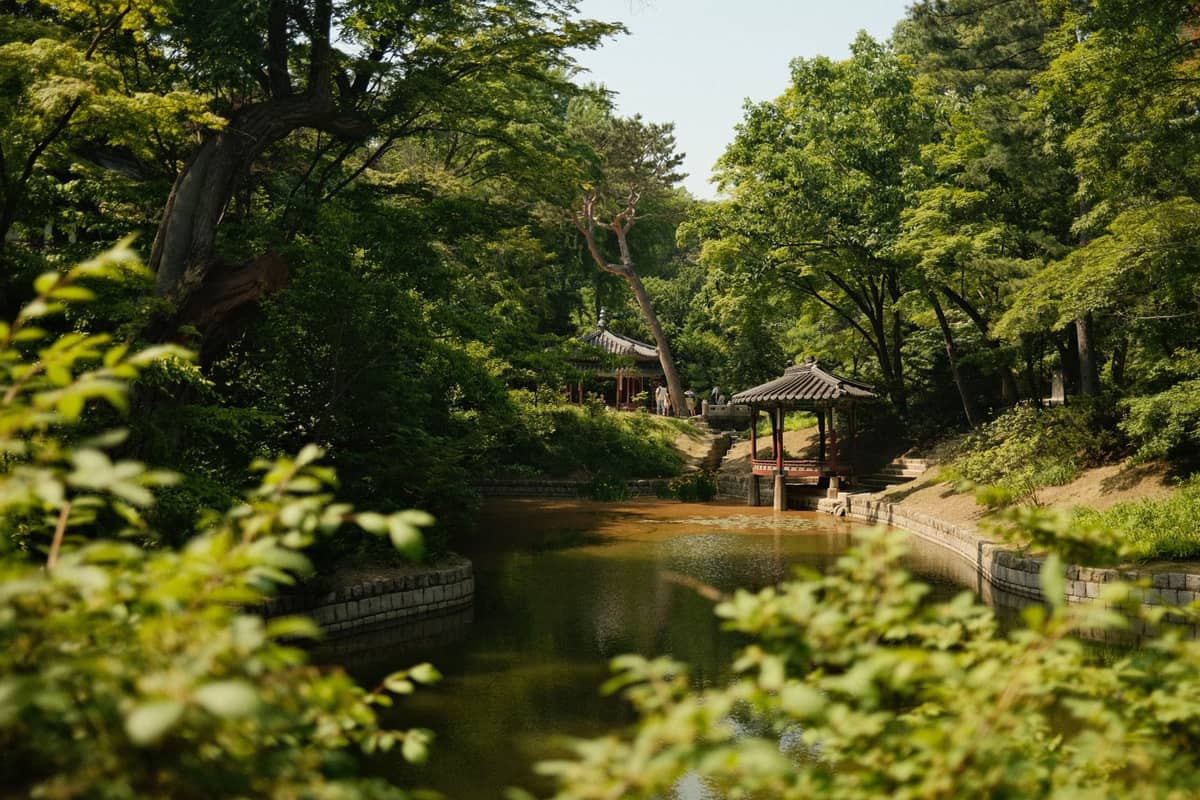
Palace visits can genuinely work with children if you pick the right one and time it well. Gyeongbokgung is the largest and most impressive, but it is also the most crowded. The Seoul palaces guide covers all five in detail, but for families, Changdeokgung's Secret Garden (Huwon) offers something different: a guided walk through forested paths, ponds, and traditional pavilions that older children find more engaging than open palace courtyards. The garden requires a separate timed ticket and has limited daily capacity, so book ahead.
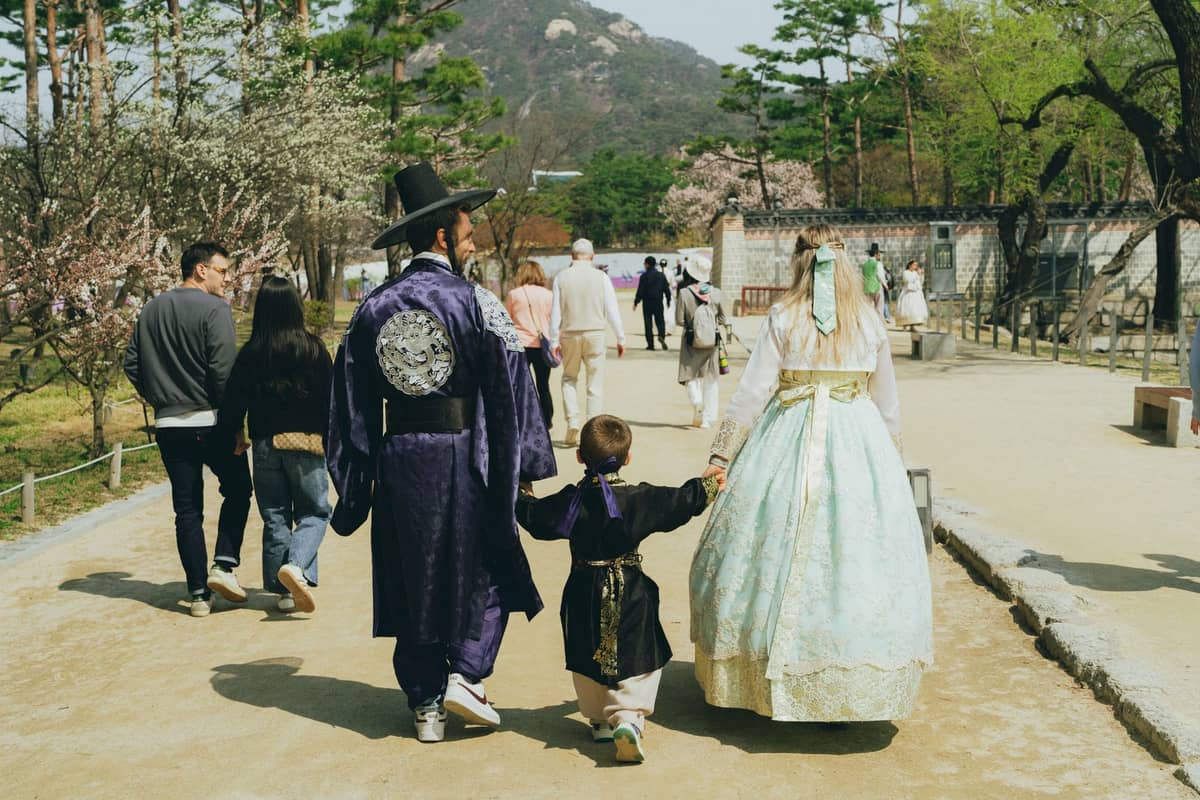
The hanbok rental experience The hanbok rental experience around Gyeongbokgung and nearby palaces is consistently popular with families. Children in hanbok (traditional Korean dress) get free entry to most of the major palaces, which makes the rental cost effectively offset. Rental shops cluster around Gyeongbokgung's east gate and charge around 10,000–20,000 KRW per person for a few hours. It is primarily a photogenic activity rather than an educational deep-dive, but children enjoy it and it creates strong memories. See the hanbok rental guide for rental tips and recommended shops.Bukchon Hanok Village is consistently popular with families. Children in hanbok (traditional Korean dress) get free entry to most of the major palaces, which makes the rental cost effectively offset. Rental shops cluster around Gyeongbokgung's east gate and charge around 10,000–20,000 KRW per person for a few hours. It is primarily a photogenic activity rather than an educational deep-dive, but children enjoy it and it creates strong memories. See the hanbok experience guide for rental tips and recommended shops.
The National Folk Museum of Korea, located inside the Gyeongbokgung palace grounds, is free with palace admission and has a dedicated children's museum annex with hands-on exhibits about traditional Korean life. It is significantly better for families than the main National Museum of Korea for younger children, though the latter's scale and dinosaur-era artifacts can hold the attention of children aged 8 and up. Both are free.
✨ Pro tip
Gyeongbokgung offers a free changing of the guard ceremony at the Gwanghwamun Gate, typically held multiple times daily (check current schedule on the palace's official site). It lasts about 20 minutes, involves elaborate costumes and drumming, and requires no ticket. Young children find the spectacle engaging without requiring any sustained attention span.
Seasonal Planning for Families in Seoul
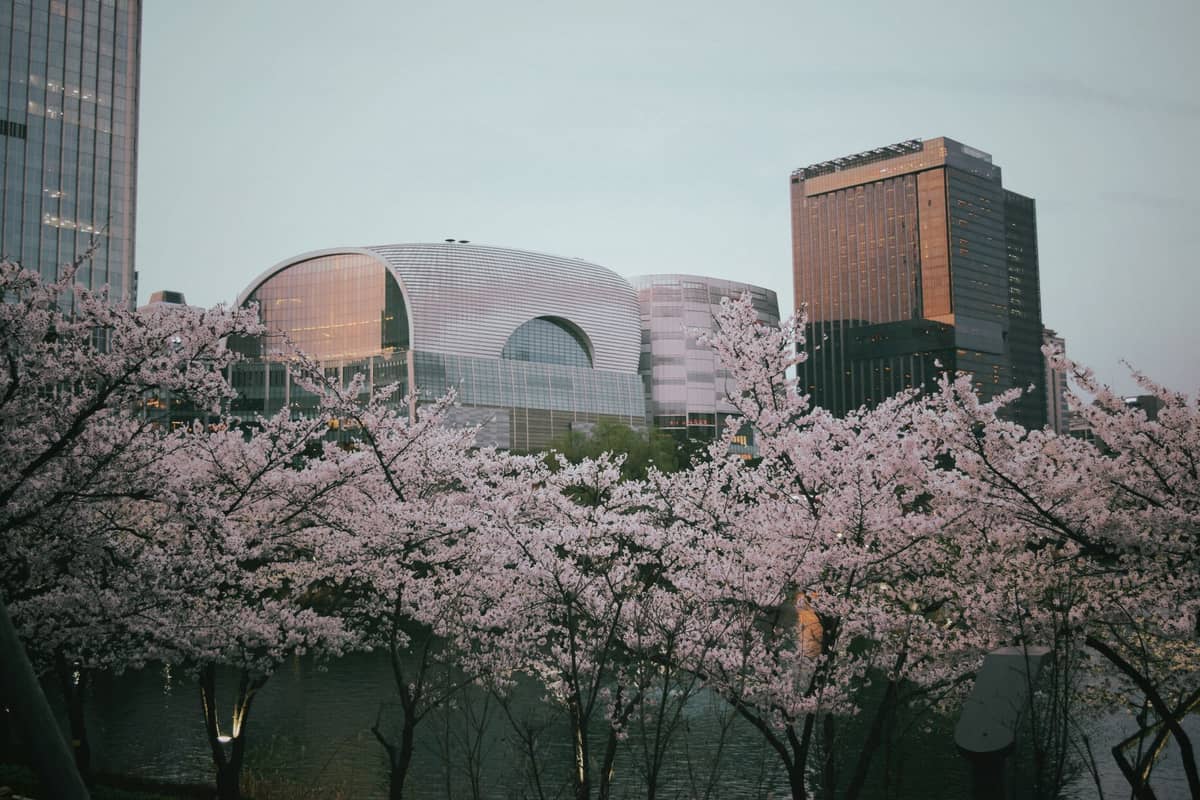
Timing matters significantly in Seoul with children. Spring (April to May) and autumn (September to October) are the most comfortable seasons for outdoor activity: temperatures sit roughly between 10–22°C, rain is relatively limited, and the city is at its most photogenic. Cherry blossoms in early April draw large crowds to parks and riverbanks, so plan popular outdoor spots for early morning.
Summer (June to August) is the most challenging season for families with young children. Temperatures regularly exceed 30°C with high humidity, and the jangma rainy season typically runs through June into July, bringing heavy downpours. This is when indoor attractions — aquariums, KidZania, COEX Mall, Lotte World's indoor section — become the daily anchor. Schedule outdoor time for early morning (before 10am) or early evening. The Han River parks have splash zones that are specifically popular in July and August.
Winter in Seoul (December to February) is cold, often dropping near or below 0°C, and dry. It is not the ideal season for families with toddlers who need outdoor movement, but indoor attractions are comfortable and less crowded. Seoul in winter has its own appeal for older children: ice skating rinks open at several locations including Seoul Plaza and Lotte World, and the city's Christmas and New Year lighting is genuinely impressive. Layer up and keep outdoor stretches short.
- Spring and autumn: prioritize outdoor parks, palace visits, and hanbok experiences
- Summer: anchor days around indoor venues; use parks only in early morning or late afternoon
- Rainy days (any season): COEX Aquarium, KidZania, Lotte World indoor zone, and children's museums
- Winter: ice skating, indoor malls, and the National Folk Museum; dress children in serious layers
Logistics, Strollers, and Getting Around
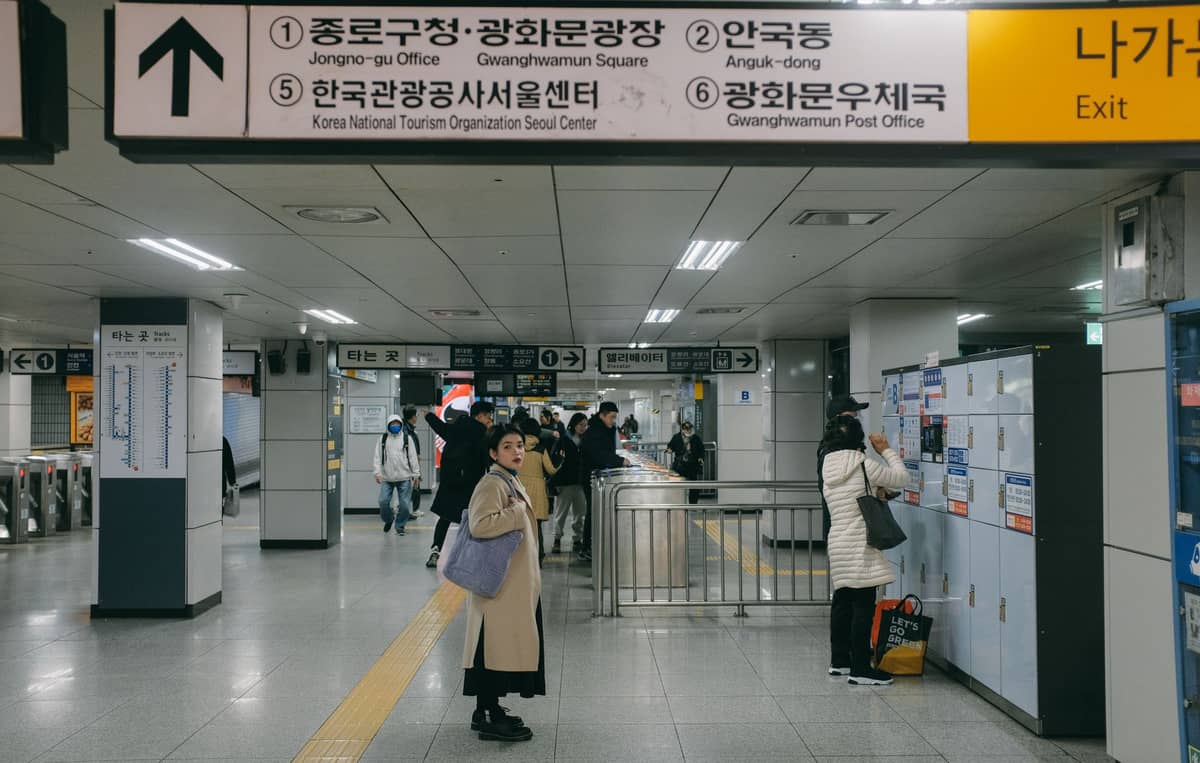
Seoul's subway system covers almost every major family attraction on this list. Most stations built or renovated in the past two decades have elevators, though older stations on Lines 1 and 2 can be inconsistent. If you are travelling with a stroller, check the station map on the Seoul Metro app before heading out. The guide to getting around Seoul covers T-money cards, taxi apps, and bus navigation in more detail.
Taxis are practical for short hops with young children, especially in the evening or bad weather. Kakao T is the standard app and works with international payment methods, though setup can require a Korean number in some configurations — confirm this before you need it. Uber has a limited Seoul presence. Standard taxis are metered and reasonably priced for shorter trips; larger 'jumbo' taxis fit bigger groups with luggage or stroller equipment.
Feeding children in Seoul is rarely a problem. Convenience stores (GS25, CU, 7-Eleven) are on almost every block and stock hot food, snacks, drinks, and basic baby supplies. Most restaurants are comfortable with children and high chairs are common in family-oriented areas. Tipping is not customary in South Korea, so no need to factor that into your meal budget.
ℹ️ Good to know
Seoul's tap water is treated and monitored regularly, but many local families and visitors use bottled or filtered water. For infants and very young children, using bottled water for formula preparation is the cautious approach. Bottled water is cheap and available everywhere.
FAQ
What is the best area to stay in Seoul with kids?
Jongno-gu (near the palaces) and Jamsil/Songpa (near Lotte World and Olympic Park) are the two most practical bases for families. Jongno puts you close to free cultural sites and good subway access. Jamsil suits families with theme-park-focused itineraries. Both have good accommodation options across a range of budgets.
Is Seoul safe for families with young children?
Seoul consistently ranks among the safest major cities in Asia. Street crime is rare, pedestrian infrastructure is generally good, and medical facilities are modern and accessible. The main practical safety concern is traffic at pedestrian crossings — hold hands with small children at busy intersections, as some drivers treat amber lights aggressively.
How much does a family day out in Seoul cost?
It varies significantly by activity type. A full free day (parks, palace changing of the guard, picnic from a convenience store) can cost under 10,000 KRW per adult. A paid day (Lotte World, aquarium, or KidZania) can run 50,000–70,000 KRW per adult before food. Most families mix the two across a week-long trip.
Are Seoul's major attractions stroller-friendly?
Most modern attractions are. COEX Mall, Lotte World, KidZania, and children's museums are fully stroller-accessible. The palace grounds have paved paths, though some uneven stone surfaces exist in older sections. Seoul Forest and Han River parks are flat and well-paved. The main challenge is older subway station exits, so check elevator availability in advance.
What age group is Seoul best suited for in terms of family travel?
All age groups are catered for, but the sweet spot is children aged 4–12. Toddlers do well in parks and aquariums. Children 4 and up unlock KidZania and theme park rides. Teenagers can handle the subway independently and enjoy street food markets, the electronics district, and cultural neighborhoods. Infants and babies travel fine with some planning around feeding, nappy supplies, and rest schedules.