5 Days in Seoul: The Extended Itinerary with Day Trips
Five days is enough to experience historic Seoul, its modern neighborhoods, and at least one compelling excursion beyond the city. This guide organizes each day by district to minimize transit time, with a clear take on what's worth it and what isn't.
Plan and book this trip
Tools from our partner Travelpayouts help you compare flights and hotels. If you book through them, we may earn a commission at no extra cost to you.
Flights
Hotels map
TL;DR
- Five days in Seoul comfortably covers old Seoul, central districts, the west and east sides, Gangnam, and one full day trip outside the city.
- Organize days by neighborhood cluster, not attraction type — it saves 30-60 minutes of backtracking daily. See the full guide to getting around Seoul for transit tips.
- The top day-trip choices are the DMZ, Nami Island, and Suwon Hwaseong Fortress — each requires a different approach and budget.
- Spring (April–May) and autumn (September–October) are the best seasons; summer brings monsoon rains in June–July, winter drops below 0°C.
- Get a T-money card at the airport or any convenience store — it covers the metro, buses, and even some taxis. Check Seoul on a budget for cost-saving strategies.
Before You Arrive: Practical Groundwork
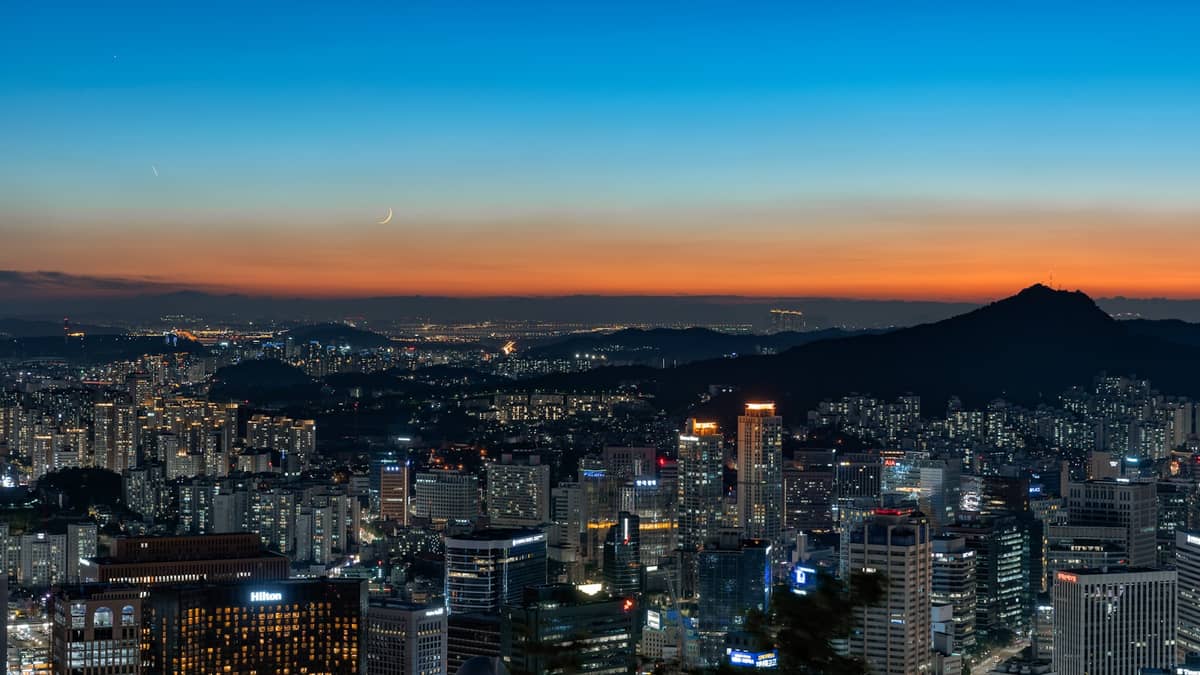
Seoul Special Metropolitan City (서울특별시) sits in northwestern South Korea on the Han River, covering 605 square kilometers with a population of around 9.3 million. Most international travelers land at Incheon International Airport (ICN), roughly 50 km west of the city center. The AREX airport rail connects Incheon to Seoul Station in about 43 minutes on the express service, making it the most reliable option. Airport limousine buses run direct routes to major districts like Gangnam and Hongdae for around 15,000–18,000 KRW, useful if your accommodation is far from Seoul Station. Taxis are door-to-door convenient but cost significantly more, especially with tunnel tolls.
South Korea offers visa-free entry for many nationalities, but eligibility depends on your passport and current policy — verify with the Korean Embassy before booking. The currency is the South Korean won (KRW); withdrawal from ATMs at convenience stores (GS25, CU, 7-Eleven) is straightforward. Tipping is not customary. Electricity runs on Type C and F plugs at 220V. The emergency number is 112 for police and 119 for fire and ambulance.
💡 Local tip
Buy a T-money card on arrival and load it with at least 30,000 KRW to start. A single metro ride costs roughly 1,550 KRW or more depending on distance. The T-money card also works seamlessly on buses, making it far more convenient than buying individual fares each time.
Day 1: Historic Seoul — Palaces, Bukchon, and Insadong
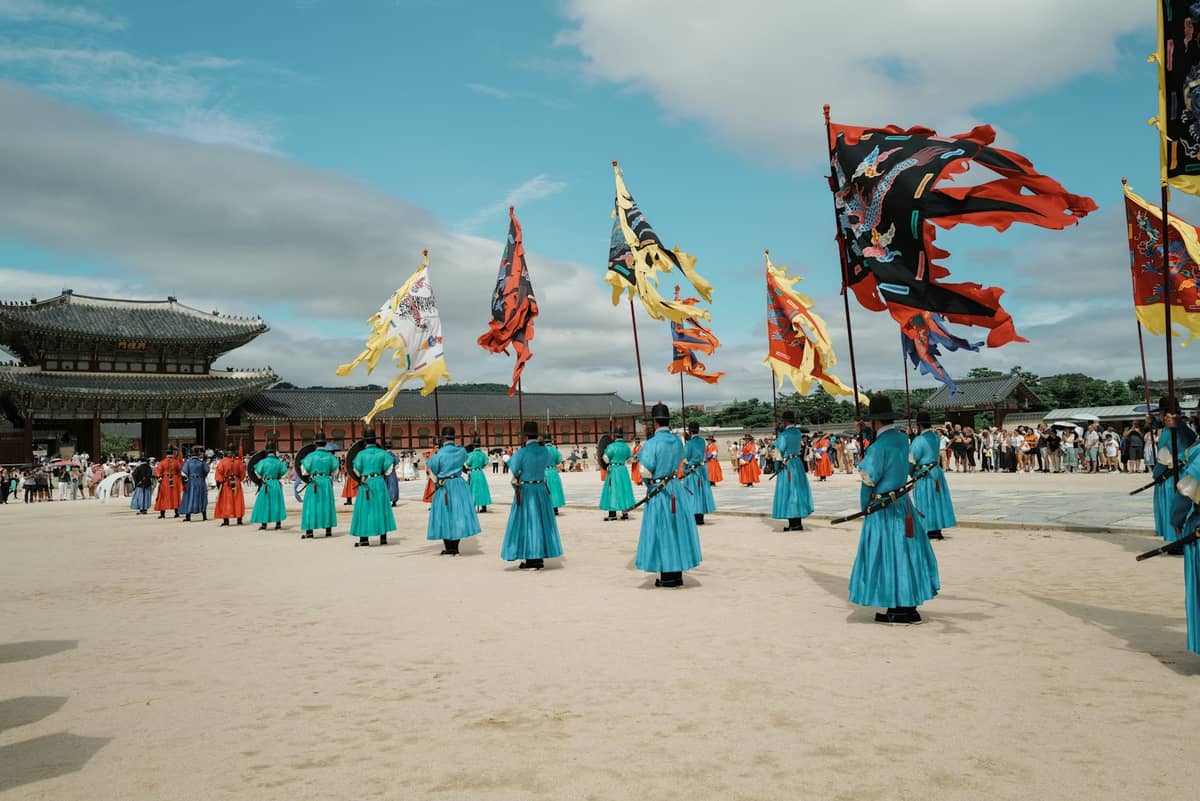
Start at Gyeongbokgung Palace, the largest and most intact of Seoul's five Joseon-era palaces. Arrive before 10:00 AM to beat tour groups — the changing of the guard ceremony at the main gate runs multiple times daily and is worth timing your arrival around. Budget 1.5 to 2 hours for the palace grounds, including the National Folk Museum inside. From there, walk northeast into Bukchon Hanok Village, a residential area of preserved traditional Korean houses (hanok) that offers the most photogenic streets in old Seoul. The main viewpoint on Gahoe-dong's steep lane gets crowded by mid-morning, so earlier is always better.
After Bukchon, head south to Insadong for lunch — the pedestrian street is lined with Korean restaurants, tea houses, and craft shops. Ssamziegil, the courtyard complex midway down the street, has good food stalls and independent shops without the tourist-trap pricing of the main strip. In the afternoon, consider Changdeokgung Palace, a UNESCO World Heritage Site whose Secret Garden (Huwon) requires a separate ticket and timed entry — book ahead online if you want the garden tour. End the day at Jongmyo Shrine, the Confucian royal ancestral shrine that feels genuinely removed from the tourist circuit even in peak season.
Day 2: Central Seoul — Namsan, Myeongdong, and Cheonggyecheon
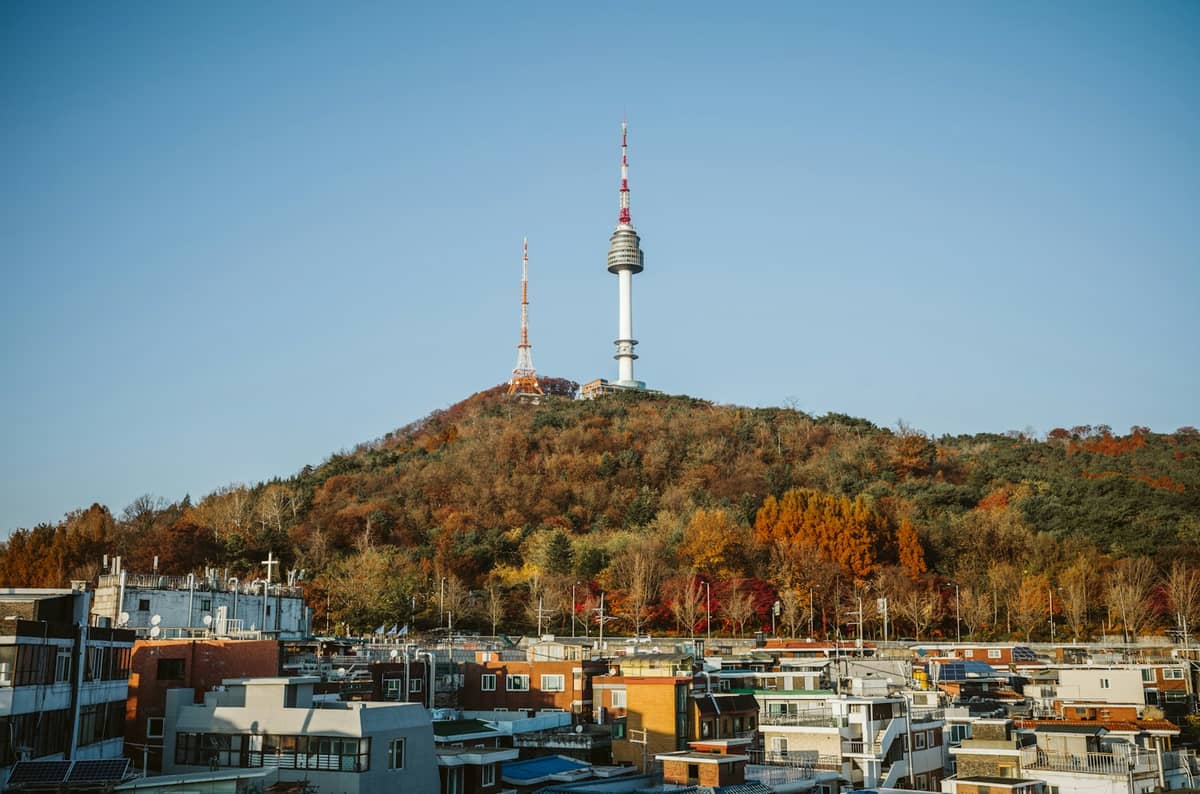
Day 2 covers the geographic and commercial center of the city. Begin at Namsan Mountain — take the cable car or walk the trail up for panoramic views before the haze sets in. N Seoul Tower sits at the summit and is a legitimate viewpoint, though the observation deck entry fee (around 29,000 KRW) is skippable if you're satisfied with the free outdoor platform below. The surrounding Namsan Park is excellent for a morning walk regardless of season.
From Namsan, descend into Myeongdong for lunch. This district is Seoul's most commercially dense and genuinely hectic at midday and on weekends — the street food stalls along the main pedestrian lane are good value (egg bread, tteokbokki, skewered meats for 2,000–5,000 KRW each) even if the surrounding cosmetics shops feel relentless. Skip the sit-down tourist restaurants here; the street stalls are the actual draw.
In the afternoon, walk north to Cheonggyecheon Stream, the 10.9-km urban waterway restored from a covered highway in 2005. Walking east along the stream toward Dongdaemun Design Plaza takes about 40 minutes at a relaxed pace and is one of the most pleasant urban walks in the city. The DDP itself — Zaha Hadid's aluminum-clad complex — is worth seeing from the outside; check the exhibition schedule if you want to go inside. End the evening at Gwangjang Market for bindaetteok (mung bean pancakes) and mayak gimbap — this is one of Seoul's oldest traditional markets and the food quality is consistently high.
⚠️ What to skip
Myeongdong's sit-down restaurants near the main pedestrian street frequently charge inflated prices targeting tourists. The same Korean dishes available for 8,000–12,000 KRW in other neighborhoods can run 15,000–20,000 KRW here. Eat street food in Myeongdong, then save proper meals for Insadong, Seongsu, or anywhere off the main commercial strip.
Day 3: Day Trip — DMZ, Nami Island, or Suwon
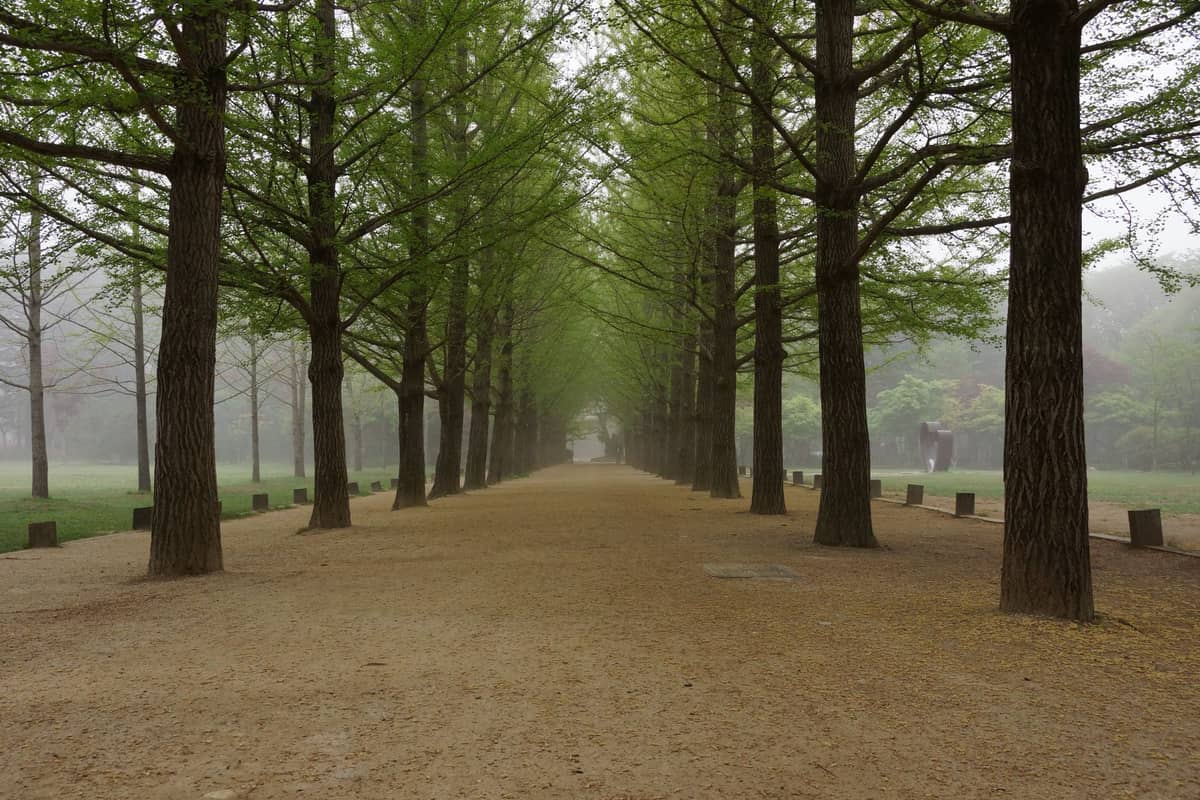
Day 3 is best reserved for an excursion outside central Seoul. Three options dominate most itineraries, and they suit different types of travelers.
- DMZ Tour The Demilitarized Zone between North and South Korea is roughly 60 km north of Seoul. Independent access is restricted — you need to join an organized tour, which typically includes the Third Infiltration Tunnel, Dora Observatory, and Dorasan Station. Most tours depart from central Seoul hotels or the War Memorial area and last 5–8 hours. Cost is typically 40,000–80,000 KRW depending on the operator and inclusions. Book at least a day ahead, especially in peak season. This is a genuinely significant historical site, not a theme park — come with context.
- Nami Island This small river island about 80 km northeast of Seoul became famous partly through the Korean drama 'Winter Sonata.' It's scenic, especially during spring cherry blossoms and autumn foliage, but can feel overly curated. Reach it via ITX-Cheongchun train from Cheongnyangni Station (about 70–80 minutes) then a short taxi or bus to the ferry. Round-trip ferry plus island entry runs around 16,000 KRW. Good for couples or families; less compelling if you're primarily interested in history or urban culture.
- Suwon Hwaseong Fortress Suwon, about 30 km south of Seoul, is home to Hwaseong Fortress, a late-18th-century UNESCO-listed defensive wall that circles much of the old city. It's reachable in 30–40 minutes by subway (Line 1) and costs almost nothing to visit. The full wall circuit takes about 2 hours on foot and rewards those interested in Korean history. Less touristed than the DMZ or Nami Island, which is either a selling point or a drawback depending on your travel style.
✨ Pro tip
For the DMZ, book through an operator that includes the Third Infiltration Tunnel and Dora Observatory — some budget tours skip these highlights to cut time. The USO tour (run from Yongsan) is well-organized and credible, though there are several reputable private operators as well. Check cancellation policies: tours are occasionally suspended on short notice for security reasons.
Day 4: West and East Seoul — Hongdae, Seongsu, and Hangang
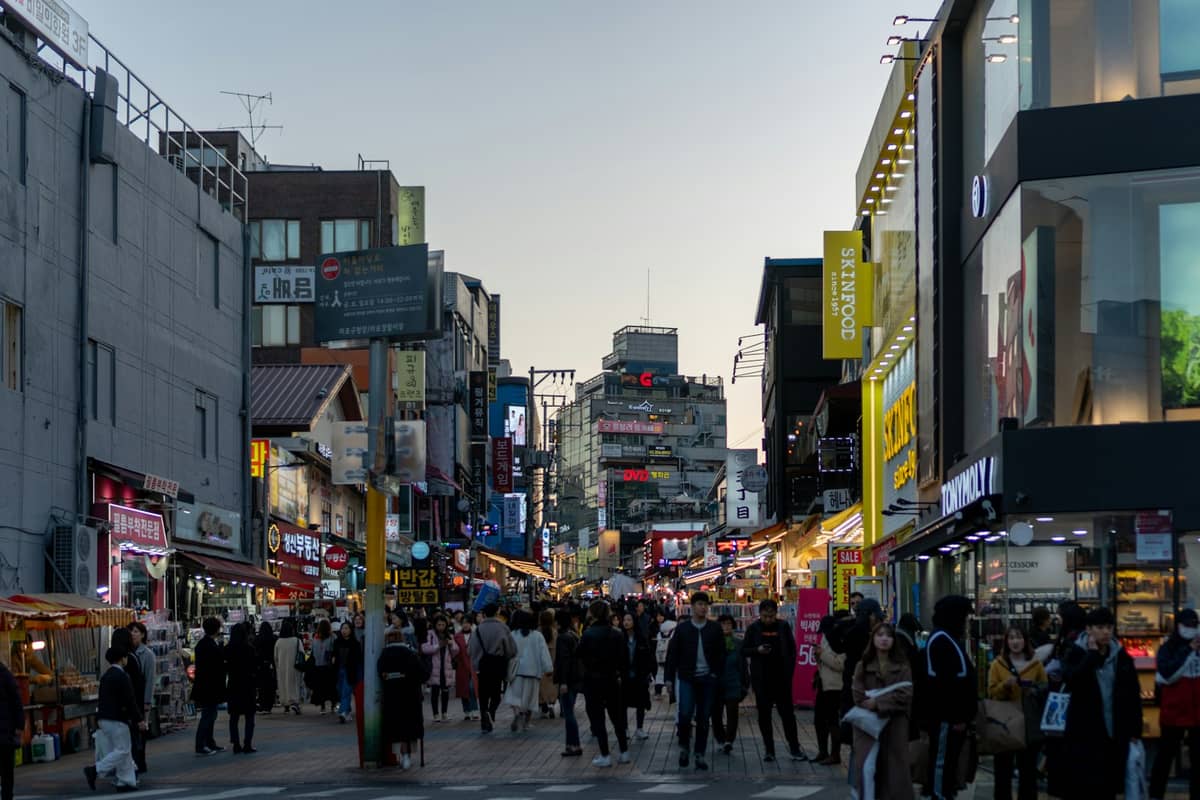
Day 4 balances the creative energy of west Seoul with the industrial-chic atmosphere of the east. Start in Hongdae, the university district in Mapo-gu that anchors Seoul's independent music scene, street art, and café culture. The area is worth an hour or two in the morning before it gets crowded — the covered market streets near Hongik University station, the small indie record shops, and the independent clothing stores are what define the neighborhood. If K-pop experiences are on your list, several fan shops, dance academies, and SM/JYP-affiliated stores are concentrated here and in nearby areas.
Cross the Han River in the afternoon to reach Seongsu, Seoul's former industrial district that has become the most interesting neighborhood for design studios, specialty coffee, and converted-factory restaurants. Unlike Hongdae, Seongsu hasn't yet been fully commercialized — it's denser with genuinely independent businesses than most comparable neighborhoods. Plan 2–3 hours here for walking and coffee. Before heading back, stop at Hangang Park near Ttukseom or Banpo for an early evening walk along the river. In summer, the parks fill with locals picnicking and cycling — convenience store beer and ramyeon at the riverside is a legitimate Seoul experience.
Day 5: South Seoul — Gangnam, COEX, and Bongeunsa
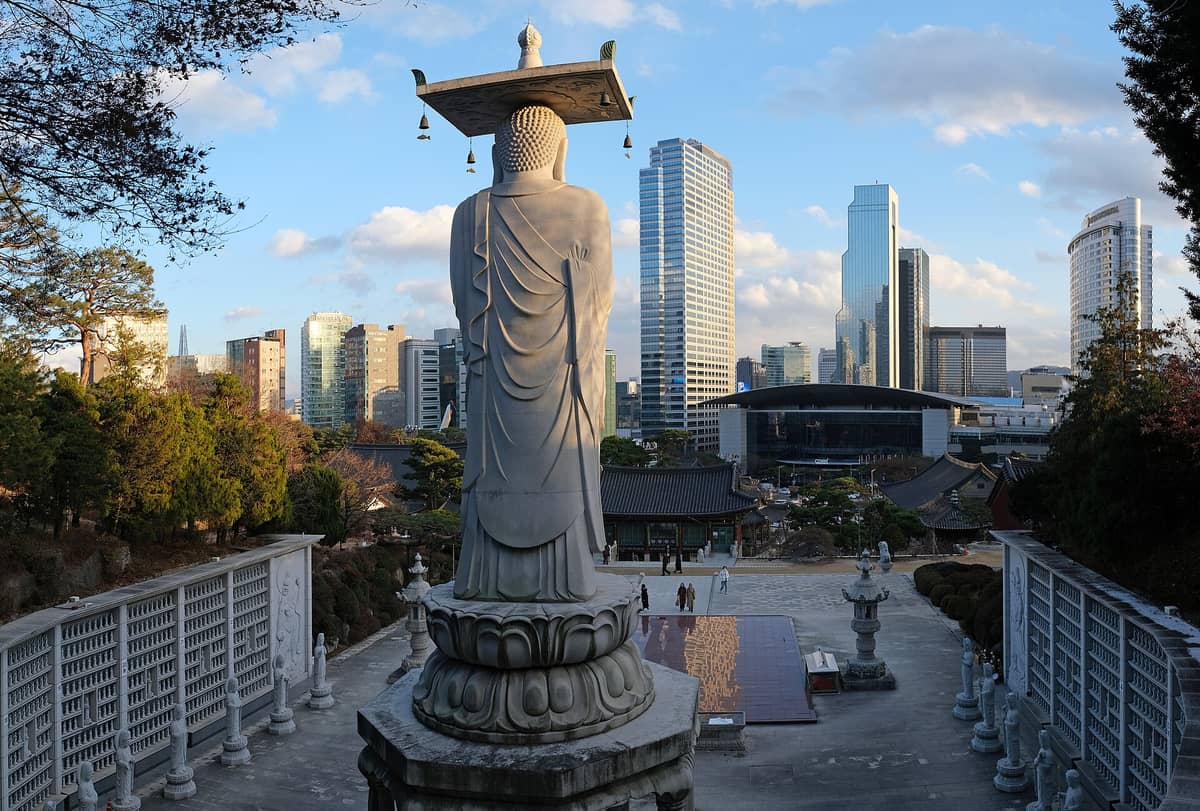
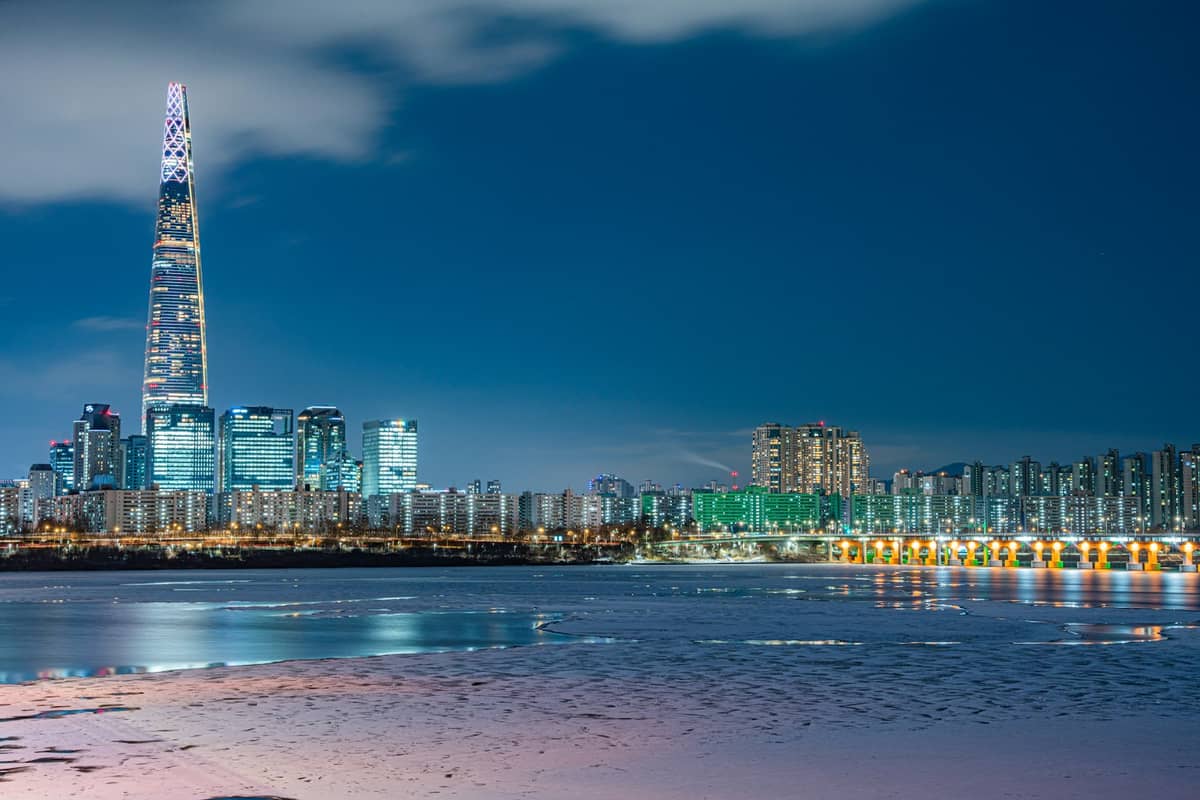
Save Gangnam for your final full day. The district's reputation from the Psy song is not entirely wrong — it is conspicuously wealthy, well-maintained, and expensive compared to older parts of the city. Start at Bongeunsa Temple, a working Buddhist temple that sits directly across from the glass towers of the COEX complex. The contrast is one of the more arresting visual juxtapositions in Seoul, and the temple itself is calm and properly functioning rather than purely decorative. From there, walk to COEX Mall primarily for the Starfield Library, a cavernous open bookshelves installation inside the mall that's become one of Seoul's most photographed interiors.
The afternoon is well spent in Gangnam proper — Garosu-gil, the tree-lined street in Sinsa-dong, is the most walkable part of the district, with independent boutiques and good restaurants. If shopping is a priority, this is also your window: Seoul's best shopping spans Myeongdong, Dongdaemun, and Gangnam, each with different strengths. Gangnam skews toward premium and Korean designer brands; Dongdaemun is better for fashion at scale and late-night retail. For a high-altitude goodbye to the city, Lotte World Tower's 123rd-floor observation deck in nearby Jamsil offers some of the best views in Seoul, weather permitting.
- Buy your T-money card and load it with 30,000–50,000 KRW on arrival — it covers metro, bus, and select taxis.
- Download Naver Maps: it handles Seoul transit far more accurately than Google Maps for real-time subway routes.
- Kakao T is the dominant ride-hailing app; have it set up before you need it, as signing up mid-trip can be frustrating.
- Many attractions offer discounted or free entry with proof of arrival at Incheon Airport (the Korea Tour Card offers transit and discount bundles).
- Convenience stores (CU, GS25, 7-Eleven) are everywhere and genuinely useful: affordable food, ATMs, mobile data SIM top-ups, and other basics.
- Carry a portable battery — navigation and translation apps drain phones faster than expected on travel days.
ℹ️ Good to know
Seoul's weather makes a real difference to this itinerary. Spring (April–May) brings cherry blossoms and comfortable temperatures around 10–20°C. Autumn (September–October) is similarly mild with vivid foliage. Summer is hot and humid (25–30°C) with a rainy season from late June to July. Winter drops near or below 0°C — outdoor itinerary items like the Hangang riverside and palace grounds are less pleasant but the city is far less crowded.
Adapting This Itinerary: Season, Budget, and Travel Style
The sequence above works for most first-time visitors, but it's worth knowing which elements are truly flexible. The day trip on Day 3 is the most interchangeable: the DMZ suits travelers with an interest in geopolitics and 20th-century Korean history; Nami Island works well for those visiting during the spring cherry blossom season or autumn foliage; Suwon is the best pick for anyone who wants UNESCO history with very little tourist infrastructure around it.
Budget travelers can do this entire five-day trip affordably. Accommodation in guesthouses or budget hotels in Hongdae or Jongno runs 30,000–60,000 KRW per night. Daily food costs can be held under 20,000–30,000 KRW by eating at pojangmacha stalls, convenience stores, and neighborhood restaurants rather than tourist-facing spots. Many major palaces and Jongmyo are free for Korean citizens under 24; foreign visitors 18 and under typically enter free or on certain days — check the official Visit Seoul site for current policies. For a full breakdown, free things to do in Seoul covers the best no-cost options across all districts.
FAQ
Is 5 days enough for Seoul?
Five days is a solid amount of time for a first visit. It's enough to cover the main historic sites, several distinct modern neighborhoods, and one day trip outside the city without feeling rushed. That said, Seoul is genuinely large — 605 square kilometers — and there are neighborhoods and experiences that a 5-day trip won't reach. Most visitors who spend 5 days leave with a strong sense of the city and a list of reasons to come back.
What is the best day trip from Seoul for a 5-day itinerary?
It depends on your interests. The DMZ is the most historically significant and unlike anything else in the world, but it requires a guided tour and advance booking. Nami Island is scenic and easy to reach independently, especially beautiful during cherry blossom season (late March to early April) and autumn foliage (late October). Suwon's Hwaseong Fortress is UNESCO-listed, reachable by subway, and far less crowded than the other two options — making it the best choice for travelers who prefer to explore at their own pace.
What is the best area to stay in Seoul for a 5-day trip?
Jongno-gu (near Gyeongbokgung and Insadong) gives the best access to Day 1 sights and is well-connected by subway. Myeongdong (Jung-gu) is central and convenient but overpriced relative to comparable accommodation elsewhere. Hongdae (Mapo-gu) is a good base for younger travelers and has excellent nightlife and transport links. Gangnam is well-connected but further from the historic center, making it better suited to business travelers or those on a luxury trip.
How do I get around Seoul efficiently during a 5-day trip?
The Seoul Metropolitan Subway is the backbone of the city and covers every area in this itinerary. A T-money card loaded with KRW and Naver Maps for navigation is the standard approach — Google Maps handles Seoul transit adequately but Naver is more accurate for real-time subway information. Taxis (or Kakao T rides) are useful for late-night returns or trips that span awkward subway routes. Walking is underrated: many of the Day 1 and Day 2 sights are within 15–20 minute walks of each other.
What should I eat during 5 days in Seoul?
A five-day trip can cover a genuine range of Korean food without repeating. Priorities: Korean BBQ (samgyeopsal or galbi) at a proper grill restaurant, bibimbap or doenjang jjigae at a neighborhood pojangmacha or lunch spot, bindaetteok and mayak gimbap at Gwangjang Market, tteokbokki from street stalls in Myeongdong or Insadong, and fried chicken with beer (chimaek) as an evening option anywhere. Seoul's convenience stores (GS25, CU) also serve genuinely good cheap food that locals eat regularly — don't overlook them for breakfast or late-night snacks.