Korean BBQ in Seoul: Best Restaurants, What to Order, and How It Works
Korean BBQ in Seoul is one of the city's defining food experiences, but navigating it well takes more than just showing up hungry. This guide covers the best restaurants by type, how to order confidently, what everything costs, and the etiquette mistakes that mark out first-timers.
Plan and book this trip
Tools from our partner Travelpayouts help you compare flights and hotels. If you book through them, we may earn a commission at no extra cost to you.
Flights
Hotels map
TL;DR
- Korean BBQ means grilling meat at your table, usually over charcoal or gas, with free refillable side dishes called banchan served alongside.
- Price ranges vary dramatically: expect ₩12,000–₩30,000 per person at no-frills pork spots, up to ₩150,000+ per person at premium hanwoo restaurants. See our full guide to what to eat in Seoul for broader food context.
- The best restaurant depends on what you want: beginners should look for staff-assisted grilling; beef lovers should prioritize hanwoo specialists; budget travelers should head to any neighborhood pork belly (samgyeopsal) spot.
- Reservations matter at popular or premium restaurants, especially on weekends. Walk-ins are usually fine at mid-range spots on weekdays.
- Every neighborhood in Seoul has solid BBQ options. Myeongdong and Mapo are reliable for tourists; Seongsu and Yongsan are where locals tend to eat.
What Korean BBQ Actually Is (and How It Works)
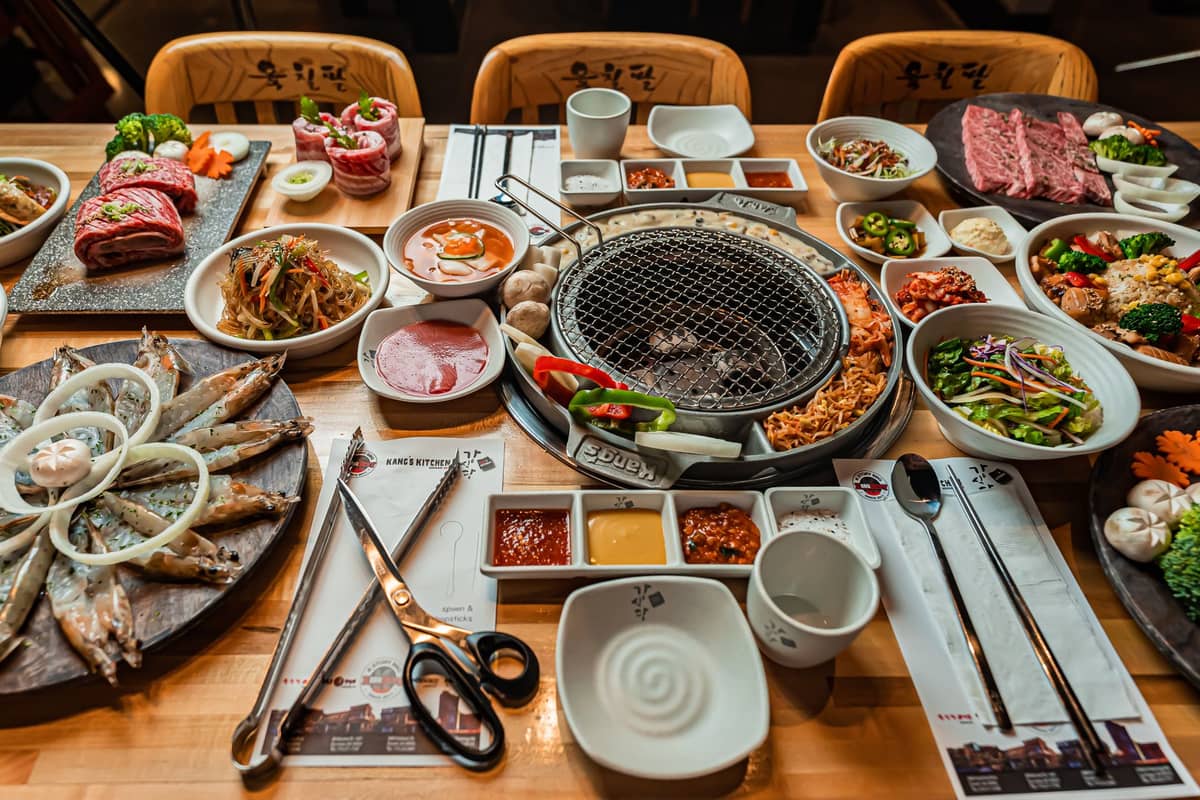
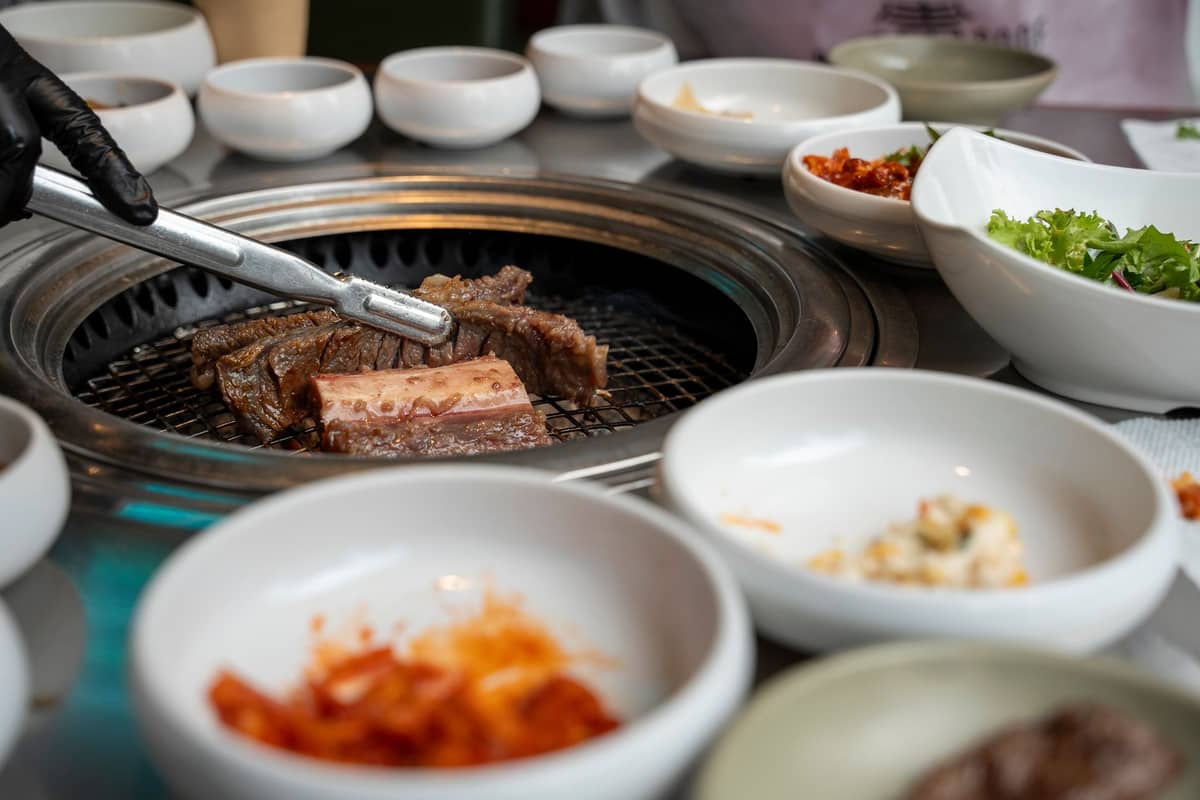
Korean BBQ, known locally as gogi-gui (고기구이), is not a specific dish but a style of dining. Raw or marinated meat arrives at your table and gets cooked on a grill built into the table itself, usually fueled by charcoal or gas. You eat as you cook, wrapping meat in lettuce or perilla leaves with rice, fermented soybean paste (doenjang), raw garlic, and sliced green chili. It is social, slow, and built for groups.
The free side dishes that come with every Korean BBQ meal are called banchan. These typically include kimchi, pickled radish, seasoned spinach, bean sprouts, and various fermented or braised vegetables. They are refillable, so ask for more without hesitation. The quality and variety of banchan is one of the more reliable ways to judge a restaurant's overall standards.
💡 Local tip
At most mid-range and upscale restaurants in Seoul, a staff member will come to your table and grill the meat for you, especially if you look unsure. At cheaper spots, you are expected to grill it yourself. Watch neighboring tables for cues on how the grill is being managed.
A common confusion for first-timers: the per-person price listed in menus usually refers to a single portion of one meat cut, not a full meal. Most groups order two or three different cuts plus a rice dish or stew (jjigae) to finish. Budget accordingly rather than assuming the listed price covers everything.
The Main Cuts: What to Order and Why It Matters
The single most important decision at any Korean BBQ restaurant is whether you are eating pork or beef, because the two often come from entirely different types of establishments. Pork belly joints (samgyeopsal-jip) tend to be casual, affordable, and found on almost every block in Seoul. Beef restaurants, particularly those serving Korean native cattle (hanwoo), are more expensive, often more formal, and require more thought about where to go.
- Samgyeopsal (삼겹살) Thick-cut pork belly, grilled plain or lightly seasoned. The default choice for casual meals. Usually ₩12,000–₩20,000 per portion.
- Chadolbaegi (차돌박이) Thinly shaved beef brisket that cooks in seconds on a hot grill. Mild, fatty, and often the gateway cut for beef beginners.
- Galbi (갈비) Marinated beef short ribs, sweet and caramelized. LA galbi uses cross-cut ribs and is found at many BBQ restaurants. One of the most recognizable Korean BBQ cuts internationally.
- Bulgogi (불고기) Marinated sliced beef, usually sirloin or ribeye. Sweeter and more tender than other cuts. More commonly cooked in a pan insert than directly on a grill.
- Hanwoo (한우) Korean native beef, often compared to Japanese wagyu in terms of marbling and price. Served at specialist restaurants; expect to pay ₩50,000–₩150,000+ per person for premium cuts like hanwoo sirloin (deungsim) or ribeye (kkot-deungsim).
- Makchang / Gopchang (막창 / 곱창) Grilled intestines, pork or beef. An acquired taste but a staple of late-night BBQ culture, especially around Mapo and Mapo-gu neighborhoods.
ℹ️ Good to know
Hanwoo beef is graded 1++, 1+, 1, 2, and 3, with 1++ the highest marbling. Most tourist-facing hanwoo restaurants serve grade 1 or 1+. If a restaurant is marketing 'premium Korean beef' but not specifying the grade or cut, that is worth noticing.
Best Korean BBQ Restaurants in Seoul: Picks by Category
There is no single best Korean BBQ restaurant in Seoul. The right choice depends entirely on your budget, who you are eating with, and what kind of experience you want. The following recommendations are organized by category rather than ranked, because a ₩15,000 pork belly at a neighborhood joint can be more satisfying than a ₩100,000 hanwoo meal if you choose the wrong one.
- Wangbijib (왕비집) – Myeongdong One of the most tourist-accessible BBQ spots in the city. Staff often speak basic English and Chinese, and will grill for you. Solid galbi and bulgogi at mid-range prices. Good for first-timers who want guidance. Located in Myeongdong, so expect tourist-area pricing and noise.
- Mongtan (몽탄) – Yongsan / Samgakji A well-regarded spot that has developed a strong following among both locals and food-focused travelers. Known for high-quality beef cuts rather than pork. Reported at ₩30,000–₩60,000 per person. Reservations recommended on weekends.
- Born and Bred (본앤브레드) – near Majang-dong One of Seoul's better-known hanwoo specialists. Positioned at the premium end of the market at ₩50,000–₩120,000 per person. The beef quality justifies the price for dedicated meat enthusiasts, but it is not the right call for a casual group dinner.
- Geumdwaeji Sikdang (금돼지식당) Frequently cited in both Korean and international food press for its pork-focused menu. Known for aged and specialty pork cuts rather than standard samgyeopsal. Often requires a reservation. Mid-to-upper range pricing.
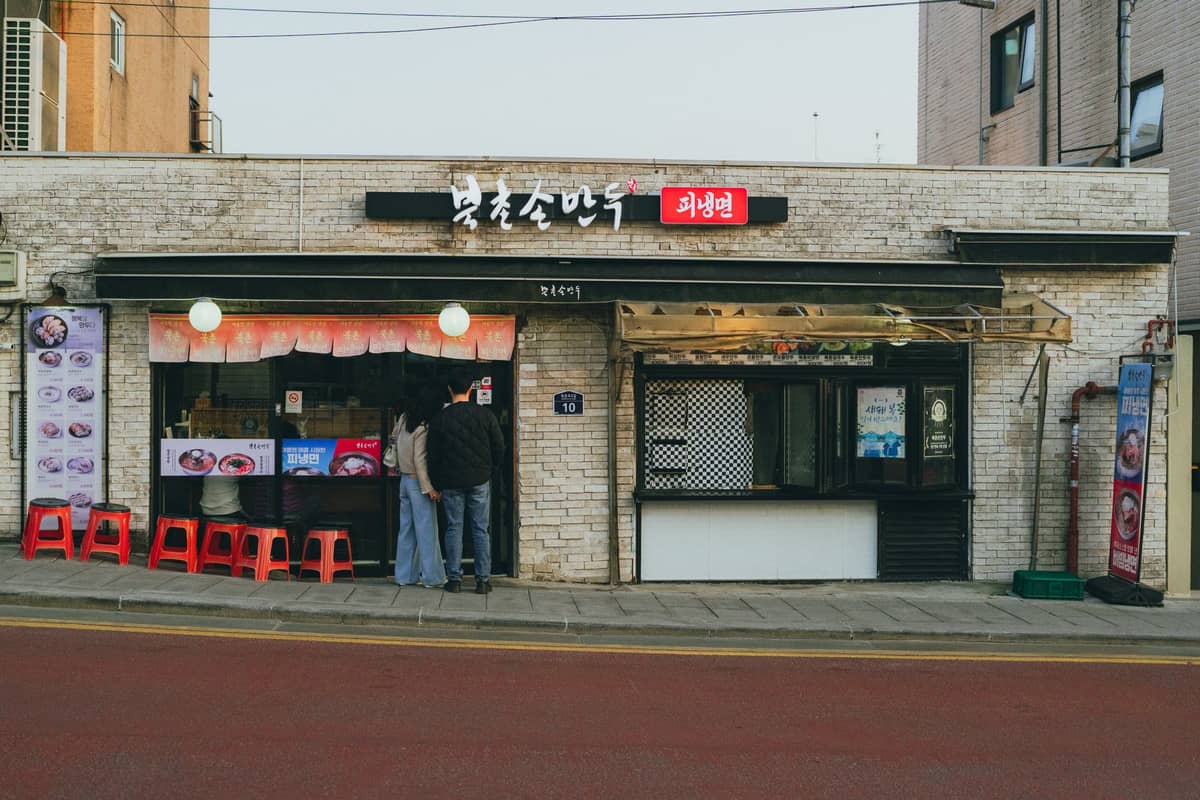
- Neighborhood Samgyeopsal Spots For the most authentic and affordable experience, skip the well-known names and find a packed local pork belly restaurant in Mapo, Hongdae, or Seongsu. Look for restaurants full of Koreans, a visible grill ventilation system overhead, and a laminated paper menu. These meals regularly come in under ₩20,000 per person including soju.
If you are planning a broader food crawl through Seoul, pairing Korean BBQ with a visit to Gwangjang Market or exploring the Seoul street food scene makes for a full day of eating. Gwangjang is particularly good for bindaetteok (mung bean pancakes) and yukhoe (Korean beef tartare), which complement rather than duplicate a BBQ dinner.
How to Order, Pay, and Behave: Practical Etiquette
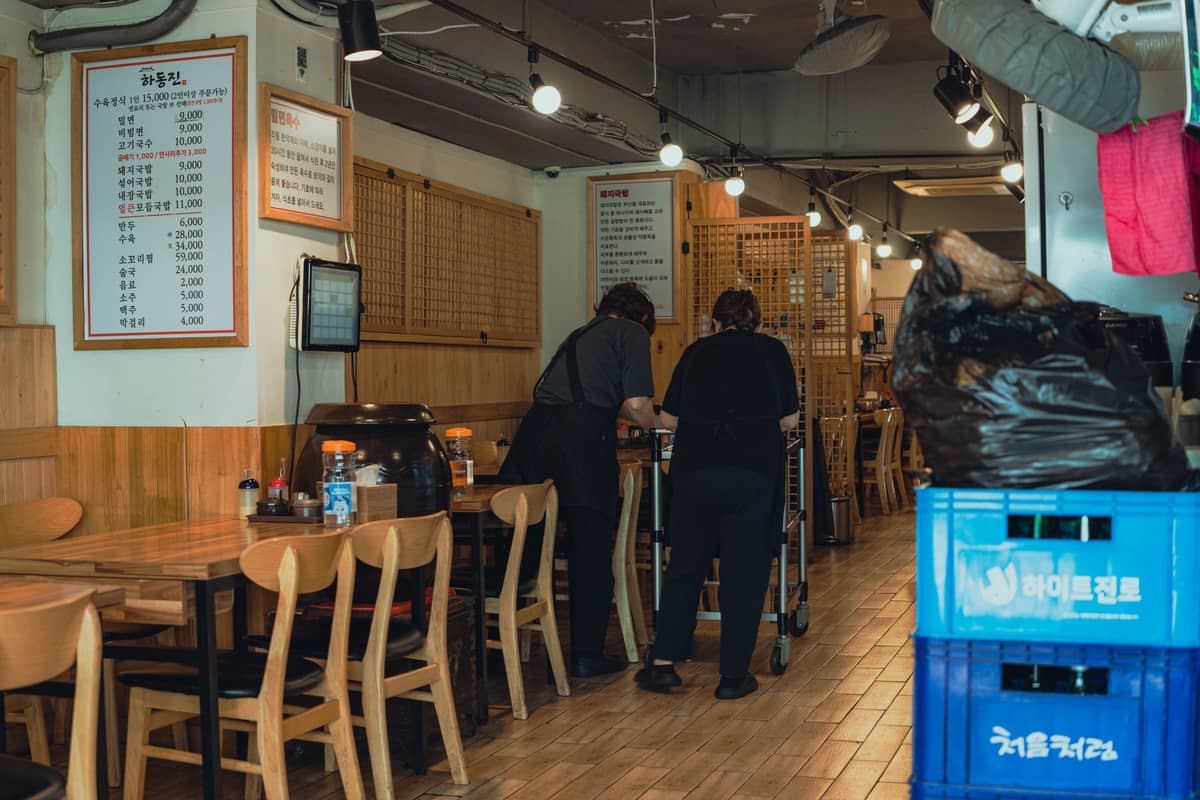
Ordering at a Korean BBQ restaurant is straightforward once you know the structure. You order by meat cut and quantity, typically in portions of 200g or 300g. Most restaurants have a minimum order of two portions if you are dining as a couple. Drinks, rice, and stews are ordered separately and are not included in the meat price. A complete meal for two usually involves two meat orders, two bowls of rice or one rice dish to share, and sometimes a doenjang jjigae (fermented soybean stew) to finish.
Menus in Seoul increasingly include photos, and many restaurants in tourist-heavy areas like Myeongdong and Insadong have English translations. In local neighborhood spots, translation apps work well for deciphering handwritten boards. Google Translate's camera function handles Korean menus reliably in most cases.
⚠️ What to skip
Tipping is not customary in South Korea, including at BBQ restaurants. Leaving a tip can sometimes cause confusion. Service charges are not typically added to bills either. The price on the menu is the price you pay, plus any additional orders.
- Pour drinks for others at the table before pouring for yourself. Accepting a drink with two hands or one hand supporting the other wrist is considered polite.
- Do not stick chopsticks upright into rice. This gesture is associated with funeral rites in Korean culture.
- Scissors are provided at most BBQ restaurants to cut meat into bite-sized pieces while it is on the grill. This is normal and expected.
- The ventilation hood above the grill will often be lowered automatically or by staff. Your clothes will likely smell of smoke after the meal. This is unavoidable.
- Refills on banchan are always free. Catch a server's eye and point to the empty dish, or call out 'Yeogi-yo' (여기요) to get attention.
Pricing Breakdown: What Korean BBQ Actually Costs in Seoul
Korean BBQ pricing in Seoul spans a wider range than most visitors expect. At the low end, a satisfying pork belly meal with soju and banchan can cost as little as ₩15,000–₩25,000 per person. At the high end, a multi-cut hanwoo tasting experience at a specialist restaurant can run ₩100,000–₩150,000 per person or more. The vast middle ground, covering most popular and well-reviewed restaurants, sits at ₩30,000–₩60,000 per person for a full meal with drinks.
For a concrete reference point: at Nambu (남부), a well-regarded restaurant in Seocho-gu near Nambu Bus Terminal Station Exit 5, a Nambu Hanpan set of 600g is priced at around USD 48.50, with kimchi rice (Kimchi Sulbap) at around USD 6.30. Opening hours are Monday to Friday 11:00–22:00 and Saturday to Sunday 12:00–22:00, with a weekday break from 15:00–16:30. These figures are from published sources but verify current pricing directly before visiting as menus change seasonally. For travelers watching costs, our guide to Seoul on a budget covers how to eat well without overspending.
✨ Pro tip
Lunch at Korean BBQ restaurants is significantly cheaper than dinner at many mid-range spots. Some offer a set lunch menu (점심 특선) with one or two cuts, rice, and soup for ₩12,000–₩18,000 per person. This is one of the best-value meals in the city if you time it right.
When to Go and How to Get a Table
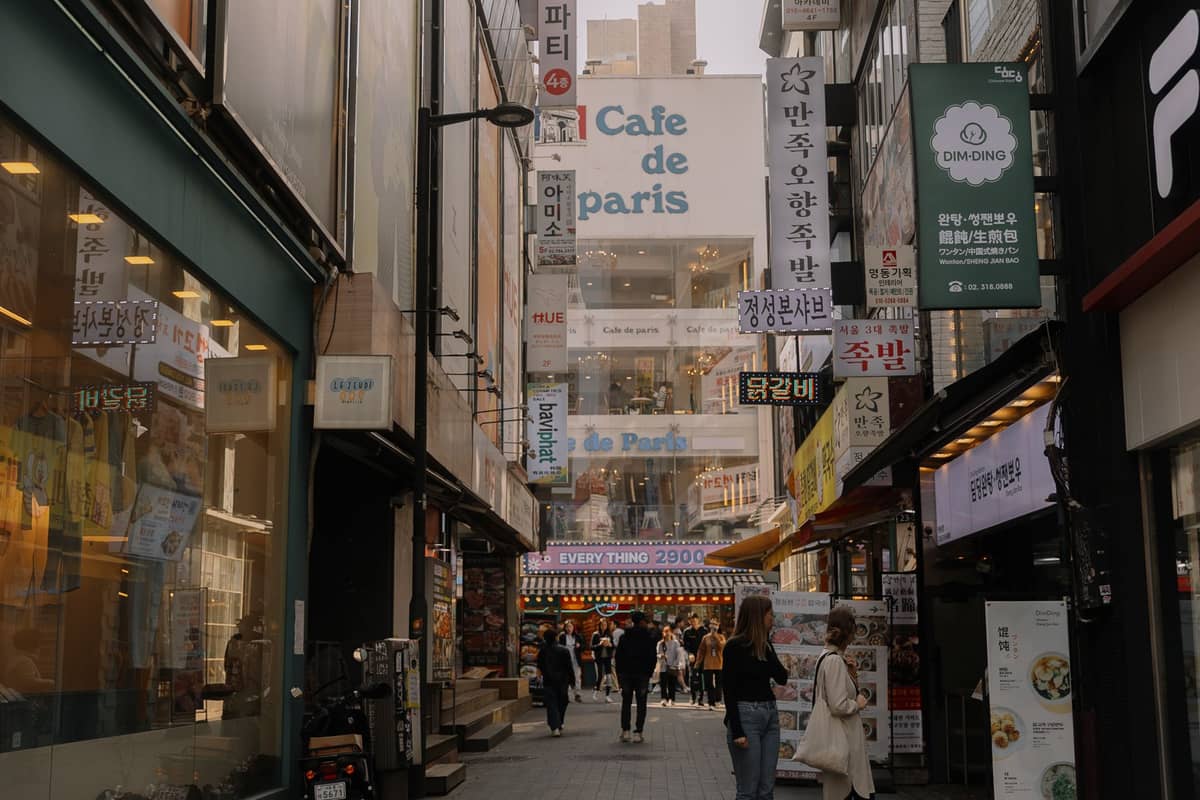
Korean BBQ is a year-round activity and does not have meaningful seasonal restrictions. Demand picks up during peak travel periods (April to May for cherry blossom season, September to October for autumn foliage), which makes reservations at popular restaurants more important. During summer, the extra heat from the grill in an already warm dining room is something to factor in if you are heat-sensitive.
For well-known restaurants, reservations through Naver Map or Kakao Map are often the most reliable options. Some restaurants also accept walk-ins by joining a physical queue. International booking platforms like Klook list certain restaurants with advance reservation options, which can be useful if you do not have a Korean phone number. For timing your Seoul visit more broadly, our guide to the best time to visit Seoul covers seasonal crowd patterns and pricing.
Weekday evenings between 6pm and 8pm are peak dining hours at BBQ restaurants. If you arrive before 6pm or after 9pm, queues at most places drop significantly. Weekend lunches at popular spots fill up faster than expected, particularly in tourist-heavy districts. The least competitive time to visit a highly rated BBQ restaurant is a Tuesday or Wednesday evening, arriving slightly before the dinner rush.
If you are staying in or near areas like Hongdae and Mapo or Itaewon and Yongsan, you have some of the city's best BBQ options within walking distance. Both neighborhoods have a dense concentration of restaurants at different price points and are well connected by metro.
FAQ
Is Korean BBQ expensive in Seoul?
It depends entirely on where you go. Budget pork belly restaurants charge ₩12,000–₩20,000 per portion, and a full meal with drinks can easily come in under ₩25,000 per person. Mid-range restaurants with better cuts and service run ₩30,000–₩60,000 per person. Premium hanwoo specialist restaurants cost ₩80,000–₩150,000+ per person. Seoul has excellent BBQ at every price point.
Do I need to know Korean to eat Korean BBQ in Seoul?
Not at all. Many restaurants in tourist areas have English menus or picture menus. In local spots, Google Translate's camera function works well for Korean text. Learning two phrases helps: 'Yeogi-yo' (여기요) to call a server, and 'Juseyo' (주세요) meaning 'please give me.' Staff at places like Wangbijib in Myeongdong often speak basic English.
What is the difference between Seoul Korean BBQ and what you get outside Korea?
The main differences are freshness, variety, and the banchan culture. In Seoul, the meat quality tends to be higher, the cuts more specific, and the free side dishes are genuinely good. The table grill setup is also more sophisticated, often using premium charcoal (참숯, charmsut) rather than gas. The social aspect of eating together while cooking is also more central to the experience in Korea than it tends to be at Korean restaurants abroad.
Can vegetarians eat at Korean BBQ restaurants in Seoul?
It is genuinely difficult. Most Korean BBQ restaurants are built around meat and the banchan often contains fish sauce, shrimp paste, or anchovy. Some restaurants have tofu or mushroom grill options, but these are exceptions rather than the rule. Vegetarians are better served exploring Korean temple food or dedicated vegetarian restaurants in Seoul rather than adapting a BBQ meal.
Do I need a reservation for Korean BBQ in Seoul?
For well-known or premium restaurants like Mongtan, Born and Bred, or Geumdwaeji Sikdang, yes. Especially on Friday and Saturday evenings. For neighborhood samgyeopsal spots, walk-ins are almost always fine on weekdays and most lunchtimes. Reservations are made through Naver Map, Kakao Map, or occasionally through the restaurant's Instagram page, which is common for trendier spots.