Seoul Street Food Guide: Best Markets, Must-Try Snacks & Practical Tips
Seoul's street food scene is one of the best reasons to visit the city. This guide breaks down the top markets, the snacks worth lining up for, what things actually cost, and the practical details that most guides skip.
Plan and book this trip
Tools from our partner Travelpayouts help you compare flights and hotels. If you book through them, we may earn a commission at no extra cost to you.
Flights
Hotels map
TL;DR
- Gwangjang Market (established in 1905) and Myeongdong are the two anchors of Seoul street food, but each serves a very different crowd and atmosphere.
- Most individual snacks cost 1,000–6,000 KRW; a proper sit-down market meal runs 12,000–15,000 KRW.
- Bring cash. Many stalls, especially in traditional markets, prefer cash and may not accept cards.
- Spring (April–May) and autumn (September–October) are the best seasons for outdoor eating; for full context on timing, see the best time to visit Seoul.
- Stall hours vary by vendor. Some stalls in major markets close on Sundays or Mondays, so check before you go.
Why Seoul Street Food Is Worth Your Time
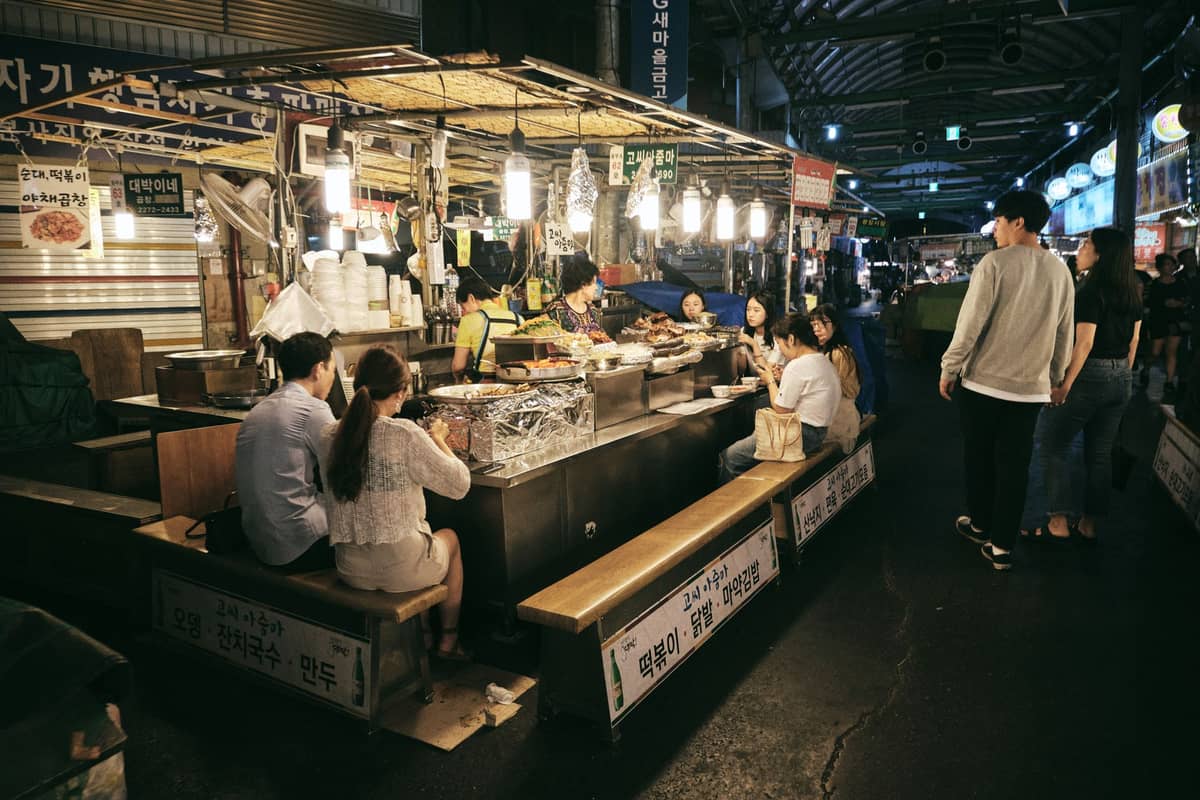
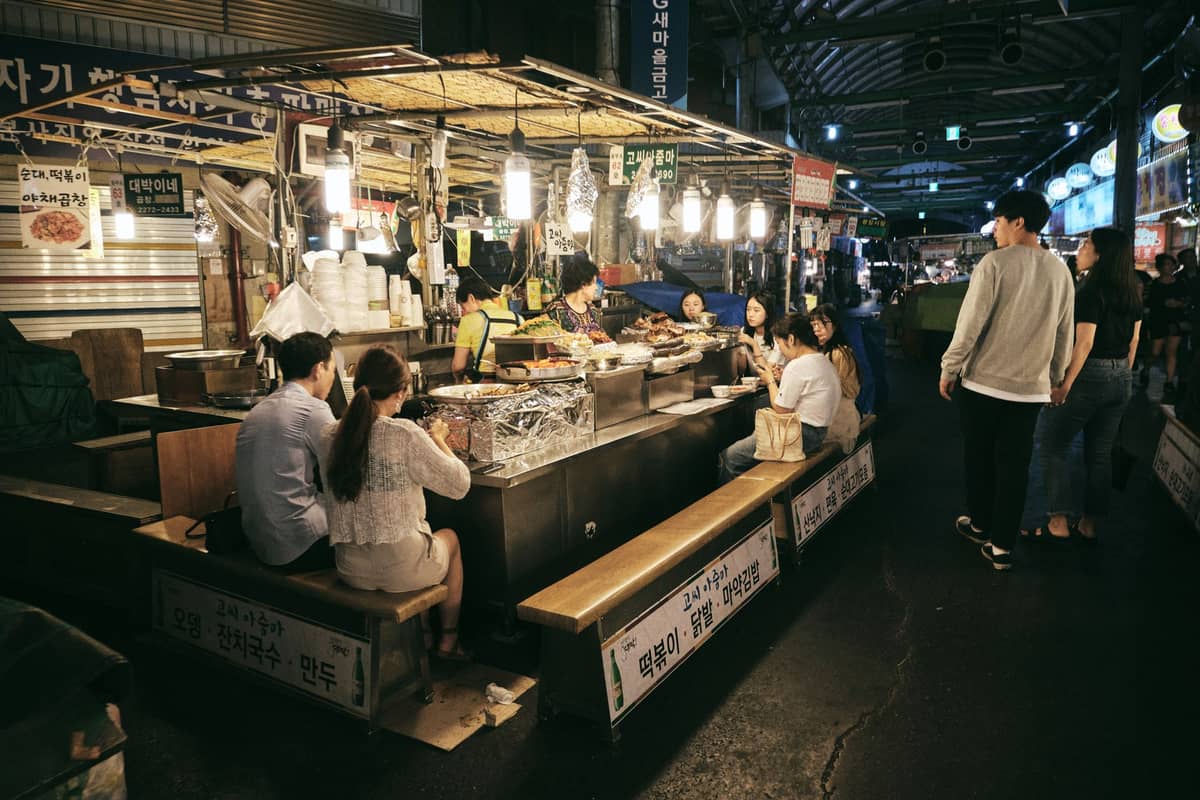
Korean food has a global reputation for depth and intensity, and the street version of it is where you taste the least diluted form. No restaurant markup, no menu designed for foreign palates, just vendors who have been making the same dish for decades. Seoul's street food culture is inseparable from its market culture: the city's traditional markets (sijang) evolved into places where you could buy raw ingredients and eat a prepared meal in the same lane. That dual function still defines places like Gwangjang and Namdaemun today.
The range is enormous. You can eat your way through Seoul on a very small budget, spending 2,000–5,000 KRW per snack across multiple stops, or sit down at a market stall for a full meal of pajeon and makgeolli under 20,000 KRW. For a broader sense of what to eat beyond street stalls, the Seoul food guide covers restaurant dining and Korean cuisine in more depth.
Gwangjang Market: Seoul's Most Famous Food Hall
Gwangjang Market opened in 1905, making it one of the oldest continuously operating markets in Korea. It sits in Jongno-gu at 88 Changgyeonggung-ro, and the food section is concentrated in the central covered arcade. The stalls run roughly 8:30 AM to 11:00 PM, though individual vendors set their own hours and some shut earlier. Some vendors close on Sundays; confirm this before planning a Sunday visit.
The signature dishes at Gwangjang Market are bindaetteok (mung bean pancakes, fried to order and served hot and crispy) and mayak gimbap, the small addictive rice rolls whose name translates loosely as "drug gimbap" — a reference to how difficult they are to stop eating. A serving of ten pieces costs around 3,000 KRW. Other staples include yukgaejang (spicy beef soup), bibimbap, and various raw fish dishes from the fresh market section adjacent to the food hall.
💡 Local tip
At Gwangjang, the vendors along the central aisle will actively call out to you. It is fine to walk the whole hall first before choosing a stall. Prices are largely consistent between vendors selling the same items, so you are not losing anything by taking your time to look. Sit at the counter directly in front of the vendor who is cooking rather than at a shared communal table if you want the best service.
Gwangjang draws a large number of tourists, partly due to international food media coverage. That is not a reason to skip it: the food is genuinely good and the atmosphere is authentic. But if you arrive at peak hours (noon to 2 PM and 6 PM to 8 PM on weekdays), expect to queue for a seat at popular stalls. Midweek mornings are the quietest. The market is accessible from Jongno 5-ga Station on Line 1, Exit 8.
Myeongdong: Tourist-Facing but Still Worth It
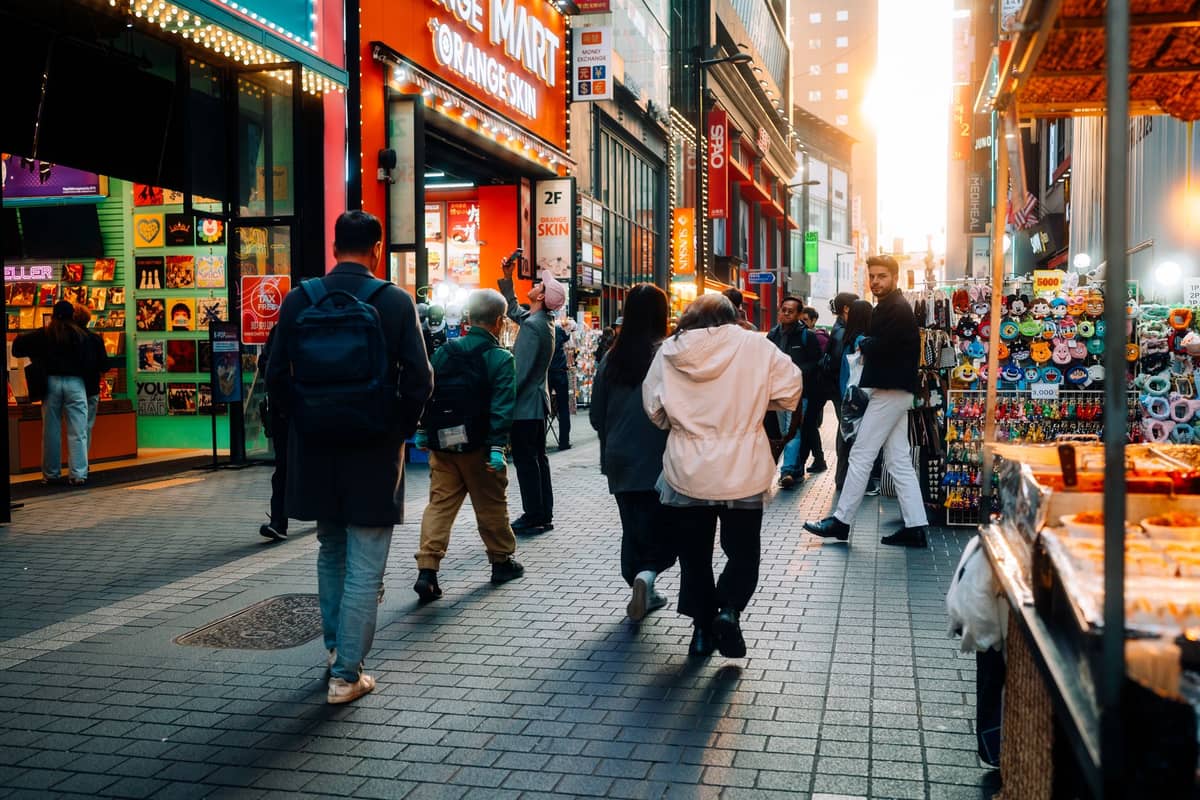
Myeongdong's street food strip runs down the pedestrian shopping lanes between Myeongdong Station (Line 4, Exit 5 or 8) and the Cathedral. Stalls typically set up from around 11:00 AM and run to 11:00 PM, with the busiest window between 5:00 PM and 9:00 PM when the shopping crowds are thickest. This is where you will find the most photogenic and internationally marketed Korean street food items.
- Tornado Potato (회오리감자) A spiral-cut potato on a skewer, deep-fried and dusted with flavored powder. Costs 4,000–6,000 KRW. Satisfying but filling, better as a snack to share.
- Dak-kkochi (닭꼬치) Grilled chicken skewer glazed with sweet-spicy sauce. Around 2,000–3,000 KRW per skewer. One of the better value-to-satisfaction options in Myeongdong.
- Eomuk (어묵) Fish cake on a skewer, served in hot broth. Often free to drink the broth. Around 500 KRW per cup. One of Korea's oldest street snacks.
- Tteokbokki (떡볶이) Chewy rice cakes in gochujang-based sauce, sometimes served with boiled eggs and fish cake. Full portion costs 8,000–12,000 KRW.
- Hotteok (호떡) Pan-fried dough filled with brown sugar, cinnamon, and nuts. Best in cooler months. Around 1,000–2,000 KRW.
⚠️ What to skip
Myeongdong street food is heavily tourist-oriented and prices can be 20–40% higher than equivalent snacks at traditional markets. Vendors are professional and food is generally consistent, but if you are looking for the most authentic experience or the best value, Gwangjang or Namdaemun will serve you better. Myeongdong works well as part of a shopping day rather than a dedicated food destination.
Other Markets Worth Eating At
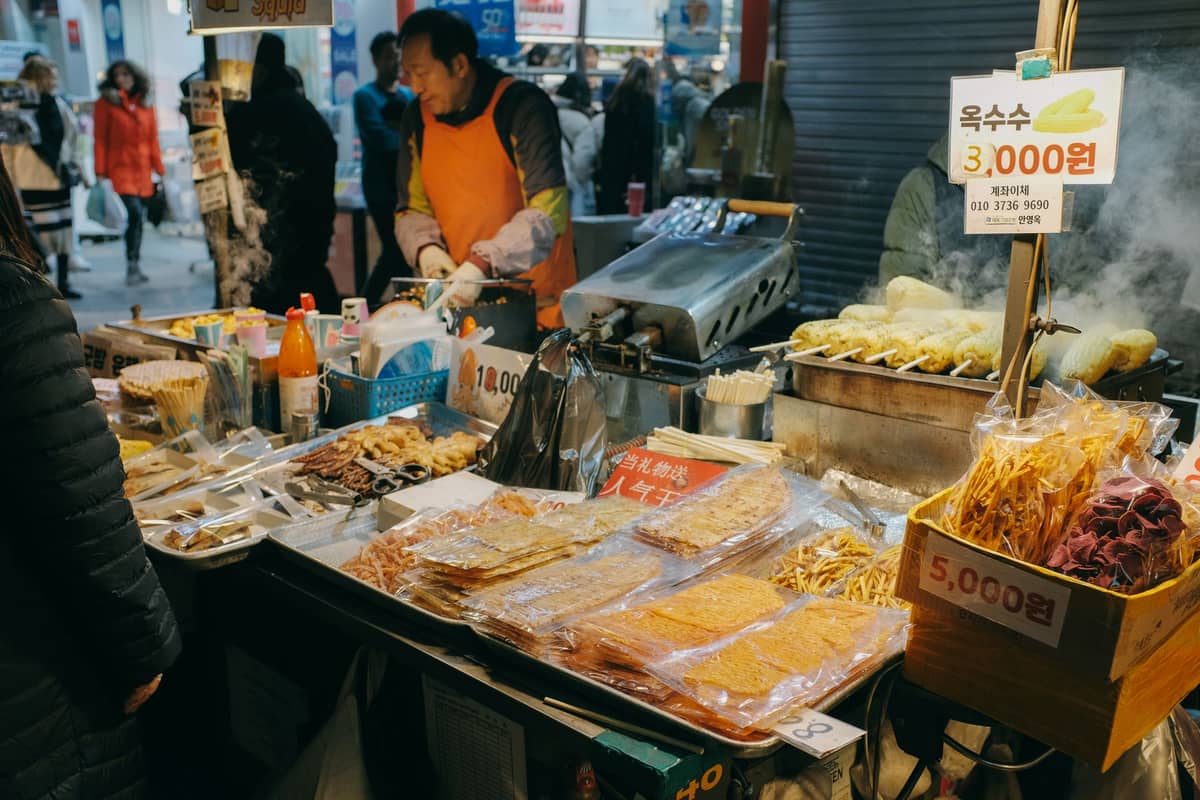
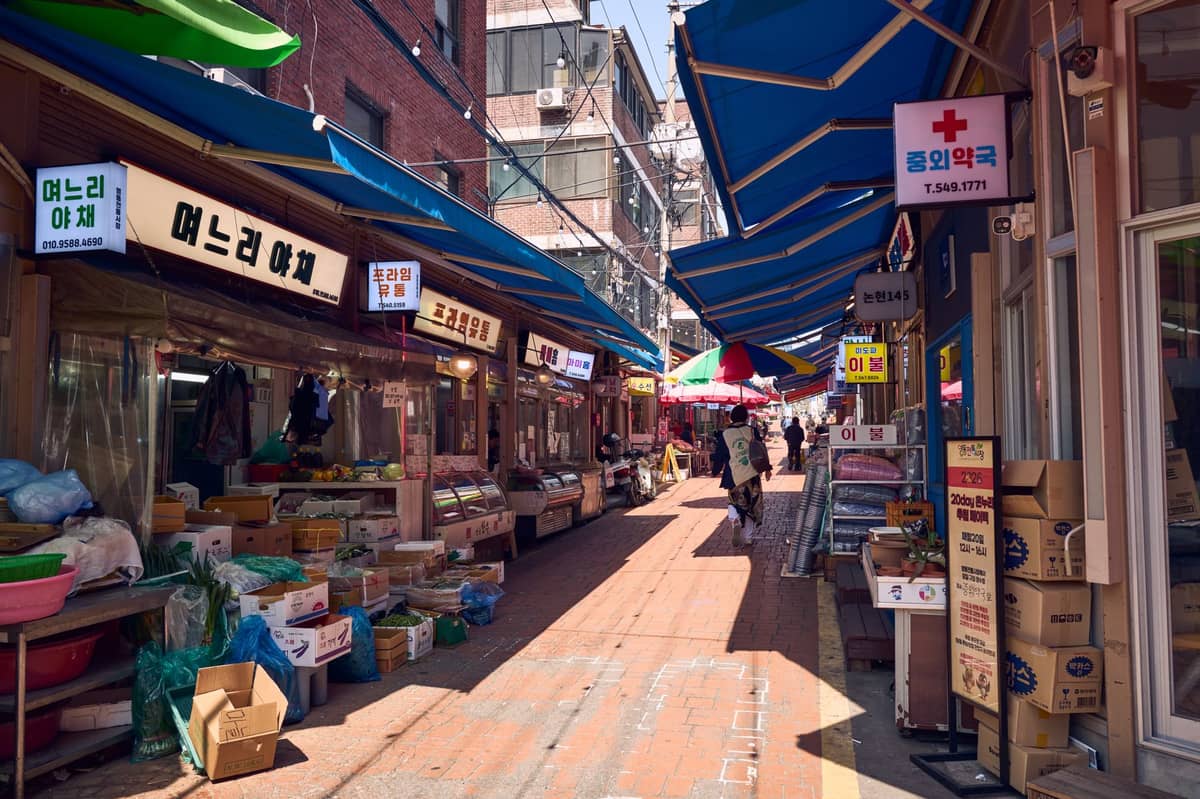
Seoul has dozens of traditional markets beyond Gwangjang and Myeongdong. Namdaemun MarketNamdaemun is the largest traditional market in Korea and has a strong food section with excellent kalguksu (knife-cut noodle soup) and hotteok. The market operates around the clock in parts, though specific food stalls have their own hours. It is located near City Hall and accessible from Hoehyeon Station on Line 4.
Mangwon MarketMangwon Market in Mapo-gu is a local neighborhood market with a quieter atmosphere and a strong selection of banchan (side dishes), fresh produce, and prepared foods. It is less photogenic than Gwangjang but more representative of how Seoulites actually shop and eat. Worth visiting if you are already in Hongdae or Mapo for the afternoon.
Tongin MarketTongin Market near Gyeongbokgung has a unique dosirak (lunchbox) system where visitors buy tokens and exchange them for small portions of different dishes from multiple stalls, assembling a meal as they go. It is a smart concept that lets you try a wide range of Korean food in a single visit. Open Tuesday through Sunday; the dosirak café system typically runs 11:30 AM to 4:30 PM.
For a deeper look at Seoul's market landscape overall, including fabric markets, antique stalls, and wholesale food trade, the Seoul markets guide covers the full range across neighborhoods.
What Things Actually Cost: A Realistic Price Guide
Street food in Seoul is genuinely affordable, but prices have risen in recent years and vary significantly between tourist-heavy areas and local markets. The figures below are based on commonly reported 2026 price ranges and should be treated as approximate.
- Individual snacks (skewers, gimbap, eomuk): 500–3,000 KRW
- Heartier single items (tornado potato, tteokbokki, pajeon): 4,000–12,000 KRW
- Sit-down market stall meal (e.g., bindaetteok + makgeolli): 12,000–20,000 KRW
- Makgeolli (Korean rice wine, per bottle at a market stall): 5,000–8,000 KRW
- Budget for a thorough street food tour across 2–3 markets: 30,000–50,000 KRW per person
✨ Pro tip
Withdraw Korean won before hitting the markets. The major traditional markets have ATMs nearby, but many individual food stalls are cash-only. Carrying 30,000–50,000 KRW in small bills for a market food day is a practical baseline. T-money cards and credit cards are accepted at most convenience stores and larger restaurants, but not at many market stalls.
Seasonal Timing and Practical Logistics
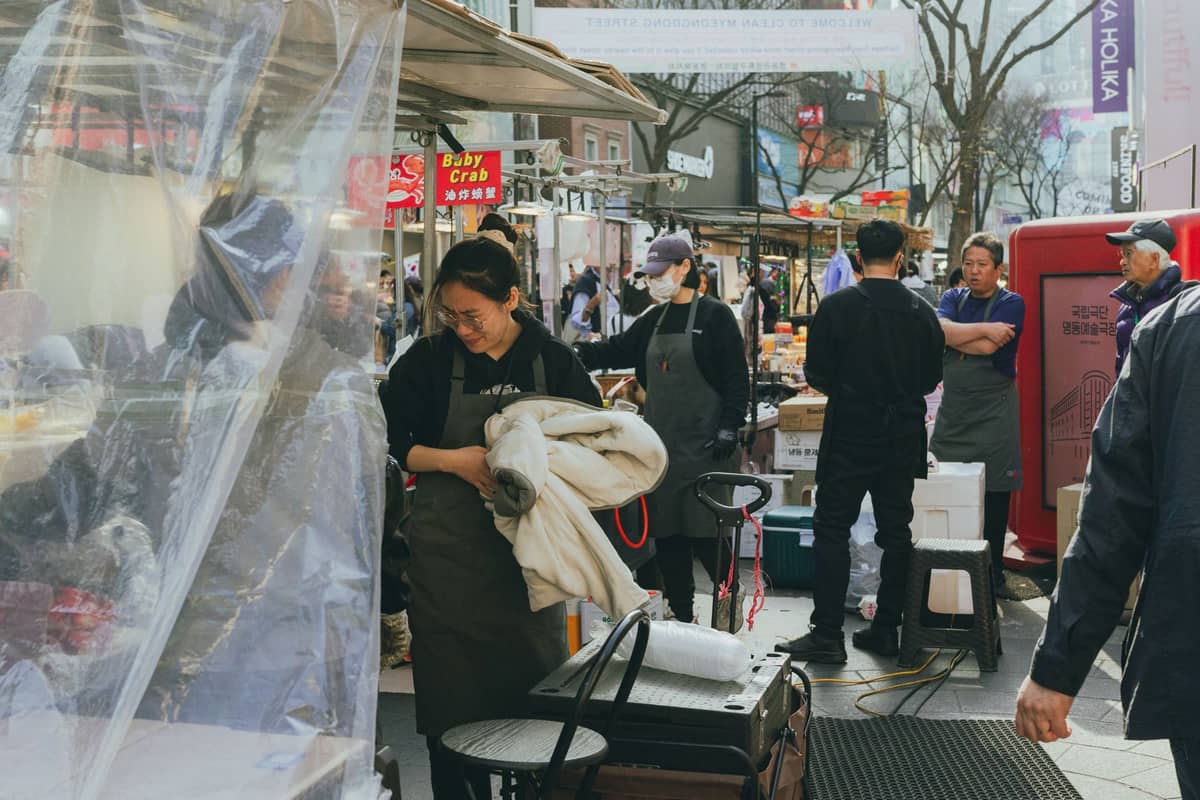
Seoul street food markets operate year-round, but the experience changes significantly with the season. Spring (April–May) and autumn (September–October) are the most comfortable times to eat outdoors: temperatures hover around 10–20°C and the air is clear. Summer brings the jangma rainy season (typically June–July) with high humidity and temperatures reaching 30°C or above, which makes covered markets like Gwangjang more appealing than outdoor stalls. For a fuller picture of how the seasons affect your trip, see the guide to the best time to visit Seoul.
Winter (December–February) has its own street food rhythm. Hotteok, roasted chestnuts, and hot eomuk broth are cold-weather staples that taste exactly right when temperatures drop below zero. The markets are less crowded in winter, lines at popular stalls are shorter, and the atmosphere at a heated indoor market can be genuinely cozy. Do not write off Seoul street food in winter.
For first-time visitors trying to fit street food into a broader itinerary, the 3-day Seoul itinerary suggests pairing a Gwangjang Market visit with a morning at nearby Changgyeonggung Palace, which keeps you in the same part of Jongno-gu and maximizes time efficiency.
ℹ️ Good to know
Night markets and outdoor food festivals are most active from late April through October. The Yeouido Hangang Park and Seoul Forest areas host seasonal food events that draw local families and younger crowds. These are more casual and less curated than the traditional markets, but they offer a different social atmosphere worth experiencing if you are in Seoul during the warmer months.
FAQ
What is the best market for street food in Seoul?
Gwangjang Market is the most acclaimed for food specifically, with bindaetteok and mayak gimbap as the signature items. It has been operating since 1905 and the food hall atmosphere is genuinely unique. Namdaemun is better for variety across a longer visit, while Tongin Market is the best option for tasting a wide range of dishes in small portions.
How much cash should I bring for a Seoul street food day?
30,000–50,000 KRW covers a thorough street food tour across two or three markets, including a sit-down stall meal and several snacks. Many stalls are cash-only, so do not rely on card payment at traditional markets. Withdraw Korean won from an ATM before you start.
Is Seoul street food safe to eat?
Yes. Seoul has high food safety standards and traditional markets are regulated. Food is generally cooked to order at street stalls, which reduces risk. If you have specific dietary restrictions or allergies, communication can be harder due to the language barrier, so learn a few key Korean phrases or use a translation app before ordering.
What are the most iconic Korean street foods to try in Seoul?
Tteokbokki (spicy rice cakes), hotteok (sweet filled pancakes), eomuk (fish cake on skewer), dak-kkochi (grilled chicken skewer), mayak gimbap (small rice rolls), and bindaetteok (mung bean pancakes) are all genuinely worth trying. Tornado potato is the most Instagrammed item but not necessarily the most representative of Korean food culture.
Are Seoul markets open on weekends?
Most major markets operate on Saturdays. Sundays are more variable: parts of Gwangjang Market close on Sundays, and some individual vendors in other markets take Sunday or Monday off. Namdaemun has sections open 24 hours but food stalls have their own schedules. Always check current hours before visiting, especially for a dedicated food-focused trip.