Where to Stay in Seoul: Best Neighborhoods & Hotels for Every Traveler
Choosing where to stay in Seoul shapes your entire trip. This guide breaks down the top neighborhoods by traveler type, covering transit access, hotel options, price ranges, and the trade-offs so you can pick the right base before you book.
Plan and book this trip
Tools from our partner Travelpayouts help you compare flights and hotels. If you book through them, we may earn a commission at no extra cost to you.
Flights
Hotels map
TL;DR
- Myeongdong is the most practical first-time base: central subway access, dense hotel supply, and street food on every corner. See the full Myeongdong neighborhood guide for what's nearby.
- Jongno and Insadong suit culture-focused visitors who want palaces, museums, and traditional teahouses within walking distance.
- Hongdae is the right call for nightlife, indie cafés, and younger traveler energy — but expect noise on weekends.
- Gangnam is not essential for most tourists; it makes more sense for business trips or upscale dining focused stays.
- Seoul's subway (T-money card) connects every neighborhood cheaply and efficiently, so location matters less than in many other major cities. Read the full guide to getting around Seoul before deciding.
How to Think About Where to Stay in Seoul
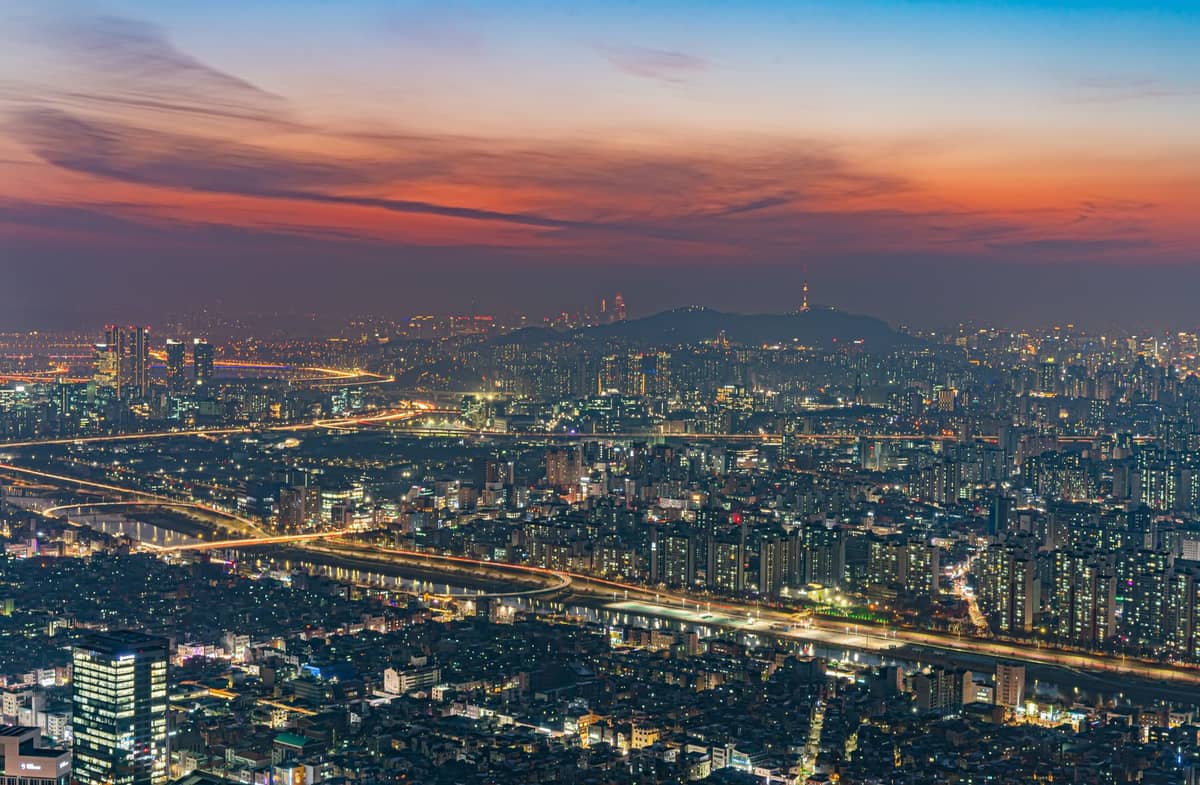
Seoul covers roughly 605 square kilometers with a population just under 10 million, but its subway network is so extensive that no single neighborhood gives you a decisive geographic advantage. Almost every major sight is within 30 to 45 minutes of any central district by metro, and a single-journey fare rarely exceeds 1,500 KRW (around $1.10 USD). That said, neighborhood choice still matters for tone, daily convenience, and the kind of trip you end up having.
The bigger variable is what you want outside your hotel door. Street food and shopping at midnight? Myeongdong. Morning walks past 600-year-old palaces? Jongno. Late-night karaoke and craft beer bars? Hongdae. Budget guesthouses and art galleries? Insadong and Seochon. Each district has a distinct personality that affects your day-to-day rhythm more than raw distance from the sights.
💡 Local tip
Book accommodation near a subway station on Lines 1, 2, or 4 whenever possible. These are the backbone lines that connect to Incheon Airport (AREX), the main shopping corridors, and most tourist attractions. Walking 10 minutes to a transfer-heavy station is a small daily friction that adds up across a week.
Myeongdong and Jung-gu: Best for First-Timers
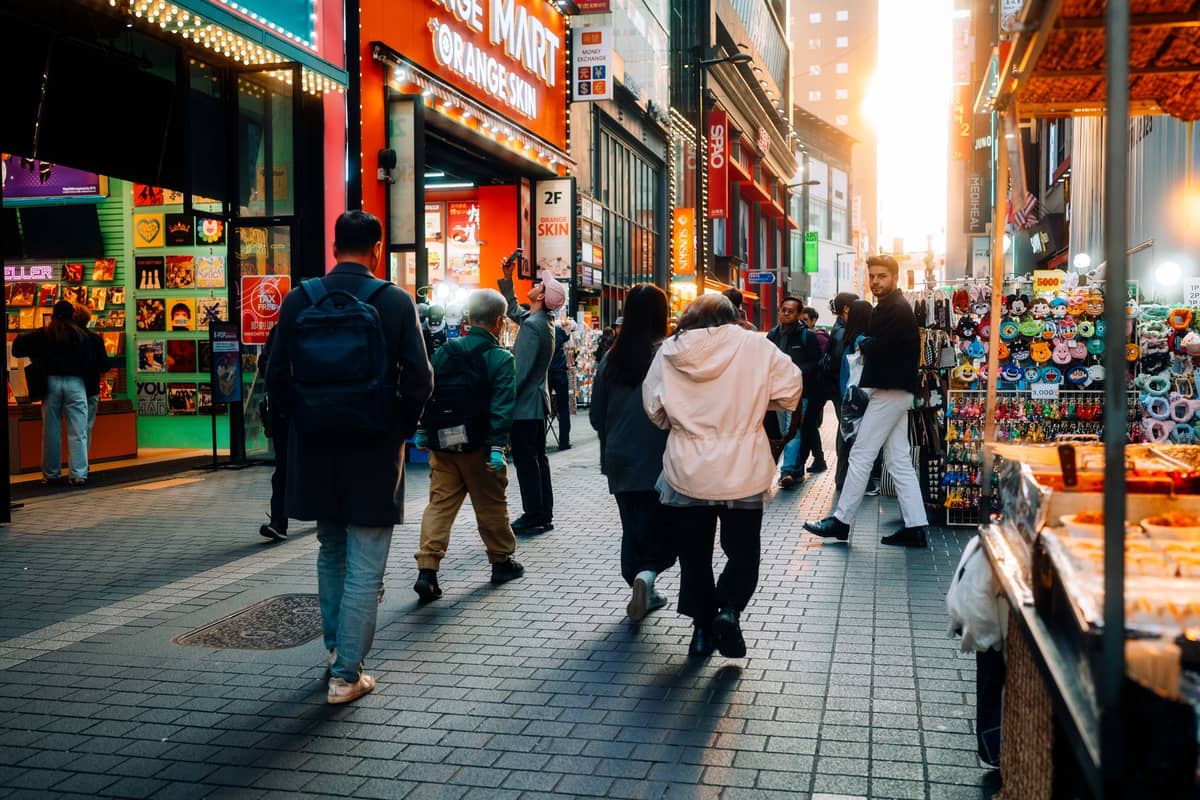
Myeongdong earns its reputation as the default first-timer base for practical reasons, not just hype. It sits near the geographic center of old Seoul, with Seoul Station (Line 1 and AREX) about 15 minutes west and Myeongdong Station (Line 4) right in the neighborhood. From here you can reach Gyeongbokgung Palace in under 20 minutes, Dongdaemun Design Plaza in 15, and Namdaemun Market nearby on foot. The Incheon Airport express train stops at Seoul Station, making arrival and departure logistics straightforward.
The area is dense with K-beauty shops, street food carts, and mid-range to luxury hotels. It is not the place for a quiet retreat — pedestrian traffic is heavy from mid-morning until late at night, especially on the main shopping street. But if you want to maximize sightseeing time and minimize transit complexity on a first visit, it delivers. Nearby Myeongdong Cathedral and Namsan Mountain are both walkable, giving the area more depth than pure retail.
- L'Escape Hotel Boutique luxury with a French editorial aesthetic; one of Seoul's most design-forward properties. Higher price point, worth it for the experience.
- LOTTE Hotel Seoul Landmark five-star property with excellent transport links and consistent service. Popular with business and leisure travelers alike.
- L7 Myeongdong by LOTTE Lifestyle hotel aimed at younger travelers; rooftop bar with city views, well-priced relative to its design quality.
- Hotel 28 Myeongdong Solid mid-range choice with small but clean rooms and a central location. Works well for travelers who prioritize location over space.
Jongno and Insadong: Best for Culture and History
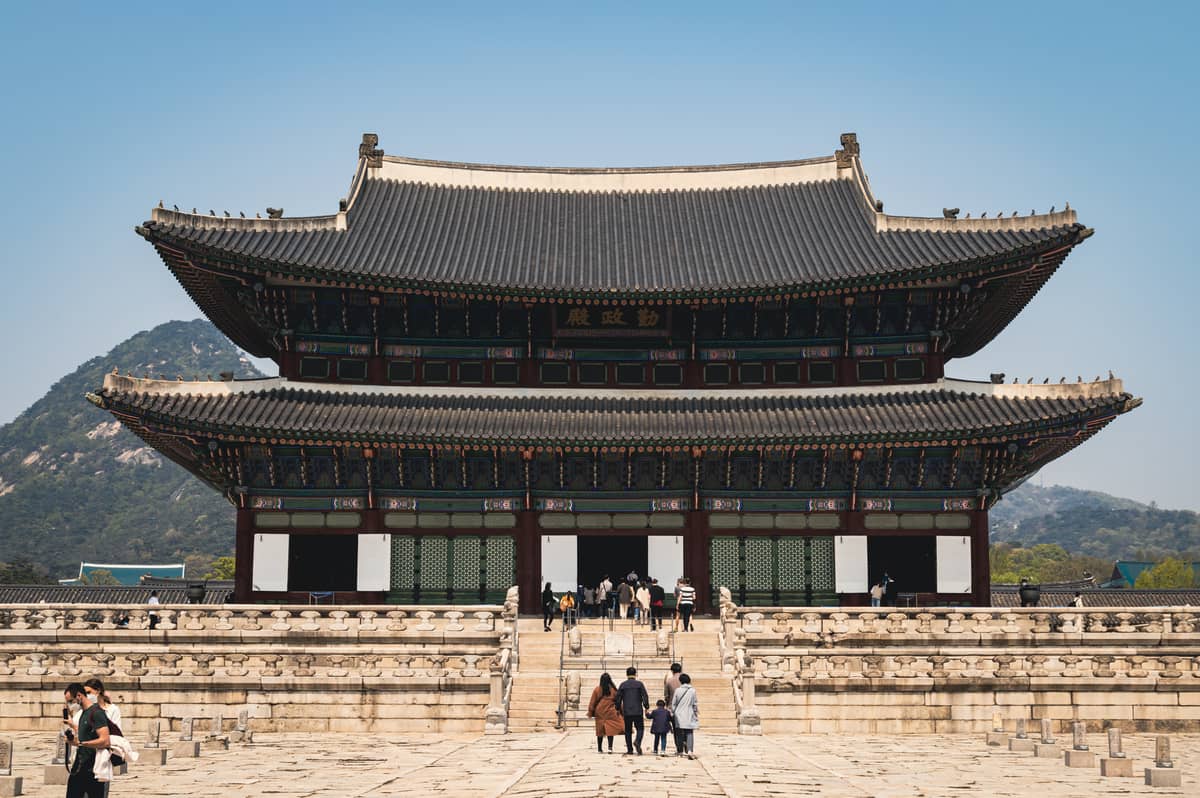
The Jongno district is where Seoul's history is most tangible. Gyeongbokgung Palace, Changdeokgung Palace, and Jongmyo Shrine are all within this corridor. Staying here means you can reach the palace gates before the crowds arrive — a real advantage during cherry blossom season in April when lines form early.
Insadong, just south of Jongno, is the traditional crafts and gallery district, lined with antique shops, ceramic studios, and tea houses. It connects naturally to Bukchon Hanok Village to the north and Seochon Village to the west. These are neighboring but distinct areas — Bukchon is a residential hanok cluster on a hillside, quieter and more photogenic; Insadong is commercial and tourist-oriented. First-timers often conflate them, but they serve different purposes.
Hotel supply in Jongno skews toward guesthouses, boutique properties, and business hotels rather than large international chains. NINE TREE by Parnas Seoul Insadong and Dormy Inn EXPRESS Insadong are consistent picks in the mid-range bracket. The area quiets down noticeably after 10 PM, which suits travelers who prefer an early start over nightlife.
ℹ️ Good to know
Jongno is best in spring (April to May) and autumn (September to October). Palace grounds and the nearby Bukhansan foothills are at their most visually striking in these seasons, and the mild temperatures — typically 10 to 20°C — make walking between sites comfortable. Summer's monsoon rains (June to July) can make the cobbled lanes around Insadong messy, and palace gardens are far less appealing.
Hongdae and Mapo: Best for Nightlife and Creative Energy
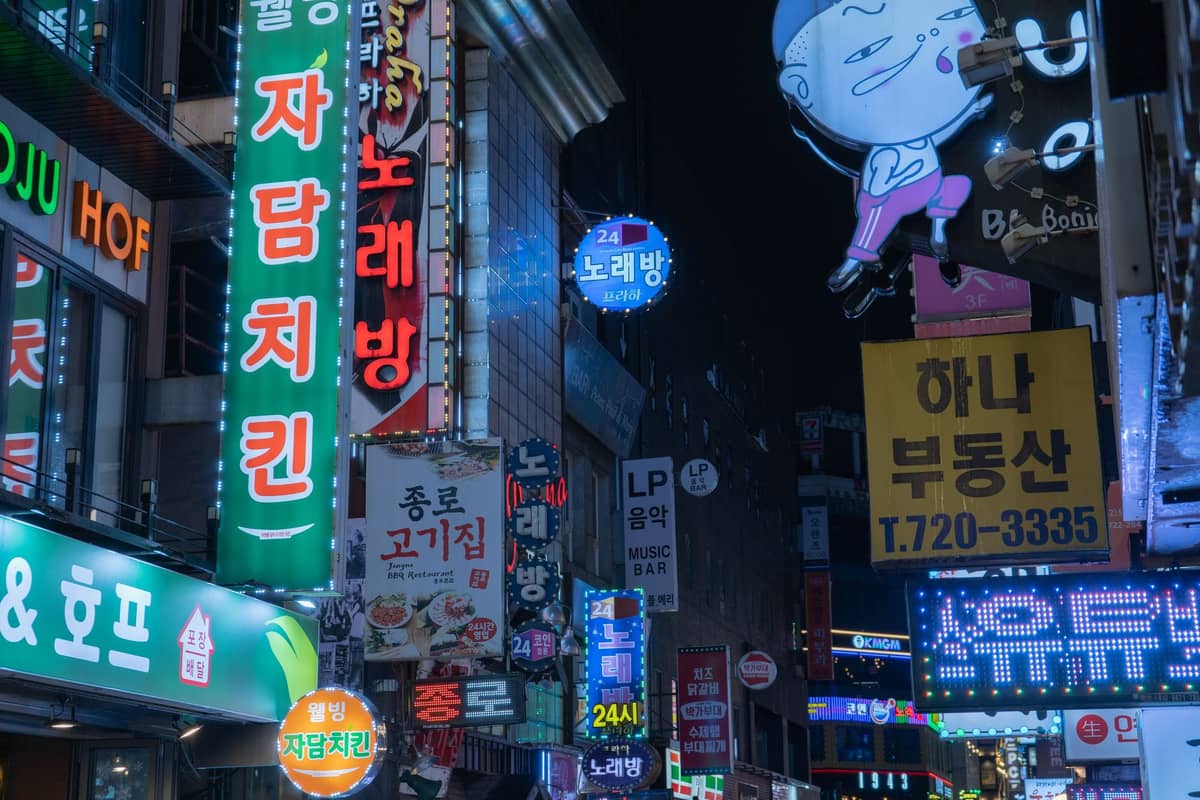
Hongdae (short for Hongik University area) has been Seoul's creative and nightlife district for decades. The area around Hongdae and Mapo-gu is dense with independent cafés, live music venues, street performances, noraebang (karaoke) rooms, and bars that stay open until dawn on weekends. It is also home to a large concentration of budget guesthouses and capsule hotels, making it one of the more affordable areas to sleep in central Seoul.
The trade-off is noise. Friday and Saturday nights in Hongdae are genuinely loud until 3 or 4 AM, and the main club street is not the place to be if you need an early start the next morning. For travelers planning a mix of cultural sightseeing and evening activity, a quieter base like Myeongdong with day trips to Hongdae works better than the reverse. But for travelers whose Seoul trip revolves around music, art, food, and staying out late, this is the correct neighborhood.
⚠️ What to skip
Hongdae hotel prices spike significantly on weekend nights. If you're booking a Friday or Saturday stay, check rates at least 3 to 4 weeks out. A mid-range room that costs 80,000 KRW on a Tuesday can easily double on a Saturday during peak season.
Gangnam and Jamsil: Best for Business Travelers and Families
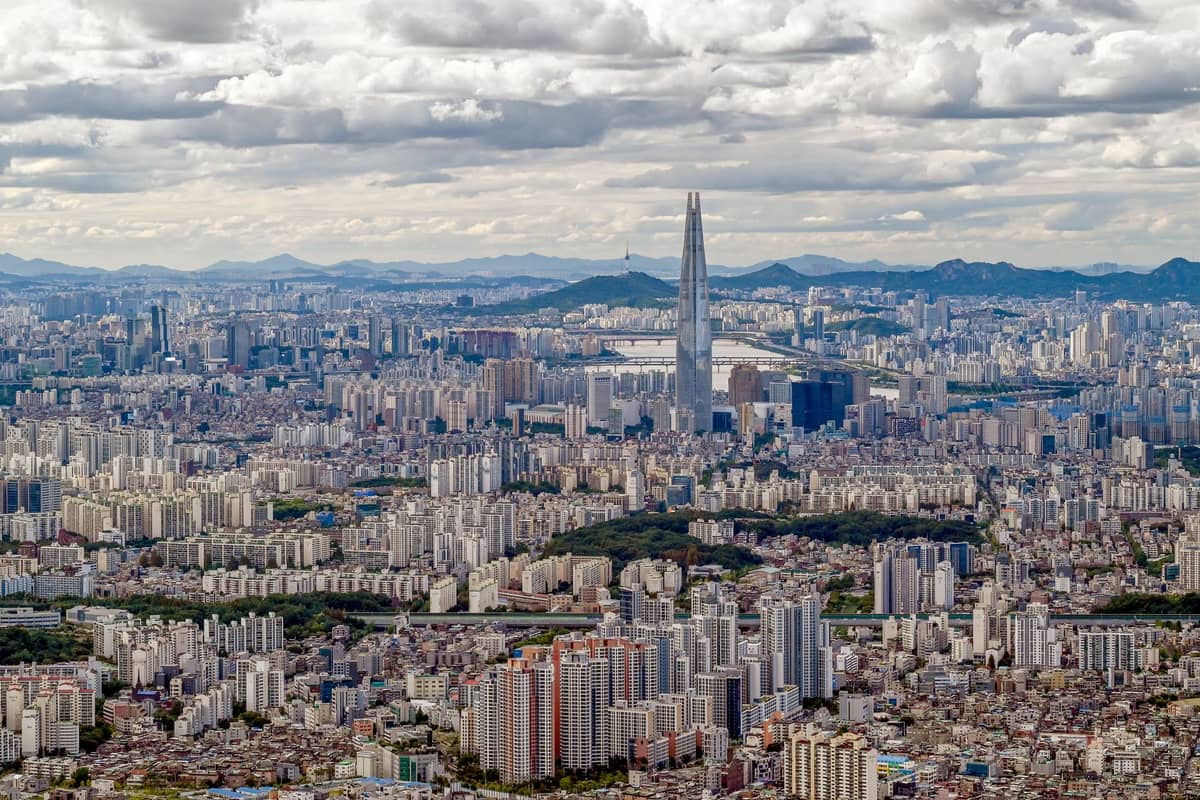
Gangnam-gu is Seoul's wealthy southern district, home to luxury retail, high-end restaurants, and Korea's corporate headquarters. For most leisure tourists, the common advice to stay here is slightly overblown — the major cultural sights are in northern Seoul, and a Gangnam base means longer commutes to palaces and traditional markets. That said, Bongeunsa Temple and the COEX Mall are both in this district, and the dining and nightlife scene along the Garosu-gil strip is genuinely excellent.
Jamsil, in neighboring Songpa-gu, is more explicitly family-oriented. Lotte World Adventure and Lotte World Tower are both here, along with Olympic Park and Seokchon Lake. Hotels in this area tend to be large, well-priced relative to Gangnam, and designed for families. If your trip includes a day at Lotte World, staying nearby removes the subway commute with kids in tow.
- Park Hyatt Seoul (Gangnam) One of the best luxury hotels in the city: floor-to-ceiling glass walls, a rooftop pool, and direct COEX access. Business-focused but genuinely beautiful.
- Andaz Seoul Gangnam Design-forward Hyatt property with a lively bar program and strong service. Suits lifestyle-minded travelers who want luxury without formality.
- Novotel Ambassador Seoul Gangnam Reliable four-star option that balances price and quality well. Popular with both business travelers and package tourists.
Practical Tips Before You Book Seoul Hotels
Seoul hotels cover every price bracket, from 20,000 KRW capsule pods in Hongdae to five-star suites above 500,000 KRW per night in Gangnam and Myeongdong. Mid-range travelers (budget of roughly 100,000 to 200,000 KRW per night) will find the best value-to-location ratio in Myeongdong, Insadong, and near Dongdaemun. Booking at least three to four weeks ahead is advisable during peak travel periods: late March to early May (cherry blossom season) and October, when autumn foliage draws significant visitor numbers.
Arriving from Incheon International Airport (ICN), located about 50 to 60 km west of central Seoul, the AREX airport express train is the most cost-efficient option: it connects directly to Seoul Station, putting you in the heart of the city. Journey time is approximately 43 minutes on the all-stop service or around 51 minutes on the commuter line, with fares significantly lower than taxi. From Gimpo International Airport (GMP), roughly 15 to 20 km from central Seoul and mainly handling domestic and regional routes, the subway connection via Line 5 or the Gimpo Goldline is straightforward. Check current fare schedules before travel as pricing is subject to change. For detailed transit options, the complete Seoul transport guide covers routes, apps, and T-money card setup.
- Confirm your hotel is within a 5 to 10 minute walk of a subway station — most Seoul hotels advertise this, but check on a map rather than trusting the description.
- Korean tipping culture: tipping is not customary in South Korea. Service charges are sometimes included in upscale hotels, but leaving extra cash is not expected or required.
- Electricity in Seoul uses Type C and F plugs at 220V, 60Hz — pack a universal adapter if your devices use a different standard.
- Seoul's tap water is treated and generally considered potable, but many visitors and locals prefer bottled or filtered water. Confirm with your accommodation.
- Kakao T is the dominant ride-hailing app for taxis in Seoul. Download it before arrival and link a payment method — it simplifies late-night returns from Hongdae or Itaewon considerably.
- The Korean emergency numbers are 112 (police) and 119 (fire and ambulance). Save them before you travel.
If this is your first time in Seoul and you have three to five days, Myeongdong or Jongno will serve you better than Gangnam for daily sightseeing efficiency. For a longer trip with diverse itinerary goals, consider splitting your nights between two neighborhoods. A 5-day Seoul itinerary typically benefits from at least one base in the historic northern core. On a tighter schedule, the 3-day Seoul guide recommends Myeongdong as the single most versatile base for maximizing coverage.
FAQ
What is the best area to stay in Seoul for first-time visitors?
Myeongdong in Jung-gu is consistently recommended as the most practical base for first-timers. It offers central subway access (Line 4 at Myeongdong Station, plus easy reach to Seoul Station on Line 1 and the AREX airport express), a dense concentration of hotels across all price brackets, and walkable access to Namsan Mountain, Namdaemun Market, and the main palace corridor. If you want more cultural atmosphere and don't mind slightly fewer hotel options, the Jongno and Insadong area is a strong alternative.
Is Gangnam a good base for tourists in Seoul?
For most leisure tourists, Gangnam is not the most efficient base. The major historical sights (palaces, traditional markets, hanok villages) are concentrated in northern Seoul, making a Gangnam stay mean longer daily commutes. Gangnam works better for business travelers, those prioritizing upscale dining and shopping, or visitors specifically interested in modern Seoul. If you're splitting a longer trip, one or two nights in Gangnam alongside a northern base can give you a fuller picture of the city.
How far is Incheon Airport from central Seoul hotels?
Incheon International Airport (ICN) is roughly 50 to 60 km from central Seoul. The AREX airport express train reaches Seoul Station in approximately 43 to 51 minutes depending on the service type, and costs significantly less than a taxi. From Seoul Station, most central neighborhoods are within 1 to 3 subway stops. Gimpo Airport (GMP), mainly used for domestic flights, is only about 15 to 20 km from the city center and connects via subway Line 5.
When is the best time to book hotels in Seoul?
Book 3 to 4 weeks ahead for most of the year, and 6 to 8 weeks ahead if you're traveling during late March to early May (cherry blossom season) or October (autumn foliage). These are the peak demand periods when central hotels in Myeongdong and Jongno fill up and prices increase sharply. Summer (June to August) is humid and rainy in Seoul but less congested for accommodation, so last-minute bookings are more viable. Winter (December to February) offers the lowest rates but requires a base close to subway access to avoid cold outdoor transfers.
What is the best neighborhood to stay in Seoul for nightlife?
Hongdae (Hongik University area) in Mapo-gu is the top pick for nightlife. It has the densest concentration of bars, clubs, live music venues, and noraebang rooms, and the scene stays active until dawn on weekends. Itaewon in Yongsan-gu is a second option, particularly known for its international bar scene and has historically been popular with expats and foreign visitors. Both areas have plenty of budget accommodation options, but expect noise on Friday and Saturday nights regardless of where you book.