Best Temples in Seoul: Buddhist Shrines & Sacred Sites
Seoul holds a remarkable concentration of sacred sites within its modern boundaries. This guide covers the city's finest Buddhist temples, Confucian shrines, shamanist sites, and other places of spiritual significance — from the lantern-lit courtyards of central Jogyesa to the granite ridges of Inwangsan.
Plan and book this trip
Tools from our partner Travelpayouts help you compare flights and hotels. If you book through them, we may earn a commission at no extra cost to you.
Flights
Hotels map
Seoul is rarely thought of as a spiritual destination, but the city contains an extraordinary range of sacred sites dating back over a thousand years. Buddhist temples sit in the shadows of glass towers, Confucian shrines preserve royal ancestral rites unchanged for centuries, and shamanist shrines cling to rocky mountain slopes above the city. Whether you have a single afternoon or a full week, the depth of Seoul's sacred landscape rewards careful exploration. For broader context on the city's historic core, see our guide to palaces in Seoul and our overview of the Jongno-Bukchon district, For broader context on the city's historic core, see our guide to and our overview of the , which contains many of the city's temples, shrines, and historic sites.
💡 Local tip
Most Buddhist temples in Seoul are free to enter, including Jogyesa and Bongeunsa. Jongmyo Shrine charges a small admission fee (1,000 won for adults). Dress respectfully — covered shoulders and knees are appreciated at active places of worship.
Essential Buddhist Temples
These are the temples that define Buddhist practice in Seoul — most are accessible by subway, free to enter, and offer something distinct. Spring is the best season to visit: Buddha's Birthday (usually in May) transforms these courtyards with thousands of hanging lanterns. If you want to time your trip around the festivals, our Seoul in spring guide covers the Lotus Lantern Festival and other seasonal highlights in detail.
1. Begin at Jogyesa, the Heart of Korean Buddhism
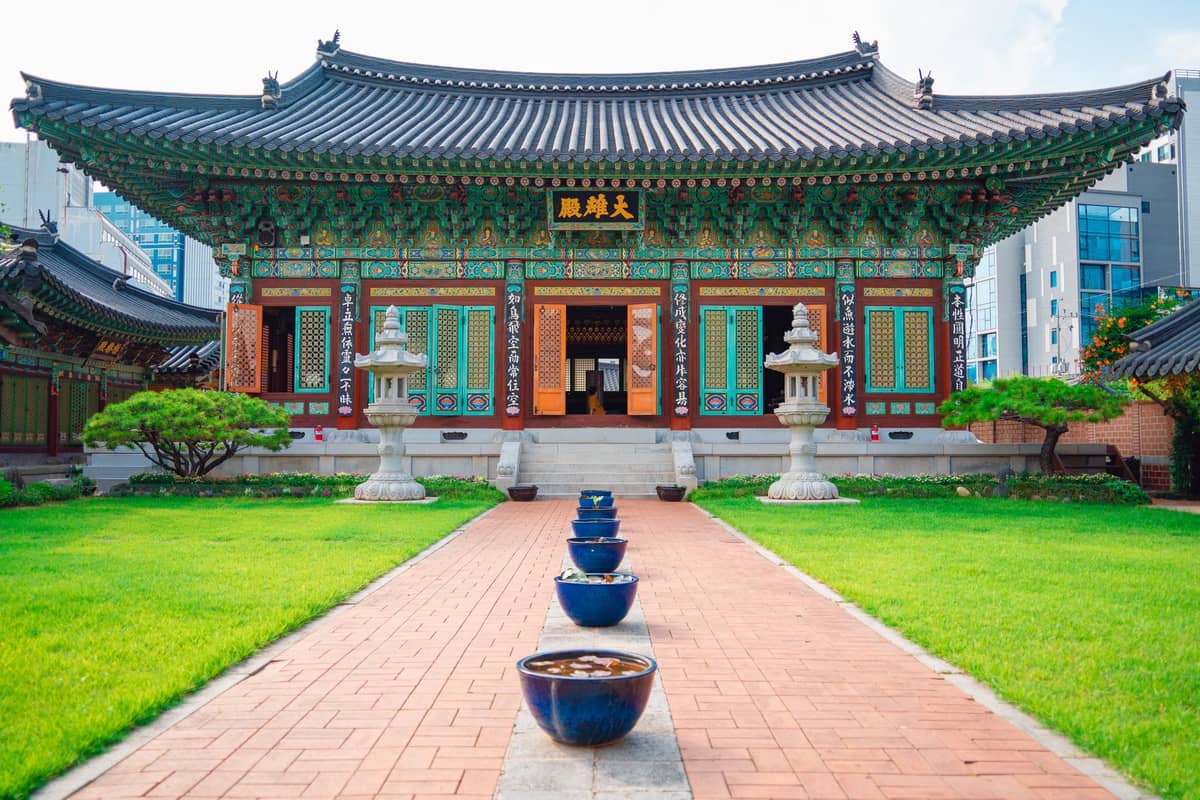
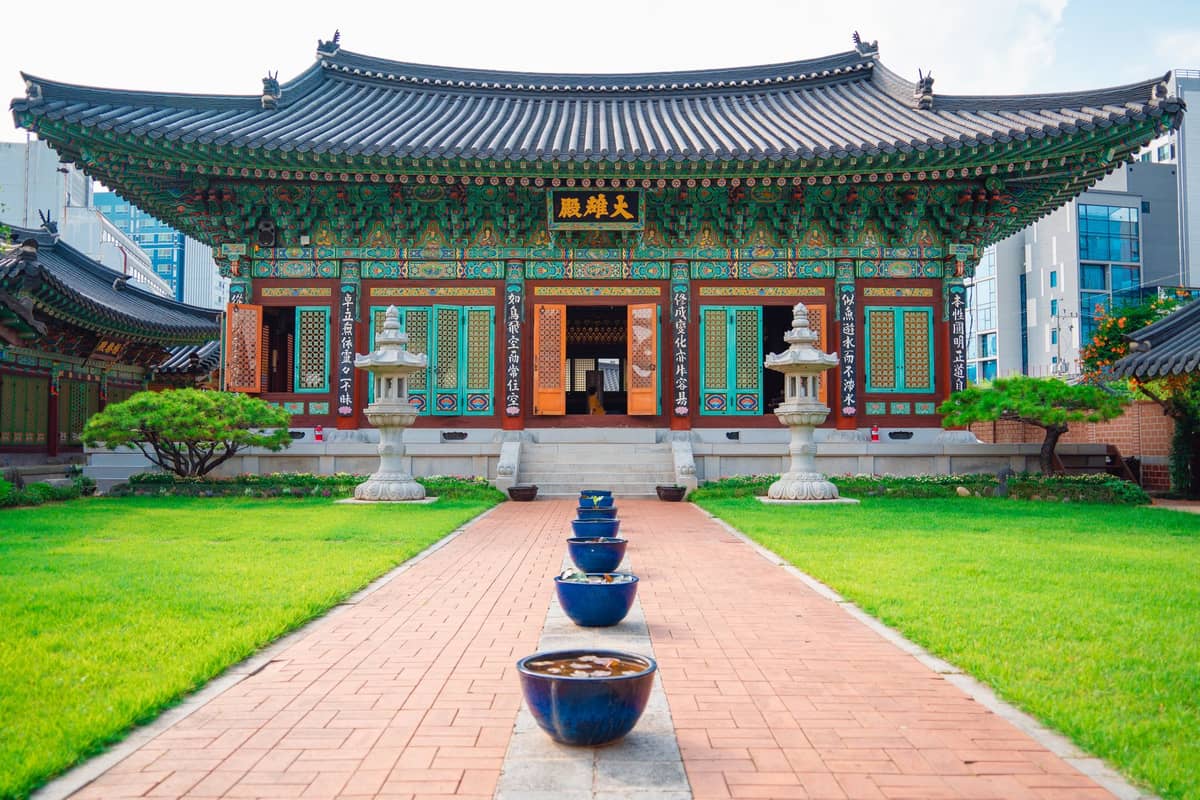
The head temple of the Jogye Order sits a short walk from Gyeongbokgung. Its 500-year-old white pine tree, nine-story stone pagoda, and main hall are always open. At Buddha's Birthday, the entire street fills with paper lanterns — one of Seoul's finest annual spectacles.
Explore1. Begin at Jogyesa, the Heart of Korean Buddhism
The head temple of the Jogye Order sits a short walk from Gyeongbokgung. Its 500-year-old white pine tree, nine-story stone pagoda, and main hall are always open. At Buddha's Birthday, the entire street fills with paper lanterns — one of Seoul's finest annual spectacles.
Explore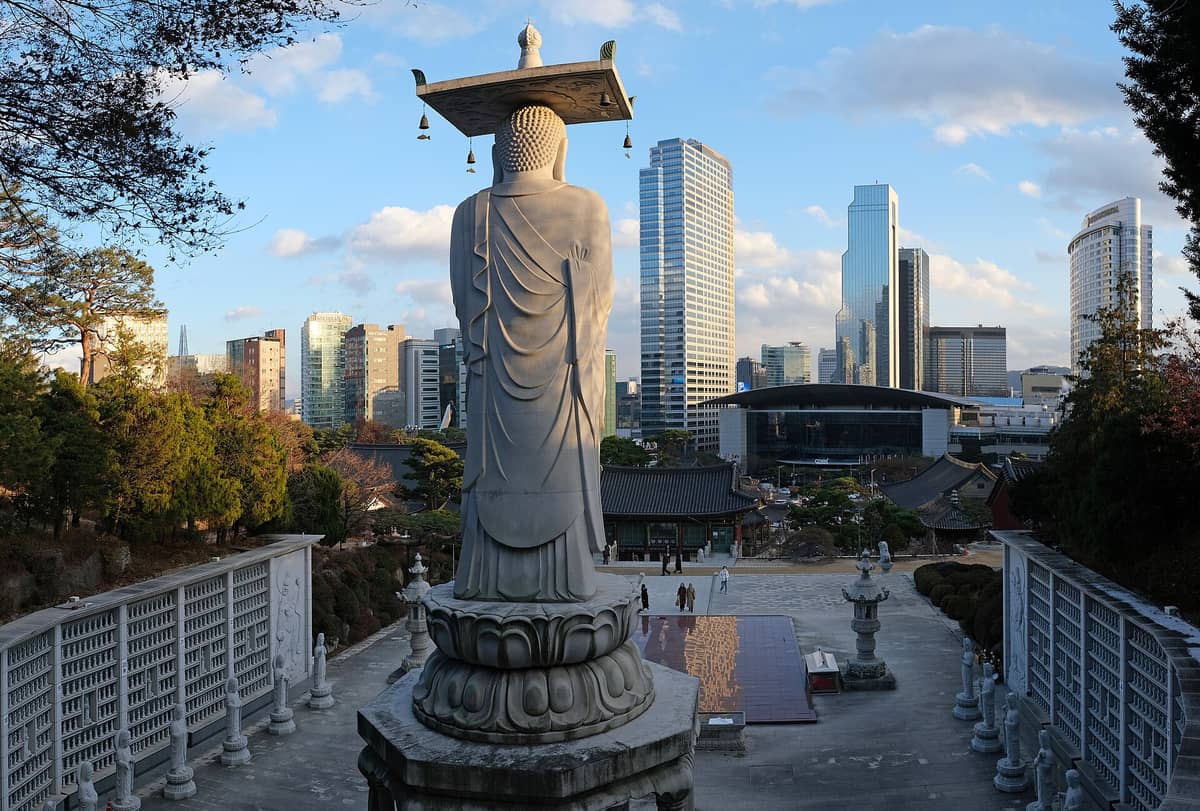
2. Visit Bongeunsa for Dramatic Contrast in Gangnam
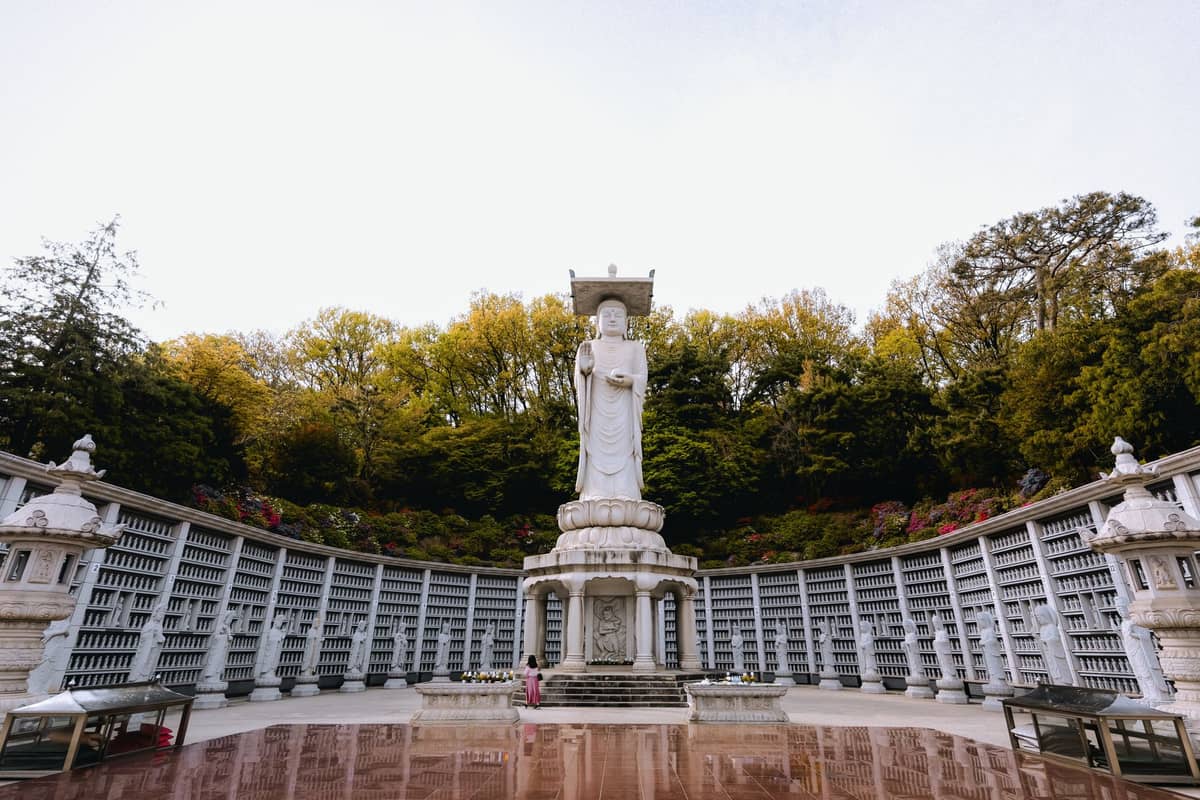
This 1,200-year-old temple complex sits directly opposite the COEX Mall in Gangnam. The 23-meter stone Mireuk Buddha statue presides over forested grounds that feel genuinely quiet despite the surrounding skyscrapers. Temple stay programs run overnight on weekends.
Explore2. Visit Bongeunsa for Dramatic Contrast in Gangnam
This 1,200-year-old temple complex sits directly opposite the COEX Mall in Gangnam. The 23-meter stone Mireuk Buddha statue presides over forested grounds that feel genuinely quiet despite the surrounding skyscrapers. Temple stay programs run overnight on weekends.
Explore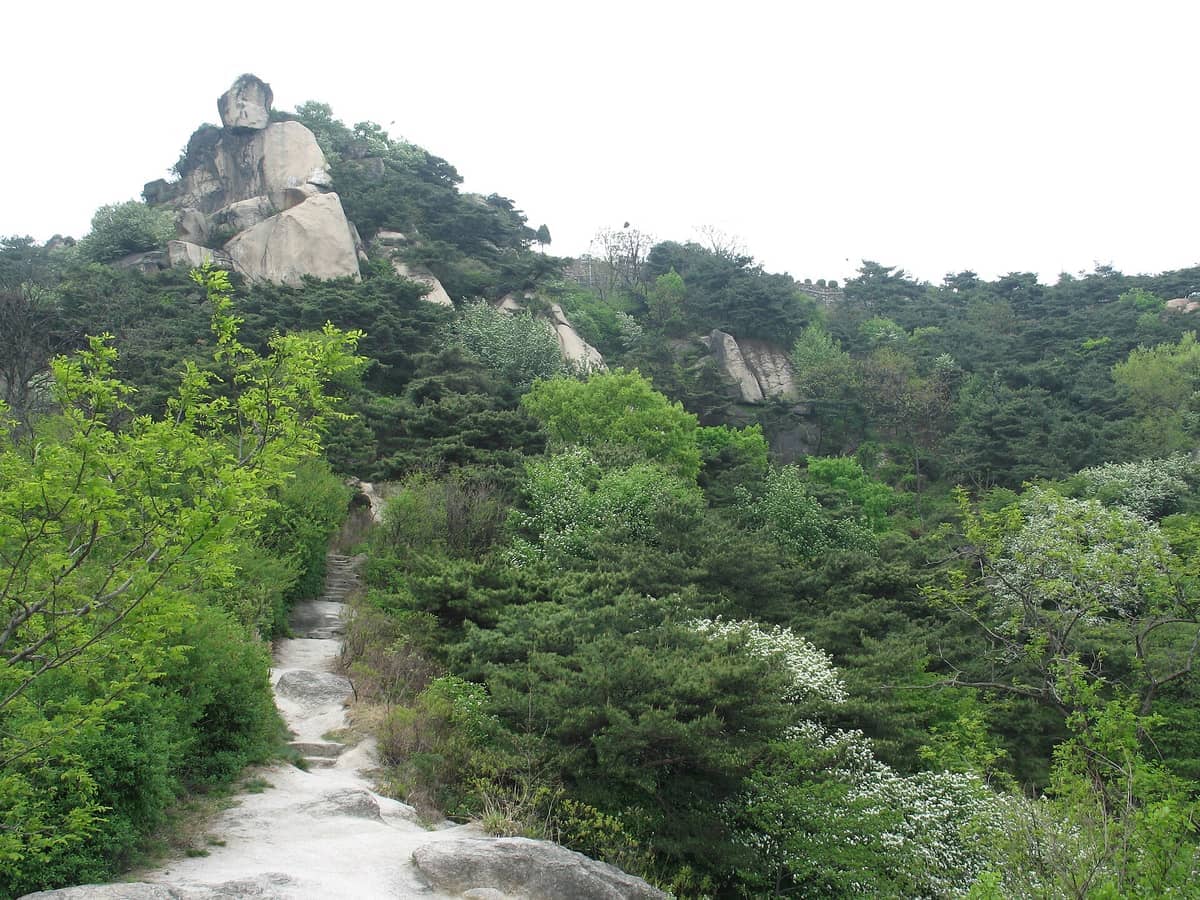
3. Hike Inwangsan for Shamanist Shrines and Spiritual Atmosphere
Inwangsan's rocky trails pass sections of the Seoul City Wall before reaching Guksadang, a cluster of shamanist shrines actively used for gut rituals. The combination of Buddhist and shamanist sacred spaces on one mountain makes this Seoul's most spiritually layered hike.
Explore3. Hike Inwangsan for Shamanist Shrines and Spiritual Atmosphere
Inwangsan's rocky trails pass sections of the Seoul City Wall before reaching Guksadang, a cluster of shamanist shrines actively used for gut rituals. The combination of Buddhist and shamanist sacred spaces on one mountain makes this Seoul's most spiritually layered hike.
Explore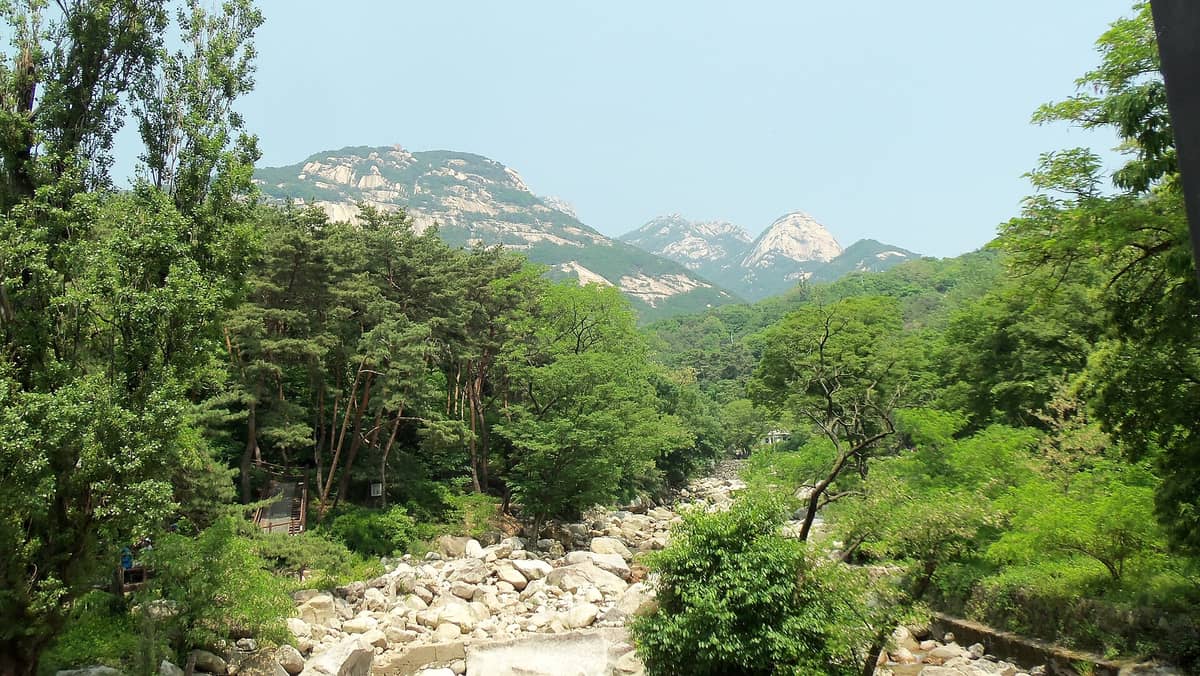
4. Find Buddhist Temples Hidden Inside Bukhansan National Park
Bukhansan's trails pass through several working Buddhist temples tucked among granite peaks. Doseonsa and Hwagyesa are the most accessible. Both offer calm forested courtyards and a genuine sense of retreat, visited more by Korean hikers than tourists.
Explore4. Find Buddhist Temples Hidden Inside Bukhansan National Park
Bukhansan's trails pass through several working Buddhist temples tucked among granite peaks. Doseonsa and Hwagyesa are the most accessible. Both offer calm forested courtyards and a genuine sense of retreat, visited more by Korean hikers than tourists.
ExploreConfucian Shrines & Royal Sacred Sites
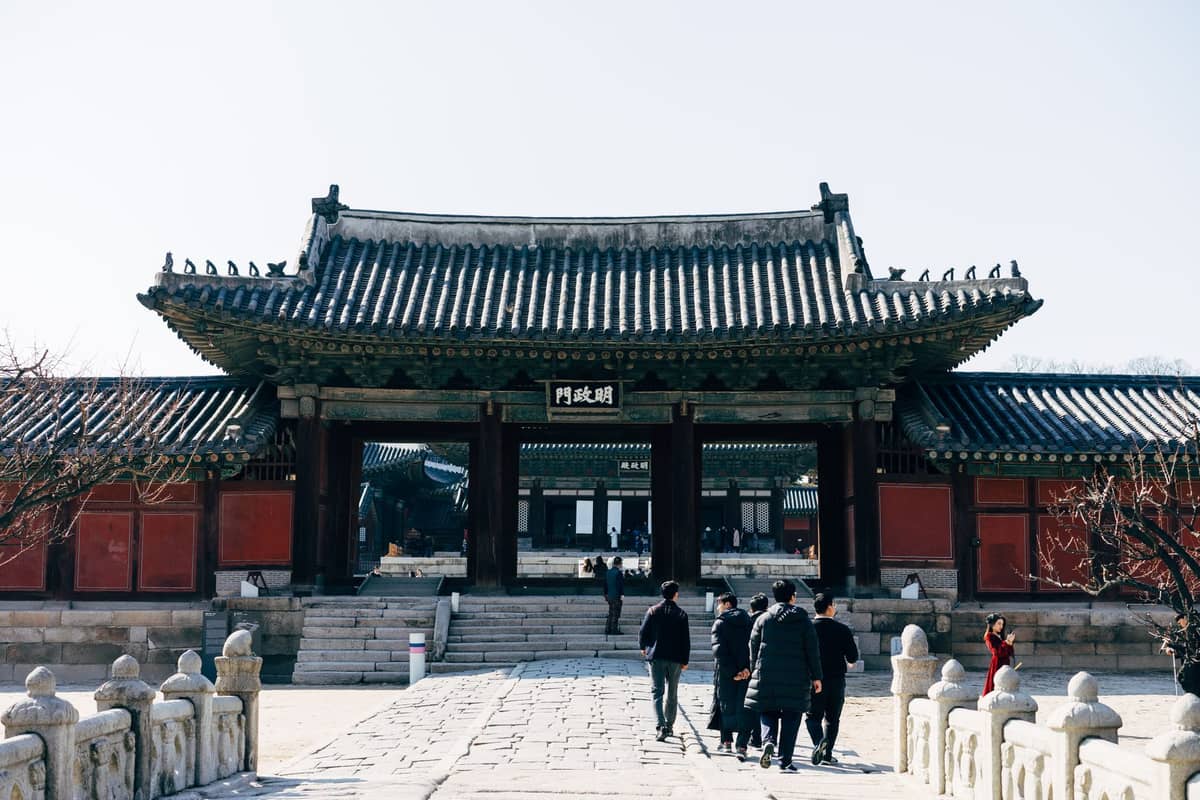
Not all of Seoul's sacred sites are Buddhist. The Joseon dynasty was deeply Confucian, and the shrines built to honor royal ancestors remain among the most architecturally significant and peaceful places in the city. These sites are best explored alongside Seoul's palaces — our hanok villages guide covers the surrounding neighborhoods in detail.
5. Experience Jongmyo, Korea's Most Important Confucian Shrine
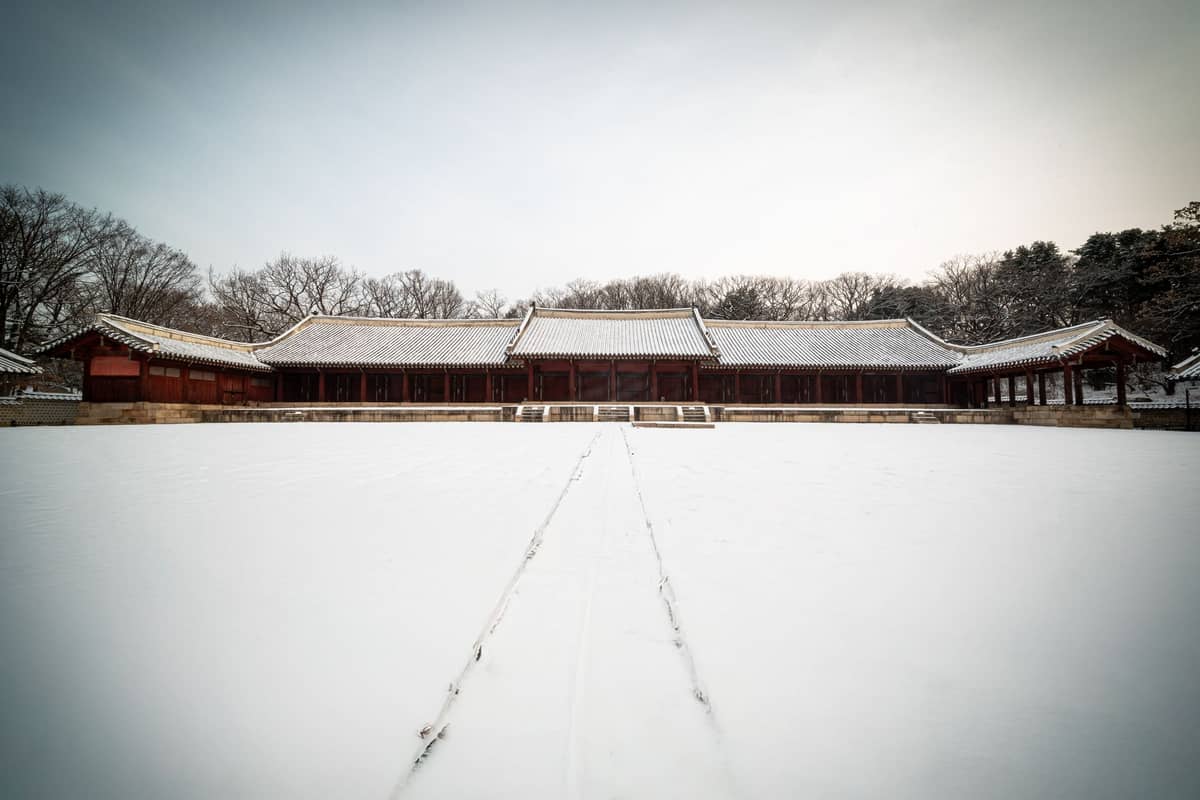
A UNESCO World Heritage Site housing the spirit tablets of Joseon kings and queens in the world's longest single wooden structure. Entry requires joining a guided tour. The annual Jongmyo Daeje ritual in May, with royal music and dance unchanged for centuries, is extraordinary.
Explore5. Experience Jongmyo, Korea's Most Important Confucian Shrine
A UNESCO World Heritage Site housing the spirit tablets of Joseon kings and queens in the world's longest single wooden structure. Entry requires joining a guided tour. The annual Jongmyo Daeje ritual in May, with royal music and dance unchanged for centuries, is extraordinary.
Explore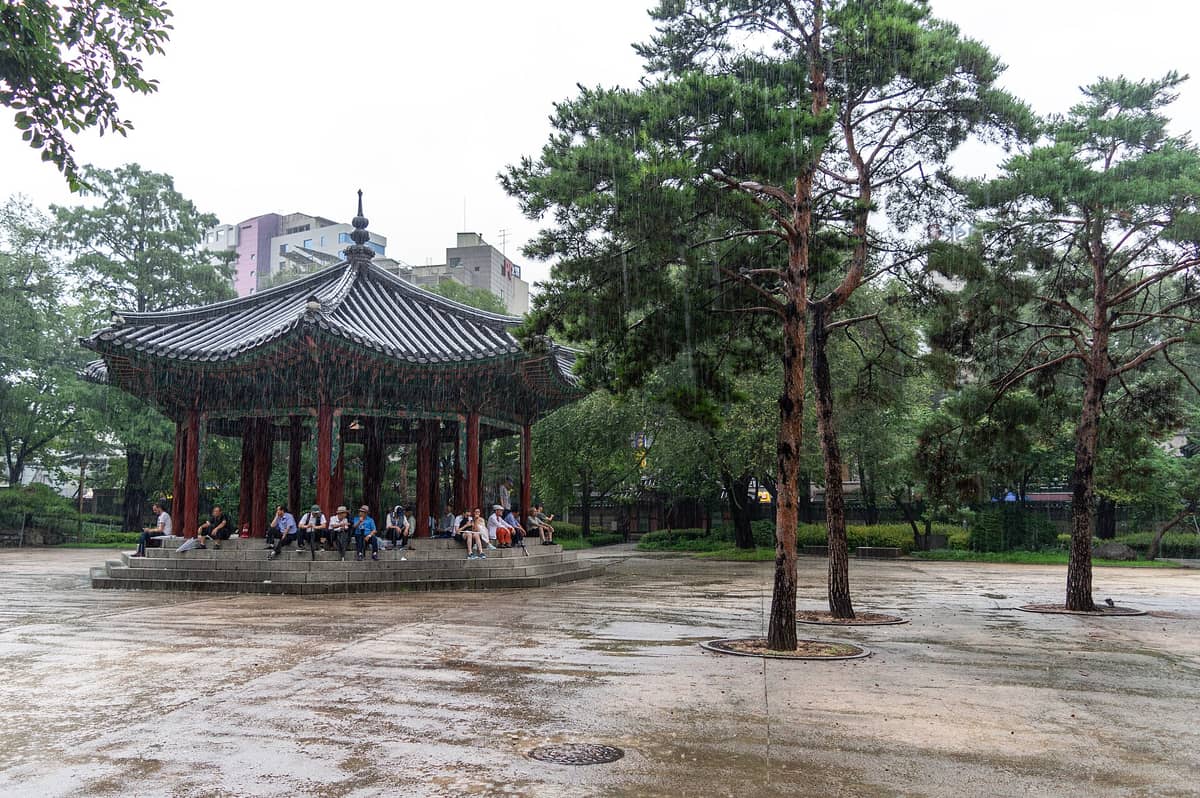
6. See the Wongaksa Pagoda at Korea's First Public Park
Tapgol Park preserves the 10-story marble Wongaksa Pagoda, a National Treasure from 1467 originally built for a Buddhist temple. The pagoda's carved reliefs depicting Buddhist narratives are remarkable up close, and the park carries deep historical significance as a site of independence.
Explore6. See the Wongaksa Pagoda at Korea's First Public Park
Tapgol Park preserves the 10-story marble Wongaksa Pagoda, a National Treasure from 1467 originally built for a Buddhist temple. The pagoda's carved reliefs depicting Buddhist narratives are remarkable up close, and the park carries deep historical significance as a site of independence.
ExploreSacred Sites Within Palace Grounds
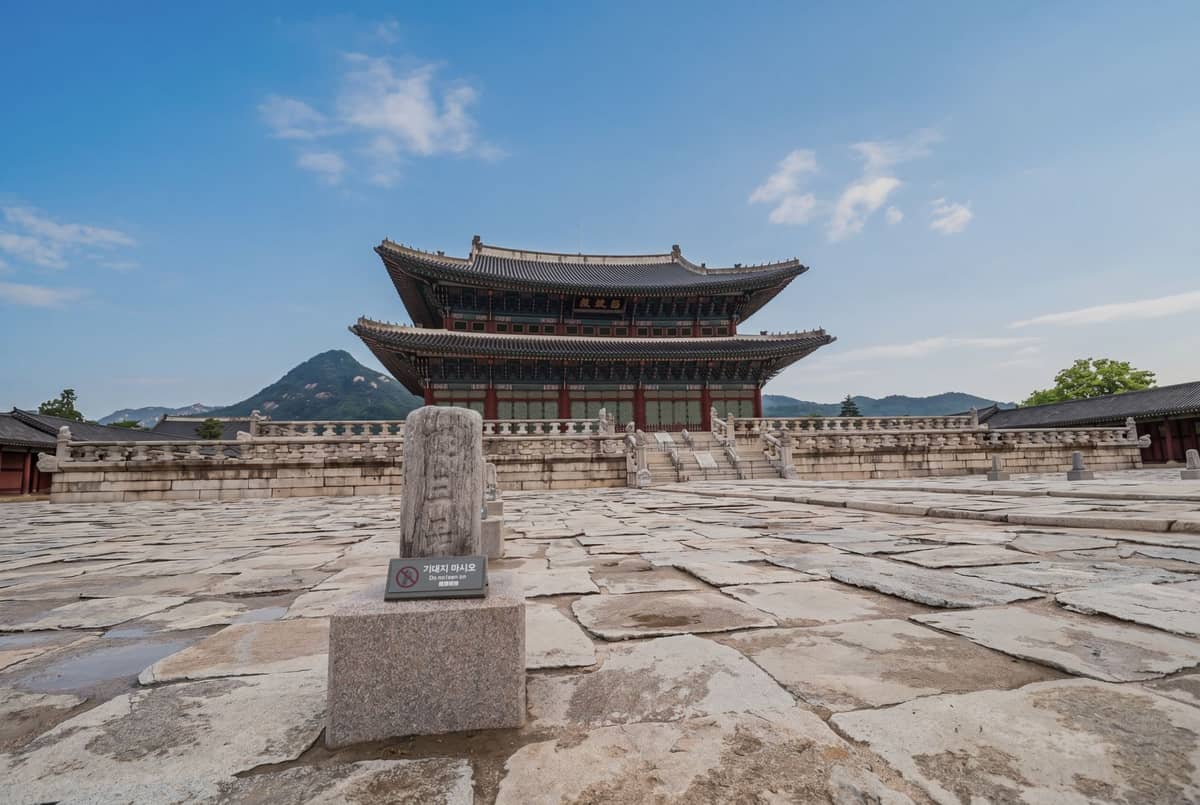
Several of Seoul's royal palaces contain shrines, ceremonial halls, and sacred structures within their grounds. Visiting these alongside their palace context gives a fuller picture of how spiritual practice was woven into royal life. For a complete palace itinerary, see our guide to Seoul's palaces.
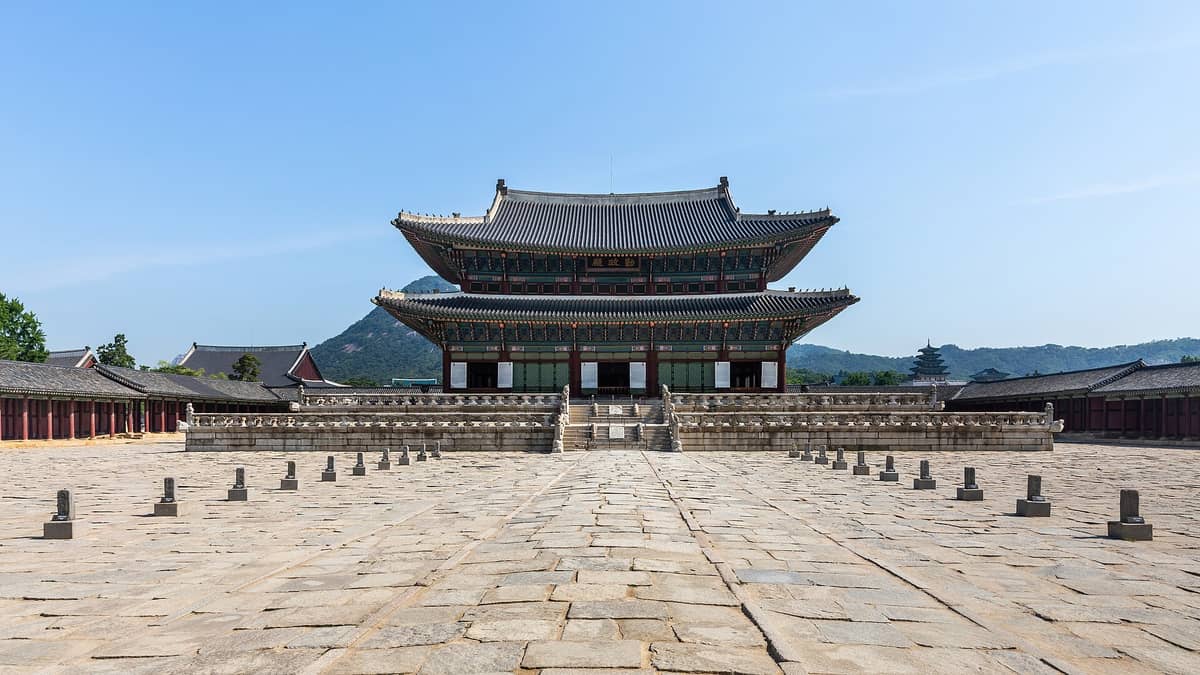
7. Explore Ceremonial Shrine Halls Inside Gyeongbokgung
Gyeongbokgung's vast grounds include Sajik Altar (nearby) and several ritual halls used for royal ancestral rites. The palace's scale and ceremonial architecture are essential context for understanding how Confucian sacred practice shaped the Joseon capital. Free on the first Sunday of each month.
Explore7. Explore Ceremonial Shrine Halls Inside Gyeongbokgung
Gyeongbokgung's vast grounds include Sajik Altar (nearby) and several ritual halls used for royal ancestral rites. The palace's scale and ceremonial architecture are essential context for understanding how Confucian sacred practice shaped the Joseon capital. Free on the first Sunday of each month.
Explore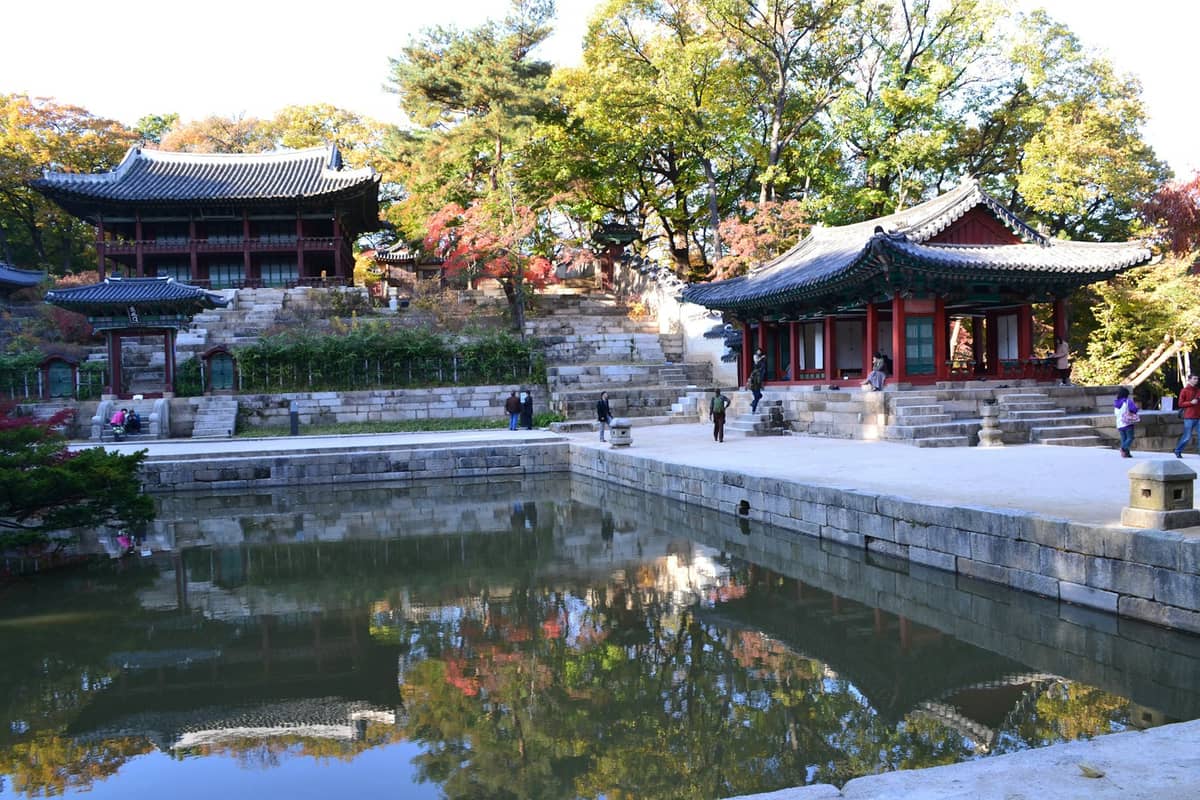
8. Find Quiet Rituals in Changdeokgung's Sacred Spaces
The UNESCO-listed Secret Garden (Huwon) contains pavilions used for royal ritual and reflection. The Injeongjeon throne hall was the site of key ceremonial rites. Guided tours of the garden run at set times — book ahead, especially in spring and autumn when demand is highest.
Explore8. Find Quiet Rituals in Changdeokgung's Sacred Spaces
The UNESCO-listed Secret Garden (Huwon) contains pavilions used for royal ritual and reflection. The Injeongjeon throne hall was the site of key ceremonial rites. Guided tours of the garden run at set times — book ahead, especially in spring and autumn when demand is highest.
Explore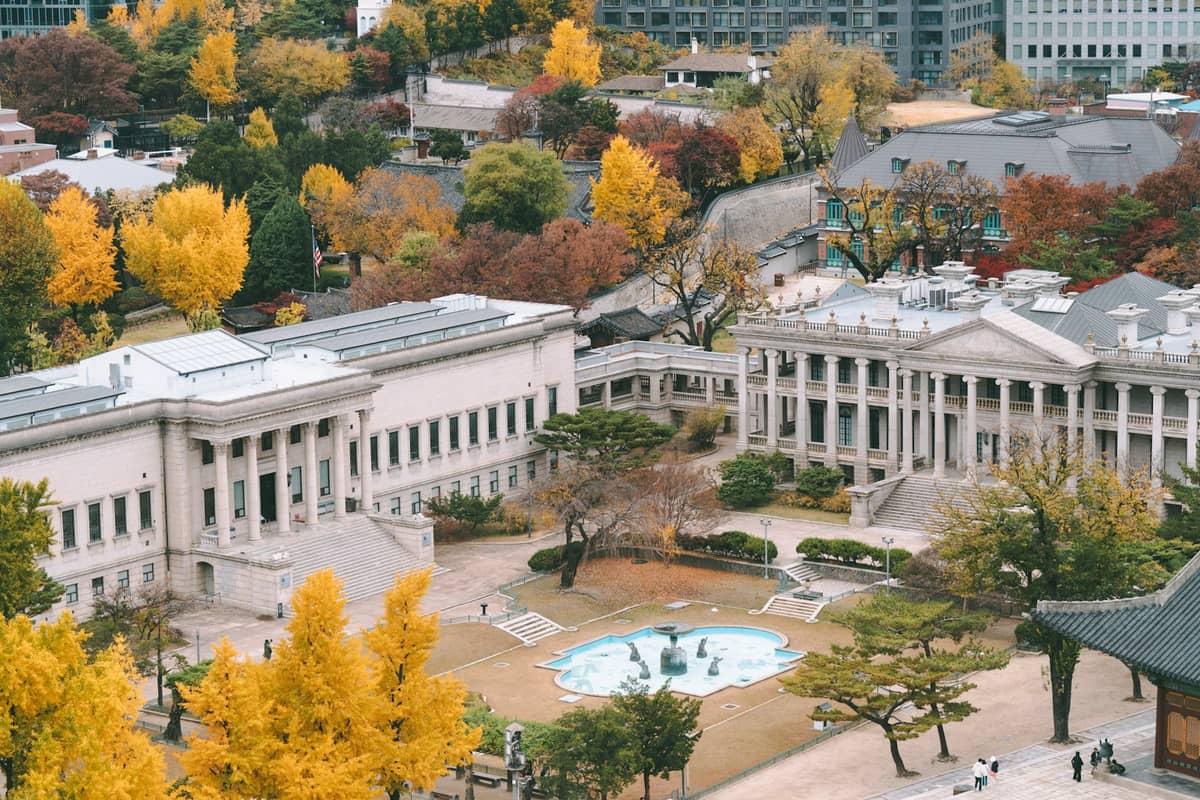
9. Reflect at Deoksugung, a Palace with a Turbulent Sacred History
Deoksugung served as an emergency royal residence during times of crisis and holds shrines honoring Joseon ancestors. Its compact size means you can explore the ceremonial buildings, including Junghwajeon hall, in under two hours. The adjacent stone wall road is worth the detour.
Explore9. Reflect at Deoksugung, a Palace with a Turbulent Sacred History
Deoksugung served as an emergency royal residence during times of crisis and holds shrines honoring Joseon ancestors. Its compact size means you can explore the ceremonial buildings, including Junghwajeon hall, in under two hours. The adjacent stone wall road is worth the detour.
ExploreHistoric Gates, Walls & Sacred Urban Landmarks
Seoul's old city was defined by sacred geography: its walls, gates, and mountains were all assigned spiritual significance within a geomantic framework. Walking the Seoul City Wall trail connects many of these sites into a single coherent journey across the city's historic fabric.
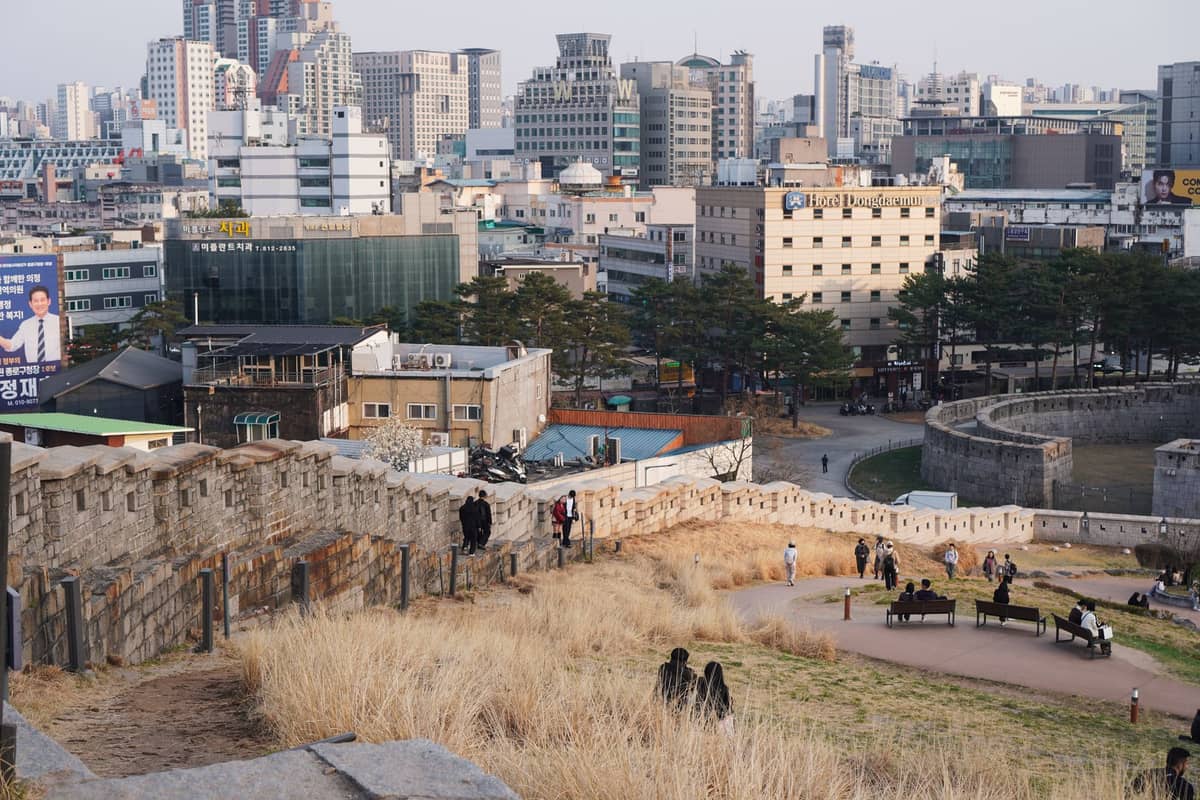
10. Walk the Hanyangdoseong Wall Across Sacred Mountains
The 18.6km Joseon-era city wall was laid out according to pungsu (Korean geomancy), tracing four mountains considered spiritually protective. The Inwangsan and Bugaksan sections pass directly by shrines and temples. The full circuit takes 8 hours; individual sections can be done in 2–3 hours.
Explore10. Walk the Hanyangdoseong Wall Across Sacred Mountains
The 18.6km Joseon-era city wall was laid out according to pungsu (Korean geomancy), tracing four mountains considered spiritually protective. The Inwangsan and Bugaksan sections pass directly by shrines and temples. The full circuit takes 8 hours; individual sections can be done in 2–3 hours.
Explore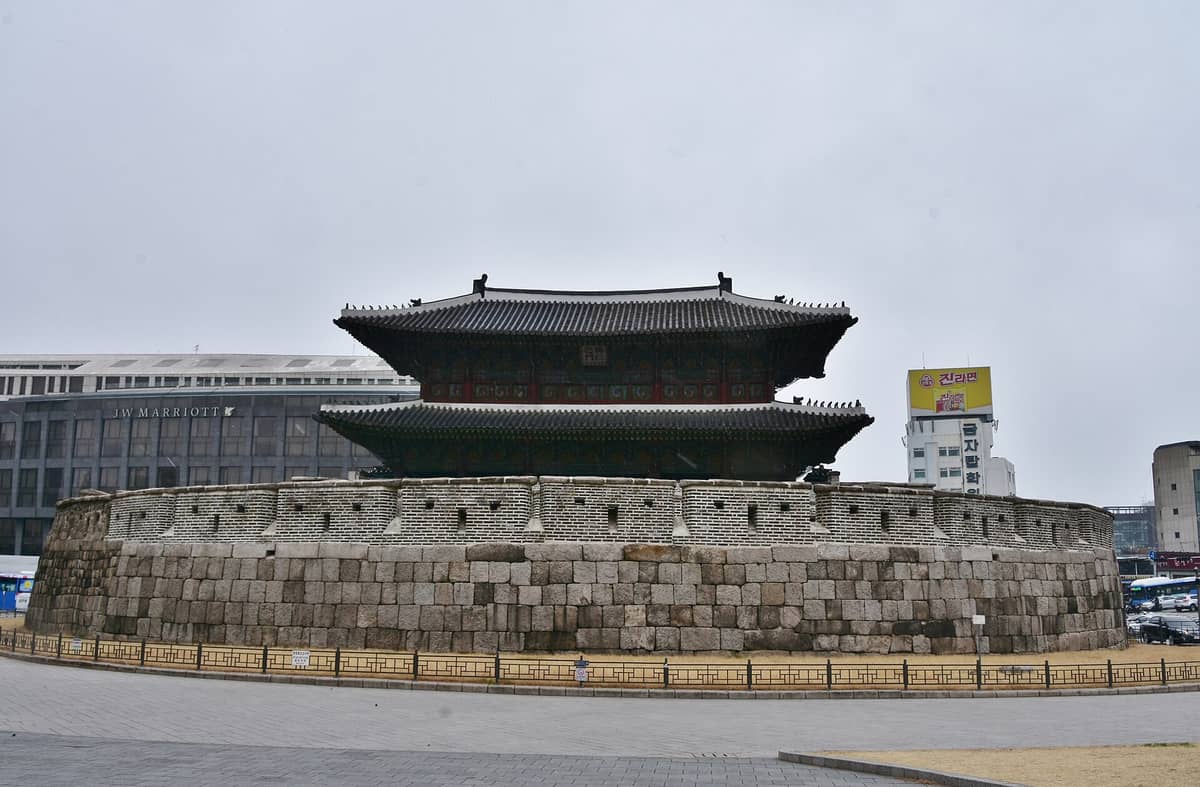
11. See Heunginjimun, the Eastern Gate Aligned with Mountain Spirits
The only surviving original city gate with its outer protective wall intact, Heunginjimun was positioned to address the weak eastern geomantic energy of the city. Standing beside it offers a tangible sense of how spiritual thinking shaped Seoul's founding layout.
Explore11. See Heunginjimun, the Eastern Gate Aligned with Mountain Spirits
The only surviving original city gate with its outer protective wall intact, Heunginjimun was positioned to address the weak eastern geomantic energy of the city. Standing beside it offers a tangible sense of how spiritual thinking shaped Seoul's founding layout.
Explore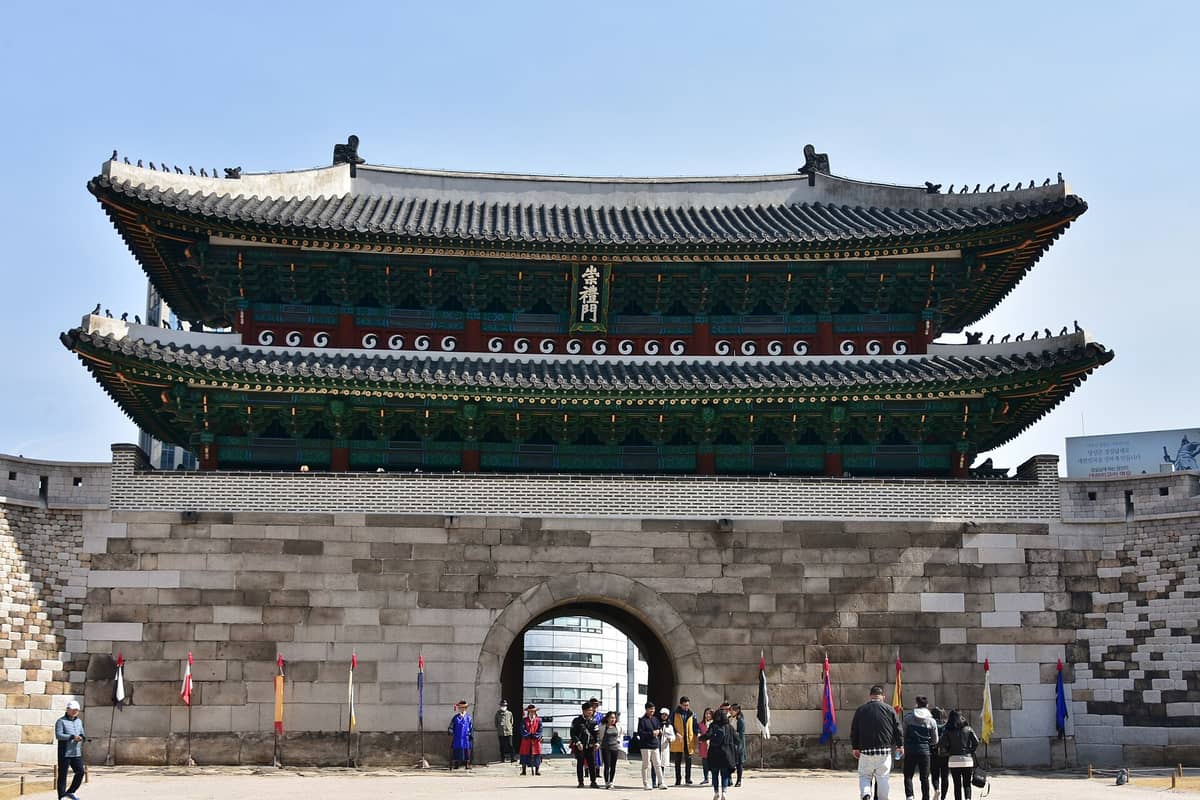
12. Visit Sungnyemun, a designated Treasure
The southern gate of the Joseon capital, rebuilt after a devastating arson fire in 2008 and reopened in 2013, holds deep symbolic and spiritual significance as the formal entrance to the capital. Its two-story wooden pavilion structure is among the finest surviving examples of Joseon gate architecture.
Explore12. Visit Sungnyemun, a designated Treasure
The southern gate of the Joseon capital, rebuilt after a devastating arson fire in 2008 and reopened in 2013, holds deep symbolic and spiritual significance as the formal entrance to the capital. Its two-story wooden pavilion structure is among the finest surviving examples of Joseon gate architecture.
Explore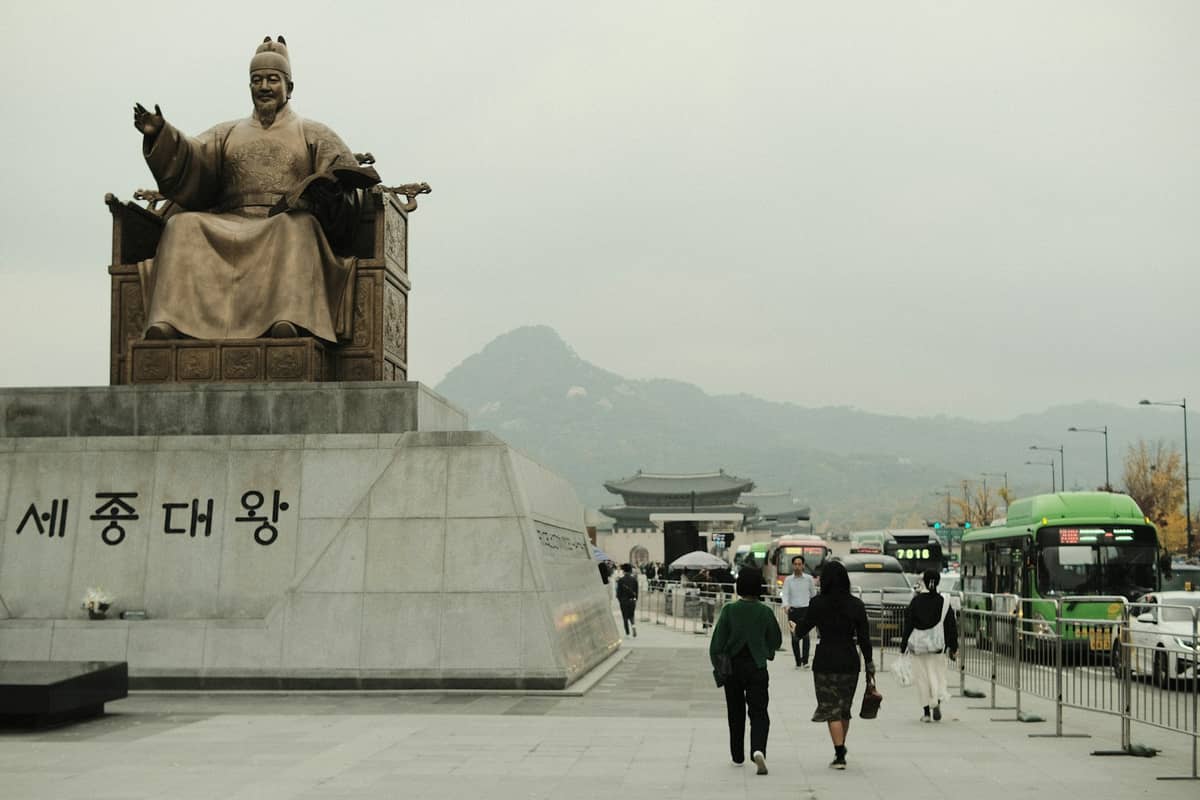
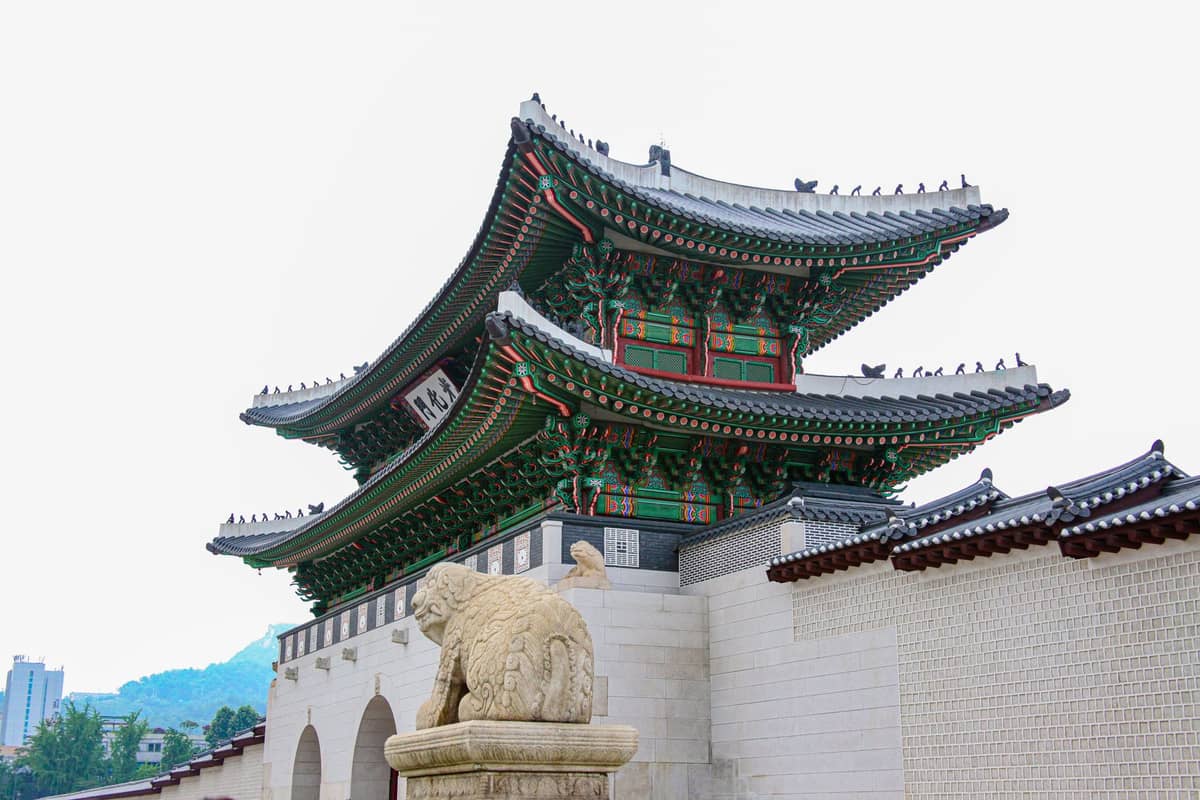
13. Stand at Gwanghwamun, the Ceremonial Axis of the Joseon Capital
The grand boulevard fronting Gyeongbokgung was deliberately designed as a sacred civic axis, aligned with Bugaksan Mountain behind the palace. The restored square and gate frame the clearest view of the palace's ceremonial approach, best appreciated at dawn before the crowds arrive.
Explore13. Stand at Gwanghwamun, the Ceremonial Axis of the Joseon Capital
The grand boulevard fronting Gyeongbokgung was deliberately designed as a sacred civic axis, aligned with Bugaksan Mountain behind the palace. The restored square and gate frame the clearest view of the palace's ceremonial approach, best appreciated at dawn before the crowds arrive.
ExploreOther Places of Worship & Interfaith Significance
Seoul's sacred landscape is not exclusively Buddhist or Confucian. The city contains significant Christian and Muslim sites that have shaped its modern identity. For travelers exploring multiple faith traditions, Itaewon and Yongsan offer the most diverse concentration of religious architecture in the city.
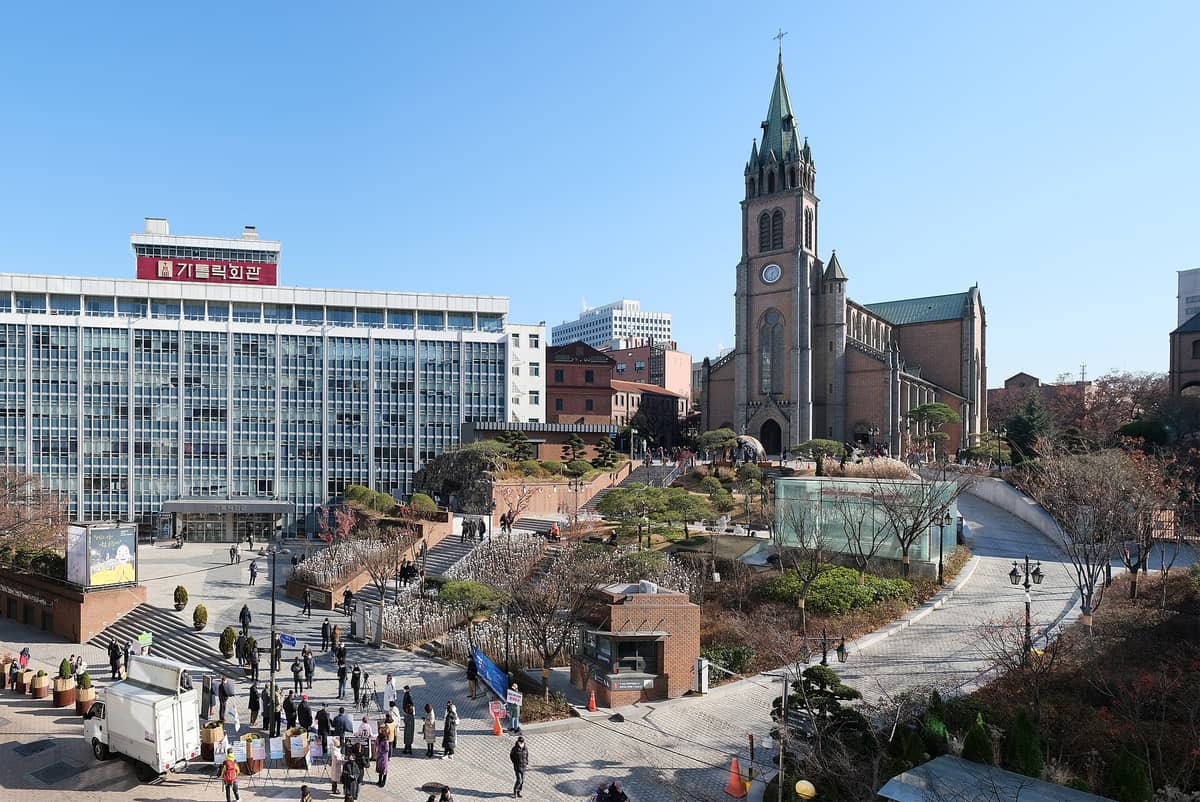
14. Admire Myeongdong Cathedral, Korea's Premier Catholic Landmark
Built in 1898, this Gothic Revival red-brick cathedral is Korea's most historically significant Catholic church. It served as a sanctuary during pro-democracy protests in the 1970s and 80s, adding civic and political meaning to its spiritual role. Daily masses are held in Korean.
Explore14. Admire Myeongdong Cathedral, Korea's Premier Catholic Landmark
Built in 1898, this Gothic Revival red-brick cathedral is Korea's most historically significant Catholic church. It served as a sanctuary during pro-democracy protests in the 1970s and 80s, adding civic and political meaning to its spiritual role. Daily masses are held in Korean.
Explore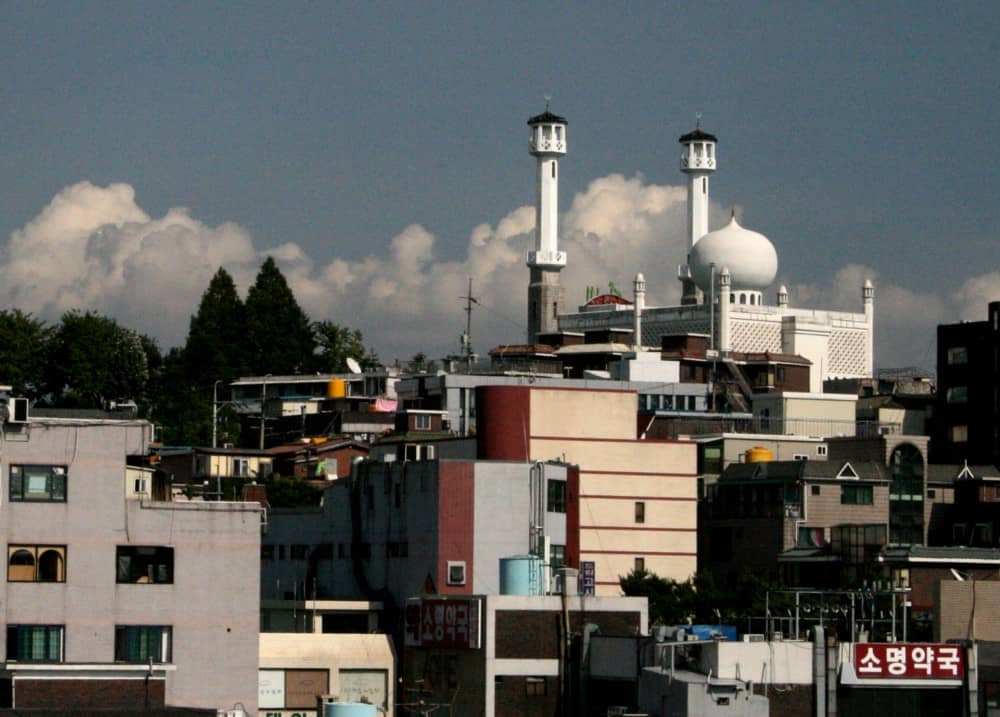
15. Explore Seoul Central Mosque in Itaewon
Korea's first and largest mosque, completed in 1976 on a hillside above Itaewon, anchors a community of halal restaurants, Islamic schools, and cultural organizations. Non-Muslim visitors are welcome outside prayer times. The surrounding streets give a genuine sense of Seoul's multicultural fabric.
Explore15. Explore Seoul Central Mosque in Itaewon
Korea's first and largest mosque, completed in 1976 on a hillside above Itaewon, anchors a community of halal restaurants, Islamic schools, and cultural organizations. Non-Muslim visitors are welcome outside prayer times. The surrounding streets give a genuine sense of Seoul's multicultural fabric.
Explore✨ Pro tip
Plan your temple visits for weekday mornings. Jogyesa and Bongeunsa see the lightest foot traffic before 10am. At Jongmyo Shrine, guided tours run at fixed times throughout the day — check the official schedule before you go as At Jongmyo Shrine, guided tours run at fixed times throughout the day — check the official schedule before you go.
FAQ
Are Seoul's Buddhist temples free to enter?
Most Buddhist temples in Seoul charge no admission fee, including Jogyesa, Bongeunsa, Hwagyesa, and several other major temples. Jongmyo Shrine is not a Buddhist temple but a Confucian royal shrine, and it charges a small admission fee of 1,000 won for adults. Always check current information before visiting as fees and access policies can change.
When is the best time to visit Seoul's temples?
Spring is the most rewarding season, particularly around Buddha's Birthday (a public holiday in May). Jogyesa and other major temples hang thousands of paper lanterns and hold processions as part of the Lotus Lantern Festival. Autumn (October-November) is also excellent for comfortable temperatures and scenic temple grounds. Summer is hot and humid, and winter can be very cold at outdoor sacred sites.
Can I do a temple stay in Seoul?
Yes. Yes. Bongeunsa in Gangnam offers overnight temple stay programs for international visitors, including meditation, tea ceremony, and morning chanting. The programs typically run on weekends and must be booked in advance through the temple's official website or the Korea Temple Stay program portal., including meditation, tea ceremony, and morning chanting. The programs typically run on weekends and must be booked in advance through the temple's official website or the Korea Temple Stay program portal.
Is Jongmyo Shrine a Buddhist temple?
No. Jongmyo Shrine is a Confucian royal ancestral shrine, not a Buddhist temple. It houses the spirit tablets of Joseon dynasty kings and queens and is the site of the annual Jongmyo Daeje ritual. It is a UNESCO World Heritage Site and historically one of Korea's most significant sacred sites, but its tradition is Confucian rather than Buddhist.
What should I wear when visiting temples in Seoul?
Dress respectfully: covered shoulders and knees are appreciated at active temples and shrines. There is no strict enforcement at most Seoul sites, but modest clothing shows respect for worshippers using the space. Remove your shoes when entering main halls where required. Photography inside prayer halls may be restricted — look for signs or ask before shooting.