Seoul to Busan: How to Get There and What to Expect
The Seoul to Busan corridor is one of the most-traveled routes in South Korea. This guide breaks down every realistic option, from the KTX high-speed train to intercity buses and flights, with fares, journey times, and practical booking advice.
Plan and book this trip
Tools from our partner Travelpayouts help you compare flights and hotels. If you book through them, we may earn a commission at no extra cost to you.
Flights
Hotels map
TL;DR
- The KTX high-speed train is the fastest city-center to city-center option, covering roughly 325 km in as little as 2 hours 15 minutes on express services.
- Standard KTX economy tickets cost around ₩59,800 one-way; first class runs about ₩83,700 on some services. Buses are cheaper at ₩23,000–₩34,000 but take 4+ hours.
- Flights look quick on paper but door-to-door travel time usually exceeds the KTX when you factor in airport procedures at both ends.
- Book KTX tickets via Korail up to 30 days in advance. During Korean public holidays, seats sell out fast — see our tips on peak travel periods in Seoul to plan ahead.
- Seoul Station (KTX) and Express Bus Terminal are both well-connected to the Seoul Metro, making departure straightforward from most neighborhoods.
The Route in Context: Seoul to Busan by the Numbers
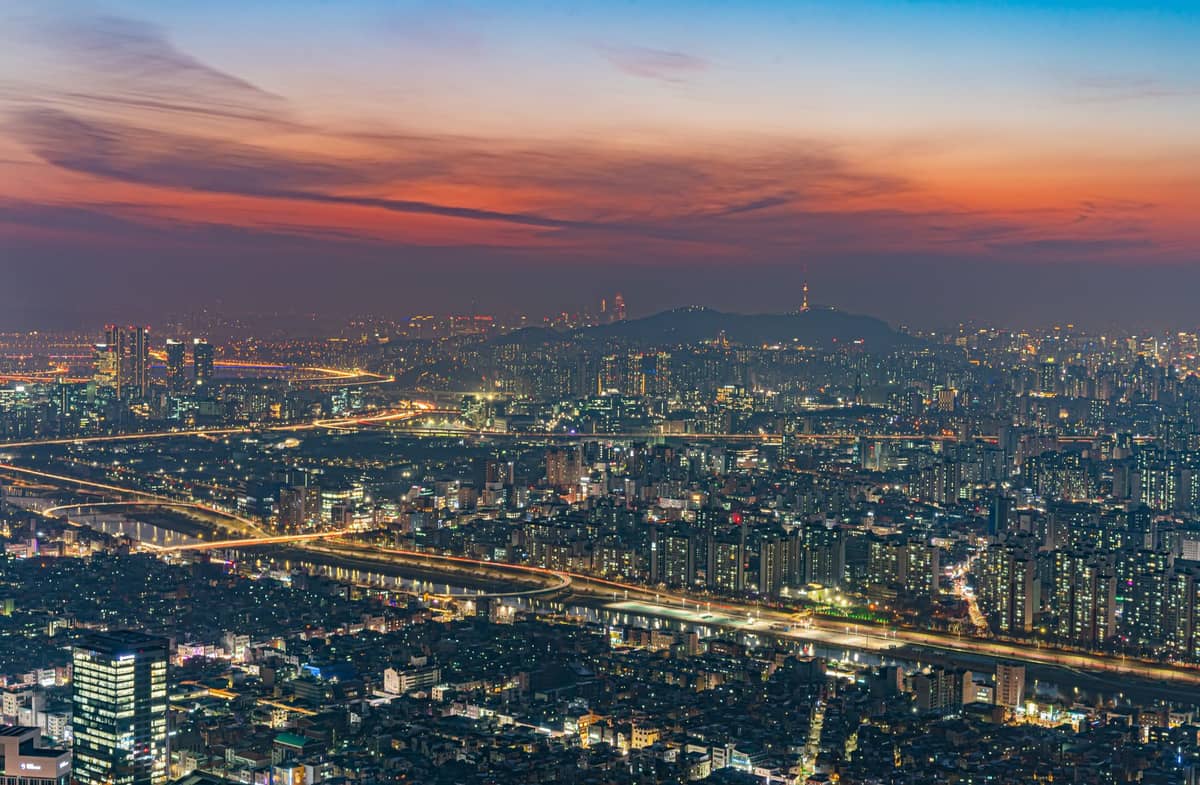
Seoul and Busan are South Korea's two largest cities, separated by roughly 325 km. That distance might sound manageable on a map, but driving or taking a standard road route through traffic takes considerably longer than the official distance implies. The KTX changed the equation dramatically when it launched in 2004, compressing what was once a 4.5-5 hour train journey into under 2.5 hours on express services. Understanding the actual options, rather than just the fastest headline number, is what makes the difference between a smooth trip and a frustrating one.
Most travelers departing from central Seoul will use Seoul Station as their main hub. It connects directly to Metro Lines 1 and 4, the AREX airport rail link, and multiple bus routes. Yongsan Station also serves some KTX services and is worth knowing if you're staying in that part of the city. Busan's main KTX terminus is Busan Station, located in the Dong-gu district and connected to Busan Metro Line 1.
KTX: The Default Choice for Most Travelers
The KTX (Korea Train eXpress) is operated by Korail and runs between Seoul Station and Busan Station multiple times per day. On the fastest nonstop services, the journey takes approximately 2 hours 17 minutes. More typical journey times, depending on stops, range from 2 hours 40 minutes to around 3 hours 25 minutes. Services start early in the morning and the last departure is late at night, giving you substantial flexibility for same-day trips or evening departures.
- Standard (Economy) Class Around ₩59,800 one-way. Comfortable seats with decent legroom, power outlets on newer trains, and a quieter car option. Adequate for a 2-3 hour journey.
- First Class (Special) Around ₩83,700 one-way. Wider seats, more recline, and a noticeably quieter environment. Worth it if you're working or want to sleep, less critical for a short daytime trip.
- SRT (Suseo High-Speed Railway) A competing high-speed rail service departing from Suseo Station in Gangnam. Fares are slightly lower than KTX on some routes and departure times can be more convenient if you're based south of the Han River. Journey times are comparable.
💡 Local tip
Book KTX tickets directly through the Korail website or the Korail Talk app. Tickets open approximately 30 days before the travel date. During Chuseok (Korean Thanksgiving) and Seollal (Lunar New Year), seats can sell out very quickly — set a reminder and book the moment the window opens.
Korail also offers a rail pass aimed at foreign visitors (the Korea Rail Pass), which can offer savings if you're combining the Seoul-Busan route with other intercity journeys. For a single round trip, individual tickets are usually more cost-effective, but the pass makes sense for multi-city itineraries. Check the current Korail website for pass eligibility and pricing, as terms change periodically.
⚠️ What to skip
KTX tickets cannot always be fully refunded last-minute. Cancellation fees apply on a sliding scale as the departure time approaches. If your plans are uncertain, check the refund policy before purchasing, especially for peak-season travel.
Intercity Bus: Cheaper, Slower, Still Viable
Seoul has two main express bus terminals serving Busan routes: Seoul Express Bus Terminal (served by Metro Lines 3, 7, and 9 in Gangnam) and Dong Seoul Terminal in Gwangjin-gu. One-way fares to Busan typically range from ₩23,000 to ₩34,000 depending on the bus class (regular vs. premium/우등/sleeper). Journey times are generally 4 hours or more, and that assumes clear highway conditions. Traffic on the Gyeongbu Expressway during Friday evenings, holiday periods, or summer weekends can push that to 5-6 hours or longer.
The bus does have genuine advantages: it's significantly cheaper, drops you at Busan Central Bus Terminal or Seobu (West Busan) Terminal, and premium 'uright' or 'premium' seats on some operators are genuinely comfortable for overnight runs. If budget is the priority and you have time to spare, the bus is a legitimate option. But don't book it assuming the journey will be quick. It won't be.
✨ Pro tip
For late-night departures, some operators run premium sleeper-style buses where seats recline almost flat. These can be a practical option for travelers wanting to arrive in Busan early morning without paying for a hotel night in Seoul. Book through Kobus (the official intercity bus booking portal) in advance.
Flying Seoul to Busan: When It Makes Sense (and When It Doesn't)
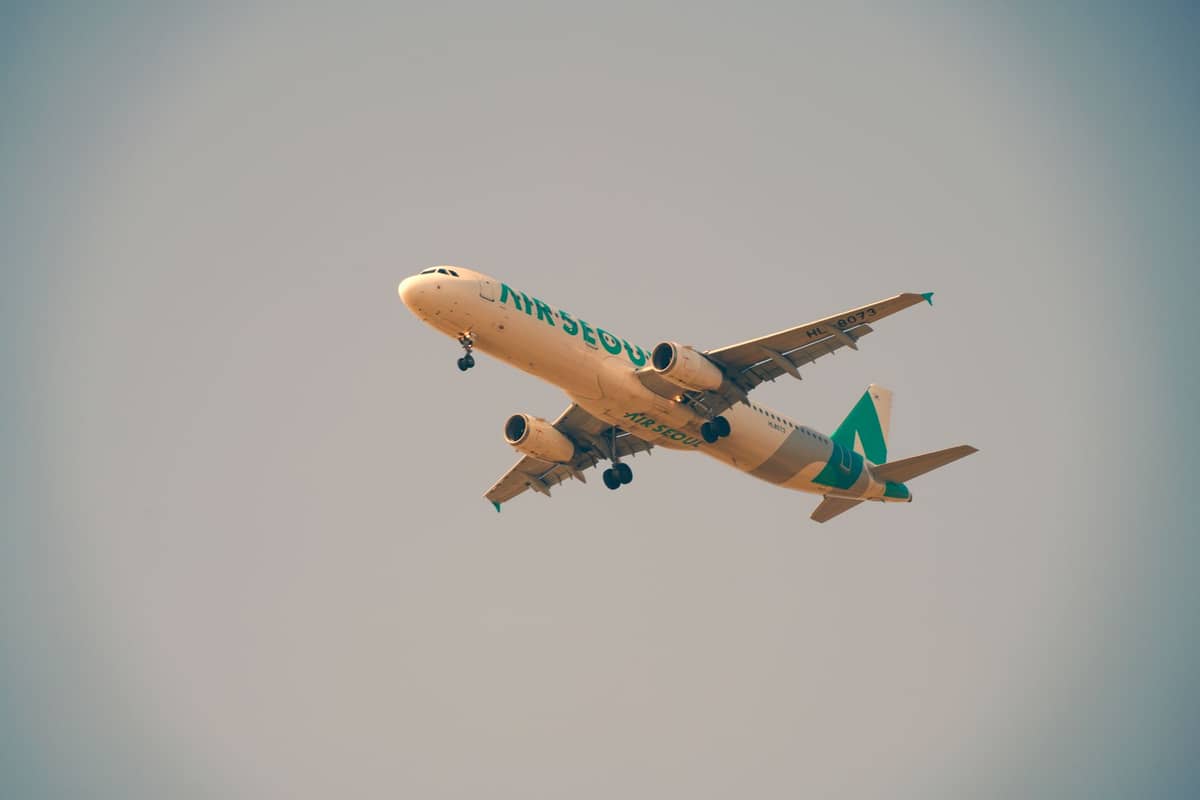
The flight itself, on routes between Gimpo International Airport (GMP) in Seoul and Gimhae International Airport (PUS) in Busan, takes around 55–65 minutes in the air. Airlines like Korean Air and Asiana operate the route. On paper, that sounds faster than the KTX. In practice, it rarely is. Factor in getting to Gimpo, west of central Seoul, arriving at least an hour before departure, boarding, the flight itself, baggage claim, and then the journey from Gimhae Airport into central Busan, and you're typically looking at 4+ hours total door-to-door.
Flying makes more sense in specific circumstances: if you're already at Gimpo for a connecting flight, if you find a promotional fare significantly below the KTX price, or if you have luggage constraints that make the bus impractical and budget makes KTX unappealing. For the vast majority of travelers, KTX is faster and less stressful city-center to city-center. The flight option is not a bad one, just rarely the optimal one for this particular route.
Driving: Technically Possible, Rarely Recommended
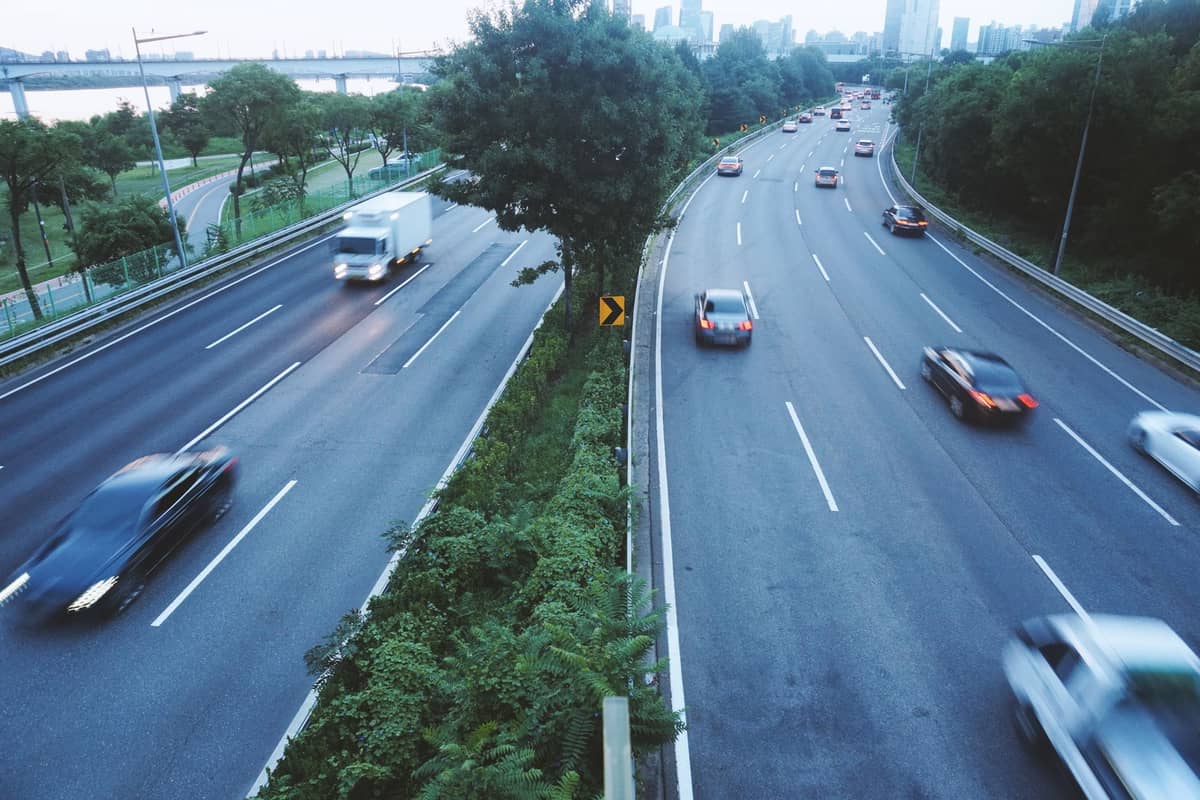
The Gyeongbu Expressway connects Seoul to Busan and is one of South Korea's busiest highways. In ideal conditions (midweek, mid-morning, no holidays), the drive can take around 4-5 hours. In reality, holiday traffic, especially during Chuseok and Lunar New Year, can turn the route into a crawl lasting 8–10 hours or more. Renting a car makes sense if you plan to explore the countryside between Seoul and Busan, visit smaller cities like Gyeongju or Daegu along the way, or need maximum flexibility once in Busan. For a point-to-point trip to Busan and back, driving adds stress and cost without meaningful advantages over KTX.
- Expressway tolls between Seoul and Busan are roughly ₩18,000–₩20,000 each way, varying by route and vehicle class.
- Fuel costs add significantly depending on car type; expect to spend ₩60,000–₩90,000 in petrol for the full journey in a standard car.
- Rental cars in South Korea require an International Driving Permit (IDP) in addition to your national license for most nationalities — verify requirements before booking.
- Parking in central Busan can be expensive and difficult to find near popular areas.
Practical Booking and Travel Logistics
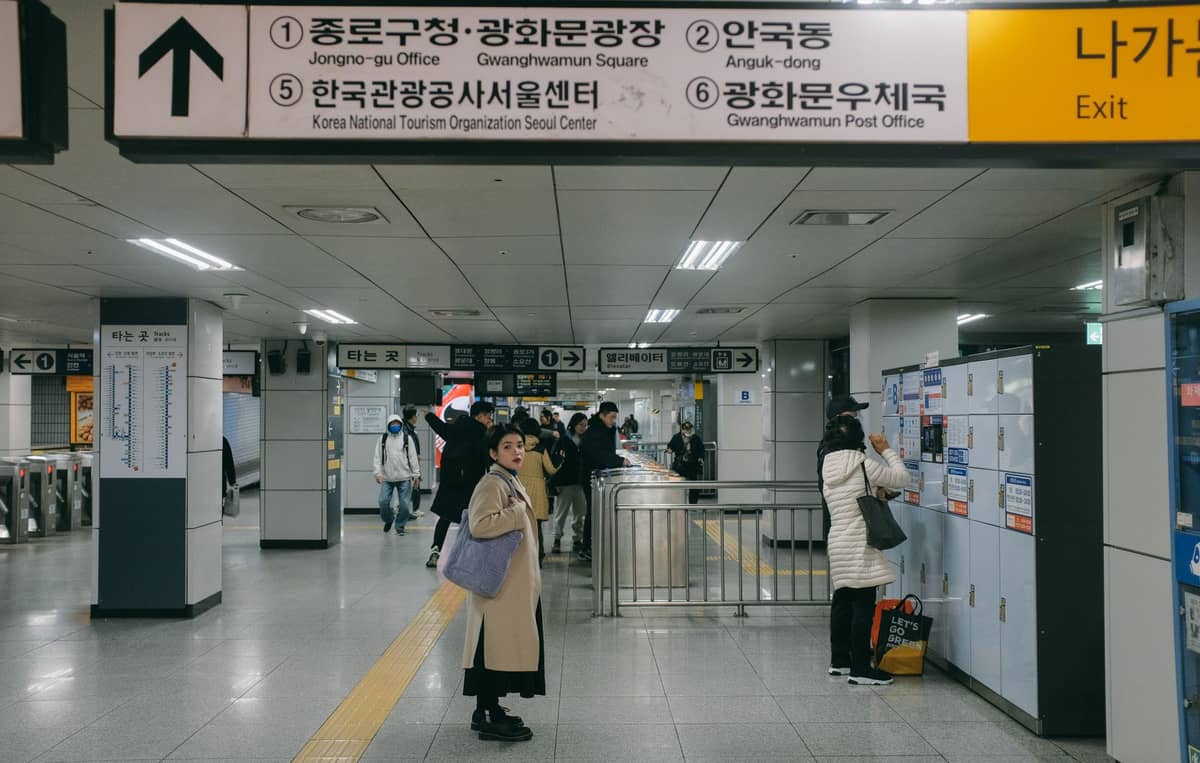
Seoul Station is the easiest departure point for most visitors staying in central Seoul. It sits on Metro Lines 1 and 4 and is about 50–60 minutes from Incheon International Airport via the AREX express train, making it straightforward to connect a flight arrival with a same-day KTX departure to Busan if your schedule allows. If you're based in Gangnam or the southern districts, consider checking SRT departures from Suseo Station, which may save you a cross-city metro journey.
Getting around Seoul efficiently before your departure is straightforward using the T-money card, which works on all subway lines and buses. If you're new to Seoul's transit network, our guide to getting around Seoul covers the T-money system, line transfers, and airport rail in detail.
If you're planning a broader South Korea trip that includes both Seoul and Busan, structuring your itinerary around the KTX makes good logistical sense. Our 5-day Seoul itinerary can help you decide how many nights to allocate in the capital before heading south, while day trips in the other direction are also worth considering — our day trips from Seoul guide covers other destinations reachable by KTX or bus.
ℹ️ Good to know
All fares quoted in this guide (KTX ~₩59,800 economy, ~₩83,700 first class; bus ₩23,000–₩34,000) are approximate standard adult one-way prices. Korail and bus operators adjust pricing periodically and apply dynamic pricing during peak periods. Always check the official booking platform for current fares before purchasing.
FAQ
How long does the Seoul to Busan KTX take?
The fastest KTX express services cover the route in approximately 2 hours 17 minutes. More common journey times, depending on intermediate stops, range from 2 hours 40 minutes to 3 hours 25 minutes. Check the specific service when booking — not all KTX trains are the same speed.
How much does it cost to travel from Seoul to Busan?
KTX standard (economy) class costs around ₩59,800 one-way; first class is around ₩83,700. Intercity buses typically cost ₩23,000–₩34,000 depending on bus class. Flights vary but often do not offer a price advantage over KTX once booking fees and airport transfers are included. All fares are subject to change — verify on the official Korail or Kobus platforms.
Is it better to take the KTX or fly from Seoul to Busan?
For most travelers, KTX is the better choice. Total door-to-door flight time (including getting to Gimpo, check-in, the flight, and Gimhae-to-central-Busan transfer) typically exceeds KTX journey time. KTX departs from central Seoul and arrives in central Busan, which removes the airport transfer problem entirely.
Do I need to book KTX tickets in advance?
For travel outside major Korean holidays (Chuseok, Seollal), same-day or next-day tickets are often available, though popular departure times fill up. During Korean public holidays, tickets can sell out quickly after the booking window opens about 30 days before travel. Booking in advance is always the safer approach.
Which station in Seoul do KTX trains to Busan depart from?
Most KTX services to Busan depart from Seoul Station (Metro Lines 1 and 4). Some services also depart from Yongsan Station, two stops south on Line 1. SRT high-speed trains, a competing service with slightly lower fares on some routes, depart from Suseo Station in Gangnam, which is more convenient for travelers staying south of the Han River.