Yeouido is Seoul's compact island district in the Han River, home to the National Assembly, major broadcasting networks, and the city's most celebrated cherry blossom avenue. By day it runs on finance and politics; by evening it transforms into one of Seoul's most relaxed riverside destinations.
Yeouido sits in the Han River like a city within the city: glass towers and government buildings on one side, open riverbanks and cycling paths on the other. It is Seoul's financial and political nerve center, yet it earns its place on any traveler's itinerary for reasons that have nothing to do with banking. The cherry blossoms along Yeouingil-ro in spring draw enormous crowds for good reason, and the Han River parks here are among the most popular in the entire city.
Orientation
Yeouido is a flat, roughly rectangular island in the Han River, belonging to Yeongdeungpo-gu in Seoul's western half. The Saetgang stream separates the island from the Yeongdeungpo commercial district on the south side, while bridges connect it to both banks of the Han River, making it accessible from multiple directions despite being technically an island.
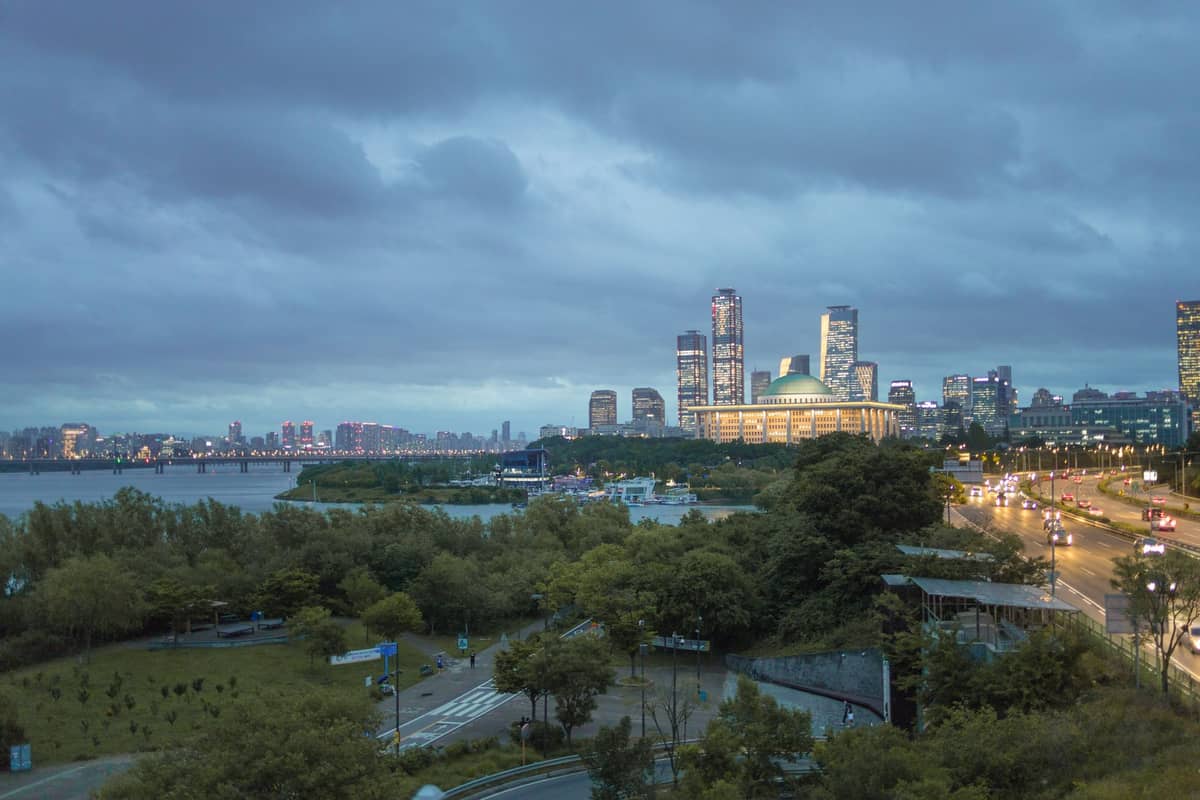
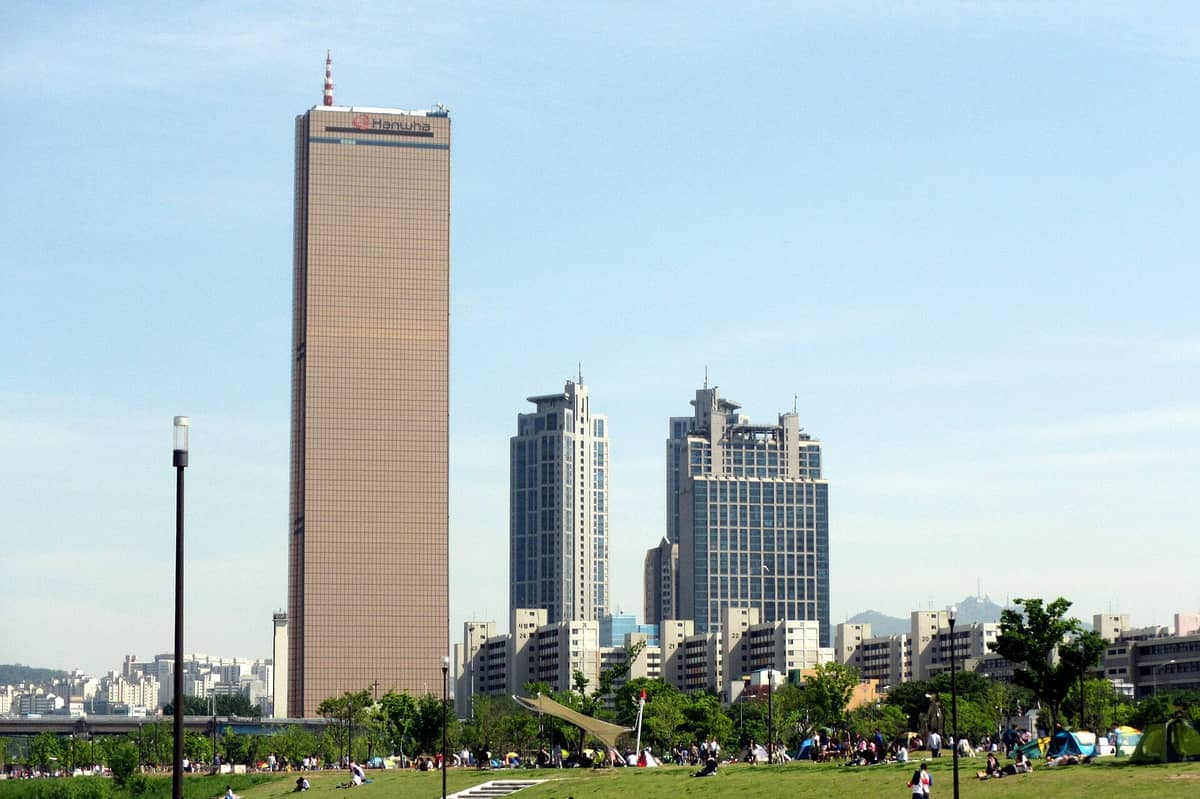
Spatially, Yeouido divides into a few legible zones. The eastern half is dominated by the Korea Exchange, major investment banks, and the IFC Seoul complex. Move west and you reach the National Assembly compound, which occupies a large portion of the island's western end. The northern edge along the Han River is almost entirely parkland, cycling infrastructure, and food stalls. Yeouido Park sits roughly in the center, a green buffer between the financial towers to the east and the legislative district to the west.
Neighboring districts frame the island well. Mapo and HongdaeMapo and Yongsan lie across the river to the north, reachable via Mapo Bridge. To the east, across the river, Yongsan is a short bus or metro ride away. Understanding this geography helps: Yeouido is not a transit crossroads but a destination in its own right, most efficiently approached by metro.
Character & Atmosphere
The character of Yeouido shifts more dramatically by hour and day than almost any other district in Seoul. On a Tuesday morning at 8am, the streets around Yeouido Station fill with office workers in suits, convenience store lines stretch out the door, and the entire island hums with the compressed energy of a financial center going to work. The towers along Yeouigongwon-ro cast long shadows, and the sound is predominantly traffic and footsteps.
By lunchtime, the character softens slightly. Workers spill out into the underground mall beneath IFC Seoul, or walk the wide boulevard toward Yeouido Park to eat outdoors. The park itself, 23 hectares of grass, walking paths, and woodland, absorbs this midday activity easily. The afternoon light hits the Han River at a low angle in autumn, turning the water a deep reflective silver that makes the north side of the island feel genuinely beautiful despite the skyline looming behind you.
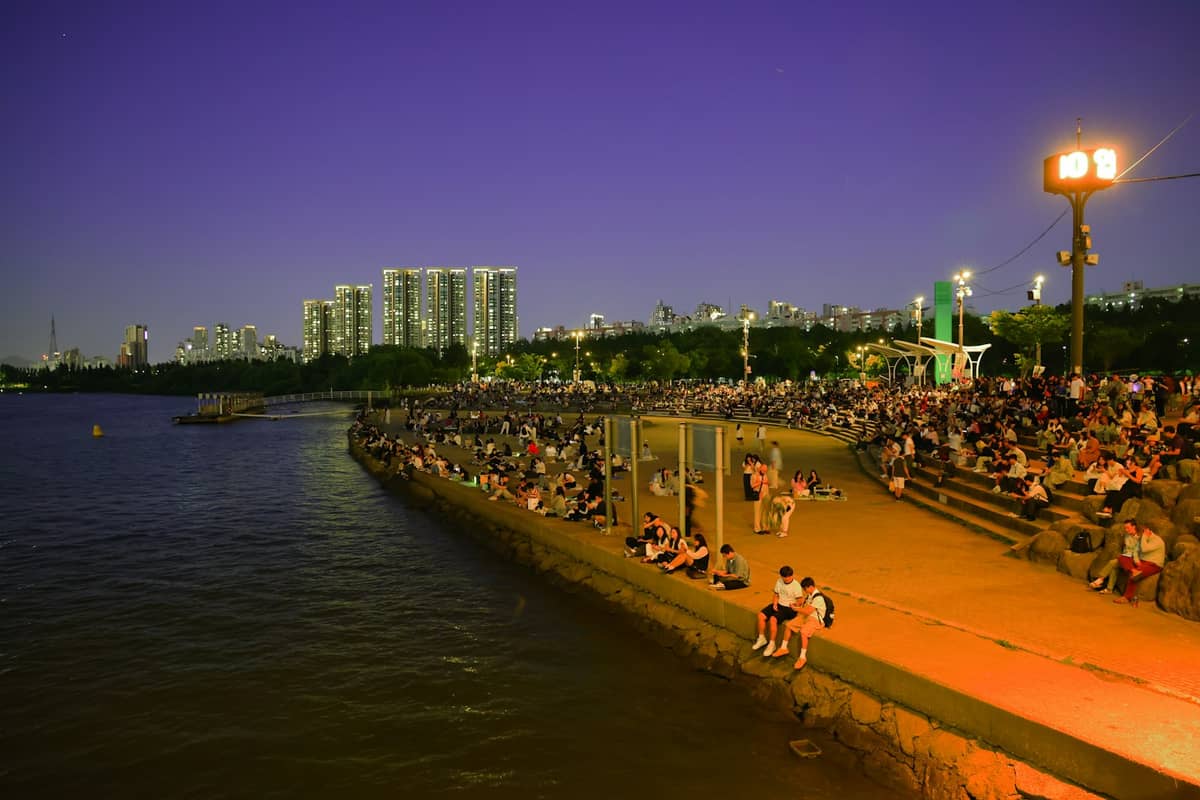
After 6pm on weekdays and through the weekend, a different population takes over entirely. Cycling groups claim the riverside paths. Families park themselves on the grass with instant noodles from the convenience stores along the riverbank. In summer, the Han River parks here stay occupied well past midnight, with people sitting on rental mats, eating takeout fried chicken, and watching the lights on Mapo Bridge reflect off the water. It does not feel like a financial district at all.
The one period that genuinely overwhelms Yeouido is the cherry blossom season, typically late March to mid-April depending on the year. Yeouingil-ro, the main boulevard running through the island, is lined with cherry trees that form a dense canopy of pink for roughly two weeks. During peak bloom, the crowds are significant by any standard: police manage foot traffic, street food vendors line the sidewalks, and the normally corporate atmosphere is replaced by something closer to a street festival. It is spectacular and crowded in equal measure.
⚠️ What to skip
Cherry blossom season on Yeouingil-ro is one of Seoul's most popular annual events. If you visit during peak bloom (usually late March to early April), expect dense crowds on weekends, limited parking, and longer wait times everywhere. Arriving on a weekday morning gives you a far more pleasant experience.
What to See & Do
Yeouido Park is the geographic and social heart of the island and the natural starting point for any visit. The park is open 24 hours and free to enter. It combines open lawns, wooded walking paths, a small pond, and cycling lanes that connect to the broader Han River path network. On weekends, it functions as a genuine neighborhood commons: people exercise, children play, couples walk, and the atmosphere is relaxed and unpretentious.
The Hangang Park section accessible from Yeouido's northern bank is one of the most popular stretches of the entire Han River park system. You can rent bicycles near the park entrance and ride west toward the National Assembly end or east toward Mapo Bridge. The riverside convenience stores here are an institution: grab instant noodles, snacks, and a can of something cold, rent a mat or a small tent, and settle in along the water the way Seoulites have been doing for decades.
The National Assembly Building at the western end of the island is worth seeing from the outside even if you have no interest in Korean politics. The domed structure set behind a wide formal approach is one of the more architecturally distinctive government buildings in the city, and the surrounding grounds are open and walkable. National Assembly Station on Line 9 puts you closest, about a short walk away.
The IFC Seoul complex on the eastern end of Yeouido anchors the financial district and contains a large mall with international retail. It is not a cultural attraction but it is useful: good food options, reliable air conditioning in summer, and a direct connection to Yeouido Station underground. Conrad Seoul occupies the upper floors of one of the IFC towers.
Walk the cherry blossom avenue along Yeouingil-ro in spring
Cycle the Han River path north and west from Yeouido Hangang Park
Visit Yeouido Park for a relaxed afternoon of walking or picnicking
See the National Assembly Building and its grounds from the exterior
Watch the sunset over the Han River from the northern riverbank
💡 Local tip
The Han River park at Yeouido is one of the best spots in Seoul to do what locals actually do on a day off. Bring a picnic, rent a bicycle, or simply sit on the grass by the water. Convenience stores near the park entrance stock everything you need, including disposable barbecue grills in warmer months.
Eating & Drinking
The food scene in Yeouido divides clearly by context. The area around Yeouido Station and IFC Seoul is built for the office lunch crowd: Korean set meal restaurants, Japanese chain restaurants, upscale cafés, and a well-stocked basement food hall underneath IFC. These options are good quality and priced for professionals rather than budget travelers, with lunch sets typically in the 12,000 to 20,000 KRW range.
The streets between Yeouido Park and the IFC complex support a denser cluster of independent restaurants. Korean grilled meat restaurants, naengmyeon (cold noodle) spots, and jokbal (pig trotter) houses are well represented. A few of the Korean barbecue restaurants in this corridor have been operating for decades and are known among Seoul office workers rather than tourists, which keeps the atmosphere and the prices more grounded.
The Han River park itself generates its own food culture. Riverside vendors and convenience stores supply the picnic economy, and in warmer months you will find tents selling pajeon (scallion pancakes), fried chicken delivery services operating directly to the grass, and portable barbecue setups. For a broader survey of Seoul's street food culture, the Seoul street food guide covers the city's best spots, many of which are accessible from Yeouido as a base.
Café culture has grown steadily in Yeouido over the last decade. The streets south of Yeouido Park have a increasing number of independent specialty coffee shops alongside the standard chain presence. These tend to attract a younger creative crowd that has moved into the neighborhood as rents in Hongdae and Mapo have climbed. The cafés along this stretch are generally good quality, Instagram-friendly without being exclusively so, and open late enough to accommodate after-work visits.
There is a rooftop bar and several hotel bars in the vicinity of the IFC towers, catering primarily to the business travel demographic. They offer good views of the Han River and the Mapo Bridge at night, though prices reflect the target clientele. For nightlife proper, Yeouido is not the destination: most visitors looking for bars and clubs after dark will move on to Hongdae, Itaewon, or Gangnam.
Getting There & Around
The metro is the most practical way to reach Yeouido. Seoul's metro network serves the island via two lines. Line 5 stops at Yeouido Station and Yeouinaru Station. Line 9 stops at Yeouido Station and National Assembly Station. Line 9 is an express service on certain trains, which makes Yeouido fast to reach from both Gimpo Airport to the west and Gangnam to the east: the express service connects Gimpo Airport to Yeouido in roughly 20 minutes.
Yeouido Station sits near the eastern edge of the island and is the main interchange point. National Assembly Station puts you at the western end of the island near the park and the government complex. Yeouinaru Station on Line 5 is positioned closest to the Han River park entrance on the north side, which makes it the best choice if your primary destination is the riverside.
Multiple bus routes serve Yeouido, connecting it to Yeongdeungpo, Mapo, and central Seoul. Several routes stop near Yeouido Park according to the park's official map. Buses are practical for connecting to neighborhoods not directly on Lines 5 or 9, though for most visitors the metro is simpler.
Within Yeouido itself, the distances are walkable. From Yeouido Station to the National Assembly Building is roughly 1.5 kilometers along Yeouigongwon-ro. The park is a 5-minute walk from the station. Cycling is a particularly good option here because the Han River path is wide, well-maintained, and flat, connecting Yeouido eastward toward Banpo and westward toward Mapo. Bicycle rental stations operate near the park and the riverside.
ℹ️ Good to know
Line 9 runs express trains between Gimpo Airport, Yeouido, and Gangnam, making Yeouido one of the most convenient neighborhoods in Seoul for travelers arriving at Gimpo International Airport. The journey from Gimpo Airport Station to Yeouido Station takes approximately 20 minutes on an express service.
Where to Stay
Yeouido is primarily a business travel accommodation district. The Conrad Seoul inside IFC Seoul is the flagship option: a luxury hotel with Han River views, well-appointed rooms, and direct underground access to the IFC Mall. It caters to corporate travelers and leisure guests who want comfort, proximity to the river, and fast metro access to Gangnam or central Seoul.
For travelers seeking a broader range of accommodation options, Yeouido is not the most flexible base. The hotel stock skews toward large business hotels and serviced apartments rather than guesthouses or budget options. Travelers wanting more variety should consider Itaewon and Yongsan for mid-range international options, or the Hongdae area for budget and boutique choices, both of which remain easily accessible to Yeouido by metro.
That said, staying in Yeouido has specific advantages: it is exceptionally quiet on weekends when the office buildings empty out, the Han River is immediately accessible for morning runs or evening walks, and the Line 9 express makes Gangnam, the airport, and key sightseeing areas fast to reach. For a full overview of where to base yourself in Seoul, the Seoul accommodation guide breaks down each neighborhood in practical terms.
Planning Your Visit
Yeouido integrates naturally into a broader Seoul itinerary rather than demanding a full day on its own. The Han River park and the cherry blossom avenue are the two experiences that genuinely justify a dedicated half-day. For first-time visitors structuring multiple days in the city, a 3-day Seoul itinerary can help slot Yeouido into the larger picture alongside the palaces, markets, and neighborhoods to the north and east.
Spring is the most rewarding season to visit Yeouido. The cherry blossoms along Yeouingil-ro are among the most celebrated in the city, and the mild temperatures make the Han River park genuinely pleasant rather than merely functional. The Seoul in spring guide covers timing, crowds, and what to expect across the city during blossom season.
Autumn is the second-best window: the trees in Yeouido Park turn well, the light on the Han River is excellent, and the summer humidity has cleared. Summer visits are viable but the riverbank can feel oppressively hot by midday; plan outdoor activity for early morning or evening. Winter strips the island back to its corporate skeleton, though the Han River park retains a quiet, spare appeal on clear days. For seasonal planning across Seoul as a whole, the best time to visit Seoul guide covers each season in detail.
TL;DR
Yeouido is Seoul's financial and political island district in the Han River, home to the National Assembly, major banks, and one of the city's most popular Han River park stretches.
The cherry blossom avenue along Yeouingil-ro in late March to early April is spectacular but very crowded: visit on a weekday morning for the best experience.
The Han River park on Yeouido's northern bank is one of the best places in Seoul to spend a relaxed afternoon the way locals actually do: cycling, picnicking, and watching the river.
Line 9 express makes Yeouido fast to reach from Gimpo Airport and Gangnam, and it is an easy add-on to an itinerary that includes Hongdae, Mapo, or Yongsan.
Best suited to: spring visitors chasing cherry blossoms, business travelers, couples wanting riverside evening walks, and anyone curious to see Seoul's corporate power center alongside its most accessible riverbank.
Three days is enough to get a real feel for Seoul, if you plan by neighborhood instead of trying to crisscross the city. This itinerary covers historic Joseon-era Seoul, the commercial and cultural center, and the newer districts that define the city's contemporary identity, with practical logistics at every step.
Five days is enough to experience historic Seoul, its modern neighborhoods, and at least one compelling excursion beyond the city. This guide organizes each day by district to minimize transit time, with a clear take on what's worth it and what isn't.
Seoul has a deep museum scene, from Korea's vast national collection in Yongsan to cutting-edge contemporary art spaces and sobering historical sites. Whether you have a day or a week, these are the essential museums to put on your itinerary.
Seoul rewards visitors differently depending on the season. Spring brings cherry blossoms and mild temperatures, autumn delivers golden foliage and clear skies, summer is hot and monsoon-affected, and winter is cold but cheap. Here is exactly what to expect, month by month.
Seoul rewards those who look up, climb high, and stay out past sunset. This guide covers the city's finest panoramic viewpoints — from paid observation decks at record-breaking towers to free hilltop parks where locals gather at dusk to watch the city lights come on.
Bukhansan National Park sits inside Seoul's city limits yet delivers genuine mountain terrain, granite ridges, and a 836-meter summit. This guide covers the best trails, transit access, seasonal closures, and practical tips for first-timers and returning hikers alike.
Seoul's location in northwestern South Korea makes it a surprisingly strong base for day trips. From UNESCO fortresses reachable by subway to ancient capital cities served by KTX, this guide covers the best options with honest travel times, costs, and seasonal advice.
The Demilitarized Zone is one of the most visited sites in South Korea, yet most travelers arrive underprepared. This guide covers tour types, current prices, booking logistics, what you'll actually see, and the honest drawbacks before you commit.
Seoul is one of the most rewarding cities in the world to explore on a tight budget. From UNESCO-listed palaces and ancient city walls to world-class museums and sprawling riverside parks, an enormous amount of what makes Seoul great costs absolutely nothing to experience.
Seoul has one of the most efficient urban transit networks in the world, covering virtually every corner of the city by subway and bus. This guide breaks down fares, card options, airport connections, and the practical details that make the difference between a smooth trip and an expensive mistake.
Gwangjang Market is one of Seoul's oldest and most celebrated food destinations, known for bindaetteok, mayak gimbap, and raw beef yukhoe. This guide covers every dish worth ordering, how much to pay, when to go, and how to navigate the market like someone who has been there before.
Renting a hanbok in Seoul is one of the most photogenic things you can do in the city, and it costs less than a decent lunch. This guide covers where to rent, how much to pay, what to expect, and how to get the most out of your few hours in traditional dress.
Seoul preserves several distinct hanok districts, each with its own character. This guide covers the main options, practical logistics, seasonal crowd patterns, and a clear picture of what to expect before you visit.
Seoul rewards curious travelers who look past the obvious. This guide covers the city's lesser-visited neighborhoods, transformed industrial spaces, street art villages, and local markets — with practical logistics, seasonal advice, and a clear take on what's worth your time.
Seoul is one of the few world capitals where you can summit a real mountain, walk a 600-year-old fortress wall, and be back in the city for dinner. This guide covers the best trails for every level, from challenging granite peaks to gentle hilltop park strolls.
Seoul's jjimjilbangs are far more than bathhouses. They are all-hours social institutions where locals come to soak, sweat, eat, sleep, and decompress. This guide covers how they work, what everything costs, the unwritten rules of etiquette, and how to make the most of your visit whatever the season.
Seoul is the global epicenter of skincare innovation, and shopping for beauty products here is a genuinely different experience from buying Korean brands abroad. This guide covers the best stores, the smartest districts, what to prioritize buying, and how to avoid the common traps that leave tourists overpaying at airport duty-free.
Korean BBQ in Seoul is one of the city's defining food experiences, but navigating it well takes more than just showing up hungry. This guide covers the best restaurants by type, how to order confidently, what everything costs, and the etiquette mistakes that mark out first-timers.
Seoul is the undisputed capital of K-pop, but knowing where to actually go matters more than the hype suggests. This guide covers free landmarks, fan-friendly museums, live show recordings, shopping districts, and bookable experiences — with a clear take on what's worth your time.
From palatial five-star hotels in the historic north to slick Gangnam towers, this guide covers where to stay, eat, and spend at the top end — with a clear take on what's special and what's just expensive.
Seoul nightlife runs later, harder, and more diversely than almost any other city in Asia. From Hongdae's student club strips to Gangnam's bottle-service mega-clubs and Itaewon's underground electronic scene, this guide breaks down every major district, what to expect, and how to navigate a night out without the rookie mistakes.
Noraebang are private karaoke rooms at the heart of Seoul's nightlife culture. This guide covers the difference between coin and standard noraebang, where to find the best venues, what to expect, and how to get the most out of the experience without overpaying.
Seoul preserves five Joseon-era royal palaces within its city limits, each with a distinct character and history. This guide covers all five in depth, plus the essential sites, shrines, and neighborhoods that complete a palace-focused visit to the city.
Seoul's café scene is one of the most developed in Asia, divided across distinct neighborhoods where each district has its own personality. This guide breaks down the best coffee districts and concept cafés by area, with honest advice on timing, crowds, and what to actually order.
Seoul offers far more romantic depth than its reputation for K-pop and street food suggests. This guide covers the best things to do in Seoul for couples, from iconic landmarks and scenic parks to low-key neighborhood strolls, with seasonal advice and practical logistics throughout.
Autumn is widely considered the best time to visit Seoul, with crisp temperatures, golden ginkgo avenues, blazing maple trails, and a packed cultural calendar. This guide covers peak foliage timing, the top spots to see autumn color, seasonal festivals, practical logistics, and what most visitors overlook.
Spring is Seoul's most photogenic season, with cherry blossoms peaking in early April and festivals filling the city's parks and riversides. This guide covers bloom timing, the best viewing locations, what the weather is really like, and how to plan around the crowds.
Seoul winters are cold, dry, and genuinely rewarding for travelers who come prepared. From palace snow views to late-night pojangmacha street food, this guide covers everything you need to know about visiting Seoul from December through February.
Seoul's market scene spans centuries and neighborhoods, from ancient covered halls serving mung bean pancakes to weekend flea markets spilling out under highway overpasses. This guide covers the best traditional, flea, and night markets in the city, with practical details on what to buy, what to eat, and when to go.
Seoul is far more affordable than most people expect. This guide breaks down real daily costs, the cheapest ways to get around, where to eat well for under ₩10,000, and which world-class attractions cost nothing at all.
Seoul ranks among the safest major cities in the world for international visitors, but that does not mean zero risks. This guide covers emergency contacts, common scams, neighborhood dynamics, seasonal hazards, and practical precautions so you can travel confidently in Seoul Special Metropolitan City.
Seoul's street food scene is one of the best reasons to visit the city. This guide breaks down the top markets, the snacks worth lining up for, what things actually cost, and the practical details that most guides skip.
Seoul holds a remarkable concentration of sacred sites within its modern boundaries. This guide covers the city's finest Buddhist temples, Confucian shrines, shamanist sites, and other places of spiritual significance — from the lantern-lit courtyards of central Jogyesa to the granite ridges of Inwangsan.
The Seoul to Busan corridor is one of the most-traveled routes in South Korea. This guide breaks down every realistic option, from the KTX high-speed train to intercity buses and flights, with fares, journey times, and practical booking advice.
Seoul is one of Asia's most practical cities for family travel, with a deep mix of free outdoor parks, indoor rainy-day backups, cultural experiences, and full-day theme parks. This guide covers the top family activities across every age group, with real advice on pricing, crowd timing, and seasonal planning.
Seoul's shopping scene is one of the most varied in Asia, spanning underground mega-malls, centuries-old traditional markets, and indie streetwear boutiques. This guide breaks down every major district by what you'll actually find there, how much to spend, and when to go.
Seoul rewards first-time visitors and repeat travelers equally. This guide covers the city's essential experiences across history, food, neighborhoods, and nature, with practical details on costs, timing, and what to skip.
Seoul is one of the world's great eating cities, and knowing what to order makes all the difference. This guide covers the essential Korean food you need to try, from market snacks under ₩5,000 to slow-cooked soups worth planning your day around.
Choosing where to stay in Seoul shapes your entire trip. This guide breaks down the top neighborhoods by traveler type, covering transit access, hotel options, price ranges, and the trade-offs so you can pick the right base before you book.