Centre Pompidou Hanwha: Paris's Modern Art Giant Comes to Seoul
Opened on June 4, 2026 inside Yeouido's landmark 63 Building, Centre Pompidou Hanwha is a four-year partnership bringing works from one of the world's most important modern and contemporary art collections to Seoul. It is Centre Pompidou's second physical presence in Asia, after Shanghai, and it changes what a day in Yeouido can mean for a culturally curious traveler.
Quick Facts
- Location
- 63 Building, 50 63-ro, Yeongdeungpo-gu, Seoul (Yeouido)
- Getting There
- Yeouido Station (Line 5 / Line 9) or 63 Square shuttle from Yeouinaru Station (Line 5)
- Time Needed
- 2–3 hours for a focused visit; longer if you explore the 63 Building's other floors
- Cost
- 28,000 KRW (reported at opening, June 2026 — verify current pricing before visiting)
- Best for
- Modern art lovers, design-minded travelers, rainy-day culture seekers, couples
- Official website
- www.centrepompidou-hanwha.kr
What Is Centre Pompidou Hanwha?
Centre Pompidou Hanwha is a satellite museum created through a four-year partnership between the Centre Pompidou in Paris and the South Korean conglomerate Hanwha, announced in 2023 and inaugurated on June 4, 2026.
The Paris institution's collection is one of the largest repositories of modern and contemporary art in the world, and this Seoul outpost brings a curated selection of that material to an East Asian audience for the first time. It is not a temporary touring exhibition in the typical sense. The partnership structure is designed to rotate programming and maintain a genuine institutional presence rather than a one-off loan show.
ℹ️ Good to know
Centre Pompidou Hanwha is the second physical Centre Pompidou venue in Asia, after the West Bund project in Shanghai. The Paris original opened in 1977 and holds one of the world's largest collections of modern and contemporary art.
The Setting: Yeouido's 63 Building
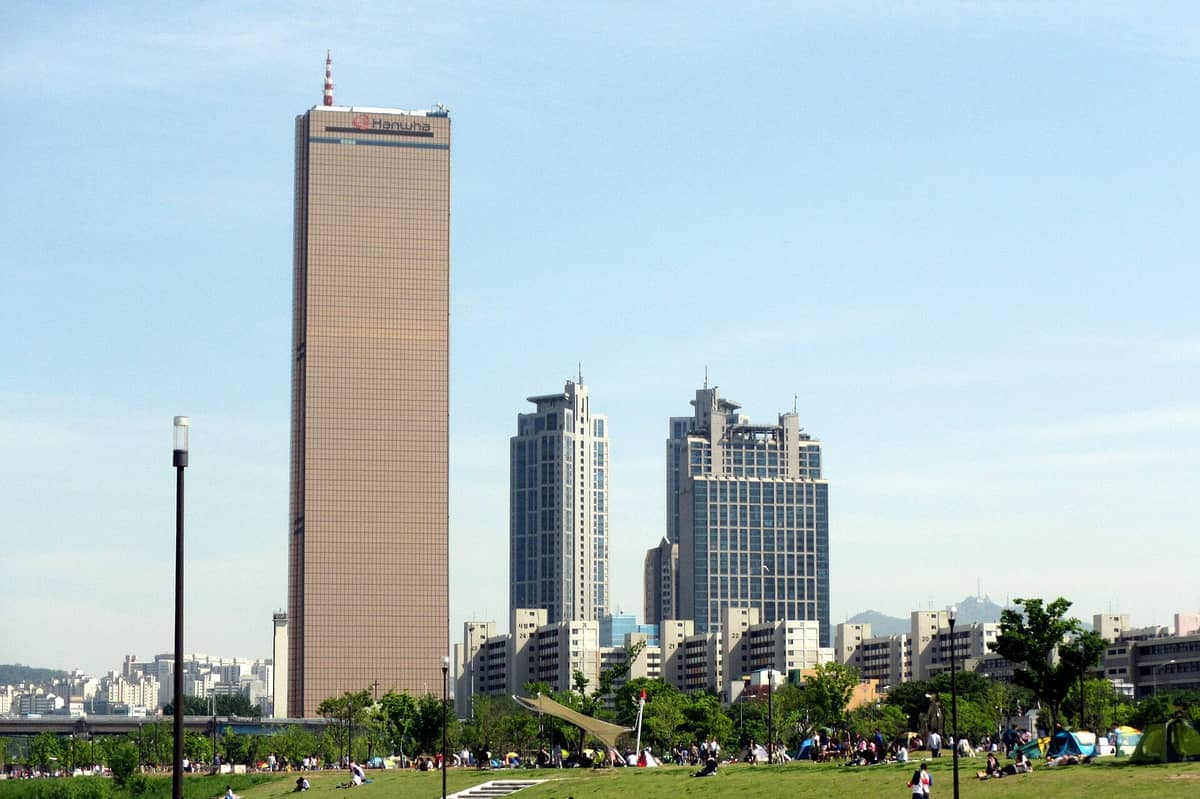
The 63 Building is not a neutral container. When it was completed in 1985, it was the tallest building in Asia outside of Japan, and its reflective golden glass cladding made it an instant visual shorthand for South Korea's rapid economic ascent. Arriving at the building from the riverside walkway, you see the facade shift color with the light, from pale amber in the morning to deep gold by late afternoon.
Yeouido itself is primarily a financial and political district, home to the National Assembly and major brokerage firms. It has never had a strong cultural identity compared to neighborhoods like Insadong or Seongsu, which makes the arrival of an institution with this much international prestige feel genuinely significant rather than routine.
If you are planning a fuller day in the area, the Han River is a short walk from the building. The Hangang Park stretches along the riverbank and is a good place to decompress after time spent inside gallery spaces. Yeouido is also well covered in any broader Seoul itinerary worth its salt.
Tickets & tours
Hand-picked options from our booking partner. Prices are indicative; availability and final rates are confirmed when you complete your booking.
DMZ and Lake Majang Suspension Bridge Tour from Seoul
From 57 €Instant confirmationFree cancellationHalf Day DMZ Tour from Seoul, 3rd Tunnel, Observatory and More
From 47 €Instant confirmationFree cancellationSeoul zombie city exploration game and private tour
From 10 €Instant confirmationFree cancellationLuggage Storage in Seoul
From 7 €Instant confirmationFree cancellation
What You'll Actually See Inside
The museum presents works drawn from the Centre Pompidou's permanent collection, covering modern and contemporary art broadly understood to include painting, sculpture, photography, video, and design. The specific works on display rotate according to the programming schedule, so the precise lineup at any given visit will differ. Check the official website before going if there is a particular artist or movement you want to prioritize.
The gallery spaces are designed to feel coherent with Centre Pompidou's institutional identity, which prizes clarity of presentation and open, accessible framing of modern art. Expect white-wall galleries, good lighting calibrated to the works rather than spectacle, and wall texts that give genuine context without being condescending. The tone is serious but approachable.
Morning light through the building's glass skin creates a warm cast in the transitional spaces between galleries. By midday the interior temperature is well-controlled, which matters in Seoul's humid summers. Wednesday and Saturday evenings, when the museum stays open until 21:00, offer a noticeably quieter and more atmospheric experience than weekend afternoons.
💡 Local tip
Wednesday and Saturday evening visits (the museum stays open until 21:00 on those days) tend to draw smaller crowds than Saturday afternoons. If you want space to stand in front of a work without other visitors in your peripheral vision, an evening visit is worth planning around.
Getting There and Getting In
The 63 Building sits on the southern tip of Yeouido island. The most straightforward transit option from central Seoul is Line 5 to Yeouinaru Station, from which a shuttle or short walk brings you to the building's entrance. Yeouido Station (served by both Line 5 and Line 9) is another option, with the walk from there taking roughly 10 to 15 minutes along a well-signed riverside path.
Tickets were priced at 28,000 KRW at the time of the museum's opening in June 2026.
Yeouido is straightforward to reach from most parts of Seoul on the metro. If you are traveling from Gangnam, Line 9 provides a direct connection. For a full sense of the neighborhood context, the Yeouido area guide covers the district in detail.
Time of Day and Crowd Patterns
Weekday mornings, particularly Tuesday through Friday between opening at 10:00 and around noon, tend to be the quietest period. The building's primary daytime visitors are often office workers from the surrounding financial district during lunch breaks, which means galleries can fill briefly around 12:00 to 13:00 before clearing again in the early afternoon.
Weekend afternoons, especially on Saturdays, draw the largest crowds. If you are visiting on a Saturday and want a comfortable experience, arriving at opening (10:00) or switching to the extended evening hours is the better approach. Sunday crowds are typically lighter than Saturday but busier than weekday mornings.
⚠️ What to skip
The museum is closed on Mondays. This is a common source of wasted trips, particularly for visitors combining it with other Yeouido stops. Double-check the day before planning any Monday visit.
Practical Notes for Your Visit
The 63 Building contains multiple attractions and facilities beyond the museum, such as an observatory (the former aquarium closed in 2024). If you are visiting with children or traveling companions who have different interests, the building accommodates varied agendas in a way that a standalone gallery rarely can. That said, budget your time carefully: trying to cover everything in the building in a single visit dilutes the experience of each.
Photography policies inside contemporary museum spaces vary by exhibition and by individual work, particularly for works under active copyright. Assume that flash photography and tripods are restricted unless signage explicitly states otherwise. The building's exterior and common areas are generally fine to photograph.
Accessibility within the 63 Building's main structure is generally supported by elevators and ramp access, consistent with what you would expect from a major commercial and cultural building of this scale in Seoul. If you have specific mobility requirements, contacting the venue in advance is advisable given that detailed accessibility documentation was not publicly available at the time of writing.
Seoul has a strong museum culture worth exploring beyond this single venue. For context on the broader landscape, the best museums in Seoul guide covers the full range from national institutions to smaller specialist collections. If contemporary art specifically interests you, MMCA Seoul in the Jongno area offers a complementary program focused on Korean and Asian contemporary artists.
Is It Worth Your Time?
For travelers with a genuine interest in modern or contemporary art, this is one of the most significant new cultural institutions to open in Seoul in years. The combination of the Centre Pompidou's collection depth with a programming structure designed for sustained presence rather than a single touring show gives it a different weight from most international exhibition partnerships.
Travelers who are ambivalent about modern art and primarily visiting out of curiosity or to fill an afternoon may find the 28,000 KRW entry price harder to justify against Seoul's many free or low-cost cultural options. The city has excellent public museums, historic palaces, and neighborhood-level cultural experiences that offer strong value at lower cost.
If the entrance fee gives you pause, it is worth knowing that Seoul has a substantial amount of free cultural experiences that can fill an itinerary without requiring budget trade-offs. That context is useful before committing to any paid attraction.
Insider Tips
- Wednesday and Saturday evenings are the best-kept scheduling secret: the museum stays open until 21:00, crowds thin noticeably after 18:00, and the building's exterior looks dramatically different in low evening light reflecting off the Han River.
- The 63 Building has a food court and restaurant options on site. Eating here before or after your visit saves you from backtracking to central Yeouido's busy commercial strips during peak hours.
- The Centre Pompidou's rotating programming means repeat visits within a few months can yield entirely different works. If you are in Seoul for an extended stay or returning within the year, the exhibition calendar on the official website is worth checking.
- Seoul's T-money card (used on metro and buses) makes the transit connection to Yeouido Station or Yeouinaru Station seamless. Having one loaded before you go means you can move between the riverfront, the museum, and other parts of the city without any friction.
- The 63 Building's observation floors offer some of the better elevated views of the Han River and Yeouido if you want to extend your visit. Check whether combined ticketing with the museum is available, as it may offer better value than purchasing separately.
Who Is Centre Pompidou Hanwha For?
- Modern and contemporary art enthusiasts who want to see Centre Pompidou collection works without traveling to Paris
- Couples looking for a substantive cultural anchor to a Yeouido afternoon followed by a Han River walk
- Design-focused travelers interested in the intersection of international institutional culture and Seoul's architectural landmarks
- Rainy-day visitors who need an indoor program with enough depth to fill a full afternoon
- Repeat Seoul visitors who have already covered the city's major historical and palace sites and want something newer
Nearby Attractions
Other things to see while in Yeouido:
- Hangang Park
Hangang Park is a network of riverside parks stretching along the Han River through Seoul. The Yeouido section is the most popular, drawing families, cyclists, and late-night picnickers to one of the city's most genuinely local outdoor spaces.