MMCA Seoul: Where Contemporary Korean Art Meets Palace History
The National Museum of Modern and Contemporary Art's Seoul branch occupies a compound that once served the Joseon royal court, making it one of the most architecturally layered art spaces in the country. Opened in November 2013, it sits steps from Gyeongbokgung Palace and Bukchon Hanok Village, offering rotating exhibitions that span Korean modernism, international contemporary art, and large-scale installation work.
Quick Facts
- Location
- 30 Samcheong-ro, Jongno-gu, Seoul (Sogyeok-dong, Jongno-gu 03062)
- Getting There
- Subway Line 3, Anguk Station Exit 1 (approx. 10-min walk)
- Time Needed
- 1.5 to 3 hours depending on current exhibitions
- Cost
- Admission fees vary by exhibition; check the official website before visiting
- Best for
- Art enthusiasts, architecture lovers, and anyone pairing a palace visit with cultural depth
- Official website
- www.mmca.go.kr/eng
What MMCA Seoul Actually Is
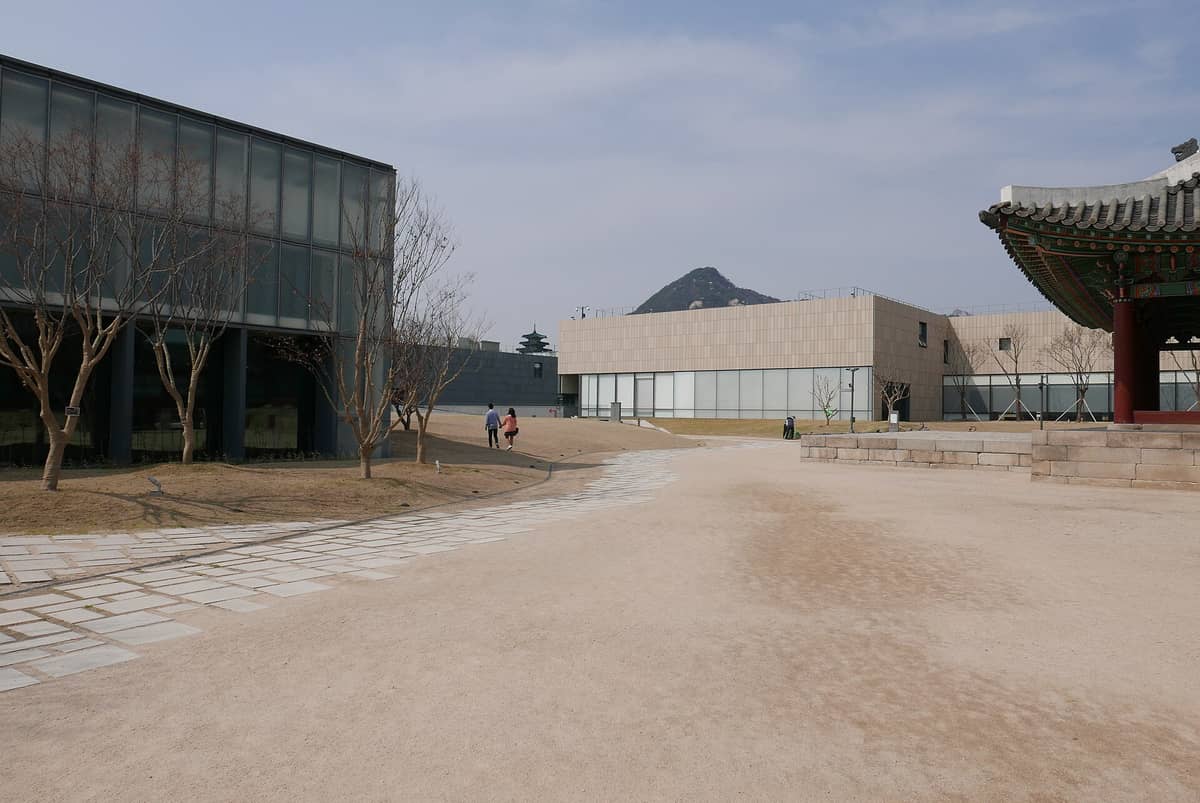
The National Museum of Modern and Contemporary Art, Korea (MMCA) operates four branches across the country. The Seoul branch, known as MMCA Seoul, opened in November 2013 within a compound that once housed government facilities near Gyeongbokgung Palace. The building, designed by Min Hyunsik, incorporates preserved historic structures alongside contemporary gallery volumes. The result is a campus rather than a single building, with exterior courtyards, passageways, and rooftop spaces that feel more like a carefully curated neighborhood than a traditional white-cube institution.
This is not a permanent collection museum in the conventional sense. MMCA Seoul operates primarily through rotating temporary exhibitions, though it maintains a significant holdings program. The focus spans Korean modern and contemporary art from the early 20th century to the present, alongside international work and interdisciplinary projects. Visitors who arrive expecting a fixed encyclopedic display will need to adjust their expectations: what you see depends almost entirely on what is scheduled during your visit.
💡 Local tip
Check the official exhibitions calendar at mmca.go.kr/eng before your visit. Exhibitions change several times a year, and some blockbuster shows sell out timed-entry slots in advance, especially on weekends.
The Physical Experience: Courtyards, Corridors, and Scale
Approaching from Anguk Station Exit 1, you walk north along Samcheong-ro through a stretch of galleries, independent cafes, and the walled edges of Changdeokgung Palace before the MMCA Seoul entrance appears on the left. The approach itself is part of the experience: this corridor is one of the most architecturally consistent streets in central Seoul, lined with low-rise buildings and old stone walls rather than signage and glass towers.
Inside the compound, the first thing most visitors notice is the scale of the exterior spaces relative to the gallery rooms themselves. The central courtyard, flanked by restored historic structures and newer gallery wings, acts as a transitional space where people sit on stone steps, photograph the roofline compositions, or simply decompress between rooms. On clear days, Inwangsan Mountain is visible over the rooftops to the northwest. The interplay between the old eaves and the sober contemporary facades is the building's most rewarding visual experience, arguably as interesting as any single work inside.
The gallery spaces vary considerably in character. Some rooms are narrow and intimate, set inside the preserved historic structures with wooden beams overhead. Others are large-format contemporary halls suited to installation art and video work. The combination can feel slightly uneven in flow, but it also prevents the numbing uniformity that affects larger institutions. Signage is in Korean and English throughout.
Tickets & tours
Hand-picked options from our booking partner. Prices are indicative; availability and final rates are confirmed when you complete your booking.
DMZ and Lake Majang Suspension Bridge Tour from Seoul
From 57 €Instant confirmationFree cancellationHalf Day DMZ Tour from Seoul, 3rd Tunnel, Observatory and More
From 47 €Instant confirmationFree cancellationSeoul zombie city exploration game and private tour
From 10 €Instant confirmationFree cancellationLuggage Storage in Seoul
From 7 €Instant confirmationFree cancellation
Opening Hours and the Wednesday/Saturday Advantage
MMCA Seoul is open Monday, Tuesday, Thursday, Friday, and Sunday from 10:00 to 18:00. On Wednesday and Saturday, the museum extends its hours until 21:00, with the late evening slot running from 18:00 to 21:00. The museum is closed on January 1, Lunar New Year's Day, and Chuseok. These three dates are worth noting carefully if your Seoul trip falls near a major Korean holiday.
The Wednesday and Saturday evening openings are significantly quieter than daytime visits. By 19:00 on a weekday evening, the school groups and tour parties have long departed, and the galleries have a genuinely different atmosphere: lower noise levels, more considered viewing pace, and better natural light transitions in rooms with skylights as the evening progresses. If you are in Seoul mid-week and want an unhurried art experience, this is one of the better-timed opportunities in the city.
⚠️ What to skip
Admission fees are not fixed across all visits. Some exhibitions require separate paid tickets while others are free. The official website lists current pricing by exhibition. Do not assume free entry.
Historical Context: Why This Location Matters
The site at 30 Samcheong-ro carries several layers of historical significance. During the Joseon dynasty (1392 to 1897), the area was part of the broader Gyeongbokgung palace district, and in later periods it was used for government facilities before becoming the museum site.
The decision to convert this site into a contemporary art museum was therefore not a neutral architectural choice. It was an active transformation of a space historically associated with state authority and, in its more recent incarnation, with surveillance and military administration. Understanding this context adds a layer of meaning to the experience of walking its open courtyards, which were previously closed to the public entirely. The museum sits between Gyeongbokgung Palace to the south and the historic alleyways of Bukchon Hanok Village to the east, and this geographic positioning reflects a deliberate curatorial identity: a contemporary institution embedded in the densest concentration of Joseon-era heritage in the country.
How to Approach Your Visit Practically
From Anguk Station, Exit 1 is the standard approach and puts you on Samcheong-ro heading north. The walk takes roughly 10 minutes at an easy pace. Alternatively, Gwanghwamun Station Exit 2 provides a slightly longer approach from the south, passing through Gyeongbokgung's surrounding streets. Neither route involves difficult terrain, but the Anguk approach is more direct and passes through a more interesting streetscape.
MMCA Seoul sits within a cluster of attractions that reward combining into a half-day or full-day circuit. The palace grounds of Changdeokgung Palace are a short walk to the east, and the National Folk Museum of Korea is located inside the Gyeongbokgung grounds to the south. For those interested in how the MMCA fits into a broader Seoul itinerary, it pairs well with the historic district's galleries and tea houses along Samcheong-ro and Bukchon without requiring significant additional travel.
Photography is generally permitted in most areas, but policies differ by exhibition. In spaces with commercial or loaned works, photography restrictions are posted at the gallery entrance. The courtyard and exterior architectural spaces are almost always freely photographable and are, honestly, among the more rewarding subjects on the site. Wear comfortable shoes: the compound involves more walking across uneven stone surfaces than a single-floor gallery, and the elevation changes between buildings are modest but present.
ℹ️ Good to know
The MMCA Seoul museum shop, near the entrance, carries a well-curated selection of Korean art publications, design objects, and exhibition catalogues, including titles on Korean modernism that are difficult to find in general bookshops.
Honest Assessment: Who Will Love It and Who May Not
MMCA Seoul is one of the more serious art institutions in Northeast Asia, and it programs accordingly. The exhibitions tend toward conceptually rigorous work rather than crowd-pleasing retrospectives, which means that visitors without prior interest in contemporary art may find the galleries difficult to engage with. If you are primarily interested in traditional Korean culture, the surrounding heritage sites will likely be more rewarding than the museum itself.
Visitors traveling with young children may find the atmosphere less accommodating than family-oriented attractions: the galleries are quiet by design, interactive elements are not universal, and the exhibition content often skews toward adult themes. Families looking for structured engagement in the area would likely have a better experience at the National Folk Museum of Korea, which has dedicated children's programming. Those who will get the most from MMCA Seoul are people with an active interest in contemporary art, architecture, or the cultural history of modern Korea, and anyone who appreciates the unusual sensation of encountering large-format contemporary installation work inside a compound that was, within living memory, completely off-limits to the public.
For context on how MMCA Seoul fits within the broader Seoul art and museum landscape, the guide to Seoul's best museums covers institutional options across the city, from the National Museum of Korea to smaller specialist collections.
Insider Tips
- Wednesday evening visits after 18:00 are the quietest window of the week. Crowd levels drop sharply after the standard 18:00 closing time, and the extended hours feel like a private viewing by comparison to weekend afternoons.
- The outdoor rooftop terrace accessible from the upper gallery levels offers a framed view toward the palace district and the mountains beyond. It is easy to walk past the access point without noticing it: look for signage near the upper corridor linking the main building to the historic wing.
- The café inside the compound, while not exceptional for coffee, is positioned in one of the more architecturally interesting interior spaces: a restored structure with exposed timber elements. It is worth pausing there regardless of whether you order anything.
- Timed-entry tickets for headline exhibitions can sell out on weekend mornings. If you are visiting during a major show, book online the evening before rather than assuming walk-up availability.
- Samcheong-ro, the street running south from the museum toward Anguk Station, has a concentration of small contemporary galleries and independent design shops worth exploring before or after your MMCA visit. Most have free entry and operate on similar hours.
Who Is MMCA Seoul (National Museum of Modern and Contemporary Art) For?
- Contemporary art enthusiasts interested in Korean and international works
- Architecture-focused travelers drawn to the contrast between Joseon-era structures and modern gallery design
- Visitors pairing a palace district itinerary with cultural depth beyond historic sites
- Solo travelers or couples who prefer a contemplative, unhurried museum experience
- Anyone visiting on a Wednesday or Saturday who wants a meaningful evening activity in central Seoul
Nearby Attractions
Other things to see while in Jongno & Bukchon:
- Bukchon Hanok Village
Bukchon Hanok Village (북촌한옥마을) is a preserved residential district of roughly 860 traditional Korean hanok houses in central Seoul, situated between Gyeongbokgung and Changdeokgung palaces. Unlike a museum or theme park, it is a real neighborhood where people still live, which shapes every aspect of visiting it. Entry is free, but access to certain alleys is restricted to protect residents.
- Changdeokgung Palace & Secret Garden
Changdeokgung Palace is the best-preserved of Seoul's five Joseon-era royal palaces, and its rear garden — the Huwon, known as the Secret Garden — remains one of the most atmospheric green spaces in the entire city. Together, they form a UNESCO World Heritage Site that rewards visitors who plan ahead.
- Changgyeonggung Palace
One of Seoul's five grand Joseon-era palaces, Changgyeonggung Palace sits in Jongno-gu and offers a quieter royal grounds experience. With late evening opening hours, low admission, and centuries of layered history, it rewards visitors who arrive without high expectations and leave with quiet satisfaction.
- Gwanghwamun Square
Gwanghwamun Square stretches 40,300 square meters through the center of Seoul, framed by Gyeongbokgung Palace to the north and the distant peaks of Bugaksan beyond. It is free, open 24 hours, and carries more historical weight than most visitors realize on first pass.