National Folk Museum of Korea: Korea's Everyday Past, Brought to Life
Tucked inside the grounds of Gyeongbokgung Palace, the National Folk Museum of Korea offers a free, unhurried look at how ordinary Koreans lived across centuries. Three permanent exhibition halls, an open-air village, and rotating seasonal displays make it one of Seoul's most substantive cultural stops.
Quick Facts
- Location
- 37 Samcheong-ro, Jongno-gu, Seoul 03045 (inside Gyeongbokgung Palace grounds)
- Getting There
- Subway Line 3, Anguk Station, Exit 2 (approx. 780 m walk)
- Time Needed
- 1.5 to 3 hours depending on depth of interest
- Cost
- Free admission
- Best for
- History enthusiasts, families, rainy day culture, slow travelers
- Official website
- www.nfm.go.kr/english/index.do
What the National Folk Museum of Korea Actually Is
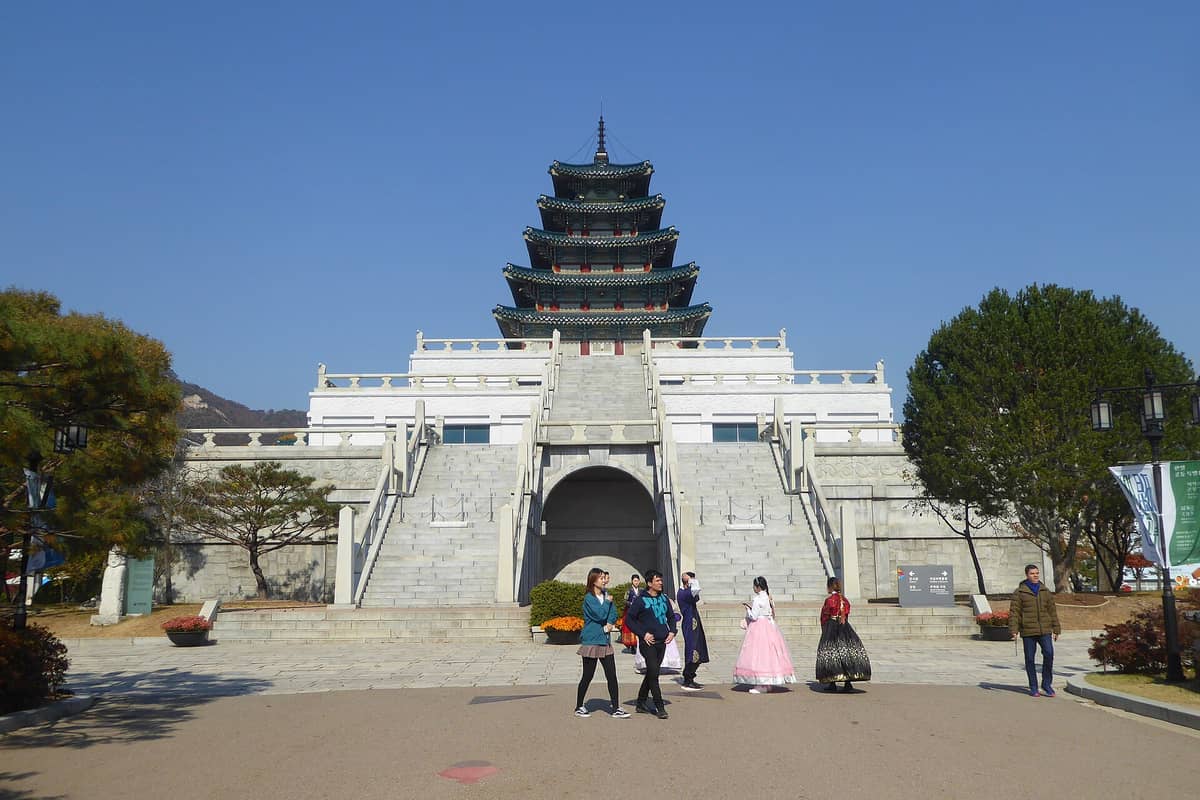
The National Folk Museum of Korea (국립민속박물관) sits inside the northeastern corner of Gyeongbokgung Palace's outer grounds, a position that shapes the entire visit before you even reach the entrance. You approach through stone-paved courtyards and past traditional architectural elements, which means the historical context begins outdoors. The museum itself was established in 1945, making it one of South Korea's oldest public cultural institutions, and its core mission has remained consistent: document the material culture, customs, and daily life of the Korean people across time.
Unlike the grand national art museums that favor rare or elite objects, this museum focuses deliberately on the ordinary. Tools, clothing, household furniture, ritual objects, agricultural implements, and seasonal customs fill the three permanent indoor halls. The tone is ethnographic rather than art-historical, and that distinction matters when deciding whether this is the right stop for your itinerary.
ℹ️ Good to know
Admission is free. No online reservation is needed for standard exhibition access or guided tours.
The Three Permanent Halls: What Each Covers
The museum organizes its permanent collection across three exhibition halls, each with a distinct focus. The first hall traces the broad sweep of Korean history and how the Korean people developed as a civilization: territorial formation, the rise of kingdoms, and the social structures that shaped daily life over millennia. Displays include replica living environments and well-labeled artifact groupings, presented with enough English-language text to follow without a guide.
The second hall narrows to the Joseon Dynasty period (1392 to 1897) and the life cycle of ordinary people: birth rituals, coming-of-age ceremonies, marriage customs, ancestor rites, and funerary practices. This hall tends to hold visitors longer than the first, because the objects feel genuinely intimate. Elaborate wedding palanquins, hanbok organized by rank and season, and models of traditional domestic spaces give a textured sense of social life that textbook history rarely provides.
The third hall addresses the annual cycle of Korean folk life: the agricultural calendar, seasonal festivals, traditional games, and the rhythms of community work. If you have children in your group, this section tends to connect most directly with them, since many of the customs shown here (New Year games, harvest celebrations, communal cooking) still have living counterparts in Korean culture today.
Tickets & tours
Hand-picked options from our booking partner. Prices are indicative; availability and final rates are confirmed when you complete your booking.
DMZ and Lake Majang Suspension Bridge Tour from Seoul
From 57 €Instant confirmationFree cancellationHalf Day DMZ Tour from Seoul, 3rd Tunnel, Observatory and More
From 47 €Instant confirmationFree cancellationSeoul zombie city exploration game and private tour
From 10 €Instant confirmationFree cancellationLuggage Storage in Seoul
From 7 €Instant confirmationFree cancellation
The Outdoor Folk Village: The Part Many Visitors Rush Past
Behind the main buildings, a compact outdoor area reconstructs a traditional Korean village environment with full-scale structures: a thatched-roof farmhouse, a nobleman's residence, a granary, a watermill, and various vernacular structures representing different regions and economic classes. Stone figures line a short path through the space, and the overall layout is calm enough to invite a slow walk rather than a quick scan.
In autumn the outdoor area is particularly photogenic, with the aged wood and stone structures set against turning foliage. Spring brings similar appeal when blossoms appear in adjacent areas of the palace grounds. In summer, the shaded paths offer brief relief, though midday heat still makes longer outdoor time uncomfortable. Winter visits are quieter and the light is cleaner, though weekday mornings in colder months can feel almost deserted.
⚠️ What to skip
On weekends and public holidays, indoor access to the outdoor exhibition area is restricted. If you want unrestricted access to all parts of the museum, a weekday visit is more reliable.
Opening Hours and Best Time to Visit
Hours vary by season. From March through October, the museum opens at 09:00 and closes at 18:00, with last entry at 17:00. Wednesdays in this period are extended: 09:00 to 20:00, with last entry at 19:00. From November through February, hours shorten to 09:00 to 17:00, with last entry at 16:00. The museum closes on certain major public holidays. Check the official website before visiting during holiday periods.
Timing your visit has a measurable effect on quality. Weekday mornings between 09:00 and 11:00 are consistently the least crowded windows. Tour groups from Gyeongbokgung Palace frequently spill into the museum after morning palace tours, so mid-morning on weekdays and almost all of the weekend between 10:00 and 14:00 tends toward higher density. The Wednesday evening extension is underused by tourists and worth considering if you want the halls to yourself.
Pair this visit with Gyeongbokgung Palace directly next door, or continue northeast toward Bukchon Hanok Village for a half-day that moves coherently from royal history to folk culture to living traditional architecture.
How to Get There
The most straightforward approach is Subway Line 3 to Anguk Station, Exit 2. From the exit, it is roughly 780 meters on foot heading southwest toward the palace. The walk takes about 10 minutes at a relaxed pace. There is no dedicated parking immediately adjacent, and driving is not recommended given the narrow streets and limited spaces around the palace area.
For a broader orientation to moving around the city, the Seoul transit guide covers subway cards, bus routes, and navigation apps in practical detail.
Practical Notes for Your Visit
Photography is generally permitted throughout the permanent galleries, though individual exhibits may be restricted. The lighting in some sections is deliberately subdued to protect textiles and organic materials, so phone cameras may struggle in the second hall. A dedicated camera with manual controls handles the conditions better.
English-language labeling covers the main exhibits adequately, though not exhaustively. Audio guides are available and provide more depth for visitors who want interpretive context beyond the wall text. A museum shop near the exit sells reproductions, craft items, and books on Korean folk culture, with pricing generally lower than comparable souvenir shops in Insadong.
The grounds are largely flat and paved, making the indoor sections accessible for wheelchairs and strollers. The outdoor folk village area has some uneven stone paths, but most of it is navigable with care. Restroom facilities are available and well-maintained.
If traditional Korean architecture and neighborhood life are central to your Seoul plans, the guide to Seoul's hanok villages and the nearby Ikseon-dong Hanok Village are natural companions to this museum visit.
Honest Assessment: Worth Your Time?
The National Folk Museum rewards visitors who are genuinely curious about how people actually lived in pre-modern Korea, not just the palaces and kings, but the farmers, merchants, craftspeople, and household rhythms that made up the majority of Korean historical experience. For that visitor, it is one of the best free museums in Seoul. The collections are well-organized, the English-language support is sufficient, and the outdoor village area adds a spatial quality that pure object-display museums lack.
That said, visitors who primarily want visual spectacle, contemporary art, or fast-paced entertainment will find it underwhelming. The presentation style is scholarly and the exhibits are dense with informational context. Children under eight may lose engagement in the indoor halls quickly, though the outdoor area and some interactive sections in the third hall tend to hold their attention better. Visitors with very limited time in Seoul who are forced to choose between this and the adjacent palace should prioritize the palace for architectural drama, then add the museum only if the schedule allows.
Seoul's museum landscape is rich beyond this single institution. For a comparative overview, the best museums in Seoul guide helps you sequence visits based on your interests.
Insider Tips
- Wednesday evening hours (open until 20:00 from March to October) are consistently quiet. The halls feel entirely different with only a handful of other visitors inside.
- The outdoor folk village is most photogenic in the early morning when the light is low and flat, before the palace tour groups arrive around 10:00.
- Pick up a free paper floor map at the entrance. The signage inside the building is clear, but the map helps you pace your visit so you don't rush the third hall after spending too long in the first.
- The museum shop near the exit sells traditional craft items and books at prices noticeably lower than Insadong's commercial stretch. If you are looking for quality souvenirs with cultural context, browse here before deciding elsewhere.
- Check the museum's official website for temporary or special exhibitions before your visit. These rotate seasonally and sometimes coincide with major Korean holidays, offering displays that connect to living cultural practice rather than historical archive alone.
Who Is National Folk Museum of Korea For?
- Travelers who want cultural depth beyond palace and temple visits
- Families with children aged 8 and older, especially for the outdoor folk village and seasonal customs hall
- Rainy or very hot days when outdoor sightseeing is unpleasant and an indoor alternative is needed
- First-time visitors to Korea who want historical context before exploring the city
- Budget travelers, since free admission makes this one of the strongest value stops in central Seoul
Nearby Attractions
Other things to see while in Jongno & Bukchon:
- Bukchon Hanok Village
Bukchon Hanok Village (북촌한옥마을) is a preserved residential district of roughly 860 traditional Korean hanok houses in central Seoul, situated between Gyeongbokgung and Changdeokgung palaces. Unlike a museum or theme park, it is a real neighborhood where people still live, which shapes every aspect of visiting it. Entry is free, but access to certain alleys is restricted to protect residents.
- Changdeokgung Palace & Secret Garden
Changdeokgung Palace is the best-preserved of Seoul's five Joseon-era royal palaces, and its rear garden — the Huwon, known as the Secret Garden — remains one of the most atmospheric green spaces in the entire city. Together, they form a UNESCO World Heritage Site that rewards visitors who plan ahead.
- Changgyeonggung Palace
One of Seoul's five grand Joseon-era palaces, Changgyeonggung Palace sits in Jongno-gu and offers a quieter royal grounds experience. With late evening opening hours, low admission, and centuries of layered history, it rewards visitors who arrive without high expectations and leave with quiet satisfaction.
- Gwanghwamun Square
Gwanghwamun Square stretches 40,300 square meters through the center of Seoul, framed by Gyeongbokgung Palace to the north and the distant peaks of Bugaksan beyond. It is free, open 24 hours, and carries more historical weight than most visitors realize on first pass.