Changgyeonggung Palace: Seoul's Overlooked Royal Grounds Worth Your Time
One of Seoul's five grand Joseon-era palaces, Changgyeonggung Palace sits in Jongno-gu and offers a quieter royal grounds experience. With late evening opening hours, low admission, and centuries of layered history, it rewards visitors who arrive without high expectations and leave with quiet satisfaction.
Quick Facts
- Location
- 185, Changgyeonggung-ro, Jongno-gu, Seoul
- Getting There
- Seoul Metro Line 4, Hyehwa Station Exit 4 (about 10 minutes' walk)
- Time Needed
- 1.5 to 2.5 hours
- Cost
- KRW 1,000 (adults 19–64); free for under 18s, 65+, hanbok wearers, and on Culture Day (last Wednesday of each month)
- Best for
- History seekers, slow walkers, evening visits, budget travelers
- Official website
- http://cgg.cha.go.kr
What Changgyeonggung Palace Actually Is
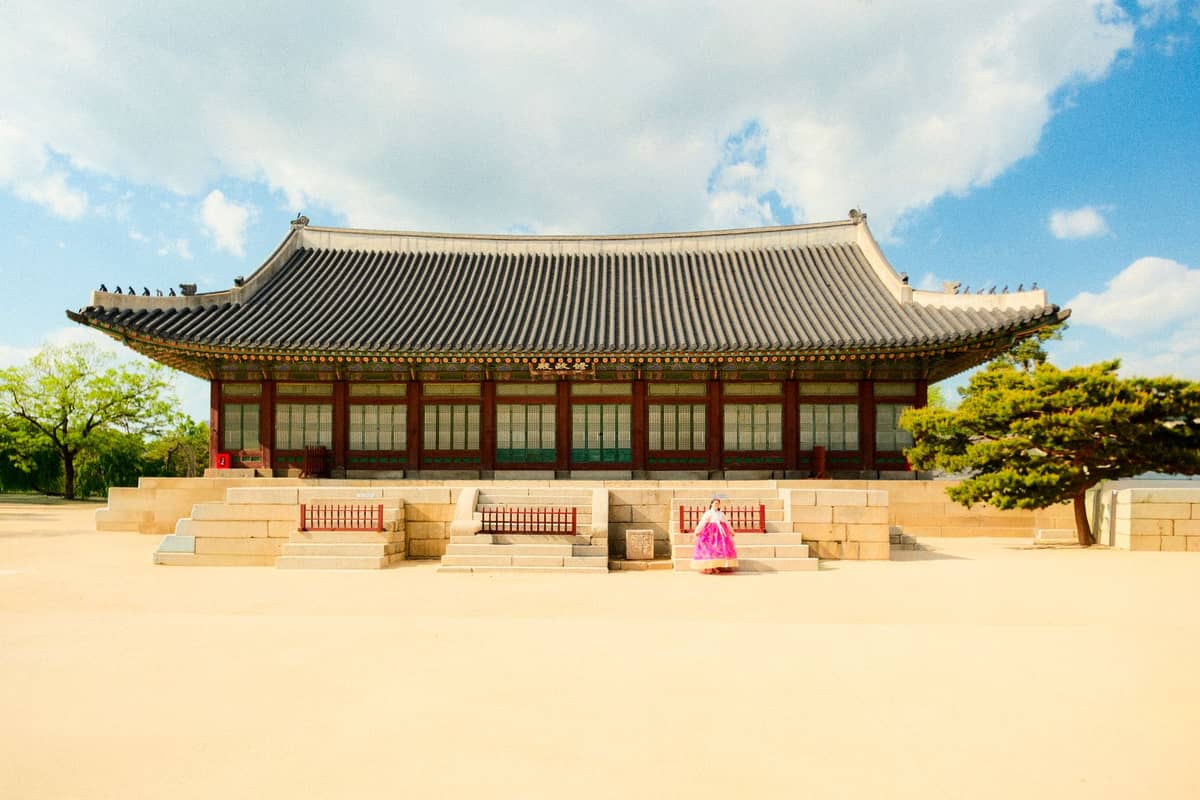
Changgyeonggung Palace is one of the Five Grand Palaces of the Joseon dynasty, occupying a sprawling walled compound in Jongno-gu. Built in 1483 and formally named during King Seongjong's reign in the late 15th century, it served primarily as a residence for the queens, concubines, and royal family members connected to the adjacent Changdeokgung., it served primarily as a residence for the queens, concubines, and royal family members connected to the adjacent Changdeokgung. The two palaces share a rear garden and were functionally intertwined for centuries, which explains why Changgyeonggung often feels like the quieter continuation of a larger complex rather than a standalone destination.
Understanding its history helps set expectations. During the Japanese colonial period, the palace was converted into a park with a zoo and botanical garden. The official name was restored in 1983, and a systematic restoration was completed then. What you walk through now is a partial reconstruction: authentic Joseon architecture in some areas, reconstructed structures in others, and open grounds where important buildings once stood.
ℹ️ Good to know
Opening hours: 09:00–21:00 daily (last admission 20:00). Closed Mondays. The late closing time makes this one of Seoul's few royal palaces where an evening visit is genuinely possible.
Entering the Grounds: The First 20 Minutes
The main entrance gate, Honghwamun, is modest compared to the imposing Gwanghwamun Gate fronting Gyeongbokgung, but that understatement sets the tone for the entire visit. Pass through, pay KRW 1,000, and you cross a shallow stone bridge over a small stream channel, Okcheongyo Bridge. Pausing here, you notice the stonework is worn smooth in the center from centuries of foot traffic. That kind of small, dateable detail is what makes Changgyeonggung interesting for visitors who look carefully.
Ahead, Inside, Myeongjeongjeon Hall is the oldest surviving main throne hall from the Joseon dynasty, built in 1616. Inside, the wooden interior is dim and fragrant with old timber, and the ceiling's painted dragon medallion is vivid against the dark beams. Visitors who have already seen Gyeongbokgung's grander Geunjeongjeon often find Myeongjeongjeon more intimate and legible.
Tickets & tours
Hand-picked options from our booking partner. Prices are indicative; availability and final rates are confirmed when you complete your booking.
DMZ and Lake Majang Suspension Bridge Tour from Seoul
From 57 €Instant confirmationFree cancellationHalf Day DMZ Tour from Seoul, 3rd Tunnel, Observatory and More
From 47 €Instant confirmationFree cancellationSeoul zombie city exploration game and private tour
From 10 €Instant confirmationFree cancellationLuggage Storage in Seoul
From 7 €Instant confirmationFree cancellation
Moving Through the Palace: What to See and in What Order
The palace compound spreads across uneven terrain with several distinct zones. Most visitors move northeast from Myeongjeongjeon toward the inner residential quarters, passing Tongmyeongjeon and Yanghwadang, the halls associated with the queens' daily life. The architecture here is lower and more domestic in scale than the formal ceremonial buildings near the entrance. Roof lines are simpler, courtyards smaller, and the human dimension of royal life is easier to imagine.
Continue north and the grounds open into a broad lawn that was once the site of the colonial-era zoo. The cleared space now feels slightly empty, but it has become a reflective area where visitors sit on stone steps and take in the surrounding walls and treeline. In spring, blossoms against traditional tile roofs draw significant crowds on weekend afternoons.
The greenhouse structure visible near the northern edge of the compound is a remnant of the Japanese-era botanical garden, a wrought-iron and glass construction that has been preserved as a historical artifact rather than an active garden. It is a strange object within a Joseon palace, and its presence is intentional: it documents what was done to the site and why restoration is ongoing. For travelers interested in Gyeongbokgung Palace or Changdeokgung Palace, Changgyeonggung adds important context about what Korean royal architecture looked like before, during, and after the colonial period.
How the Experience Changes by Time of Day
Morning visits between 09:00 and 11:00 are calm. The light is soft and directional, which makes the tiled roofs and whitewashed walls photograph cleanly without harsh shadows. Tour groups occasionally arrive at this hour, but they move quickly and tend to cluster near Myeongjeongjeon before dispersing. You can walk the inner residential quarters in near-silence.
Midday is the busiest period, particularly on weekends and during cherry blossom season. The combination of school groups, families, and tourists with limited time means the main pathways around the throne hall can feel crowded. If you arrive at noon on a weekend in April, manage expectations accordingly.
Late afternoon and evening are where Changgyeonggung offers a genuine advantage. The low lantern-style lighting that activates around dusk casts warm shadows across stone pavements, and the surrounding walls make the palace feel removed from the city entirely.
💡 Local tip
For the evening atmosphere, arrive by 18:30 so you have time to explore before last admission at 20:00. Wear comfortable shoes with grip: stone pathways become slippery when damp.
Getting There and Practical Logistics
Take Seoul Metro Line 4 to Hyehwa Station and exit through Exit 4. The walk to Changgyeonggung's main entrance takes approximately 10 minutes along Changgyeonggung-ro.
Hyehwa is also a good base for combining this visit with nearby attractions. The area is walkable to Jongmyo Shrine and connects easily to the broader Jongno-Bukchon neighborhood, Seoul's most historically dense district.
Admission is KRW 1,000 for adults aged 19 to 64. Group rates (10 or more people) are KRW 800 per person. Entry is free for visitors 18 and under, 65 and over, and those wearing a hanbok. On Culture Day, the last Wednesday of every month, admission is free for all visitors. Payment is accepted at the ticket booth near the main gate; cash and cards are typically accepted, but carry small bills as backup.
No detailed accessibility information is officially published for the palace grounds. Visitors with significant mobility limitations should be aware that the historic surface materials are unlikely to be fully accessible throughout. Contact the Korea Heritage Service in advance if you have specific access requirements.
Photography and Seasonal Considerations
Changgyeonggung rewards photographers who prefer composed, uncrowded frames. The absence of large tour groups for much of the day means you can work slowly around the main hall without people in every shot. The interior of Myeongjeongjeon is dim, so a camera that handles low light well makes a difference. The painted ceiling is worth a wide-angle shot from directly below.
Autumn is underrated here. The compound's mature trees turn amber and red through late October and into November, and the contrast with grey stone walls and green-glazed roof tiles is striking. For a deeper comparison across the palaces during this season, the guide to Seoul's palaces covers how each site looks and performs at different times of year. If you are planning around foliage or blossoms, the Seoul in autumn guide and Seoul in spring guide provide current seasonal context.
⚠️ What to skip
The palace is closed every Monday. If you plan your visit on a Monday, you will arrive at a locked gate. Double-check the date before making the trip.
Honest Assessment: Is It Worth Your Time?
Changgyeonggung is not Seoul's most spectacular palace. Gyeongbokgung is larger, more complete, and more photogenic. Changdeokgung offers the celebrated Secret Garden. If your time in Seoul is limited to one or two days, those two palaces should take priority. But if you have three or more days, or if you are staying near Jongno-gu, Changgyeonggung earns its place for reasons that are harder to photograph: its sense of accumulated history, its unusually honest presentation of colonial-era damage, its quiet evening atmosphere, and the fact that you can move through it without crowds pressing around you.
Visitors who find historical palace architecture repetitive after one or two sites, or who are primarily seeking dramatic skyline views and interactive experiences, are unlikely to find much here to hold their attention. The site is quiet, understated, and rewards patience more than spectacle.
Insider Tips
- Visit on the last Wednesday of the month (Culture Day) for free admission. This applies to all visitors regardless of age or nationality.
- The connection path between Changgyeonggung and Changdeokgung's Huwon (Secret Garden) is reserved for guided tours of the Secret Garden and is not a general shortcut between the two palaces. Plan your route accordingly.
- The old greenhouse near the northern section of the grounds is easy to miss if you stay on the main central path. Take the smaller path that curves left past the open lawn area to find it.
- Wear layers for evening visits. Even in mild weather, the stone surfaces and enclosed walls hold cold air, and temperatures drop noticeably after 18:00.
- If you are visiting with children, the open lawn area in the northern section has space to run and is far less crowded than the main ceremonial zones near the entrance.
Who Is Changgyeonggung Palace For?
- Travelers with three or more days in Seoul who want to go deeper into Joseon royal history
- Evening walkers looking for a lit, atmospheric outdoor space that closes later than most palace sites
- Budget visitors: at KRW 1,000, this is one of Seoul's best-value historical sites
- History and architecture enthusiasts interested in the colonial-era transformation of Korean heritage sites
- Photographers who prefer quiet, uncrowded frames over landmark-heavy shots
Nearby Attractions
Other things to see while in Jongno & Bukchon:
- Bukchon Hanok Village
Bukchon Hanok Village (북촌한옥마을) is a preserved residential district of roughly 860 traditional Korean hanok houses in central Seoul, situated between Gyeongbokgung and Changdeokgung palaces. Unlike a museum or theme park, it is a real neighborhood where people still live, which shapes every aspect of visiting it. Entry is free, but access to certain alleys is restricted to protect residents.
- Changdeokgung Palace & Secret Garden
Changdeokgung Palace is the best-preserved of Seoul's five Joseon-era royal palaces, and its rear garden — the Huwon, known as the Secret Garden — remains one of the most atmospheric green spaces in the entire city. Together, they form a UNESCO World Heritage Site that rewards visitors who plan ahead.
- Gwanghwamun Square
Gwanghwamun Square stretches 40,300 square meters through the center of Seoul, framed by Gyeongbokgung Palace to the north and the distant peaks of Bugaksan beyond. It is free, open 24 hours, and carries more historical weight than most visitors realize on first pass.
- Gwangjang Market
Established in 1905, Gwangjang Market in Jongno is Seoul's oldest continuously operating covered market. It draws visitors for its legendary street food stalls — bindaetteok, mayak gimbap, yukhoe — as much as for its wholesale fabric halls and secondhand clothing floors.