Nishijin is Kyoto's traditional silk-weaving district, occupying the northwestern part of central Kyoto's Kamigyō Ward. The neighborhood built its identity around Nishijin-ori, a form of silk brocade designated as a national traditional craft in 1976, and that heritage is still woven into the fabric of daily life here. For travelers willing to look past the city's more famous temple circuits, Nishijin offers something rare: a working, lived-in Kyoto that has changed far less than the areas tourists typically crowd.
Nishijin is where Kyoto's famous silk brocade has been produced for over five centuries, and the neighborhood still carries the rhythm of that craft. Narrow lanes run between machiya townhouses that double as workshops, and the occasional clatter of a loom drifts through an open window. This is one of the few districts in central Kyoto where the city feels genuinely residential first and touristic second.
Orientation
Nishijin sits in the northwestern quadrant of central Kyoto, falling primarily within Kamigyō Ward. Its core runs roughly between Horikawa-dori to the east, the Kitaoji area to the north, and the streets approaching Nijo-jo territory to the south. East-west, Imadegawa-dori serves as a key cross-axis, and the intersection of Horikawa-dori and Imadegawa-dori is effectively the anchor point of the district for visitors. The Nishijin Textile Center sits just south of that crossing.
Understanding where Nishijin sits in relation to the wider city helps you plan efficiently. Directly to the east lies the Karasuma corridor, Kyoto's commercial spine, with Doshisha University and Kyoto Imperial Palace grounds nearby. To the south, the district shades into downtown Kyoto around Nijo and Oike. To the north, the streets thin out toward Kinkaku-ji territory. Nishijin is not isolated from the city's major sights, but it feels that way, partly because bus routes rather than subway lines define access here.
The neighborhood does not have rigid tourist-map boundaries, and locals use the name loosely. The streets most worth exploring for their traditional character radiate outward from the Horikawa-Imadegawa intersection in a rough radius of 10 to 15 minutes on foot. If you wander beyond that, you move into quieter residential zones where the machiya townhouses begin to thin and give way to postwar concrete construction. For context on how Nishijin connects to the rest of the city, thegetting around Kyoto guide explains the city's bus and subway network in detail.
Character & Atmosphere
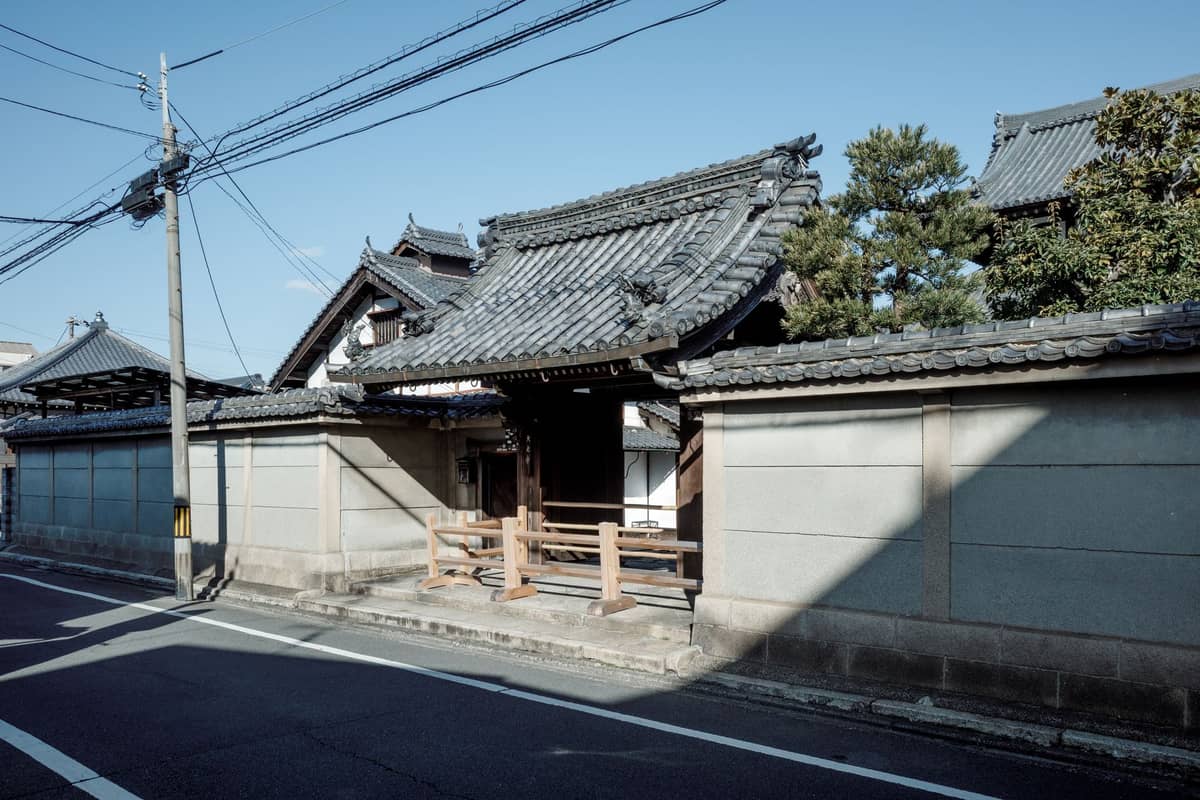
Arrive in Nishijin on a weekday morning and the neighborhood feels genuinely industrious. Small delivery trucks navigate lanes barely wide enough for them, workshop doors stand open to the cool air, and if you pause at the right moment, you can hear the mechanical rhythm of a loom operating inside a machiya. The wooden townhouses here were built with deep, narrow floor plans, one room wide at the street and several rooms deep, a design that let weavers work in the back while maintaining a shopfront toward the lane.
By midday the streets are quieter, especially on weekdays when foot traffic is light compared to Kyoto's more visited districts. The afternoon light in autumn falls at a low angle across the dark-timbered facades of the machiya, turning their latticed windows amber and throwing long shadows across the lane stones. It is a photogenic neighborhood without performing its photogenic qualities for visitors, which is part of what makes walking through it feel unhurried and genuine.
Evenings in Nishijin are calm to the point of quiet. This is a residential district with working hours, not a nightlife zone. Restaurants and small cafes pull their shutters by eight or nine in the evening, and the streets empty early. That is not a drawback for everyone. If you are staying in the area, the evening atmosphere is peaceful in a way that central Kyoto's more crowded districts never quite achieve.
The neighborhood skews local. You are more likely to encounter elderly residents walking to the corner grocery than tour groups following a guide with an umbrella. On weekends, the Nishijin Textile Center draws a modest flow of visitors, but even then the surrounding streets absorb the extra foot traffic without strain. Nishijin is not a place you stumble on by accident during a standard Kyoto itinerary, and that self-selection keeps it feeling unhurried.
ℹ️ Good to know
Nishijin-ori was officially designated a national traditional craft under Japan's Traditional Craft Industries Law in 1976. The weaving techniques used in Nishijin-ori combine multiple complex patterned-weave methods, often incorporating colored silk threads and sometimes metal paper strips to produce the dense brocade used in high-grade kimono and obi sashes, while kasuri (ikat) is a distinct resist-dyeing and figured-weave technique used in some Japanese textiles.
What to See & Do
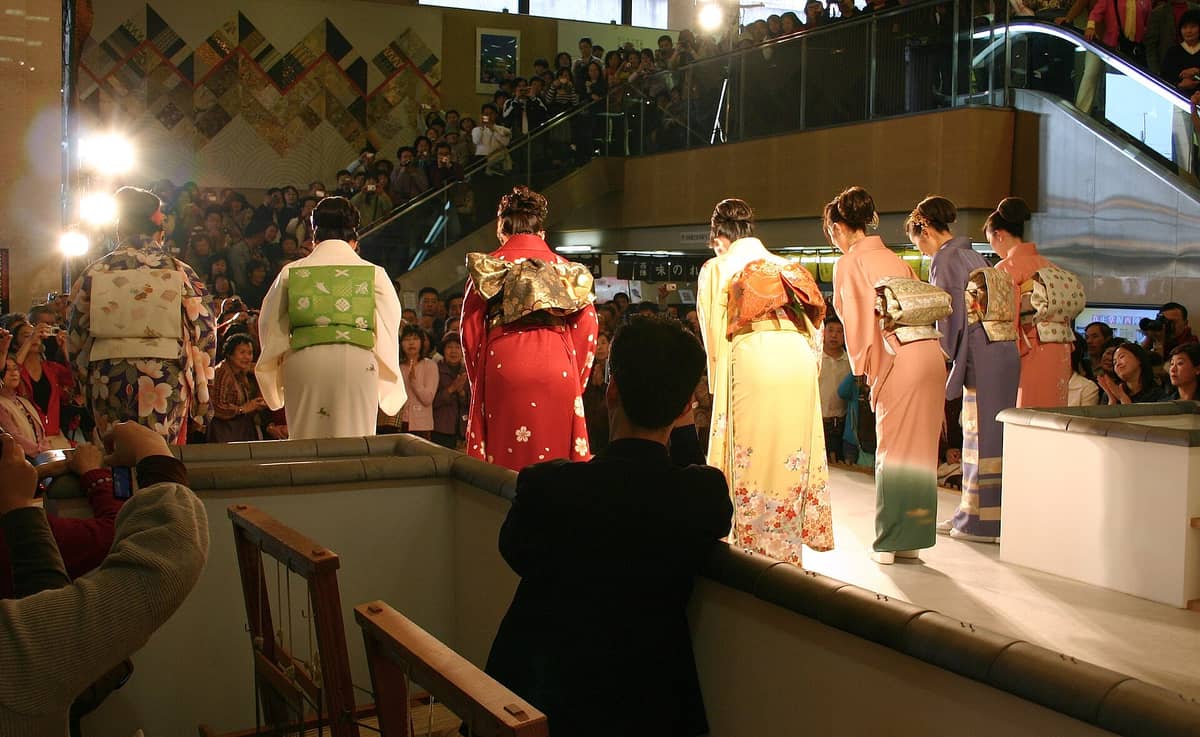
The Nishijin Textile Center on Horikawa-dori is the neighborhood's most organized visitor attraction and the logical starting point. The center hosts weaving demonstrations where you can watch artisans working on traditional looms, and a showroom displays finished Nishijin-ori fabric alongside exhibits explaining the history of the craft. Kimono fashion shows are staged periodically, and the gift shop sells a range of textile products from affordable bookmarks and small accessories to high-end woven pieces. Admission to the main exhibition area is free, with separate fees for optional hands-on experiences or kimono try-ons. Verify current hours and event schedules with the center directly before visiting.
Beyond the Textile Center, the most rewarding way to spend time in Nishijin is simply walking the lanes. The streets between Horikawa-dori and Omiya-dori, threading north and south of Imadegawa-dori, contain some of the highest concentrations of intact machiya in Kyoto. Many are still functioning workshops or family businesses, and a handful have been converted into small cafes, galleries, or guesthouses that occupy their original structures. The visual texture of the neighborhood, the layered wood, the persimmon-dyed noren curtains, the stacked indigo bolts visible through half-open doors, is its own attraction.
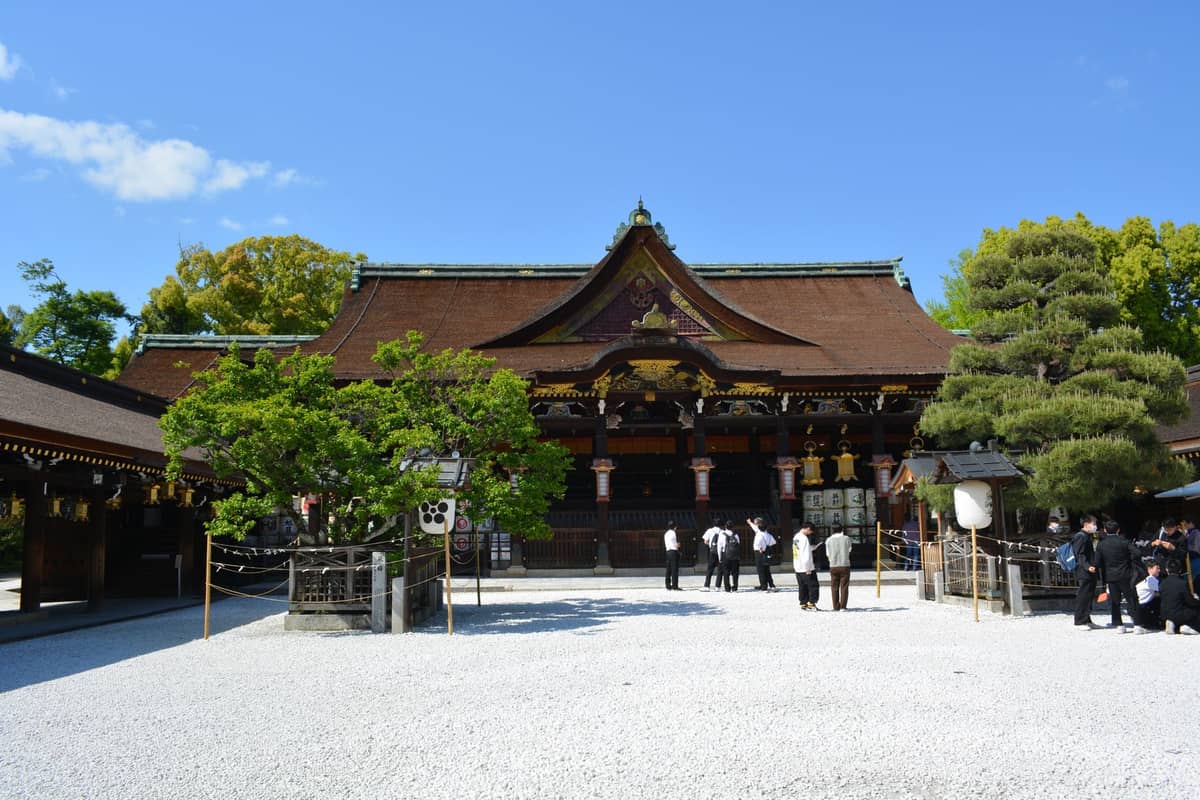
Nishijin sits within easy walking or cycling distance of several major Kyoto landmarks.Nijo Castle lies roughly 20 minutes on foot to the southeast, and Kitano Tenmangu Shrineis about 15 minutes to the northwest, making Nishijin a natural corridor between those two sites. The shrine's monthly flea markets, held on the 25th of each month, draw vendors selling antiques, textiles, and craft goods and are worth timing your visit around.
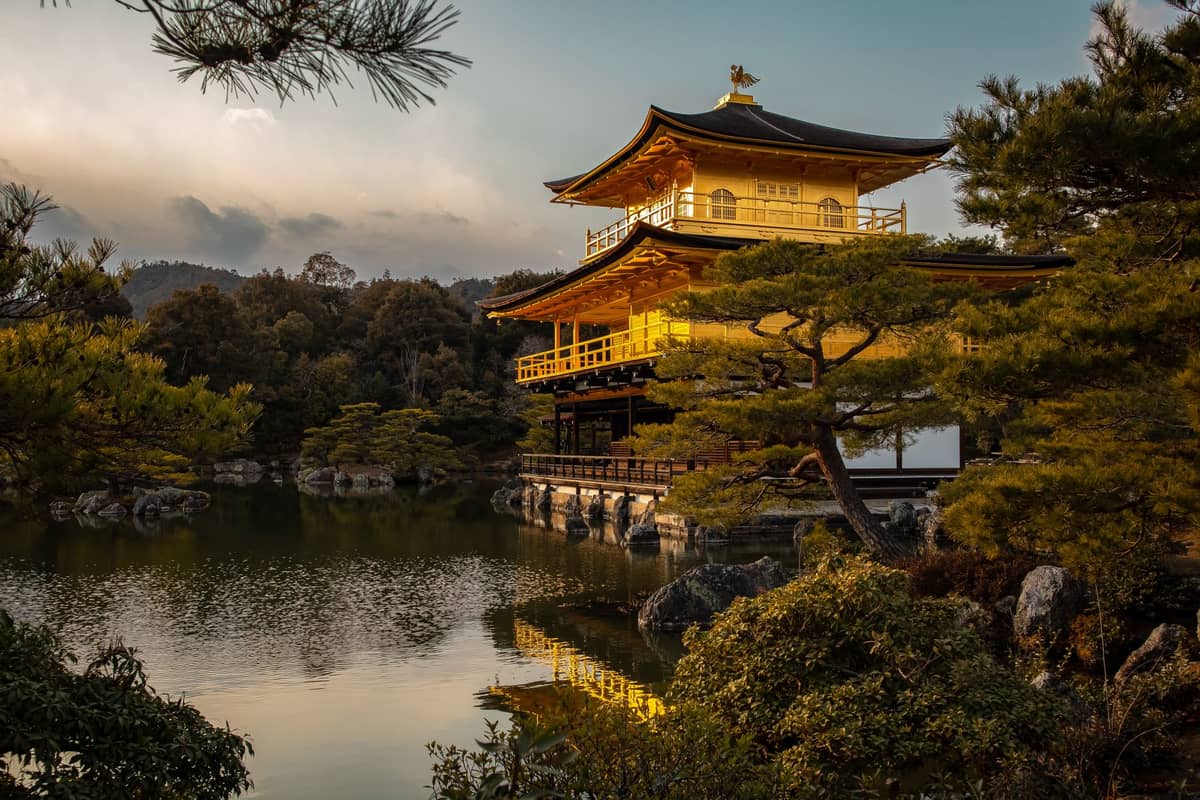
Further northwest, within reasonable cycling range, sits Kinkaku-ji and Ryoan-ji. Nishijin is well-positioned as a base for reaching western Kyoto's temple circuit without the full length of a cross-city journey. TheNishijin Textile Centeralso occasionally hosts kimono rental or weaving experience sessions, which can be arranged on-site.
Nishijin Textile Center: free entry to exhibitions; weaving demonstrations and kimono fashion shows are offered regularly, with some special experiences requiring a separate fee (schedule varies)
Machiya lane walking: the streets between Horikawa-dori and Omiya-dori, north and south of Imadegawa-dori
Kitano Tenmangu Shrine flea market: held on the 25th of each month, strong textile and antique selection
Cycling the western temple circuit: Nishijin is a good staging point for Kinkaku-ji and Ryoan-ji
Independent weaving workshops: some accept visitors or sell directly; look for noren curtains and open workshop doors
💡 Local tip
If you visit on the 25th of the month, combine Nishijin with the Kitano Tenmangu flea market about 15 minutes walk to the northwest. Vendors regularly sell vintage textiles, kimono accessories, and obi sashes at a fraction of boutique prices.
Eating & Drinking
Nishijin's food scene is quiet and local rather than curated for tourists, which cuts both ways. You will not find the density of restaurant options available in Gion or around Nishiki Market, but what is here tends to be priced for residents rather than visitors. Small tofu shops, traditional Japanese confectionery makers selling wagashi, and neighborhood lunch spots serving teishoku set meals are the backbone of eating in the area.
A number of machiya have been converted into cafes in recent years, typically serving hand-drip coffee, matcha drinks, and light meals in interiors that retain original timber beams and earthen floors. These spots tend to be small, seating perhaps eight to twelve people, and operate on limited hours. They are worth seeking out if you appreciate the experience of sitting inside a century-old wooden structure, but do not count on finding them open if you arrive without checking ahead.
For a wider food experience, the neighborhood is close enough to downtown Kyoto that extending your walk south toward the Nishiki Market area is straightforward.Nishiki Marketis Kyoto's most concentrated stretch of food vendors and specialty food producers, roughly 25 to 30 minutes on foot south of Nishijin's core. TheKyoto food guidecovers the wider city's dining scene if you want to plan meals across multiple neighborhoods.
Budget travelers should note that Nishijin's local lunch spots often offer the kind of honest, inexpensive teishoku meals (a set combining rice, miso soup, pickles, and one main dish) that have become harder to find in more tourist-saturated areas. Prices in the 700 to 1,200 yen range for lunch are common and reflect current local norms. Evening dining options are limited, and some spots close by early evening, so plan accordingly if you are staying in the neighborhood.
Getting There & Around
Nishijin is primarily served by Kyoto City Bus rather than the subway. The Horikawa Imadegawa stop, located directly at the Nishijin Textile Center, is served by bus route 9 from Kyoto Station and additional routes from other parts of the city. From Kyoto Station, bus 9 runs north along Horikawa-dori and reaches Horikawa Imadegawa in roughly 25 to 30 minutes depending on traffic. Bus and subway day passes, available from Kyoto Station, make multiple trips across the day significantly cheaper than paying per ride. Verify current pass coverage and pricing with Kyoto City Bus before purchasing.
The nearest subway station is Imadegawa on the Karasuma Line, which puts you approximately 10 to 15 minutes on foot east of the Textile Center. The Karasuma Line runs north-south through central Kyoto with connections at Kyoto Station (southern end) and Kokusaikaikan (northern terminus). If you are coming from the subway, exit at Imadegawa Station and walk west along Imadegawa-dori, passing through a mix of university buildings and residential streets before the machiya architecture of Nishijin begins to appear.
Cycling is genuinely one of the best ways to move around Nishijin and connect it to the surrounding temple circuit. The terrain is flat, the lanes are narrow enough that cyclists navigate them more easily than cars, and rental shops are available throughout central Kyoto. Many guesthouses in the area also offer bicycle rental directly. From Nishijin by bike, Kitano Tenmangu is about 10 minutes northwest, Kinkaku-ji is roughly 15 minutes, and Nijo Castle is 15 to 20 minutes southeast, depending on traffic and pace.
💡 Local tip
Kyoto's current one-day tickets offer unlimited rides across the city bus and subway network and represent good value if you plan to visit multiple neighborhoods in a day. Pick them up at Kyoto Station's bus terminal or tourist information center. Verify current pass types and pricing before your trip.
Where to Stay
Nishijin is an increasingly interesting option for accommodation, particularly for travelers who want to stay in a traditional machiya guesthouse rather than a hotel. A number of machiya in the neighborhood have been restored and converted into small guesthouses or vacation rentals, offering the experience of living inside a traditional wooden townhouse with tatami rooms and internal courtyard gardens. For travelers drawn to this style of accommodation, theKyoto ryokan guideoffers broader context on traditional lodging options across the city.
The neighborhood suits independent travelers who prefer a quiet base and are comfortable navigating by bus or bicycle rather than relying on subway access. It is less well-suited to first-time visitors who want to walk to major sights directly from their hotel, since Nishijin's distance from Higashiyama, Gion, and the southern temple circuit means most day trips require a transit leg. Families with children and travelers prioritizing convenience over atmosphere may find theKyoto Station area or downtown Kyoto a more practical base.
For travelers who choose to stay in Nishijin, the streets closest to the Horikawa-Imadegawa intersection offer the most convenient bus access while still placing you within the neighborhood's most characterful lanes. Avoid choosing accommodation too far west of Omiya-dori if transit access matters to you, as that puts you further from the main bus routes and a longer walk from the Karasuma Line subway.
Honest Drawbacks
Nishijin is not the right neighborhood for every Kyoto visitor, and it is worth being clear about why. The textile heritage that defines the area is genuinely interesting but can feel thin as a sole day-trip destination. The Nishijin Textile Center is worth an hour, and the lane walking is rewarding for travelers who enjoy urban texture and craft culture. But if you are not engaged by that kind of slow observation, the neighborhood may feel like an undifferentiated residential area with less to see than you expected.
The dining and nightlife options are sparse by Kyoto's already-modest-by-global-standards bar. If you want variety in evening dining or the social energy of a street like Pontocho, Nishijin will not deliver that. Evening options are limited enough that staying here requires planning dinner in advance or traveling to a neighboring area. The bus-dependent transit situation also adds friction compared to neighborhoods on the subway network.
⚠️ What to skip
Nishijin's working workshops and residential lanes are not set up as tourist attractions. Walking slowly through lanes to admire architecture is welcome, but peering into workshop windows or entering private spaces without invitation is considered intrusive. Many of the machiya visible from the street are private homes or active businesses, not museums.
That said, for travelers who specifically want a Kyoto experience with lower tourist density, genuine craft heritage, and the visual reward of intact traditional architecture, Nishijin delivers. It pairs particularly well with a broader western Kyoto day that takes in Kitano Tenmangu and Kinkaku-ji. Travelers building a longer Kyoto itinerary may find it fits naturally into their plans. Theone week Kyoto itinerary and the guide to less-visited Kyoto experiencesboth offer frameworks for incorporating Nishijin without making it carry more weight than it should.
TL;DR
Nishijin is Kyoto's historic silk-weaving district in Kamigyō Ward, built around Nishijin-ori brocade production, a national traditional craft since 1976.
The neighborhood's main draw is its intact machiya streetscape and the Nishijin Textile Center, best explored on foot or by bicycle over two to three hours.
Transit relies on Kyoto City Bus (route 9 from Kyoto Station to Horikawa Imadegawa) rather than the subway; the Karasuma Line's Imadegawa Station is about a 10–15 minute walk east, with visitors walking west along Imadegawa-dori to reach Nishijin.
Best suited to independent travelers, slow travelers, and those interested in craft culture, traditional architecture, and a genuinely residential Kyoto atmosphere.
Not ideal as a sole base for first-timers wanting walkable access to major sights; evening dining options are limited and the area is quiet after dark.
Kyoto holds more extraordinary Japanese gardens per square kilometer than anywhere else on earth. This guide covers the finest examples across every style, from dry rock gardens to imperial stroll gardens, with practical advice on access, timing, and what makes each one worth the visit.
Kyoto holds more Shinto shrines than almost any city on earth, ranging from grand imperial complexes to quiet forest sanctuaries. This guide covers the best, with practical advice on when to go, what to expect, and what most visitors get wrong.
Kyoto has over 1,600 Buddhist temples and around 400 Shinto shrines, ranging from gold-leafed pavilions to remote mountain retreats. This guide cuts through the noise to highlight the temples that genuinely reward a visit, with context on what makes each one worth your time.
Kyoto rewards visitors year-round, but the experience varies dramatically by season. This guide breaks down every month by weather, crowds, costs, and what's actually worth seeing — so you can choose the right time for your trip, not just the most popular one.
Kyoto's best views range from the famous wooden stage at Kiyomizu-dera to a forested mountain summit reached by a 45-minute hike. This guide covers the city's top viewpoints across temples, hilltops, iconic streets, and observation decks, with tips on timing and what to expect.
Kyoto sits at the center of one of Japan's richest regions for day-tripping. Within an hour by train, you can reach ancient deer parks, mountain temples, sake-brewing canals, and remote moss gardens. This guide covers the best excursions organized by direction and theme.
Kyoto is one of the world's great cultural cities, and a surprising number of its best experiences are completely free. From the torii-gate tunnels of Fushimi Inari to the stone lanes of Higashiyama and the canal-side Philosopher's Path, here is a practical guide to the finest free attractions in Kyoto.
The Fushimi Inari hike is one of the most iconic walks in Japan, threading thousands of vermilion torii gates up Mt. Inari in southern Kyoto. This guide covers every trail option, the best times to go, how to get there cheaply, and the the reality about what the experience is actually like.
Kyoto's transport network is more layered than it first appears. This guide breaks down every practical option, from city buses and subway lines to IC cards, day passes, and airport transfers, so you can move around the city without wasting time or money.
Gion Matsuri fills the entire month of July with shrine rituals, towering floats, and lantern-lit street festivals. This guide breaks down exactly what happens, when, where to stand, and how to survive the July heat without missing the highlights.
Kyoto has no international airport of its own. This guide covers every practical way to reach the city from Kansai International Airport (KIX) and Osaka Itami (ITM), with current fares, journey times, and clear advice on which option suits your trip.
Kyoto's cherry blossom season is one of Japan's great spectacles, but peak bloom lasts barely a week and the crowds are intense. This guide covers exactly when to go, where to stand, what to skip, and how to make the most of sakura season in Kyoto.
Kyoto is Japan's historic capital, with over 1,600 temples, a preserved geisha district, and some of the country’s finest food. This guide covers everything a first-time visitor needs: the best time to visit, how to get from the airport, which neighborhoods to base yourself in, and how to avoid the most common mistakes.
Kyoto's food culture runs deeper than temple towns and tea ceremonies. From formal kaiseki multi-course meals to humble obanzai home cooking and steaming bowls of yudofu beside ancient temples, this guide covers what to eat, where to eat it, and exactly what to budget — season by season.
Kyoto is one of the most atmospheric cities in Asia for couples, with preserved historic streets, seasonal illuminations, ryokan stays, and cultural rituals designed for two. This guide covers the best romantic experiences, realistic pricing, and the timing details that make the difference between a good trip and a memorable one.
Kyoto is the only city in Japan where the geisha tradition survives at scale. This guide covers the five geisha districts, every major dance performance, licensed cultural experiences, and the etiquette rules that matter — so you can engage with this world respectfully and on your own terms.
Kyoto rewards those who look beyond the headline sights. This guide covers the city's most rewarding lesser-known temples, atmospheric alleyways, mountain retreats, and local institutions, from a moss-carpeted UNESCO garden requiring advance booking to a century-old public bathhouse in a residential neighborhood.
Autumn transforms Kyoto into one of the most photographed places on earth, with maples and ginkgos turning gold and crimson across temples, gardens, and hillsides. This guide covers when foliage peaks, where to go, which illumination events are worth your evening, and how to avoid the worst of the crowds.
Kyoto in winter (December to February) offers crisp, mostly dry weather, thinner crowds, and a quieter side of the city's temples and shrines. This guide covers what the season actually looks like, what to do, how to get around, and where the crowds still gather.
Three days is enough to experience the best of Kyoto without feeling rushed, but only if you plan smart. This guide breaks down exactly where to go, when to go, and how to get around, including updated transport advice that most other guides get wrong.
Renting a kimono in Kyoto is one of the most memorable ways to experience the city, but the advertised prices rarely tell the full story. This guide breaks down real costs, the best neighborhoods to explore in traditional dress, seasonal advice, and practical tips that most shops won't tell you upfront.
Kyoto is the spiritual home of Japanese matcha culture, from centuries-old tea houses in Gion to stone-mill workshops in Uji. This guide covers where to drink, eat, and learn about matcha — with real prices, practical logistics, and practical advice on what's worth your time.
Kyoto's nightlife is quieter than Tokyo's but far richer than most visitors expect. This guide covers the best izakayas, sake bars, evening tours, and riverside dining across Pontocho, Gion, and Kiyamachi, with practical advice on costs, timing, and what to skip.
Kyoto is one of Japan's most rewarding cities to visit, but costs can add up fast. This guide breaks down exactly how to stretch your yen further — covering transport passes, free attractions, affordable food, and the best times to visit when prices drop.
Seven days is the ideal length to experience Kyoto without rushing. This guide breaks down each day by district, with practical logistics, timing advice, and clear assessments of what's worth your time. Whether you're planning your first visit or returning with more days to spare, this itinerary covers the full range of Kyoto's historic city.
Kyoto offers a surprisingly diverse range of hot-spring bathing options, from rural mountain onsen to sleek hotel spas. This guide breaks down the best facilities, real pricing, seasonal timing, and the rules you need to know before you strip off your yukata.
Kyoto's ramen scene runs deeper than most visitors expect. This guide covers the top-rated shops, the best neighborhoods to explore, what styles define Kyoto ramen, and practical advice for navigating queues, hours, and seasonal menus.
A Kyoto ryokan stay is one of the most distinctive lodging experiences in Japan, but the rules, pricing structures, and expectations are unlike any Western hotel. This guide breaks down what actually happens from check-in to breakfast, what things cost across budget tiers, and which neighborhoods make the most sense depending on your itinerary.
Kyoto is Japan's craft capital, where century-old textile workshops sit alongside covered shopping arcades and a legendary food market. This guide breaks down where to shop, what to buy, and how to avoid tourist traps — by neighborhood, price point, and category.
Kyoto's sushi scene runs deeper than most visitors expect. This guide breaks down the best sushi restaurants in Kyoto by price tier, neighborhood, and style, with practical advice on reservations, seasonal fish, and common mistakes to avoid.
From quick group introductions to private lessons in historic teahouses, Kyoto offers more ways to experience chado than almost anywhere in Japan. This guide covers the best venues, realistic prices, booking advice, and the cultural context that makes each sip mean something.
Visiting Kyoto's temples and shrines without understanding the etiquette means missing half the experience. This guide covers everything from torii gate protocol and hand-purification steps to photography restrictions, admission costs, and the key differences between Shinto shrines and Buddhist temples.
Nara is one of the easiest and most rewarding day trips from Kyoto, just 40 km away with frequent train connections. This guide breaks down every transport option, cost comparisons, and how to make the most of your time there.
The Kyoto to Tokyo corridor is one of Japan's most-traveled routes. This guide covers every realistic option, from the Tokaido Shinkansen to overnight highway buses, with clear breakdowns of cost, speed, and when each option makes sense.
Kyoto rewards walkers more than almost any city in Japan. This guide breaks down the best self-guided walking routes by district, with timing, admission costs, crowd advice, and clear assessments of what's worth your time and what isn't.
Kyoto's weather swings from bitter January mornings to oppressive August humidity, with two peak tourist seasons sandwiched in between. This guide breaks down what to expect every month, what to pack, and when the crowds and weather actually align in your favor.
Kyoto is not just temples and shrines. The city has a surprisingly strong lineup of kid-friendly attractions, from the Kyoto Railway Museum and Aquarium in Umekoji Park to samurai theme parks and wide outdoor spaces. This guide covers what's genuinely worth your family's time, realistic pricing, the best seasons to visit with children, and how to structure your days without burning everyone out.
Kyoto rewards those who spend well and plan ahead. This guide covers the city's finest ryokan, reservation-only kaiseki restaurants, and culturally rich experiences, along with practical advice on booking windows, seasonal pricing, and what actually justifies the premium.
Kyoto packs more than 1,600 years of Japanese history into a single city. This guide covers the best things to do in Kyoto across every district, from iconic temples and sake breweries to traditional tea ceremonies and bamboo forest walks, with practical advice on crowds, costs, and timing.
Choosing where to stay in Kyoto shapes your entire trip. This guide covers the five best areas for visitors, price breakdowns by neighbourhood, accommodation type comparisons, and the booking timing you need to avoid paying double during peak season.