Kyoto Tea Ceremony: Where to Experience One (And What to Expect)
From quick group introductions to private lessons in historic teahouses, Kyoto offers more ways to experience chado than almost anywhere in Japan. This guide covers the best venues, realistic prices, booking advice, and the cultural context that makes each sip mean something.
Plan and book this trip
Tools from our partner Travelpayouts help you compare flights and hotels. If you book through them, we may earn a commission at no extra cost to you.
Flights
Hotels map
TL;DR
- Group tea ceremony sessions start around ¥2,000–¥5,000 per person; private or kimono-inclusive experiences typically run ¥7,000 and up.
- Most venues require advance booking online, especially during spring cherry blossom season and autumn foliage (late March–May and October–November).
- Top neighborhoods for tea ceremonies include Higashiyama, Gion, and Arashiyama — all close to other key sights.
- Tourist-facing tea ceremonies are not the multi-hour formal chaji rituals; they are designed as beginner-friendly introductions, usually 45–90 minutes.
- Seasonality matters inside the teahouse too: practitioners use a sunken hearth (ro) from November to April and a portable brazier (furo) from May to October.
What Actually Happens at a Kyoto Tea Ceremony
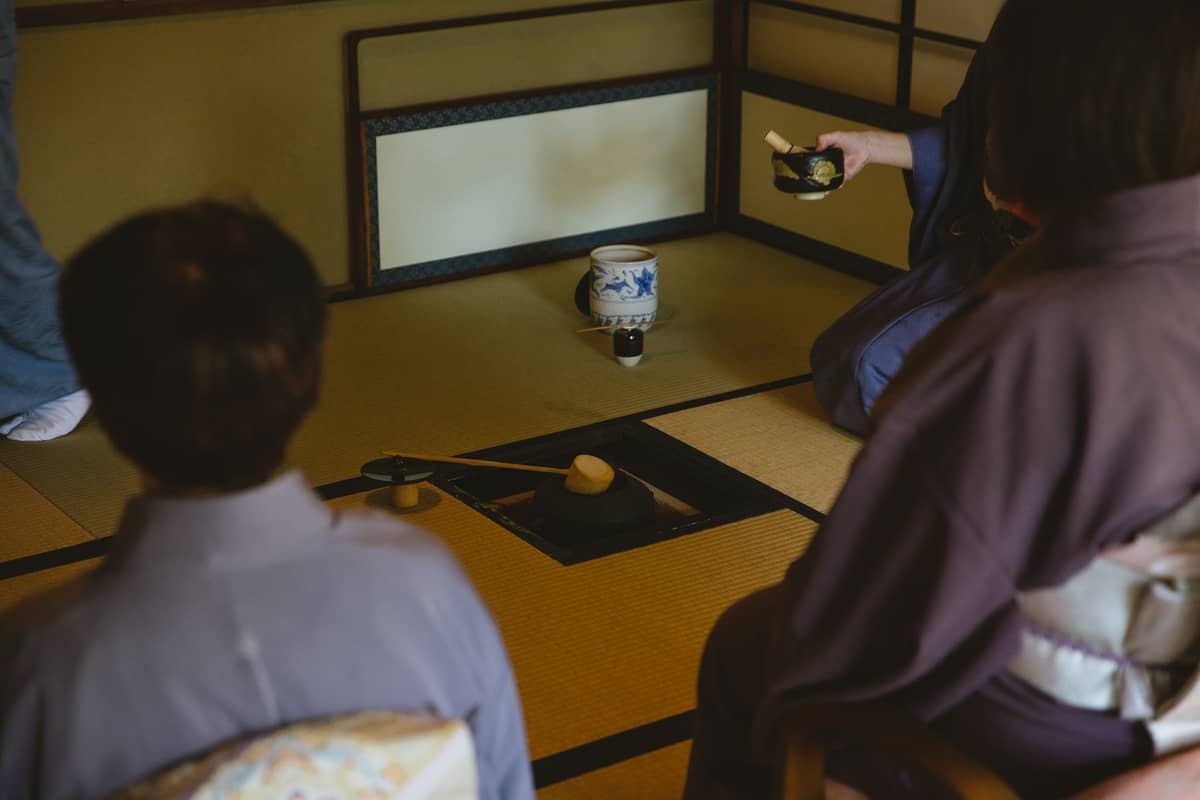
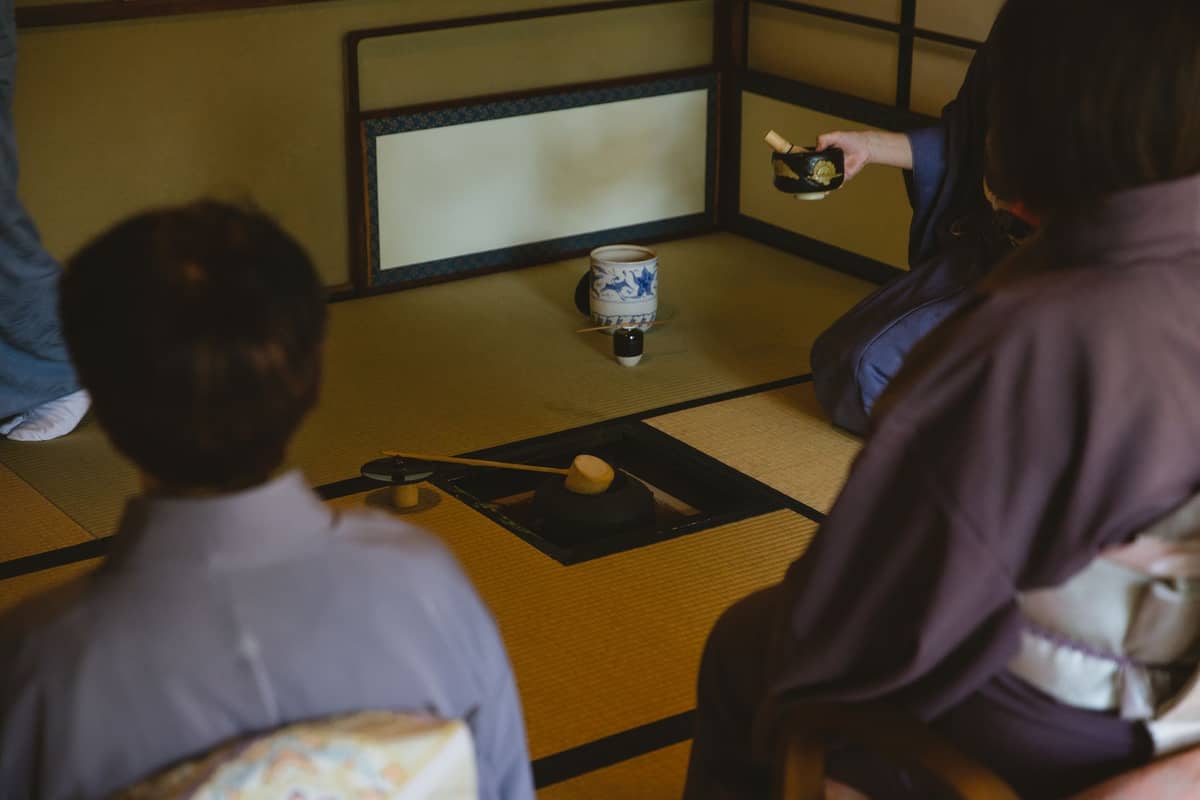
The Kyoto tea ceremony, rooted in the Japanese art of chado (the way of tea), is far more structured than simply being handed a bowl of matcha. Every gesture — the way the host folds the silk cloth, wipes the bowl, and ladles hot water — follows centuries of codified practice developed by tea masters including Sen no Rikyu in the 16th century. Understanding the basics before you arrive makes the experience considerably richer.
In a standard tourist-facing session, you will typically be seated in a tatami room, served a small sweet (wagashi) to balance the bitterness of the matcha, and then presented with a bowl of whisked tea. A host or English-speaking guide usually explains each step. You may also be invited to try whisking your own bowl. The whole thing runs around 45 minutes for a group session, or closer to 90 minutes for private or more comprehensive experiences. Nobody expects you to sit in seiza (kneeling) for the full duration — most venues accommodate Western-style seated positions for guests who find floor seating uncomfortable.
ℹ️ Good to know
A 'chaji' is the full formal tea ceremony that can last up to four hours including a meal, multiple rounds of tea, and precise seasonal rituals. What 99% of tourists book is a 'chakai' — a shorter, more casual gathering. Both are legitimate expressions of chado. Don't feel shortchanged by the abbreviated format; it's designed as an introduction, not a lesser version.
Types of Tea Ceremony Experiences Available in Kyoto
Kyoto's tea ceremony offerings have expanded considerably to serve the city's millions of annual visitors. Options now range from drop-in sessions at temple gardens to intimate private lessons with certified tea masters. Knowing which format suits your interests and schedule is the first decision to make.
- Group Introduction Sessions The most common format. Groups of 2–20 people sit together, watch a brief demonstration, receive tea and a sweet, and learn basic etiquette. Sessions run approximately 45 minutes and cost around ¥2,000–¥5,000 per person. Ideal if you want a culturally grounded but low-commitment experience.
- Private Tea Lessons One-on-one or small group lessons with a tea practitioner. You receive more hands-on instruction — including whisking technique, posture, and the philosophy behind each movement. These run 60–90 minutes and typically start from ¥7,000–¥10,000 per person. Worth it for those with a genuine interest in chado.
- Kimono + Tea Ceremony Packages Combined experiences where you dress in a rental kimono before the ceremony. Popular with first-time visitors. Yumeyakata and similar venues offer these packages from around ¥7,000–¥12,000 depending on kimono quality and session length. Book early during peak seasons.
- Temple Garden Tea Ceremonies Some temples and garden estates offer tea in historically authentic settings. The atmosphere differs significantly from commercial venues. Expect fewer English explanations but a more atmospheric experience. Urasenke and Omotesenke — the two main schools of tea descended from Sen no Rikyu — both operate teaching centers in Kyoto.
- Luxury Ryokan Tea Experiences Several high-end ryokan include tea ceremony access as part of their cultural programming. This is typically more private and unhurried than a standalone booking. Check with your accommodation ahead of time.
Best Venues for a Tea Ceremony in Kyoto
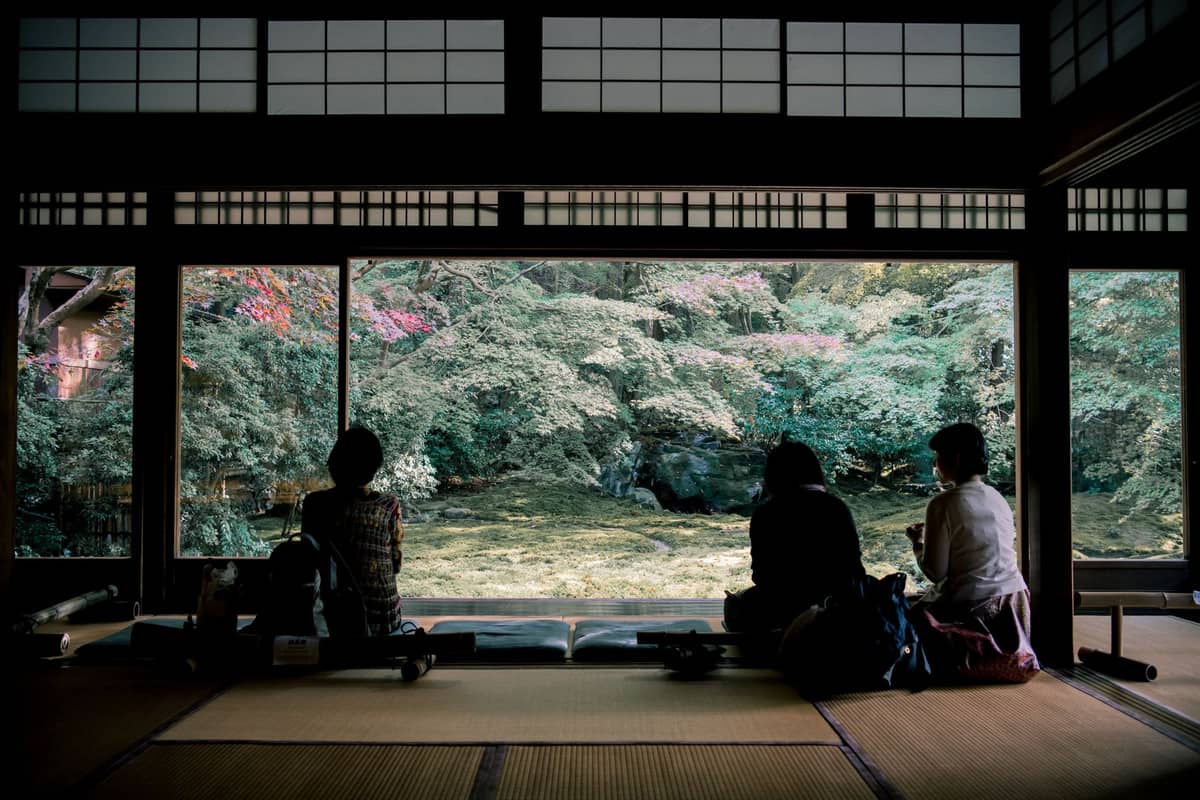
Venue quality varies widely. Some spaces are genuinely beautiful traditional teahouses inside temple grounds; others are converted rooms in tourist buildings that happen to serve matcha. The following are among the most consistently recommended options, with current pricing where available (verify directly before booking as rates change).
For visitors based in or near Higashiyama, Tea Ceremony Koto offers sessions from ¥3,300 per adult in a traditional machiya setting near Kinkaku-ji Tea Ceremony Kyoto Nagomi, also in the area, runs from ¥3,500 for adults with English-speaking hosts and no prior experience required. Both typically run multiple daily time slots; check their current schedules, as hours and holiday closures (including Obon in mid-August and New Year) can vary.
In the Giondistrict, Sakaguchi-an offers a more intimate setting in a restored townhouse, and MAIKOYA provides beginner-focused sessions with kimono options and English guides. Gion's proximity toHanamikoji Streetmeans you can easily pair a morning tea ceremony with an afternoon walk through one of Kyoto's most photographed neighborhoods.
Over in Arashiyama, Yumeyakata runs sessions from ¥3,850 per person and is well-organized for international visitors. The area also suits a full day out: combine a morning tea ceremony with a visit toTenryu-ji's garden or a walk through the bamboo grove nearby.
For a more premium experience, Chanoyu The KYOTO offers 90-minute sessions priced around ¥9,800–¥12,000, with a focus on depth over throughput. This suits visitors who want proper instruction rather than a snapshot opportunity. Advance booking is essential here.
⚠️ What to skip
Avoid booking the cheapest walk-in sessions you find along the tourist streets near Kiyomizu-dera without checking reviews first. Some are legitimate and well-run; others are little more than a bowl of matcha in a small room with a laminated info sheet. Check Google or TripAdvisor reviews specifically for the quality of the host's explanation and the authenticity of the setting before paying.
Pricing, Booking, and Logistics
Prices across Kyoto's tea ceremony market break down into fairly predictable tiers. A basic group matcha experience with wagashi runs ¥2,000–¥5,000. Add English-language instruction, a more intimate setting, or kimono rental, and you move into the ¥5,000–¥8,000 range. Private lessons or luxury venue experiences with extended time and genuine pedagogical content sit at ¥8,000–¥15,000 or more per person.
Most reputable venues now accept online bookings through their own sites, or through third-party platforms like Klook and Wabunka Experience. Booking at least one day in advance is the standard recommendation; in practice, during peak spring and autumn periods, popular slots can sell out a week or more ahead. If your travel dates fall in late March through early May or October through mid-November, book before you arrive in Kyoto.
- Book directly through venue websites for the most accurate pricing and cancellation policies.
- Group sessions (4+ people) sometimes offer slight discounts — worth asking when booking for families or travel groups.
- If you have dietary restrictions, note that wagashi (the accompanying sweet) is usually made with rice flour, red bean paste, or sesame — typically vegan-friendly, but confirm with the venue.
- Tatami floor seating is standard. If you have knee or hip limitations, contact the venue in advance; most can provide a chair alternative without issue.
- Photography policies vary. Some venues allow photos during the sweet course but not during the tea preparation itself. Ask before raising your phone.
✨ Pro tip
If your main goal is atmosphere over instruction, look for tea ceremonies held inside active temple gardens rather than standalone commercial venues. Nanzen-ji and the gardens around Philosopher's Path have options that place you in genuinely historic surroundings. The experience is quieter and often more memorable than a purpose-built tourist venue.
Seasonal Timing: When to Book and What Changes
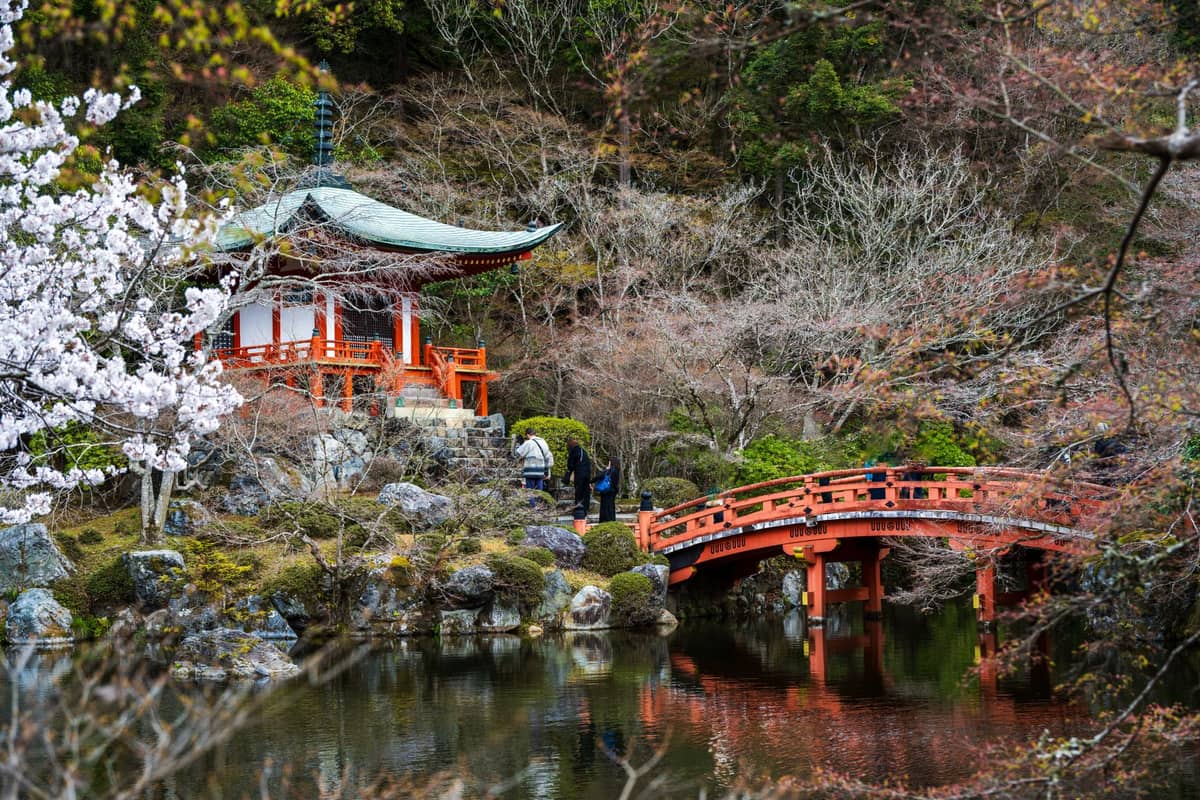
Kyoto's tourist seasons directly affect how easy it is to get a tea ceremony booking and how crowded the surrounding streets will be. Spring (late March to early May, with peak crowds in late March to early April) and autumn (late October to mid-November, with peak around mid-November) are the busiest periods, corresponding to cherry blossom and fall foliage seasons respectively. For a detailed breakdown of how these seasons affect the whole city, thebest time to visit Kyoto guidecovers crowd levels, temperatures, and what to expect month by month.
Inside the teahouse, the season matters in a different way. Traditional tea practice observes two seasonal divisions: the furo period (May through October) uses a portable brazier placed on the tatami, while the ro period (November through April) uses a sunken hearth built into the floor. Practitioners and serious students consider the ro period the more formal and important of the two. For most visitors, this distinction is a nice piece of context rather than a deciding factor in when to book.
Winter (December through February) is genuinely underrated for tea ceremonies. Crowds are thinner, venues have availability, and there is something fitting about drinking hot matcha in a cold teahouse with a snow-dusted garden outside. Kyoto winters are cool but manageable, with daytime highs usually around 8–10°C and overnight lows near 0–3°C. TheKyoto in winter guide has more on making the most of the quieter season.
Cultural Context: What Makes a Tea Ceremony Meaningful
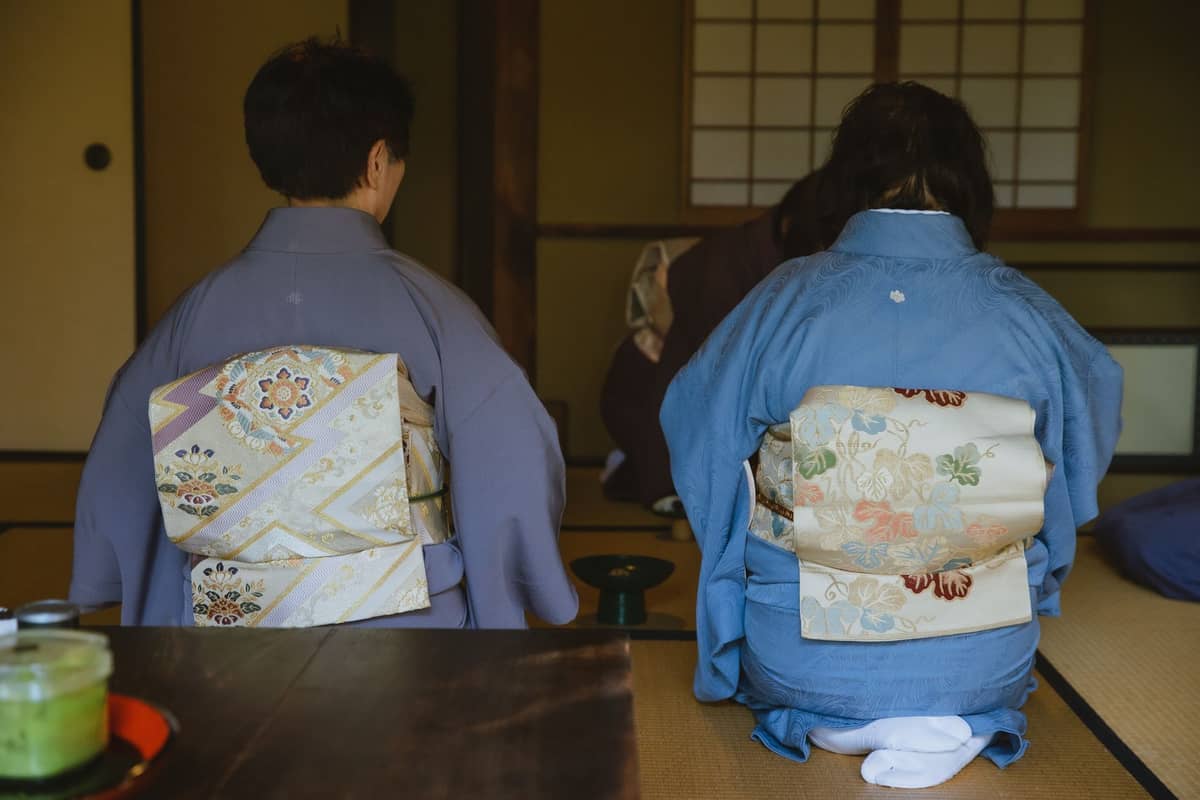
The principles underlying chado are often summarized by four concepts articulated by Sen no Rikyu: wa (harmony), kei (respect), sei (purity), and jaku (tranquility). These are not decorative slogans. Every element of the ceremony — the placement of utensils, the direction of entry, the way the bowl is turned before drinking — expresses a deliberate philosophy. Understanding this shifts the experience from watching someone make tea to participating in something that has been practiced continuously in its current form for roughly 500 years.
Kyoto is the center of Japan's tea culture for historical reasons. The city was the imperial capital for over a millennium, and the patronage of aristocrats, Buddhist temples, and samurai elites shaped the development of formal tea practice here more than anywhere else. The Urasenke and Omotesenke schools, both headquartered in Kyoto'sNishijin district, train practitioners from around the world and maintain the tradition at its most rigorous. Visitors cannot typically walk into these schools for a casual session, but their presence in the city reflects why Kyoto remains the definitive destination for experiencing chado.
If you want to understand more about the culture around traditional arts before or after your ceremony,Kyoto's geisha culture guidecovers the overlapping world of geiko and maiko, who are trained in tea ceremony as part of their arts education. It adds useful context to what you see in districts like Gion.
💡 Local tip
Wear clean socks with no holes — you will remove your shoes before entering a tatami room, and this is the one practical wardrobe detail that catches visitors off guard. Avoid strong perfume or cologne; it interferes with the subtle scent of the incense and tatami that is part of the sensory design of the space.
FAQ
Do I need to book a Kyoto tea ceremony in advance?
Yes, for most reputable venues. Walk-ins are sometimes accepted at lower-end tourist operations, but the better teahouses require reservations. During spring cherry blossom season (late March to early May) and autumn foliage season (mid-October to mid-November), popular slots book out days to a week in advance. Booking online through the venue's own site at least a few days ahead is the safest approach year-round.
How long does a tea ceremony in Kyoto take?
Standard group sessions run approximately 45 minutes. More comprehensive private lessons or premium experiences typically last 60–90 minutes. Full formal tea ceremonies (chaji) that include a meal and multiple rounds of tea can last several hours, but these are not commonly offered to tourists and require a connection to a tea school or practitioner.
How much does a tea ceremony cost in Kyoto?
Prices range from around ¥2,000–¥5,000 for a basic group matcha session to ¥7,000–¥15,000 or more for private lessons or kimono-inclusive packages. Published rates from current venues include Tea Ceremony Koto from ¥3,300 per adult, Kyoto Nagomi around ¥3,500, Yumeyakata from ¥3,850, and Chanoyu The KYOTO from approximately ¥9,800–¥12,000. Verify prices directly with venues as rates change.
What should I wear to a tea ceremony in Kyoto?
Smart casual clothing is fine. You do not need to wear a kimono unless it is part of your package. The key practical points: wear clean socks (shoes are removed), avoid strong fragrances, and if you plan to sit on tatami in seiza (kneeling), stretch beforehand or simply ask for a chair alternative — most venues provide one without any fuss.
Can I do a tea ceremony and other cultural activities on the same day in Kyoto?
Easily. Tea ceremony sessions are short enough (45–90 minutes) to fit into a larger day of sightseeing. Higashiyama venues pair naturally with Kiyomizu-dera and Ninenzaka. Arashiyama venues sit close to Tenryu-ji garden and the bamboo grove. Gion venues work well with an evening walk along Hanamikoji. If you are planning a full cultural day, the Kyoto 3-day itinerary guide has structured routes that integrate these experiences efficiently.