Arashiyama is Kyoto's western mountain district, where the Katsura River meets forested hillsides and centuries-old temples. It rewards early risers with quiet morning atmospheres and delivers some of the city's most dramatic seasonal scenery in spring and autumn.
Arashiyama sits at the western edge of Kyoto where the mountains meet the river, and it operates on a rhythm entirely different from the city center. The bamboo grove, the Zen gardens of Tenryu-ji, and the arching span of Togetsukyo Bridge have drawn visitors for over a thousand years — but the neighborhood still manages to feel like a place people actually live, especially in the early hours before the tour groups arrive.
Orientation
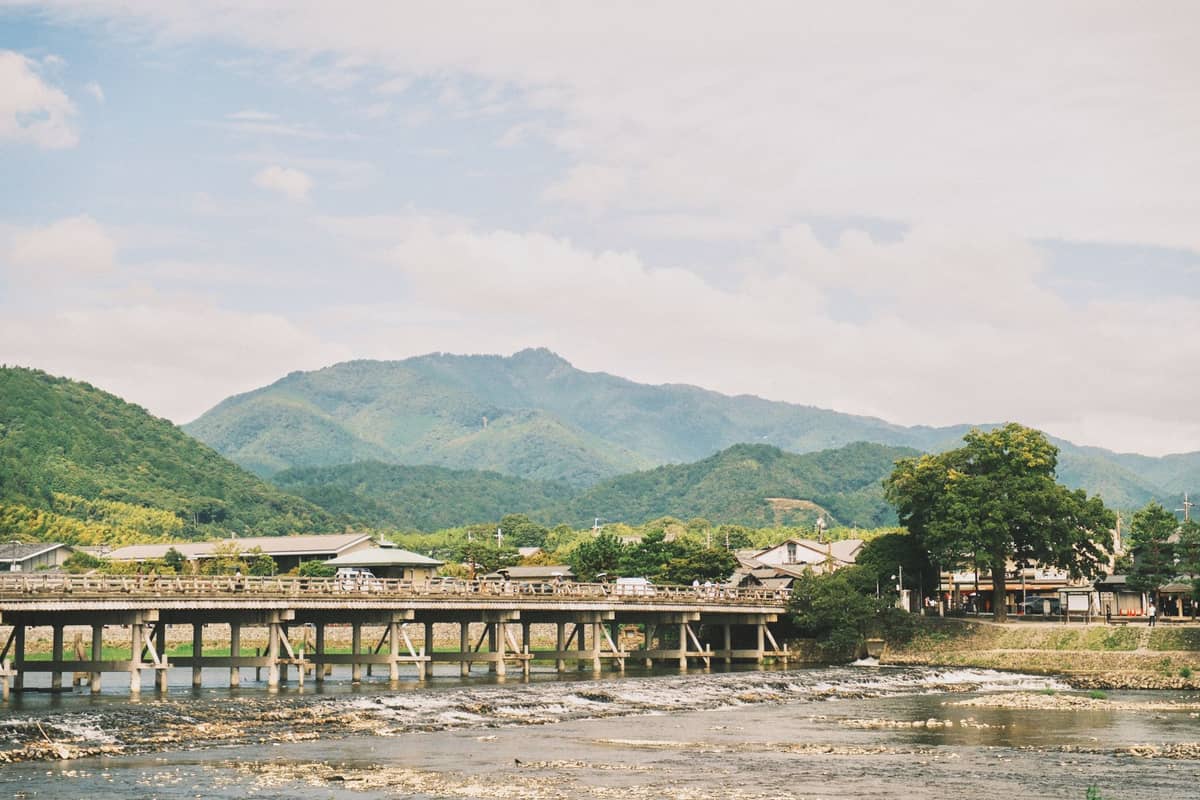
Arashiyama occupies the western fringe of Kyoto, around 11 kilometers from Kyoto Station, in the administrative wards of Ukyo and Nishikyo. The Katsura River, which becomes the Oi River as it passes through this stretch, forms the district's natural spine. Togetsukyo Bridge, the wide wooden-railed span that crosses the river here, is the practical and psychological center of the neighborhood — most visitors orient themselves in relation to it.
The district breaks loosely into three zones. South of the river and west of Hankyu Arashiyama Station is a quieter residential and garden area. North of the river, the land rises sharply toward the Arashiyama mountains, with the bamboo grove, Tenryu-ji, and the approach streets concentrated in a dense cluster. Further north along the Sagano area, the terrain opens into longer walking routes toward Jojakko-ji, Nison-in, and the preserved streetscape of Saga-Toriimoto.
Arashiyama is geographically isolated from the rest of Kyoto's tourist corridor. It does not connect easily on foot toHigashiyama or Gion— those neighborhoods sit on the opposite (eastern) side of the city. Plan Arashiyama as its own half-day or full-day destination rather than a quick detour.
Character & Atmosphere
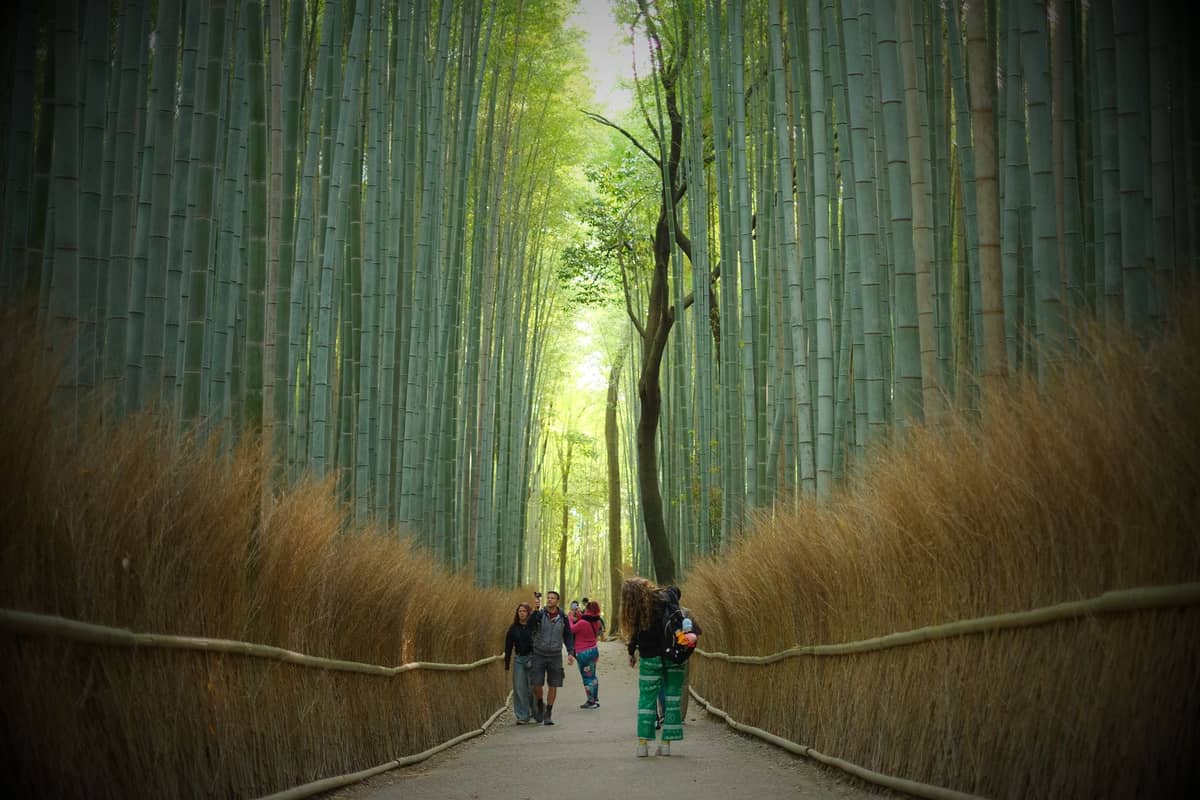
On a weekday morning before 8 a.m., Arashiyama is almost silent. The bamboo grove path is empty enough that you can hear the stalks clicking in the wind. Shop shutters are still down along the main approach roads, the river catches the early light, and the occasional temple worker sweeps the stone paths without hurrying. This version of Arashiyama is the one worth going out of your way for.
By 10 a.m. on any day between late March and mid-November, that quiet has entirely disappeared. The lanes between Tenryu-ji and the bamboo grove fill quickly, and Togetsukyo Bridge becomes a slow shuffle of visitors stopping for photographs. The main shopping street running north from the bridge, lined with tofu shops, matcha soft-serve stalls, and souvenir stores selling lacquerware and woven bamboo goods, moves at a snail's pace on peak weekends. This is not a criticism — it is useful information. If you arrive at 9 a.m. or later during cherry blossom or autumn foliage season, factor in crowds as part of the experience.
In the afternoon, the light on the mountain slopes turns golden and the riverbanks become genuinely pleasant. Families rent flat-bottomed boats and pole slowly under the bridge. Cormorant fishermen occasionally work the shallows in traditional dress. The energy is slower here than in Kyoto's downtown wards, and the forested hillsides that frame every view make it feel more like a mountain town than a city district.
After dark, Arashiyama is unusually quiet for a major tourist area. Most of the shops and restaurants close by 6 or 7 p.m., and the district essentially goes to sleep. This makes it a poor base for evening activity, but it does mean that guests staying overnight at riverside ryokan experience an almost rural stillness after the day-trippers leave.
💡 Local tip
Aim to arrive at the bamboo grove and Tenryu-ji by 7:30–8:00 a.m. The grove is accessible at all hours and has no entry fee. Tenryu-ji opens at 8:30 a.m. and fills fast. Being there right at opening makes a measurable difference in how the experience feels.
What to See & Do
The Arashiyama Bamboo Groveis the image most people associate with Kyoto's west side: a narrow path cutting through towering moso bamboo, the stalks rising 10 to 15 meters on either side and filtering the light into something unusually green and cool. The path itself is short, around 400 meters, which is part of why it crowds so quickly. Early morning or light rain both thin the foot traffic considerably.
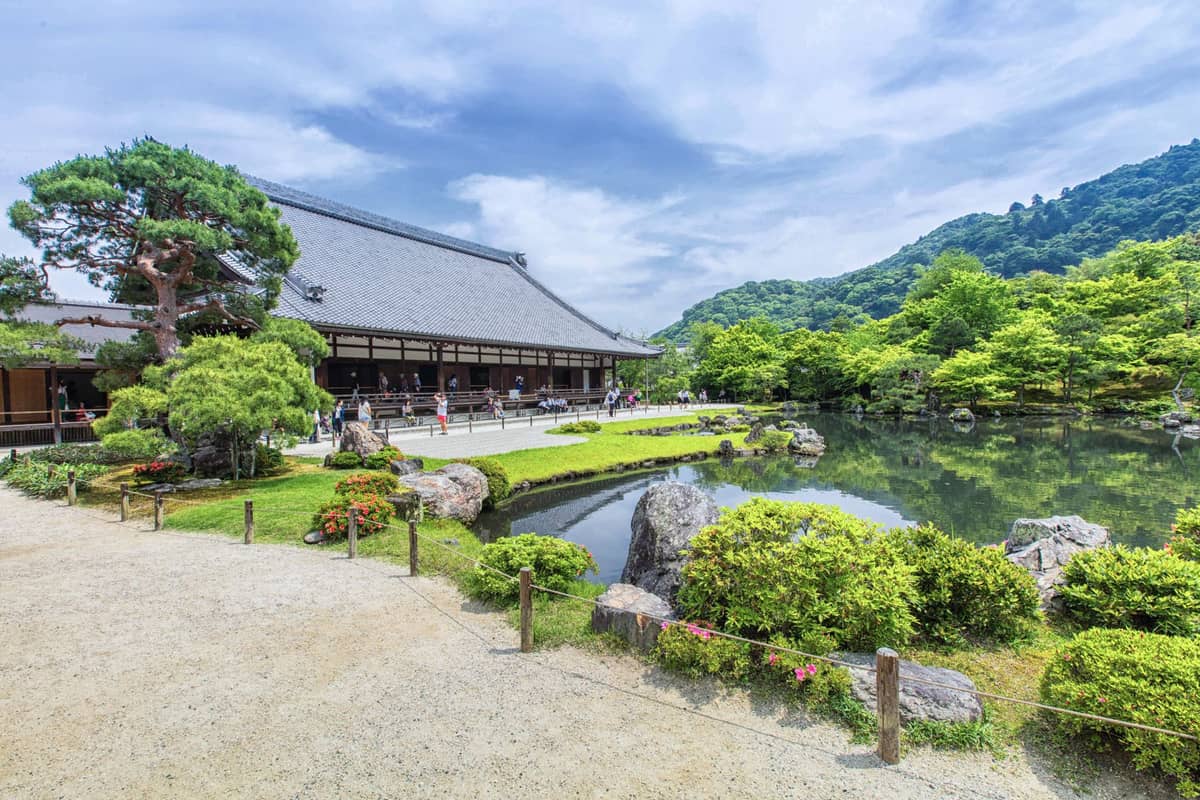
Tenryu-jiis one of the great Zen temple complexes in Japan, founded in 1339 and listed as a UNESCO World Heritage Site. The main draw is the garden, designed by the monk Muso Soseki, which uses the Arashiyama mountains as borrowed scenery behind the central pond. The result is a composition that looks essentially unchanged from the 14th century. The bamboo grove begins immediately behind the temple's north gate, making it natural to combine both in a single morning.
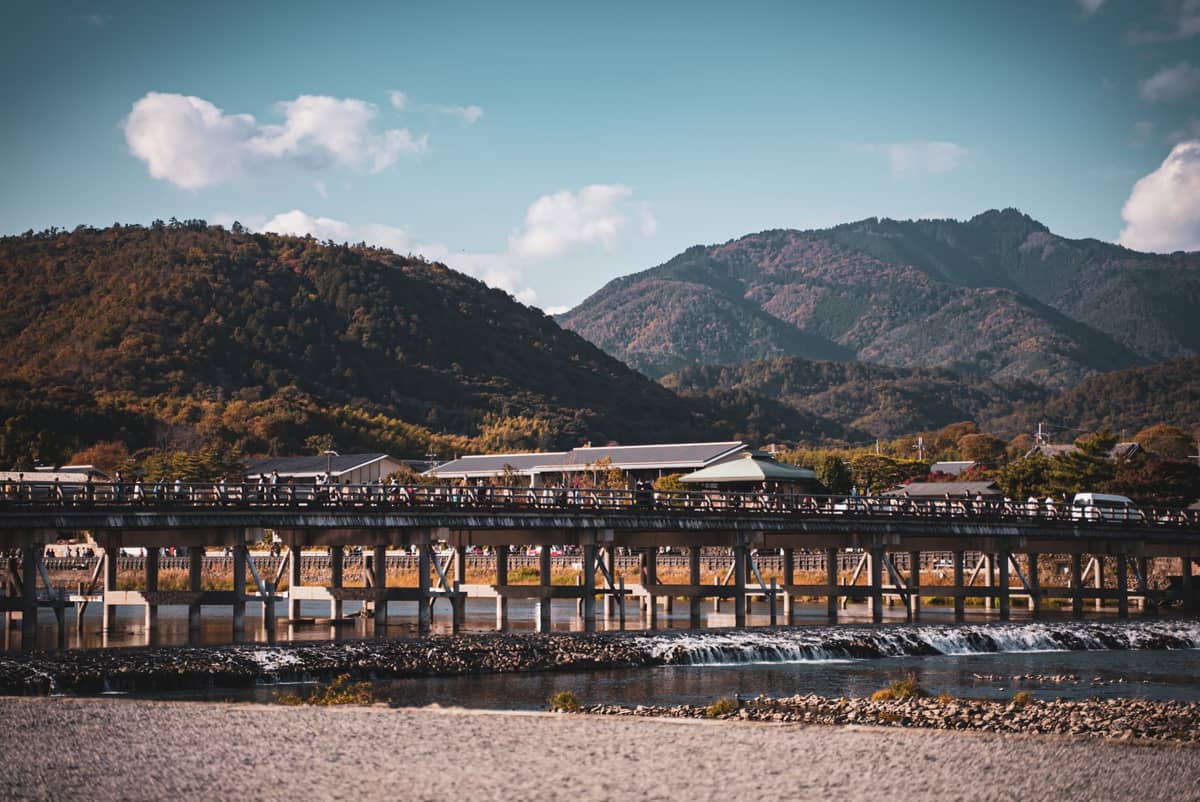
Togetsukyo Bridgeis the most photographed spot during the sakura and koyo seasons. In spring, the hillsides behind it flush pink; in autumn, they turn orange and red. The bridge itself dates in its current form to 1934 but was first built in the Heian period (9th century). Walking across it and then following the southern riverbank west gives you one of the more pleasant low-effort walks in the district.
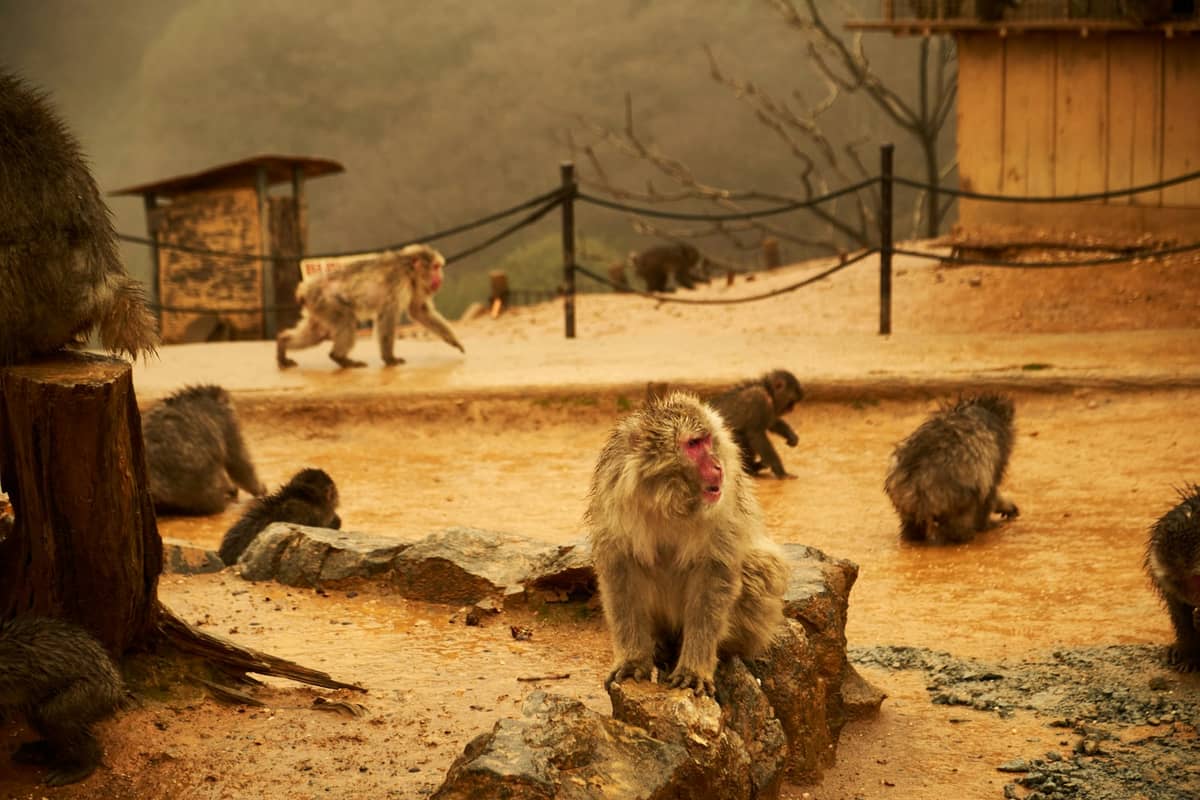
For something more active, the Arashiyama Monkey Park Iwatayamarequires a 15–20-minute uphill hike through forest to reach a hilltop where a troop of Japanese macaques roams freely. The views back over Arashiyama and the Katsura River are worth the climb alone. Children generally find it excellent; the park is open daily and charges a modest entry fee.
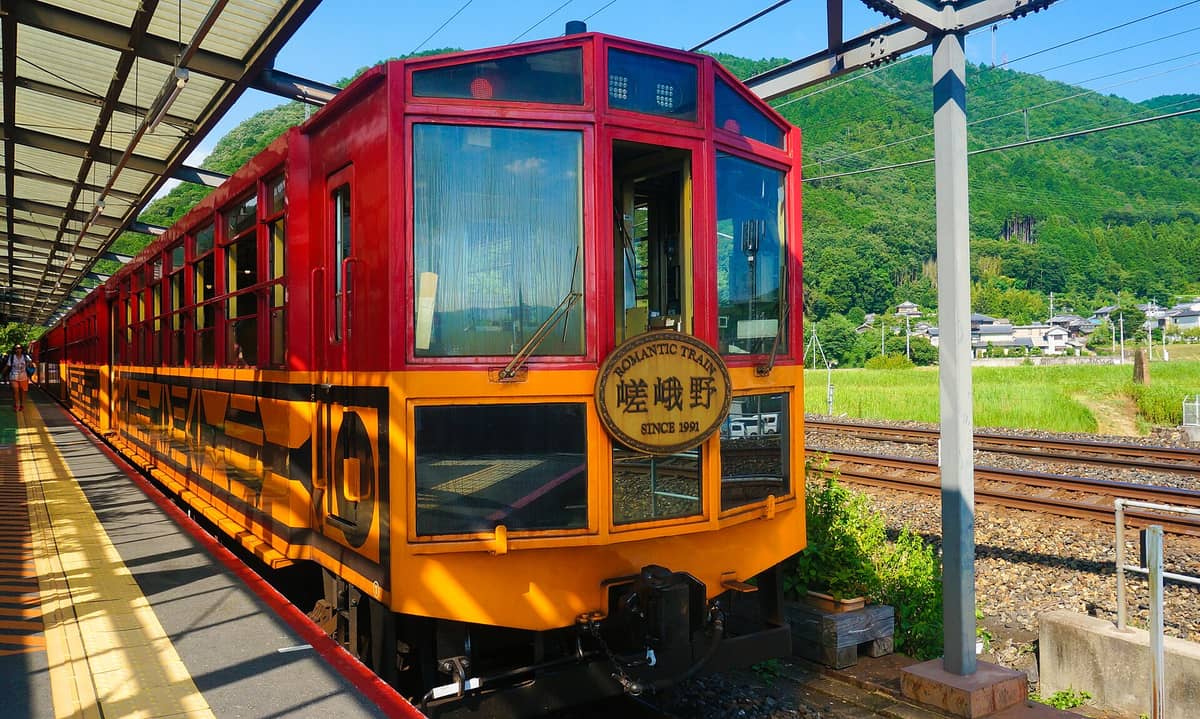
The Sagano Scenic Railway(also called the Sagano Romantic Train) runs along a narrow-gauge track through the Hozu River gorge, one of the more dramatic pieces of landscape in the Kyoto area. The 7.3-kilometer route takes about 25 minutes one way, and the open-sided carriages make the most of the gorge scenery. Tickets sell out during peak season, so book in advance.
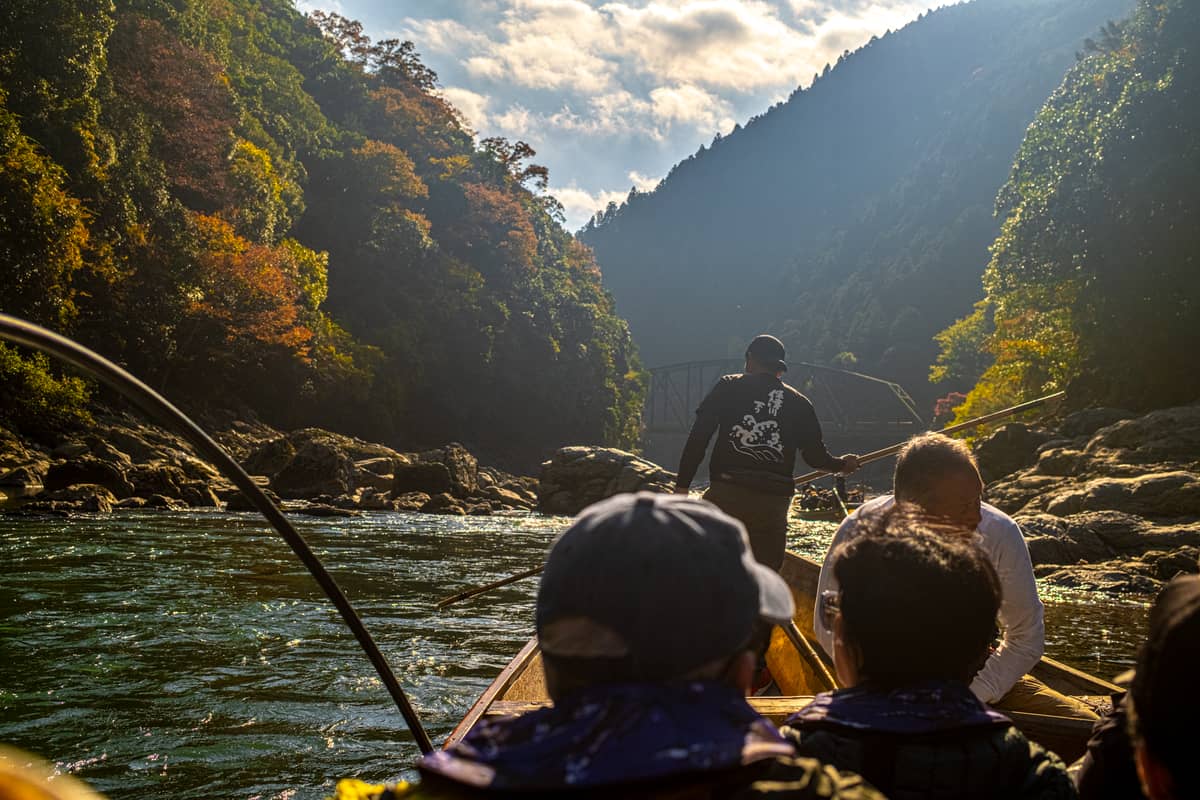
If you follow the lane north past the bamboo grove and continue uphill through the Sagano area, the crowds thin rapidly. Jojakko-ji and Nison-in are both excellent temples that receive far fewer visitors than Tenryu-ji. The preserved streetscape of Saga-Toriimoto, with its thatched-roof tea houses and old wooden facades, gives a sense of what the approaches to major temples once looked like throughout Kyoto. TheHozu River boat ridedownstream from Kameoka is a separate trip, two hours through the gorge and depositing passengers near Arashiyama — a spectacular way to arrive if logistics allow.
Arashiyama Bamboo Grove: free entry, open at all hours, best before 8 a.m.
Tenryu-ji: opening 8:30 a.m., garden-only or full complex tickets available
Togetsukyo Bridge: free to walk, central orientation point for the district
Monkey Park Iwatayama: uphill hike required, rewarding views from the top
Sagano Scenic Railway: book tickets ahead during spring and autumn
Saga-Toriimoto preserved street: 15-20 minutes walk from the bamboo grove, very little crowds
Eating & Drinking
Arashiyama's food scene is heavily tilted toward daytime dining, with most restaurants and cafés operating lunch hours and closing by early evening. The main shopping street leading north from Togetsukyo Bridge is lined with stalls selling yudofu (tofu simmered in kombu broth), which is a Kyoto specialty with particular roots in this area given the traditionally Buddhist character of the surrounding temples. Matcha soft-serve cones are everywhere, ranging from acceptable to genuinely good.
For sit-down meals, the riverside area has a cluster of restaurants with views over the Oi River. Kaiseki (formal multi-course Japanese cuisine) is well represented here, and several older ryokan-restaurants offer lunch sets that give access to garden seating without requiring an overnight stay. These tend to be expensive by Kyoto standards but are less formal at lunch than dinner.
Budget eating is easier than it looks. Convenience stores near JR Saga-Arashiyama Station provide reliable cheap options, and several noodle shops and small teishoku (set meal) places operate on the side streets away from the main tourist approach. Warabi mochi (a soft rice-cake sweet dusted with kinako powder) is sold at numerous small shops and is one of the better things to eat here as a snack.
Arashiyama is also a good place to engage with Kyoto's matcha culture in a more grounded way than central Kyoto sometimes allows. For a deeper understanding of why matcha is such a specific part of this region's food identity, theKyoto matcha guidecovers the context well. A small number of cafés in the Sagano lanes also serve traditional tea in a less formal setting than a full tea ceremony.
⚠️ What to skip
Most restaurants and stalls on the main tourist strip close between 5 and 6 p.m. If you plan to stay in Arashiyama through the evening, identify your dinner options in advance or be prepared to head back toward downtown Kyoto for a wider choice.
Getting There & Around
Three separate rail lines serve Arashiyama from different parts of Kyoto, which means you can usually choose your approach based on where you are staying. Each line deposits you at a slightly different point within the district.
The JR Sagano Line (also called the San-in Line) runs from Kyoto Station to JR Saga-Arashiyama Station in about 15–20 minutes. This is the most direct connection from the main transport hub and the most commonly used. From the station, Tenryu-ji is roughly a 10-minute walk west, and the bamboo grove is about 15 minutes on foot.
The Keifuku Randen Tram (Arashiyama Line) terminates at Randen Arashiyama Station, which sits closest to Togetsukyo Bridge and the main shopping approach. The tram departs from Shijo-Omiya in central Kyoto and takes around 25 minutes. It is slower than JR but passes through residential Kyoto neighborhoods in a way that feels distinctly local.
The Hankyu Arashiyama Line connects from Katsura Station, which is on the Hankyu Kyoto Line from central Kyoto and Osaka. Hankyu Arashiyama Station is on the south side of the river, a short walk from Togetsukyo Bridge. This is particularly useful if you are coming directly from Osaka.
Kyoto City Bus number 28 runs directly from Kyoto Station to Arashiyama-Tenryuji-mae in approximately 45–50 minutes, depending on traffic. This is the most flexible option if you are carrying luggage or traveling with young children, but it can be slow on busy days. Within the district, almost everything is walkable — the area between JR Saga-Arashiyama Station and the far end of the Sagano lane circuit is about 3 kilometers.
Bicycles are available for rent near all three stations and are well suited to the district's flat riverbank areas. Cycling through the Sagano lanes and along the northern hillside roads is one of the more enjoyable ways to cover more ground. For full logistics on moving between neighborhoods across Kyoto, thegetting around Kyoto guidecovers transit options, IC cards, and pass options in detail.
ℹ️ Good to know
IC cards (Suica or ICOCA) work on all three rail lines serving Arashiyama and simplify transfers between different operators. If you are on a multi-day Kyoto trip, loading one before you arrive saves time at ticket machines.
Where to Stay
Arashiyama is one of the best areas in Kyoto to stay if you want a ryokan experience with genuine surroundings rather than a hotel in a commercial district. Several high-end ryokan sit directly on the riverbank or on hillside plots above the Oi River, offering rooms with private views of the water and the forested slopes. For a full overview of this kind of accommodation, theKyoto ryokan guide explains what to expect, what to budget, and how to book.
The trade-off is isolation. Staying in Arashiyama means you are far from central Kyoto's restaurants, nightlife, and easy transit connections to Nara or Osaka. It works well as a one or two-night base if you want to experience the district in the early morning and late evening, when it is genuinely free of day crowds. It works less well as a base for exploring the whole city, since you will spend meaningful time in transit getting to and from the east side.
For travelers who want to stay closer to the center while treating Arashiyama as a day trip, thedowntown Kyotoarea offers far more accommodation variety and better transit access across the city. Budget travelers will find limited hostel options in Arashiyama itself — the neighborhood skews toward mid-range and luxury stays.
Seasonal Highlights & Honest Drawbacks
Arashiyama is one of Kyoto's two or three most spectacular spots during cherry blossom season in late March and early April. The hillsides behind Togetsukyo Bridge turn pale pink, and the combination of blossoms, river, and mountains is genuinely striking. Autumn foliage, typically peaking in mid to late November, transforms the same hillsides into deep red and orange. Both seasons draw enormous crowds; if you are planning a visit around either, read theKyoto cherry blossom guide or the Kyoto in autumn guide before finalizing your timing.
Summer visits are entirely viable, though the heat in Kyoto's basin geography makes the afternoon hours uncomfortable. The bamboo grove is noticeably cooler than open streets, which gives it an additional practical appeal in July and August. Winter is genuinely underrated here: the bamboo grove looks extraordinary after the rare snowfall, visitor numbers drop sharply, and the ryokan rates reflect the quieter season.
The main honest drawback to Arashiyama is that the core tourist circuit is short and, by midday, extremely crowded. The bamboo grove path takes 10 minutes to walk even slowly. Tenryu-ji's garden, while beautiful, can be done in under an hour. Many visitors feel they have covered the highlights by noon and either move on or extend their day by pushing further into the Sagano hills, which rewards those who bother but is not obvious from the main approach roads.
💡 Local tip
To extend your time in Arashiyama meaningfully, walk north past the bamboo grove and keep going. The paths through Sagano toward Jojakko-ji, Nison-in, and Saga-Toriimoto can fill two to three additional hours and see far fewer visitors than the main cluster near Tenryu-ji.
TL;DR
Arashiyama is one of Kyoto's most scenic districts, best experienced in the early morning before day crowds arrive from the city center.
The core highlights — bamboo grove, Tenryu-ji garden, Togetsukyo Bridge — are concentrated within a small area; allow at least half a day and push into the quieter Sagano lanes for a fuller visit.
Three separate rail lines (JR, Randen Tram, Hankyu) connect Arashiyama to different parts of Kyoto; JR Saga-Arashiyama Station is the most direct from Kyoto Station.
Best for: travelers who want a ryokan stay in mountain surroundings, visitors prioritizing seasonal scenery (spring blossoms or autumn foliage), and anyone willing to start their day early.
Not ideal as a full-trip base: the neighborhood closes early, dining options are limited in the evening, and central Kyoto is 20-30 minutes away by transit.
Kyoto holds more extraordinary Japanese gardens per square kilometer than anywhere else on earth. This guide covers the finest examples across every style, from dry rock gardens to imperial stroll gardens, with practical advice on access, timing, and what makes each one worth the visit.
Kyoto holds more Shinto shrines than almost any city on earth, ranging from grand imperial complexes to quiet forest sanctuaries. This guide covers the best, with practical advice on when to go, what to expect, and what most visitors get wrong.
Kyoto has over 1,600 Buddhist temples and around 400 Shinto shrines, ranging from gold-leafed pavilions to remote mountain retreats. This guide cuts through the noise to highlight the temples that genuinely reward a visit, with context on what makes each one worth your time.
Kyoto rewards visitors year-round, but the experience varies dramatically by season. This guide breaks down every month by weather, crowds, costs, and what's actually worth seeing — so you can choose the right time for your trip, not just the most popular one.
Kyoto's best views range from the famous wooden stage at Kiyomizu-dera to a forested mountain summit reached by a 45-minute hike. This guide covers the city's top viewpoints across temples, hilltops, iconic streets, and observation decks, with tips on timing and what to expect.
Kyoto sits at the center of one of Japan's richest regions for day-tripping. Within an hour by train, you can reach ancient deer parks, mountain temples, sake-brewing canals, and remote moss gardens. This guide covers the best excursions organized by direction and theme.
Kyoto is one of the world's great cultural cities, and a surprising number of its best experiences are completely free. From the torii-gate tunnels of Fushimi Inari to the stone lanes of Higashiyama and the canal-side Philosopher's Path, here is a practical guide to the finest free attractions in Kyoto.
The Fushimi Inari hike is one of the most iconic walks in Japan, threading thousands of vermilion torii gates up Mt. Inari in southern Kyoto. This guide covers every trail option, the best times to go, how to get there cheaply, and the the reality about what the experience is actually like.
Kyoto's transport network is more layered than it first appears. This guide breaks down every practical option, from city buses and subway lines to IC cards, day passes, and airport transfers, so you can move around the city without wasting time or money.
Gion Matsuri fills the entire month of July with shrine rituals, towering floats, and lantern-lit street festivals. This guide breaks down exactly what happens, when, where to stand, and how to survive the July heat without missing the highlights.
Kyoto has no international airport of its own. This guide covers every practical way to reach the city from Kansai International Airport (KIX) and Osaka Itami (ITM), with current fares, journey times, and clear advice on which option suits your trip.
Kyoto's cherry blossom season is one of Japan's great spectacles, but peak bloom lasts barely a week and the crowds are intense. This guide covers exactly when to go, where to stand, what to skip, and how to make the most of sakura season in Kyoto.
Kyoto is Japan's historic capital, with over 1,600 temples, a preserved geisha district, and some of the country’s finest food. This guide covers everything a first-time visitor needs: the best time to visit, how to get from the airport, which neighborhoods to base yourself in, and how to avoid the most common mistakes.
Kyoto's food culture runs deeper than temple towns and tea ceremonies. From formal kaiseki multi-course meals to humble obanzai home cooking and steaming bowls of yudofu beside ancient temples, this guide covers what to eat, where to eat it, and exactly what to budget — season by season.
Kyoto is one of the most atmospheric cities in Asia for couples, with preserved historic streets, seasonal illuminations, ryokan stays, and cultural rituals designed for two. This guide covers the best romantic experiences, realistic pricing, and the timing details that make the difference between a good trip and a memorable one.
Kyoto is the only city in Japan where the geisha tradition survives at scale. This guide covers the five geisha districts, every major dance performance, licensed cultural experiences, and the etiquette rules that matter — so you can engage with this world respectfully and on your own terms.
Kyoto rewards those who look beyond the headline sights. This guide covers the city's most rewarding lesser-known temples, atmospheric alleyways, mountain retreats, and local institutions, from a moss-carpeted UNESCO garden requiring advance booking to a century-old public bathhouse in a residential neighborhood.
Autumn transforms Kyoto into one of the most photographed places on earth, with maples and ginkgos turning gold and crimson across temples, gardens, and hillsides. This guide covers when foliage peaks, where to go, which illumination events are worth your evening, and how to avoid the worst of the crowds.
Kyoto in winter (December to February) offers crisp, mostly dry weather, thinner crowds, and a quieter side of the city's temples and shrines. This guide covers what the season actually looks like, what to do, how to get around, and where the crowds still gather.
Three days is enough to experience the best of Kyoto without feeling rushed, but only if you plan smart. This guide breaks down exactly where to go, when to go, and how to get around, including updated transport advice that most other guides get wrong.
Renting a kimono in Kyoto is one of the most memorable ways to experience the city, but the advertised prices rarely tell the full story. This guide breaks down real costs, the best neighborhoods to explore in traditional dress, seasonal advice, and practical tips that most shops won't tell you upfront.
Kyoto is the spiritual home of Japanese matcha culture, from centuries-old tea houses in Gion to stone-mill workshops in Uji. This guide covers where to drink, eat, and learn about matcha — with real prices, practical logistics, and practical advice on what's worth your time.
Kyoto's nightlife is quieter than Tokyo's but far richer than most visitors expect. This guide covers the best izakayas, sake bars, evening tours, and riverside dining across Pontocho, Gion, and Kiyamachi, with practical advice on costs, timing, and what to skip.
Kyoto is one of Japan's most rewarding cities to visit, but costs can add up fast. This guide breaks down exactly how to stretch your yen further — covering transport passes, free attractions, affordable food, and the best times to visit when prices drop.
Seven days is the ideal length to experience Kyoto without rushing. This guide breaks down each day by district, with practical logistics, timing advice, and clear assessments of what's worth your time. Whether you're planning your first visit or returning with more days to spare, this itinerary covers the full range of Kyoto's historic city.
Kyoto offers a surprisingly diverse range of hot-spring bathing options, from rural mountain onsen to sleek hotel spas. This guide breaks down the best facilities, real pricing, seasonal timing, and the rules you need to know before you strip off your yukata.
Kyoto's ramen scene runs deeper than most visitors expect. This guide covers the top-rated shops, the best neighborhoods to explore, what styles define Kyoto ramen, and practical advice for navigating queues, hours, and seasonal menus.
A Kyoto ryokan stay is one of the most distinctive lodging experiences in Japan, but the rules, pricing structures, and expectations are unlike any Western hotel. This guide breaks down what actually happens from check-in to breakfast, what things cost across budget tiers, and which neighborhoods make the most sense depending on your itinerary.
Kyoto is Japan's craft capital, where century-old textile workshops sit alongside covered shopping arcades and a legendary food market. This guide breaks down where to shop, what to buy, and how to avoid tourist traps — by neighborhood, price point, and category.
Kyoto's sushi scene runs deeper than most visitors expect. This guide breaks down the best sushi restaurants in Kyoto by price tier, neighborhood, and style, with practical advice on reservations, seasonal fish, and common mistakes to avoid.
From quick group introductions to private lessons in historic teahouses, Kyoto offers more ways to experience chado than almost anywhere in Japan. This guide covers the best venues, realistic prices, booking advice, and the cultural context that makes each sip mean something.
Visiting Kyoto's temples and shrines without understanding the etiquette means missing half the experience. This guide covers everything from torii gate protocol and hand-purification steps to photography restrictions, admission costs, and the key differences between Shinto shrines and Buddhist temples.
Nara is one of the easiest and most rewarding day trips from Kyoto, just 40 km away with frequent train connections. This guide breaks down every transport option, cost comparisons, and how to make the most of your time there.
The Kyoto to Tokyo corridor is one of Japan's most-traveled routes. This guide covers every realistic option, from the Tokaido Shinkansen to overnight highway buses, with clear breakdowns of cost, speed, and when each option makes sense.
Kyoto rewards walkers more than almost any city in Japan. This guide breaks down the best self-guided walking routes by district, with timing, admission costs, crowd advice, and clear assessments of what's worth your time and what isn't.
Kyoto's weather swings from bitter January mornings to oppressive August humidity, with two peak tourist seasons sandwiched in between. This guide breaks down what to expect every month, what to pack, and when the crowds and weather actually align in your favor.
Kyoto is not just temples and shrines. The city has a surprisingly strong lineup of kid-friendly attractions, from the Kyoto Railway Museum and Aquarium in Umekoji Park to samurai theme parks and wide outdoor spaces. This guide covers what's genuinely worth your family's time, realistic pricing, the best seasons to visit with children, and how to structure your days without burning everyone out.
Kyoto rewards those who spend well and plan ahead. This guide covers the city's finest ryokan, reservation-only kaiseki restaurants, and culturally rich experiences, along with practical advice on booking windows, seasonal pricing, and what actually justifies the premium.
Kyoto packs more than 1,600 years of Japanese history into a single city. This guide covers the best things to do in Kyoto across every district, from iconic temples and sake breweries to traditional tea ceremonies and bamboo forest walks, with practical advice on crowds, costs, and timing.
Choosing where to stay in Kyoto shapes your entire trip. This guide covers the five best areas for visitors, price breakdowns by neighbourhood, accommodation type comparisons, and the booking timing you need to avoid paying double during peak season.