Gion Matsuri: The Complete Guide to Kyoto's Greatest Festival
Gion Matsuri fills the entire month of July with shrine rituals, towering floats, and lantern-lit street festivals. This guide breaks down exactly what happens, when, where to stand, and how to survive the July heat without missing the highlights.
Plan and book this trip
Tools from our partner Travelpayouts help you compare flights and hotels. If you book through them, we may earn a commission at no extra cost to you.
Flights
Hotels map
TL;DR
- Gion Matsuri runs all of July, but the two grand float processions (Yamaboko Junko) fall on July 17 and July 24 — not the same day.
- Street viewing of both parades is free. Some individual floats sell paid interior access tickets (around ¥500–¥1,000) during the Yoiyama evenings.
- The Yoiyama evenings (July 14–16 and 21–23) are when streets close to traffic and food stalls appear — these nights are as impressive as the parades themselves.
- July in Kyoto is brutally hot — regularly above 30°C with high humidity. See ourKyoto weather guide for what to pack and expect.
- The Ato Matsuri (second festival, July 21–24) draws significantly fewer crowds than the Saki Matsuri and features floats that weren't revived until 2014 — a legitimate reason to pick the later dates.
What Gion Matsuri Actually Is (And What It Isn't)
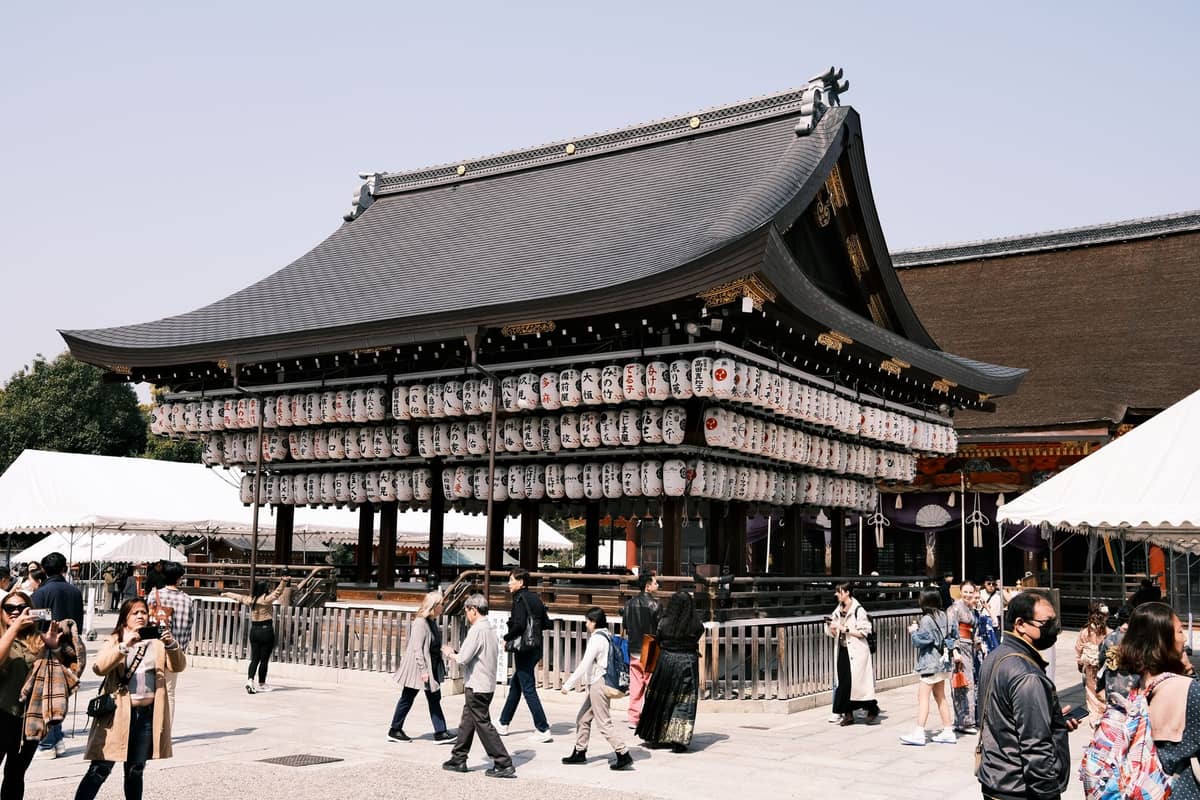
Gion Matsuri is one of Japan's three great festivals, alongside Osaka's Tenjin Matsuri and Tokyo's Kanda Matsuri. It originated over 1,100 years ago as a purification ritual at Yasaka Shrine, intended to appease the gods and stop a deadly plague that swept through the capital in 869 CE. Today it's a UNESCO Intangible Cultural Heritage, but the religious core remains intact: the floats are consecrated vessels, the rituals are conducted by Shinto priests, and the entire month carries genuine ceremonial weight.
The single biggest misconception tourists carry into this festival is that it's a single-day event centered on one big parade. In reality, Gion Matsuri is a month-long program with shrine rituals beginning July 1, float construction visible to the public from around July 10, pedestrianized evening festivals (Yoiyama), two separate grand processions, and closing ceremonies stretching to July 31. The festival is anchored atYasaka Shrine in the Gion district, but the processions and street festivals sprawl across the downtown Shijo-Karasuma-Kawaramachi grid.
ℹ️ Good to know
Gion Matsuri is split into two halves: the Saki Matsuri (first festival, culminating July 17) and the Ato Matsuri (latter festival, culminating July 24). Each has its own Yoiyama evenings, its own set of floats, and its own procession route. They are distinct events, not repeats of each other.
The Festival Calendar: Key Dates and What Happens When
Understanding the festival structure saves a lot of confusion. Here is how July unfolds, with approximate timings based on the standard annual pattern. Always verify the precise schedule against Kyoto's official tourism channels in the months before you travel, as specific start times can shift slightly year to year.
- July 1–10: Opening Rituals Ceremonies at Yasaka Shrine mark the official start. These are low-key but atmospherically rich events for those interested in Shinto practice rather than spectacle.
- July 10–14: Float Construction (Yama and Hoko Assembly) Artisans build the enormous wooden floats in the streets around Shijo and Karasuma using traditional rope-lashing techniques — no nails. Watching the construction is free and gives a genuine sense of the scale involved.
- July 14–16: Saki Matsuri Yoiyama (Evenings, approx. 18:00–23:00) Streets around Shijo close to vehicles and transform into pedestrian festival zones lined with food stalls and lantern-lit floats. July 15 and 16 are the peak crowds. July 14 is notably quieter.
- July 17: Saki Matsuri Yamaboko Junko (First Grand Procession, 09:00–13:00 approx.) Around 23 floats process through central Kyoto, starting near the Shijo-Karasuma intersection. This is the most-watched event of the festival. Crowds along the main route are extreme by 08:30.
- July 21–23: Ato Matsuri Yoiyama (Evenings, approx. 18:00–23:00) The second round of evening street festivals. Noticeably less crowded than the Saki Matsuri equivalent. A better option for those who want the atmosphere without the crush.
- July 24: Ato Matsuri Yamaboko Junko (Second Grand Procession, 09:30–late morning) Ten floats process through the city, starting near Karasuma-Oike. Several of these floats were only revived after 2014 following centuries of dormancy, making this procession historically significant and underappreciated.
- July 28–31: Closing Ceremonies Purification rituals and the return of sacred objects to Yasaka Shrine. The city quiets considerably. Accommodation prices drop and the temples go back to normal crowds.
The Floats: Yama, Hoko, and What Makes Them Different
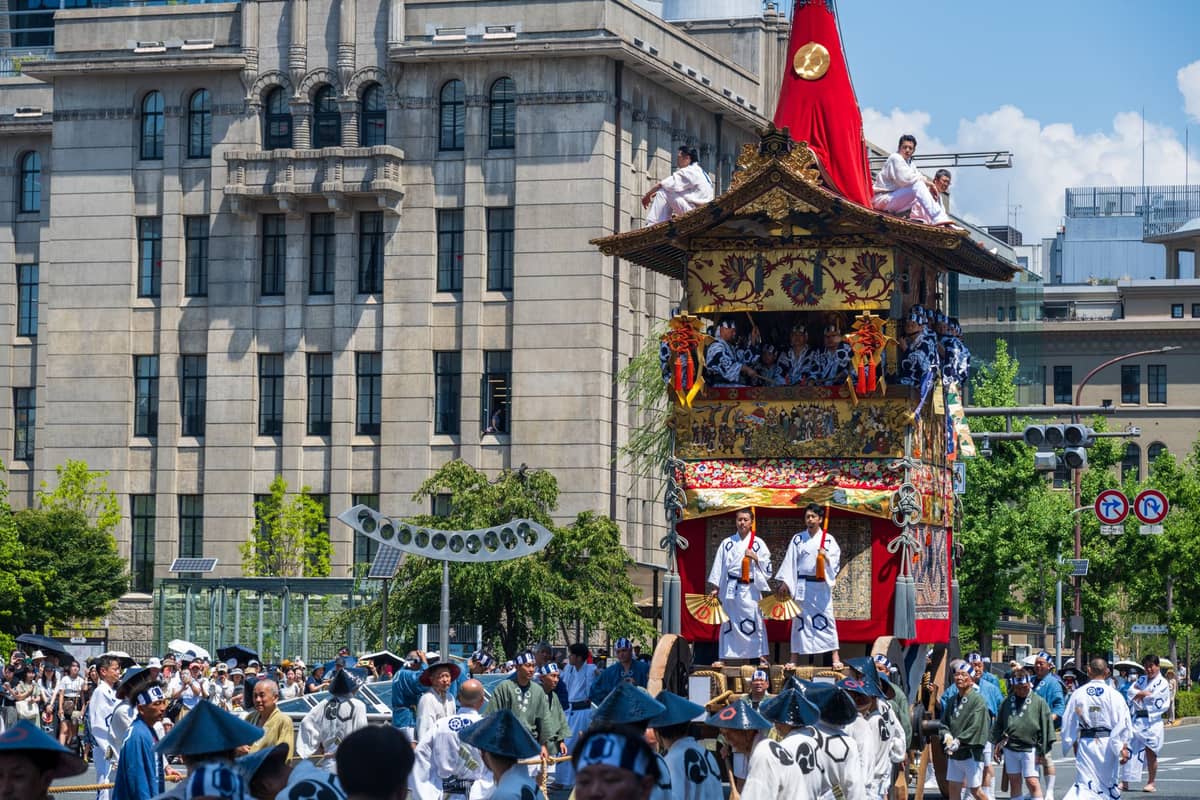
The floats divide into two types. Hoko (鉾) are the massive wheeled floats, some reaching 25 meters tall. They require teams of men to pull on ropes, and they cannot turn — they execute a slow sideways slide called辻回し (tsujimawashi) at intersections using straw and bamboo to pivot. These corner turns are among the most dramatic moments of the procession and draw the largest crowds. Yama (山) are smaller, portable floats carried on wooden beams by groups of bearers. They move faster and are easier to follow through the route.
During the Yoiyama evenings, the floats are stationary and lit with paper lanterns. You can approach closely, inspect the tapestries (some dating to the 16th and 17th centuries, including Flemish and Persian textiles brought via the Silk Road), and in some cases pay to climb inside or onto the upper deck. These paid interior visits run around ¥500–¥1,000 per float and are organized independently by each float preservation society. There's no advance booking — you pay at the float during the evening hours.
✨ Pro tip
The tapestries draped on the floats are often called 'moving museums.' Look for floats with European and Persian textile panels — these are imported textiles that survived through the preservation efforts of Kyoto’s merchant families. The Tsuki Hoko and Naginata Hoko are particularly worth examining up close during Yoiyama. The Tsuki Hoko and Naginata Hoko are particularly worth examining up close during Yoiyama.
Viewing Strategy: Where to Stand and When to Arrive
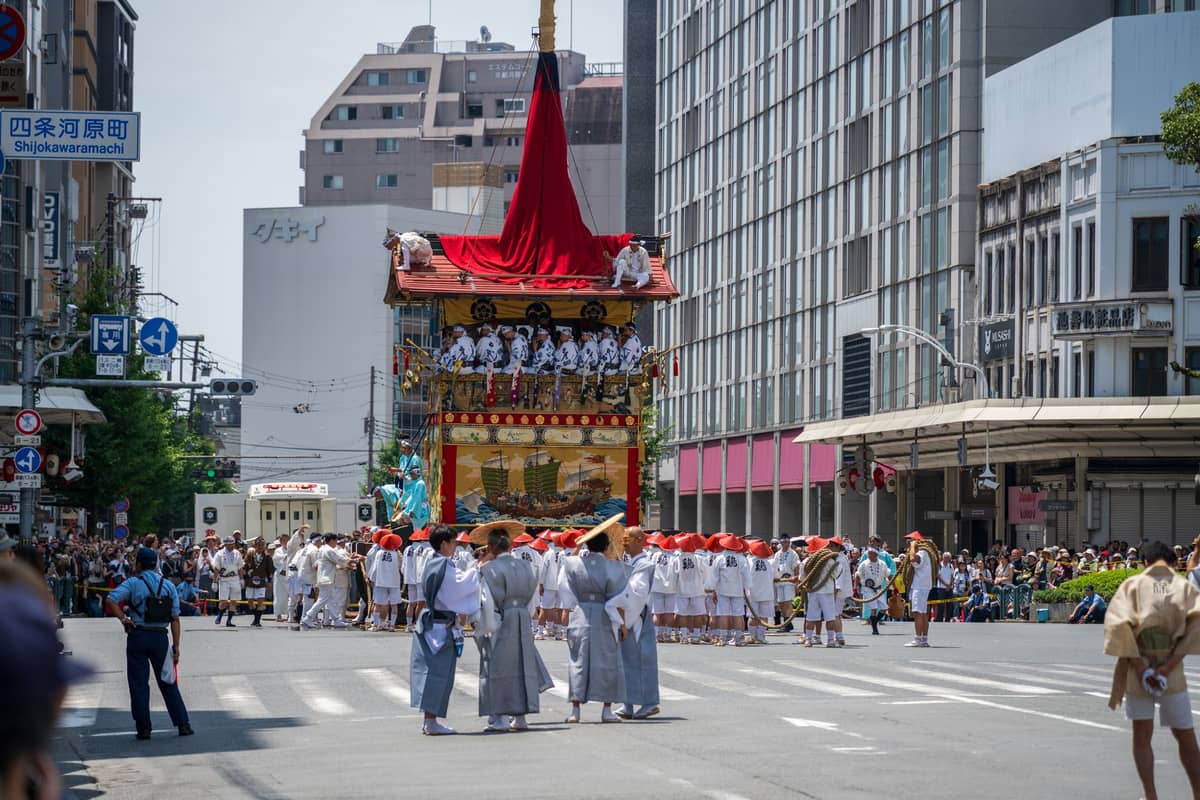
For the July 17 procession, the route runs roughly: Shijo-Karasuma east along Shijo → north on Kawaramachi → west on Oike → south toward Shinmachi. The procession begins near Shijo-Karasuma around 09:00. If you want a front-row spot along the main route without a paid seat, arrive by 07:30 to 08:00. By the time the lead float passes at 09:00, the sidewalks are already several people deep.
Paid grandstand-style seating is sold by some viewing area operators along the route, typically priced between ¥6,000 and ¥8,000 for standard seats and much higher for premium options. These fill up quickly. Check Kyoto's official tourism portal in May and June for availability each year. If you cannot secure a paid spot and want a clear sightline, the Oike-dori stretch between Karasuma and Kawaramachi is slightly less saturated than the Shijo-dori section and still catches the floats at full momentum. These fill up quickly. Check Kyoto's official tourism portal in May and June for availability each year. If you cannot secure a paid spot and want a clear sightline, the Oike-dori stretch between Karasuma and Kawaramachi is slightly less saturated than the Shijo-dori section and still catches the floats at full momentum.
- Arrive at your chosen roadside spot by 07:30 for the July 17 parade — 08:30 is already late for front positions.
- The Oike-dori section of the route is marginally less packed than Shijo-dori and still offers clear views of the full-height hoko floats.
- For the tsujimawashi (corner pivot) spectacle, position yourself at a major intersection: Shijo-Karasuma, Shijo-Kawaramachi, or Karasuma-Oike.
- The July 24 Ato Matsuri procession starts at Karasuma-Oike, not Shijo-Karasuma — arriving at the wrong starting point is a common mistake.
- Both processions are free to watch from the public roadside. You do not need any ticket to see the parades themselves.
- On Yoiyama evenings, enter the street festival zone from the northern or southern ends to avoid the worst bottlenecks at Shijo station.
⚠️ What to skip
Roads around Shijo and Karasuma close to vehicles on Yoiyama evenings (typically from around 18:00) and on parade mornings. Do not plan to drive or take taxis into the central district during these windows. Roads around Shijo and Karasuma close to vehicles on Yoiyama evenings (typically from around 18:00) and on parade mornings. Do not plan to drive or take taxis into the central district during these windows. Take the Hankyu line to Karasuma station or the subway Karasuma line to Shijo station, and walk in. Allow extra time — platform exits are crowded. Allow extra time — platform exits are crowded.
Saki vs. Ato Matsuri: Which Half Should You Attend?
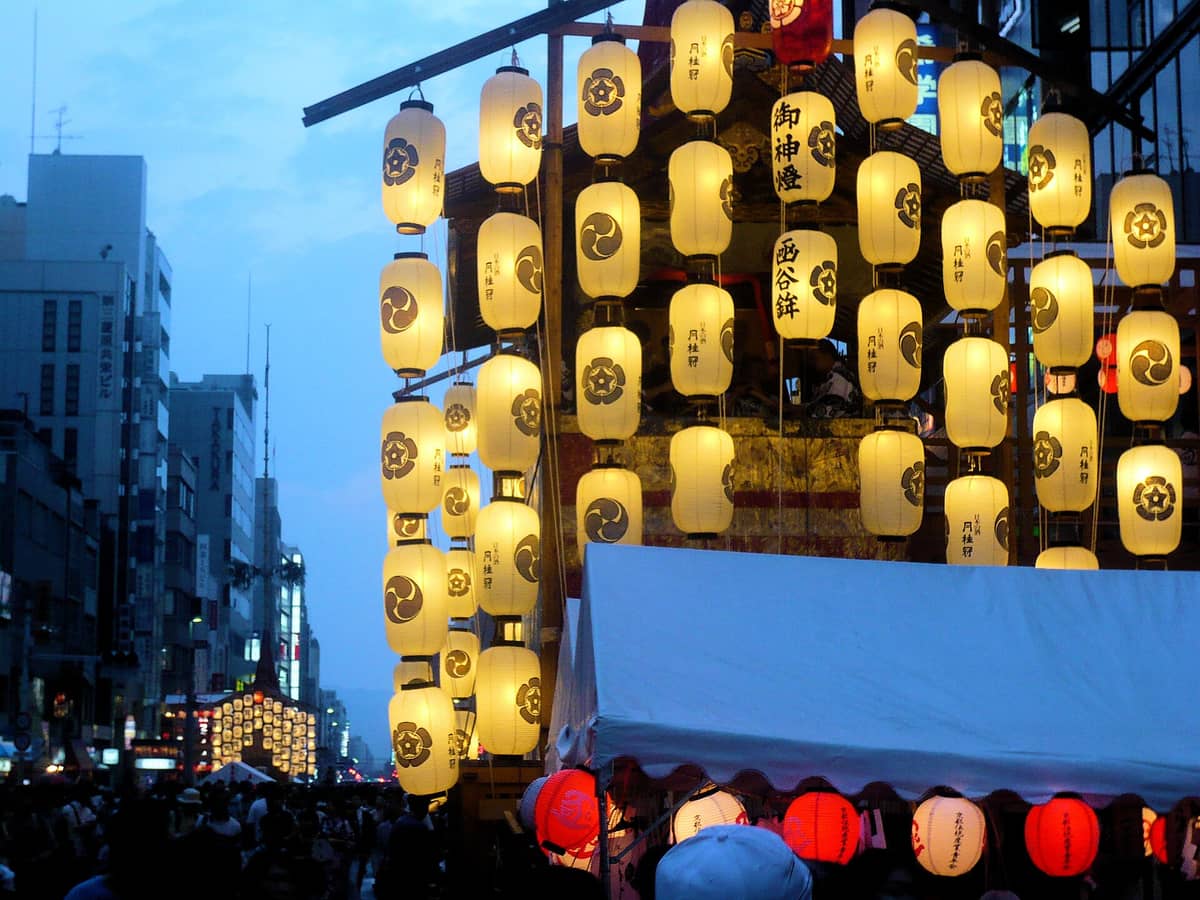
Most international visitors default to the Saki Matsuri because July 17 is the date that appears first in every article and guidebook. That concentration means the Yoiyama nights of July 14–16 and the July 17 parade are by far the most crowded moments of the entire festival year in Kyoto. If crowd avoidance is a priority, the Ato Matsuri is a serious alternative.
The Ato Matsuri features eleven floats including several that were restored and revived after 2014, ending a dormancy of over 150 years. The Ofune Hoko, a ship-shaped float, is one of the most visually distinctive in the entire festival and only appears in the Ato procession. The Yoiyama evenings of July 21–23 have food stalls, lantern-lit floats, and a festival atmosphere, but the street density is manageable compared to Saki Matsuri. Hotel rates in the week of July 20–24 also tend to be lower than the July 14–17 peak, though all of July is busy season in Kyoto.
If you are planning your trip around the festival and have not yet sorted accommodation, read thewhere to stay in Kyoto guideearly. Hotels within walking distance of the Shijo-Karasuma area book out months in advance for July. Staying near Kyoto Station and commuting by subway is a practical alternative — the Karasuma subway line connects directly.
Practical Logistics: Heat, Crowds, and Getting There
July is Kyoto's peak summer month. Temperatures regularly exceed 32°C with humidity that makes it feel closer to 38°C or above. The festival involves standing on sun-baked asphalt for extended periods, often in tightly packed crowds with limited shade. Heatstroke is a genuine risk. Carry at least one litre of water per person, wear a hat, apply sunscreen, and identify convenience stores (7-Eleven, Lawson, FamilyMart) along your route before the parade starts — they sell cold drinks, sports electrolyte drinks, cooling towels, and portable fans.
The central Kyoto grid where the festival takes place is best reached by public transit during the festival period. The Hankyu Kyoto Line serves Karasuma station directly near Shijo-dori. The Kyoto Municipal Subway Karasuma Line stops at Shijo station. Both are practical entry points. For broader context on navigating the city, theguide to getting around Kyotocovers IC card options, day passes, and bus versus subway tradeoffs.
Tipping is not practiced in Japan. If you buy food from a stall or purchase a float interior ticket, hand over the correct cash or pay by card where accepted — no tip expected or appropriate. Most festival food stalls are cash-only, so arrive with yen in small denominations. Nearby 7-Eleven ATMs accept international cards and are your most reliable option for cash withdrawal.
- Wear light, breathable clothing. Yukata (cotton summer kimono) are popular and culturally appropriate for Yoiyama evenings — rental shops in Gion offer same-day rentals.
- Festival food stalls (yatai) are concentrated during Saki Matsuri Yoiyama (July 14–16), not spread evenly across all of July.
- Convenience stores near Shijo and Karasuma sell chilled bottled water, onigiri, and packaged snacks — useful if stall queues are long.
- Public toilets are available near Yasaka Shrine and in the covered shopping arcades nearby, but queues grow long on peak evenings.
- Photography is unrestricted in public areas. Avoid photographing individuals in private moments or entering float restricted areas without permission.
The Gion Matsuri is the single busiest event in Kyoto's calendar, which means the surrounding attractions also peak in July. If you plan to combine festival visits with temple touring, read the3-day Kyoto itineraryto understand how to structure days around early morning temple visits before the midday heat and afternoon crowds take over. Sites likeKiyomizu-dera and Fushimi Inari Taishaare at their busiest in July — visit before 08:00 if crowds are a concern.
💡 Local tip
Wearing a yukata to Yoiyama is not a tourist gimmick — it's genuinely what many local Kyotoites do on these evenings. Kimono rental shops in the Gion area offer yukata with obi dressing for around ¥2,000–¥5,000 for an evening. Book ahead if you want this for July 15 or 16, as shops fill their slots fast.
Beyond the Parades: What Else Happens During Gion Matsuri
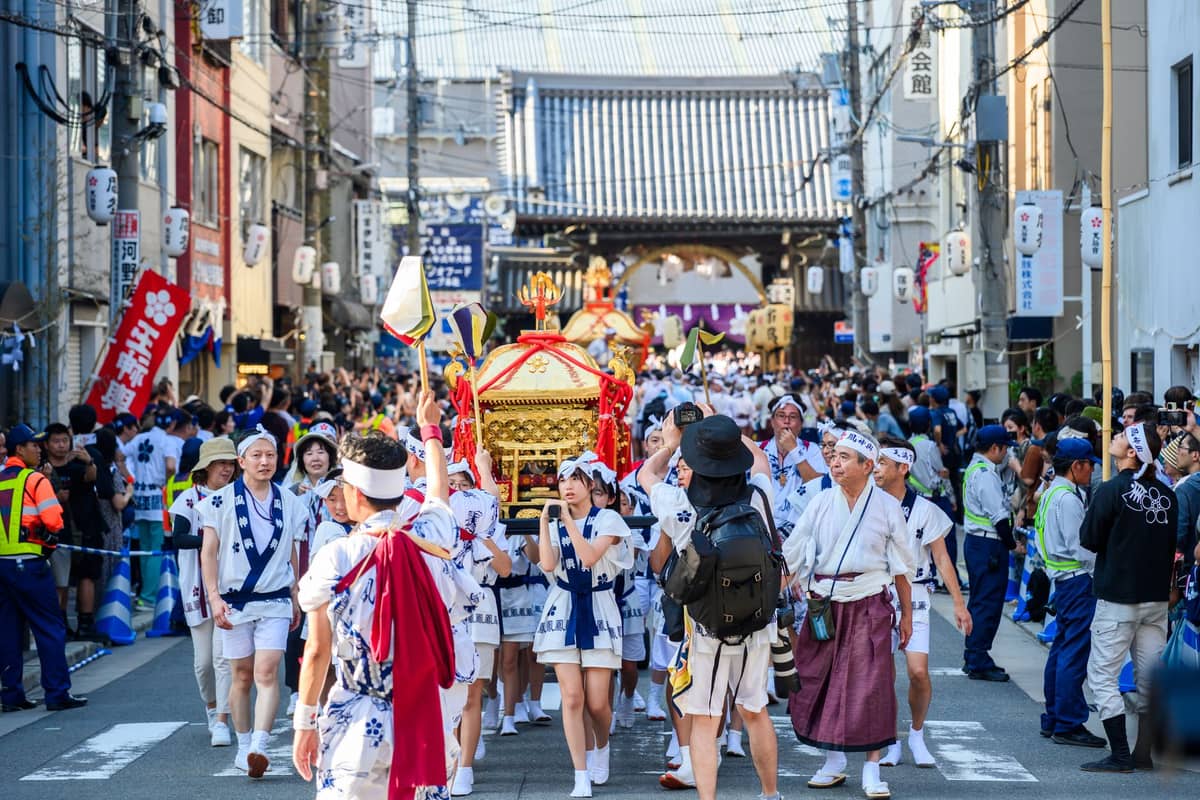
The festival month offers more than parades and Yoiyama nights. Yasaka Shrine holds daily rituals throughout July, including the Mikoshi procession on July 17 in which portable shrines are carried through the streets in a separate evening procession following the daytime float parade. The shrine compound itself — connected to theHanamikoji Streetand the broader Higashiyama walking district — is decorated and open throughout the month.
For travelers who want the cultural depth of the festival without the peak-crowd intensity, arriving in early July (July 1–10) gives access to the opening shrine rituals and float construction in a relatively calm environment. The Nishiki Market area near Shijo is also particularly lively during the festival month, with shops stocking seasonal goods and traditional sweets associated with the festival. TheNishiki Market makes a good base for grazing between festival events.
FAQ
Is Gion Matsuri free to attend?
Street viewing of both Yamaboko Junko processions (July 17 and July 24) is completely free. No ticket is required to stand along the route. Some floats during Yoiyama evenings sell paid interior access tickets (around ¥500–¥1,000), sold at the float on the night. Paid grandstand seating is available at some locations along the parade route, typically ¥6,000–¥8,000 for standard seats and much more for premium seats. The Yoiyama evening street festivals themselves are also free to walk through.
What is the difference between Saki Matsuri and Ato Matsuri?
Gion Matsuri splits into two halves. The Saki Matsuri (first festival) runs July 14–17 and features around 23 floats in its procession on July 17. The Ato Matsuri (latter festival) runs July 21–24 and features 11 floats in its procession on July 24. Each has its own Yoiyama evenings. The Ato Matsuri is significantly less crowded and includes historically revived floats not seen for over 150 years before 2014.
How crowded does Gion Matsuri get and when is it worst?
The evenings of July 15 and 16 (Saki Matsuri Yoiyama) are the most congested moments, with very large crowds in the downtown streets. The July 17 parade morning is also extremely crowded. The Ato Matsuri events (July 21–24) draw substantially smaller crowds. If you are sensitive to extreme crowds, target the Ato Matsuri or arrive very early (before 08:00) for the July 17 parade to secure a roadside spot before the worst congestion builds.
What should I wear to Gion Matsuri?
Light, breathable clothing is essential — July temperatures regularly exceed 32°C with high humidity. Many visitors, including locals, wear yukata (lightweight cotton kimono) for the Yoiyama evenings, which is culturally appropriate and widely appreciated. Avoid heavy materials, black clothing that absorbs heat, and footwear that is difficult to walk long distances in. A portable fan, hat, and sunscreen are practical additions.
Can I visit other Kyoto attractions during Gion Matsuri week?
Yes, but expect elevated crowds citywide. Temple and shrine sites around Higashiyama, Arashiyama, and Fushimi are busier than usual in July. The practical solution is early morning visits — most major sites like Kiyomizu-dera and Fushimi Inari are dramatically quieter before 08:30. Afternoons are best reserved for the festival itself. Check the full things-to-do landscape before building your schedule.