Kiyomizu-dera: Kyoto's Hillside Temple Worth the Climb
Kiyomizu-dera is a UNESCO World Heritage Buddhist temple perched on the forested slopes of Higashiyama in eastern Kyoto. Its vast wooden stage, supported by 139 pillars without a single nail, overlooks a valley of maples and cedars that shifts dramatically with the seasons. This guide covers exactly what to expect, when to go, and how to make the most of a visit.
Quick Facts
- Location
- 1-294 Kiyomizu, Higashiyama-ku, Kyoto 605-0862
- Getting There
- Kyoto City Bus to Gojo-zaka or Kiyomizu-michi stop, then 10 min uphill walk
- Time Needed
- 1.5 to 2.5 hours including the approach streets
- Cost
- ¥500 adults / ¥200 elementary and junior high school students (verify current pricing before visiting)
- Best for
- History lovers, architecture enthusiasts, autumn foliage, photography
- Official website
- www.kiyomizudera.or.jp/en
What Kiyomizu-dera Actually Is
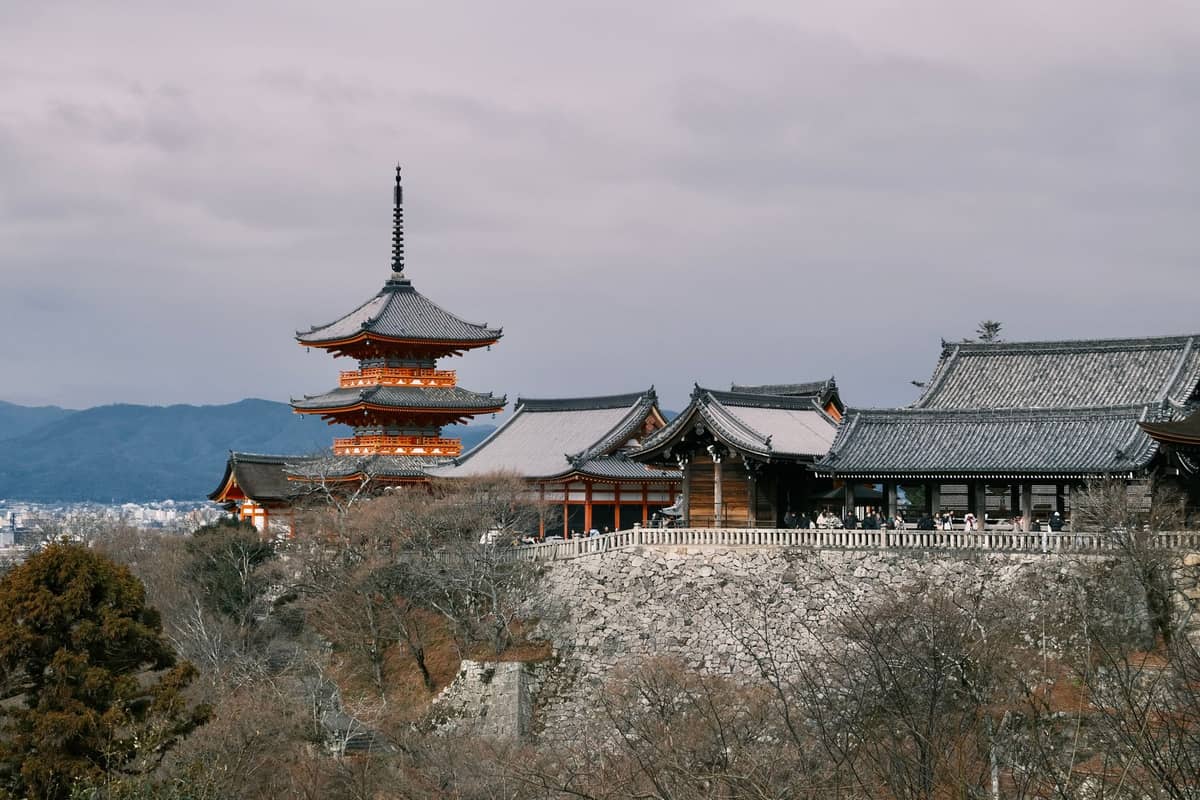
Kiyomizu-dera, formally named Otowasan Kiyomizu-dera (音羽山 清水寺), is a major Buddhist temple that has occupied this hillside in Kyoto's Higashiyama district since 778, for over twelve centuries. Its current main hall dates to 1633, rebuilt under the patronage of Tokugawa Iemitsu. The complex is a designated component of the Historic Monuments of Ancient Kyoto, a UNESCO World Heritage Site, and is one of the most visited religious sites in Japan.
The defining feature is the temple's wooden stage (butai), a broad veranda that projects 13 meters out from the main hall over the hillside. It is supported by 139 zelkova wood pillars assembled using a traditional interlocking technique with no nails. The phrase 'jumping off the stage at Kiyomizu' is a Japanese idiom equivalent to 'taking a leap of faith', which tells you something about how deeply this structure is embedded in the national consciousness.
ℹ️ Good to know
Opening hours: daily from 06:00. Standard closing is 18:00 most of the year, 18:30 in July and August. During special spring, summer, and autumn illumination events, the grounds stay open until around 21:00 (last entry 21:00). Verify exact event dates at kiyomizudera.or.jp before visiting.
The Approach: Ninenzaka and Sannenzaka
Getting to Kiyomizu-dera is half the experience. From the Gojo-zaka or Kiyomizu-michi bus stops, the route winds uphill through two consecutive stone-paved lanes, Ninenzaka and Sannenzaka, lined with wooden shophouses selling ceramics, matcha sweets, pickles, and tourist wares. The cobblestones are uneven and slick when wet, so footwear matters more than you might expect.
These streets are genuinely atmospheric in the early morning, before 08:00, when the shutters are still down and the stone lanes are quiet except for the sound of temple bells and distant crows. By 10:00 on a weekend, the same streets are thick with visitors. If you are also planning to explore the surroundingHigashiyama districtmore broadly, starting at Kiyomizu-dera early and walking downhill toward Gion gives you the best of both worlds.
The stone-paved stretch of Ninenzaka and Sannenzakais worth treating as a destination in its own right rather than just a transit corridor. Several small shops here stock Kyoto-style ceramics (kiyomizu-yaki) specific to this neighborhood, and the architecture of the surrounding machiya townhouses has been carefully preserved.
⚠️ What to skip
The entire approach from the bus stop is uphill on uneven stone paving. Visitors using wheelchairs or with significant mobility limitations should be aware that the route to the main hall has no fully accessible alternative path. Contact the temple directly to confirm current accommodation options.
Tickets & tours
Hand-picked options from our booking partner. Prices are indicative; availability and final rates are confirmed when you complete your booking.
Kyoto Coast, Amanohashidate and Ine Bay 1-Day Trip from Osaka or Kyoto
From 46 €Instant confirmationFree cancellationKyoto Sanzen-in, Arashiyama and Bamboo Grove Full Day Tour
From 47 €Instant confirmationFree cancellationKyoto Arashiyama insider walking tour
From 66 €Instant confirmationFree cancellationMatcha green tea tour in Kyoto's Uji Market
From 130 €Instant confirmationFree cancellation
Inside the Complex: What You Are Looking At
After paying admission at the main gate (Nio-mon), the path leads through a series of structures including the West Gate and three-story pagoda before reaching the main hall. Each gate and structure is painted in layers of vermillion lacquer that deepens in color toward late afternoon, when the low angle of the sun catches the wood grain underneath.
The main hall's wooden stage is the focal point. Standing on it, you are looking out over a canopy of Japanese maples, cedars, and cherry trees dropping away into the valley below. In mid-November, when the maples peak in color, this view becomes one of the most striking in Kyoto, a dense wave of scarlet and orange. In late March and early April, cherry blossoms fill the same frame. Neither season is quiet, but neither is the view diminished by the crowds on the stage beside you.
Below the main hall, the Otowa waterfall feeds three channels of water, each said to grant a different blessing: longevity, success in studies, and fortune in love. Visitors queue to catch the water with long-handled cups. The queue moves slowly but steadily. Drinking from more than one stream is considered greedy in local tradition, a detail the temple's own materials mention and one that says a great deal about the cultural etiquette embedded here.
To the north of the main hall, the Jishu Shrine sits within the temple grounds and is dedicated to Okuninushi-no-Mikoto, a deity associated with love and matchmaking. It draws a younger crowd and has a distinctly different atmosphere from the main temple precincts. For broader context on Kyoto's shrine culture, theguide to Kyoto's best shrines covers the range of what the city offers.
How the Experience Changes by Time of Day and Season
Kiyomizu-dera opens at 06:00, and the hour between opening and 07:30 is categorically different from the rest of the day. The incense smoke from early morning prayers drifts through cool air. A handful of worshippers move quietly between the halls. The wooden stage has almost no one on it, and the valley below is still catching the first light through the tree canopy. If you have the option, this is when to come.
By 09:00 to 10:00 the approach streets begin filling, and by late morning on weekends in spring or autumn the main hall can feel more like a busy viewpoint than a working temple. This is not a reason to avoid the visit, but it does change what you experience. Midweek visits in shoulder season, late September or early November, are significantly calmer than weekend visits during peak cherry blossom or autumn foliage weeks.
The evening illumination events in spring and autumn are worth considering separately. The grounds are lit after dark, the crowds are different in character (more locals, fewer tour groups), and the view from the wooden stage over illuminated trees is genuinely unlike the daytime version. Check the temple's official site for exact event dates, as they vary annually. For a broader seasonal overview of what Kyoto looks like across the year, theguide to the best time to visit Kyoto gives a clear seasonal breakdown.
Photography: What Works and What Doesn't
The most reproduced image of Kiyomizu-dera is the main hall shot from the northern hillside path, where the full elevation of the wooden stage and its pillar structure is visible against the tree-covered valley. This viewpoint is reached by continuing along the path past the main hall rather than doubling back. Early morning light hits the hall's eastern facade well; late afternoon gives warmer tones but means shooting into the light from this angle.
Inside the main hall, photography is generally permitted in the outer areas but may be restricted in specific inner sanctum spaces. Watch for signage and follow any posted restrictions without waiting to be asked. The Otowa waterfall area is photogenic but tight, and the queue of visitors drinking from the cups is difficult to avoid including in any shot taken from ground level.
💡 Local tip
For the classic full-width shot of the wooden stage, position yourself on the covered walkway of the Okunoin sub-hall to the north. This is the angle seen on most official images and works best in the 30 minutes after sunrise or in the last hour before closing.
Practical Details: Getting There, Costs, and Context
From Kyoto Station, take Kyoto City Bus route 100 or 206 to Gojo-zaka stop, then walk approximately 10 minutes uphill. Alternatively, the Kiyomizu-michi stop, also served by Kyoto City Bus routes, is slightly closer to the upper approach. Taxis can drop you at the bottom of the approach streets but cannot drive up the pedestrian lanes. There is no train station within walking distance of the temple.
Admission to the main hall precincts is ¥500 for adults and ¥200 for elementary and junior high school students as of 2026. The approach streets, outer garden areas, and views from outside the ticketed zone are free. Budget around 1.5 to 2.5 hours if you also intend to walk the Ninenzaka and Sannenzaka streets.
Kiyomizu-dera sits at the northern end of a walkable arc through Higashiyama that includesYasaka Pagoda and, further north, Hanamikoji Streetin Gion. Walking this route from south to north, finishing near Maruyama Park, gives a coherent half-day through some of Kyoto's most intact historic urban fabric.
Dress conservatively when visiting the temple halls: covered shoulders and knees are appropriate. Tipping is not customary anywhere in Japan. The walk involves elevation gain; wear shoes with grip, particularly in wet weather when the stone paths become genuinely slippery.
Honest Assessment: Who This Is For and Who Might Want to Skip It
Kiyomizu-dera is not overhyped in the sense that the physical structure genuinely delivers. The wooden stage is architecturally remarkable, the hilltop position creates a real panoramic view, and the complex is historically significant in ways that are legible even to visitors with no background in Japanese Buddhism.
It is, however, extremely busy. Anyone who visited ten years ago and found it crowded will find it more so now. Visitors seeking a contemplative, uncrowded temple experience should consider other Higashiyama options or plan a 06:00 arrival. Visitors with mobility limitations will find the approach challenging and should research alternatives before committing to the route. People who dislike queuing will want to avoid the Otowa waterfall area during peak hours.
For a calmer alternative with a similarly forested hillside setting,Nanzen-jiin the northern part of Higashiyama offers considerable architectural interest with noticeably lighter foot traffic outside peak season.
Insider Tips
- Arrive at 06:00 when the gates open. The first 90 minutes are dramatically quieter than any other part of the day, and the quality of light on the wooden stage in early morning is genuinely different from midday.
- The northern hillside path that loops past Okunoin sub-hall and back around is used by fewer visitors than the main direct route, and it gives the best structural view of the stage and its supporting pillars. Follow the path past the main hall rather than retracing your steps.
- During autumn illumination events (usually mid-November), the combination of lit maples and the wooden stage after dark attracts a noticeably different crowd from the daytime rush. Lines form, but the experience is distinct enough to justify a separate visit if you are in Kyoto during this period.
- The approach streets sell Kyoto ceramics (kiyomizu-yaki) at a range of price points. Shops closer to the bus stop tend to carry more mass-market items; the smaller studios higher up the lane stock more distinctive work, some of it made by local artisans.
- If you are visiting in summer (June to August), start before 07:00. By 09:00 the humidity is already significant and the stone-paved approach streets in full sun feel considerably hotter than the thermometer suggests.
Who Is Kiyomizu-dera For?
- First-time visitors to Kyoto who want to understand what makes the city's temple architecture distinctive
- Autumn foliage seekers: the maple canopy visible from the wooden stage is one of Kyoto's best seasonal views
- Architecture and craft enthusiasts drawn to the nail-free wooden stage construction and kiyomizu-yaki ceramics tradition
- Photographers working early mornings or during evening illumination events
- Travelers combining a half-day Higashiyama walk with nearby Gion and Maruyama Park
Nearby Attractions
Other things to see while in Higashiyama:
- Ishibe-koji Lane
Tucked behind Kodai-ji temple in the Higashiyama district, Ishibe-koji Lane is a narrow, stone-paved passage lined with traditional machiya townhouses, lantern-lit inns, and discreet restaurants. Free to walk at any hour, it offers a rare glimpse of old Kyoto that the bigger sightseeing streets rarely deliver.
- Kyoto National Museum
The Kyoto National Museum holds one of Japan's most significant collections of pre-modern Japanese and East Asian art, spanning painting, sculpture, ceramics, textiles, and calligraphy. Housed in a landmark Meiji-era building beside Sanjusangen-do, it rewards slow, careful visitors far more than rushed ones.
- Ninenzaka & Sannenzaka
Ninenzaka and Sannenzaka are two interconnected stone-paved lanes in Higashiyama that form part of the historic approach to Kiyomizu-dera. Free to walk and open around the clock, they offer a rare glimpse of preserved historic streetscape amid traditional teahouses, pottery shops, and matcha cafes.
- Sanjusangen-do Temple
Sanjusangen-do is a 13th-century Buddhist temple hall in Higashiyama, Kyoto, stretching 120 meters and housing 1,001 statues of Kannon. It is one of the most visually overwhelming religious spaces in Japan, and one of the most accessible. Here is everything you need to know before you visit.