Sanjusangen-do Temple: Kyoto's Hall of a Thousand Kannon
Sanjusangen-do is a 13th-century Buddhist temple hall in Higashiyama, Kyoto, stretching 120 meters and housing 1,001 statues of Kannon. It is one of the most visually overwhelming religious spaces in Japan, and one of the most accessible. Here is everything you need to know before you visit.
Quick Facts
- Location
- 657 Sanjusangendo Mawaricho, Higashiyama-ku, Kyoto 605-0941
- Getting There
- Shichijo Station (Keihan Line), 5–10 min walk; or City Bus to Hakubutsukan-Sanjusangendo-mae stop
- Time Needed
- 45–90 minutes
- Cost
- Adults ¥600 / High school & junior high ¥400 / Elementary ¥300 / Under elementary age free
- Best for
- Buddhist art, Japanese history, architecture, slow travel, rainy-day visits
- Official website
- www.sanjusangendo.jp
What Sanjusangen-do Actually Is
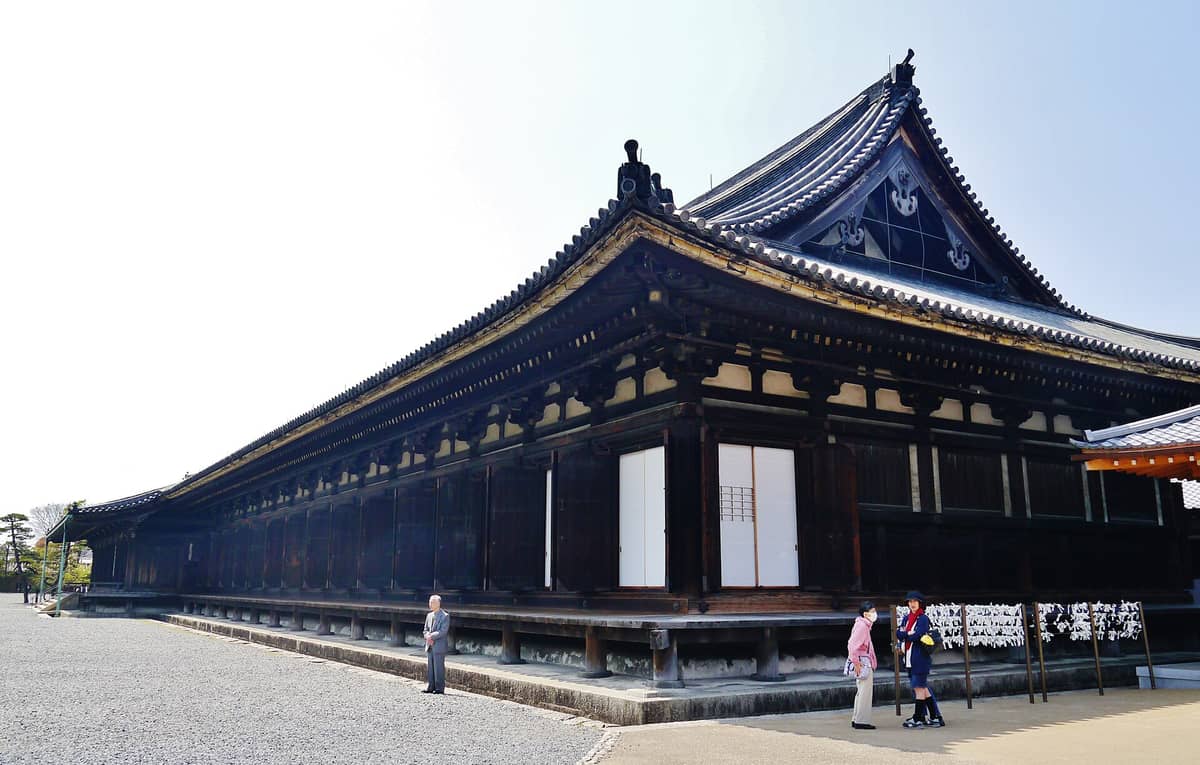
Sanjusangen-do, formally known as Rengeō-in (蓮華王院), is a Buddhist temple hall in Kyoto's Higashiyama district that has been stopping visitors cold since the 13th century. The name itself reflects the hall's thirty-three bays, referring to the structural intervals between the columns that give the hall its extraordinary length of roughly 120 meters. It is one of the longest wooden structures in Japan.
Inside that hall stand 1,001 statues of Kannon, the Buddhist bodhisattva of compassion. One large central seated figure, carved by the master sculptor Tankei in the 13th century, is flanked by 500 standing Kannon on each side, arranged in ten rising rows. Most statues are gilded. Every face is subtly different. The cumulative effect, particularly when your eyes adjust to the dim interior light, is unlike anything else in Japan.
ℹ️ Good to know
Opening hours vary by season: 8:30–17:00 (April 1 to November 15) and 9:00–16:00 (November 16 through March 31), with last entry 30 minutes before closing. Verify current hours at sanjusangendo.jp before your visit, as times can shift slightly.
A Brief History Worth Knowing
The original hall was commissioned by the retired Emperor Go-Shirakawa and completed in 1164, during the Heian period. It burned down in 1249, and the current structure was rebuilt in 1266 during the Kamakura period. That rebuilt hall, now over 750 years old, is what you are visiting today. The fact that it has survived earthquakes, typhoons, and the many fires that ravaged Kyoto over the centuries is itself remarkable.
The statues inside were not all made at once. Some date from the original 12th-century construction and survived the 1249 fire; others were carved in the decades following the 1266 rebuilding. Among the 1,001 Kannon figures, all have been designated as National Treasures of Japan. The 28 guardian deities (Nijūhachi Busshū) stationed at the flanks of the hall are equally significant works of Kamakura-period sculpture, each with its own pose and expression.
The temple sits within Higashiyama, the eastern foothills district that contains some of Kyoto's oldest preserved streets and religious sites. Unlike the heavily photographed lanes ofNinenzaka and Sannenzakato the north, the area around Sanjusangen-do feels quieter and more residential, which changes the approach considerably.
Tickets & tours
Hand-picked options from our booking partner. Prices are indicative; availability and final rates are confirmed when you complete your booking.
Kyoto Coast, Amanohashidate and Ine Bay 1-Day Trip from Osaka or Kyoto
From 46 €Instant confirmationFree cancellationKyoto Sanzen-in, Arashiyama and Bamboo Grove Full Day Tour
From 47 €Instant confirmationFree cancellationKyoto Arashiyama insider walking tour
From 66 €Instant confirmationFree cancellationMatcha green tea tour in Kyoto's Uji Market
From 130 €Instant confirmationFree cancellation
What the Visit Actually Feels Like
You approach along a broad outer path with a long wooden fence running the length of the building to your right. The exterior is unassuming, almost understated, a long low structure of dark timber with a gently curved roof. Nothing outside prepares you for the interior.
After removing your shoes at the entrance (sock feet on polished wooden floors, which can be cold in winter), you enter a corridor that runs the full length of the hall. The statues begin immediately. The smell inside is faint incense overlaid with aged wood and cool stone. The light is deliberately low. As you walk the length of the hall, the gold of 1,001 figures catches the ambient light from narrow windows. The sound is near-silence, broken only by soft footsteps and the occasional whispered conversation.
Most visitors slow to a deliberate pace within the first few meters. The individual faces of the standing Kannon statues each have subtly different expressions, different arrangements of their many arms, different secondary figures emerging from the headdresses. Looking for a familiar face is an old Japanese tradition tied to the belief that one of the 1,001 faces resembles a deceased loved one. Whether or not you engage with that tradition, the act of looking carefully at individual statues rather than the whole gives the visit a meditative quality that most Kyoto temples do not offer.
💡 Local tip
Photography inside the main hall is not permitted. Keep your camera in your bag once you pass the entrance, and let yourself simply look. The outdoor grounds and exterior of the building can be photographed freely.
How the Experience Changes by Time of Day
Early morning, particularly on weekdays, is when the interior feels most appropriately contemplative. The low morning light filtering through the narrow windows gives the gold statues a warmer quality than midday, and the hall has a natural quiet that group tours disrupt. Arriving within the first 30 minutes of opening is the single most effective strategy for a calmer experience.
By mid-morning, tour groups arrive in earnest. The hall accommodates them reasonably well given its length, but the experience is notably more crowded between around 10:00 and 13:00. This is not a reason to avoid the temple, it is simply a different kind of visit. Afternoon arrivals, particularly from 14:00 onward, see a gradual thinning of crowds as tour buses move on.
On rainy days, Sanjusangen-do is an excellent choice. The interior is entirely sheltered, the outdoor grounds drain well, and crowds are often lighter than on clear days when visitors concentrate on scenic outdoor temples. If you are in Kyoto during the June rainy season or on a grey November day, this is one of the best places to be.
Practical Walkthrough: Getting There and Getting In
The most straightforward approach is by Keihan Line to Shichijo Station, roughly a 6-minute walk east. The route is flat and well-signed. Alternatively, Kyoto City Bus stops directly outside at the Hakubutsukan-Sanjusangendo-mae stop, making it easy to combine with other southern Higashiyama attractions including the Kyoto National Museum, which is directly across the road.
Admission is ¥600 for adults, ¥400 for junior and high school students, and ¥300 for elementary school students. Tickets are purchased at a small booth near the entrance. There is no online booking system; walk-up purchase is standard. If you are planning a broader temple tour, check theKyoto budget guide for strategies on managing daily costs.
The temple is open every day of the year with no regular closures. The grounds include a long covered outer corridor along the west side of the building, which is where the famous Tōshiya archery targets are set up during the annual Ōmato Taikai ceremony in mid-January. At other times of year this space is quiet and slightly melancholy, but worth walking.
💡 Local tip
Wear socks. You will remove your shoes at the entrance and the floors inside are polished wood that can be cold in winter and slippery in socks. Shoes are placed in a bag you carry with you, so bulky footwear is slightly inconvenient.
Accessibility
Sanjusangen-do is notably accessible by Kyoto temple standards. The main hall route has been adapted for wheelchair users, and wheelchairs are available to borrow at the entrance at no additional charge. For visitors using their own wheelchairs, staff can assist as needed. The outdoor approach path is flat and paved.
Visitors with limited mobility who struggle with stairs at other major Kyoto temples, such as Kiyomizu-dera, often find Sanjusangen-do a more practical and less physically demanding alternative with comparable cultural significance.
Who Should Consider Skipping This
Visitors who come primarily for garden landscapes or natural scenery will find little to hold their attention here. The grounds are simple and compact. If your Kyoto trip is oriented around gardens and outdoor spaces,Ryoan-ji or the Philosopher's Path may satisfy you more completely.
Those who struggle in low-light indoor spaces or find repetitive visual imagery overwhelming may find the main hall disorienting rather than compelling. The hall is also fairly long to walk in one continuous direction, which can be tiring for visitors with significant mobility limitations, despite the accessibility provisions. Finally, children who are bored by religious sculpture and cannot photograph anything may lose interest quickly.
Pairing Sanjusangen-do with Nearby Attractions
The Kyoto National Museumis directly across the street and makes an obvious pairing for a half-day in southern Higashiyama. The museum houses a significant permanent collection of Buddhist art and frequently stages major temporary exhibitions from its national collection.
For a full-day itinerary, the walk north from Sanjusangen-do through Higashiyama towardKiyomizu-deratakes around 25 minutes on foot and passes several smaller shrines and machiya streets. The contrast between Sanjusangen-do's interior intensity and Kiyomizu-dera's expansive views over the city makes them strong complements. For practical timing advice across the whole district, the3-day Kyoto itinerary has a worked example.
Insider Tips
- The 28 guardian deity statues (Nijūhachi Busshū) flanking the Kannon figures are individually extraordinary works of Kamakura-period sculpture and are often overlooked by visitors fixated on the rows of Kannon. Spend a few minutes with each guardian before moving on.
- The Tōshiya long-range archery competition is held at the temple every year in mid-January. If your visit coincides with this period, check whether the ceremony is open to spectators — it is a genuinely rare experience and transforms the outer corridor completely.
- The outer western corridor where the archery takes place is generally free to walk even without entering the paid hall, and gives a good sense of the building's scale. Worth doing before you buy your ticket if you want to orient yourself., and gives a good sense of the building's scale.
- Sanjusangen-do is one of the better rainy-day options in all of Kyoto. The interior visit takes 45–60 minutes and the approach from the bus stop is very brief. Keep it in reserve for grey or wet days when outdoor temples are less rewarding. and the approach from the bus stop is very brief. Keep it in reserve for grey or wet days when outdoor temples are less rewarding.
- The temple's official website is primarily in Japanese, but the admission and hours information is straightforward to read via a browser translation tool. Check it the morning of your visit if you are visiting in November or March, when seasonal hour changes occur.
Who Is Sanjusangen-do Temple For?
- First-time visitors to Kyoto who want to understand the scale of Japanese Buddhist art in one location
- Travelers interested in Kamakura-period sculpture and National Treasure-designated works
- Visitors with mobility limitations looking for a major cultural site with strong wheelchair accessibility
- Rainy-day itinerary planning when outdoor temples lose their appeal
- Anyone who wants a quieter, less selfie-focused alternative to Kyoto's most photographed outdoor attractions
Nearby Attractions
Other things to see while in Higashiyama:
- Ishibe-koji Lane
Tucked behind Kodai-ji temple in the Higashiyama district, Ishibe-koji Lane is a narrow, stone-paved passage lined with traditional machiya townhouses, lantern-lit inns, and discreet restaurants. Free to walk at any hour, it offers a rare glimpse of old Kyoto that the bigger sightseeing streets rarely deliver.
- Kiyomizu-dera
Kiyomizu-dera is a UNESCO World Heritage Buddhist temple perched on the forested slopes of Higashiyama in eastern Kyoto. Its vast wooden stage, supported by 139 pillars without a single nail, overlooks a valley of maples and cedars that shifts dramatically with the seasons. This guide covers exactly what to expect, when to go, and how to make the most of a visit.
- Kyoto National Museum
The Kyoto National Museum holds one of Japan's most significant collections of pre-modern Japanese and East Asian art, spanning painting, sculpture, ceramics, textiles, and calligraphy. Housed in a landmark Meiji-era building beside Sanjusangen-do, it rewards slow, careful visitors far more than rushed ones.
- Ninenzaka & Sannenzaka
Ninenzaka and Sannenzaka are two interconnected stone-paved lanes in Higashiyama that form part of the historic approach to Kiyomizu-dera. Free to walk and open around the clock, they offer a rare glimpse of preserved historic streetscape amid traditional teahouses, pottery shops, and matcha cafes.