Higashiyama is Kyoto's most intact historic district, spreading along the lower slopes of the eastern mountains between the Kamo River and the forested ridgeline. Its stone-paved lanes connect a continuous run of temples, shrines, and traditional wooden machiya townhouses that few other neighborhoods in Japan can match.
Higashiyama is where Kyoto looks most like the city people imagine before they arrive. Stone-paved lanes climb gently between preserved wooden shopfronts, five-story pagodas frame the skyline, and the forest starts where the last temple garden ends. It is also one of the most visited stretches of city in all of Japan, which shapes everything about when and how you should explore it.
Orientation
Higashiyama-ku is the administrative ward that covers Kyoto's entire eastern edge, running roughly from Sanjō-dori in the north down to Jūjō-dori in the south. In practice, when travelers talk about Higashiyama, they almost always mean the Southern Higashiyama sightseeing corridor: a roughly 2.5-kilometer strip that runs along the base of the hills from Shichijō-dori in the south to Yasaka Shrine at the top of Shijō-dori in the north.
The Kamo River marks the western boundary. Cross one of its bridges heading east and you immediately start climbing, even if gently. The topography explains the neighborhood's character: the hills pressed the city's historic temple builders up against the mountain slopes, and the narrow lanes that developed between them have never been widened for cars. That is why this area still feels like old Kyoto even after a century of modernization elsewhere.
Higashiyama sits directly east of Gion, Kyoto's traditional entertainment district. The two areas bleed into each other around Yasaka Shrine and along Hanamikoji Street. To the north, the hills continue toward Nanzen-ji and the Philosopher's Path area. To the south, the district meets the Kyoto Station area near Tōfuku-ji. Understanding this geography matters: a single long walk can connect Higashiyama's temple lane all the way through Gion and along the Kamo River without doubling back.
Character & Atmosphere
Arrive before 8am and Higashiyama reveals what it actually is beneath the crowds: a quiet hillside neighborhood where shopkeepers sweep their doorsteps, temple priests rake gravel gardens, and the smell of incense drifts down through the cedar trees above Kiyomizu-dera. The stone lanes of Ninenzaka and Sannenzaka are empty enough at this hour to photograph without other tourists in the frame. The light at dawn comes across the hills at a low angle and catches the texture of old roof tiles in a way that no afternoon visit replicates.
By mid-morning, the character shifts entirely. Tour buses arrive at the main Kiyomizu-michi bus stop, souvenir shops on Matsubara-dori raise their shutters, and the stone lanes fill with a moving river of visitors. From around 10am to 5pm, Southern Higashiyama is among the most crowded streets in Kyoto. This is not a complaint so much as a fact to plan around. The crowds are part of a long tradition: this route has been a pilgrimage path for centuries, and the shops selling pickles, pottery, and green tea sweets are there because people have been walking past them for generations.
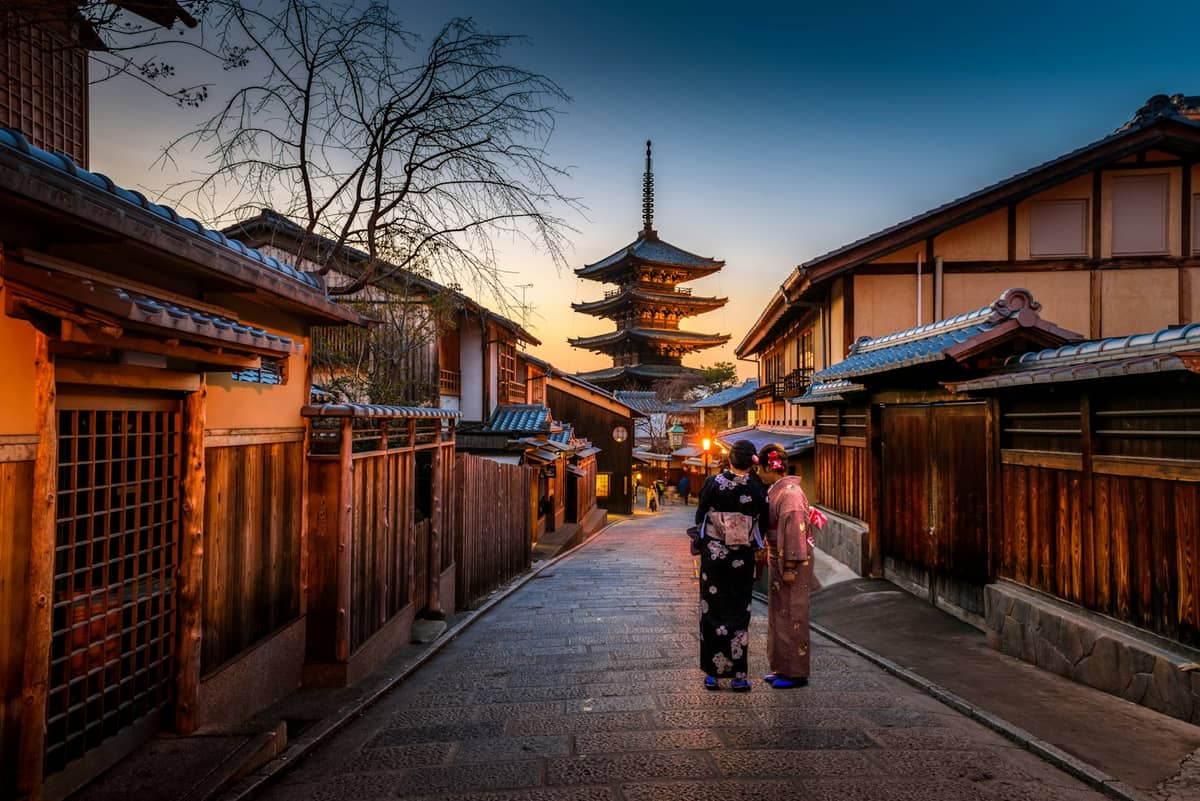
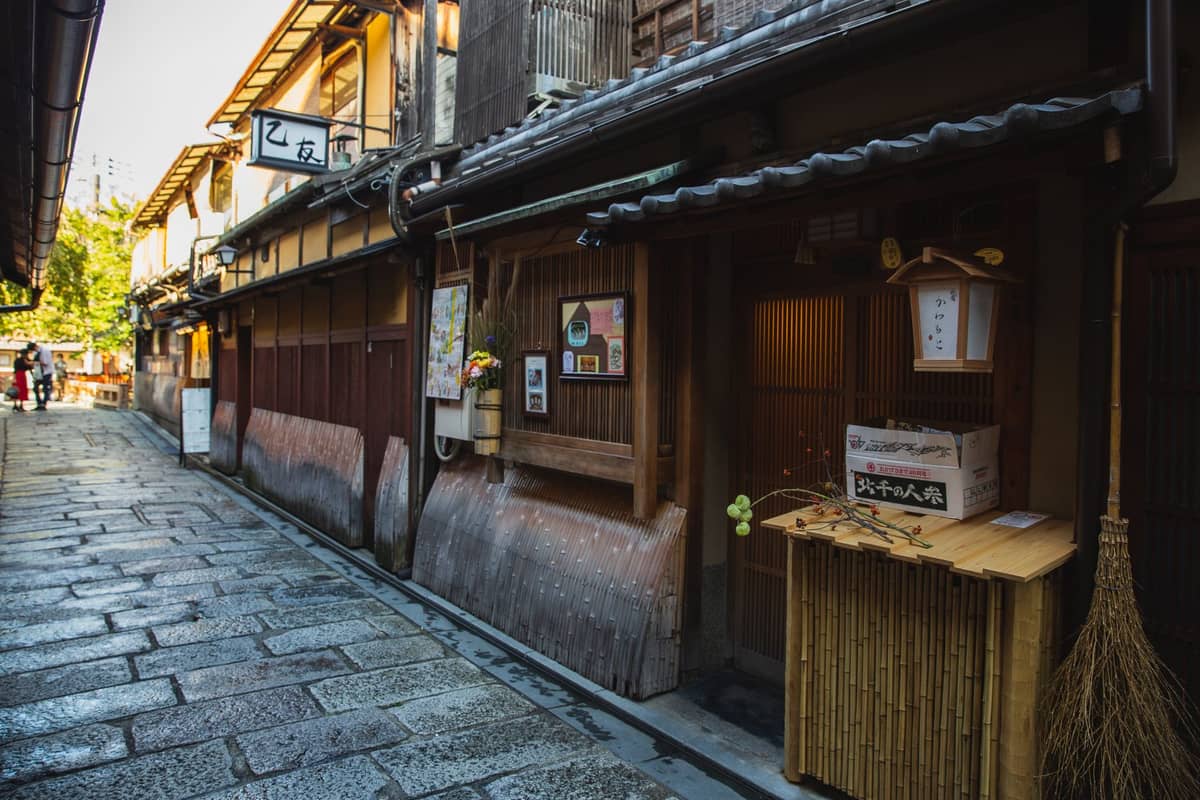
By early evening, as the last tour groups head back toward Kyoto Station, the neighborhood settles again. Restaurants in the lanes around Ninenzaka light their lanterns, the wooden shopfronts take on an amber glow, and the pagoda of Hōkan-ji rises against a darkening sky. Nighttime in Higashiyama is calm rather than lively — this is not a nightlife destination — but it rewards an after-dinner walk along Ishibei-koji, the quietest and best-preserved lane in the district.
💡 Local tip
The single best strategy for Higashiyama is to visit Kiyomizu-dera at opening time (usually around 6am), walk the stone lanes downhill before the crowds build, then have breakfast near Yasaka Shrine. You will see the same places as everyone else, but in a completely different atmosphere.
What to See & Do
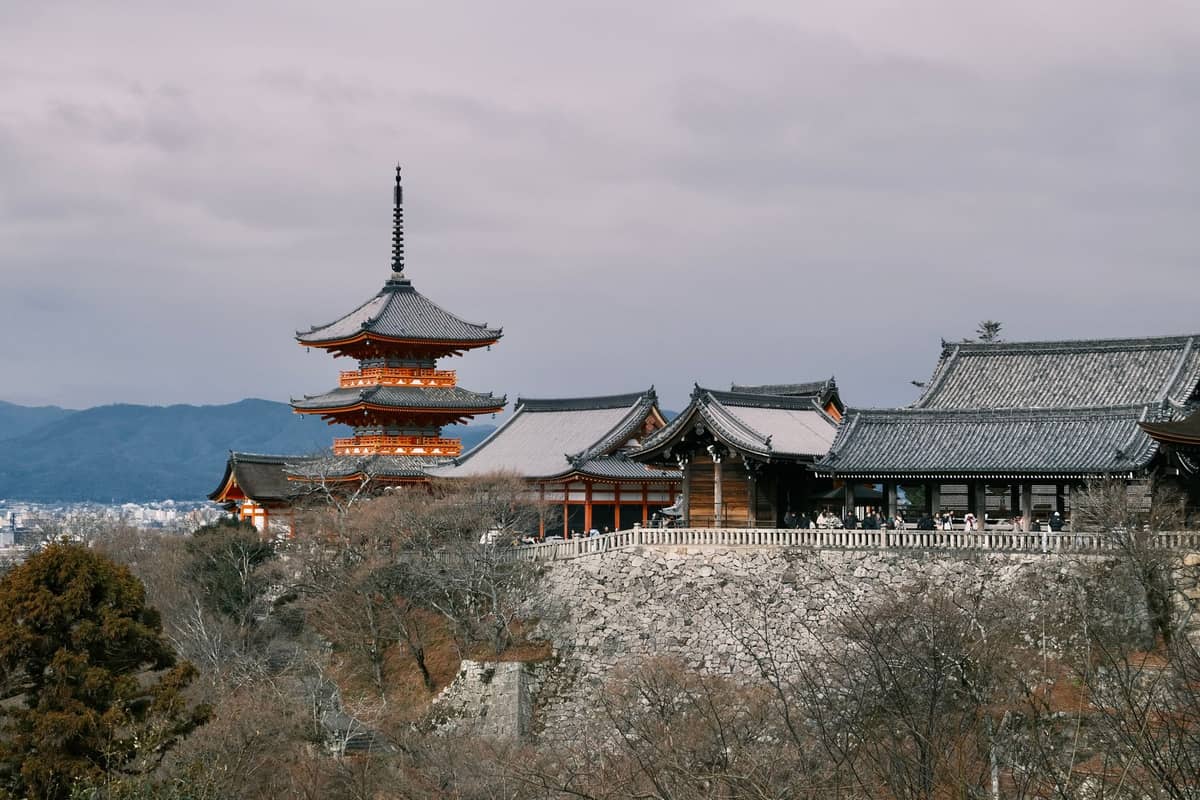
The anchor of the whole district is Kiyomizu-dera, the great hillside temple at 1-294 Kiyomizu, Higashiyama-ku. Its wooden stage extends out over a forested cliff on a framework of massive wooden pillars assembled without a single nail — a construction method that has stood for over 400 years. The views across Kyoto from the stage are among the best in the city. The temple complex is large enough to spend an hour exploring, including the Jishu Shrine dedicated to the deity of love and the Otowa waterfall at the base of the main hall. Admission is charged; verify current hours and fees before visiting.
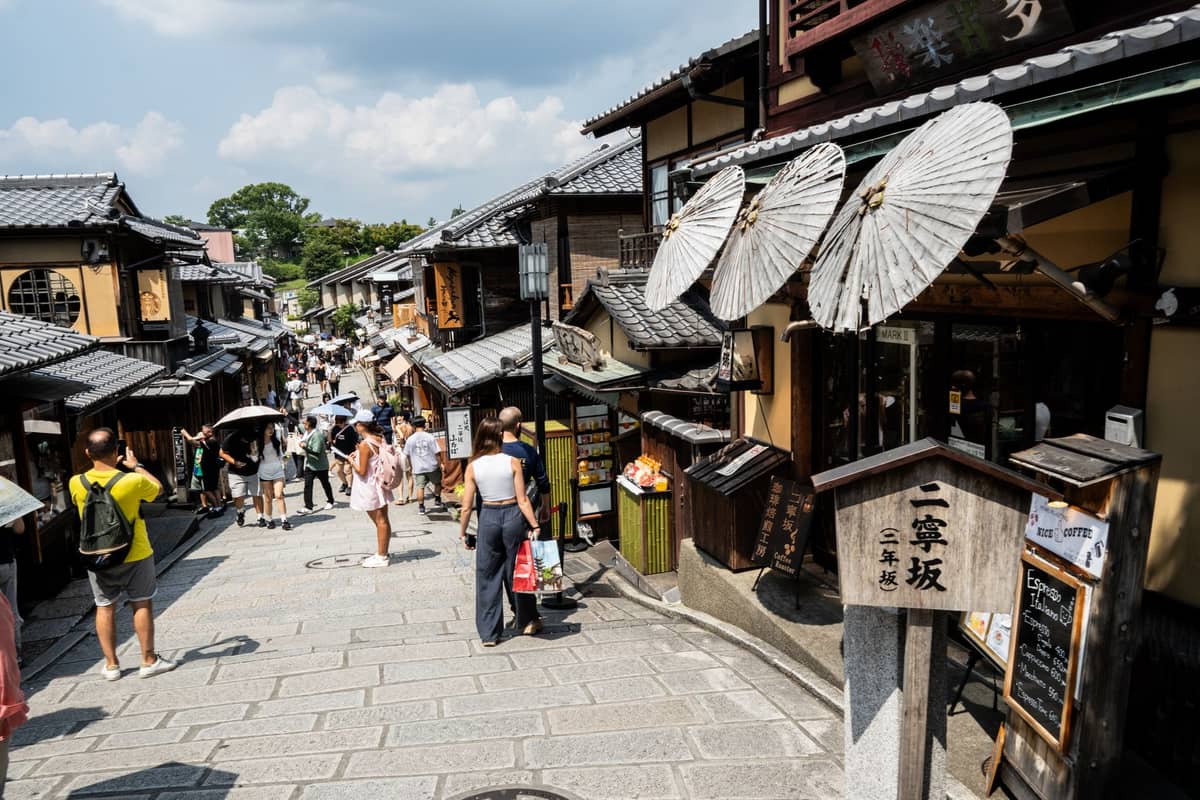
Walking north from Kiyomizu-dera, the route descends throughNinenzaka and Sannenzaka, the two linked stone-paved lanes that are the visual heart of Southern Higashiyama. Ninenzaka (Two-Year Slope) connects via a short turn to Sannenzaka (Three-Year Slope), and together they form a roughly 500-meter preserved corridor flanked by wooden machiya converted into tea shops, pottery stores, and restaurants. Local lore says that anyone who trips on these steps will face two or three years of bad luck, which at least keeps people watching their footing on the uneven cobblestones.
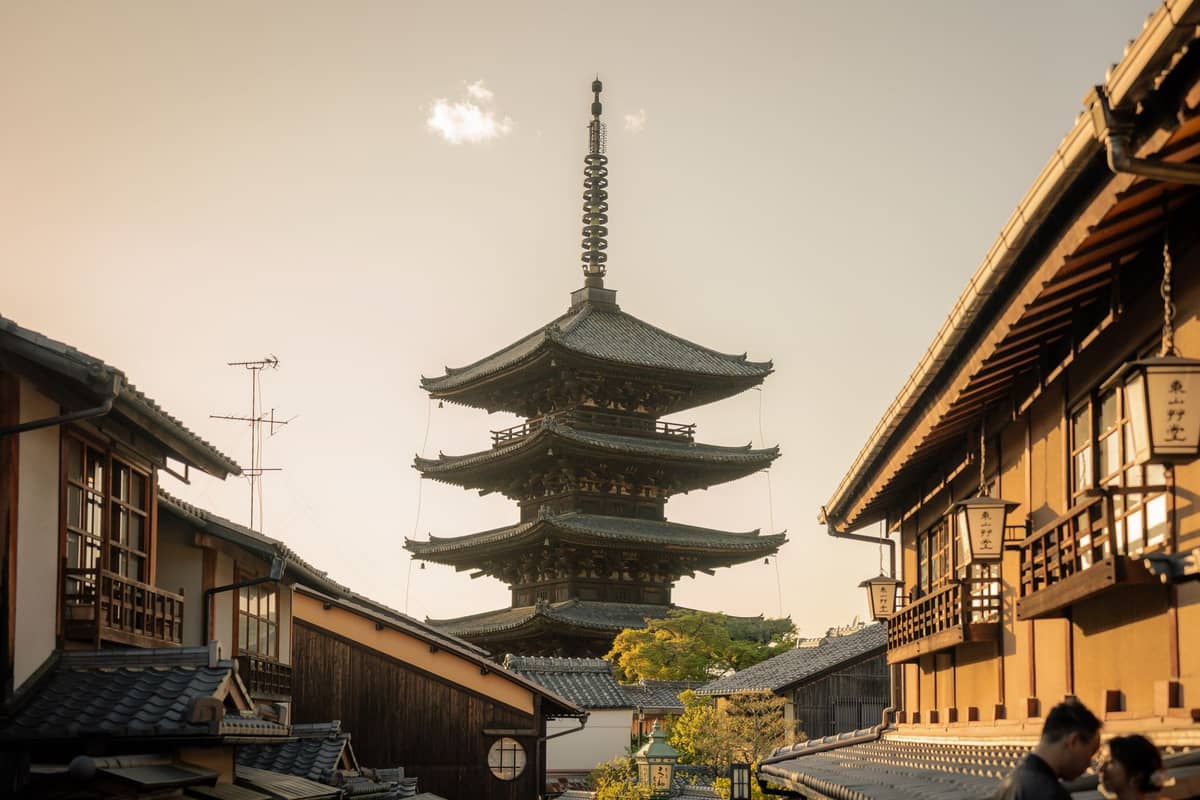
Near the top of Sannenzaka, the lane opens toward Kodai-ji Temple and the approach toYasaka Pagoda(Hōkan-ji). The five-story pagoda at 388 Yasaka Kamimachi is the most photographed structure in Higashiyama and one of the most recognizable silhouettes in all of Kyoto. The lane running directly beneath it, with wooden townhouses on either side, is among the most reproduced images of the city.
At the northern end of the sightseeing corridor, Yasaka Shrineanchors the intersection of Higashiyama and Gion. The shrine grounds are open 24 hours and free to enter, making this a good starting or ending point for any walk. The main hall is lit up after dark, and the stone lanterns along the entrance path create an atmosphere at night that the daytime crowds dilute. Yasaka Shrine is also the center of the Gion Matsuri festival held each July — one of Japan's largest annual events.
A short detour off the main tourist path leads to Ishibei-koji Lane, a narrow private-feeling alley that runs parallel to the main sightseeing route between Kōdai-ji and Yasaka Shrine. The lane is lined with traditional inns and restaurants behind stone walls and wooden gates. Unlike Ninenzaka and Sannenzaka, it sees a fraction of the foot traffic and gives a clearer sense of what historic Kyoto streetscapes actually feel like away from souvenir crowds.
Kiyomizu-dera: Kyoto's most iconic hilltop temple, best visited at opening time
Ninenzaka and Sannenzaka: stone-paved preserved shopping lanes with traditional architecture
Yasaka Pagoda (Hōkan-ji): five-story pagoda visible across the whole southern district
Kodai-ji Temple: hillside temple with bamboo grove and illuminated garden in spring and autumn
Yasaka Shrine: free entry, open 24 hours, heart of the Gion Matsuri festival
Ishibei-koji Lane: the quietest and best-preserved alley in the district
Maruyama Park: large public park adjoining Yasaka Shrine, famous for cherry blossoms
⚠️ What to skip
The stone slopes of Ninenzaka and Sannenzaka become genuinely slippery in rain. Wear shoes with some grip rather than sandals or smooth-soled footwear, particularly if visiting during Kyoto's wet season in June and July or after autumn showers.
Eating & Drinking
The food scene in Higashiyama splits cleanly between the tourist corridor and the residential and restaurant streets just off it. Along Ninenzaka, Sannenzaka, and Matsubara-dori, the dominant format is small shops selling things you can eat while walking: tofu soft-serve ice cream, yatsuhashi (triangular sweets filled with red bean paste or chocolate), pickled vegetables sold by the slice, and skewered mochi grilled over charcoal. The quality varies, but the best of these shops use Kyoto's legendary tofu producers and local Uji matcha.
Sit-down restaurants cluster in the Ishibei-koji area and along the approach streets toward Gion. This is where Kyoto's kaiseki tradition is most accessible at a range of price points: from casual obanzai set lunches (Kyoto-style small dishes with rice, miso, and pickles) running around 1,000-2,000 yen, to full kaiseki multi-course dinners at traditional machiya restaurants that can reach 15,000 yen or more per person. For context on how these fit into Kyoto's broader food culture, theKyoto food guidecovers the full spectrum from street snacks to high-end kaiseki.
Matcha is ubiquitous in Higashiyama — this is one of the best areas in Japan to try it in serious form. Tea houses along the Ninenzaka route serve thick whisked matcha alongside wagashi sweets in small tatami rooms, and the ritual of sitting still for ten minutes while the crowds pass outside is one of the area's underrated pleasures. For deeper context on Kyoto's matcha culture, theKyoto matcha guide explains what to look for and where standards are highest.
There are few bars in Higashiyama itself, and the neighborhood largely closes by 9pm. If you want drinks after dinner, the easiest move is to walk ten minutes west into Gion, where Pontocho Alley and the streets around Shijō-Kawaramachi have a full range of standing bars, izakayas, and cocktail spots. Higashiyama is a daytime and early evening destination for eating; it is not where you come for a late night.
Getting There & Around
The most direct rail access to Southern Higashiyama is via the Keihan Electric Railway, which runs along the west bank of the Kamo River. Kiyomizu-Gojō Station (Keihan Line) is the closest stop to Kiyomizu-dera: from the exit, it is roughly a 20–25-minute walk east along Gojō-dori and then uphill along the temple approach. Gion-Shijō Station (Keihan Line) is better if you are starting from the Yasaka Shrine end of the corridor.
City bus is the other major option and often more convenient from central Kyoto. Bus routes along Shijō-dori reach the Gion bus stop near Yasaka Shrine, while services along Gojō-dori stop at Kiyomizu-michi, from which Kiyomizu-dera is a 10-minute uphill walk. The Kyoto City Bus network is extensive; IC cards (Suica, ICOCA) work on all city buses and are the easiest way to pay.
Higashiyama itself is best navigated entirely on foot once you arrive. The stone lanes are not accessible by car or bicycle in most sections, and the compact geography means that walking from Kiyomizu-dera to Yasaka Shrine takes about 30 minutes at a casual pace. For a broader understanding of how Higashiyama connects to the rest of Kyoto's transport network, theguide to getting around Kyoto covers subway, bus, and rail connections in detail.
ℹ️ Good to know
Higashiyama has almost no parking and is not designed for cars. If you are coming from Kyoto Station by taxi, the driver will drop you at the edge of the pedestrian zone, typically near the bottom of Gojō-dori or Matsubara-dori. From there, you walk. Budget 15-20 minutes on foot to reach the upper section of the lane near Yasaka Pagoda.
Where to Stay
Staying inside Higashiyama puts you within walking distance of Kyoto's most concentrated historic district, which is the main argument for it. The tradeoff is that restaurants and bars close early, the neighborhood is quiet after dark, and you are somewhat removed from the central subway network. For travelers prioritizing a classic Kyoto atmosphere and early access to the temple lanes before crowds build, Higashiyama is an excellent base. Thewhere to stay in Kyoto guidecompares all the major neighborhoods for different traveler types.
Accommodation in Higashiyama ranges from internationally branded hotels near the Kamo River to small traditional ryokan within the preserved lanes themselves. The machiya guesthouses and ryokan along and around Ishibei-koji Lane and the Ninenzaka area are among the most atmospheric places to sleep in Kyoto, though they book out months in advance for peak seasons (late March through May, and October through November). For first-time visitors interested in a traditional inn experience, theKyoto ryokan guideexplains how these properties work, what to expect, and how to book.
The best location within Higashiyama for accommodation depends on your priorities. The northern section near Yasaka Shrine and Gion gives easier evening access to restaurants and bars, and is about a 10-minute walk from the Keihan Line. The southern section near Ninenzaka and Kiyomizu-dera is quieter at night and places you directly on the morning temple walk, but dining options within easy reach are more limited. Budget travelers will find more affordable guesthouses and hostels in the adjacent Gion and downtown areas, from which Higashiyama is a 20-minute walk.
Practical Tips & Honest Assessment
Higashiyama earns its reputation. The concentration of historic architecture, the quality of the preserved streetscapes, and the sheer number of significant temples and shrines within a short walk make this the most complete expression of historic Kyoto in a single district. If you visit Kyoto once, you will almost certainly come here.
The honest caveat is the crowds. Between mid-morning and late afternoon from March through November, the main lanes between Kiyomizu-dera and Yasaka Shrine are extremely busy. During peak cherry blossom season in late March and early April, and during peak autumn foliage in November, the crowds at Kiyomizu-dera in particular are among the largest at any tourist site in Japan. If you dislike being in a slow-moving mass of visitors, either come very early or accept that this is the character of the place and adjust expectations accordingly.
Higashiyama works exceptionally well as a half-day from a base elsewhere in Kyoto. Starting fromdowntown Kyotoor the Kyoto Station area, arriving at Kiyomizu-dera at opening, walking the stone lanes to Yasaka Shrine, and then crossing into Gion for lunch takes around four hours and covers the best of the district without the midday crowds. Combining Higashiyama with a visit to thePhilosopher's Pathto the north makes a full day walking tour of eastern Kyoto.
TL;DR
Higashiyama is the most intact historic district in Kyoto, with preserved stone lanes, wooden townhouses, and a continuous walk connecting multiple major temples and shrines.
Best visited early morning (before 9am) or late afternoon to avoid the peak crowds that fill the lanes from mid-morning to late afternoon, especially March through November.
The core sightseeing route runs about 2.5 kilometers from Kiyomizu-dera in the south to Yasaka Shrine in the north — comfortable on foot, not accessible by car or bicycle.
Ideal for first-time visitors to Kyoto, travelers interested in traditional architecture and temple culture, couples seeking a classic romantic Japanese streetscape, and anyone staying in or near Gion.
Less suited to travelers who prioritize nightlife, modern dining, or easy subway access — for evening activity, Gion and downtown Kyoto are a short walk or taxi ride away.
Kyoto holds more extraordinary Japanese gardens per square kilometer than anywhere else on earth. This guide covers the finest examples across every style, from dry rock gardens to imperial stroll gardens, with practical advice on access, timing, and what makes each one worth the visit.
Kyoto holds more Shinto shrines than almost any city on earth, ranging from grand imperial complexes to quiet forest sanctuaries. This guide covers the best, with practical advice on when to go, what to expect, and what most visitors get wrong.
Kyoto has over 1,600 Buddhist temples and around 400 Shinto shrines, ranging from gold-leafed pavilions to remote mountain retreats. This guide cuts through the noise to highlight the temples that genuinely reward a visit, with context on what makes each one worth your time.
Kyoto rewards visitors year-round, but the experience varies dramatically by season. This guide breaks down every month by weather, crowds, costs, and what's actually worth seeing — so you can choose the right time for your trip, not just the most popular one.
Kyoto's best views range from the famous wooden stage at Kiyomizu-dera to a forested mountain summit reached by a 45-minute hike. This guide covers the city's top viewpoints across temples, hilltops, iconic streets, and observation decks, with tips on timing and what to expect.
Kyoto sits at the center of one of Japan's richest regions for day-tripping. Within an hour by train, you can reach ancient deer parks, mountain temples, sake-brewing canals, and remote moss gardens. This guide covers the best excursions organized by direction and theme.
Kyoto is one of the world's great cultural cities, and a surprising number of its best experiences are completely free. From the torii-gate tunnels of Fushimi Inari to the stone lanes of Higashiyama and the canal-side Philosopher's Path, here is a practical guide to the finest free attractions in Kyoto.
The Fushimi Inari hike is one of the most iconic walks in Japan, threading thousands of vermilion torii gates up Mt. Inari in southern Kyoto. This guide covers every trail option, the best times to go, how to get there cheaply, and the the reality about what the experience is actually like.
Kyoto's transport network is more layered than it first appears. This guide breaks down every practical option, from city buses and subway lines to IC cards, day passes, and airport transfers, so you can move around the city without wasting time or money.
Gion Matsuri fills the entire month of July with shrine rituals, towering floats, and lantern-lit street festivals. This guide breaks down exactly what happens, when, where to stand, and how to survive the July heat without missing the highlights.
Kyoto has no international airport of its own. This guide covers every practical way to reach the city from Kansai International Airport (KIX) and Osaka Itami (ITM), with current fares, journey times, and clear advice on which option suits your trip.
Kyoto's cherry blossom season is one of Japan's great spectacles, but peak bloom lasts barely a week and the crowds are intense. This guide covers exactly when to go, where to stand, what to skip, and how to make the most of sakura season in Kyoto.
Kyoto is Japan's historic capital, with over 1,600 temples, a preserved geisha district, and some of the country’s finest food. This guide covers everything a first-time visitor needs: the best time to visit, how to get from the airport, which neighborhoods to base yourself in, and how to avoid the most common mistakes.
Kyoto's food culture runs deeper than temple towns and tea ceremonies. From formal kaiseki multi-course meals to humble obanzai home cooking and steaming bowls of yudofu beside ancient temples, this guide covers what to eat, where to eat it, and exactly what to budget — season by season.
Kyoto is one of the most atmospheric cities in Asia for couples, with preserved historic streets, seasonal illuminations, ryokan stays, and cultural rituals designed for two. This guide covers the best romantic experiences, realistic pricing, and the timing details that make the difference between a good trip and a memorable one.
Kyoto is the only city in Japan where the geisha tradition survives at scale. This guide covers the five geisha districts, every major dance performance, licensed cultural experiences, and the etiquette rules that matter — so you can engage with this world respectfully and on your own terms.
Kyoto rewards those who look beyond the headline sights. This guide covers the city's most rewarding lesser-known temples, atmospheric alleyways, mountain retreats, and local institutions, from a moss-carpeted UNESCO garden requiring advance booking to a century-old public bathhouse in a residential neighborhood.
Autumn transforms Kyoto into one of the most photographed places on earth, with maples and ginkgos turning gold and crimson across temples, gardens, and hillsides. This guide covers when foliage peaks, where to go, which illumination events are worth your evening, and how to avoid the worst of the crowds.
Kyoto in winter (December to February) offers crisp, mostly dry weather, thinner crowds, and a quieter side of the city's temples and shrines. This guide covers what the season actually looks like, what to do, how to get around, and where the crowds still gather.
Three days is enough to experience the best of Kyoto without feeling rushed, but only if you plan smart. This guide breaks down exactly where to go, when to go, and how to get around, including updated transport advice that most other guides get wrong.
Renting a kimono in Kyoto is one of the most memorable ways to experience the city, but the advertised prices rarely tell the full story. This guide breaks down real costs, the best neighborhoods to explore in traditional dress, seasonal advice, and practical tips that most shops won't tell you upfront.
Kyoto is the spiritual home of Japanese matcha culture, from centuries-old tea houses in Gion to stone-mill workshops in Uji. This guide covers where to drink, eat, and learn about matcha — with real prices, practical logistics, and practical advice on what's worth your time.
Kyoto's nightlife is quieter than Tokyo's but far richer than most visitors expect. This guide covers the best izakayas, sake bars, evening tours, and riverside dining across Pontocho, Gion, and Kiyamachi, with practical advice on costs, timing, and what to skip.
Kyoto is one of Japan's most rewarding cities to visit, but costs can add up fast. This guide breaks down exactly how to stretch your yen further — covering transport passes, free attractions, affordable food, and the best times to visit when prices drop.
Seven days is the ideal length to experience Kyoto without rushing. This guide breaks down each day by district, with practical logistics, timing advice, and clear assessments of what's worth your time. Whether you're planning your first visit or returning with more days to spare, this itinerary covers the full range of Kyoto's historic city.
Kyoto offers a surprisingly diverse range of hot-spring bathing options, from rural mountain onsen to sleek hotel spas. This guide breaks down the best facilities, real pricing, seasonal timing, and the rules you need to know before you strip off your yukata.
Kyoto's ramen scene runs deeper than most visitors expect. This guide covers the top-rated shops, the best neighborhoods to explore, what styles define Kyoto ramen, and practical advice for navigating queues, hours, and seasonal menus.
A Kyoto ryokan stay is one of the most distinctive lodging experiences in Japan, but the rules, pricing structures, and expectations are unlike any Western hotel. This guide breaks down what actually happens from check-in to breakfast, what things cost across budget tiers, and which neighborhoods make the most sense depending on your itinerary.
Kyoto is Japan's craft capital, where century-old textile workshops sit alongside covered shopping arcades and a legendary food market. This guide breaks down where to shop, what to buy, and how to avoid tourist traps — by neighborhood, price point, and category.
Kyoto's sushi scene runs deeper than most visitors expect. This guide breaks down the best sushi restaurants in Kyoto by price tier, neighborhood, and style, with practical advice on reservations, seasonal fish, and common mistakes to avoid.
From quick group introductions to private lessons in historic teahouses, Kyoto offers more ways to experience chado than almost anywhere in Japan. This guide covers the best venues, realistic prices, booking advice, and the cultural context that makes each sip mean something.
Visiting Kyoto's temples and shrines without understanding the etiquette means missing half the experience. This guide covers everything from torii gate protocol and hand-purification steps to photography restrictions, admission costs, and the key differences between Shinto shrines and Buddhist temples.
Nara is one of the easiest and most rewarding day trips from Kyoto, just 40 km away with frequent train connections. This guide breaks down every transport option, cost comparisons, and how to make the most of your time there.
The Kyoto to Tokyo corridor is one of Japan's most-traveled routes. This guide covers every realistic option, from the Tokaido Shinkansen to overnight highway buses, with clear breakdowns of cost, speed, and when each option makes sense.
Kyoto rewards walkers more than almost any city in Japan. This guide breaks down the best self-guided walking routes by district, with timing, admission costs, crowd advice, and clear assessments of what's worth your time and what isn't.
Kyoto's weather swings from bitter January mornings to oppressive August humidity, with two peak tourist seasons sandwiched in between. This guide breaks down what to expect every month, what to pack, and when the crowds and weather actually align in your favor.
Kyoto is not just temples and shrines. The city has a surprisingly strong lineup of kid-friendly attractions, from the Kyoto Railway Museum and Aquarium in Umekoji Park to samurai theme parks and wide outdoor spaces. This guide covers what's genuinely worth your family's time, realistic pricing, the best seasons to visit with children, and how to structure your days without burning everyone out.
Kyoto rewards those who spend well and plan ahead. This guide covers the city's finest ryokan, reservation-only kaiseki restaurants, and culturally rich experiences, along with practical advice on booking windows, seasonal pricing, and what actually justifies the premium.
Kyoto packs more than 1,600 years of Japanese history into a single city. This guide covers the best things to do in Kyoto across every district, from iconic temples and sake breweries to traditional tea ceremonies and bamboo forest walks, with practical advice on crowds, costs, and timing.
Choosing where to stay in Kyoto shapes your entire trip. This guide covers the five best areas for visitors, price breakdowns by neighbourhood, accommodation type comparisons, and the booking timing you need to avoid paying double during peak season.