Temple & Shrine Etiquette in Kyoto: The Complete Practical Guide
Visiting Kyoto's temples and shrines without understanding the etiquette means missing half the experience. This guide covers everything from torii gate protocol and hand-purification steps to photography restrictions, admission costs, and the key differences between Shinto shrines and Buddhist temples.
Plan and book this trip
Tools from our partner Travelpayouts help you compare flights and hotels. If you book through them, we may earn a commission at no extra cost to you.
Flights
Hotels map
TL;DR
- Shinto shrines and Buddhist temples follow different etiquette: clap twice at shrines, press palms together silently at temples.
- Always walk to the side of the center path under a torii gate — the middle is symbolically reserved for the deity.
- Remove shoes before entering interior temple halls and follow posted signs strictly on photography.
- Most major sites like Kinkaku-ji and Kiyomizu-deracharge ¥500–¥700 admission; autumn night-lit special openings add ¥500–¥1,200 on top.
- Dress modestly: covered shoulders and knees are standard practice, not just a suggestion.
Shrines vs. Temples: Why the Difference Matters
Kyoto has over 1,600 Buddhist temples and around 400 Shinto shrines. They coexist across the city and often look superficially similar to a first-time visitor, but they operate under distinct religious traditions with different customs. Getting the two mixed up is the single most common mistake foreign visitors make.
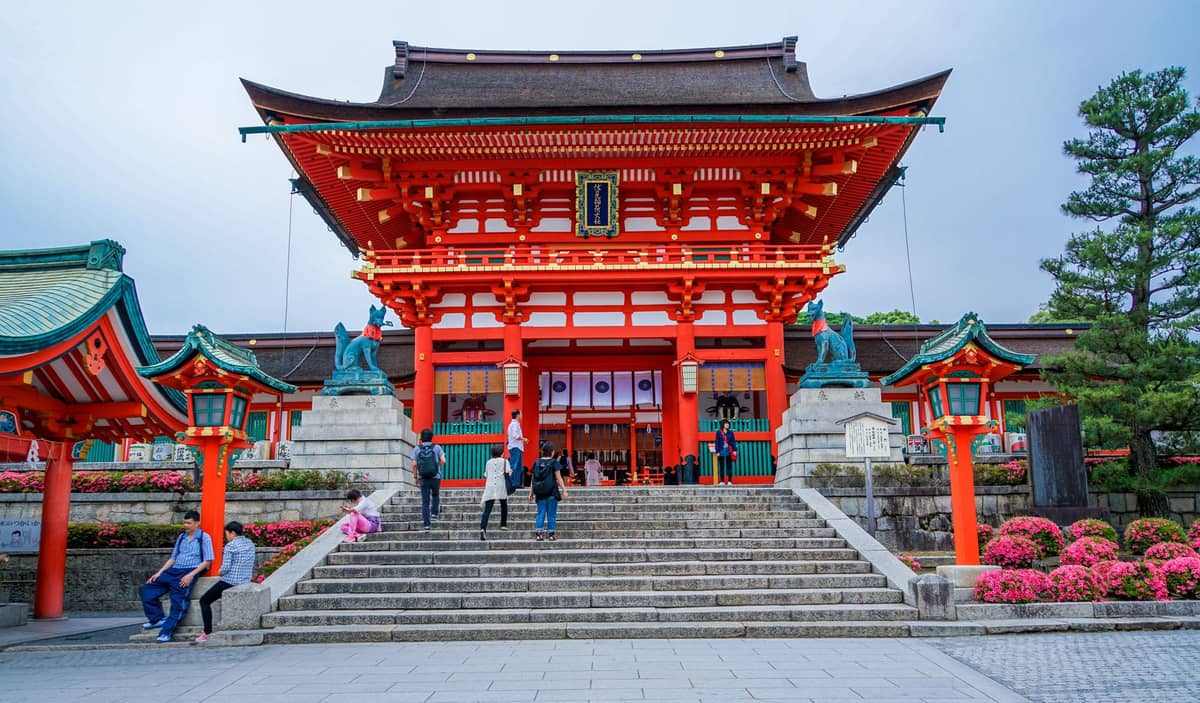
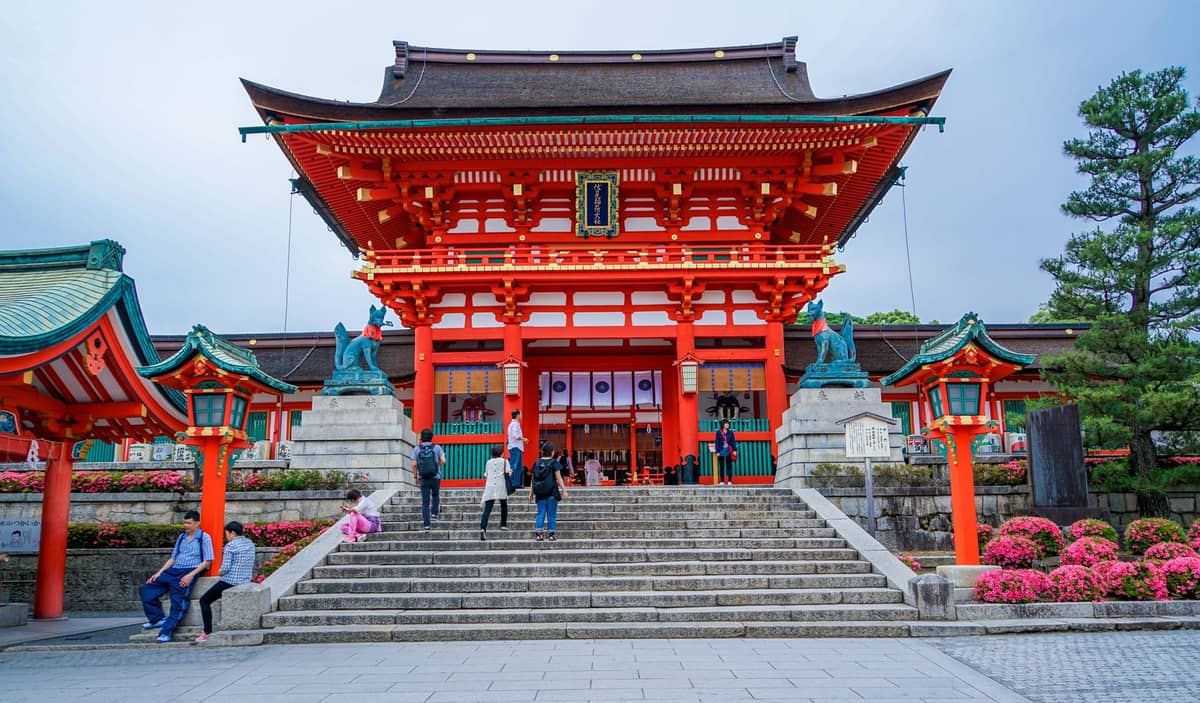
Shinto shrines are identified by their torii gates — typically vermilion or unpainted wood — and house kami (deities). Buddhist temples usually feature incense burners at the entrance, large Buddha statues in the main hall, and a more architectural complexity with pagodas or lecture halls. Some sites, like Fushimi Inari Taisha, are purely Shinto. Others, like Kiyomizu-dera, are Buddhist. A few historic compounds contain both.
ℹ️ Good to know
The most practical rule: if you see a torii gate at the entrance, you're at a Shinto shrine and clapping is appropriate at the altar. If the entrance features a large incense urn and Buddha imagery, you're at a Buddhist temple — press your palms together in gassho (合掌) and bow once. No clapping.
Step-by-Step Etiquette at Shinto Shrines
The ritual sequence at a Shinto shrine is consistent across Kyoto, from the enormousFushimi Inari Taishato smaller neighborhood shrines tucked into residential alleys. Following it correctly shows respect and takes about two minutes.
- 1. Bow at the torii gate A slight bow before passing through acknowledges you're entering sacred space. Walk to either side of the center path — the middle is considered the path of the deity, not visitors.
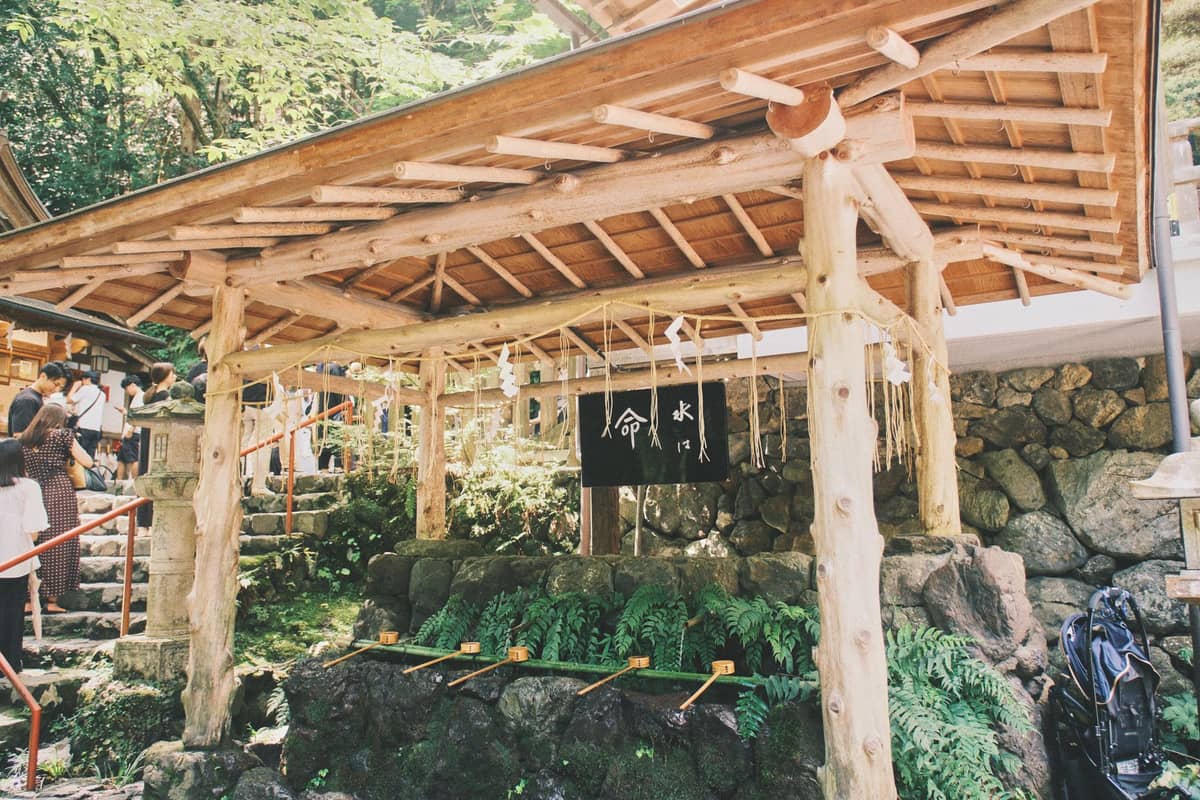
- 2. Purify at the temizuya (手水舎) The stone basin near the entrance is for ritual hand-washing. Using the ladle, pour water over your left hand, then your right. Pour water into your cupped left hand and rinse your mouth — do not put the ladle to your lips directly. Some shrines have removed shared ladles post-pandemic; follow current on-site instructions.
- 3. Approach the main hall Bow slightly again before the offering box (saisen-bako). Toss a coin in — ¥5 coins are considered lucky because the Japanese word go-en (五円) sounds like the word for 'connection.' There is no obligation to use a specific amount.
- 4. Bow twice, clap twice, pray, bow once This is the standard sequence: two deep bows, two sharp claps with hands aligned, then hold your hands together in silent prayer, then one final bow. This is called ni-rei ni-hakushu ichi-rei (二礼二拍手一礼).
- 5. Exit respectfully Bow once more at the torii gate on your way out, facing back toward the main hall.
Step-by-Step Etiquette at Buddhist Temples
Buddhist temple etiquette is quieter and more contemplative. The emphasis is on silent reverence rather than ritual clapping.
- Bow at the sanmon gate The main gate marks the threshold between secular and sacred. A small bow on entry is standard.
- Light incense if available At temples with an incense burner (koro), you can purchase incense sticks, light them, and place them upright. Waft the smoke toward yourself — it is believed to have purifying properties. Do not blow out the flame; wave it out or let it extinguish naturally.
- Press palms together (gassho) before the Buddha In front of Buddhist altars or statues, bring your palms together, bow once, and pray silently. Do not clap. This is the key difference from shrine etiquette and the one most visitors get wrong.
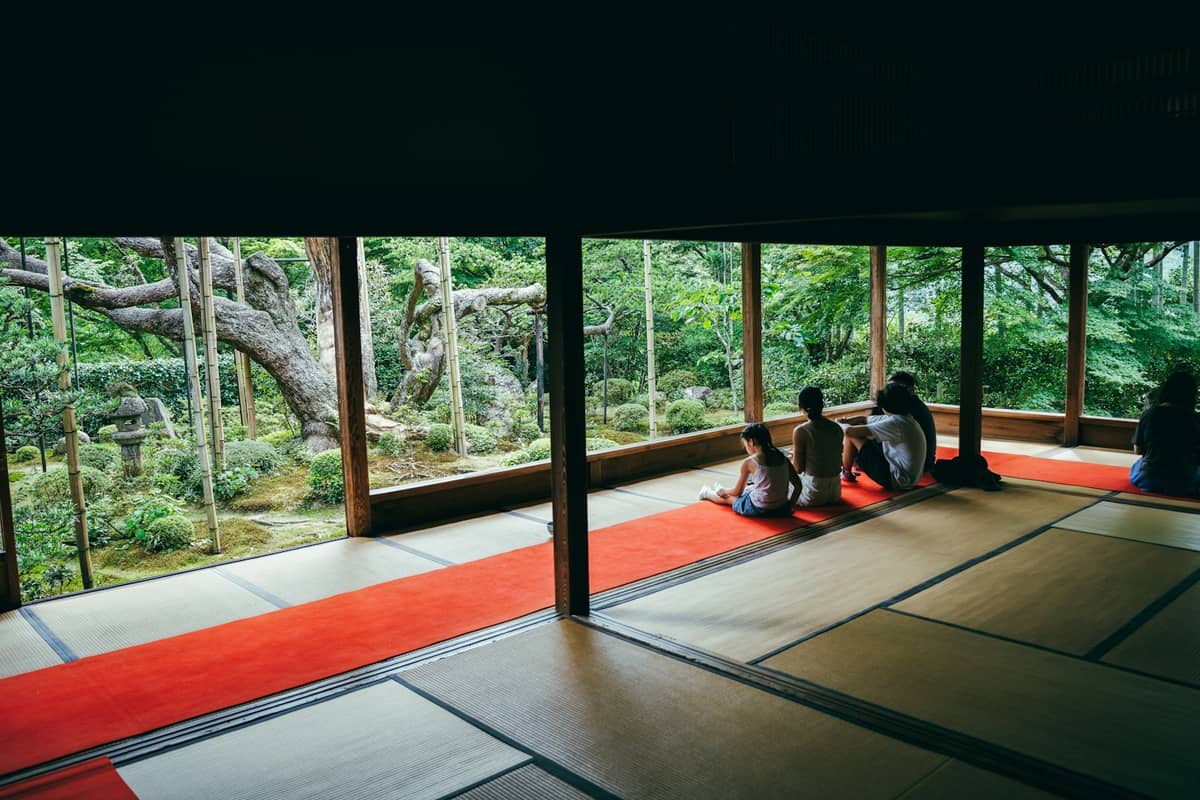
- Remove shoes before entering buildings Interior halls — where you walk on tatami or polished wooden floors — require shoes off. Look for a shelf or area just inside the entrance. Many temples provide slippers; use them and leave your shoes neatly.
⚠️ What to skip
Photography rules vary sharply between sites and even between buildings within the same site. Many main halls and treasure houses prohibit photography entirely, while gardens are usually fine. Always check posted signs before raising your camera. At Daitoku-ji and several sub-temples, photography inside any building is banned outright.
Admission Fees and Opening Hours: What to Expect
Kyoto temples and shrines vary considerably in cost. Some shrines, including most of Fushimi Inari Taisha's grounds, are free to enter at any hour. Others charge admission that ranges from a few hundred yen to over ¥1,500 for World Heritage sites with extensive grounds.
- Kiyomizu-dera Adults ¥500, junior high and elementary students ¥200. Standard hours approximately 06:00–18:00, varying slightly by season. Wheelchair users and holders of disability certificates plus one companion enter free.
- Kinkaku-ji (Golden Pavilion) Adults ¥500, students (grades 1–9) ¥300. Open daily approximately 09:00–17:00. Visitors follow a fixed garden loop; the pavilion interior is closed to the public.
- Daigo-ji (World Heritage Site) Adults ¥1,500, junior/high school students ¥1,000. Hours are 09:00–17:00 from March through early December, shortening to 09:00–16:30 in winter. Group discounts apply from 20 people.
- Byodo-in (Uji, 30 min from Kyoto Station) Garden and museum: adults ¥700, junior/high school ¥400, elementary ¥300. Phoenix Hall interior requires an additional ¥300. Garden hours approximately 08:45–17:30.
- Autumn and special night openings Dozens of Kyoto temples hold illuminated evening openings in November, typically 18:00 to 21:00 last entry. These carry surcharges of ¥500–¥1,200 on top of regular admission and are some of the most memorable experiences in Kyoto, but they attract significant crowds.
Admission fees and hours are updated annually by individual sites, so always check the official website before visiting. For planning multiple temple visits in a day, the3-day Kyoto itinerarygroups sites by neighborhood to minimize travel time and maximize value.
✨ Pro tip
Arrive at major temples like Kiyomizu-dera and Kinkaku-ji before 08:30 or after 16:30 to experience them with far fewer visitors. Crowds at peak season (late March through early May and mid-October through late November) can make the approach streets nearly impassable by mid-morning.
Dress Code and What to Wear
Kyoto's temples and shrines do not enforce strict dress codes at the entrance the way some European churches do, but modest and respectful clothing is genuinely expected, not just politely suggested. The standard guidance: covered shoulders, no very short shorts or skirts. In practice, this rules out beachwear and sleeveless tops rather than requiring anything formal.
If you're visiting in summer when temperatures regularly reach 32°C, lightweight breathable fabrics that still cover shoulders and knees are the practical solution. Wearing arented kimonois one option many visitors choose — it's culturally appropriate by definition and available at rental shops throughout Gion and Higashiyama for around ¥3,000–¥6,000 per day including dressing assistance.
Comfortable walking shoes matter more than most visitors anticipate. Many temple complexes involve considerable walking on uneven stone paths, steep staircases, and gravel gardens. Stone steps at sites like Fushimi Inari or the approach to Kurama-dera can be genuinely demanding. Footwear that slips on and off easily is also useful given how often you'll remove shoes indoors.
Common Etiquette Mistakes and How to Avoid Them
Most etiquette errors at Kyoto temples and shrines come from either not knowing the rules or from assuming everything works the same way. A few specific mistakes come up repeatedly.
- Walking down the center of the torii path The sando (参道), or approach path, has its center symbolically reserved for the deity. Visitors should walk slightly to one side. At busy sites like Fushimi Inari, this is widely ignored during peak hours, but making the effort at quieter shrines is appreciated.
- Clapping at a Buddhist altar This is the single most common mistake. Clapping belongs exclusively to Shinto shrine worship. At temples, always press palms together silently.
- Touching ladle to lips at the temizuya The ladle is shared by everyone. Pour water into your cupped palm first. Since 2020, many shrines have also replaced shared ladles with flowing water spouts or other sanitary alternatives — follow whatever system is in place.
- Assuming photography is always allowed Interiors of main halls, treasure houses, and rooms housing significant Buddha statues or paintings frequently prohibit cameras and phones. When in doubt, look for a sign or simply don't photograph.
- Keeping shoes on inside halls The transition point is usually obvious — a raised threshold, a shoe shelf, or a sign. If you miss it, someone will politely point it out. Better to look for it proactively.
- Loud behavior and phone calls Active worship happens throughout the day at Kyoto's temples and shrines. Even in heavily touristed sites, residents and locals come to pray. Keep voices low, especially near the main halls and prayer areas.
For context on specific major sites, the best temples in Kyoto guide covers what makes each one distinct, while the best shrines in Kyotoguide focuses on Shinto sites with practical visiting tips for each.
💡 Local tip
If you want to learn proper tea ceremony etiquette alongside temple customs, both share an emphasis on deliberate, respectful movement. The two experiences complement each other well during a longer stay in Kyoto.
Seasonal Considerations for Temple Visits
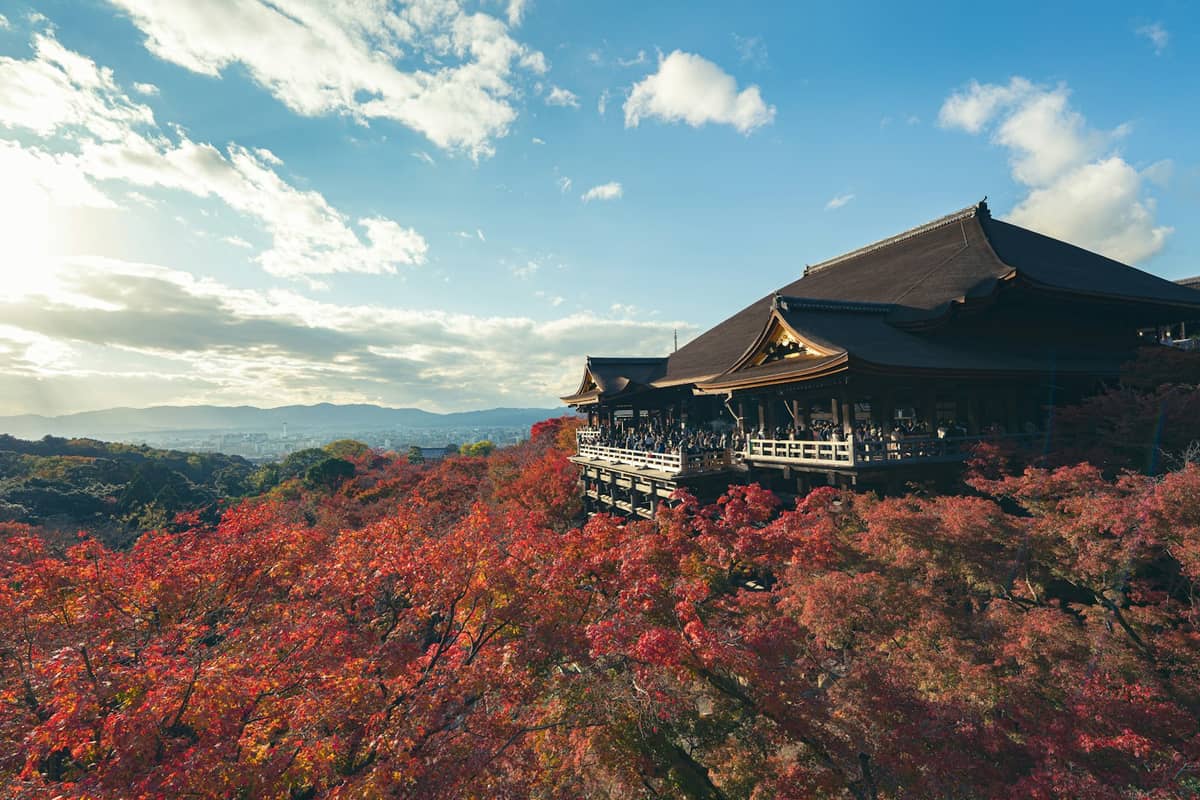
Kyoto's temple experience changes dramatically by season. Spring cherry blossoms (late March to mid-April) and autumn foliage (mid-October through late November) bring the highest visitor numbers and the most atmospheric conditions simultaneously. Crowds atKiyomizu-deraduring peak cherry blossom season can mean waiting 20–30 minutes just to enter the main hall. Arriving at opening time (06:00 at Kiyomizu-dera) sidesteps most of this.
Autumn is particularly worth planning around for temple visits. The combination of maple foliage (momiji) and temple gardens is genuinely spectacular at sites likeEikan-do Zenrin-ji and Ryoan-ji. The special night illuminations during November run from approximately 18:00 to 21:00, with entry surcharges of ¥500–¥1,200. These events sell out informal queues fast — arriving at 17:30 is sensible.
Winter (December through February) is underrated for temple visits. TheKyoto in winter guidecovers this in detail, but the key advantage is significantly reduced crowds and the occasional snowfall that transforms garden temples into something rarely photographed. Kinkaku-ji in snow is one of Kyoto's most striking visuals and requires neither luck nor a reservation — just cold tolerance.
FAQ
Do I need to participate in the rituals at Kyoto temples and shrines?
No. Many visitors observe without participating in purification or prayer rituals, and that's perfectly acceptable. Following the physical rules — removing shoes, staying quiet, not photographing restricted areas — is more important than performing the worship steps. If you do want to participate, the rituals are described publicly and open to everyone regardless of religion.
Is there a dress code enforced at Kyoto temples?
Strict enforcement at the gate is rare, but modest clothing is genuinely expected: covered shoulders and no very short shorts or skirts. A few sites with stricter interior access may request specific standards, but for most temple and shrine grounds, neat and modest casual clothing is sufficient.
Can I visit Kyoto temples and shrines for free?
Many Shinto shrines, including most of Fushimi Inari Taisha's grounds, Shimogamo Shrine, and Heian Shrine's outer precinct, have no admission charge. Most major Buddhist temples charge ¥500–¥1,500 for entry to their main grounds. Secondary sub-temples and special treasure houses often carry additional fees.
What is the difference between a torii gate and a sanmon gate?
A torii (鳥居) is a distinctive gate structure that marks the entrance to a Shinto shrine, typically consisting of two upright pillars and a crossbeam. A sanmon (山門) is the formal main gate of a Buddhist temple, usually a roofed, multi-story wooden structure. Identifying the gate type quickly tells you which etiquette system applies inside.
Are Kyoto temples and shrines accessible for visitors with limited mobility?
Accessibility varies considerably. Flat garden temples like Ninna-ji and parts of Daitoku-ji are relatively manageable. Kiyomizu-dera involves steep stone staircases. Fushimi Inari Taisha is doable at the lower levels but the full mountain hike is not wheelchair accessible. Many sites offer partial access with free or discounted entry for disability certificate holders plus a companion — check the official site of each location before visiting.