Kinkaku-ji (Golden Pavilion): What to Expect Before You Go
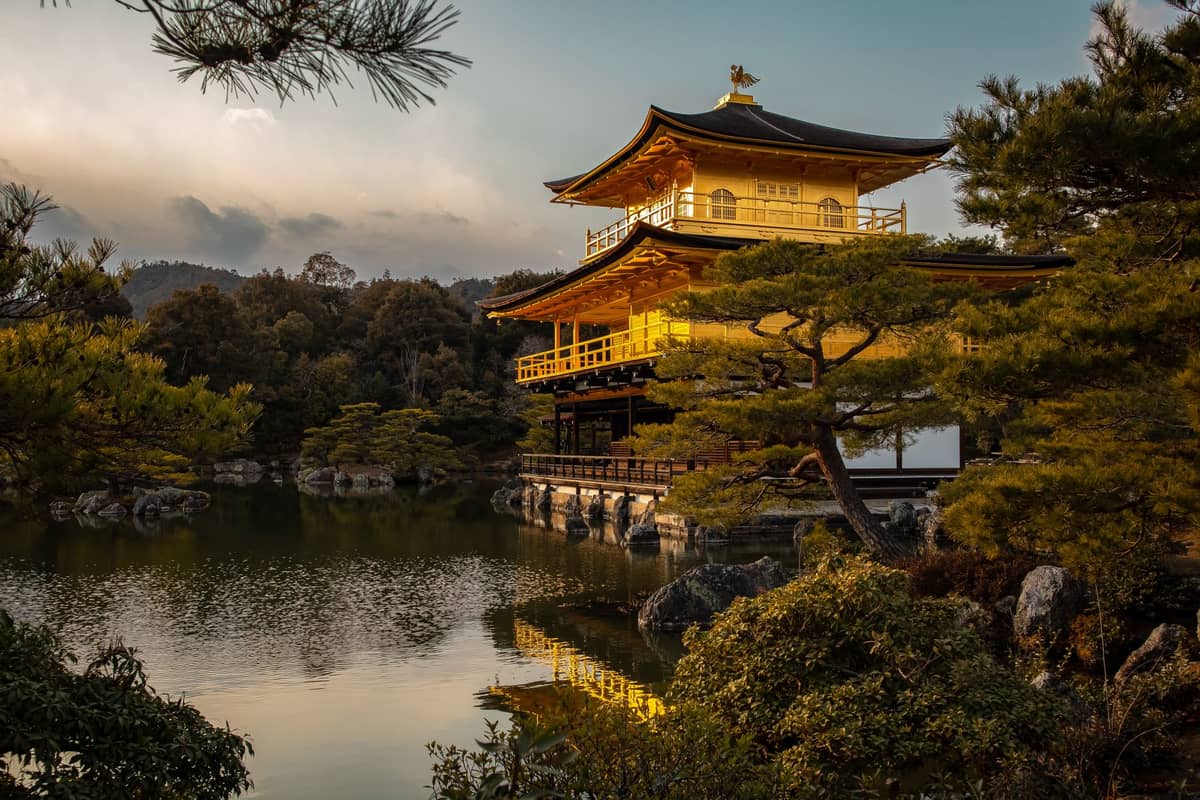
Kinkaku-ji is Kyoto's most photographed temple, a three-story gold-leaf pavilion reflected in a tranquil pond within a classical strolling garden. Here is everything you need to visit intelligently: the best times, crowd patterns, transit routes, and a clear assessment of the experience.
Quick Facts
- Location
- 1 Kinkakuji-cho, Kita-ku, Kyoto 603-8361 (northwest Kyoto)
- Getting There
- Kyoto City Bus stops near the temple entrance; buses run from Kyoto Station and downtown Karasuma-Shijo area
- Time Needed
- 45–90 minutes for the garden circuit; allow extra time for queues at peak periods
- Cost
- Adults ¥500 / Children (elementary & junior high) ¥300. Tickets are sold at the gate; no advance booking for individuals
- Best for
- First-time Kyoto visitors, architecture enthusiasts, garden photography, cultural immersion
- Official website
- www.shokoku-ji.jp/en/kinkakuji
What Kinkaku-ji Actually Is
Kinkaku-ji, formally Rokuon-ji and part of the Shokoku-ji branch of the Rinzai school of Zen Buddhism, is best known by the structure at its center: a three-story pavilion whose upper two floors are covered in gold leaf, positioned at the edge of a large reflective pond called Kyoko-chi, or Mirror Pond. The pavilion and its reflection together form the image that appears on virtually every Kyoto postcard, and the sight of the structure on a clear morning is, by any objective measure, extraordinary.
The garden surrounding it is a classical Japanese strolling garden, designed to be experienced on foot along a single prescribed path that winds through wooded grounds, past stone arrangements, tea ceremony areas, and smaller secondary structures. You do not enter the pavilion itself. The experience is entirely exterior, which is worth knowing before you arrive with expectations shaped by interior temple visits elsewhere.
ℹ️ Good to know
Tickets are sold at the gate. Adults ¥500, children (elementary through junior high school) ¥300. There is no advance booking system for individual visitors. The temple is open daily 09:00–17:00 year-round.
The Visit, Hour by Hour
The temple opens at 09:00, and the difference between arriving at 09:00 and arriving at 10:30 is dramatic. At opening, even during peak spring and autumn seasons, the crowd at the main viewing platform is manageable. The light at this hour is gentle, coming from the east, which means the pavilion faces the sun directly and the gold catches it cleanly. The pond is calm, the reflection sharp. Within twenty minutes of the main gate opening, the primary viewing deck begins to fill with school groups and tour buses. By 10:00, the scene at the main platform is often shoulder-to-shoulder.
Midday, from roughly 11:00 to 14:00, is the most congested window on any day outside of winter. The light is also harsher and more overhead, which flattens the texture of the gold leaf somewhat. Photographers who care about the quality of the image, not just its content, prefer the first and last hour of opening.
Late afternoon, from around 15:30 onward, sees crowds thin noticeably as tour groups leave. The western light at this hour angles across the pavilion differently, giving it a warmer, slightly redder tone. If you cannot arrive early, late afternoon is your second-best window. The garden closes at 17:00 without exception, so aim to enter by 16:00 at the latest.
💡 Local tip
Arrive at 09:00 when the gates open. This is not a minor advantage — it can mean the difference between a peaceful, photogenic visit and standing in a dense queue for a clear view of the pavilion.
Tickets & tours
Hand-picked options from our booking partner. Prices are indicative; availability and final rates are confirmed when you complete your booking.
Kyoto Coast, Amanohashidate and Ine Bay 1-Day Trip from Osaka or Kyoto
From 46 €Instant confirmationFree cancellationKyoto Sanzen-in, Arashiyama and Bamboo Grove Full Day Tour
From 47 €Instant confirmationFree cancellationKyoto Arashiyama insider walking tour
From 66 €Instant confirmationFree cancellationMatcha green tea tour in Kyoto's Uji Market
From 130 €Instant confirmationFree cancellation
Historical Context
The original structure at this site was built in the late 14th century as a villa for the shogun Ashikaga Yoshimitsu. After his death in 1408, it was converted into a Zen temple according to his wishes. The pavilion's three floors each represent a distinct architectural style: the ground floor in the Shinden style of Heian court architecture, the second in the Buke (samurai) style, and the third in the Zen Buddhist style. This layering of architectural languages in a single structure reflects the eclectic political and cultural authority Yoshimitsu was projecting during his rule.
The pavilion standing today is not the medieval original. In 1950, a 22-year-old novice monk set fire to the structure, destroying it entirely. Yukio Mishima fictionalized this act in his 1956 novel 'The Temple of the Golden Pavilion,' bringing the story international attention. The current building is a 1955 reconstruction, rebuilt using traditional materials and techniques, and has since undergone additional restoration of its gold leaf. The story of destruction and reconstruction is part of what makes the site culturally layered rather than simply scenic.
Walking the Garden Circuit
The path through the grounds is one-directional and takes between 40 and 60 minutes at a relaxed pace. After passing through the ticket gate, visitors walk a short approach before arriving at the main viewing area, a wide platform facing the pavilion across the pond. This is the central moment of the visit and where most people spend five to fifteen minutes. The view is wide, unobstructed, and deliberately framed by the surrounding trees and stone shoreline.
From there, the path continues around the upper pond and through woodland sections where the crowds thin considerably. There are small shrines, a stone garden attributed to the late Zen master Kokushi, and a traditional teahouse called Sekkatei where you can purchase matcha and a sweet while sitting on a covered bench overlooking a secondary pond. This is one of the less-rushed moments in the circuit and worth the stop.
The exit brings visitors out near a souvenir area and a secondary temple structure. For those interested in continuing a temple-focused day in northwest Kyoto,Ryoan-jiis walkable from here and offers one of Japan's most considered rock garden experiences — a strong pairing if you want contrasting approaches to Zen temple design.
Seasonal Considerations
Kinkaku-ji looks different across the four seasons, and each version is genuinely worth seeing. Spring brings pale pink cherry blossoms to the trees around the pond, softening the contrast between gold and green. Autumn turns the maples surrounding the pavilion deep red and orange, a combination with the gold leaf that produces the most dramatic color palette of the year. Both seasons also bring the heaviest crowds, so the timing trade-off is real.
Winter is the most underrated time to visit. On the rare mornings when snow settles on the pavilion's roof and surrounding garden, the visual impact is exceptional, and crowd levels drop sharply. Kyoto winters are cold, with daytime temperatures often around 5–8°C in December and January, but the reduced queues and quieter grounds make it a compelling season for visitors comfortable in the weather. Light snow at Kinkaku-ji is unpredictable and cannot be planned for, but if you happen to be in Kyoto on a cold clear day following overnight snow, this is where to go first.
Summer, from late June through August, is the most challenging period due to Kyoto's high humidity and temperatures that regularly reach 30–33°C. The garden is largely unsheltered between its wooded sections, and the midday heat can make the circuit uncomfortable.Kyoto's best travel seasonsalign closely with when Kinkaku-ji is at its most rewarding: April to May and October to November.
Getting There
Kinkaku-ji is in the northwest of Kyoto, outside the central subway grid, so Kyoto City Bus is the standard way to get there. From Kyoto Station, several bus routes serve the area, with journey times often around 30–40 minutes depending on traffic and route. From downtown Karasuma-Shijo, journeys are somewhat shorter. Bus stops near the temple entrance are well-signed in English and Japanese.
Kyoto's bus network can slow significantly during peak tourist seasons due to road congestion. If you are visiting in spring cherry blossom season or peak autumn foliage, add buffer time for the bus journey. A taxi from central Kyoto is faster during congested periods but considerably more expensive.
If you are planning a day focused on northwest Kyoto, combining Kinkaku-ji with Ryoan-ji andNinna-jimakes geographic sense — all three are close enough to walk between, and together they represent three distinct approaches to temple garden design. This circuit is one of the more rewarding ways to spend a half-day in this part of the city.
Photography Notes
The main pavilion view is fixed and available to everyone. The standard shot — pavilion reflected in the pond with clear sky or seasonal foliage — is taken from a specific platform that cannot be repositioned. There is no elevated angle, no alternative vantage point that is dramatically different. What distinguishes one photograph from another here is light quality, crowd timing, and seasonal color.
Morning light from the east hits the gold face of the pavilion directly. The reflection in calm morning water can be mirror-sharp. A small tripod is useful for low-light shots in the first minutes after opening. A polarizing filter helps manage reflections on brighter days. The garden path beyond the main viewing platform offers secondary compositions from slightly different angles as it curves around the pond, but these are less impactful than the primary view.
💡 Local tip
Shoot the reflection in the first 30 minutes after opening. Even light wind creates ripples that blur the pavilion's mirror image. Still water is most reliable early in the morning before foot traffic on the surrounding path disturbs the surface.
Accessibility and Practical Notes
The garden circuit involves some uneven stone paths and short inclines, but the primary viewing area and most of the main path are navigable by wheelchair and pushchair, with partial limitations on some sections. Visitors with mobility concerns should expect a largely accessible route to the main view, but not full barrier-free access across all garden areas.
There are toilet facilities on site near the entrance and exit areas. A covered souvenir shop and the Sekkatei teahouse offer shelter and seating. Outside the temple grounds, the immediate surrounding street has small shops and cafes. Bring cash for the entrance fee, as card payment may not be accepted at the ticket gate.
For a broader understanding of temple etiquette across Kyoto's religious sites, theKyoto temple etiquette guidecovers the behavioral norms that apply here and at similar Zen sites.
An Honest Assessment
Kinkaku-ji is not a misrepresented attraction. The pavilion genuinely looks the way the photographs suggest. The gold leaf is real, dense, and luminous in good light. The reflection in the pond works. The garden is well-maintained and historically coherent. This is one of those rare cases where the iconic image and the actual experience largely align.
The honest caveat is the crowd. On a typical spring or autumn weekend morning from 10:00 onward, the main viewing platform is so dense that a relaxed experience is difficult. The site is efficient at moving people through, and the circuit does not allow lingering in bottlenecks, but if solitude or quiet contemplation is what you are seeking in a temple garden, there are better options in Kyoto.
Visitors who want a meditative Zen garden experience with minimal crowds should consider pairing this visit with a trip toDaitoku-ji, a sprawling temple complex in the same northwest district that receives far fewer visitors and contains multiple sub-temple gardens of exceptional quality. The contrast between the two experiences on a single day is instructive.
Insider Tips
- Buy your ticket at the outer gate before walking the approach path — the queue to pay moves faster than it appears, but having small change speeds things up since payment is usually made in cash.
- The Sekkatei teahouse inside the garden offers matcha and a traditional sweet for a few hundred yen. Most visitors walk past it. Stopping here gives you 10–15 minutes of relative calm mid-circuit with a garden view.
- On weekday mornings in January and February, you can sometimes have the main viewing platform to yourself for several minutes — a genuinely different experience from peak season visits. If winter Kyoto fits your schedule, this is one of the strongest arguments for it.
- The path curves around the back of the pond after the main platform, giving a side-angle view of the pavilion through trees. It is a less iconic composition but less crowded, and in autumn the maple framing here is striking.
- Northwest Kyoto's bus routes back to central Kyoto can be slow in afternoon traffic. If you are continuing to Arashiyama or another western district afterward, check bus timing in advance or consider a taxi for the connection to avoid losing significant time waiting.
Who Is Kinkaku-ji (Golden Pavilion) For?
- First-time visitors to Kyoto who want to see the city's defining landmark in person
- Architecture and design travelers interested in how Japanese Zen aesthetics express themselves in built form
- Garden photographers who can plan an early-morning arrival and work within a fixed scenic composition
- Travelers building a northwest Kyoto circuit combining Kinkaku-ji, Ryoan-ji, and Ninna-ji in a single half-day
- Winter visitors to Kyoto who want to experience major landmarks with thinner crowds and occasional snow
Nearby Attractions
Other things to see while in Nishijin:
- Daitoku-ji Temple Complex
Daitoku-ji is a sprawling Rinzai Zen monastic complex in Kyoto's Nishijin district, containing roughly two dozen sub-temples set among raked gravel lanes, weathered mud walls, and ancient pines. The grounds are free to enter at any hour, while individual sub-temples charge modest admission to access some of Japan's most refined dry-landscape gardens.
- Funaoka Onsen
Built in 1923 and registered as a Tangible Cultural Property of Japan, Funaoka Onsen is a rare survivor of Taishō-era sento architecture in Kyoto's traditional Nishijin weaving district. Admission costs around ¥550, the carved wooden interiors are extraordinary, and almost everyone soaking alongside you is a local.
- Kitano Tenmangu Shrine
Founded in 947 and dedicated to the deity of scholarship, Kitano Tenmangu is one of Kyoto's most culturally layered shrines. Entrance to the main grounds is free, the plum grove is among the finest in the city, and on the 25th of every month the whole complex transforms into one of Kyoto's largest antique markets.
- Ninna-ji Temple
Founded in 888 AD and designated a UNESCO World Heritage Site, Ninna-ji Temple blends imperial history with striking architecture across freely walkable grounds. It is best known for the Omuro Sakura, a late-blooming dwarf cherry variety that draws visitors weeks after the city's other blossoms have fallen.