Ninna-ji Temple: Kyoto's Imperial Buddhist Sanctuary
Founded in 888 AD and designated a UNESCO World Heritage Site, Ninna-ji Temple blends imperial history with striking architecture across freely walkable grounds. It is best known for the Omuro Sakura, a late-blooming dwarf cherry variety that draws visitors weeks after the city's other blossoms have fallen.
Quick Facts
- Location
- 33 Omuro Ouchi, Ukyo-ku, Kyoto 616-8092 (Nishijin/Omuro district, northwest Kyoto)
- Getting There
- Omuro-Ninnaji Station (Keifuku Randen Kitano Line), a few minutes on foot; or Kyoto City Bus route 26 from Kyoto Station (approx. 30 min)
- Time Needed
- 1.5 to 2.5 hours (longer during cherry blossom season)
- Cost
- Temple grounds: free outside Omuro Hanamatsuri. Palace/Goten Garden: ¥800 adults, free for high school students and younger. Omuro cherry blossom festival admission: ¥500 adults. Reihokan Museum (spring/autumn only): ¥500 adults.
- Best for
- Late-season cherry blossoms, Buddhist architecture, Japanese garden design, history enthusiasts
- Official website
- ninnaji.jp/en
What Is Ninna-ji, and Why Does It Matter?
Ninna-ji Temple is one of Kyoto's most historically significant religious sites, founded in 888 AD during the reign of Emperor Uda, who later retired here and became its first abbot. That imperial connection shaped everything about the complex. For centuries, Ninna-ji was headed by members of the imperial family, giving it a rank and visual grandeur that sets it apart from most temples in the city. The buildings feel palatial rather than purely devotional, and the grounds reflect that dual identity of court residence and Shingon Buddhist sanctuary.
The temple is part of the UNESCO World Heritage designation covering the Historic Monuments of Ancient Kyoto, a grouping of 17 properties across the city and surrounding area. That status is warranted here. Unlike some World Heritage sites that reward mainly the dedicated historian, Ninna-ji rewards casual visitors too, particularly those who arrive at the right time of year.
Ninna-ji sits in the Omuro district of northwest Kyoto, comfortably paired withRyoan-ji and Kinkaku-jion a half-day temple circuit. All three are within cycling or walking distance of one another, making this corner of the city one of Kyoto's most concentrated areas for serious Buddhist heritage.
The Omuro Sakura: Kyoto's Last Cherry Trees
Ninna-ji's most celebrated feature is the Omuro Sakura, a strain of short-statured, late-blooming cherry trees that grow within the western section of the grounds. These trees typically flower one to two weeks after the famous Maruyama Park and Philosopher's Path blossoms have dropped, which means Ninna-ji becomes the final stop on Kyoto's cherry blossom calendar. For travelers who miss peak bloom elsewhere, this is genuinely significant rather than a consolation prize.
The trees grow to only about two meters tall, so their canopy sits almost at eye level. Walking among them feels intimate in a way that viewing blossoms from below a tall tree does not. Pink petals are level with your face, and the tightly planted grove creates a corridor effect along the gravel paths. In mid-morning light, the contrast between the pale pink blossoms and the dark timber of the five-story pagoda behind them is striking.
💡 Local tip
A ¥500 special admission applies to the Omuro cherry blossom festival area during Omuro Hanamatsuri. This is separate from the ¥800 Goten Garden ticket. Both can be purchased on-site; arrive before 10:00 to avoid queues that build significantly later in the day.
The blossom period runs roughly from late March into mid-April, but the exact timing shifts year to year with temperature. Do not plan a visit solely for the sakura without checking current bloom reports in the week before you arrive. The Randen tram that connects Omuro-Ninnaji Station to Kitano Hakubaicho is itself flanked by cherry trees during the season, so the journey to the temple becomes part of the experience.
Tickets & tours
Hand-picked options from our booking partner. Prices are indicative; availability and final rates are confirmed when you complete your booking.
Kyoto Coast, Amanohashidate and Ine Bay 1-Day Trip from Osaka or Kyoto
From 46 €Instant confirmationFree cancellationKyoto Sanzen-in, Arashiyama and Bamboo Grove Full Day Tour
From 47 €Instant confirmationFree cancellationKyoto Arashiyama insider walking tour
From 66 €Instant confirmationFree cancellationMatcha green tea tour in Kyoto's Uji Market
From 130 €Instant confirmationFree cancellation
Exploring the Temple Grounds: What You Will Actually See
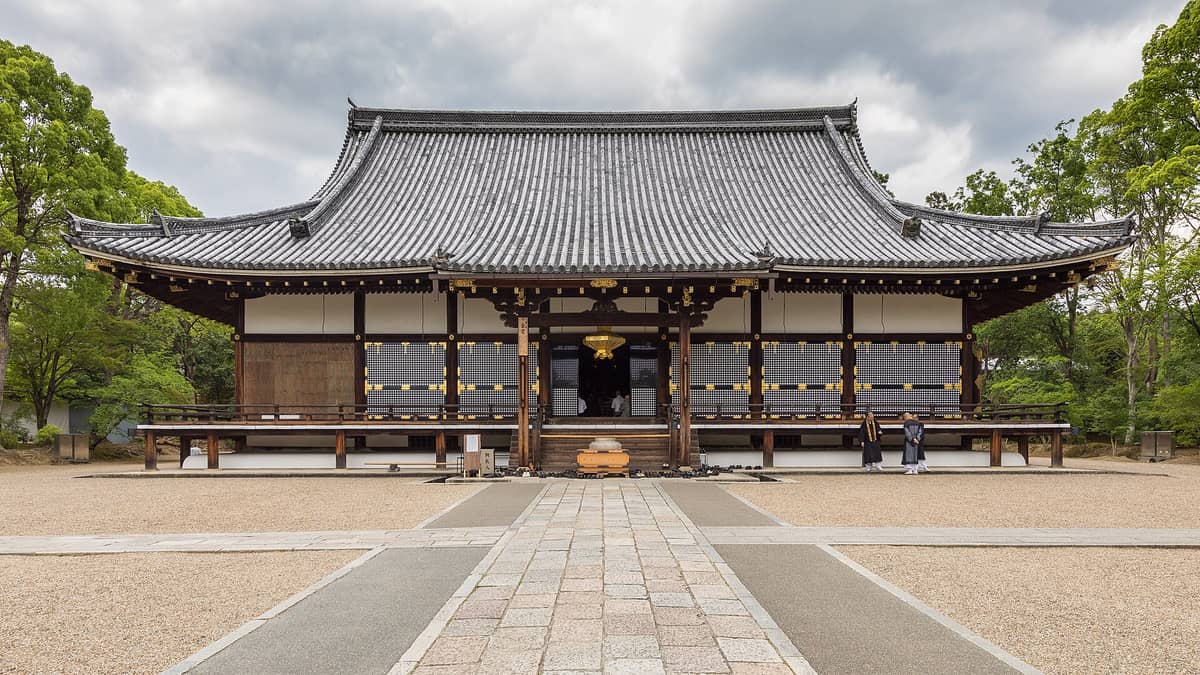
Entering through the massive Niomon Gate, you walk into an open forecourt that is free to wander at any time of year. The scale surprises most visitors. Ninna-ji is not one building but a spread of structures across a substantial compound. The main axis leads past the Chumon (middle gate) to the Kondo, the primary Buddha hall, which dates to the early 17th century and is a designated National Treasure of Japan. Its architectural style is precise Momoyama-period Buddhist construction: sweeping roof, dark wood, and an interior lit with the particular flat quality of filtered shrine light.
The five-story pagoda nearby is also a National Treasure and one of the most photographed structures in northwest Kyoto. It stands at 36.18 meters and dates to 1637. Unlike some pagodas that are hemmed in by later construction, this one has space around it, and you can circle it completely on gravel paths.
Gravel crunches underfoot throughout the free-access areas, and on weekday mornings the sound carries clearly across the compound because the crowds are thin. There are stone lanterns at irregular intervals and a small pond near the bell tower. The atmosphere in the early morning, before tour groups arrive from central Kyoto, is genuinely calm.
💡 Local tip
The free grounds area is often overlooked in favor of the paid Goten Garden, but the Kondo and five-story pagoda both sit in the free section. Spend at least 30 minutes here before paying for the garden.
The Goten Palace Garden: Worth the ¥800?
The Goten refers to the former imperial palace buildings and their attached strolling garden, a style known as kaiyushiki-teien that Japanese aristocratic design developed to perfection. A central pond reflects the surrounding pines and rocks, with stone bridges connecting small islands. The garden is designed to be walked around its perimeter in a single circuit, with different compositions revealing themselves from each turn of the path.
The palace buildings themselves include shoin-style reception rooms with painted sliding screens and tatami floors visible from the exterior veranda. You walk along the wooden corridor connecting rooms, looking inward at the screens and outward at the garden simultaneously. It is the kind of spatial sequencing that Japanese architecture executes with particular intelligence: interior and garden are never fully separated.
If you have already paid entry at Katsura Imperial Villaor the Kyoto Imperial Palace, the Goten will feel familiar in concept, though more approachable since no advance reservation is required. For most visitors, the ¥800 is justified. For travelers who find Japanese strolling gardens repetitive after several days of temple-hopping, it can be skipped without missing the core of Ninna-ji.
How the Experience Changes by Time of Day and Season
Opening time at 09:00 gives you the compound in near-silence. Gravel raking sounds come from somewhere behind the Kondo, incense drifts faintly from the main hall, and the light on the pagoda is low and directional. By late morning, organized tour groups begin arriving from nearby major temples such as Ryoan-ji. Between 11:00 and 14:00 the compound is at its most congested, though it never reaches the density of Kinkaku-ji or Fushimi Inari.
Afternoons from about 14:30 see a noticeable thinning of visitors. The garden in afternoon light catches warmer tones on the pond surface, and the palace interior screens become more visible as the exterior glare softens. Late afternoon in autumn, when the maples in the garden turn orange and yellow, is arguably the temple's second-best season after cherry blossom time.
In winter, Ninna-ji receives far fewer visitors than its more central counterparts. The grounds take on an austerity that suits the Buddhist aesthetic well, and occasional snowfall on the pagoda roof is a scene that photographers seek specifically here. For a broader look at how Kyoto's temples behave seasonally, theKyoto in winter guide covers what to expect across the city.
⚠️ What to skip
Summer visits (July to August) mean significant heat inside the temple compound, which offers limited shade in the free-access areas. Bring water. The Goten Garden has more tree cover, but the heat index in Kyoto's basin climate is genuinely challenging from late July onward.
Getting There and Practical Logistics
The most atmospheric approach is via the Keifuku Randen tram, a narrow-gauge line that is one of Kyoto's few surviving street-level railways. Board at Kitano Hakubaicho Station or connect from Shijo-Omiya on the Arashiyama Line. Omuro-Ninnaji Station is the stop directly serving the temple, and the walk to the Niomon Gate takes only a few minutes. The tram itself is slow by design, running through residential streets at a pace that forces you to notice the neighborhoods rather than transit through them.
By bus, Kyoto City Bus route 26 from Kyoto Station reaches a stop near Ninna-ji in approximately 30 minutes. Buses run frequently but can be crowded during peak tourist season and rush hour. If you are combining Ninna-ji with Ryoan-ji and Kinkaku-ji, a bicycle rented near Kyoto Station or in the Nishijin area is the most efficient option.
Visitors with a disability certificate receive free admission to certain paid areas upon presenting documentation at the ticket counter. The main temple grounds are generally flat and accessible, though detailed wheelchair access information for all areas should be confirmed with the temple directly before visiting.
Opening hours run from 09:00 to 17:00 from March through November, and 09:00 to 16:30 from December through February. Last admission is 30 minutes before closing. The temple is open year-round. The Reihokan Museum, which displays sacred treasures including National Treasure artworks, opens only during limited spring and autumn periods at around ¥500 admission; check the official site for current dates and exact pricing before planning your visit specifically around it.
ℹ️ Good to know
Groups of 15 or more receive approximately a 10% discount on many paid admission areas. Free admission typically applies for high school students and younger in several ticketed sections, but confirm current student policies on the official site or at the ticket counter.
Insider Tips
- Pair Ninna-ji with Ryoan-ji by walking the 10-minute path between them, then continue to Kinkaku-ji. This northwest temple circuit is best done east to west (Kinkaku-ji first, Ninna-ji last) so you end near the Randen tram for an efficient return without backtracking.
- The late-blooming Omuro Sakura often peak when the rest of Kyoto has declared cherry blossom season finished. If you are visiting in mid-April, check Ninna-ji's current bloom status before writing off sakura season entirely.
- The five-story pagoda photographs cleanest from the left side of the forecourt path, framed against open sky. Most visitors photograph it straight-on from the center path, which adds a busy railing to the foreground.
- The Reihokan Museum, when open, displays items not accessible elsewhere and is often uncrowded even during busy temple periods. If you are visiting in late April or early November, check whether it is open and allow extra time.
- The Randen tram from Kitano Hakubaicho to Omuro-Ninnaji is a genuinely pleasant 10-minute ride through low-rise residential Kyoto. Use it at least one way rather than taking the bus both directions.
Who Is Ninna-ji Temple For?
- Travelers visiting Kyoto in mid-April who want to see late-blooming cherry blossoms after peak season has passed
- Architecture and Japanese design enthusiasts interested in Momoyama-period Buddhist structures and imperial palace gardens
- Visitors who want a calmer alternative to the crowds at Kinkaku-ji, with comparable historical significance
- Photographers seeking the pagoda-and-blossoms composition that defines Ninna-ji's most recognizable image
- Anyone building a northwest Kyoto day combining this temple with Ryoan-ji's rock garden and Kinkaku-ji's golden pavilion
Nearby Attractions
Other things to see while in Nishijin:
- Daitoku-ji Temple Complex
Daitoku-ji is a sprawling Rinzai Zen monastic complex in Kyoto's Nishijin district, containing roughly two dozen sub-temples set among raked gravel lanes, weathered mud walls, and ancient pines. The grounds are free to enter at any hour, while individual sub-temples charge modest admission to access some of Japan's most refined dry-landscape gardens.
- Funaoka Onsen
Built in 1923 and registered as a Tangible Cultural Property of Japan, Funaoka Onsen is a rare survivor of Taishō-era sento architecture in Kyoto's traditional Nishijin weaving district. Admission costs around ¥550, the carved wooden interiors are extraordinary, and almost everyone soaking alongside you is a local.
- Kinkaku-ji (Golden Pavilion)
Kinkaku-ji is Kyoto's most photographed temple, a three-story gold-leaf pavilion reflected in a tranquil pond within a classical strolling garden. Here is everything you need to visit intelligently: the best times, crowd patterns, transit routes, and a clear assessment of the experience.
- Kitano Tenmangu Shrine
Founded in 947 and dedicated to the deity of scholarship, Kitano Tenmangu is one of Kyoto's most culturally layered shrines. Entrance to the main grounds is free, the plum grove is among the finest in the city, and on the 25th of every month the whole complex transforms into one of Kyoto's largest antique markets.