Daitoku-ji Temple Complex: Kyoto's Quiet Zen City Within a City
Daitoku-ji is a sprawling Rinzai Zen monastic complex in Kyoto's Nishijin district, containing roughly two dozen sub-temples set among raked gravel lanes, weathered mud walls, and ancient pines. The grounds are free to enter at any hour, while individual sub-temples charge modest admission to access some of Japan's most refined dry-landscape gardens.
Quick Facts
- Location
- 53 Murasakino Daitokuji-cho, Kita-ku, Kyoto — Murasakino area
- Getting There
- Kyoto City Bus 205 or 206 to Daitokuji-mae, or Karasuma Line to Kitaoji Station then a short walk or bus
- Time Needed
- 2–4 hours depending on how many sub-temples you visit
- Cost
- Grounds: free. Sub-temples: typically ¥350–¥500 each; some special openings around ¥1,000
- Best for
- Zen garden enthusiasts, architecture lovers, travellers seeking calm away from Kyoto's main temple crowds
- Official website
- http://zen.rinnou.net/head_temples/07daitoku.html
What Daitoku-ji Actually Is
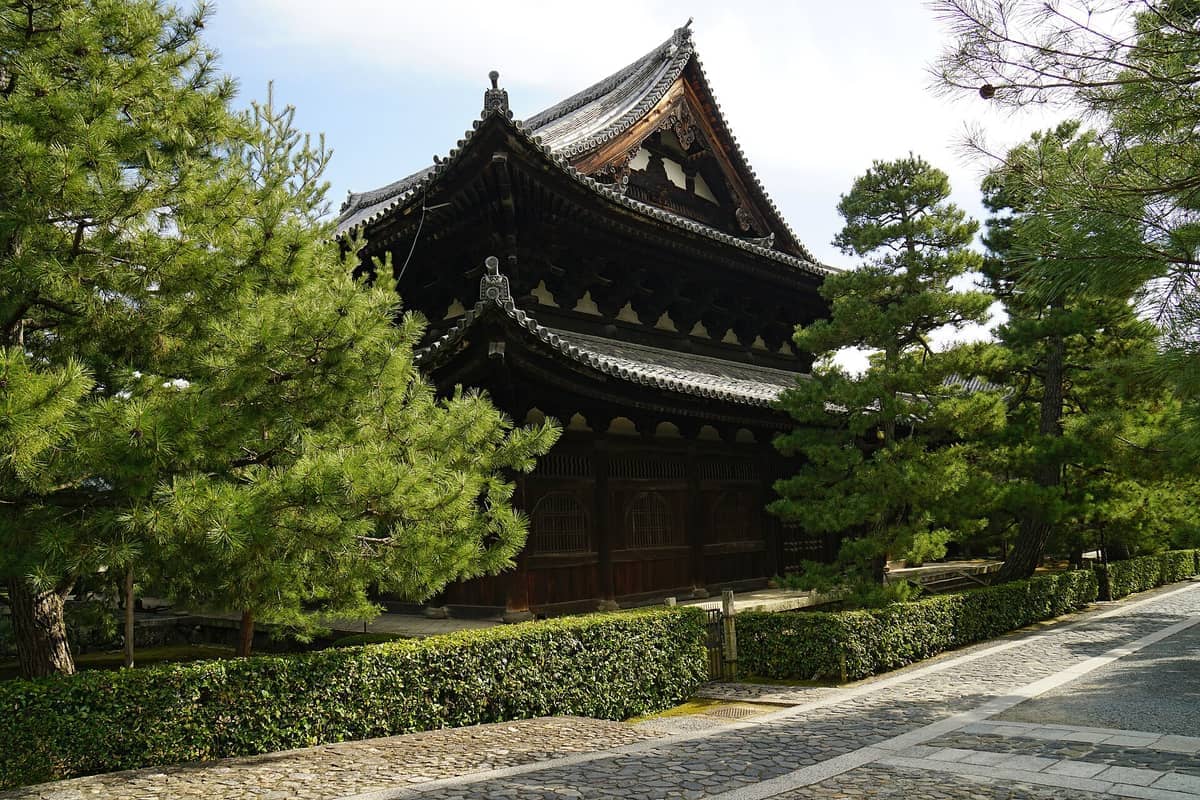
Daitoku-ji is not a single temple. It is a Rinzai Zen monastic city: a walled precinct containing roughly two dozen sub-temples, each with its own abbot's quarters, garden, and gate. Most of the complex remains an active monastery closed to general visitors, but four sub-temples keep their gates open year-round, with others unlocking for brief spring and autumn special viewings. The result is a layered experience where freely walkable lanes deliver as much atmosphere as paid entry.
Founded in the early 14th century, Daitoku-ji grew into one of the most politically and culturally influential Zen establishments in medieval Japan. Warlords patronised it, tea masters shaped its aesthetic identity, and its abbots were among the most respected Buddhist scholars of their era. That weight of history is still present in the moss-darkened stone lanterns and the precise geometry of raked gravel gardens visible through latticed gates.
The complex sits in the Nishijin district, historically Kyoto's textile quarter. The neighbourhood's quieter pace is one reason Daitoku-ji often feels markedly less crowded than comparable sites inHigashiyama. Tour buses do stop here, but they tend to concentrate at one or two sub-temples, leaving the rest of the precinct comparatively calm.
The Grounds: What You See Without Paying Anything
The main precinct's lanes are open at all hours and free to walk. Wide earthen paths run between the high mud-and-plaster walls (土塀, dobei) that separate each sub-temple compound. The walls themselves are visually striking: layers of dark earth compressed between thin bands of white plaster, topped with curved roof tiles and gradually greening with age. Walking through here at any time of day feels deliberately unhurried.
The path from the south gate passes the imposing Sanmon (main gate), a two-storey structure rebuilt in the 16th century and partly funded by the tea master Sen no Rikyu. Above the gate's upper level sits a carved figure of Rikyu himself, a detail that reportedly caused a serious political dispute at the time. The gate is not publicly accessible inside, but its mass and craft are apparent from the path below.
💡 Local tip
Arrive before 9:00 to walk the main lanes in near-silence. By mid-morning, tour groups have gathered at the popular sub-temples. Early light filters through the pine canopy and the stone lanterns are still damp with morning dew.
The large Butsuden (Buddha Hall) and Hatto (Dharma Hall) visible from the central path are used for ceremonies and are generally closed to tourists, but their scale communicates the institutional gravity of the place. This is not a heritage museum. Monks still live and train here.
Tickets & tours
Hand-picked options from our booking partner. Prices are indicative; availability and final rates are confirmed when you complete your booking.
Kyoto Coast, Amanohashidate and Ine Bay 1-Day Trip from Osaka or Kyoto
From 46 €Instant confirmationFree cancellationKyoto Sanzen-in, Arashiyama and Bamboo Grove Full Day Tour
From 47 €Instant confirmationFree cancellationKyoto Arashiyama insider walking tour
From 66 €Instant confirmationFree cancellationMatcha green tea tour in Kyoto's Uji Market
From 130 €Instant confirmationFree cancellation
The Sub-Temples Worth Paying to Enter
Of the sub-temples open year-round, three are consistently recommended and each offers something distinct.
Daisen-in
Daisen-in is the most visited sub-temple in the complex and, for good reason, the most discussed. Its dry-landscape garden (karesansui) is a masterpiece of the early 16th century, composing river valleys, mountain peaks, and ocean using only gravel, stone, and a small amount of moss. The scale is intimate rather than grand: you view it from a wooden engawa (veranda) at extremely close range, almost at stone-level. The illusion of landscape is startling.
Open 09:00–17:00 (closing at 16:30 in December and February). Admission is approximately ¥500. The attendant sometimes gives a brief explanation in Japanese. An English leaflet is usually available. Photography policies vary and you should check at the entry gate.
Ryogen-in
Ryogen-in is smaller and quieter than Daisen-in, and contains five distinct gardens in a compact footprint. One of them, Totekiko, is often cited as the smallest Zen garden in Japan: a stone circle in raked gravel that a person could step across in two paces. Despite this, it holds its own in terms of presence. Open 09:00–16:30 (last entry around 16:20).
Zuiho-in
Zuiho-in is worth seeking out for a different reason. Founded in the 16th century by a feudal lord who converted to Christianity, its modern garden (redesigned in 1961) contains a cross motif in the arrangement of stones, visible only if you know to look. Whether this reads as meaningful or contrived depends on the visitor, but the garden itself is well-composed and notably less toured than the other two. Open 09:00–17:00.
ℹ️ Good to know
Several sub-temples, including Obai-in, open only during brief spring and autumn special viewing periods. Admission for these special openings can reach around ¥1,000. Check current opening schedules before visiting, as dates change each year.
How the Experience Changes Through the Day
Early morning, before 09:00, is genuinely different from any other time. The sub-temple gates are not yet open, but the lanes are yours. The smell is of damp gravel, pine resin, and old wood — cool in all but the hottest weeks of summer. Gravel crunches underfoot. An occasional monk crosses the path at distance.
Between 10:00 and 12:00, groups arrive. They concentrate at Daisen-in, which means the lanes further into the complex remain relatively calm. By early afternoon the crowds thin again, particularly on weekdays. Late afternoon, around 15:30–16:00, is a second quiet window before closing times, and the angle of light against the dobei walls turns the pale plaster a deeper gold.
In autumn, specifically from mid-November, maple trees within some sub-temple gardens produce colour that can be quite striking against the grey stone and raked gravel. Crowds return for this period, and the limited-opening sub-temples tend to schedule their special viewings around it. Spring brings a quieter bloom within the walls. Summer is genuinely hot given Kyoto's basin geography, and the shaded lanes provide some relief, but the combination of heat and humidity makes late morning visits uncomfortable.
For a broader view of how seasons affect timing decisions across the city, thebest time to visit Kyotoguide covers temperature ranges, crowd patterns, and festival schedules in detail.
Historical and Cultural Context
Daitoku-ji was established in 1315 by the monk Shuho Myocho (known posthumously as Daito Kokushi) and received imperial patronage under Emperor Hanazono and Emperor Go-Daigo. Its early decades were turbulent: the complex was largely destroyed during the Onin War (1467–1477), which left much of Kyoto in ruins. Rebuilding was financed by powerful patrons, and it was during the late 15th and 16th centuries that the complex took its current shape.
The tea ceremony connection is deep and specific. Sen no Rikyu, the defining figure of the Japanese tea ceremony, had his funeral held here, and the aesthetic principles he systematised — wabi (rustic simplicity), restraint, imperfection as a form of beauty — are visibly embedded in the gardens and architecture of the sub-temples. Several famous tea houses survive within the complex grounds, though most are not publicly accessible.
This overlap between Zen Buddhism and tea culture is a recurring theme across northern Kyoto. The nearbyKitano Tenmangu Shrinehosts seasonal markets and has its own significant role in the area's cultural calendar, making it a natural pairing on a northern Kyoto half-day.
Practical Walkthrough: How to Structure Your Visit
Enter from the south gate, which is the closest to the bus stop at Daitokuji-mae. Walk north along the central lane to orient yourself. The Sanmon is on your left, the Chokushimon (imperial messenger gate, recognisable by its distinctive form) further along. Take note of which sub-temples are open that day before committing to an order.
A practical sequence for a two-hour visit: start at Ryogen-in (quieter, gets busier as the morning progresses), then cross to Zuiho-in, then finish at Daisen-in. This moves from lesser-known to most popular, which works better for crowd management than the reverse. If you have more time, explore the unpaid lanes after finishing the sub-temples: the northern sections of the precinct are less walked and more atmospheric.
Footwear matters. You will remove your shoes at the entrance to each sub-temple's main building and walk on polished wood floors or tatami in socks. Slip-on shoes are faster. Sub-temple interiors are cool even in summer, but your feet may be cold in winter.
⚠️ What to skip
Most sub-temples are cash-only for admission. There are no ATMs inside the complex. Withdraw cash before arriving, either at a convenience store near Kitaoji Station or at Kyoto Station.
Accessibility is limited throughout the complex. The gravel lanes between sub-temples are level but uneven underfoot. Most sub-temple buildings have raised wooden thresholds and steps that make wheelchair access difficult or impossible. Some special-opening events are explicitly noted as inaccessible due to the building structures.
If Daitoku-ji appeals to you, it pairs naturally with a broader northern Kyoto half-day that could also includeRyoan-ji and Kinkaku-ji, both accessible from Kitaoji Station. However, combining all three in a single day produces a distinctly different experience from spending two or three hours slowly at Daitoku-ji alone — both approaches are valid depending on what you want.
Photography
The lanes and external walls can be photographed freely. Inside sub-temples, policies vary: some prohibit all photography inside the buildings but permit it in the garden; others allow photography throughout. Ask or check posted signs at each gate. The dobei walls photograph well in any light, but the early morning and late afternoon shots have a warmth that midday lacks. A wide-angle lens is more useful than a telephoto here: the gardens read best in context, not compressed.
For location ideas across the city, the best views in Kyotoguide includes both elevated panoramas and ground-level composition spots.
Insider Tips
- The lane running along the western interior edge of the complex, past the less-visited sub-temples like Soken-in, is almost always quiet regardless of the time of day. Walk it slowly rather than heading directly between the tourist sub-temples.
- Daisen-in's warden sometimes gives a spontaneous verbal commentary in Japanese with a few English phrases. If the timing works, stay on the veranda longer than you think necessary — the interpretation changes what you see in the garden.
- The bus journey from Kyoto Station on routes 205 or 206 takes 40–45 minutes but passes through the heart of the city. Sitting on the upper deck (if available) gives a useful orientation to how the city transitions from station district to residential neighbourhood to temple precinct.
- Sub-temples with limited seasonal openings (particularly Obai-in) are announced on Japanese temple information boards and listed by specialty Kyoto tourism sources weeks in advance. If autumn coincides with your visit, checking these schedules before you arrive can unlock access to gardens that most visitors never see.
- The complex is measurably quieter on weekday mornings in late January, February, and the weeks either side of the major autumn leaf peak. If your travel dates are flexible and Zen gardens are a priority, these windows offer Daitoku-ji at something close to its intended contemplative state.
Who Is Daitoku-ji Temple Complex For?
- Travellers who want serious Zen garden architecture without the crowds of Ryoan-ji or Kinkaku-ji
- Tea ceremony enthusiasts interested in the physical spaces where Sen no Rikyu's aesthetic was developed
- Photographers who prioritise texture, light, and architectural detail over iconic panoramas
- Visitors with two or more days in Kyoto who have already covered the main tourist circuit and want depth over novelty
- Anyone travelling in winter or early spring who wants a calm, beautiful space that rewards slow walking
Nearby Attractions
Other things to see while in Nishijin:
- Funaoka Onsen
Built in 1923 and registered as a Tangible Cultural Property of Japan, Funaoka Onsen is a rare survivor of Taishō-era sento architecture in Kyoto's traditional Nishijin weaving district. Admission costs around ¥550, the carved wooden interiors are extraordinary, and almost everyone soaking alongside you is a local.
- Kinkaku-ji (Golden Pavilion)
Kinkaku-ji is Kyoto's most photographed temple, a three-story gold-leaf pavilion reflected in a tranquil pond within a classical strolling garden. Here is everything you need to visit intelligently: the best times, crowd patterns, transit routes, and a clear assessment of the experience.
- Kitano Tenmangu Shrine
Founded in 947 and dedicated to the deity of scholarship, Kitano Tenmangu is one of Kyoto's most culturally layered shrines. Entrance to the main grounds is free, the plum grove is among the finest in the city, and on the 25th of every month the whole complex transforms into one of Kyoto's largest antique markets.
- Ninna-ji Temple
Founded in 888 AD and designated a UNESCO World Heritage Site, Ninna-ji Temple blends imperial history with striking architecture across freely walkable grounds. It is best known for the Omuro Sakura, a late-blooming dwarf cherry variety that draws visitors weeks after the city's other blossoms have fallen.