Best Views & Viewpoints in Kyoto: Hilltops, Temple Stages & City Panoramas
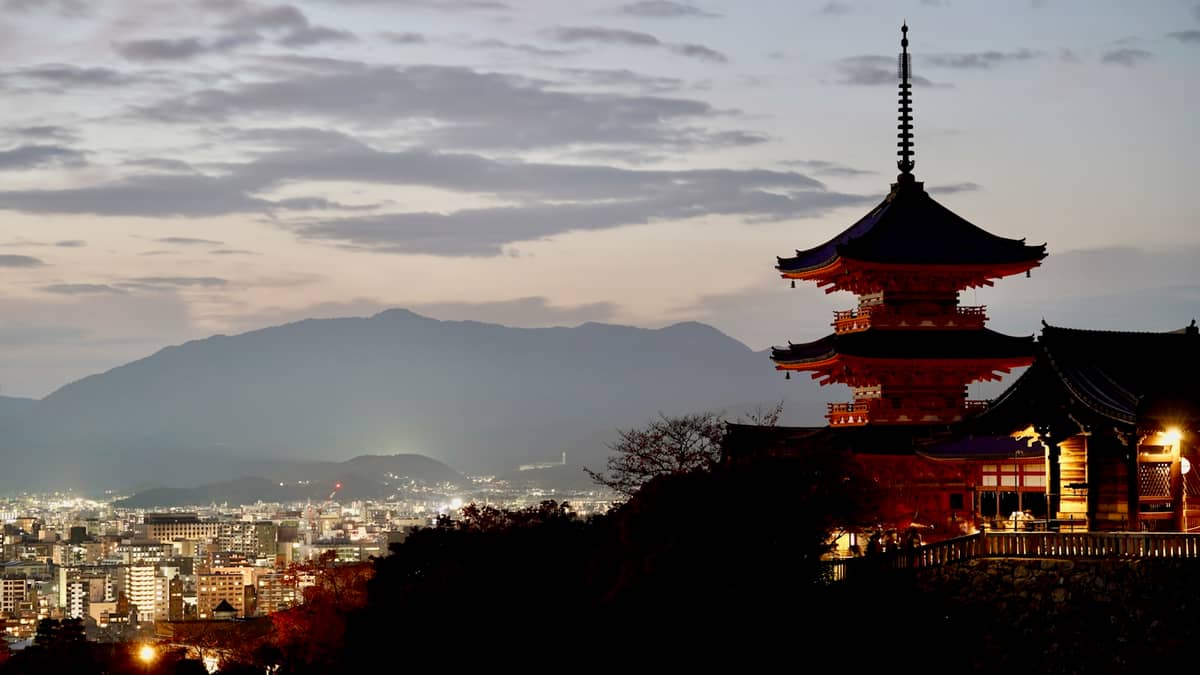
Kyoto's best views range from the famous wooden stage at Kiyomizu-dera to a forested mountain summit reached by a 45-minute hike. This guide covers the city's top viewpoints across temples, hilltops, iconic streets, and observation decks, with tips on timing and what to expect.
Plan and book this trip
Tools from our partner Travelpayouts help you compare flights and hotels. If you book through them, we may earn a commission at no extra cost to you.
Flights
Hotels map
Kyoto sits in a mountain-ringed basin, and that geography works in your favor when you're searching for great views. Whether you want a sweeping city panorama, a framed shot of pagoda rooftops, or a hillside perspective over autumn maples, the city delivers. The challenge is knowing which viewpoints reward the effort and when to visit them. For first-timers building an itinerary, ourKyoto first-timer guideis a useful starting point. For views specifically tied to cherry blossom season, thecherry blossom guidecovers the seasonal timing in detail. This guide focuses purely on where to stand for the best perspectives on Kyoto, organized by type.
💡 Local tip
Admission fees and opening hours at temple viewpoints change seasonally and can shift without notice. Always check the official site before visiting, especially for night illumination periods at Kiyomizu-dera and Kyoto Tower's reduced hours on August 16.
Temple Stages & Hillside Vantage Points
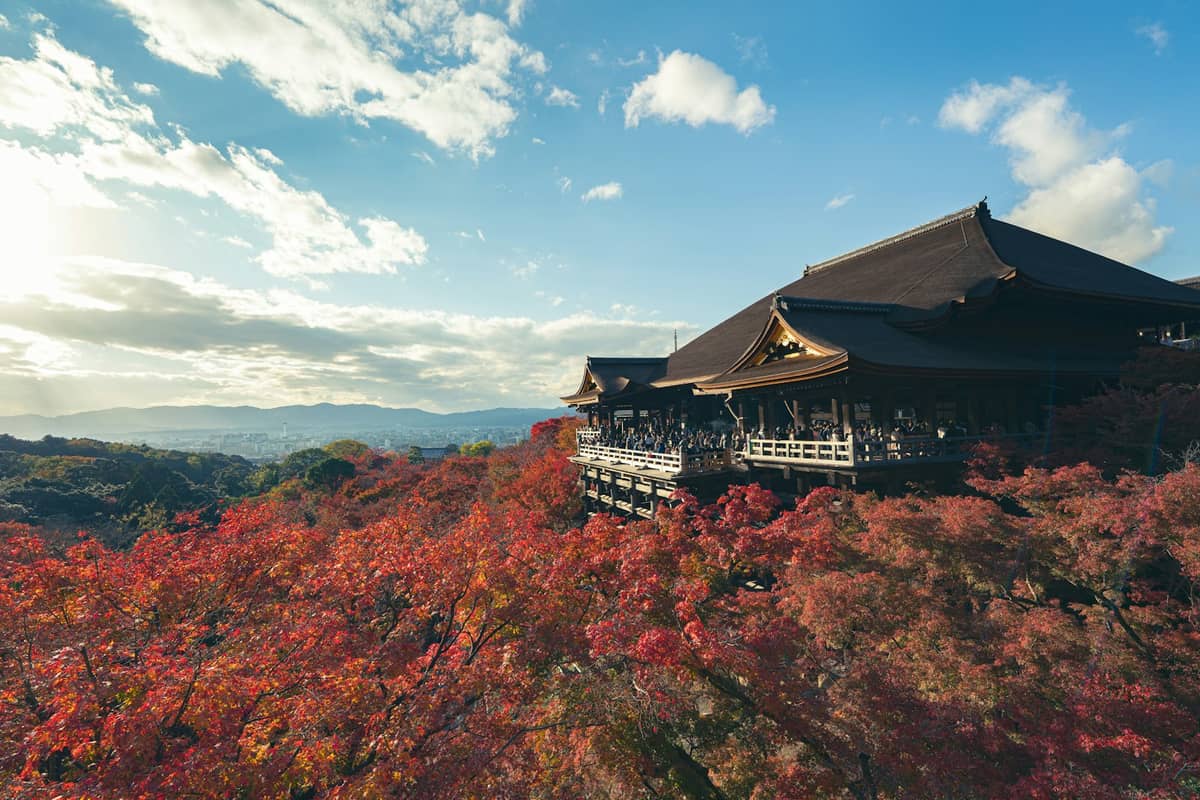
Kyoto's temple architecture was often built into hillsides deliberately, and the elevated positions of these sites produce some of the city's most celebrated views. TheHigashiyama districtis the richest area for this style of viewpoint, where multiple temples and pagodas stack up the eastern hills. For a deeper look at the temples themselves, see ourguide to the best temples in Kyoto.
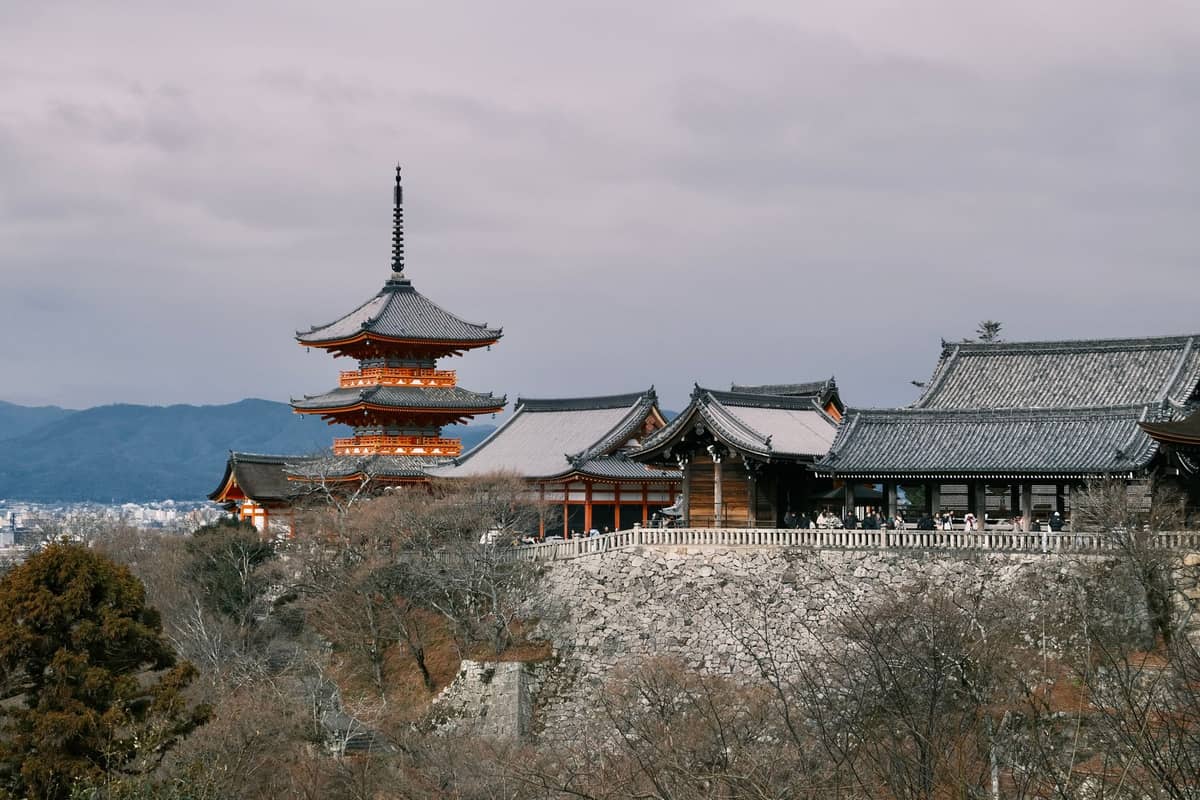
1. Stand on the Grand Wooden Stage at Kiyomizu-dera
Kyoto's most iconic viewpoint: a cantilevered wooden stage jutting from the main hall over the hillside, framing a sweeping view of the city. Opens at 06:00; night viewings run during cherry blossom, mid-August, and autumn foliage seasons. Admission around ¥500.
Explore1. Stand on the Grand Wooden Stage at Kiyomizu-dera
Kyoto's most iconic viewpoint: a cantilevered wooden stage jutting from the main hall over the hillside, framing a sweeping view of the city. Opens at 06:00; night viewings run during cherry blossom, mid-August, and autumn foliage seasons. Admission around ¥500.
Explore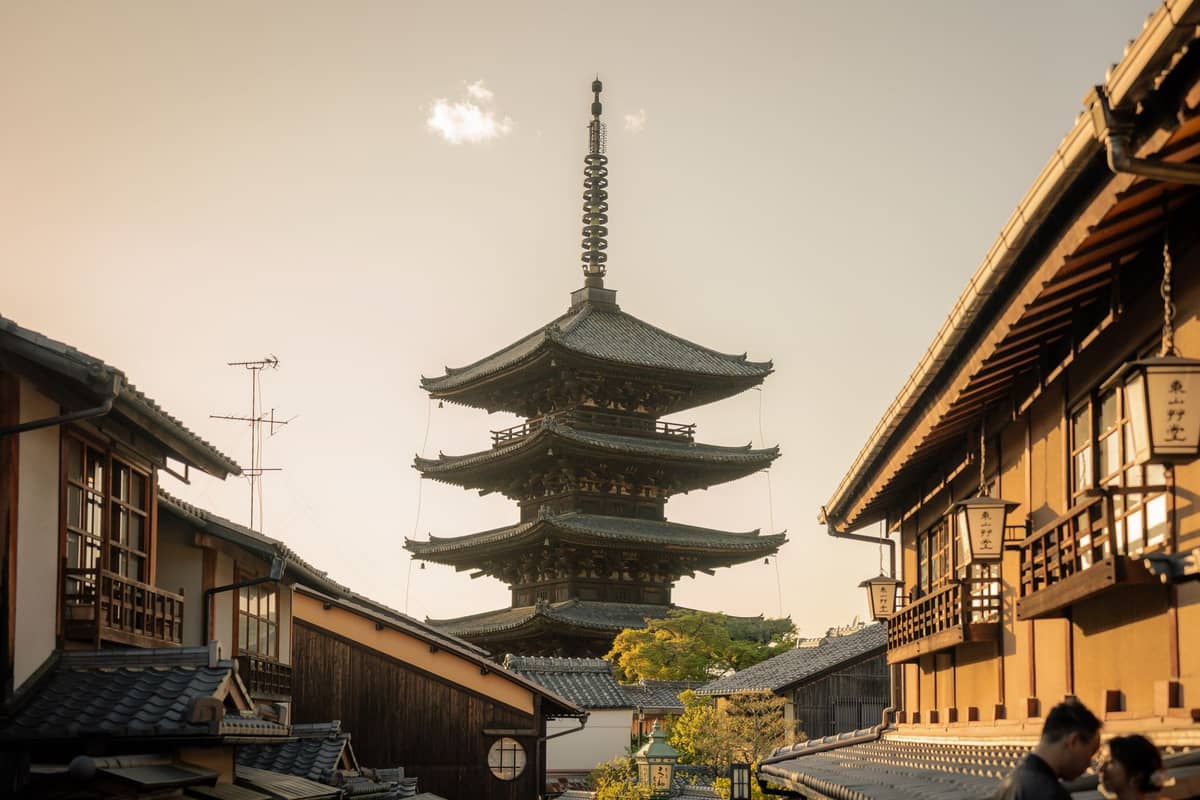
2. Frame the Higashiyama Skyline from Below Yasaka Pagoda
The five-story Yasaka Pagoda anchors Kyoto's most photographed urban view, best captured from the stone-paved lanes of Ninenzaka looking uphill. No admission required to photograph the exterior; the tower itself opens occasionally for interior visits.
Explore2. Frame the Higashiyama Skyline from Below Yasaka Pagoda
The five-story Yasaka Pagoda anchors Kyoto's most photographed urban view, best captured from the stone-paved lanes of Ninenzaka looking uphill. No admission required to photograph the exterior; the tower itself opens occasionally for interior visits.
Explore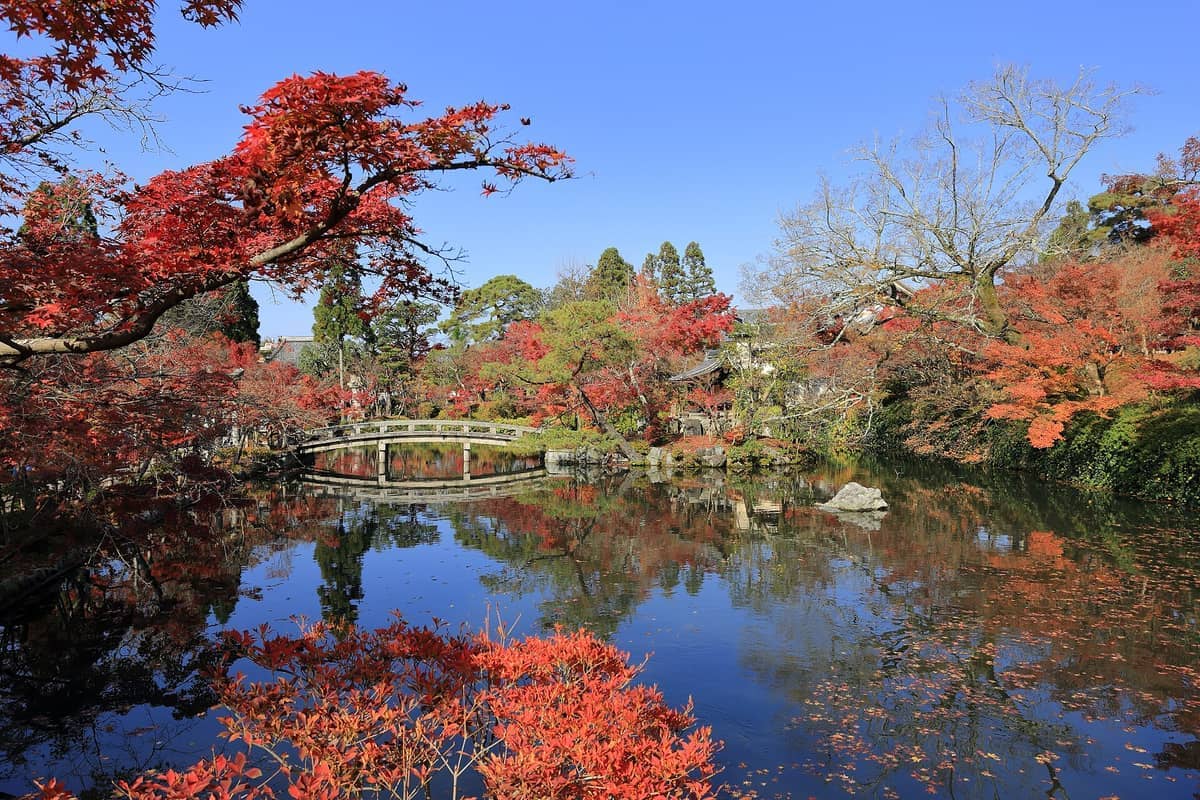
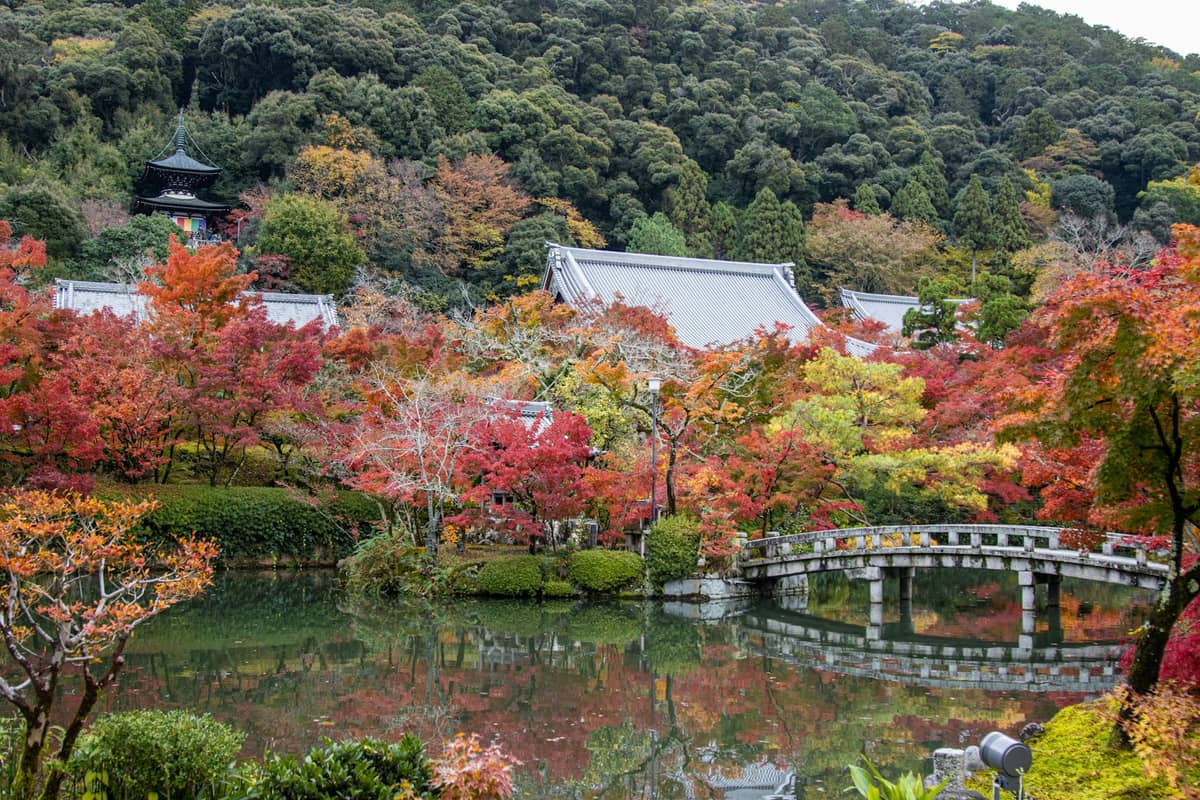
3. Look Down Over Autumn Maples from Eikan-do's Multi-Level Corridors
Eikan-do's covered walkways climb the hillside and open onto elevated viewpoints over the temple's maple-filled gardens and central pond. In late November, the red and orange canopy below is extraordinary. Go on a weekday morning to avoid the densest autumn crowds.
Explore3. Look Down Over Autumn Maples from Eikan-do's Multi-Level Corridors
Eikan-do's covered walkways climb the hillside and open onto elevated viewpoints over the temple's maple-filled gardens and central pond. In late November, the red and orange canopy below is extraordinary. Go on a weekday morning to avoid the densest autumn crowds.
Explore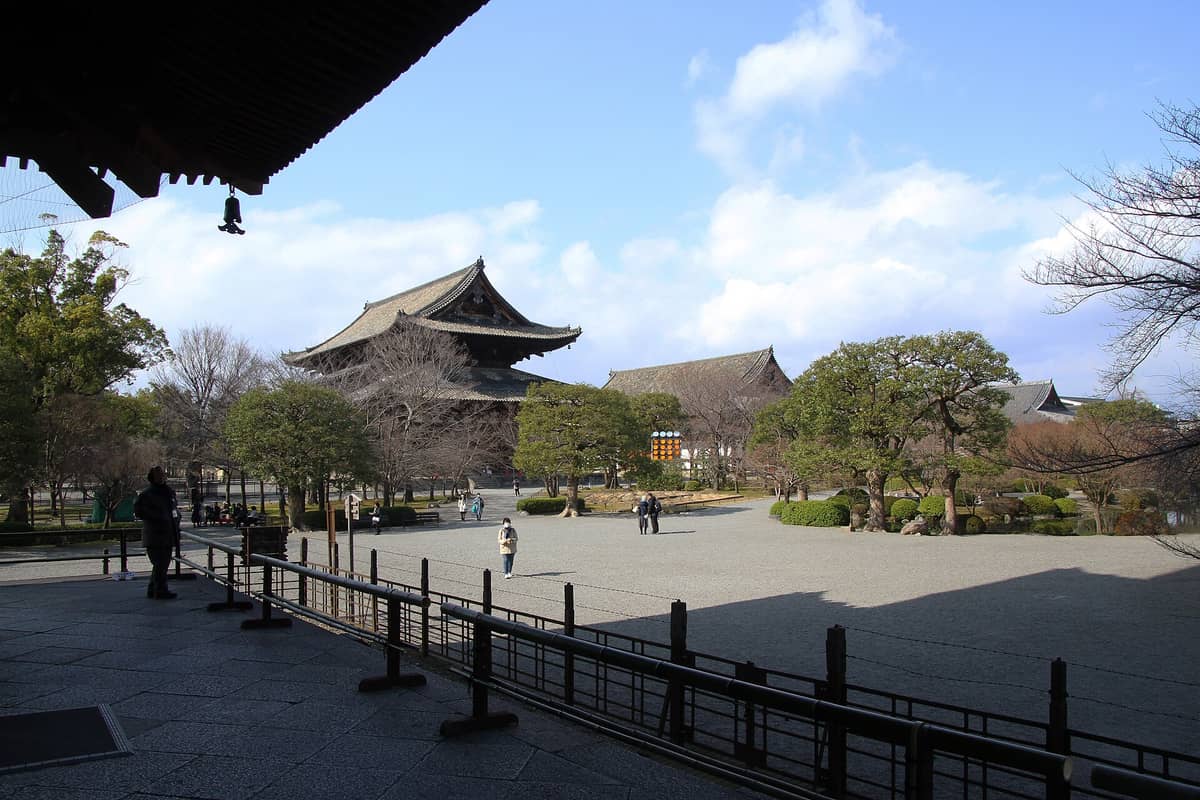
4. View Japan's Tallest Wooden Pagoda at Tō-ji
Tō-ji's 55-meter pagoda (current tower rebuilt in 1644) has defined Kyoto's southern skyline for centuries. The best views are from within the temple grounds, where the pagoda rises above low garden walls. Evening illumination events transform the scene entirely; check official dates before visiting.
Explore4. View Japan's Tallest Wooden Pagoda at Tō-ji
Tō-ji's 55-meter pagoda (current tower rebuilt in 1644) has defined Kyoto's southern skyline for centuries. The best views are from within the temple grounds, where the pagoda rises above low garden walls. Evening illumination events transform the scene entirely; check official dates before visiting.
Explore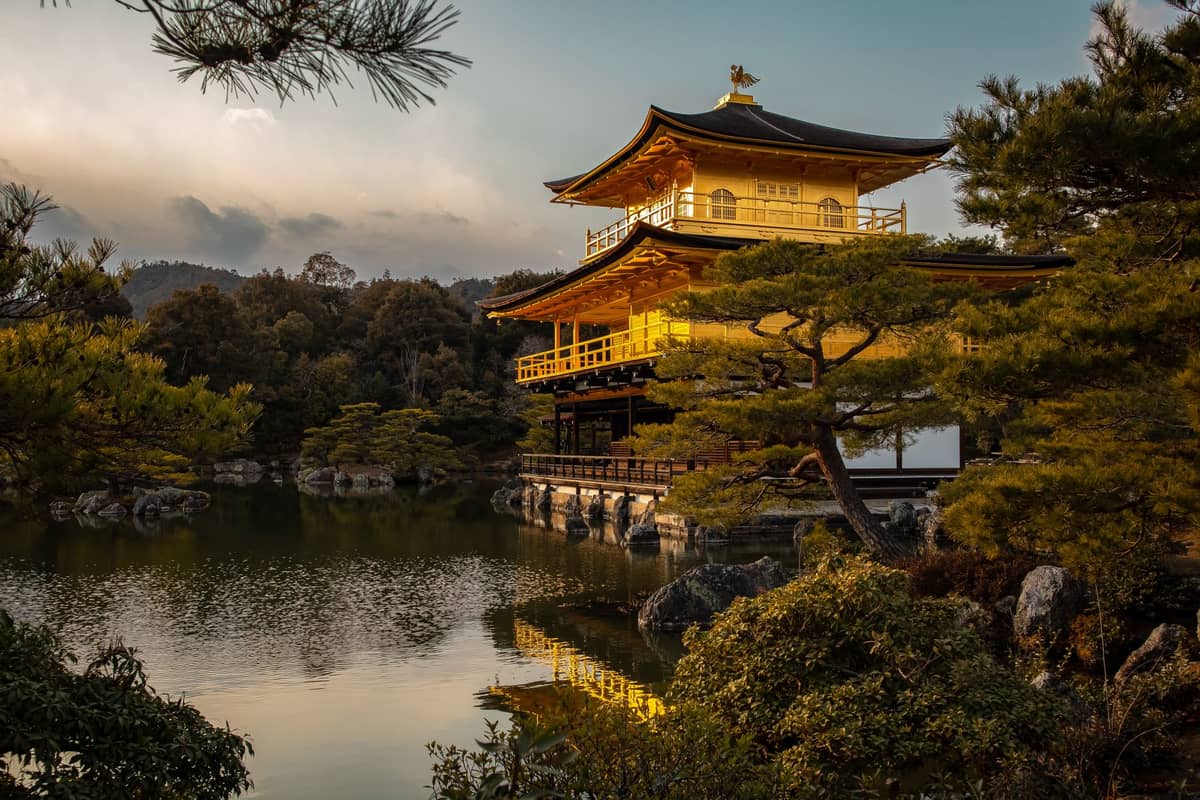
5. See the Golden Pavilion Reflected in Its Mirror Pond
Kinkaku-ji's gold-leaf upper floors reflecting in the still water below is one of Kyoto's defining images. The view is from a fixed lakeside path, so morning light from the east illuminates the facade most directly. Arrive at opening time to see it without crowds in the foreground.
Explore5. See the Golden Pavilion Reflected in Its Mirror Pond
Kinkaku-ji's gold-leaf upper floors reflecting in the still water below is one of Kyoto's defining images. The view is from a fixed lakeside path, so morning light from the east illuminates the facade most directly. Arrive at opening time to see it without crowds in the foreground.
Explore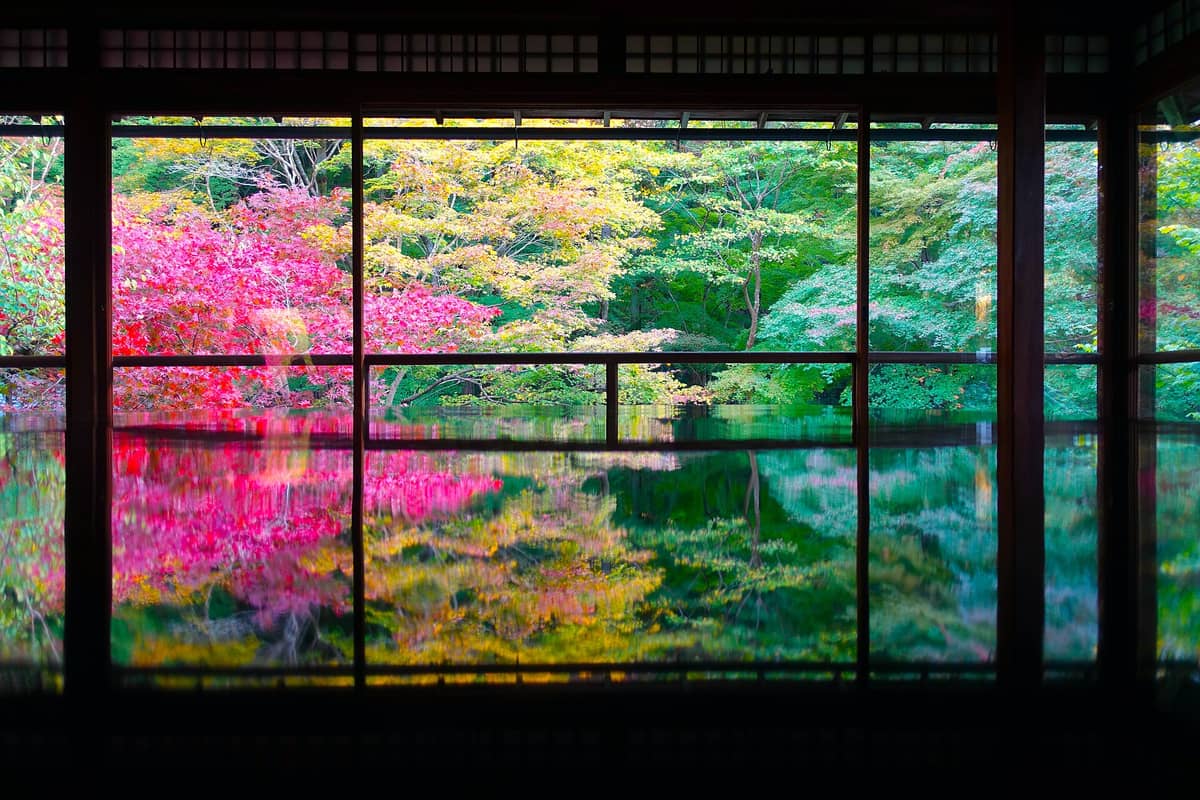
6. Catch the Famous Maple Reflection at Rurikō-in Temple
Rurikō-in opens only during cherry blossom and autumn foliage seasons. Its signature view is the reflection of red maple branches in a polished wooden desk surface, seen from an upper-floor tatami room. Book ahead as timed entry fills quickly in November.
Explore6. Catch the Famous Maple Reflection at Rurikō-in Temple
Rurikō-in opens only during cherry blossom and autumn foliage seasons. Its signature view is the reflection of red maple branches in a polished wooden desk surface, seen from an upper-floor tatami room. Book ahead as timed entry fills quickly in November.
ExploreMountain Summits & Hilltop Hikes
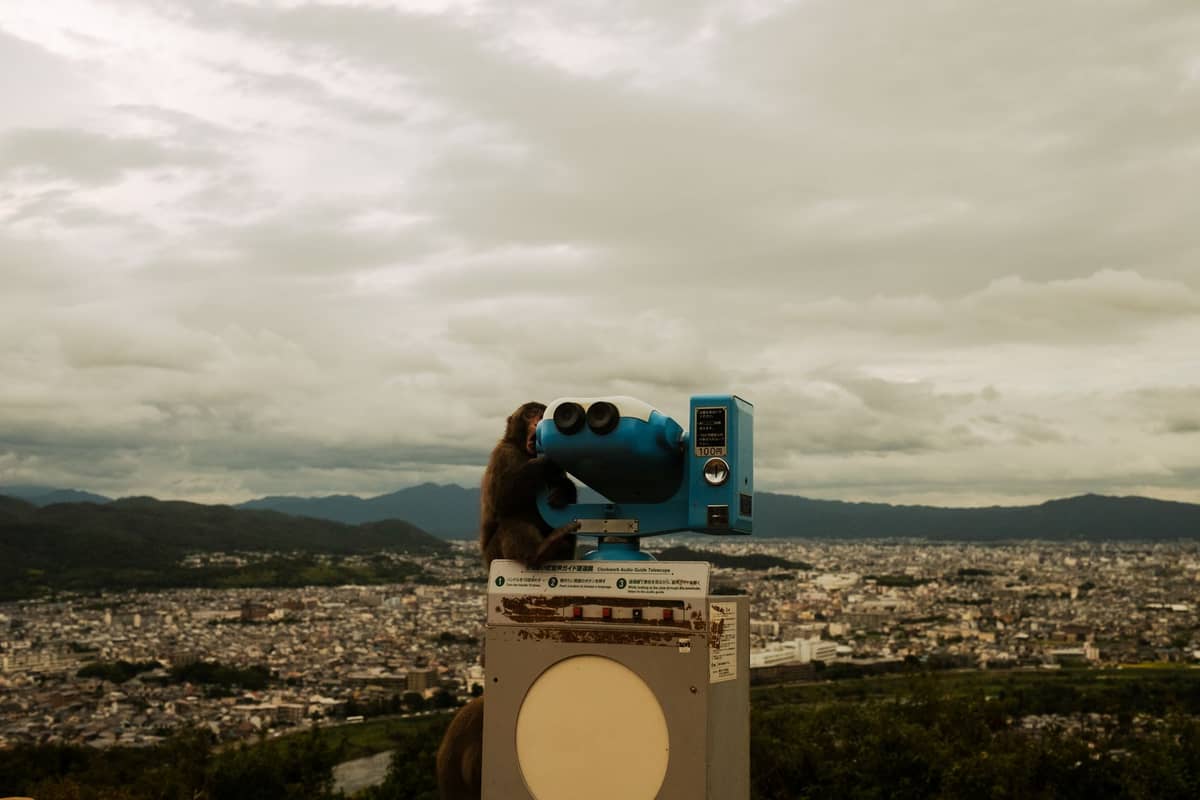
For the broadest panoramas over Kyoto's basin, you need to gain elevation. Several of the city's surrounding mountains are accessible by foot or cable car and reward the effort with views stretching to the far edges of the city. TheKurama and Kibune area in the north adds mountain scenery to the mix.
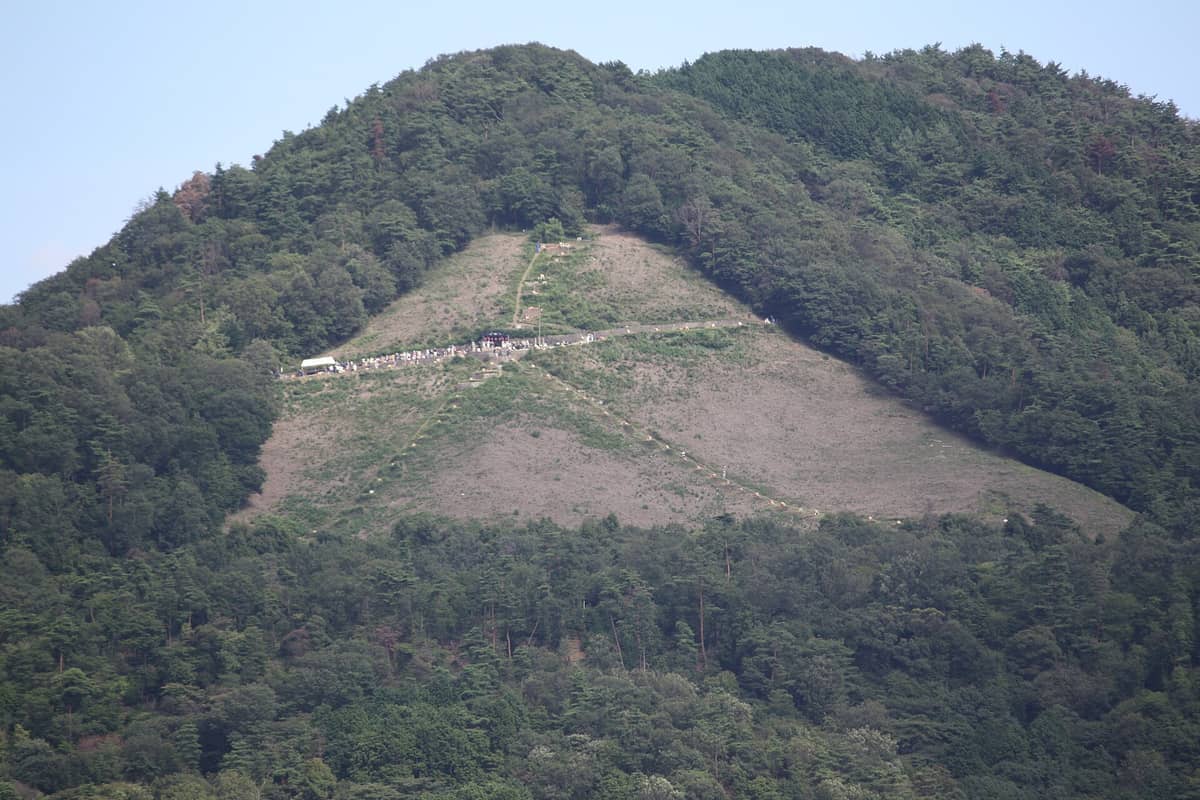
7. Hike Daimonji-yama for Kyoto's Best Unrestricted City Panorama
A 45-minute hike through cedar forest behind Ginkaku-ji leads to a summit with one of Kyoto's clearest 180-degree city views. Free, unmarked trailhead near the Silver Pavilion. On August 16, the giant 大 character is burned here during the Obon Daimonji festival.
Explore7. Hike Daimonji-yama for Kyoto's Best Unrestricted City Panorama
A 45-minute hike through cedar forest behind Ginkaku-ji leads to a summit with one of Kyoto's clearest 180-degree city views. Free, unmarked trailhead near the Silver Pavilion. On August 16, the giant 大 character is burned here during the Obon Daimonji festival.
Explore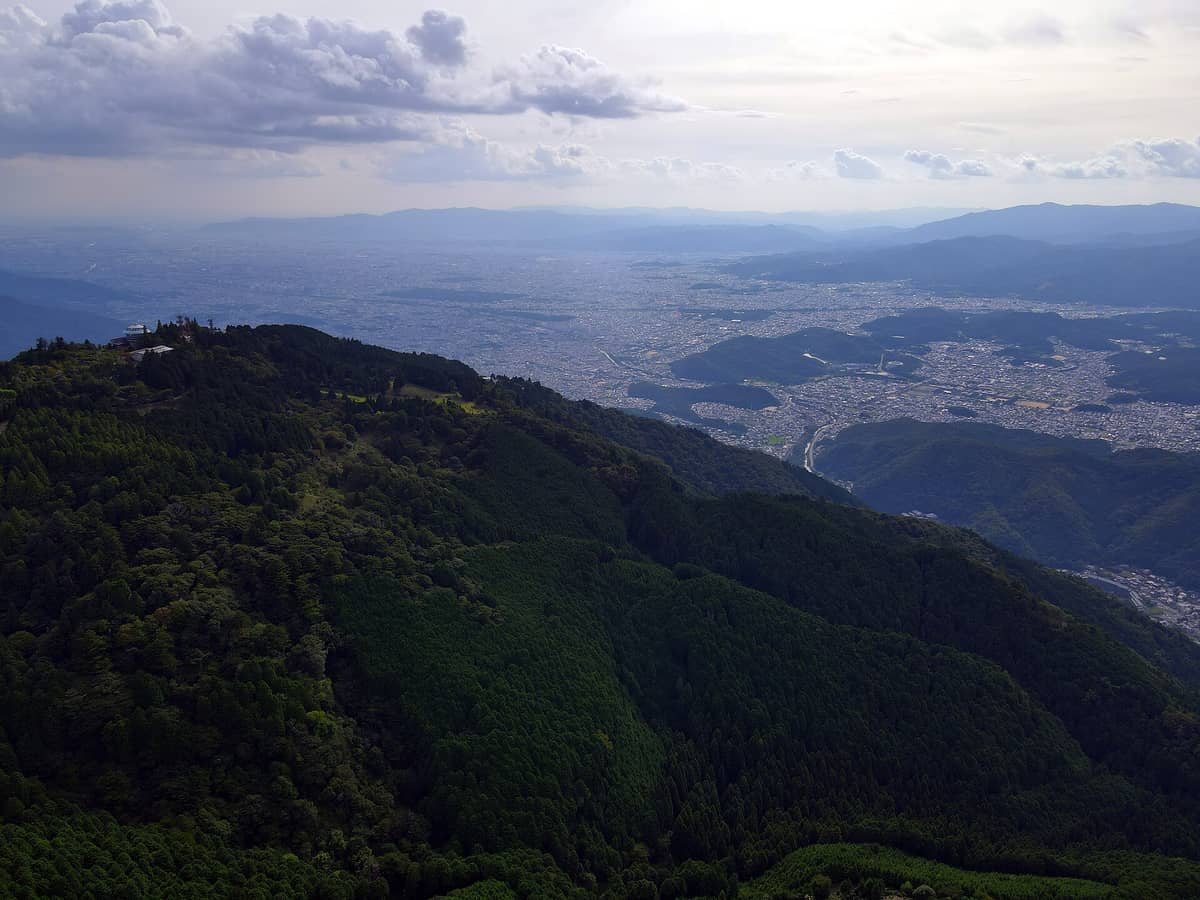
8. Ride Up Mount Hiei for Views Over Kyoto and Lake Biwa
Mount Hiei straddles the Kyoto-Shiga border, and its cable car summit delivers a rare double view: the Kyoto basin to the west and Lake Biwa to the east. The vast Enryaku-ji temple complex at the top is a UNESCO World Heritage Site worth exploring once you arrive.
Explore8. Ride Up Mount Hiei for Views Over Kyoto and Lake Biwa
Mount Hiei straddles the Kyoto-Shiga border, and its cable car summit delivers a rare double view: the Kyoto basin to the west and Lake Biwa to the east. The vast Enryaku-ji temple complex at the top is a UNESCO World Heritage Site worth exploring once you arrive.
Explore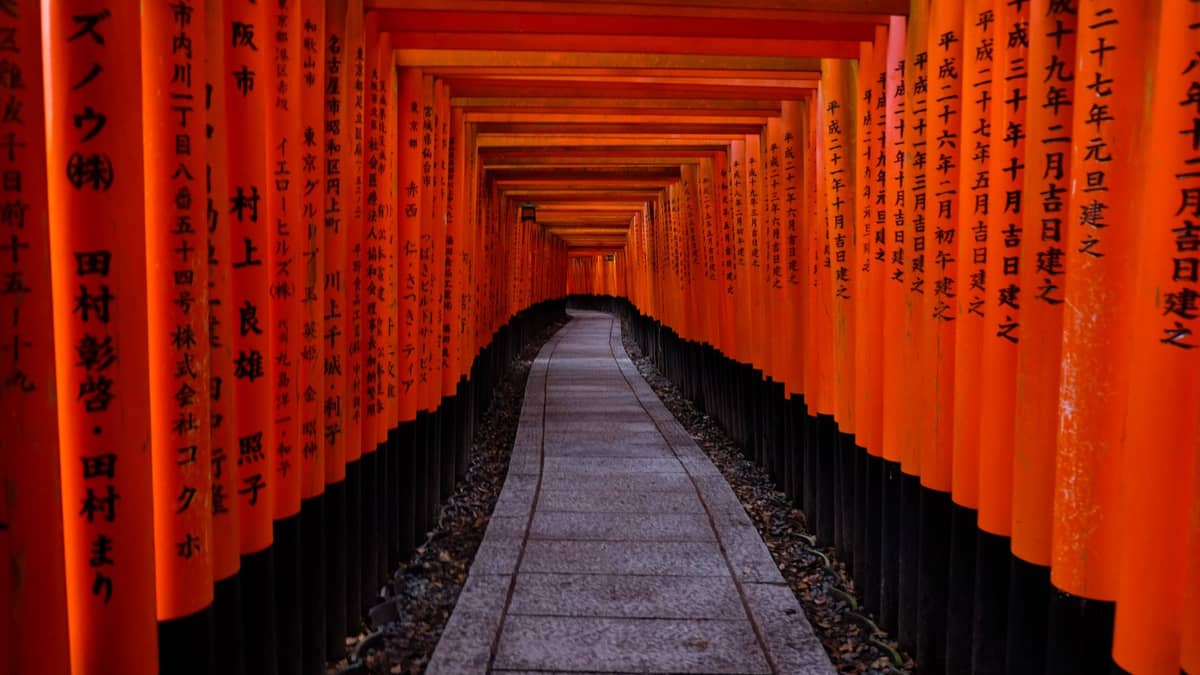
9. Climb Mount Inari's Torii Tunnels to a Hilltop City View
Most visitors turn back at the lower gates, but the full 2-3 hour ascent to Inari's summit rewards with quiet forest paths and a clear view over southern Kyoto. Open 24 hours and free to enter; dawn and late evening are the best times to experience the upper mountain undisturbed.
Explore9. Climb Mount Inari's Torii Tunnels to a Hilltop City View
Most visitors turn back at the lower gates, but the full 2-3 hour ascent to Inari's summit rewards with quiet forest paths and a clear view over southern Kyoto. Open 24 hours and free to enter; dawn and late evening are the best times to experience the upper mountain undisturbed.
Explore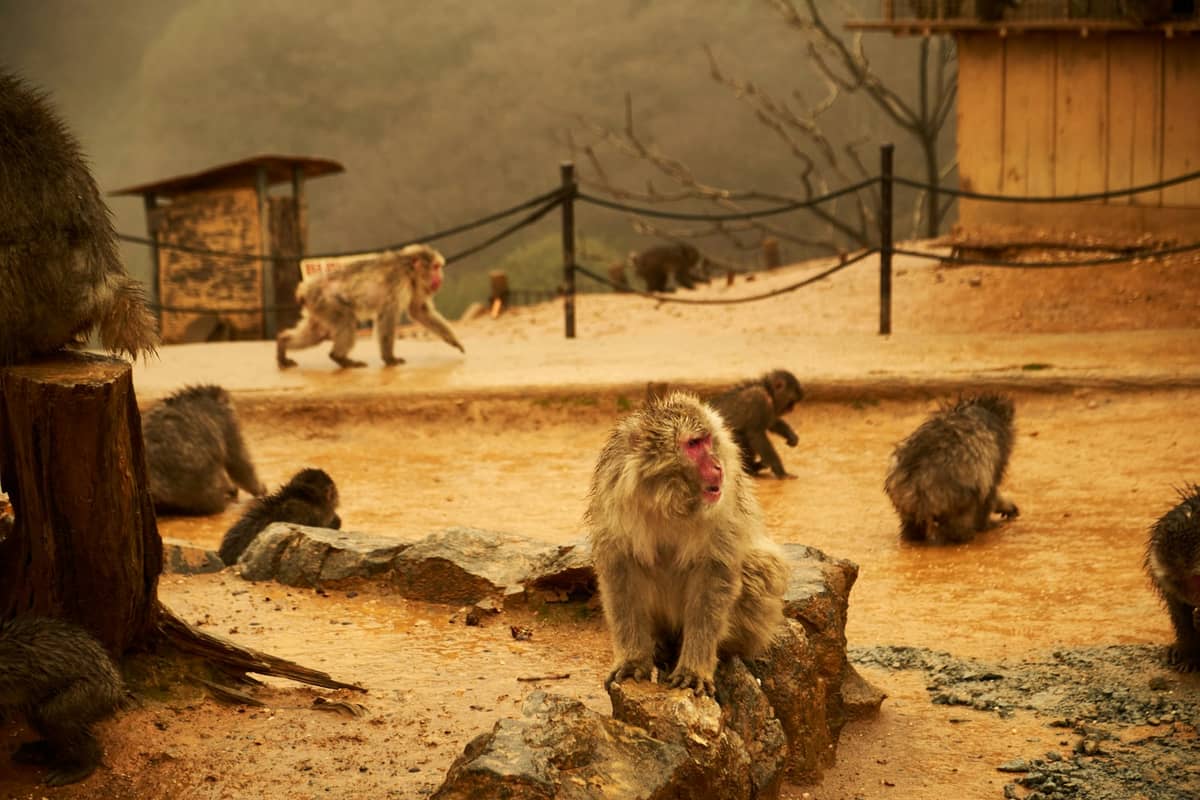
10. Earn a Panoramic View of Kyoto with the Monkey Park Hike
A 20-minute uphill walk through forest brings you to an open hilltop where 120 wild Japanese macaques roam freely and Kyoto spreads out below. The view is an unexpected bonus for a wildlife attraction and one of the most accessible elevated perspectives in the Arashiyama area.
Explore10. Earn a Panoramic View of Kyoto with the Monkey Park Hike
A 20-minute uphill walk through forest brings you to an open hilltop where 120 wild Japanese macaques roam freely and Kyoto spreads out below. The view is an unexpected bonus for a wildlife attraction and one of the most accessible elevated perspectives in the Arashiyama area.
Explore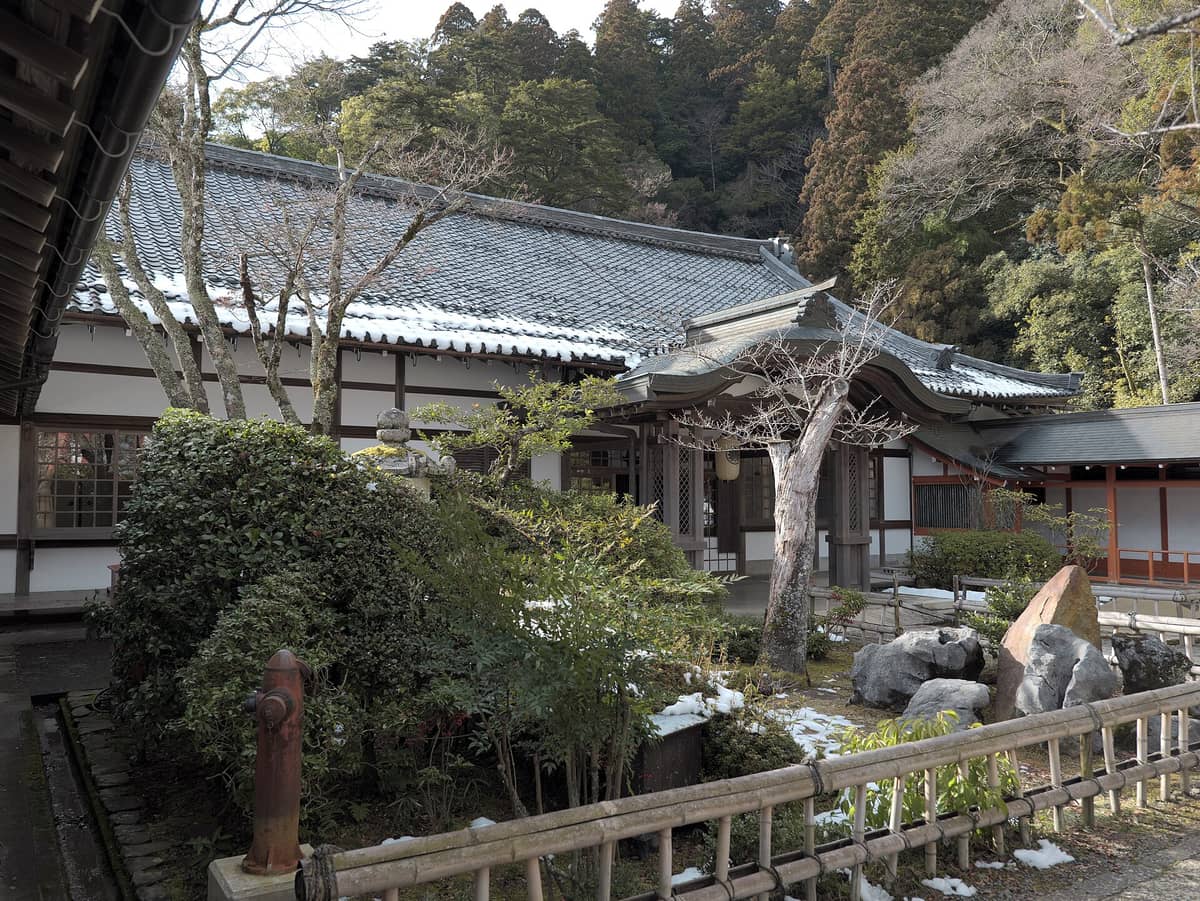
11. Ascend to Kurama-dera for Cedar Forest Atmosphere and Mountain Views
A cable car or forest trail leads up to this mystical mountain temple complex above Kurama village. The views are of densely forested peaks rather than the city grid, offering a completely different visual experience. Best combined with a walk down to Kibune village in spring or autumn.
Explore11. Ascend to Kurama-dera for Cedar Forest Atmosphere and Mountain Views
A cable car or forest trail leads up to this mystical mountain temple complex above Kurama village. The views are of densely forested peaks rather than the city grid, offering a completely different visual experience. Best combined with a walk down to Kibune village in spring or autumn.
ExploreUrban Observation Points & City Skylines
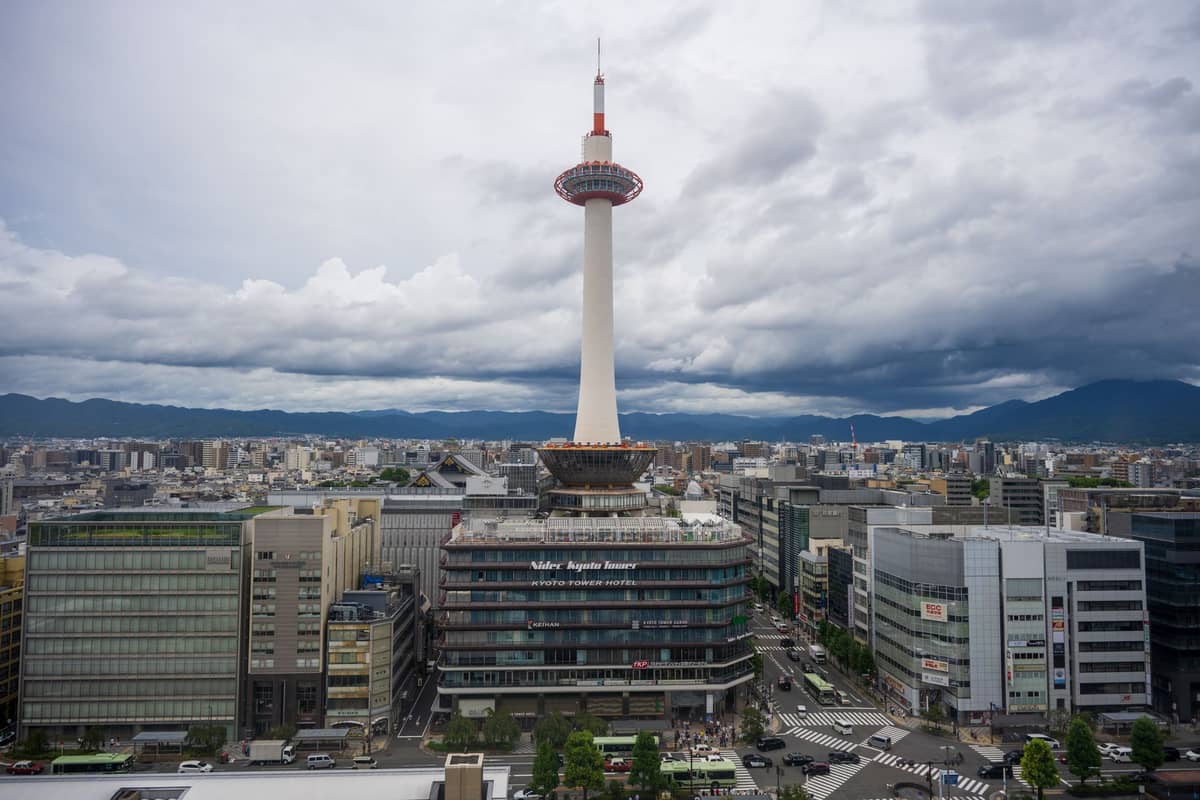
Kyoto's building height restrictions mean the city lacks a dense high-rise skyline, making even modest elevation feel significant. TheKyoto Station areahas the most concentrated cluster of modern viewpoints, while rooftop bars near Higashiyama offer views framed by historic architecture.
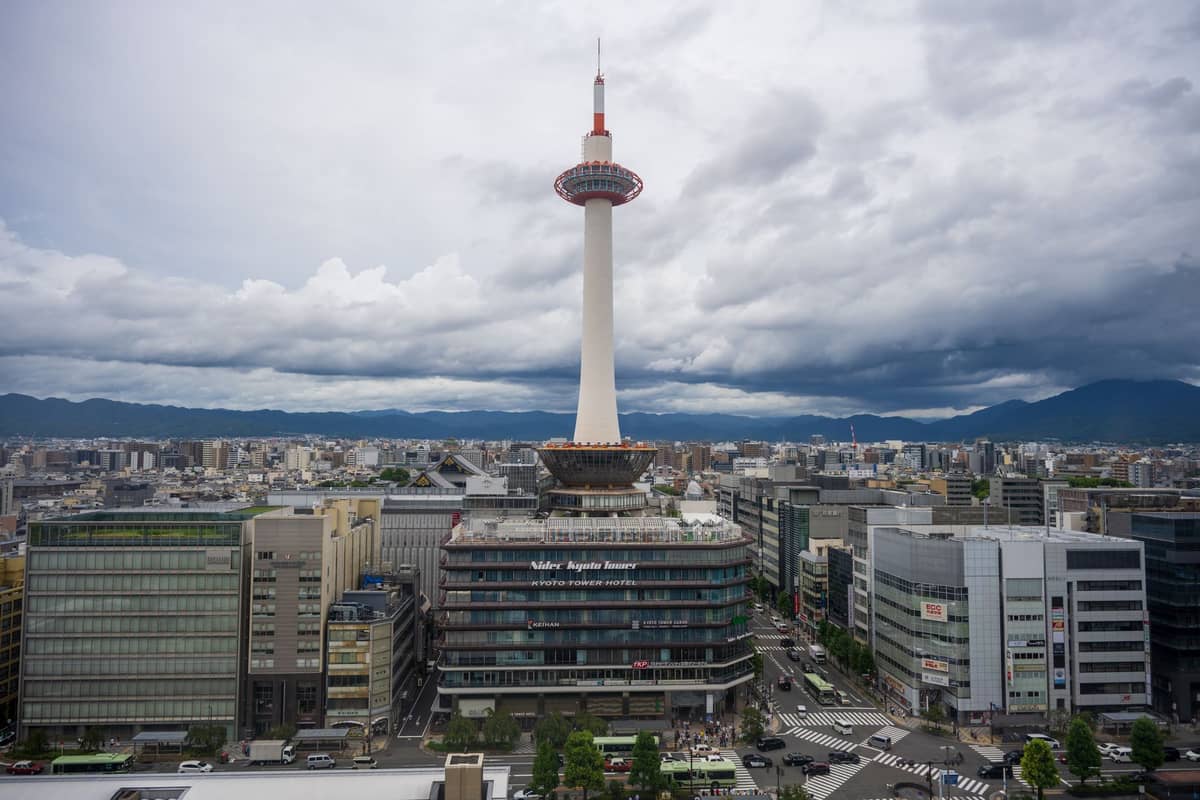
12. Survey the City from Kyoto Tower's 100-Meter Observation Deck
At 100m above ground, Kyoto Tower provides the clearest aerial perspective on the low-rise cityscape and the mountains that ring the basin on three sides. Standard hours are 10:00-21:00 (last entry 20:30); hours are reduced on August 16. Admission is ¥900 for adults.
Explore12. Survey the City from Kyoto Tower's 100-Meter Observation Deck
At 100m above ground, Kyoto Tower provides the clearest aerial perspective on the low-rise cityscape and the mountains that ring the basin on three sides. Standard hours are 10:00-21:00 (last entry 20:30); hours are reduced on August 16. Admission is ¥900 for adults.
Explore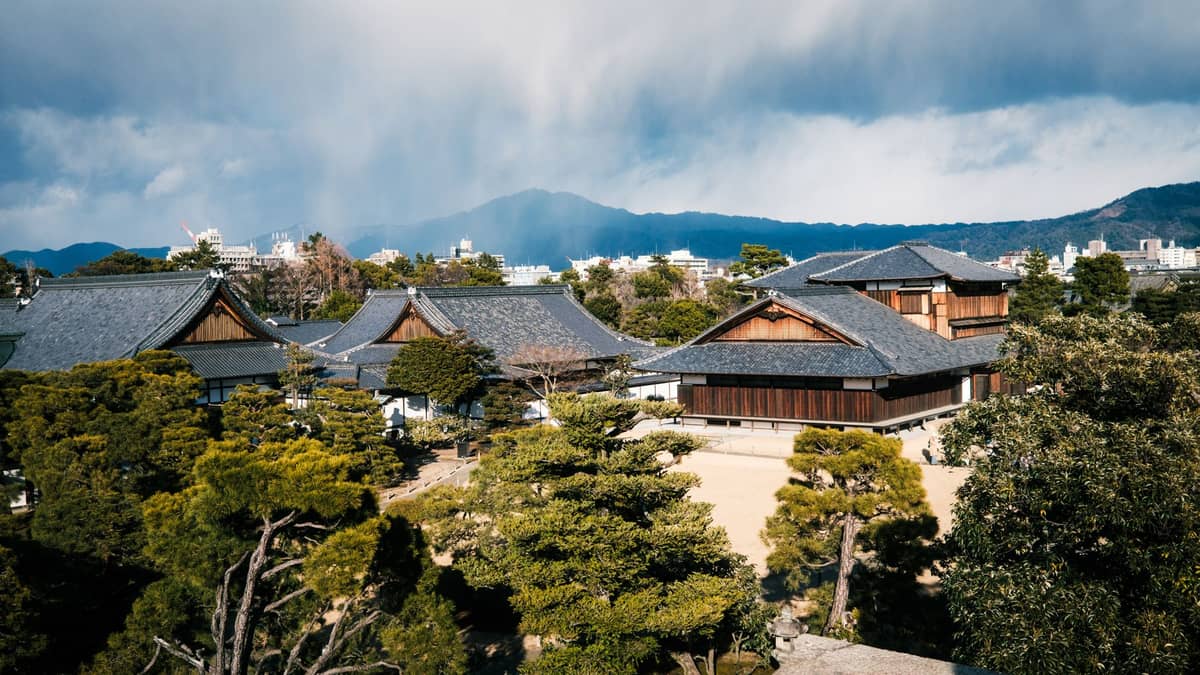
13. Survey the Castle Gardens and Downtown Rooftops from Nijō Castle
Nijō Castle's elevated stone walls and turret platforms provide elevated views over the castle's elaborate garden and across central Kyoto. The ornate interiors are the main draw, but the outer grounds offer a quiet vantage point over the castle's layered architecture and the city beyond.
Explore13. Survey the Castle Gardens and Downtown Rooftops from Nijō Castle
Nijō Castle's elevated stone walls and turret platforms provide elevated views over the castle's elaborate garden and across central Kyoto. The ornate interiors are the main draw, but the outer grounds offer a quiet vantage point over the castle's layered architecture and the city beyond.
Explore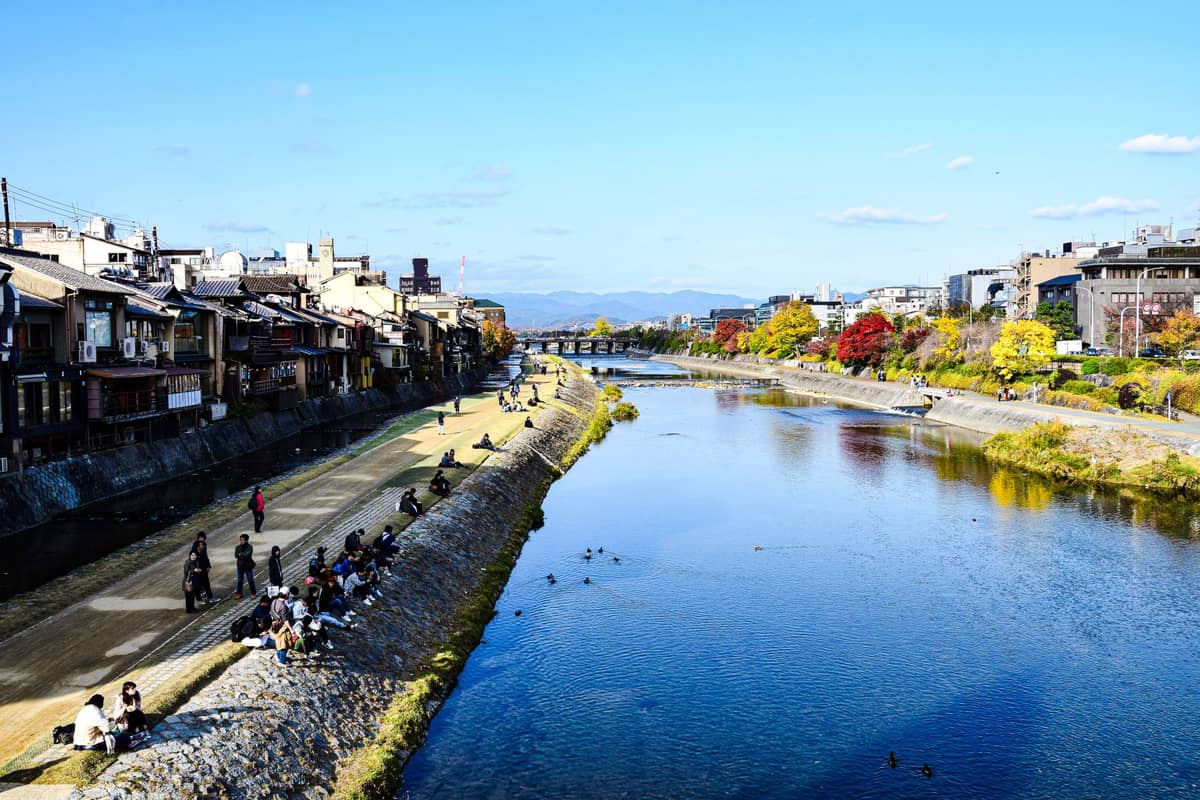
14. Watch the City at Eye Level from the Kamo River Banks
The Kamo River offers a ground-level urban panorama: the Higashiyama hills in the east frame every northward view, while the river's wide, open banks give a sense of Kyoto's scale. Evening light turns the scene golden; summer kawayuka platforms above the water add a theatrical element.
Explore14. Watch the City at Eye Level from the Kamo River Banks
The Kamo River offers a ground-level urban panorama: the Higashiyama hills in the east frame every northward view, while the river's wide, open banks give a sense of Kyoto's scale. Evening light turns the scene golden; summer kawayuka platforms above the water add a theatrical element.
ExploreScenic Streets, Bridges & Canal Views
Some of Kyoto's best views are horizontal rather than elevated: framed views down historic lanes, across decorated bridges, or along canal-side paths. These street-level perspectives define how the city looks in photographs and memories alike.
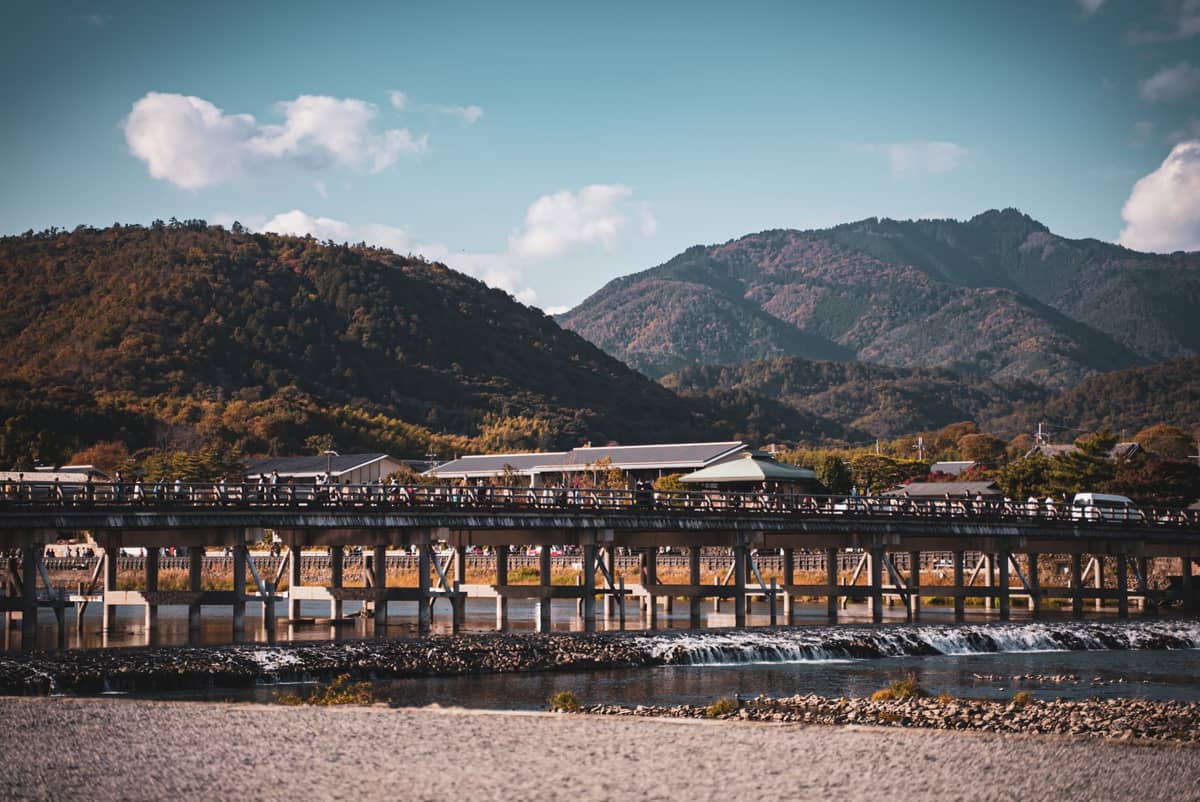
15. Frame Arashiyama's Mountains Across Togetsukyo Bridge
This classic wooden bridge across the Oi River has provided the same view of the Arashiyama hills for over a thousand years. The perspective from the south bank looking northwest is most iconic; during cherry blossom and autumn foliage seasons it becomes one of Kyoto's most photographed spots.
Explore15. Frame Arashiyama's Mountains Across Togetsukyo Bridge
This classic wooden bridge across the Oi River has provided the same view of the Arashiyama hills for over a thousand years. The perspective from the south bank looking northwest is most iconic; during cherry blossom and autumn foliage seasons it becomes one of Kyoto's most photographed spots.
Explore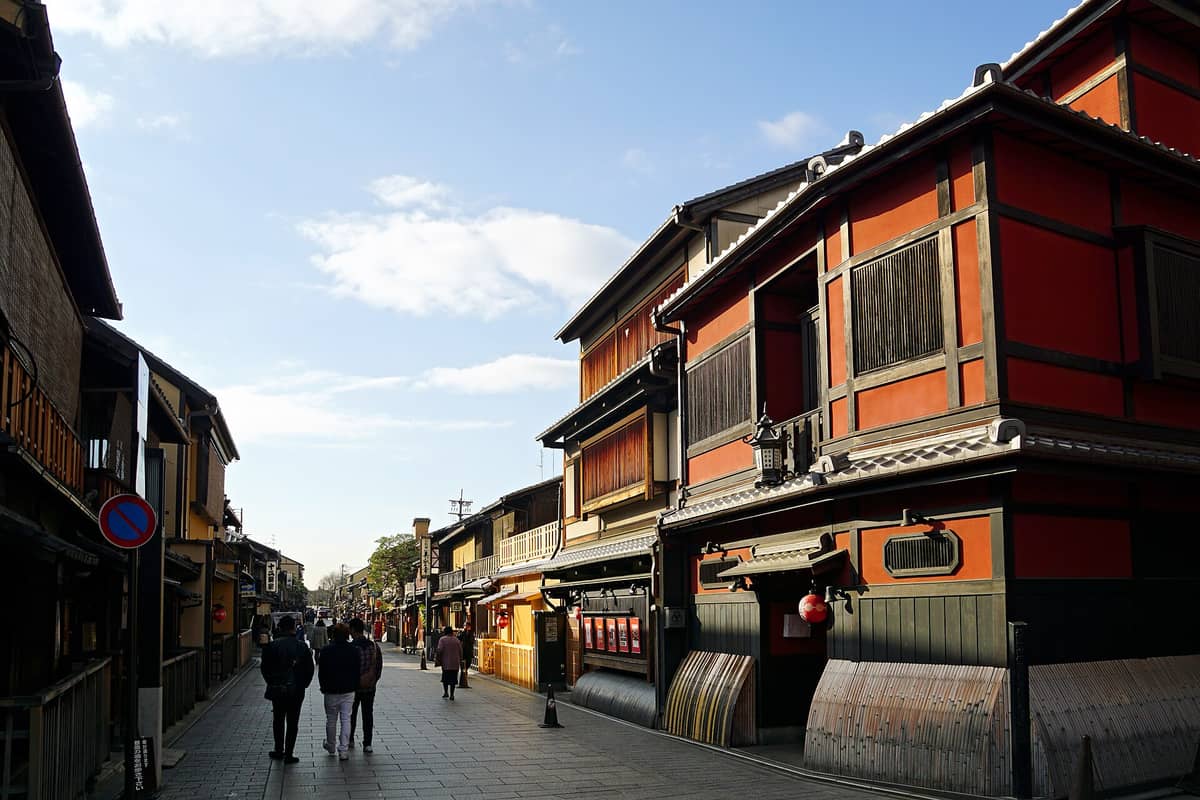
16. Photograph the Perfect Machiya Streetscape on Hanamikoji
Hanamikoji's unbroken row of ochaya facades creates the most cinematically preserved urban view in Kyoto. The best photographs are taken in the blue hour before dusk, when wooden lanterns glow and foot traffic is lighter. This is also the street where geiko and maiko sightings are most likely.
Explore16. Photograph the Perfect Machiya Streetscape on Hanamikoji
Hanamikoji's unbroken row of ochaya facades creates the most cinematically preserved urban view in Kyoto. The best photographs are taken in the blue hour before dusk, when wooden lanterns glow and foot traffic is lighter. This is also the street where geiko and maiko sightings are most likely.
Explore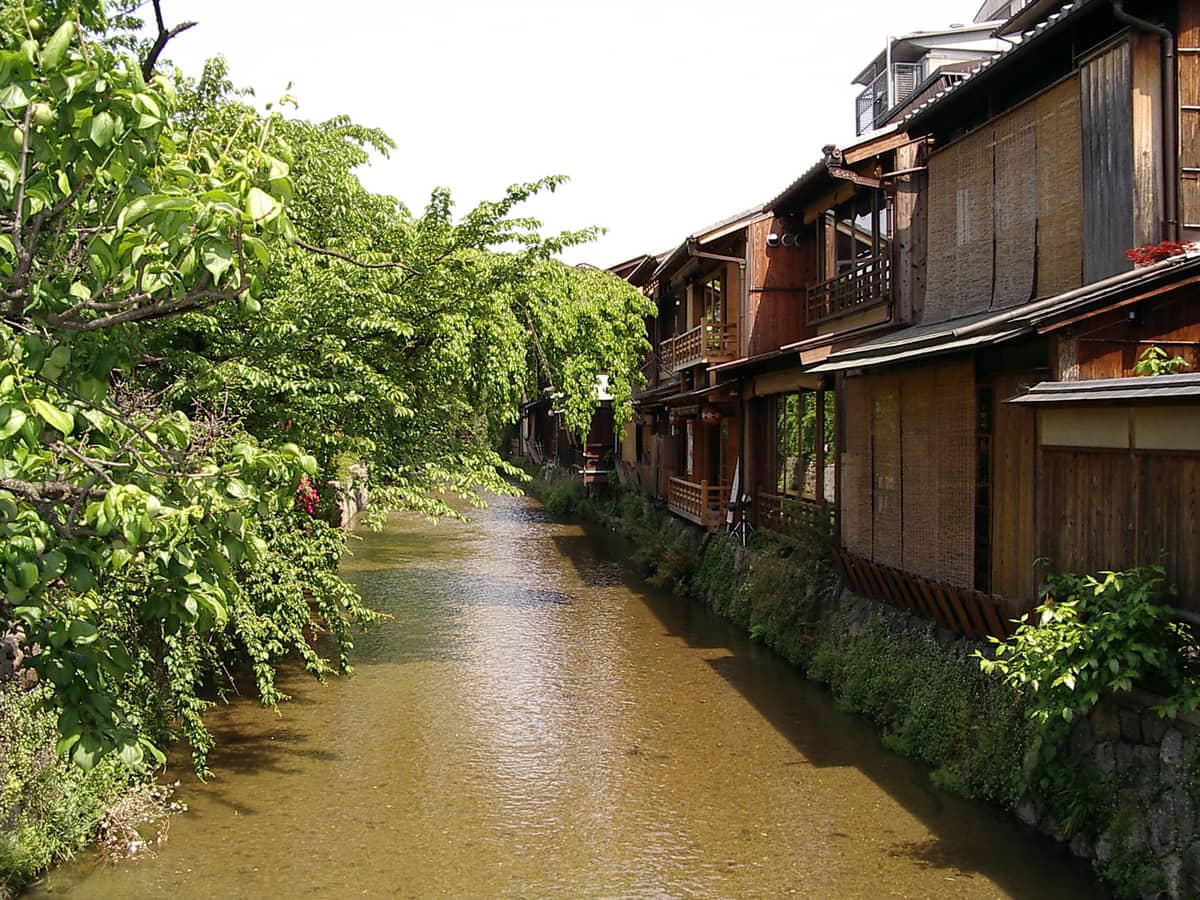
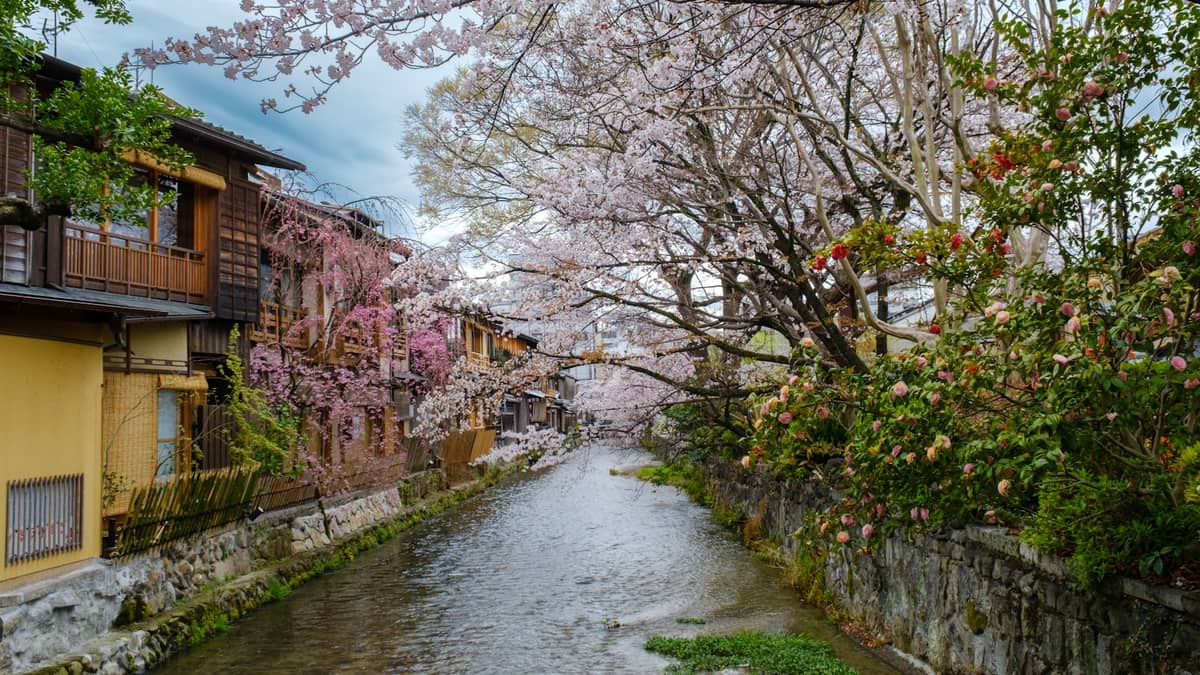
17. See Weeping Willows and Cherry Trees Over the Shirakawa Canal
The narrow Shirakawa canal in Gion is lined with willows and, in spring, cherry trees that overhang the water beside traditional ochaya buildings. The view along the canal is one of Kyoto's most romantic and is particularly striking during the city's spring evening illuminations.
Explore17. See Weeping Willows and Cherry Trees Over the Shirakawa Canal
The narrow Shirakawa canal in Gion is lined with willows and, in spring, cherry trees that overhang the water beside traditional ochaya buildings. The view along the canal is one of Kyoto's most romantic and is particularly striking during the city's spring evening illuminations.
Explore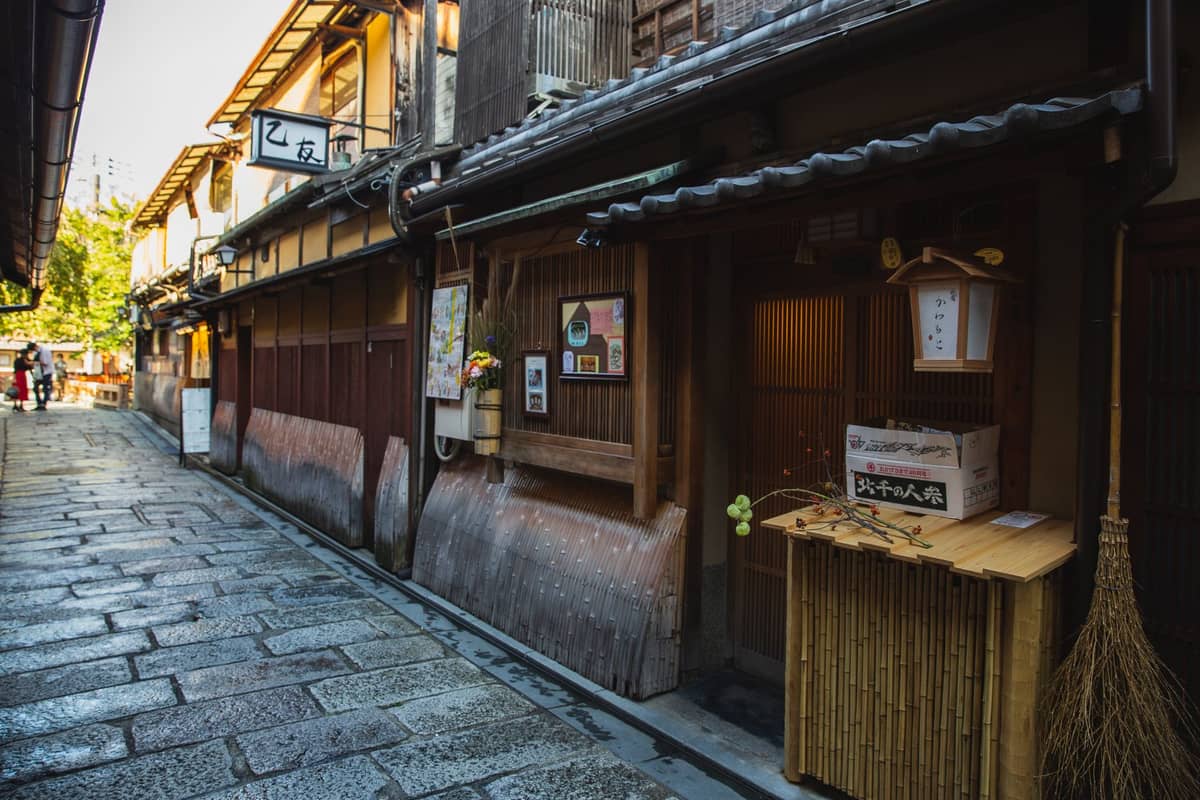
18. Find Kyoto's Most Atmospheric Hidden Lane at Ishibe-koji
Ishibe-koji is a short cobblestone alley in Higashiyama lined with immaculately preserved machiya converted into exclusive ryokan and restaurants. The lane is less trafficked than Ninenzaka and produces exceptional photographs; early morning is the only time it approaches quiet.
Explore18. Find Kyoto's Most Atmospheric Hidden Lane at Ishibe-koji
Ishibe-koji is a short cobblestone alley in Higashiyama lined with immaculately preserved machiya converted into exclusive ryokan and restaurants. The lane is less trafficked than Ninenzaka and produces exceptional photographs; early morning is the only time it approaches quiet.
Explore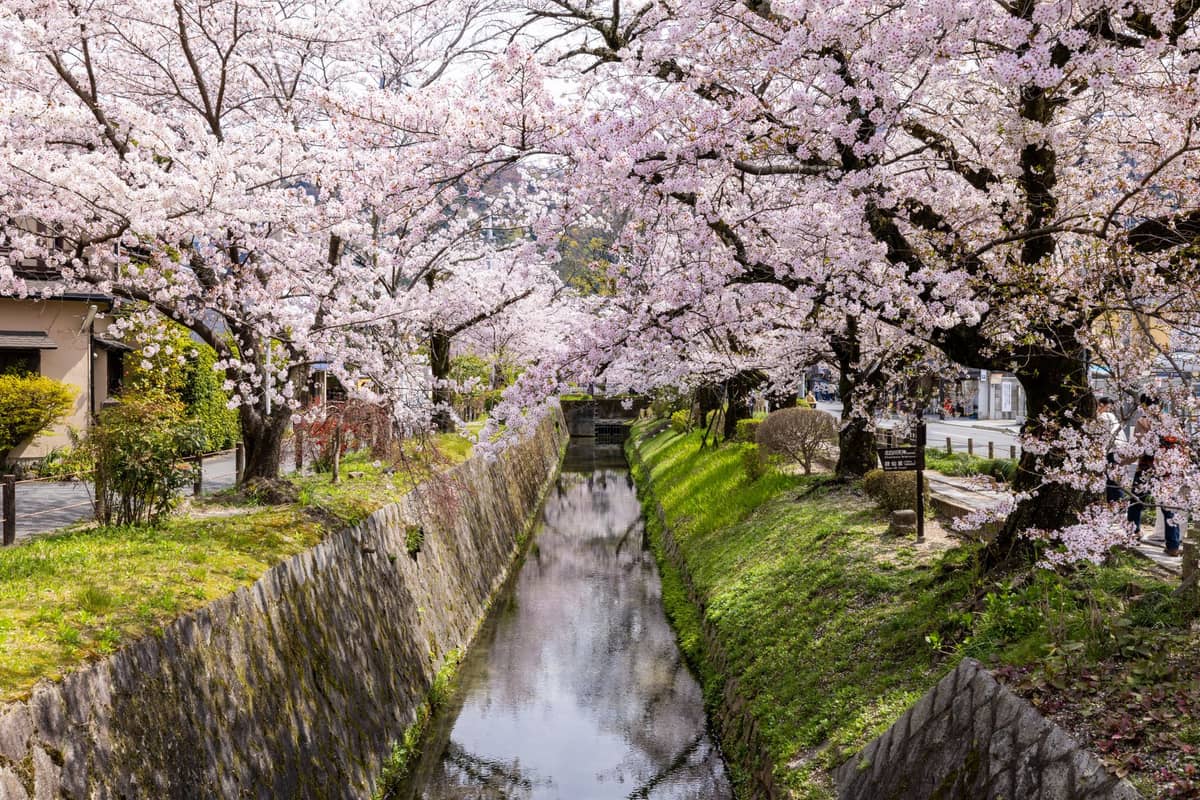
19. Walk the Canal-Side Cherry Canopy of the Philosopher's Path
This 2km walk along a narrow canal between Nanzen-ji and Ginkaku-ji is lined with cherry trees that form a tunnel of blossom in early April. The path also works in autumn when maples color the banks. It is a linear route, so you can walk one direction and return by bus.
Explore19. Walk the Canal-Side Cherry Canopy of the Philosopher's Path
This 2km walk along a narrow canal between Nanzen-ji and Ginkaku-ji is lined with cherry trees that form a tunnel of blossom in early April. The path also works in autumn when maples color the banks. It is a linear route, so you can walk one direction and return by bus.
ExploreGarden & Nature Viewpoints
Kyoto's gardens are often framed views in themselves, where borrowed scenery techniques use surrounding mountains or trees as a deliberate backdrop. Thebest gardens in Kyoto guideexplores these spaces in more depth, but several gardens are particularly worth visiting for the views they frame rather than just the gardens themselves.
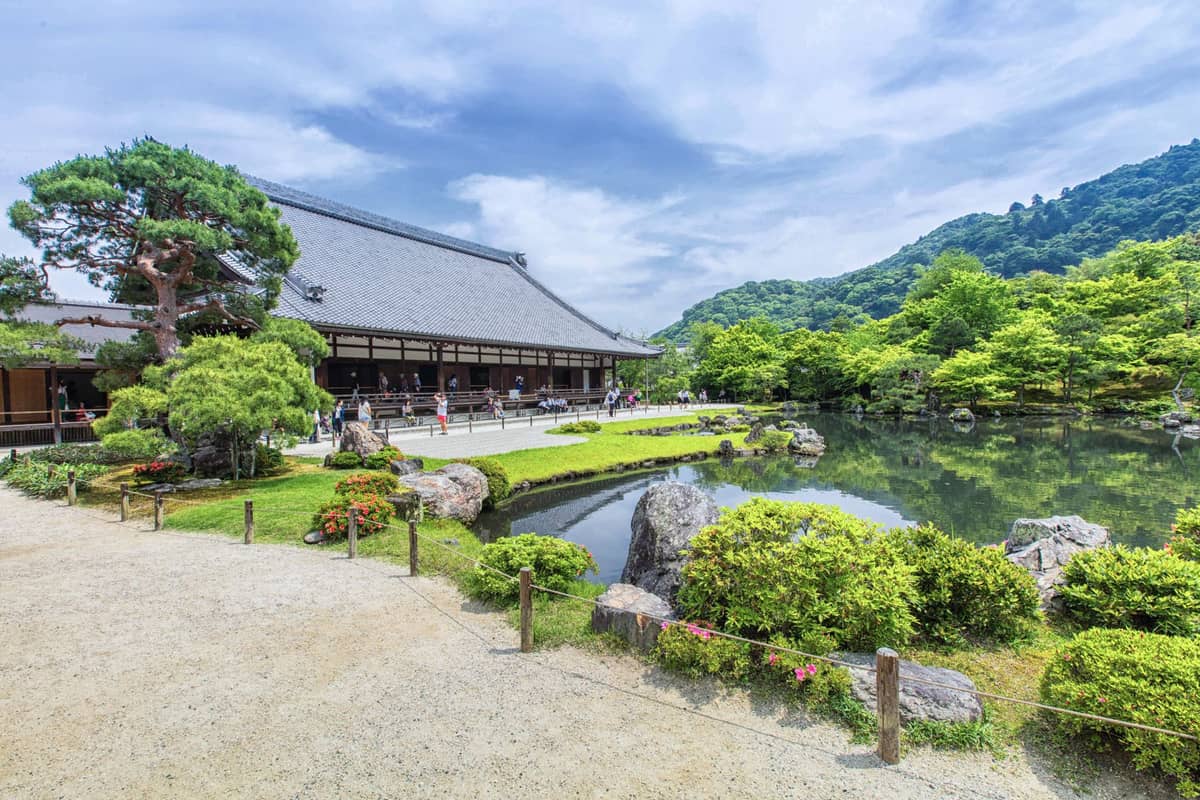
20. View the Arashiyama Mountains as Garden Backdrop at Tenryu-ji
Musō Soseki's 14th-century garden uses shakkei (borrowed scenery) to incorporate the forested Arashiyama hills into the composition. From the main viewing terrace, the mountains appear as a natural extension of the garden. It is one of Japan's most refined examples of landscape design.
Explore20. View the Arashiyama Mountains as Garden Backdrop at Tenryu-ji
Musō Soseki's 14th-century garden uses shakkei (borrowed scenery) to incorporate the forested Arashiyama hills into the composition. From the main viewing terrace, the mountains appear as a natural extension of the garden. It is one of Japan's most refined examples of landscape design.
Explore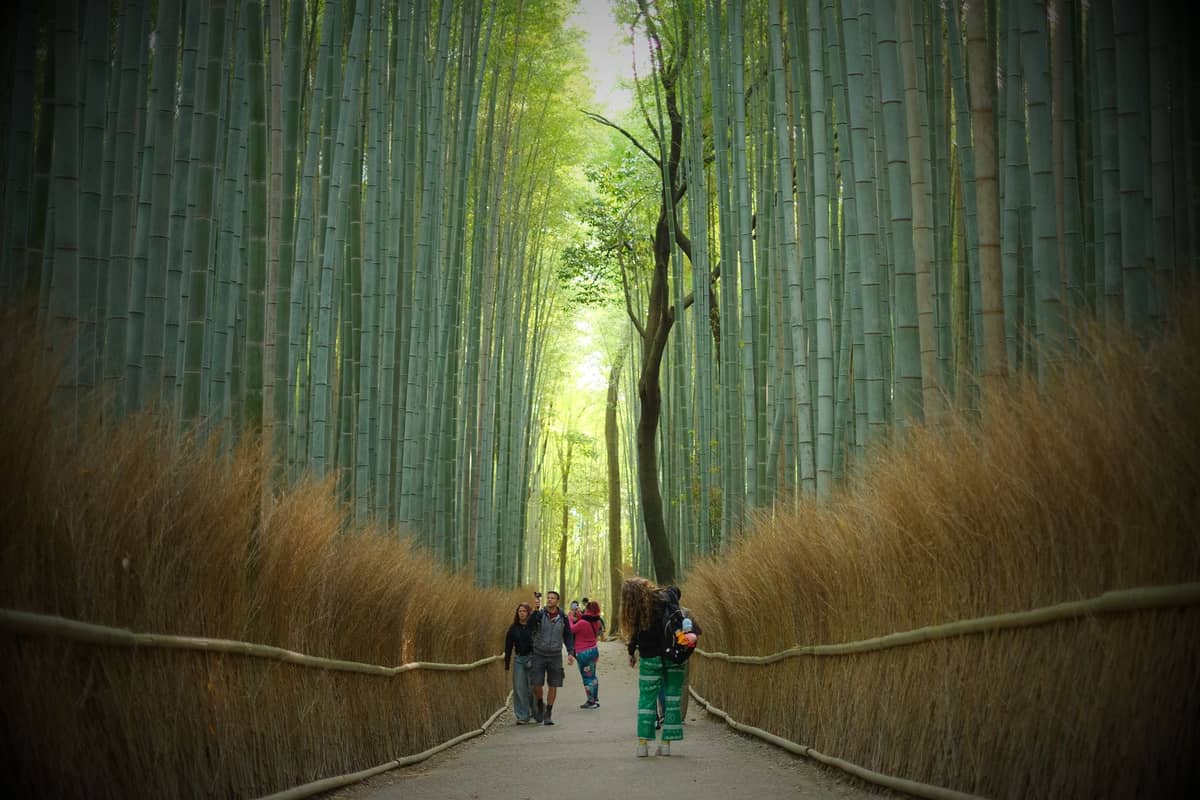
21. Look Up Through the Towering Bamboo at Arashiyama Bamboo Grove
The view here is vertical: towering green stalks converging overhead create a filtered canopy unlike anything else in Kyoto. Dawn is the only time it approaches peaceful; the grove is short (around 500m) but the visual impact is immediate. Combine with Tenryu-ji on the same visit.
Explore21. Look Up Through the Towering Bamboo at Arashiyama Bamboo Grove
The view here is vertical: towering green stalks converging overhead create a filtered canopy unlike anything else in Kyoto. Dawn is the only time it approaches peaceful; the grove is short (around 500m) but the visual impact is immediate. Combine with Tenryu-ji on the same visit.
Explore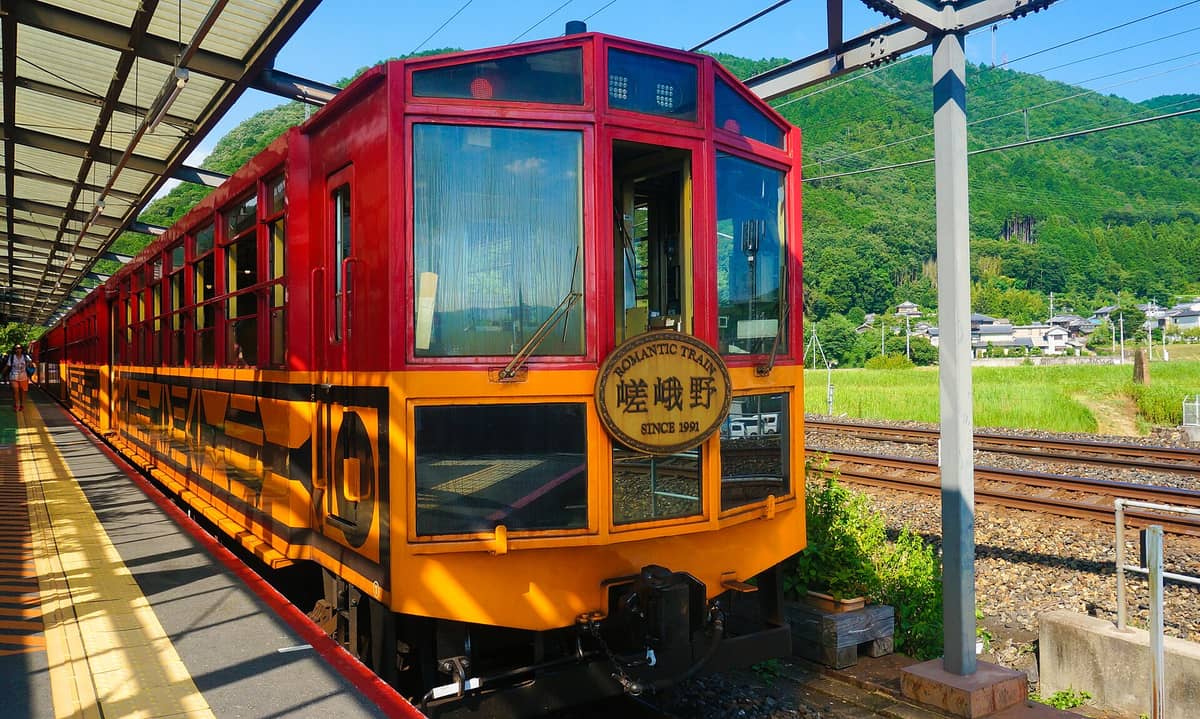
22. Watch the Hozu River Gorge Unfold from the Sagano Scenic Railway
This vintage train runs 7.3km through dramatic gorge scenery between Saga-Torokko and Kameoka, with forested cliffs rising on both sides of the rushing river below. The open-air carriage (Carriage 5) gives the best views; book tickets in advance, especially in autumn foliage season.
Explore22. Watch the Hozu River Gorge Unfold from the Sagano Scenic Railway
This vintage train runs 7.3km through dramatic gorge scenery between Saga-Torokko and Kameoka, with forested cliffs rising on both sides of the rushing river below. The open-air carriage (Carriage 5) gives the best views; book tickets in advance, especially in autumn foliage season.
Explore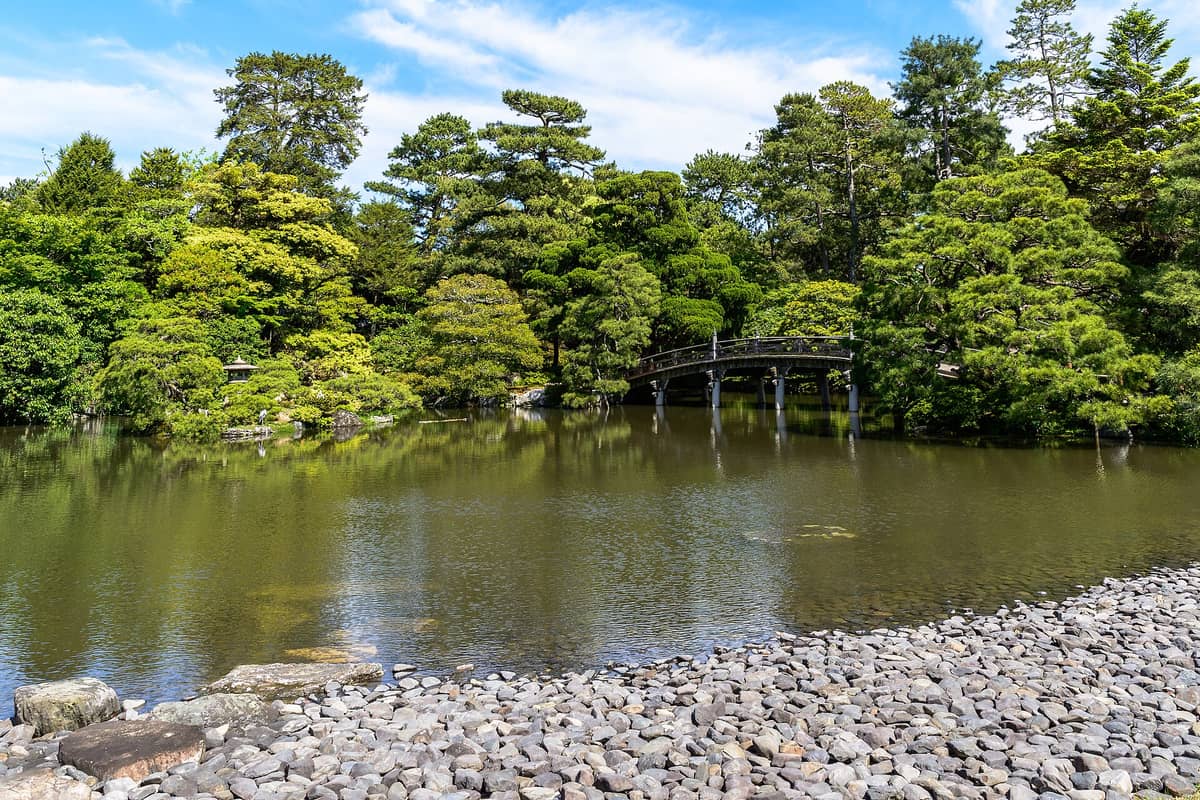
23. Look Across the Imperial Palace Grounds from Kyoto Gyoen
This vast free park surrounding the Imperial Palace provides open sky and ancient tree canopies in the middle of the city. The wide gravel paths offer long unobstructed views back toward the palace walls and gates, particularly striking in cherry blossom season and on clear winter days.
Explore23. Look Across the Imperial Palace Grounds from Kyoto Gyoen
This vast free park surrounding the Imperial Palace provides open sky and ancient tree canopies in the middle of the city. The wide gravel paths offer long unobstructed views back toward the palace walls and gates, particularly striking in cherry blossom season and on clear winter days.
Explore✨ Pro tip
Kyoto's basin geography means the mountains are visible from almost anywhere on a clear day. For the best light on the eastern hills, position yourself on the west bank of the Kamo River in the late afternoon when the sun illuminates Higashiyama directly.
FAQ
What is the best viewpoint in Kyoto for a panoramic city view?
Daimonji-yama summit offers the broadest free panorama, reached by about a 30–40 minute hike from Ginkaku-ji. Kyoto Tower near Kyoto Station is the most accessible paid option at 100m elevation. Both are clear on days with low humidity, which is most reliable in October and November.
Is there a rooftop or observation deck in Kyoto?
Kyoto Tower is the main dedicated observation deck, open daily 10:00-21:00 (last entry 20:30) with adult admission around ¥900. Hours are reduced on August 16 due to the Daimonji festival. Several hotel rooftop bars near Kiyomizu-dera also offer elevated views but typically charge seat or service fees.
When is the best time to visit Kiyomizu-dera for views?
The temple opens at 06:00, and early morning on a weekday offers the clearest views with the fewest people on the wooden stage. Seasonal night viewings during cherry blossom season, a summer period (around Obon), and autumn foliage season extend hours to around 21:30 on selected dates, with illuminations that transform the hillside view.
Are Kyoto's best viewpoints free to enter?
Several top viewpoints are free: the Daimonji-yama hike, Togetsukyo Bridge, the Philosopher's Path, and Fushimi Inari Taisha all cost nothing to access. However, Kiyomizu-dera charges ¥500 admission to reach its wooden stage, and Kyoto Tower charges ¥900. Budget-conscious visitors can get excellent city views from the free hilltop at the Monkey Park after paying the entrance fee.
What is the best area in Kyoto for a scenic walk with good views?
Higashiyama is the most concentrated area for scenic street-level views, combining the Yasaka Pagoda skyline, Ninenzaka and Sannenzaka lanes, Ishibe-koji alley, and the approach to Kiyomizu-dera within a 30-minute walking circuit. The Arashiyama area offers the best natural views, pairing the bamboo grove, Togetsukyo Bridge, and Tenryu-ji garden in a similar walking radius.