Kurama-dera Temple: Kyoto's Ancient Mountain Sanctuary
Founded in 770 AD and set high in the forested mountains north of Kyoto, Kurama-dera Temple rewards the climb with cedar-shaded trails, atmospheric shrines, and some of the city's most dramatic mountain scenery. This is a place of genuine spiritual weight, not a tick-box tourist stop.
Quick Facts
- Location
- 1074 Kurama Honmachi, Sakyo-ku, Kyoto City — Kurama-Kibune area, northern Kyoto
- Getting There
- Eizan Electric Railway Kurama Line to Kurama Station (terminal stop); 3–5 min walk to temple gate, ~30 min on foot to main hall, or ~10 min walk from the upper cable car station to the main hall
- Time Needed
- 2–3 hours for the full mountain circuit; 1 hour if using the cable car and skipping the trail
- Cost
- ¥500 mountain entry fee (high school students and older); Reihoden museum an additional ¥200 (same age category)
- Best for
- Hikers, temple enthusiasts, autumn foliage seekers, and anyone wanting to escape Kyoto's central crowds
- Official website
- www.kuramadera.or.jp
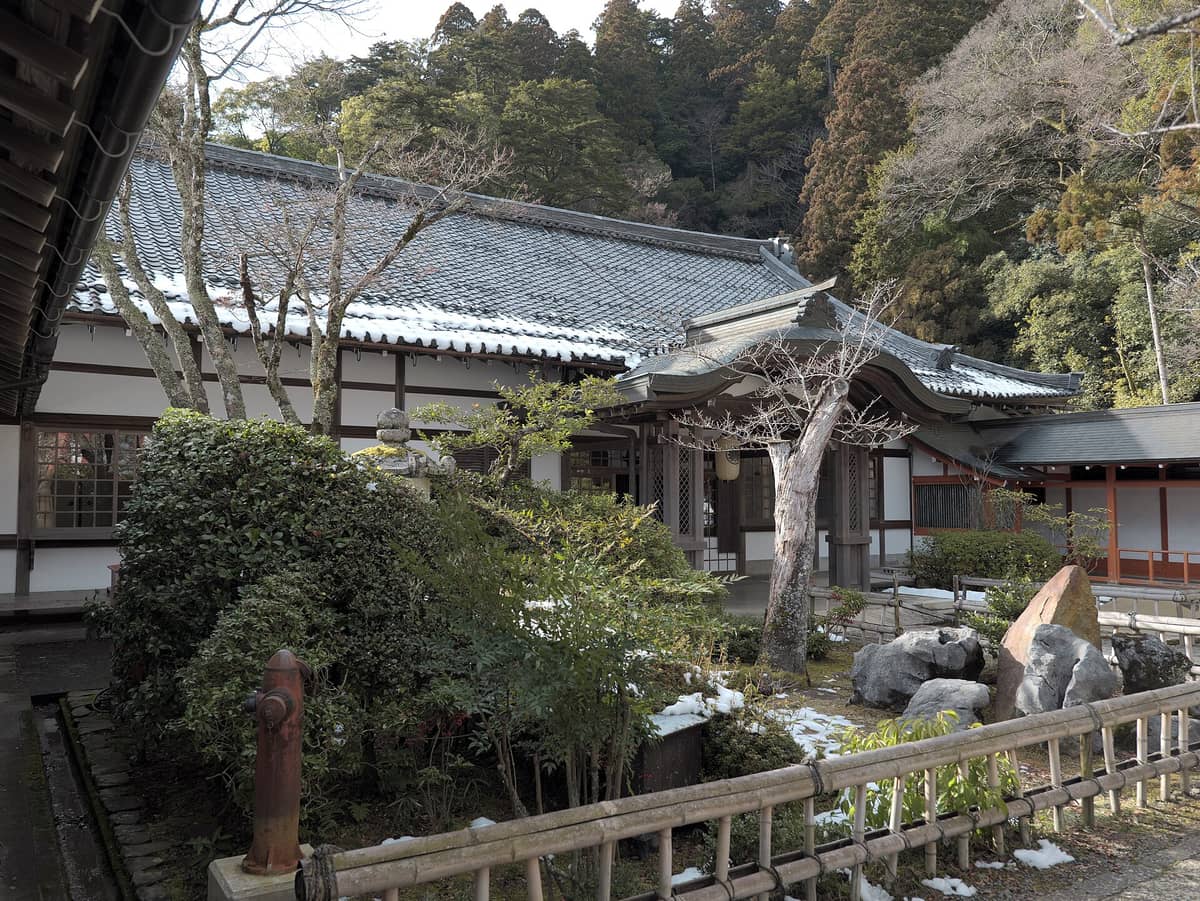
What Kurama-dera Actually Is
Kurama-dera Temple is the head temple of the Kurama Koho sect, founded in 770 AD on Mount Kurama in the forested hills roughly 30 minutes north of central Kyoto by rail from Demachiyanagi. The complex is not a single building but an entire mountain, with worship sites, stone-paved paths, ancient cedar trees, and the Reihoden museum spread across steep terrain. The mountain itself is considered sacred, and the journey up is part of the ritual — not a preamble to it.
The temple is less visited than Kyoto's downtown icons, which is exactly why it matters. On a weekday morning, you may share the cedar-lined paths with a handful of other walkers and the occasional group of schoolchildren. The air smells of damp earth and cedar resin. The sounds are mostly wind, birdsong, and the creak of old wood. This is a place that has maintained its spiritual atmosphere in a way that many of Kyoto's more accessible temples struggle to do.
ℹ️ Good to know
Opening hours: temple grounds 9:00–16:15; Reihoden museum 9:00–16:00. The museum is closed Mondays (or the following day if Monday is a national holiday) and from December 12 through the end of February. Verify current hours at kuramadera.or.jp before visiting.
Getting There and Arriving
The Eizan Electric Railway Kurama Line runs from Demachiyanagi Station in northern Kyoto to Kurama Station, a journey of about 30 minutes each way. Kurama is the terminal stop, so there is no risk of missing it. The train itself is charming — single-car, narrow-gauge, winding through increasingly dense forest as it climbs toward Kurama. In autumn, maple trees press against the carriage windows with red and orange foliage.
From Kurama Station, a small village street leads directly to the Niomon gate, a 3–5-minute walk. You pay the ¥500 mountain entry fee at this gate. From here, two routes lead up: the trail on foot (approximately 30 minutes to the main hall), or the cable car to the upper precinct, after which it is around a 10-minute walk to the main hall. The cable car has a small additional fare and does not cover the full mountain route. If you plan to walk the full circuit — continuing over the mountain ridge to Kibune — take the trail from the start. For a full guide to the area surrounding the temple, theKurama-Kibune neighborhood guide covers transport, hiking connections, and nearby dining.
💡 Local tip
The trail from Niomon to the main hall involves a steady, sometimes steep climb on uneven stone steps. Wear shoes with grip. In wet weather, the stones become slippery. Flip-flops and dress shoes are genuinely problematic here.
Tickets & tours
Hand-picked options from our booking partner. Prices are indicative; availability and final rates are confirmed when you complete your booking.
Kyoto Coast, Amanohashidate and Ine Bay 1-Day Trip from Osaka or Kyoto
From 46 €Instant confirmationFree cancellationKyoto Sanzen-in, Arashiyama and Bamboo Grove Full Day Tour
From 47 €Instant confirmationFree cancellationKyoto Arashiyama insider walking tour
From 66 €Instant confirmationFree cancellationMatcha green tea tour in Kyoto's Uji Market
From 130 €Instant confirmationFree cancellation
The Trail Up: What You Pass Along the Way
The foot path from the gate climbs through towering cedars, some of which are hundreds of years old. Their roots push through the stone steps in places, creating a texture underfoot that feels deliberately organic rather than neglected. Small subsidiary shrines and stone lanterns appear at intervals. The Yuki-jinja shrine sits partway up, a Shinto shrine within the broader Buddhist temple complex — a reminder that Kurama, like many sacred mountains in Japan, was historically a space where Buddhism and Shinto practices coexisted.
Closer to the top, the path opens slightly at the Honden, the main hall, set against a backdrop of forested peaks. The view from this level is not a panoramic city lookout — it is a view into more forest, more mountain. The atmosphere is enclosed rather than expansive, which suits the temple's spiritual character. A large bronze relief marks the approach. The smell of incense drifts from the hall itself on most days.
Beyond the main hall, the trail continues to the Okuno-in inner sanctuary, deeper into the forest and closer to the ridge. This section is quieter still and has a genuinely remote feeling despite being less than an hour from central Kyoto. Many visitors stop at the main hall and descend; those who continue to Okuno-in and then over the ridge to Kibune will find the path narrows and the cedar canopy thickens. Allow an extra 40–60 minutes for this full traverse.
How the Experience Changes by Time of Day and Season
Morning visits — arriving at the gate when it opens at 9:00 — offer the clearest light filtering through the cedar canopy and the fewest people on the path. Mist sometimes clings to the ridgeline on cool mornings, particularly in spring and autumn, giving the forested sections a layered, slightly otherworldly quality. By midday, tour groups from Kyoto occasionally appear, though Kurama-dera rarely feels crowded by the standards of central Kyoto attractions.
Autumn is the standout season. The maples alongside the cedar forest turn from mid- to late November, and the color contrast — deep evergreen against orange and red — is genuinely striking on the trail sections. Spring brings softer green growth and occasional cherry blossom near the lower precinct. Summer is the one season to approach carefully: the mountain trail is humid and the shade helps, but the climb becomes sweaty work above 28°C. Winter visits, particularly after snowfall, transform the steps and lanterns into something from a woodblock print, but the Reihoden museum is closed from mid-December through February. For broader seasonal context, theguide to Kyoto in autumn covers the best timing for foliage across the city.
The Reihoden Museum
The Reihoden (Kurama-yama Museum) houses religious artifacts, temple treasures, and natural history exhibits related to Mount Kurama. The additional ¥200 entry is modest for what the collection contains: statuary, ritual implements, and items that contextualize the temple's 1,200-year history. The museum is modest in scale compared to Kyoto's major institutions, but for visitors already committed to the full Kurama experience, it adds meaningful depth.
Note the museum's closure schedule before planning around it: Tuesdays, the day following a Tuesday national holiday, and the entire period from December 12 through the end of February. If museum access is a priority, a weekday visit in spring or autumn is the safest bet.
Accessibility and Who Should Reconsider
Kurama-dera is not suitable for visitors with significant mobility limitations. The cable car reduces one section of the climb, but the overall site involves uneven stone steps, steep gradients, and root-crossed paths that are not wheelchair accessible. Even the cable car approach requires some steps at each end. Visitors with knee problems should be aware that the descent, particularly in wet weather, requires care.
Visitors looking for a flat, easily navigable temple experience will find Kurama-dera frustrating rather than rewarding. Kyoto has excellent flat-terrain alternatives:Nishi Hongan-ji or To-ji Templeoffer historically significant experiences without the mountain climb. For families with young children, the trail is manageable for older children but slow with toddlers, and there are no stroller-friendly sections on the main path.
Photography on the Mountain
The cedar forest sections of the trail are the most photogenic. Light filtering through the tall canopy in the morning creates strong vertical compositions, particularly on slightly misty days. The Niomon gate and the stone lantern-lined paths photograph well in any season. The main hall forecourt is generally lit better in morning than afternoon, when shadow falls across the main facade. Autumn foliage near the lower trail and around the Yuki-jinja area offers reliable color contrast when timing is right, typically late November in this mountain microclimate, which tends to peak slightly earlier than the city center.
Photography within the main hall itself follows standard Japanese temple etiquette: observe any posted restrictions and avoid photographing during active worship. The outdoor forest areas have no photography restrictions.
Insider Tips
- If you plan to walk over the ridge to Kibune, go Kurama-to-Kibune rather than the reverse — the descent toward Kibune is gentler than the climb would be from that side, and you finish near Kibune's riverside restaurants for lunch.
- The cable car is operated by the temple itself and has a separate small fee on top of the mountain entry. It runs between the lower precinct and Tahoto Station in the upper precinct but does not take you all the way to the main hall; you still need to walk the final section (around 10 minutes).
- Arriving within the first 30 minutes of opening (9:00) on weekday mornings gives you the trail almost entirely to yourself. The difference in atmosphere between 9:15 and 11:00 on a busy weekend is significant.
- The Yuki Matsuri fire festival (Kurama Fire Festival) at the Yuki-jinja shrine within the complex takes place every October 22nd and involves torch-lit processions after dark — one of the more unusual temple events in Kyoto. Check current official sources for exact timing.
- Pack a light layer even in summer — the cedar canopy keeps the trail cool and the upper mountain can be noticeably colder than Kyoto city center, particularly in the shoulder seasons.
Who Is Kurama-dera Temple For?
- Hikers and walkers who want a mountain experience within 30 minutes of central Kyoto
- Temple enthusiasts interested in sites with genuine historical depth and fewer crowds
- Autumn foliage seekers, particularly in late November when mountain maples peak
- Travelers connecting to the Kibune valley for a full day out of the city
- Anyone wanting a counterpoint to Kyoto's flat, urban temple circuit
Nearby Attractions
Other things to see while in Kurama & Kibune:
- Kibune Shrine (Kifune Shrine)
Kifune Shrine is one of the oldest and most atmospheric shrines in the Kyoto region, tucked into a narrow cedar-forested valley north of the city. Dedicated to the deity of water, it draws visitors with its famous stone staircase flanked by red lanterns, its summer kawadoko riverside dining platforms, and a quiet that feels genuinely removed from central Kyoto. Entry to the grounds is free.
- Kurama Onsen
Kurama Onsen is a natural sulfur hot spring at the foot of Mount Kurama, roughly 30 minutes north of central Kyoto by train. With an open-air bath surrounded by cedar forest and a quiet mountain village setting, it offers a genuinely restorative break from the city's more crowded temples and garden circuits.