Kyoto in Autumn: The Complete Fall Foliage Guide
Autumn transforms Kyoto into one of the most photographed places on earth, with maples and ginkgos turning gold and crimson across temples, gardens, and hillsides. This guide covers when foliage peaks, where to go, which illumination events are worth your evening, and how to avoid the worst of the crowds.
Plan and book this trip
Tools from our partner Travelpayouts help you compare flights and hotels. If you book through them, we may earn a commission at no extra cost to you.
Flights
Hotels map
TL;DR
- Kyoto's autumn foliage (koyo) typically peaks late November to early December, not mid-November as commonly assumed — recent warmer autumns have pushed the peak later.
- Top viewing spots include Eikan-do Zenrin-ji, Arashiyama, and Rurikoin, each with different peak windows and crowd levels.
- Night illuminations at Kiyomizu-dera, Eikan-do, and Kodai-ji run for only a few weeks in late November to mid-December — check exact dates before you go, as they sell out.
- Crowds are intense from mid-November onward; arriving before 8am or visiting on weekday evenings makes a significant difference.
- For broader trip planning, see the best time to visit Kyoto guide for seasonal comparisons.
When Does Autumn Foliage Peak in Kyoto?
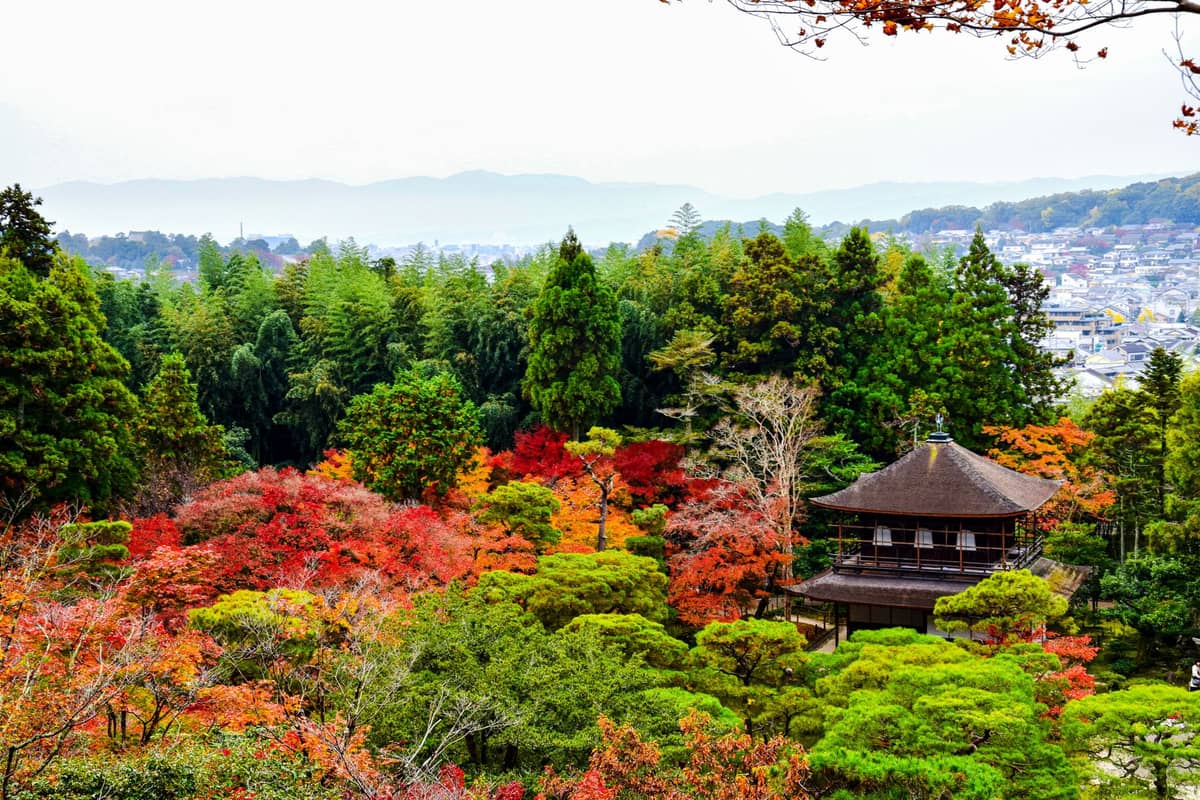
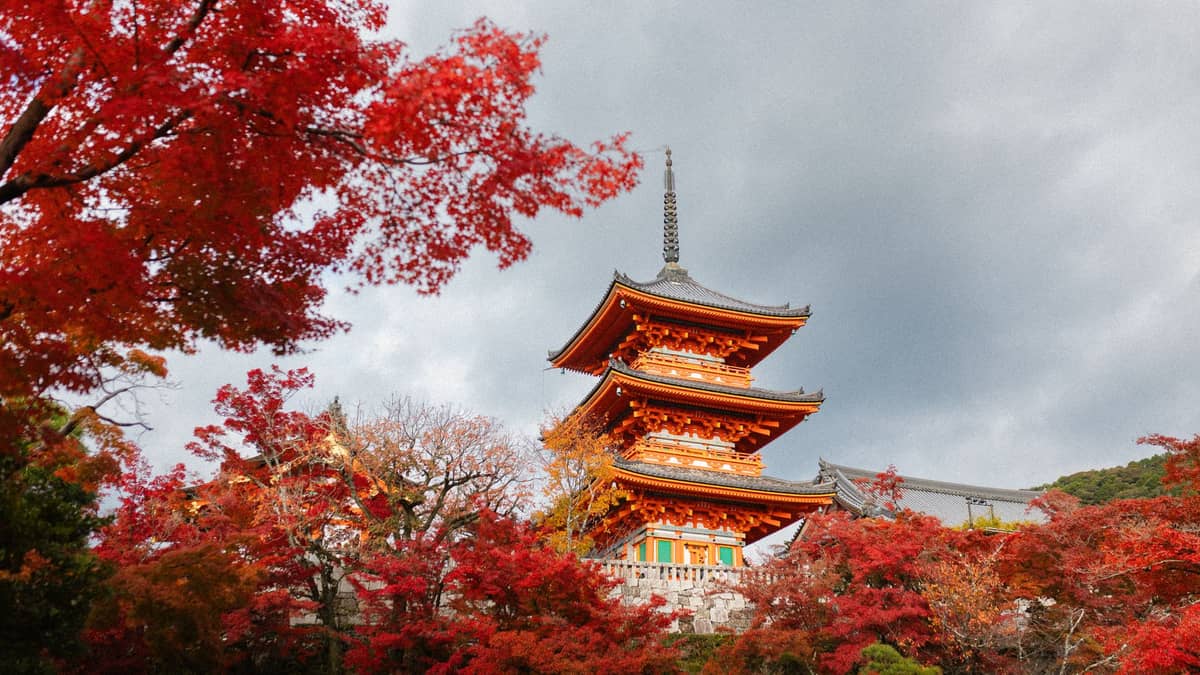
Kyoto's koyo season runs from mid-October through mid-December, but peak color is concentrated in a shorter window. Historically, the city-wide peak fell around mid to late November. In recent years, warmer autumns have shifted this. For 2025, multiple Japanese meteorological forecasters placed city-wide peak color in late November to early December, with some forecasts pointing to around December 12-15 as the brightest window for the season overall.
Temperatures are the key driver. Kyoto sits in a basin surrounded by mountains on three sides, which amplifies both summer heat and autumn temperature swings. The color change accelerates when daytime highs drop below around 20°C and nights become reliably cool. By late November, daytime averages are around 14-17°C and nights dip toward 7-9°C, which is the sweet spot for deep reds and oranges. If September and October run warmer than average, the whole season shifts a week or two later.
⚠️ What to skip
Do not book your trip assuming peak foliage will fall on a fixed date like November 15. Check a Japanese koyo forecast site (N-Kishou publishes annual foliage calendars) in late October for that year's specific predictions. Arriving one week too early means green leaves; one week too late means bare branches.
Different spots in Kyoto also peak at slightly different times. Higher-elevation locations in the hills around Kurama and Ohara color earlier, often by late October to early November. Valley-floor gardens in central Kyoto and Arashiyama peak later, typically late November. Arashiyama's best viewing is generally around November 21 in an average year, though 2025 forecasts pushed that closer to late November or December.
The Best Autumn Foliage Spots in Kyoto
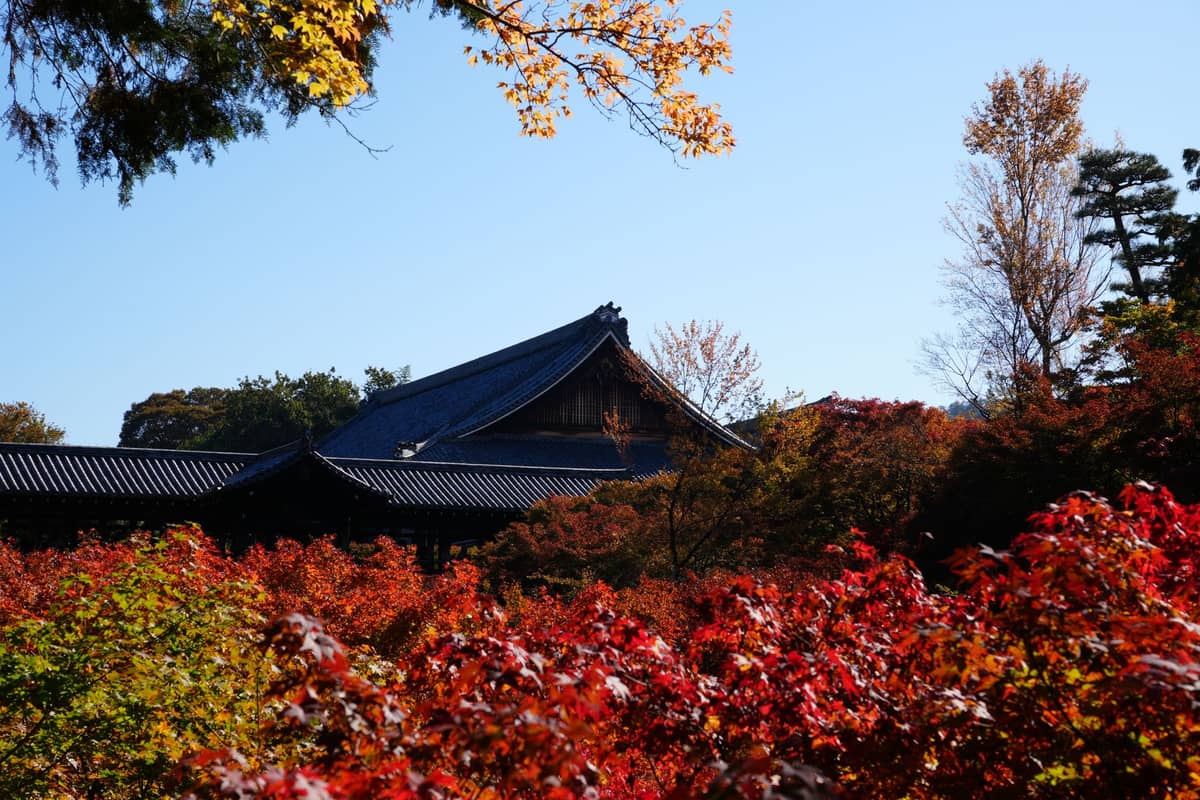
Eikan-do Zenrin-jiis widely considered Kyoto's single best koyo temple, and for good reason. The compound has hundreds of Japanese maples layered across multiple levels connected by covered corridors, pond reflections, and open hillside paths. The combination of colors, architecture, and water reflections is hard to match. Daytime visits during the regular season are included in the standard admission (¥600, higher during special autumn exhibitions); the night illumination runs November 15 to December 10, 17:30-21:00, with a separate ¥700 ticket. Expect significant queues for evening entry during peak weeks.
In the western hills, Arashiyamaoffers a different experience: foliage along the Hozu River valley, aroundTenryu-ji's Sogenchi garden, and across the hills above the Togetsukyo Bridge. Tenryu-ji's garden is a UNESCO World Heritage landscape with maples framing a central pond. The surrounding hillside trails, though busier than they used to be, give elevation and perspective that flat temple gardens cannot. Budget 3-4 hours to do the area properly.
- Eikan-do Zenrin-ji Best all-round koyo temple with hillside paths, pond reflections, and a top-tier night illumination. Peak: late November. Night viewing ¥700, runs Nov 15-Dec 10.
- Rurikoin (Rurico-in) Famous for its double-reflection of maples in a long lacquered table. Only open seasonally — autumn 2025 runs Oct 1 to Dec 14, with extended peak hours Nov 8-Dec 7. Very limited entry; special evening packages (¥7,000 via JR Tokai Tours) include transport.
- Kiyomizu-dera The wooden stage overlooks a hillside of maples. Night illumination Nov 22-Dec 7, 17:30-21:30, ¥500 adults. The walk up Ninenzaka and Sannenzaka beforehand is worth the extra time.
- Kodai-ji Special autumn admission Oct 24-Dec 14, with combined day-and-night access for ¥600 adults (no re-entry). The bamboo grove and garden are excellent in koyo season.
- Tofuku-ji One of Kyoto's most photogenic maple canopy views from the Tsutenkyo Bridge. Arrives at peak slightly earlier than central Kyoto spots, often mid to late November. Gets extremely crowded on weekends.
- Sanzen-in (Ohara) A 45-minute bus ride north of the city center, Ohara peaks earlier than downtown and feels noticeably quieter. Sanzen-in's mossy garden carpeted in fallen leaves is one of Kyoto's most peaceful autumn scenes.
✨ Pro tip
Rurikoin's famous maple-table reflection is real, but the venue is small and timed-entry fills fast. The JR Tokai Tours evening package (¥7,000) is genuinely the least stressful way to visit during peak color. If you want to visit independently during the day, arrive at opening (10:00, or 9:00 during the extended Nov 8-Dec 7 hours) or book in advance through official channels.
Night Illuminations: What's Worth Your Evening
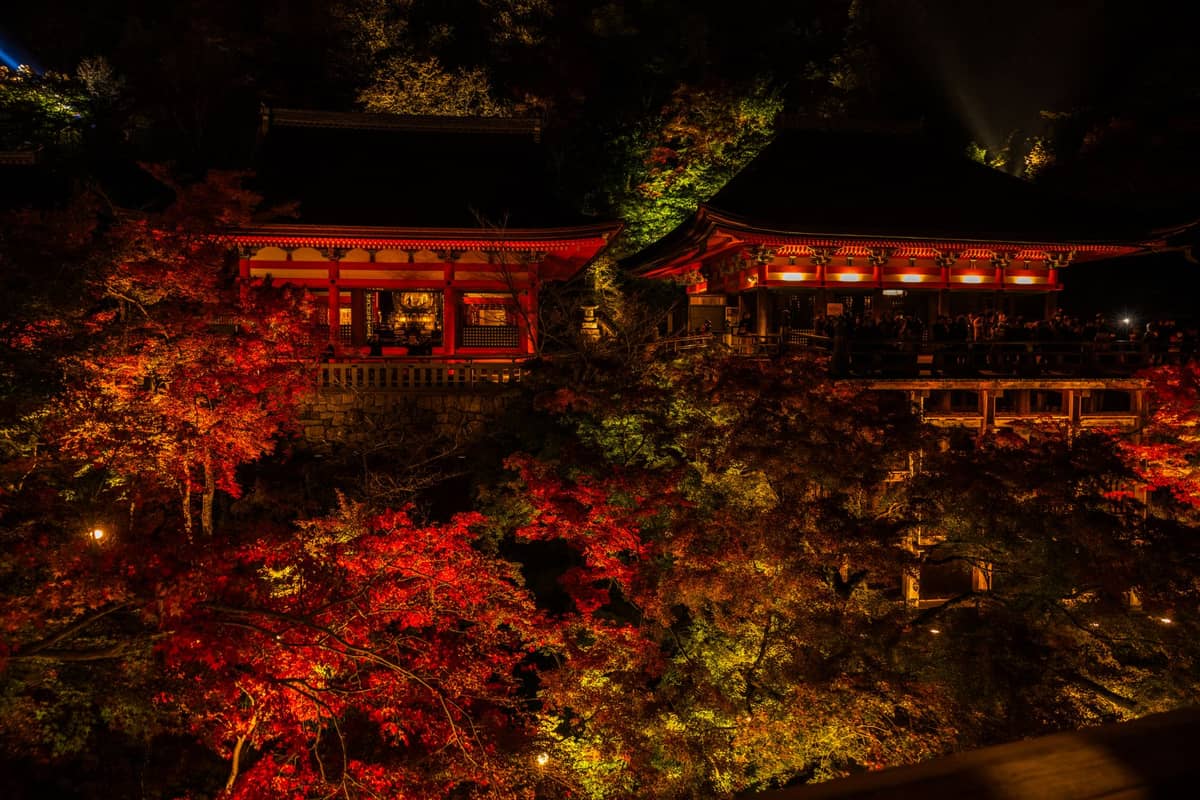
Kyoto's koyo illuminations are not gimmicks. When a 400-year-old temple garden is lit from below at dusk, with maple canopies glowing red and orange against a dark sky, it is genuinely among the more striking things you can see in Japan. The events are short-run, ticketed, and some sell out, so planning ahead matters.
Most illuminations run from around 17:30 and close by 21:00-22:00. They operate for only three to five weeks, primarily in late November and the first two weeks of December. A common mistake is arriving in early or mid-November expecting illuminations to be running. Check current-year schedules in October before you finalize evening plans.
- Kiyomizu-dera Night Illumination Nov 22-Dec 7, 2025 (check official site for current year). Hours 17:30-21:30, last entry 21:00. Adults ¥500, students ¥200. One of the most iconic autumn night views in Kyoto.
- Eikan-do Night Illumination Nov 15-Dec 10, 2025. Hours 17:30-21:00, last entry 20:30. ¥700 (junior high and older). The most complex garden of the three, with multiple paths and levels to explore.
- Kodai-ji Autumn Illumination Oct 24-Dec 14, 2025. Hours 09:00-22:00, last entry 21:30. ¥600 adults, combined temple-museum ticket ¥900. No re-entry between day and evening visits.
- Rurikoin Evening Package Via JR Tokai Tours only, ¥7,000 including transport. Evening access 18:15-20:00. Book well in advance during peak weeks.
ℹ️ Good to know
One ticket does not always cover both day and night. At Kodai-ji, a single autumn admission covers the entire day including evening, but there is no re-entry — you cannot leave and return. At Kiyomizu-dera and Eikan-do, day and night are separate admissions.
Navigating the Crowds
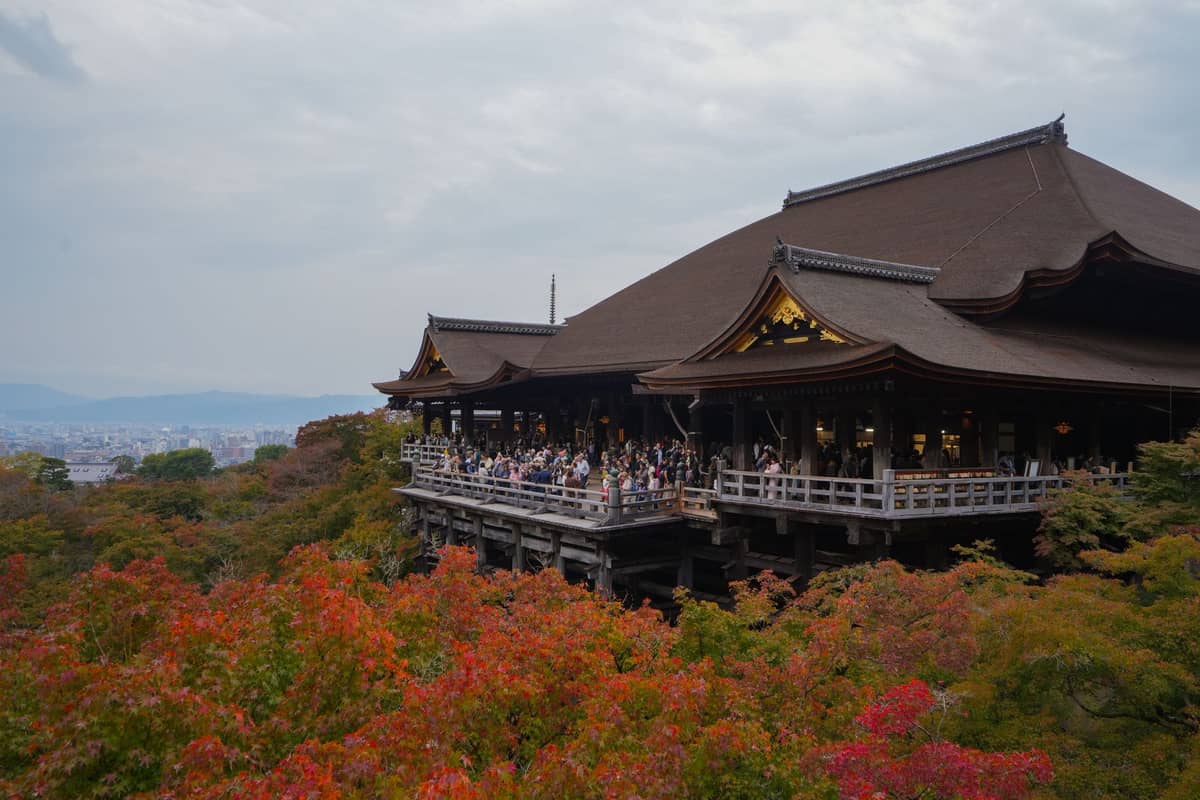
Kyoto in peak autumn is one of the busiest tourism events in Japan. Domestic Japanese travelers, school groups, and international visitors converge on the same narrow lanes and temple gardens during the same two-week window. At spots like Tofuku-ji and Kiyomizu-dera on a Saturday in late November, crowds are genuinely difficult to navigate and can diminish the experience substantially.
The most effective strategy is early starts. Temple gardens that open at 08:00 or 08:30 are dramatically quieter before 09:30 than at midday.The Philosopher's Path and the streets around Higashiyamaare best walked before 09:00 when the canal path is largely empty. Weekday visits are noticeably better than weekends, particularly the Tuesday-Thursday window.
Consider building northern and western Kyoto into your itinerary.Sanzen-in in Ohara and sites in Kurama and Kibunepeak a week or two earlier than central Kyoto and receive a fraction of the visitors. The trade-off is transport time (45-60 minutes from the city center by bus or train), but the payoff in atmosphere is real.
Getting Around During Autumn Season
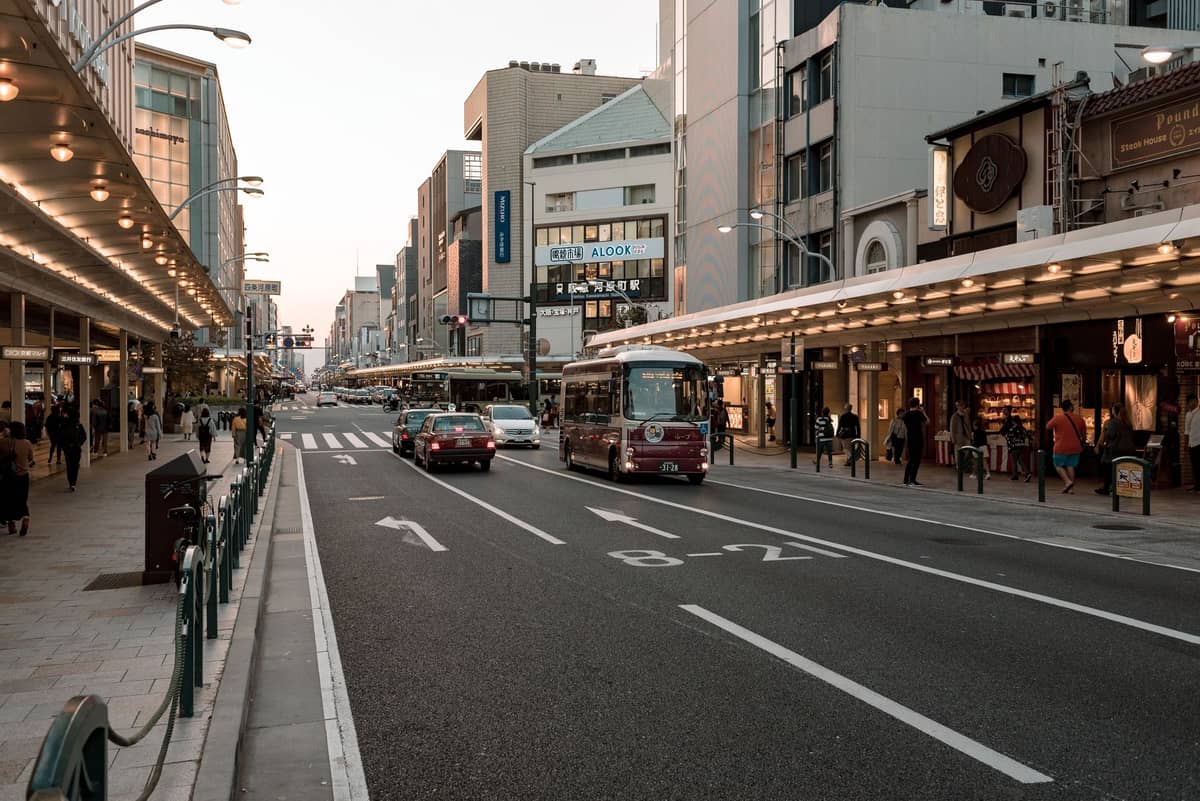
Kyoto's public transport works well but is under pressure during koyo season. The city bus network covers most major temple districts but runs slow during peak season as tourist demand surges. For the eastern temples (Eikan-do, Nanzen-ji, Kiyomizu-dera), the Tōzai Line subway to Higashiyama or Keage stations avoids bus delays. For Arashiyama, the Hankyu or Sagano Line trains are more reliable than buses. See the fullguide to getting around Kyoto for route options and pass recommendations.
For visitors arriving from Osaka, the JR West Kansai Area Pass covers unlimited JR travel (excluding Shinkansen, but including non-reserved Haruka between Kansai Airport and Kyoto) across the region for 1-4 days. The Kansai WIDE Area Excursion Pass (3-day) is priced at ¥12,000 for adults and covers a wider area including the JR Haruka from Kansai International Airport (KIX). The Haruka express takes about 75-80 minutes from KIX to Kyoto Station. Verify current pass prices with JR West before booking, as fares are periodically updated.
💡 Local tip
If you are staying in central Kyoto, rent a bicycle for the Philosopher's Path and Nanzen-ji area. The flat northern section of the canal path from Ginkaku-ji south is easily covered by bike in 20 minutes and lets you access multiple gardens without waiting for buses. Several rental shops near Kyoto Station and Gion offer day rates from around ¥1,000, with many standard bikes between ¥800-1,500.
Practical Autumn Packing and Logistics
Autumn temperatures in Kyoto range widely across the season. Early October still feels like late summer, with daytime highs around 24-26°C. By mid-November, expect roughly 14-18°C during the day and 7-10°C at night. Late November evenings at outdoor illuminations can drop to around 5-8°C, which feels significantly colder when standing still in a queue. Layer well for evening visits.
Autumn is also one of Kyoto's drier periods. October and November have comparatively low rainfall versus summer, but occasional rain is possible. A lightweight packable jacket doubles as rain protection. For temple etiquette including footwear requirements (you will remove shoes at many indoor spaces), see theKyoto temple etiquette guide. Tipping is not practiced in Japan; service charges are included at restaurants and ryokan.
If you are considering combining autumn foliage with a stay in a traditional inn, autumn is one of the highest-demand periods for Kyoto's ryokan. Book 2-3 months in advance for properties in Gion, Higashiyama, or Arashiyama. TheKyoto ryokan guidecovers what to expect in terms of pricing and what is included.
FAQ
When is the best time to see autumn leaves in Kyoto?
The typical peak window is late November to early December, with exact dates varying year to year based on autumn temperatures. Warmer autumns push peak color later, sometimes into mid-December. Check a Japanese foliage forecast (N-Kishou publishes annual koyo calendars) in late October for that season's predictions.
Is mid-November too early for autumn foliage in Kyoto?
In most years, yes — at least for the main central Kyoto spots. Mid-November typically shows partial color change with green still visible on many trees. Higher-elevation areas like Ohara and Kurama may be at or near peak, but the famous temple gardens in the city center usually hit peak color in the final week of November.
Which Kyoto autumn illumination is worth the admission?
Eikan-do is the strongest overall, with a complex multi-level garden, pond reflections, and covered walkways that make it work even in light rain. Kiyomizu-dera's illumination is dramatic for the mountain backdrop view but the temple grounds themselves are simpler. Kodai-ji is a good option for those who want a single all-day ticket covering both daytime and evening access.
How far in advance should I book Kyoto accommodation for autumn?
For stays in late November and early December, book at least 2-3 months ahead for good selection, especially if you want to stay in Gion, Higashiyama, or Arashiyama. Budget hotels near Kyoto Station have more availability but still fill up. Ryokan in prime areas can sell out further in advance during peak koyo weekends.
Are the Kyoto autumn crowds really that bad?
At peak spots on peak weekends, yes. Tofuku-ji on a Saturday in late November, or Kiyomizu-dera from 10am onward, can involve significant queuing and dense crowds. The experience is manageable with early starts (before 9am), weekday visits, and by including less-visited spots like Ohara or the Philosopher's Path rather than stacking only the famous temples.