Tō-ji Temple: Kyoto's Ancient Pagoda and Shingon Sanctuary
Tō-ji Temple, officially known as Kyōō Gokoku-ji, is one of Kyoto's most significant Buddhist complexes and a UNESCO World Heritage Site. Founded in 796 CE and shaped by the monk Kūkai into a Shingon powerhouse, it anchors the southern edge of the old capital Founded in 796 CE and shaped by the monk Kūkai into a Shingon powerhouse, it anchors the southern edge of the old capital with a 55-meter five-story pagoda that has defined Kyoto's skyline for centuries. It sits just a short walk from Kyoto Station, making it one of the most accessible major temples in the city.
Quick Facts
- Location
- 1 Kujo-cho, Minami-ku, Kyoto (Kyoto Station Area)
- Getting There
- Tōji Station (Kintetsu Kyoto Line, 10 min walk) or Kyoto Station (15 min walk southwest)
- Time Needed
- 1.5 to 2.5 hours; add time on market days (21st of each month)
- Cost
- Grounds free; paid halls approx. ¥500–¥800 adults; special night illuminations price varies
- Best for
- History and architecture enthusiasts, early-morning walkers, photography, flea market lovers
- Official website
- toji.or.jp/en
What Tō-ji Actually Is (and Why It Matters)
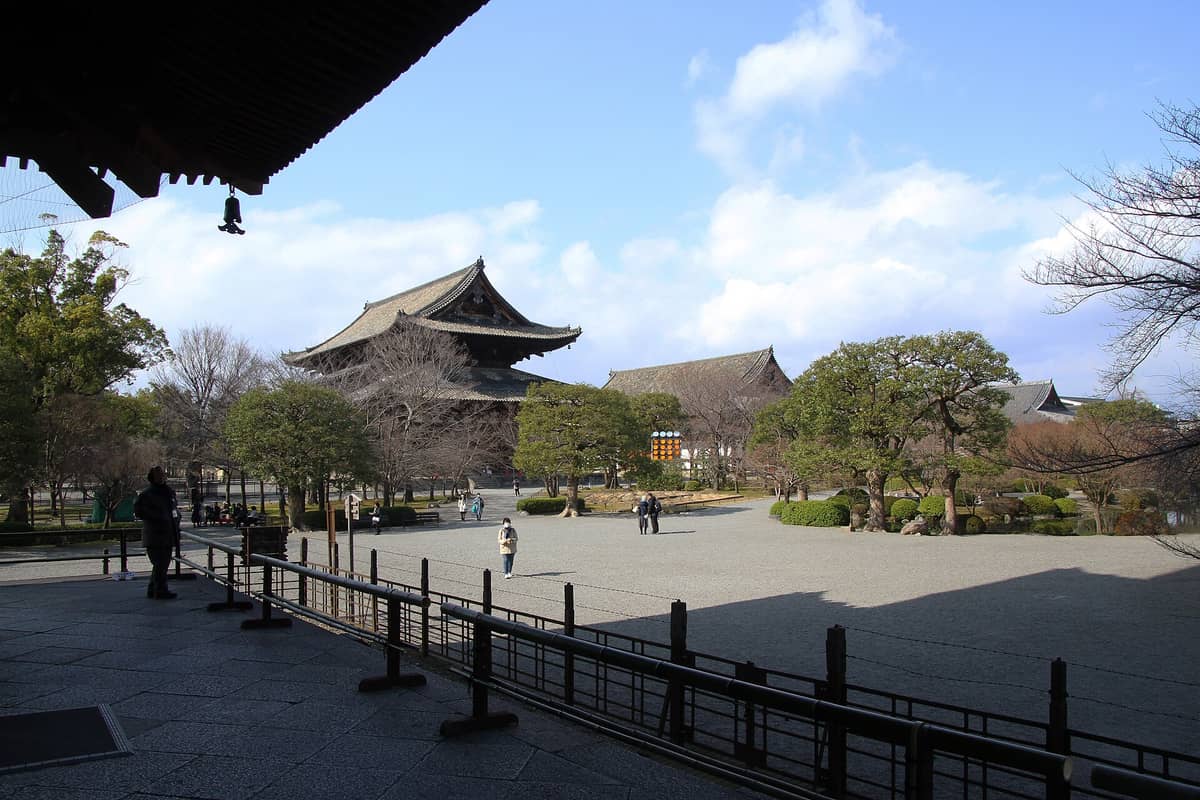
Tō-ji Temple, formally called Kyōō Gokoku-ji (教王護国寺), is not merely a postcard attraction. It is a working religious complex, a treasure house of early Japanese Buddhist art, and a living piece of urban history placed within minutes of one of Japan's busiest train stations. Founded in 796 CE, just after the imperial capital relocated to what is now Kyoto, Tō-ji was one of two temples the court permitted inside the new city boundaries. In 823, Emperor Saga entrusted it to the monk Kūkai, known posthumously as Kōbō Daishi and the founder of Shingon Buddhism in Japan. That handover transformed the temple into an esoteric Buddhist center whose influence spread across the country.
As part of the Historic Monuments of Ancient Kyoto, the complex earned UNESCO World Heritage status alongside sixteen other sites in and around the city. But unlike some of those sites, Tō-ji is tucked into a working-class neighborhood rather than a forested hillside, which gives it a different character. The streets around it carry the smell of coffee from nearby convenience stores and the low rumble of delivery trucks. The contrast between that ordinary urban texture and the soaring five-story pagoda visible from several blocks away is genuinely striking.
💡 Local tip
Opening hours: Temple grounds open daily from 05:00 to 17:00 (free entry). Main paid halls (Kondō and Kōdō) open 08:00–17:00, last admission 16:30. Hours may vary during special exhibitions and seasonal illuminations — confirm at toji.or.jp/en/ before your visit.
The Five-Story Pagoda: Japan's Tallest Wooden Tower
The Gojū-notō (五重塔), Tō-ji's five-story pagoda, stands approximately 55 meters tall and is Japan's tallest wooden pagoda. The current structure dates to 1644, a rebuild following earlier fires, but its proportions and detailing follow classical conventions of Shingon temple architecture. Each story is slightly narrower than the one below, and the rooflines carry a gentle upward curve that changes visually depending on the light and the angle of approach.
In the early morning, before the main gates fill with visitors, the pagoda catches low eastern light in a way that photographers specifically time their visits to capture. The surrounding pond, Hyōtan-ike (Gourd Pond), reflects the pagoda when the surface is calm, usually in the cooler months before wind picks up through midday. By late afternoon, the structure catches a warmer, amber tone that is equally photogenic but draws larger crowds.
The pagoda interior is not always open to general visitors. Access is typically granted during special openings tied to seasonal events, including spring and autumn viewing periods. Check the temple's official site well in advance if interior access matters to your visit. Even from the exterior, at close range, the sheer scale and the texture of the aged timber are impressive in a way that photographs do not fully convey.
ℹ️ Good to know
Photography tip: Arrive before 08:00 to photograph the pagoda with minimal crowds and better light. The north side of the grounds, near the pond, gives the cleanest composition.
Tickets & tours
Hand-picked options from our booking partner. Prices are indicative; availability and final rates are confirmed when you complete your booking.
Kyoto Coast, Amanohashidate and Ine Bay 1-Day Trip from Osaka or Kyoto
From 46 €Instant confirmationFree cancellationKyoto Sanzen-in, Arashiyama and Bamboo Grove Full Day Tour
From 47 €Instant confirmationFree cancellationKyoto Arashiyama insider walking tour
From 66 €Instant confirmationFree cancellationMatcha green tea tour in Kyoto's Uji Market
From 130 €Instant confirmationFree cancellation
Inside the Halls: Kondō, Kōdō, and the Miedo
The paid inner precinct contains three major structures worth knowing before you enter. The Kondō (Golden Hall) is the main worship hall and houses a central image of Yakushi Nyorai, the Buddha of healing. The scale of the interior is substantial, and the gilt statuary is arranged with a formality that reflects Shingon liturgical practice. Lighting inside is deliberately subdued, which takes a moment to adjust to, but the effect draws attention to the sculptural detail of the figures in a way that brighter conditions would undermine.
The Kōdō (Lecture Hall) is where Tō-ji becomes genuinely exceptional. Inside, twenty-one Buddhist sculptures arranged in a three-dimensional mandala formation represent the esoteric cosmology of Shingon Buddhism. Several of these works are National Treasures. The spatial arrangement, placing guardian figures at the outer edges and more serene bodhisattvas toward the center, is intentional and central to Shingon teaching. You can spend thirty minutes in here alone just reading the visual structure of the room.
The Miedo (Founder's Hall) honors Kūkai and sees a steady stream of worshippers throughout the day. This hall is free to enter and carries a quieter, more devotional atmosphere than the main tourist circuits. You will often find elderly visitors praying here, offering incense, and moving with the kind of purposeful calm that distinguishes people who come for faith rather than sightseeing.
The Monthly Flea Market: Kōbō-san
On the 21st of every month, Tō-ji hosts the Kōbō-san flea market (弘法市), one of the largest and oldest antique and craft markets in Kyoto. The date commemorates Kūkai's death in 835. The grounds transform from a contemplative temple space into a sprawling open-air market with hundreds of stalls selling antiques, ceramics, textiles, clothing, street food, and plants. It runs from before dawn until around dusk, and arrival by 08:00 gives you access to the best selection before stock thins.
The atmosphere is unlike the temple's usual register. Vendors haggle in Kyoto dialect, the smell of grilling skewers and roasted sweet potatoes drifts across the grounds, and the sound of temple bells occasionally cuts through the market noise as a reminder of where you are. Antique lacquerware, old kimono fabric, hand-painted scrolls, and Meiji-era ceramics sit alongside stalls selling cheap second-hand tools and everyday household goods. It requires patience and some willingness to browse without a specific goal, but it rewards that approach.
If you are building an itinerary around the market, note that this is also one of the better contexts for combining Tō-ji with a broader south Kyoto loop. For context on Kyoto'sbudget-friendly attractions, the free grounds entry combined with market browsing makes this one of the city's most cost-effective full mornings.
When to Visit and How the Experience Changes
Tō-ji functions differently across the day and the year. Early morning, before 08:00, belongs to worshippers, dog-walkers cutting through the grounds, and the occasional photographer. The pace is slow and the space feels genuinely large. By mid-morning on regular days, tour groups from Kyoto Station hotels begin arriving, and the main halls fill with an organized but noticeably busier flow.
Spring brings two things simultaneously: cherry blossoms from the large weeping cherry tree near the Miedo, which frames the pagoda beautifully when in bloom, and significantly larger crowds. During peak cherry blossom season, usually late March to mid-April, the temple runs special evening illuminations. The pagoda lit against a dark sky above pink blossoms is one of the iconic images of Kyoto spring, and it is worth the special evening entry for the session. But do not underestimate the crowds during this period.
Autumn brings a second illumination period with the maple colors, though Tō-ji's autumn foliage is more subtle than at a dedicated maple temple likeEikan-do Zenrin-ji. Winter visits, particularly in January and February, offer a dramatically quieter experience. The cold is real, Kyoto winters routinely drop near freezing at night and stay below 10°C through the day, but the absence of crowds makes the sculpture halls absorbing in a way that crowded visits do not allow. Bring a warm layer regardless of the month, as the Kōdō and Kondō are not heated.
For a fuller picture of Kyoto's seasonal timing, the best time to visit Kyoto guidecovers crowd levels, weather, and event calendars across all twelve months.
⚠️ What to skip
On the 21st of each month (Kōbō-san market day), the grounds become very crowded by mid-morning. If you want to see the temple buildings seriously, either arrive before 08:30 or visit on a non-market day.
Getting There and Practical Logistics
Tō-ji is one of the easiest major temples in Kyoto to reach. From Kyoto Station's Hachijō Exit (the south side), the temple is approximately a 10 to 15 minute walk in a straight southwest direction. The route is flat, simple to navigate, and passes through an ordinary residential and commercial neighborhood. Alternatively, the Kintetsu Kyoto Line connects Kyoto Station to Tōji Station in one stop, putting you about a 10-minute walk from the temple's east gate.
The grounds are flat and generally suitable for visitors using wheelchairs or pushchairs on the main paths. Some historic hall interiors have raised platforms and wooden steps, and access inside specific structures is not guaranteed to be step-free. For detailed accessibility needs, contact the temple directly before your visit. The official address is Kujo-cho 1, Minami-ku, Kyoto.
Tō-ji fits naturally at the beginning or end of a Kyoto Station-area day, and pairs well with a visit toNishi Hongan-ji, another substantial Buddhist complex a short walk north. For temple etiquette basics, including how to behave in worship halls, theKyoto temple etiquette guide is worth a quick read before you go.
Who Should Skip Tō-ji
Tō-ji is not a nature walk or a scenic hillside viewpoint. The surrounding neighborhood is urban and unremarkable, and the grounds, while spacious, are laid out formally rather than as a garden to wander. Visitors looking for the moss gardens and forested temple atmospheres of Sakyō-ku or Arashiyama will find Tō-ji more functional than romantic. The sculpture halls are also best appreciated with some prior interest in Buddhist iconography; without that context, the Kōdō mandala arrangement can read as a room full of statues rather than the structured cosmological statement it actually is.
Young children may find the indoor halls slow-paced, though the open grounds and the sheer size of the pagoda tend to register with kids in a straightforward way. If your travel style prioritizes scenic walks over cultural depth, Tō-ji is probably best as a 45-minute stop rather than a centrepiece of the day.
Insider Tips
- The free grounds open at 05:00, well before the paid halls. An early morning circuit of the exterior, with the pagoda in low light and almost no other visitors present, is one of the genuinely underrated experiences in central Kyoto.
- The Kōdō sculpture mandala is the main reason to buy a ticket. Allocate at least 20 minutes here specifically, and pick up the bilingual explanation sheet at the entrance to the hall — it maps each of the twenty-one figures and explains the spatial logic.
- On Kōbō-san market day (21st of each month), the best antique and textile stalls cluster near the west and north sides of the grounds. They tend to pack up earlier than street food vendors, so target those sections first if that is your priority.
- The Hyōtan-ike pond on the north side of the grounds reflects the pagoda best on calm, cool mornings in autumn and winter. In summer, wind and surface disturbance often break the reflection by mid-morning.
- Tō-ji is included in several JR Pass and Kintetsu Pass itineraries, but the admission fee to the halls is always paid separately at the site regardless of any rail pass you hold.
Who Is Tō-ji Temple For?
- Travelers with a genuine interest in Japanese Buddhist art and early Heian-period history
- Photographers targeting the pagoda at dawn or during spring cherry blossom illuminations
- Antique and craft market enthusiasts visiting on the 21st of the month
- First-time Kyoto visitors staying near Kyoto Station who want a major UNESCO site within walking distance
- Winter visitors looking for a significant, crowd-light cultural experience
Nearby Attractions
Other things to see while in Kyoto Station Area:
- Higashi Hongan-ji Temple
Higashi Hongan-ji is the head temple of the Shinshū Ōtani-ha Buddhist sect and home to the Miei-dō, the Founder's Hall widely recognized as one of the largest wooden structures on earth. Located a short walk from Kyoto Station, it costs nothing to enter and operates almost year-round, making it one of the most accessible major temples in the city.
- Kyoto Aquarium
Tucked inside Umekoji Park, a short walk from Kyoto Station, Kyoto Aquarium is a fully indoor attraction built around regional aquatic life, dolphin performances, and one of Japan's most unusual residents: the giant salamander. It's a reliable rainy-day option and a strong choice for families, though adult travelers visiting solo may find the experience skews young.
- Kyoto Railway Museum
The Kyoto Railway Museum is one of Japan's largest and most comprehensive rail museums, housing 53 historic vehicles across a sprawling indoor-outdoor complex near Kyoto Station. From Meiji-era steam locomotives to original Shinkansen cars, it rewards curious visitors of any age with well-designed exhibits, working demonstrations, and one of the best rooftop views of the surrounding area.
- Kyoto Tower
Rising 131 meters directly above Kyoto Station, Nidec Kyoto Tower offers one of the city's most accessible panoramic viewpoints. The observation deck delivers a sweeping 360-degree view over the low-rise temple cityscape, and the entire visit takes under an hour, making it a practical add-on to any day in the area.