Kyoto Aquarium: A Practical Guide to Umekoji Park's Indoor Ocean
Tucked inside Umekoji Park, a short walk from Kyoto Station, Kyoto Aquarium is a fully indoor attraction built around regional aquatic life, dolphin performances, and one of Japan's most unusual residents: the giant salamander. It's a reliable rainy-day option and a strong choice for families, though adult travelers visiting solo may find the experience skews young.
Quick Facts
- Location
- 35-1 Kankijicho, Shimogyo-ku, Kyoto (inside Umekoji Park)
- Getting There
- Umekoji-Kyotonishi Station (JR San-in Line), 7 min walk; or Kyoto Station Central Exit, 15 min walk
- Time Needed
- 1.5 to 2.5 hours
- Cost
- Adults ¥2,600 / High school & university students ¥2,000 / Junior high & elementary ¥1,400 / Children aged 3+ ¥900. Verify current fees at official site.
- Best for
- Families with children, rainy-day visits, travelers with limited mobility
- Official website
- www.kyoto-aquarium.com/en/index.html
What Kyoto Aquarium Actually Is
Kyoto Aquarium is a fully indoor aquarium set within Umekoji Park in the Shimogyo ward, roughly a kilometer west of Kyoto Station. Unlike coastal aquariums built around proximity to the sea, this facility is deliberately land-locked and themed around the aquatic environments of Kyoto Prefecture and the broader Kansai region. That means rivers, wetlands, and mountain streams feature as prominently as ocean tanks.
The aquarium officially opens 365 days a year with no regular closed days, though occasional temporary closures for facility inspections do occur. Typical hours are around 10:00 to 18:00 with last admission one hour before closing, and may vary by season or holiday. Always check the official online calendar before visiting, as hours can shift around public holidays and special events.
💡 Local tip
Ticket prices listed here were verified against the official aquarium tariff in 2026 (adults ¥2,600), but aquarium admission fees in Japan are revised periodically. Confirm the current price at the official site or ticket counter before your visit.
Getting There: Easier Than It Looks on the Map
The most direct route from central Kyoto is the JR San-in Line from Kyoto Station to Umekoji-Kyotonishi Station, a single stop that takes about two minutes, followed by a seven-minute walk to the aquarium entrance. This station opened relatively recently and has made the aquarium significantly more accessible than it was when visitors had to rely entirely on foot or bus connections.
If you are already at Kyoto Station and prefer to walk, the route from the Central Exit takes roughly 15 minutes along a straightforward path toward Umekoji Park. The walk is flat and well-signposted in English, passing through a quiet residential district. On a hot summer day or during a downpour, the train is the smarter option.
Kyoto Aquarium shares Umekoji Park with the Kyoto Railway Museum, which sits on the opposite end of the park grounds. If you have children who lean toward trains over fish, or want to fill a full day near Kyoto Station, the two pair naturally together. Plan aquarium first if you have young children, as dolphin show times often shape the visit.
Tickets & tours
Hand-picked options from our booking partner. Prices are indicative; availability and final rates are confirmed when you complete your booking.
Kyoto Coast, Amanohashidate and Ine Bay 1-Day Trip from Osaka or Kyoto
From 46 €Instant confirmationFree cancellationKyoto Sanzen-in, Arashiyama and Bamboo Grove Full Day Tour
From 47 €Instant confirmationFree cancellationKyoto Arashiyama insider walking tour
From 66 €Instant confirmationFree cancellationMatcha green tea tour in Kyoto's Uji Market
From 130 €Instant confirmationFree cancellation
The Experience Floor by Floor
The aquarium is organized into themed zones progressing from freshwater river environments toward open ocean. The ground level opens with exhibits on the Kyoto basin's river ecosystems, where tanks hold fish species found in the Kamo and Yura rivers. These are not dramatic specimens, but they are authentically local, and the interpretive signage does a reasonable job of placing them in a regional ecological context.
One of the standout exhibits is the Japanese giant salamander display. The giant salamander (Andrias japonicus) is a species native to fast-moving cold streams in western Japan and is one of the largest amphibians on earth, sometimes exceeding 150 cm in length. Seeing one motionless at the bottom of a shallow tank, its wrinkled skin blending almost perfectly with the stone substrate, is quietly arresting. It is the kind of creature most visitors have never seen outside a photograph.
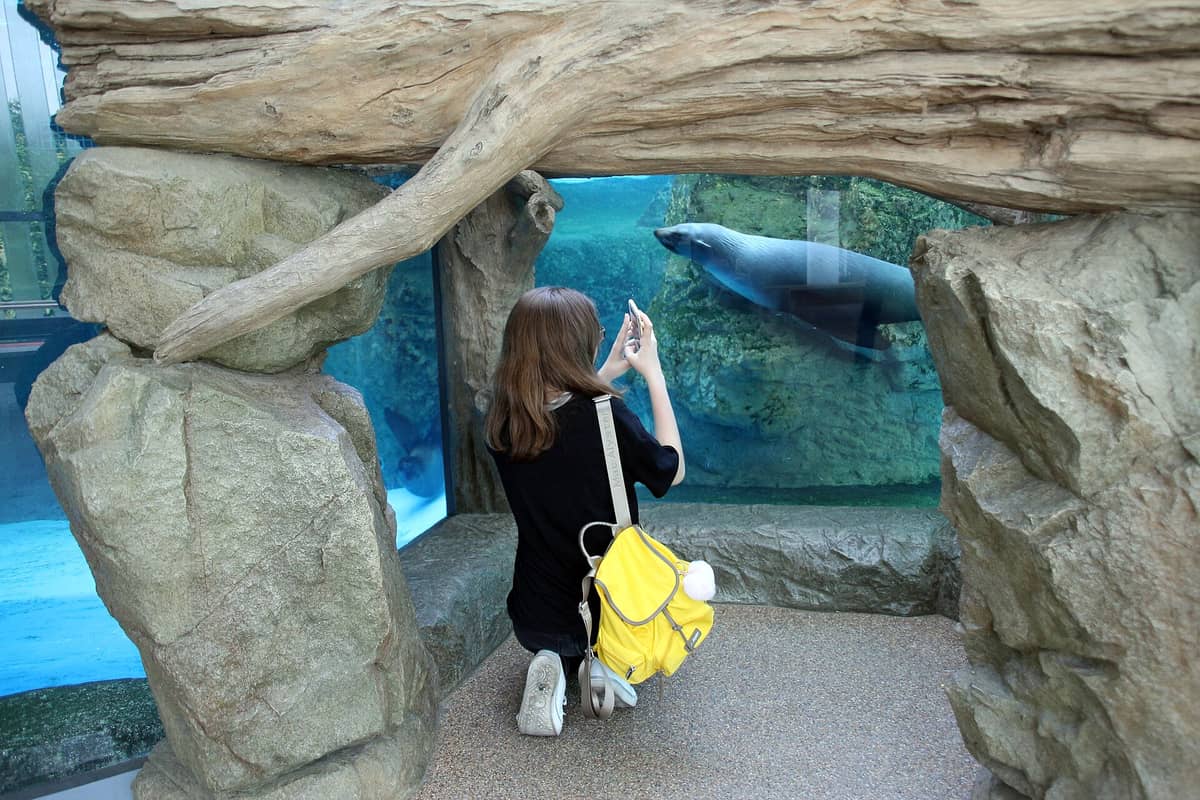
The ocean and coral zones occupy the upper sections and feel more conventionally aquarium-like, with jellyfish displays, penguin enclosures, and a coral reef tank. The penguin exhibit is popular with children, who tend to gather along the glass at feeding times. If you visit during a weekday morning, you can often observe the penguins with minimal crowds.
The Dolphin Stadium: What to Expect
The dolphin performance area is the aquarium's most prominent feature and the one that drives many family visits. Shows are scheduled at set times throughout the day, and the stadium fills quickly, particularly on weekends and during school holiday periods. If you intend to watch a performance, check the posted schedule immediately upon entry and position yourself early. The covered seating wraps around the pool at a gentle incline, giving reasonable sightlines from most rows.
Wheelchair users have a dedicated viewing space within the dolphin stadium, which is a genuine accessibility consideration rather than a token gesture. The facility overall is described as fully barrier-free indoors, with ramps and elevators connecting all floors. Four multipurpose accessible toilets are available throughout the building, and a limited number of manual wheelchairs can be borrowed from staff at no charge. Note that handle-type electric wheelchairs and senior mobility scooters are not permitted inside.
ℹ️ Good to know
Guide dogs and other certified assistance dogs are permitted throughout the aquarium, including the dolphin stadium.
When to Visit and Who Should Think Twice
Weekday mornings between opening and around 11:00 are the quietest period. School groups tend to arrive mid-morning, and weekend afternoons see the heaviest family traffic. The aquarium is particularly useful on rainy days in Kyoto's wet June rainy season (Baiu) or during the intense heat of July and August, when being outdoors for extended periods becomes uncomfortable. The fully climate-controlled interior makes it a practical refuge during both extremes.
Solo adult travelers with little interest in child-oriented programming and no particular enthusiasm for marine biology may find the aquarium underwhelming relative to Kyoto's broader cultural offerings. The same two-plus hours could be spent at sites with deeper historical or architectural significance. This is not a criticism of the aquarium's quality but an honest framing of where it sits in Kyoto's attraction landscape.
Kyoto has an extraordinary density of temples, shrines, and gardens within easy reach of the station area. If your time is limited, it is worth considering how Kyoto Aquarium fits against alternatives. For those building a wider itinerary, theKyoto first-timer guideoffers a clear framework for prioritizing your time across the city's major areas.
Photography and Practical Logistics
Photography is generally permitted throughout the public exhibit areas. The jellyfish zone, lit in cool blue tones with slow-moving specimens drifting through cylindrical tanks, produces images that work well on a wide aperture with image stabilization. The giant salamander exhibit is low-light and behind glass with a slight greenish tint, so expect some compromise on sharpness without a fast lens.
There is a gift shop near the exit with aquarium-branded merchandise and plush toys themed around resident species, including the giant salamander. A cafe operates within the facility, offering standard light meal options. No outside food is typically permitted in exhibit areas. Coin lockers are available near the entrance for bags, which is useful if you are visiting with luggage en route from or to Kyoto Station.
⚠️ What to skip
The aquarium is inside a park and does not have its own paid parking. Visitors arriving by car should check current parking options at Umekoji Park directly. The walk from Kyoto Station is flat and manageable, and public transport is strongly recommended.
Combining the Visit with the Surrounding Area
Umekoji Park itself is a pleasant green space worth a short wander before or after the aquarium, particularly in spring when the planting is at its best. TheKyoto Railway Museumis the obvious pairing on the same grounds. For those who want to extend the day toward the city center, theNishiki Marketis accessible by subway from the station area and provides a completely different sensory experience: narrow lanes, fresh produce, pickles, and grilled skewers.
Travelers interested in a broader station-area itinerary can also considerTo-ji Temple, a UNESCO World Heritage site with Japan's tallest historic pagoda, located about ten minutes by foot east of Kyoto Station in the opposite direction from the aquarium. Combining the aquarium with To-ji in a single morning and afternoon is realistic and covers indoor and outdoor experiences without heavy transit.
If you are planning more broadly around the station area, our guide to Kyoto with kidsgives a practical breakdown of which attractions across the city work well at different ages and energy levels.
Insider Tips
- Check the dolphin show schedule immediately on entry. Shows fill up fast on weekends and during school holidays, and if you want a good seat rather than a standing spot at the back, you need to arrive at the stadium at least 10 minutes early.
- The giant salamander exhibit is easy to overlook because the animals are so still they can be mistaken for a rock formation. Take a moment to look carefully at the bottom of the tank rather than moving on quickly — the detail in the skin texture is remarkable up close.
- If you are visiting with a stroller, the ramps and elevators are genuinely functional and wide enough. This is not always the case in older Kyoto facilities, so the aquarium earns real credit for its access design.
- Visiting on a rainy weekday morning during June or July turns what would be an outdoor-unfriendly day into a productive one. The aquarium rarely feels overcrowded at those times, and you can move through exhibits at your own pace.
- Disability certificate holders and one accompanying companion receive 50% off the standard admission fee. Present the certificate at the ticket counter rather than the online booking page to ensure the discount is applied correctly.
Who Is Kyoto Aquarium For?
- Families with children aged 3 to 12, particularly those drawn to live animal encounters and hands-on exhibits
- Travelers caught in summer heat or June's rainy season who need a full-morning indoor option near Kyoto Station
- Visitors with mobility considerations, as the barrier-free design and wheelchair loan service make this one of the most accessible major attractions in the Kyoto Station area
- First-time visitors to Japan who want an introduction to endemic species like the Japanese giant salamander outside of a natural history museum context
- Anyone planning a layover-style day near Kyoto Station who wants to combine the aquarium with the nearby Railway Museum and To-ji Temple without heavy cross-city transit
Nearby Attractions
Other things to see while in Kyoto Station Area:
- Higashi Hongan-ji Temple
Higashi Hongan-ji is the head temple of the Shinshū Ōtani-ha Buddhist sect and home to the Miei-dō, the Founder's Hall widely recognized as one of the largest wooden structures on earth. Located a short walk from Kyoto Station, it costs nothing to enter and operates almost year-round, making it one of the most accessible major temples in the city.
- Kyoto Railway Museum
The Kyoto Railway Museum is one of Japan's largest and most comprehensive rail museums, housing 53 historic vehicles across a sprawling indoor-outdoor complex near Kyoto Station. From Meiji-era steam locomotives to original Shinkansen cars, it rewards curious visitors of any age with well-designed exhibits, working demonstrations, and one of the best rooftop views of the surrounding area.
- Kyoto Tower
Rising 131 meters directly above Kyoto Station, Nidec Kyoto Tower offers one of the city's most accessible panoramic viewpoints. The observation deck delivers a sweeping 360-degree view over the low-rise temple cityscape, and the entire visit takes under an hour, making it a practical add-on to any day in the area.
- Nishi Hongan-ji Temple
Nishi Hongan-ji is one of Kyoto's most architecturally significant Buddhist temples and a UNESCO World Heritage Site, located minutes from Kyoto Station. Entry is free, the scale is extraordinary, and crowds are a fraction of what you'll find at more famous temples across the city.