Nishiki Market: Kyoto's Covered Food Street Explained
Nishiki Market is a narrow, covered shopping street in central Kyoto lined with roughly 100 vendors selling pickled vegetables, fresh tofu, grilled skewers, and local street food. Entry is free, crowds are real, and the experience changes dramatically depending on what time you arrive.
Quick Facts
- Location
- Nishikikoji-dori, Nakagyo-ku, Downtown Kyoto
- Getting There
- 5-min walk from Karasuma Station (Hankyu) or 7-min walk from Shijo Station (Municipal Subway Karasuma Line)
- Time Needed
- 45–90 minutes for a full walk-through with stops
- Cost
- Free to enter; budget ¥500–¥2,000 for snacks and small purchases
- Best for
- Food lovers, grocery explorers, and anyone curious about Kyoto's culinary identity
- Official website
- www.kyoto-nishiki.or.jp/en
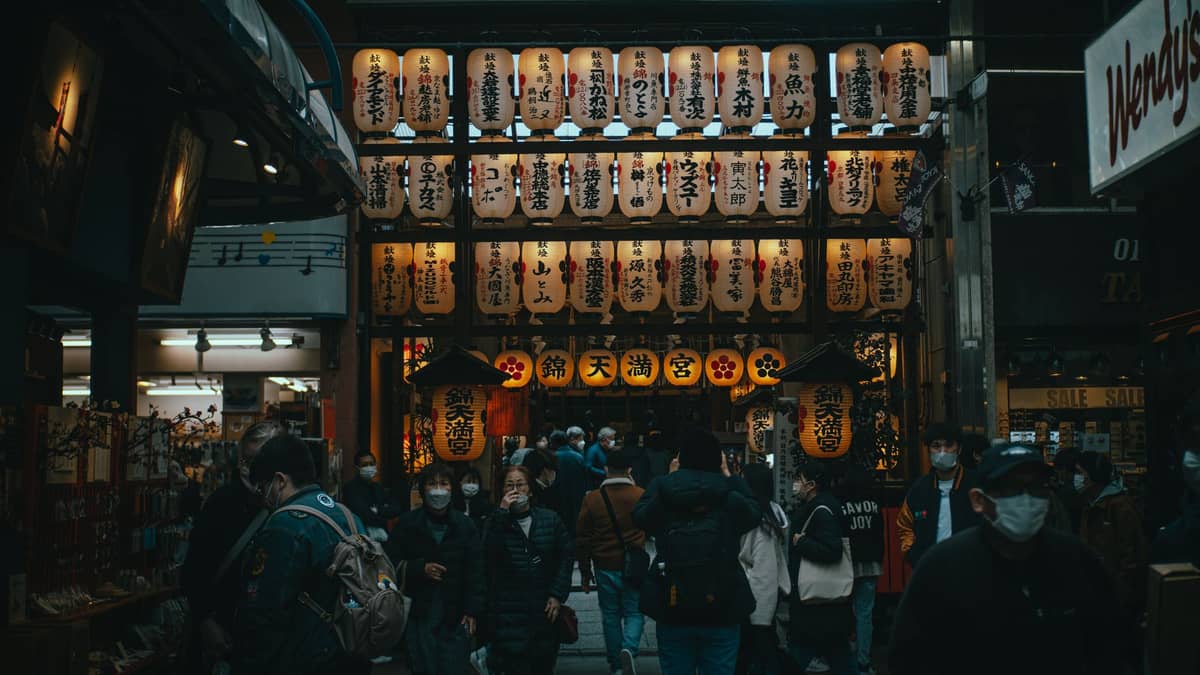
What Nishiki Market Actually Is
Kyoto Nishiki Market Shopping Street, known locally as Nishiki-ichiba, is a single covered arcade roughly four to five blocks long, running east-west along Nishikikoji-dori between Teramachi-dori and Takakura-dori in central Kyoto. It is one of the city's oldest and most concentrated food streets, with around 130 individual shops and stalls selling everything from fresh yuba (tofu skin) and Kyoto-style pickles (tsukemono) to grilled skewers, dashi stock, dried fish, and Japanese sweets.
The market is a public shopping street, not a ticketed attraction. There is no gate and no entrance fee. The Nishiki Market Shopping Street Association advises that many shops are open roughly 10:00 to 17:00 or 18:00, though individual vendors set their own hours and some close earlier or on certain days. Do not plan to arrive expecting every stall to be open at 9:00 in the morning or after 18:00 in the evening.
💡 Local tip
Arrive around 11:00 on a weekday for the best combination of open stalls and manageable crowds. Many food vendors sell out of specific items by mid-afternoon.
The Physical Experience: Senses, Layout, and Atmosphere
The street is narrow, covered by a curved canopy that keeps out rain and diffuses daylight into a pale, even glow. When the market is at capacity on a weekend afternoon, movement slows to a shuffle. The smell shifts every few meters: vinegar and fermented brine from pickle shops, the warm starchy scent of freshly steamed mochi, charcoal smoke from a vendor grilling small skewers near the center section, then the faintly oceanic smell of dried fish and kombu at the specialty ingredient stalls.
The floor is flat and paved, which makes it manageable for most visitors, though the combination of tight space and moving foot traffic means that anyone with a wide stroller or significant mobility challenges will find busy hours genuinely difficult. The association's own FAQ notes the street is not fully accessible for all mobility aids. On quieter mornings, the same street feels completely different: shop owners arranging displays, a few locals doing their daily shopping, and the occasional tourist photographing produce without elbowing anyone.
Tickets & tours
Hand-picked options from our booking partner. Prices are indicative; availability and final rates are confirmed when you complete your booking.
Nishiki Market breakfast walking food tour
From 32 €Instant confirmationFree cancellationFood tour in Kyoto Nishiki Market
From 130 €Instant confirmationFree cancellationKyoto Walking Tour and Shopping at Nishiki Market
From 76 €Instant confirmationFree cancellationKyoto Coast, Amanohashidate and Ine Bay 1-Day Trip from Osaka or Kyoto
From 46 €Instant confirmationFree cancellation
What You'll Find: Food, Shops, and What to Buy
Kyoto's culinary identity is built around subtlety and seasonal ingredients, and Nishiki Market reflects that clearly. Pickle shops are the backbone of the market, selling napa cabbage, daikon, eggplant, and cucumber preserved in everything from salt and vinegar to sake lees and red miso. Many shops offer free samples, and trying three or four side by side is one of the better free food experiences in the city.
Fresh tofu and yuba shops are also prominent, sometimes selling directly from small open-front kitchens where you can watch the process. Skewered foods on short bamboo sticks, including octopus balls (takoyaki-adjacent variations), soy-glazed rice crackers, and small grilled fish, are eaten standing at the stall or while walking. Japanese kitchen goods, ceramic tableware, and packaged dashi or spice blends make practical and lightweight souvenirs. Wagashi (traditional Japanese confectionery) shops, often with seasonal presentations, are scattered throughout.
If you are building a broader picture of Kyoto's food culture, the market pairs well with a visit to thePontocho dining alleya short walk away, or with the culinary context in Kyoto'sfood guide.
How Crowds Change Through the Day
Nishiki Market is not a hidden or overlooked destination. It appears on nearly every Kyoto itinerary, and the crowds on weekends or during cherry blossom and autumn foliage season can make the narrow street genuinely uncomfortable. Midday on a Saturday in October can mean wall-to-wall visitors from Teramachi all the way to Takakura, with pausing to examine anything at a stall requiring real patience.
Weekday mornings are the clear alternative. Between roughly 10:30 and noon from Monday to Friday, outside of major holiday periods, the market operates at a pace closer to what a local neighborhood food street should feel like. Vendors have time to talk, samples are offered more freely, and the atmosphere is functional rather than performative. Afternoons on any day see a secondary crowd surge as tour groups and visitors finishing nearby attractions arrive.
⚠️ What to skip
During peak seasons (late March to early May for cherry blossoms, mid-October to mid-November for autumn leaves), expect severe crowding even on weekday afternoons. The market's narrow width makes it one of Kyoto's more claustrophobic spots when full.
Getting There and the Surrounding Area
The market sits in the heart of downtown Kyoto, within easy walking distance of the Shijo-Karasuma intersection. From Shijo Station on the Municipal Subway Karasuma Line, or Karasuma Station on the Hankyu Kyoto Line, the walk is roughly five to seven minutes north on Karasuma-dori then west along Nishikikoji-dori.
The market's eastern end at Teramachi-dori opens directly onto the Teramachi and Shinkyogoku covered arcade shopping district, extending the possible walk considerably if you want to continue browsing. The western end near Takakura-dori is quieter and closer to the financial and office district, where the visitor density drops immediately after the last stalls.
The surrounding downtown Kyoto neighborhood puts you close to the Teramachi-Shinkyogoku arcades and the Kamo River banks, both walkable in under ten minutes.
Photography, Etiquette, and What to Know Before You Go
Photography in the market is generally practiced openly by tourists, but pointing a camera directly into a shop owner's face without acknowledgment or at other visitors is considered rude. Food stalls with prepared items displayed are generally fine to photograph; ask before shooting at kitchen areas. The narrow width of the street makes wide-angle shots at peak hours look chaotic. Early morning, when stock is being set out and the overhead lights mix with cooler natural light through the ends of the arcade, produces cleaner images.
Eating while walking is common here, which is an exception to the general norm in Japan where walking and eating simultaneously is discouraged. The market has clearly adapted to a format where vendors hand you food on a stick expecting you to consume it moving through the stall. Use the small trash receptacles vendors often provide near their stalls rather than carrying packaging the length of the market.
For anyone planning to visit several food-focused locations in one day, theKyoto matcha guideincludes several nearby downtown options that fit naturally around a Nishiki visit.
Is Nishiki Market Worth Your Time?
If you arrive at a reasonable hour on a weekday with an appetite and genuine curiosity about Kyoto's food culture, yes, without question. The variety and quality of specialty food products on a single street is difficult to find concentrated this way elsewhere in the city. For a food-focused traveler, even forty-five minutes here teaches more about Kyoto's culinary identity than most restaurant meals.
However, if you arrive on a busy weekend afternoon expecting a calm, atmospheric experience, you may come away wondering what the appeal is. The market is at its worst when crowded, and it gets very crowded. Visitors who do not enjoy tight spaces, who have significant mobility challenges, or who are primarily interested in temples and gardens rather than food will likely find it forgettable. There are more atmospheric and less-visited food streets in Kyoto for those willing to explore further from the tourist center.
If you are building a broader Kyoto itinerary, see the Kyoto first-timer guidefor how Nishiki fits alongside the city's major temples and districts.
Insider Tips
- The pickle shops near the western end of the market (toward Takakura-dori) tend to be less swamped than those in the center section and often have more patient staff willing to let you try several varieties before buying.
- Some vendors accept only cash. Carry at least ¥2,000–¥3,000 in small bills and coins if you plan to buy food or small goods from multiple stalls.
- The dashi stock and specialty seasoning shops sell packaged products that are lightweight, packable, and genuinely used by Japanese home cooks. They make far more practical gifts than generic souvenir goods.
- If you want a quieter version of the same general area, the small streets immediately parallel to Nishikikoji-dori have independent tea shops, small restaurants, and tableware stores with almost no tourist crowds.
- Many shops are closed on Wednesdays, so if you have flexibility, Tuesday or Thursday mornings tend to have the fullest selection of open vendors.
Who Is Nishiki Market For?
- Food travelers who want to sample Kyoto's distinct culinary products in one concentrated stretch
- Shoppers looking for practical Japanese pantry items, ceramics, or kitchen goods
- Visitors on a half-day itinerary in central Kyoto who want to combine a market walk with nearby riverside or downtown areas
- Anyone building a picture of daily Kyoto life beyond temples and shrines
- Budget-conscious travelers who want to eat well without sitting down at a restaurant
Nearby Attractions
Other things to see while in Downtown Kyoto (Kawaramachi & Shijo):
- Kamo River (Kamogawa)
The Kamo River runs north to south through central Kyoto, serving as the city's most democratic public space. Free to access at any hour, the riverbanks draw joggers at dawn, couples at dusk, and everyone in between. This is not a ticketed sight — it is the living backdrop of Kyoto daily life.
- Kyoto Gyoen National Garden
Kyoto Gyoen National Garden is a 65-hectare public park wrapped around the Kyoto Imperial Palace, free to enter year-round. Once the residential precinct of Heian-era court nobles, it is now one of the few places in central Kyoto where you can walk for an hour without being asked to buy a ticket.
- Kyoto Imperial Palace
Kyoto Imperial Palace, known in Japanese as 京都御所 (Kyōto Gosho), served as the seat of Japan's imperial family until the capital transferred to Tokyo in the late 19th century. Set within the broad, park-like grounds of Kyoto Gyoen National Garden, the palace complex is free to enter and open to the public year-round, making it one of downtown Kyoto's most accessible historic sites. That said, 'accessible' doesn't mean 'spectacular' in the conventional sense — this is a place of restraint, not grandeur, and knowing what to expect shapes the experience entirely.
- Kyoto International Manga Museum
Housed in a beautifully repurposed elementary school in central Kyoto, the Kyoto International Manga Museum holds roughly 300,000 manga-related items spanning over a century of the medium. It is part library, part archive, part cultural institution, and one of the few places in Japan where you can pull a vintage manga off a wall-to-ceiling shelf and read it on the grass.