Teramachi & Shinkyogoku Shopping Arcades: Downtown Kyoto's Covered Street Life
Running parallel through Nakagyo Ward, Teramachi and Shinkyogoku are Kyoto's great covered shopping streets. Together they form a long, sheltered corridor of souvenir shops, cafes, snack stalls, game centers, and old-school pharmacies that draws everyone from teenage locals to first-time foreign visitors. Entry is free, the streets run all day, and the combined stretch gives you a genuine cross-section of how Kyoto actually shops.
Quick Facts
- Location
- Nakagyo Ward, downtown Kyoto (between Shijo-dori and Sanjo-dori)
- Getting There
- Hankyu Kyoto Kawaramachi Station (~1 min walk) or Kyoto Municipal Subway Shijo Station (~5 min walk)
- Time Needed
- 1–2 hours for a casual walk; half a day if you browse seriously
- Cost
- Free to enter; individual shops vary
- Best for
- Souvenir shopping, rainy-day wandering, snacking, people-watching
- Official website
- http://www.shinkyogoku.or.jp
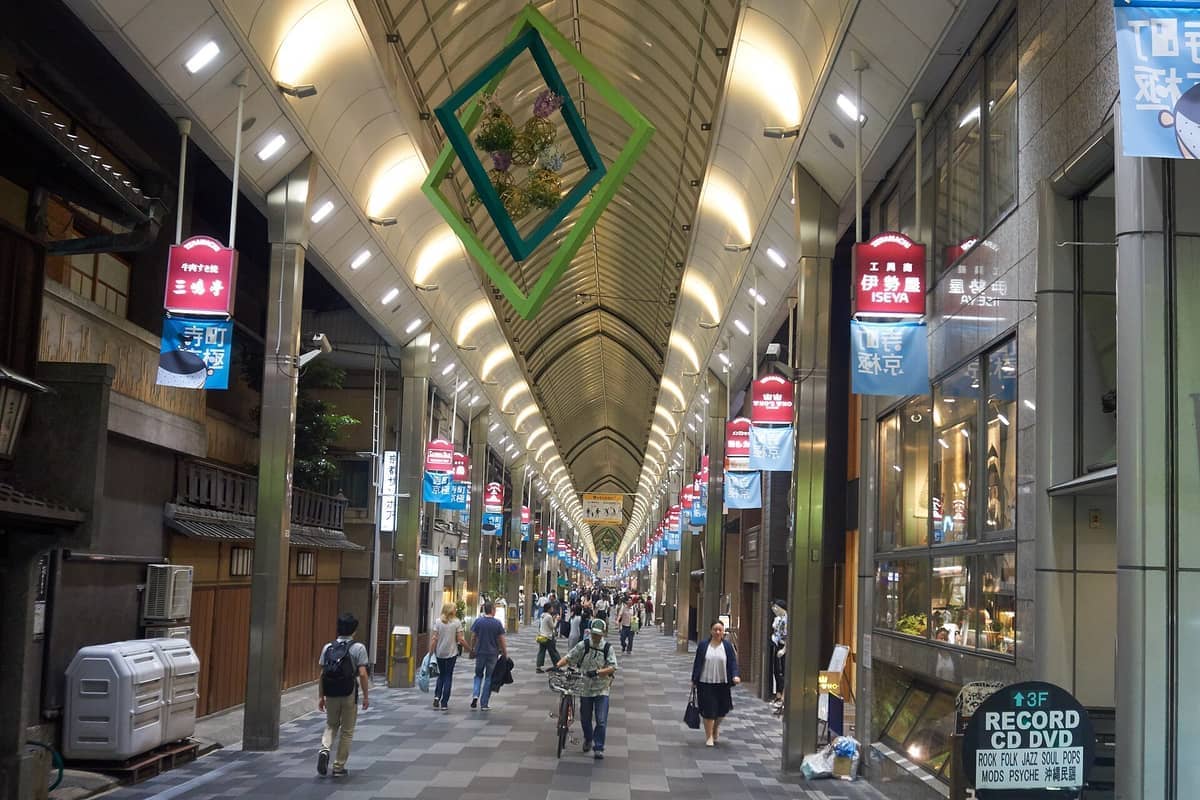
What These Streets Actually Are
The Teramachi and Shinkyogoku Shopping Arcades are two parallel covered pedestrian streets that cut north-south through the heart of downtown Kyoto, running roughly between Shijo-dori to the south and Sanjo-dori to the north. Shinkyogoku sits one block west of Teramachi; they share cross-lanes and most visitors end up drifting between both in the same visit without quite noticing the boundary.
The arcades are not a mall. There is no single operator, no unified entrance, and no ticket. They are public streets that happen to be roofed, lined with independently owned shops that open and close on their own schedules. That fact shapes the experience: the product mix is genuinely eclectic, the quality varies enormously, and you can stumble from a 100-yen candy stand into a two-century-old tea shop within the space of thirty meters.
Both arcades fall within downtown Kyoto'sNakagyo Ward, the commercial core of the city. If you are basing yourself near Shijo or Kawaramachi, you are already within easy walking distance, and these streets are a natural anchor for any afternoon spent in this part of town.
💡 Local tip
Shops typically open between 11:00 and 11:30 and close between 20:00 and 21:00. Arrive before noon on weekdays for the emptiest arcades; Saturday and Sunday afternoons can get genuinely crowded, especially near the southern Shijo end.
How the Two Streets Differ
Shinkyogoku, the western street, leans younger and louder. This is where you find the claw-machine game centers, fast-food crepe windows, macha soft-serve counters, and stalls selling anime goods and pop-culture keychains. The overhead roof here is broad and the lighting is bright, giving it the feel of a permanent fair. It is genuinely fun, but do not come expecting restrained traditional Kyoto aesthetics.
Teramachi, the eastern parallel street, has a split personality depending on which section you walk. The southern half near Shijo is touristy in the same way as Shinkyogoku: souvenir shops, wagashi sweet stalls, and the occasional drugstore. Moving north toward Sanjo, the character shifts. Antique dealers, specialist paper shops, lacquerware sellers, and old-school stationers appear with increasing frequency. The Teramachi stretch above Nijo-dori is considered one of Kyoto's better hunting grounds for secondhand and antique goods, though that section is technically a separate, quieter extension of the street.
If your time is short and you want both flavors, walk the full length of Shinkyogoku from south to north, then loop back down Teramachi. The cross-streets connecting them let you hop between the two whenever one gets too crowded or too quiet.
Tickets & tours
Hand-picked options from our booking partner. Prices are indicative; availability and final rates are confirmed when you complete your booking.
Kyoto Coast, Amanohashidate and Ine Bay 1-Day Trip from Osaka or Kyoto
From 46 €Instant confirmationFree cancellationKyoto Sanzen-in, Arashiyama and Bamboo Grove Full Day Tour
From 47 €Instant confirmationFree cancellationKyoto Arashiyama insider walking tour
From 66 €Instant confirmationFree cancellationMatcha green tea tour in Kyoto's Uji Market
From 130 €Instant confirmationFree cancellation
The Sensory Experience: What You Notice at Ground Level
The first thing that registers is the sound: a continuous low hum of pop music from competing storefronts, the occasional amplified sales pitch, and the shuffle of hundreds of shoes on flat pavement. It is not peaceful. In peak season, especially in spring during cherry blossom weeks and in November during autumn color season, the pedestrian density can feel oppressive in the narrower sections. You will smell takoyaki (octopus balls) from cart vendors near the southern entrance, then green tea incense as you pass a specialty tea shop, then something fried from a side-alley snack counter.
The roofs are a practical asset. Kyoto summers are humid and hot, with temperatures regularly hitting 32–33°C in July and August, and the covered arcades offer at least shade, if not cool air. In the June rainy season, when the city gets persistent rain and high humidity, Teramachi and Shinkyogoku become the logical destination for a morning or afternoon: you stay dry without going indoors, and the damp air brings out the wood and incense smells from the older shops.
Winter visits, with daytime temperatures hovering around 5–8°C, feel quieter and more atmospheric. The crowds thin, the Christmas and New Year decorations add warmth to the otherwise utilitarian overhead lights, and you can actually stop and look at things without being swept along by the flow.
ℹ️ Good to know
Both arcades are described as wheelchair accessible, with flat, even paving throughout. However, some individual shops have small step entrances, and the cross-lanes connecting the two streets can be very narrow with no clear priority for pedestrians versus cyclists.
What to Buy (and What to Skip)
The arcades are not the place for the most refined or expensive Kyoto crafts. For serious ceramics, lacquerware, or textile purchases, you will do better at dedicated stores in Higashiyama or the Nishijin district. What Teramachi and Shinkyogoku offer well is volume, convenience, and mid-range souvenir value.
Practical buys worth considering include: Kyoto-specific wagashi sweets in gift boxes from the shops that actually bake on site; incense sticks and holders, which are a genuinely useful and lightweight souvenir; fans (sensu) and tenugui (thin printed hand towels), which are sold in dozens of shops but vary considerably in quality and price. For food exploration along the full downtown stretch, the nearbyNishiki Marketone block south is the far better option for tasting and buying prepared foods and pickles.
The Teramachi northern extension (above Nijo-dori) is genuinely interesting for antique browsers: old maps, woodblock prints, secondhand kimono fabrics, vintage ceramics, and miscellaneous Meiji-era objects appear in the small specialist dealers. Prices are not uniformly cheap, but the selection is more distinctive than anything in the arcade's southern tourist section.
- Wagashi sweet gift sets: best bought at shops that display their production process
- Incense: good range, competitive prices, easy to pack
- Fans and tenugui: check that the item is actually made in Japan, not imported
- Antiques and vintage prints: northern Teramachi, not Shinkyogoku
- Cheap character goods and toys: Shinkyogoku caters to this without apology
How to Get There and When to Go
The most direct approach from the south is via Hankyu Kyoto-Kawaramachi Station, which puts you at the Shijo intersection in under a minute. From Kyoto Municipal Subway Shijo Station on the Karasuma Line, it is a five-minute walk east along Shijo-dori. Both approaches are straightforward and well-signposted in English.
If you are combining the arcades with a broader downtown afternoon, they connect naturally withNishiki Market (one block south, running east-west), Pontocho Alley(five minutes west across the Kamo River), and the shopping along Shijo-dori itself. The arcades sit at the center of the densest concentration of shops and restaurants in Kyoto, so there is no shortage of things to do before or after.
Weekday mornings between 10:00 and 12:00 are the quietest window. Saturday afternoons from about 14:00 onward are the most crowded, particularly in the Shinkyogoku section near Shijo. During major festivals, including the Gion Matsuri in July when the surrounding streets fill with festival stalls (yatai), the area becomes extremely congested but also genuinely festive.
⚠️ What to skip
During cherry blossom season (late March to mid-April) and autumn color peak (mid-November), foot traffic in this area can be overwhelming in the early afternoon. Plan to visit in the morning or after 19:00 when the crowd thins noticeably.
Historical Context: Why These Streets Exist
Teramachi, whose name translates loosely as 'temple town street,' takes its name from the concentration of Buddhist temples that were relocated to this corridor by Toyotomi Hideyoshi during his late 16th-century reorganization of Kyoto. The idea was to consolidate temples along the eastern edge of the city as a kind of spiritual and physical boundary. The resulting street gradually attracted merchants and craftspeople, and the commercial character solidified over the Edo period.
Shinkyogoku, by contrast, is a much younger creation. It was developed in the Meiji era as an entertainment and shopping district, deliberately designed to draw crowds with theaters, small shrines, and a variety of stalls. The name means roughly 'new capital entertainment district.' The roofed arcade structure that covers it today is a 20th-century addition, built to protect shoppers from rain and summer sun, a practical infrastructure choice that became standard for major Japanese shopping streets (shotengai) across the country.
Understanding this history makes the current mix of shops more legible. The remaining small shrines embedded within Shinkyogoku are not decorative additions; they are older than the shopping street itself. And the antique dealers on northern Teramachi are, in a loose sense, continuing the street's centuries-old role as a place where objects with a past change hands. For more of Kyoto's traditional shopping culture, theNishijin Textile Center and the Kyoto shopping guide provide useful context.
Honest Assessment: Is This Worth Your Time?
If you are in Kyoto specifically for temples, gardens, and traditional culture, the arcades are unlikely to be a highlight. They are loud, occasionally tacky, and not particularly different from covered shopping streets in other Japanese cities. Visitors who come expecting the contemplative Kyoto of Zen gardens and wooden machiya may find the experience jarring.
That said, the arcades serve a real purpose. They are free, weatherproof, centrally located, and genuinely useful for picking up gifts, trying street food, and getting a read on how young Kyoto residents actually spend their leisure time. On a rainy afternoon when every famous garden is soggy and every temple entrance queue is backed up under dripping umbrellas, Teramachi and Shinkyogoku are an easy, pressure-free alternative.
For travelers interested in a quieter, more atmospheric take on Kyoto's traditional streetscapes, theNinenzaka and Sannenzaka lanesin Higashiyama offer a very different register. But those come with their own crowds and a more performative 'old Kyoto' quality. Teramachi and Shinkyogoku are more honest about what they are.
Insider Tips
- The small shrines tucked within Shinkyogoku arcade are easy to miss entirely. Look for the torii gates rising between shop facades; stepping into one offers thirty seconds of quiet that feels genuinely surprising given the noise outside.
- The northern extension of Teramachi above Sanjo-dori has a completely different atmosphere from the tourist section. The antique and secondhand shops here are aimed at local buyers, prices are often written only in Japanese, and bargaining is not customary, but the selection of old prints, vintage tableware, and secondhand kimono fabric is worth an hour of browsing.
- Many shops in both arcades do not accept credit cards. Cash is far more reliable, particularly in the smaller, older stores. ATMs are available at the convenience stores on the cross-streets between the arcades.
- If you are buying incense or tea as gifts, ask whether the item is produced locally or imported. Some shops stock both and the difference in price and quality is significant. Staff in the specialist shops generally speak enough English to answer basic questions.
- The game centers on Shinkyogoku are genuinely good. The claw machines stock Kyoto-specific plush goods and regional limited-edition prizes that you will not find in shops, and a few hundred yen spent on one is a reasonable gamble for a souvenir with a story attached.
Who Is Teramachi & Shinkyogoku Shopping Arcades For?
- First-time visitors who need a low-pressure introduction to Kyoto's commercial culture before heading to temple districts
- Souvenir shoppers who want a large selection in a compact, walkable area without needing to navigate multiple neighborhoods
- Travelers visiting on rainy or very hot days who need a weatherproof activity in a central location
- Anyone interested in Kyoto's Meiji-era urban development and the shotengai (covered shopping street) tradition as a social institution
- Families with children, particularly the Shinkyogoku side, which has the game centers, snack options, and fast-paced variety that keeps younger travelers engaged
Nearby Attractions
Other things to see while in Downtown Kyoto (Kawaramachi & Shijo):
- Kamo River (Kamogawa)
The Kamo River runs north to south through central Kyoto, serving as the city's most democratic public space. Free to access at any hour, the riverbanks draw joggers at dawn, couples at dusk, and everyone in between. This is not a ticketed sight — it is the living backdrop of Kyoto daily life.
- Kyoto Gyoen National Garden
Kyoto Gyoen National Garden is a 65-hectare public park wrapped around the Kyoto Imperial Palace, free to enter year-round. Once the residential precinct of Heian-era court nobles, it is now one of the few places in central Kyoto where you can walk for an hour without being asked to buy a ticket.
- Kyoto Imperial Palace
Kyoto Imperial Palace, known in Japanese as 京都御所 (Kyōto Gosho), served as the seat of Japan's imperial family until the capital transferred to Tokyo in the late 19th century. Set within the broad, park-like grounds of Kyoto Gyoen National Garden, the palace complex is free to enter and open to the public year-round, making it one of downtown Kyoto's most accessible historic sites. That said, 'accessible' doesn't mean 'spectacular' in the conventional sense — this is a place of restraint, not grandeur, and knowing what to expect shapes the experience entirely.
- Kyoto International Manga Museum
Housed in a beautifully repurposed elementary school in central Kyoto, the Kyoto International Manga Museum holds roughly 300,000 manga-related items spanning over a century of the medium. It is part library, part archive, part cultural institution, and one of the few places in Japan where you can pull a vintage manga off a wall-to-ceiling shelf and read it on the grass.