Kyoto Gyoen National Garden: The City's Breathing Space
Kyoto Gyoen National Garden is a 65-hectare public park wrapped around the Kyoto Imperial Palace, free to enter year-round. Once the residential precinct of Heian-era court nobles, it is now one of the few places in central Kyoto where you can walk for an hour without being asked to buy a ticket.
Quick Facts
- Location
- 3 Kyoto-Gyoen, Kamigyo-ku, Kyoto City (central Kyoto, between Marutamachi and Imadegawa streets)
- Getting There
- Marutamachi or Imadegawa stations (Karasuma Subway Line); multiple city bus stops on all four sides
- Time Needed
- 1–2 hours for a relaxed walk; longer in cherry blossom or autumn foliage season
- Cost
- Free entry to grounds; some internal facilities charge a small fee (e.g., Shusui-tei tea room 300 JPY for high school students and above)
- Best for
- Picnics, morning walks, seasonal photography, escaping temple crowds
- Official website
- kyotogyoen.go.jp/en
What Kyoto Gyoen Actually Is
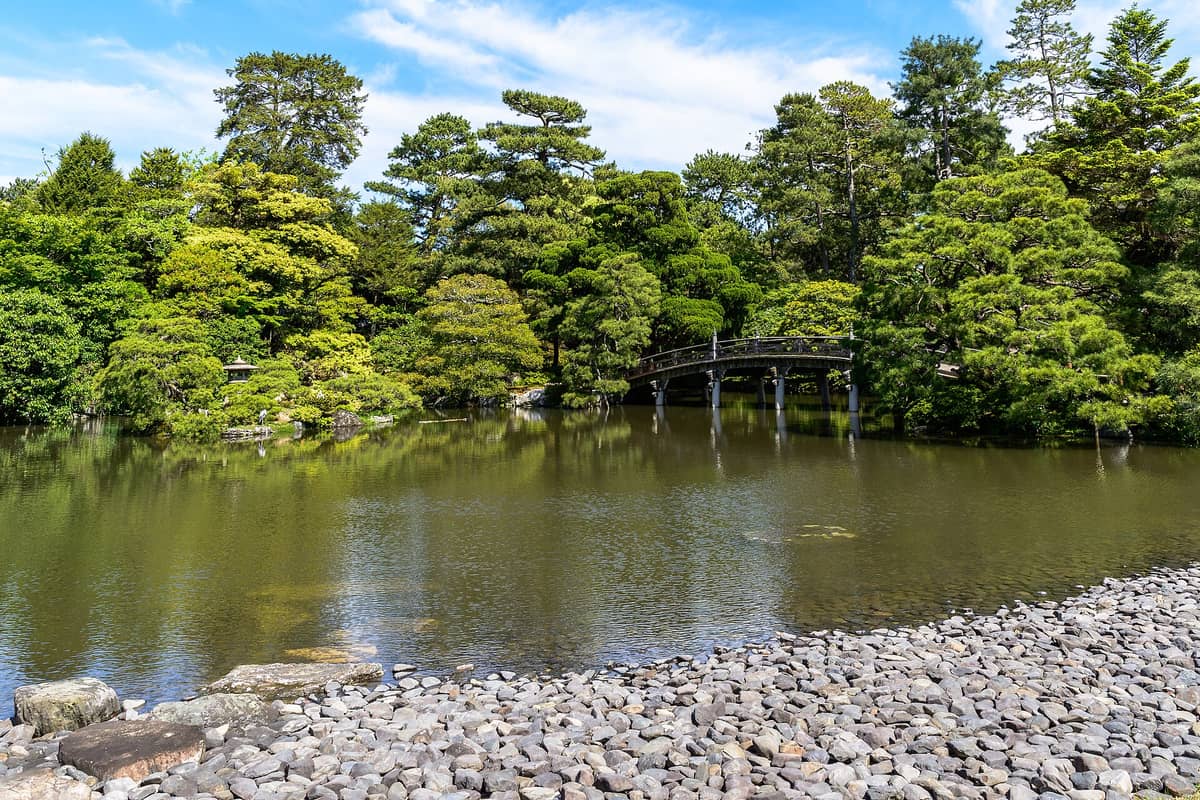
Kyoto Gyoen National Garden is not the Imperial Palace itself. That distinction trips up more visitors than it should. The palace buildings sit enclosed within a walled compound at the center of the park, accessible only on guided tours booked separately through the Imperial Household Agency. The garden that surrounds it, roughly 65 hectares of gravel paths, pine groves, plum orchards, and open lawns, is a national garden managed by the Ministry of the Environment and open to everyone, every day, at no cost.
The grounds occupy the former residential precinct of Kyoto's court nobility, the kuge families who clustered around the imperial seat during the city's millennium as Japan's capital. After the imperial court relocated to Tokyo in 1869, those noble residences were gradually cleared, and the land was opened as public green space. What remains is a rare urban park on a historic footprint: flat, broadly laid out, shaded by mature trees, and large enough to absorb a weekday crowd without feeling packed.
ℹ️ Good to know
The garden grounds are open year-round and can be accessed at any time, making this one of the few no-cost, no-schedule green spaces in central Kyoto. Internal facilities like the Shusui-tei rest area and the Kan'in-no-miya Residence Site have limited opening days and hours (typically around 09:30–15:30) and close around New Year.
How the Park Changes Through the Day
Early mornings here have a quality you rarely find in Kyoto's more famous spots. By 07:00, the gravel paths are already occupied by joggers doing laps around the palace wall, elderly residents doing tai chi on the open lawns, and dog walkers drifting between the pine stands. The light comes through the tree canopy at a low angle, and the only sounds are footsteps on gravel, birds, and the distant hum of Kyoto waking up. Bring a coffee from a nearby convenience store and you have one of the better quiet mornings the city offers.
Midday on weekends draws families spreading picnic sheets on the grass around the central open areas, and tourist groups arriving from Imadegawa station heading toward the palace walls. The park is large enough that the crowd disperses quickly, but the paths closest to the main palace gates do get congested during peak travel periods. If you prefer space, the southern and western sections of the grounds stay noticeably quieter throughout the day.
Late afternoon, especially in autumn, is when the light turns particularly good for photography. The long shadows cut across the wide gravel paths, and the ginkgo and maple trees along the inner paths glow orange. In summer, however, afternoons are genuinely uncomfortable: Kyoto's basin geography traps heat, and with average August highs around 32–33°C and high humidity, the park offers limited shade over its wider open sections. An early morning visit is strongly advisable from late June through August.
⚠️ What to skip
Kyoto's summers are hotter than most visitors expect. The basin location intensifies heat and humidity, and Kyoto Gyoen has large open gravel areas with little shade. In July and August, visit before 09:00 or after 17:00, carry water, and bring a hat.
Tickets & tours
Hand-picked options from our booking partner. Prices are indicative; availability and final rates are confirmed when you complete your booking.
Kyoto Zen Meditation and Garden Tour at a Zen Temple
From 67 €Instant confirmationFree cancellationKyoto Coast, Amanohashidate and Ine Bay 1-Day Trip from Osaka or Kyoto
From 46 €Instant confirmationFree cancellationKyoto Sanzen-in, Arashiyama and Bamboo Grove Full Day Tour
From 47 €Instant confirmationFree cancellationKyoto Arashiyama insider walking tour
From 66 €Instant confirmationFree cancellation
Seasonal Highlights Worth Planning Around
Cherry blossom season, typically mid to late March through early April, transforms the park into one of central Kyoto's most accessible hanami spots. The garden contains several clusters of cherry trees, including a well-known grove near the Hamaguri-gomon gate, and because entry is free and space is vast, it absorbs crowds far better than many of Kyoto's ticketed gardens. Locals bring bento boxes and sit under the blossoms for hours. The atmosphere is festive and genuinely communal rather than reverential.
Late February and early March bring a different draw: the plum orchard in the garden's northwest section blossoms before the cherries do, offering a quieter and less photographed seasonal event. If you're visiting Kyoto in late winter, this is worth combining with a visit toKitano Tenmangu Shrine, which has its own celebrated plum garden a short distance away.
Autumn foliage arrives in November, with ginkgo trees along the inner paths turning a vivid yellow and some maple areas showing orange and red. The color here is less concentrated than at dedicated maple gardens around the city, but the scale and the fact that you can walk freely without a timed ticket makes it a genuine alternative during the crowded autumn peak. October and November also bring the most comfortable walking temperatures, with daytime averages around 17–24°C and lower humidity than summer.
What to See Inside the Grounds
The palace walls and moat are the obvious visual anchor, and walking the perimeter gives a clear sense of the compound's scale. The palace itself requires a separate visit arranged through the Imperial Household Agency; the garden guide does not include interior palace access. But the outer walkway is atmospheric on its own: the pale gravel, the old stone walls, and the silence just inside the gate area create a sense of separation from the city that no other spot in central Kyoto quite replicates.
Inside the broader grounds, the Shusui-tei is a small pond garden with a rest area where visitors can sit and, for a modest fee, participate in a simplified tea experience. It is not a formal tea ceremony in the traditional sense, but it offers a quiet pause with a view of the pond. The Kan'in-no-miya Residence Site preserves a small historic structure from one of the former noble residences, with informational panels in English explaining the history of the court families who once lived across the entire precinct.
The garden also maintains a nature study area and publishes seasonal nature observation information on its official website, noting which plants, insects, and birds are active month by month. The grounds sit on an alluvial plain formed by repeated flooding of the Kamo River, and the ecological diversity of the mature trees, the shallow pond areas, and the open grassland supports a notable variety of birdlife for an urban park. Birdwatchers with binoculars are a consistent presence on weekday mornings.
Getting There and Moving Around
The most direct subway access is from Marutamachi Station (Karasuma Line) for the southern entrance or Imadegawa Station (Karasuma Line) for the northern side. Both are a short walk to the garden perimeter gates. City buses stop on all four sides of the garden, and given Kyoto's comprehensive bus network, most central areas are within reasonable reach. For context on navigating the broader city transit system, thegetting around Kyoto guide covers subway, bus, and day pass options in detail.
Inside the garden, paths are wide and mostly flat, surfaced with compacted gravel or paved stone. The official garden map notes wheelchair-accessible toilets and accessible roads throughout the grounds, and the terrain is genuinely manageable for visitors with mobility considerations, though gravel sections require some care. Multiple rest areas with benches are distributed across the grounds, and toilet facilities are located near the main gates and the Shusui-tei.
The garden has multiple entry gates around its perimeter, so your route through is flexible depending on which side you arrive from. There are no entry barriers, ticket gates, or bag checks at the main garden grounds, which makes arriving and leaving on your own schedule straightforward.
Honest Assessment: Is It Worth Your Time?
Kyoto Gyoen National Garden is not going to compete with the concentrated visual impact of a ticketed garden like Kokedera or a famous temple complex. If you are visiting Kyoto for the first time with limited days and a list of landmark sites, the garden works best as a transit space, somewhere to walk through on the way to the Imperial Palace tour, or as a low-key morning start before heading toNijo Castle or the shopping streets further south.
For longer stays, the garden earns its place as a genuine urban retreat. Kyoto's most popular districts,Higashiyama and Gion, are dense with visitors and commercial activity. Kyoto Gyoen is one of the few central spaces where you can simply walk slowly, sit on a bench, and watch the city from a place that does not feel designed to sell you anything. That is rarer in Kyoto than it sounds.
Visitors who find large open parks underwhelming or who are specifically seeking concentrated historic architecture may find the grounds feel sparse compared with their expectations. The park's value is in its scale and openness, not in a density of sights. If your travel style prioritizes checking off specific landmarks, adjust your time allocation here accordingly.
Photography Notes
The palace walls photograph best in early morning light, when the stone and white plaster catch directional shadows and there are few other visitors in frame. The wide gravel paths leading to the main gates work well with a wide lens and low horizon composition, especially when the paths are relatively empty. The interior garden areas near Shusui-tei have a more intimate scale and photograph well in overcast conditions, when diffused light suits the pond and stone arrangements.
During cherry blossom season, arrive by 07:30 if you want shots of the blossoms without crowds. By mid-morning on weekends in early April, the popular grove areas fill quickly. For a broader guide to seasonal photography timing across the city, see theKyoto cherry blossom guide.
Insider Tips
- The park retains nine historic outer gates from the Edo period, and the least-used are along the western side near Kunaicho-mae. Arriving from this direction in the morning means you can reach the palace walls with almost no other visitors around.
- Vending machines inside the grounds are placed near the main rest areas. In summer, plan where you will rehydrate before you start walking, as the central open sections have long stretches with no water access.
- The garden's nature observation board near the main information stand is updated seasonally in Japanese but reflects current bloom and bird activity. Cross-reference it with the official site's English nature pages if you are visiting for specific seasonal interest.
- If you are combining this visit with the Kyoto Imperial Palace guided tour, book the Imperial Household Agency tour in advance via their official website. The tour entrance is separate from the general garden access and has its own timed admission.
- The large open lawn areas in the center of the park are genuinely flat and family-friendly for children who need to run around. Unlike most Kyoto attractions, there is no pressure to stay quiet or keep to paths, making it a practical rest stop for families mid-itinerary.
Who Is Kyoto Gyoen National Garden For?
- Travelers on multi-day visits who want to balance temple fatigue with open-air walking
- Families with young children who need unstructured outdoor space
- Photographers targeting cherry blossom and autumn foliage without ticket queues
- Birdwatchers and nature observers, particularly on weekday mornings
- Budget-conscious visitors looking for a substantial Kyoto experience with no admission cost
Nearby Attractions
Other things to see while in Downtown Kyoto (Kawaramachi & Shijo):
- Kamo River (Kamogawa)
The Kamo River runs north to south through central Kyoto, serving as the city's most democratic public space. Free to access at any hour, the riverbanks draw joggers at dawn, couples at dusk, and everyone in between. This is not a ticketed sight — it is the living backdrop of Kyoto daily life.
- Kyoto Imperial Palace
Kyoto Imperial Palace, known in Japanese as 京都御所 (Kyōto Gosho), served as the seat of Japan's imperial family until the capital transferred to Tokyo in the late 19th century. Set within the broad, park-like grounds of Kyoto Gyoen National Garden, the palace complex is free to enter and open to the public year-round, making it one of downtown Kyoto's most accessible historic sites. That said, 'accessible' doesn't mean 'spectacular' in the conventional sense — this is a place of restraint, not grandeur, and knowing what to expect shapes the experience entirely.
- Kyoto International Manga Museum
Housed in a beautifully repurposed elementary school in central Kyoto, the Kyoto International Manga Museum holds roughly 300,000 manga-related items spanning over a century of the medium. It is part library, part archive, part cultural institution, and one of the few places in Japan where you can pull a vintage manga off a wall-to-ceiling shelf and read it on the grass.
- Nijō Castle
Nijō Castle is one of Kyoto's most revealing historic sites, where the architecture itself was built to expose intruders through deliberately squeaking floorboards. A UNESCO World Heritage Site since 1994, it offers a rare look inside the physical world of Edo-period power.