Nijō Castle: Kyoto's Shogunate Palace With Floors That Sing
Nijō Castle is one of Kyoto's most revealing historic sites, where the architecture itself was built to expose intruders through deliberately squeaking floorboards. A UNESCO World Heritage Site since 1994, it offers a rare look inside the physical world of Edo-period power.
Quick Facts
- Location
- 541 Nijojo-cho, Nijo-dori Horikawa Nishi-iru, Nakagyo-ku, Kyoto 604-8301 (downtown Kyoto, near Horikawa and Nijo-dori intersection)
- Getting There
- Nijojo-mae Station (Tozai Subway Line, 3-min walk); City Bus stops on Horikawa-dori also serve the castle
- Time Needed
- 1.5 to 2.5 hours for a thorough visit including palace interior and garden
- Cost
- Adults ¥1,300; Junior/Senior high school ¥400; Elementary school ¥300. Verify current combined ticket options at the official site.
- Best for
- History enthusiasts, architecture lovers, first-time Kyoto visitors wanting UNESCO context
- Official website
- nijo-jocastle.city.kyoto.lg.jp/?lang=en
What Nijō Castle Actually Is (And Why It Matters)
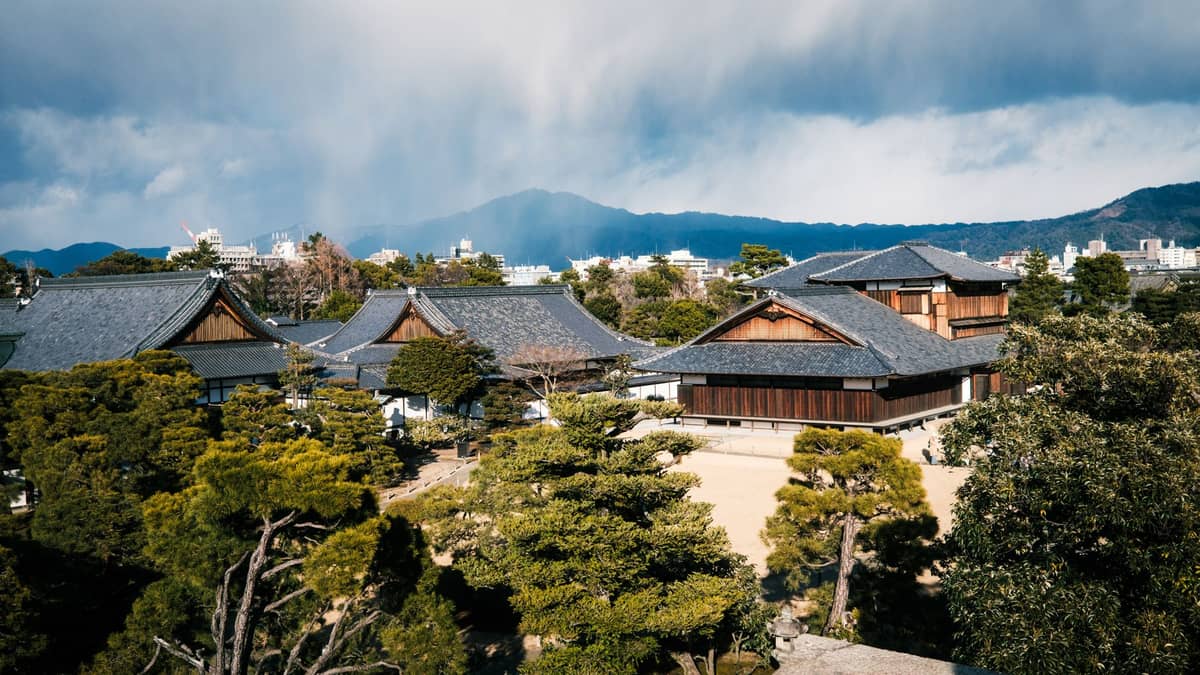
Nijō Castle, or Nijo-jo, is not a military fortress in the conventional sense. There are no great towers or battle scars. What stands here, in central Kyoto, is the most complete surviving example of Momoyama-period palatial architecture in Japan: a shogunate headquarters built to project authority through beauty, spatial design, and, famously, engineered sound.
Completed in 1603 for Tokugawa Ieyasu, the first shogun of the Edo period, the castle served as the Kyoto residence of the Tokugawa shoguns throughout much of the Edo period. The imperial family took possession after the Meiji Restoration and used it as a detached palace until 1939, when it was donated to the city of Kyoto. It became a UNESCO World Heritage Site in 1994 as part of the Historic Monuments of Ancient Kyoto.
For travelers working through a first visit to Kyoto, Nijo-jo occupies a unique position: it is one of the few major historic sites where you walk through furnished interior rooms rather than simply viewing a structure from outside. That interior access makes the experience qualitatively different from a garden or shrine visit.
ℹ️ Good to know
Opening hours: 8:45–16:00 (castle closes at 17:00). Closed December 29–31. The Ninomaru-goten Palace has additional closure days, including certain Tuesdays. Always confirm your visit date on the official website before you go.
The Ninomaru Palace: Rooms Built to Intimidate
The centerpiece of any visit is the Ninomaru-goten, the inner palace complex. You remove your shoes at the entrance and proceed in a prescribed route through six interconnected structures, totaling 33 rooms. The floors are the first thing most visitors notice: a soft, continuous creak underfoot with each step, produced by specially designed fasteners beneath the boards that create sound when pressure is applied. This is the uguisubari, the nightingale floor, which made silent movement through the palace impossible. It was a security measure, not an aesthetic accident.
The rooms are organized according to function and rank. The outermost chambers, where feudal lords waited for audiences, are lavishly decorated with gold-leaf sliding panels and ceiling paintings of pine trees and tigers by artists of the Kano school. As you move inward toward the shogun's private quarters, the decorative language shifts: the paintings become quieter, smaller in subject, more refined. The outward display of power gives way to a more intimate setting. This spatial hierarchy was entirely deliberate, and reading it as you walk through gives the rooms a logic that a single photograph cannot capture.
Photography is not permitted inside the palace rooms. This is worth knowing before you arrive. The restriction forces a different kind of attention: you look longer, and the details register more deeply. The hand-painted fusuma panels, the subtle gradations of gold across different rooms, the worn tatami borders — these are things a camera might flatten but the eye actually absorbs.
💡 Local tip
Audio guides are available for rent at the entrance and are genuinely useful here. The room labels inside the palace are informative but brief; the audio fills in the political and social context that makes the spatial choreography of the rooms meaningful.
Tickets & tours
Hand-picked options from our booking partner. Prices are indicative; availability and final rates are confirmed when you complete your booking.
Bike tour to Osaka Castle and park area
From 50 €Instant confirmationFree cancellationHimeji Castle Town Guided Bike Tour with Lunch
From 75 €Instant confirmationFree cancellationKyoto Coast, Amanohashidate and Ine Bay 1-Day Trip from Osaka or Kyoto
From 46 €Instant confirmationFree cancellationKyoto Sanzen-in, Arashiyama and Bamboo Grove Full Day Tour
From 47 €Instant confirmationFree cancellation
The Honmaru and the Outer Grounds
Beyond the Ninomaru, the castle grounds include the Honmaru, the central compound surrounded by its own moat. A smaller palace structure was relocated here from the Kyoto Imperial Palace in the nineteenth century. It is open to the public only during special periods, typically spring and autumn. Outside those windows, it is accessible only from the exterior, which is worth the short walk for the view of the outer stone walls and the moat.
The grounds also contain Ninomaru Garden, a garden attributed to the master garden designer Kobori Enshu, completed in the early Edo period. Three islands of arranged stone sit in a gravel-and-pond composition that rewards slow observation. In cherry blossom season, the trees along the inner paths bloom densely, and the castle runs a special illumination event in the evenings. The same applies during autumn foliage. These seasonal events dramatically alter the atmosphere — and the crowd levels.
If gardens are a particular interest, the best gardens in Kyotoguide covers several that surpass Nijo-jo's garden in scale and serenity, though few match its historical pedigree.
How the Experience Changes by Time of Day
Morning visits, particularly between 9:00 and 10:30, offer the most composed experience. Tour groups from Kyoto Station tend to arrive after 10:30, and by midday the Ninomaru Palace queue can stretch long enough to disrupt the rhythm of moving through the rooms. The palace route is one-directional, so congestion is felt immediately when groups bunch together.
Afternoon light, especially in the hour before closing, brings a different quality to the garden and outer grounds. The stone walls of the Honmaru cast long shadows, and the crowds thin noticeably after 15:00. If you are primarily interested in the garden and the exterior architecture rather than the palace interior, a late afternoon visit is genuinely pleasant and rarely overcrowded outside peak seasons.
Summer visits require preparation. Kyoto's basin geography concentrates heat, and by midday in July and August the outer grounds offer almost no shade along the main paths. A hat, water, and light clothing are not optional in summer. The palace interior itself provides shade and a brief temperature relief, but the queues at the entrance can mean extended time standing in direct sun. Winter visits are the opposite: the grounds are quiet, often strikingly so, and the bare trees along the inner moat reveal the architecture's proportions more clearly than any other season.
⚠️ What to skip
Nijo-jo is one of Kyoto's most visited sites and draws very large numbers during cherry blossom season and autumn foliage. Expect significant queues at the Ninomaru Palace entrance during these periods. Arriving at opening time (8:45) is the single most effective way to avoid them.
Getting There and Getting Around the Site
The most straightforward route from central Kyoto is the Tozai Subway Line to Nijojo-mae Station, about a 3-minute walk from the castle's east gate. From Kyoto Station, take the Karasuma Subway Line north to Karasuma-Oike, then transfer to the Tozai Line westbound for one stop. The total journey takes roughly 15 minutes. Several city bus lines also stop on Horikawa-dori immediately outside the castle, which is useful if you are arriving from the Kinkaku-ji or Nishijin areas to the north.
Nijo-jo fits naturally into a downtown Kyoto day. The downtown Kyotoarea places it within easy reach of Nishiki Market and the Karasuma shopping corridor, making a combined half-day circuit practical.
Inside the grounds, the route is mostly paved and relatively flat, making it manageable for visitors with mobility considerations. The Ninomaru-goten Palace interior involves raised wooden thresholds, and the castle provides loan wheelchairs at the main reception. The garden paths and outer areas are wheelchair accessible. If you have specific accessibility requirements, contacting the castle directly at +81-75-841-0096 before your visit is advisable.
The Honest Assessment: What Nijo-jo Does Well and Where It Falls Short
Nijo-jo is genuinely among the most historically significant sites in Kyoto. The Ninomaru Palace interior is irreplaceable: the combination of Kano school paintings, the spatial logic of the rooms, and the nightingale floors creates an experience that no other open-access site in Kyoto replicates. For anyone with an interest in Japanese history, political architecture, or decorative arts, it ranks as essential.
Where Nijo-jo falls short is in atmosphere. Unlike Kyoto's hilltop temples or riverside shrines, the castle sits in a flat urban block with relatively little sense of removal from the city. The outer grounds are pleasant but not dramatic. The garden, while historically significant, is modest in scale compared to the great temple gardens of Kyoto. Visitors who arrive expecting a photogenic, romantically aged castle in the manner of European fortresses may find the reality more institutional than evocative.
If the Edo-period political world holds limited appeal, the hillside temples ofHigashiyamaoffer a richer sensory and visual experience, though without the interior access that makes Nijo-jo distinctive.
Travelers visiting Kyoto primarily for spiritual or natural landscape experiences — the kind that Arashiyama or the Higashiyama temple walk deliver — may find Nijo-jo less resonant. It rewards curiosity about power, hierarchy, and craftsmanship more than it rewards a desire for tranquility or scenic beauty.
Photography and What to Realistically Expect to Capture
The ban on interior photography inside the Ninomaru Palace means the most architecturally interesting material is off-limits to your camera. What remains: the exterior facades of the palace buildings viewed from the courtyard, the stone walls and moat, the garden, and the Karamon Gate, a stunning ornamental Chinese-style gate that stands at the entrance to the inner complex. The Karamon photographs well at most hours but is particularly striking in morning light.
During the seasonal illumination events, the castle runs evening lighting from the garden through the palace facades, producing photographs quite unlike the daytime visit. If your Kyoto timing overlaps with one of these events, the evening version of the site is worth considering separately from your daytime visit. Check the official website for current event schedules, as dates vary by year.
Insider Tips
- Rent the audio guide at the entrance even if you usually skip them. The room labels inside the palace are sparse, and without context the hierarchy of the spaces — which is the whole point of the interior — is easy to miss.
- The Karamon Gate is the most photographable exterior feature of the castle, but most visitors walk past it quickly. Stop and look at the carved details: the cranes, pine, and plum motifs on the transom panels are some of the finest decorative woodwork on any open-access site in Kyoto.
- If you visit during cherry blossom season and want to see the castle illuminated at night, check whether the spring evening illumination event is running during your dates.
- The secondary Honmaru compound is only open during special seasonal periods. If the Honmaru access is relevant to your visit, check the official site calendar before booking your travel dates rather than assuming it will be open.
- Lockers for bags are available near the entrance to the Ninomaru Palace. Using them before entering is practical: the interior route involves removing and carrying your shoes through the palace, and a large bag makes this considerably more awkward.
Who Is Nijō Castle For?
- First-time Kyoto visitors wanting a UNESCO World Heritage site with genuine interior access
- History and architecture enthusiasts interested in Edo-period political structures and Kano school decorative painting
- Travelers combining a downtown Kyoto morning with Nishiki Market and the Karasuma area in the afternoon
- Photographers working during the spring or autumn illumination events, when the castle takes on a completely different visual character
- Visitors traveling with older children or teenagers who can engage with the historical narrative of shogunate power and the nightingale floor security system
Nearby Attractions
Other things to see while in Downtown Kyoto (Kawaramachi & Shijo):
- Kamo River (Kamogawa)
The Kamo River runs north to south through central Kyoto, serving as the city's most democratic public space. Free to access at any hour, the riverbanks draw joggers at dawn, couples at dusk, and everyone in between. This is not a ticketed sight — it is the living backdrop of Kyoto daily life.
- Kyoto Gyoen National Garden
Kyoto Gyoen National Garden is a 65-hectare public park wrapped around the Kyoto Imperial Palace, free to enter year-round. Once the residential precinct of Heian-era court nobles, it is now one of the few places in central Kyoto where you can walk for an hour without being asked to buy a ticket.
- Kyoto Imperial Palace
Kyoto Imperial Palace, known in Japanese as 京都御所 (Kyōto Gosho), served as the seat of Japan's imperial family until the capital transferred to Tokyo in the late 19th century. Set within the broad, park-like grounds of Kyoto Gyoen National Garden, the palace complex is free to enter and open to the public year-round, making it one of downtown Kyoto's most accessible historic sites. That said, 'accessible' doesn't mean 'spectacular' in the conventional sense — this is a place of restraint, not grandeur, and knowing what to expect shapes the experience entirely.
- Kyoto International Manga Museum
Housed in a beautifully repurposed elementary school in central Kyoto, the Kyoto International Manga Museum holds roughly 300,000 manga-related items spanning over a century of the medium. It is part library, part archive, part cultural institution, and one of the few places in Japan where you can pull a vintage manga off a wall-to-ceiling shelf and read it on the grass.