Kurama Onsen: Soaking in the Mountains Above Kyoto
Kurama Onsen is a natural sulfur hot spring at the foot of Mount Kurama, roughly 30 minutes north of central Kyoto by train. With an open-air bath surrounded by cedar forest and a quiet mountain village setting, it offers a genuinely restorative break from the city's more crowded temples and garden circuits.
Quick Facts
- Location
- 520 Kuramahonmachi, Sakyo-ku, Kyoto (Kurama-Kibune area)
- Getting There
- Kurama Station (Eizan Kurama Line, ~30 min from Demachiyanagi); shuttle bus or 10–12 min walk to onsen
- Time Needed
- 1.5–3 hours at the baths; pair with Kurama village for a half-day
- Cost
- Outdoor bath: ¥1,400 (weekdays) / ¥1,600 (weekends). Indoor + outdoor + sauna: ¥2,000 (weekdays) / ¥2,200 (weekends). Children 2 and under free. Verify before visiting.
- Best for
- Relaxation-seekers, autumn foliage visitors, hikers finishing the Kurama trail, cold-weather soaking
- Official website
- kurama-spa.com
What Kurama Onsen Actually Is
Kurama Onsen (鞍馬温泉) is a natural sulfur hot spring facility set at the base of Mount Kurama in Kyoto's Sakyo Ward, about 30 minutes north of the city by the Eizan Electric Railway. While Kyoto's main attractions are concentrated in the urban basin, Kurama sits in a narrow mountain valley where the air is noticeably cooler, the noise drops away, and the landscape shifts to cedar slopes and a small traditional village.
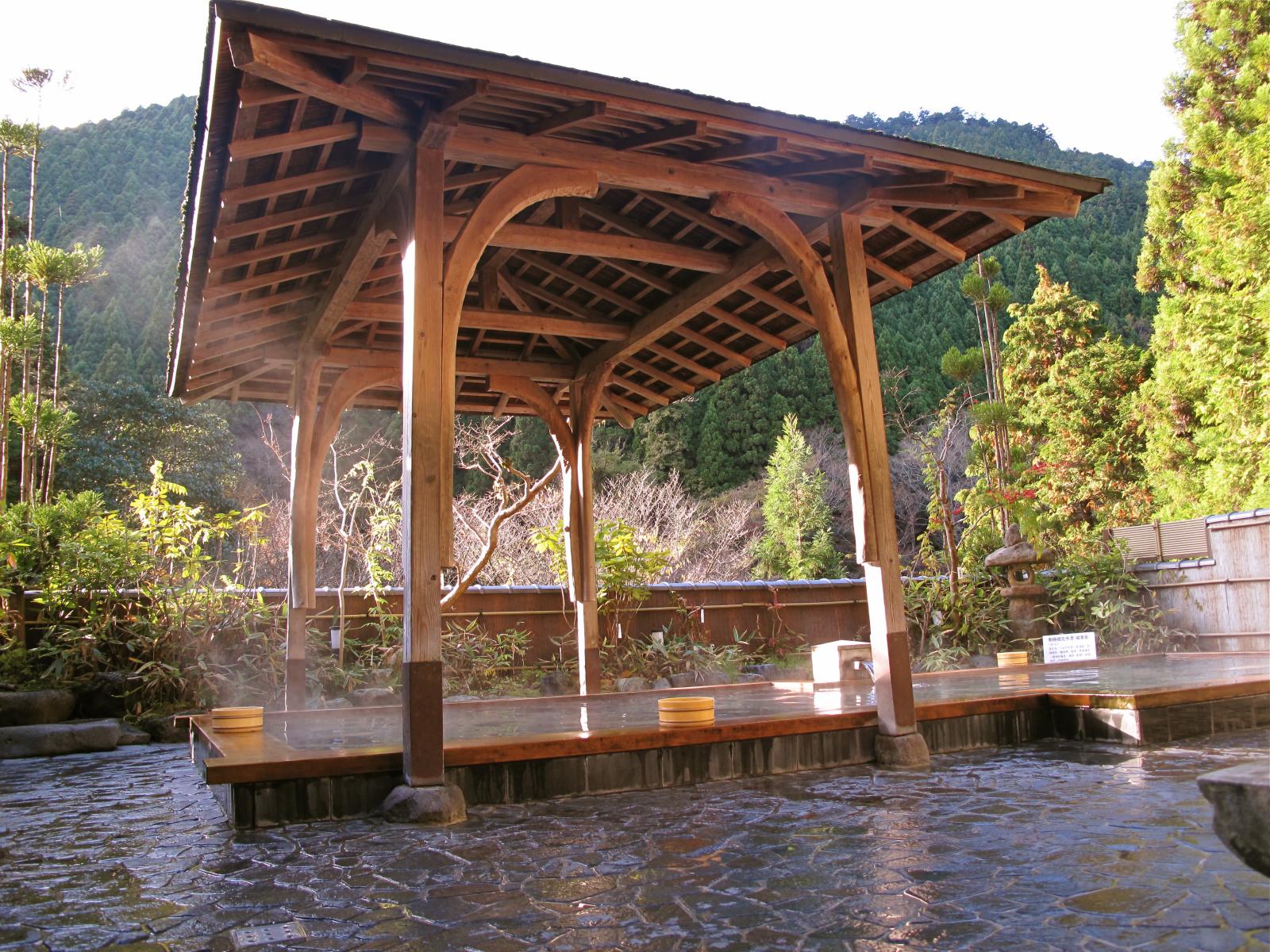
The facility offers two main bathing options: an open-air bath overlooking the forested hillside, and an indoor complex with additional bathing areas and a sauna. The outdoor bath is the centerpiece. The water itself has a faint sulfur smell typical of natural geothermal springs, and the temperature is warm enough to feel genuinely therapeutic, particularly after a walk through the village or a longer hike on the mountain trails above.
For travelers working through a Kyoto onsen guide, Kurama is frequently the most atmospheric option within easy day-trip distance of the city center. It sits in the same valley as Kibune Shrine and Kurama-dera temple, making it a natural end point to a longer day in the mountains.
Getting There: Train, Shuttle, and the Walk
The standard route starts at Demachiyanagi Station, the northern terminal of the Keihan line, where you transfer to the Eizan Electric Railway Kurama Line. The Eizan is a small single-track railway that climbs through residential neighborhoods before entering forested terrain. The journey to Kurama Station takes around 30 minutes, and the train itself is narrow and unhurried in a way that already begins to feel like a departure from the city.
From Kurama Station, you have two options. A shuttle bus runs a 3-minute route to the onsen, timed approximately to train arrivals. Alternatively, walking takes 10 to 12 minutes uphill through the village, passing small shops and Kurama-dera's entrance gate. The walk is worth doing at least one way, especially in autumn when the maple trees along the road are in color.
For those approaching from the Kokusaikaikan subway station (Karasuma Line), Kyoto Bus route 52 runs to a stop called Kurama Onsen-mae, about a 1-minute walk from the facility. This takes around 30 minutes by bus. Either approach works; the train route is generally more scenic.
💡 Local tip
Accessibility note: the shuttle bus removes the uphill walk, but Kurama Onsen is a traditional rural facility and step-free access is not thoroughly documented. If you have mobility concerns, contact the facility directly before visiting.
Tickets & tours
Hand-picked options from our booking partner. Prices are indicative; availability and final rates are confirmed when you complete your booking.
Kobe: Mt. Rokko Night View, Kitano Ijinkan, Arima Onsen Full Day Tour
From 47 €Instant confirmationFree cancellationKobe Sanda Outlets, Arima Onsen & Mount Rokko Night View Day Tour
From 48 €Instant confirmationFree cancellationKyoto Coast, Amanohashidate and Ine Bay 1-Day Trip from Osaka or Kyoto
From 46 €Instant confirmationFree cancellationKyoto Sanzen-in, Arashiyama and Bamboo Grove Full Day Tour
From 47 €Instant confirmationFree cancellation
The Bathing Experience: Outdoor Bath vs. Indoor Complex
The outdoor bath (rotenburo) is the main reason most visitors make the trip. It sits on an elevated terrace with a view of the wooded slope directly behind the building. The water is a natural sulfur spring with a mild mineral smell, the kind that lingers faintly on your skin afterward. The basin is large enough to never feel crowded during off-peak hours, and the surrounding stone and timber design fits the mountain setting without feeling contrived.
The outdoor-only admission is the more affordable entry point: ¥1,400 on weekdays, ¥1,600 on weekends and public holidays, with children at ¥700. If you want the full indoor facilities including the sauna and changing rooms with rental towels and room wear, the combined ticket runs ¥2,000 on weekdays and ¥2,200 on weekends. Children 2 and under enter free. These prices were verified as current for 2026 but should be confirmed before your visit.
The indoor baths are more functional than atmospheric, a standard Japanese bathing room with tiled walls and proper shower stations. The value of the indoor ticket is primarily the sauna access and the convenience of included towels, which saves you from packing your own. For the view and the sulfur water itself, the outdoor-only option covers everything that makes Kurama Onsen worth the trip.
ℹ️ Good to know
Opening hours: generally 10:00–21:00 (last admission around 20:20–20:30). Closed days are irregular; check the official site at kurama-spa.com before traveling, especially if visiting midweek in the off-season.
When to Visit: Seasons and Times of Day
Autumn is the most compelling season for Kurama Onsen. Between late October and mid-November, the hillsides surrounding the bath turn red and orange, and soaking in sulfur water while looking at maples in full color against a grey sky is a specific kind of experience that is hard to replicate elsewhere near Kyoto. Crowds are heavier during peak autumn weekends, but even then the baths themselves rarely feel overcrowded.
Winter visits have a different quality. The valley gets genuinely cold, temperatures near freezing on clear January nights, and the contrast between cold air and hot spring water is sharp. If Kyoto receives any snow, the scene from the outdoor bath becomes particularly still. For context on what to expect across seasons, theKyoto weather guide covers the full seasonal breakdown for the region.
Spring brings lighter crowds and cooler temperatures than the summer months. Summer (July and August) is the least ideal time for outdoor soaking at Kurama: the air is hot and humid, the sulfur bath loses its contrast effect, and the insects in the cedar forest can be persistent. That said, the facility runs year-round, and summer evenings near closing time do cool off considerably at altitude.
For timing within the day, arriving by late morning on weekdays gets you the bath at its quietest. Weekends after noon bring more visitors from the city, particularly families. The last hour before closing is often calm again, though the shuttle bus schedule back to the station should be confirmed in advance if you plan to soak late.
Combining Kurama Onsen with the Surrounding Area
Kurama Onsen makes most sense as part of a longer day in the valley rather than a standalone trip. The most natural pairing isKurama-dera temple, a mountain temple complex with a steep approach path that takes about 30 to 45 minutes to climb to the main hall. Finishing the climb, descending through the cedar forest to Kibune, and then taking the bus or walking back to Kurama before soaking is a satisfying half-day circuit.
The Kibune side of the mountain is a short hike or bus ride away and connects toKibune Shrine, known for its lantern-lit approach path and for the riverside kawadoko dining terraces that operate in summer. If you plan to hike between Kurama and Kibune and end at the onsen, wear proper footwear: the trail involves uneven stone steps and can be slippery after rain.
The village strip between Kurama Station and the onsen is short but has a few small restaurants and snack stalls. Post-bath hunger is real after soaking, and there are options for a simple lunch or a bowl of something warm before catching the train back. Bring cash; card acceptance in smaller Kurama establishments is not guaranteed.
⚠️ What to skip
Photography in the baths is not permitted, as is standard at Japanese onsen. Leave your phone in the locker. Mixed-gender bathing is not offered; the outdoor and indoor baths are separated by gender.
Practical Details and Honest Assessment
Kurama Onsen is not a luxury spa resort. The facilities are clean and well-maintained but straightforwardly functional. The lockers, the shower stations, the changing areas: all standard Japanese public bathing infrastructure. What you are paying for is the water, the outdoor setting, and the mountain environment, not plush robes or a wellness menu.
Tattoos are generally not permitted at traditional Japanese onsen, and this likely applies at Kurama as well. If this is relevant to you, contact the facility directly before making the trip.
For those planning their time carefully in Kyoto, the round-trip rail journey plus two hours at the baths is realistically a half-day commitment. If you are working through a3-day Kyoto itinerary, Kurama works best on a day that is otherwise lighter on temple visits, or as a standalone afternoon excursion rather than something squeezed between major city sights.
Who might want to skip this: travelers with very limited time in Kyoto who prioritize historic temples and gardens will find more concentrated cultural content elsewhere in the city. The onsen itself, while atmospheric, is a simple hot spring facility rather than an architectural or cultural monument. It rewards those who want to slow down, not those chasing sights.
Insider Tips
- Bring your own small towel if you choose the outdoor-only ticket, as towels are not included at the lower price tier. A 100-yen shop (100 yen coin laundry) towel works perfectly.
- The free shuttle bus from Kurama Station runs close to train arrival times, but it fills quickly on autumn weekends. If you miss it, the uphill walk through the village takes about 12 minutes and passes the Kurama-dera gate, which is worth seeing.
- On winter evenings, the outdoor bath produces visible steam clouds against the dark tree canopy. Arriving around 18:00 on a clear winter weekday puts you in the bath at dusk with very few other visitors.
- The Eizan Railway runs a maple illumination service in late autumn where the train slows through the lit tunnel of trees near Ichihara station. Time your return journey to catch it after dark.
- Pay attention to the posted closed days before traveling. Kurama Onsen does close on irregular days, and the journey out is long enough that arriving to a closed facility is a genuine inconvenience. Check the official site at kurama-spa.com for current schedules.
Who Is Kurama Onsen For?
- Hikers finishing the Kurama-dera to Kibune trail looking for a restorative soak
- Autumn foliage visitors wanting a quieter alternative to the packed temple gardens in the city center
- Cold-weather travelers who want the full outdoor bath steam-in-cold-air experience
- Couples looking for a half-day excursion that combines mountain scenery with genuine relaxation
- Repeat Kyoto visitors who have already covered the major temple circuit and want something different
Nearby Attractions
Other things to see while in Kurama & Kibune:
- Kibune Shrine (Kifune Shrine)
Kifune Shrine is one of the oldest and most atmospheric shrines in the Kyoto region, tucked into a narrow cedar-forested valley north of the city. Dedicated to the deity of water, it draws visitors with its famous stone staircase flanked by red lanterns, its summer kawadoko riverside dining platforms, and a quiet that feels genuinely removed from central Kyoto. Entry to the grounds is free.
- Kurama-dera Temple
Founded in 770 AD and set high in the forested mountains north of Kyoto, Kurama-dera Temple rewards the climb with cedar-shaded trails, atmospheric shrines, and some of the city's most dramatic mountain scenery. This is a place of genuine spiritual weight, not a tick-box tourist stop.