Arashiyama Monkey Park Iwatayama: Wild Macaques and Panoramic Views Above Kyoto
Arashiyama Monkey Park Iwatayama puts you face-to-face with free-roaming Japanese macaques on a forested hillside above the Katsura River. Reach the summit after a 20-minute uphill hike and you get two things at once: snow monkeys living on their own terms, and one of the broadest open views over Kyoto's western basin.
Quick Facts
- Location
- 61 Arashiyama Nakaoshita-cho, Nishikyo-ku, Kyoto — south bank of the Katsura River, just past Togetsukyo Bridge
- Getting There
- Arashiyama Station (Hankyu Arashiyama Line) or Saga-Arashiyama Station (JR San-in Line); 5–10 min walk to trailhead
- Time Needed
- 1.5–2 hours including the uphill trail (approx. 20–30 min each way)
- Cost
- Adults ¥800 / Children (4–15) ¥400 / Under 4 free. Cash only at entrance; no cards or online tickets. Verify current prices before visiting.
- Best for
- Families with older children, nature lovers, wildlife enthusiasts, view-seekers
- Official website
- http://www.monkeypark.jp/eng-index.html
What Arashiyama Monkey Park Iwatayama Actually Is
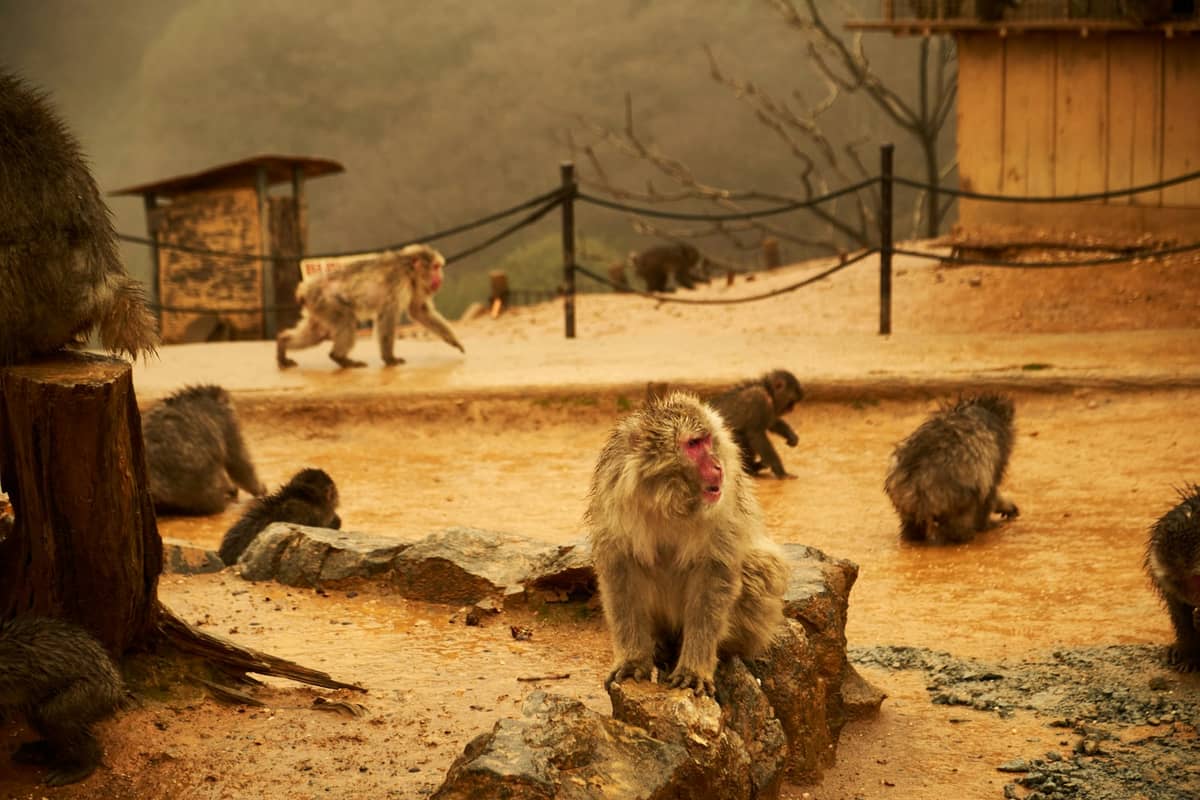
Arashiyama Monkey Park Iwatayama occupies the slopes and summit of Mt. Iwatayama on the southern bank of the Katsura River, directly acrossTogetsukyo Bridgefrom central Arashiyama. The resident population is Japanese macaques (Macaca fuscata), commonly called snow monkeys, which roam freely across the hillside. This is not a zoo or an enclosure. The monkeys move through the trees, rest on rocks, and groom each other as they please. The humans, unusually, are the ones who step inside a cage.
At the summit feeding station, visitors enter a wire-mesh hut where they can purchase small bags of food and pass pieces through narrow slots to macaques waiting on the outside. The role reversal is immediate and a little disorienting: you are indoors, the monkeys are free. It makes for a surprisingly thoughtful setup, keeping macaques wild while still allowing close observation. Outside the hut, monkeys wander within arm's reach along the paths, so the experience of being among them begins well before you reach the top.
⚠️ What to skip
Do not touch, feed, or make direct eye contact with macaques outside the feeding hut. Eye contact is read as aggression. Keep bags, food, and loose items zipped away — monkeys have been known to snatch them.
The Hike Up: What the Trail Is Like
From the ticket booth near the river, the trail climbs around 160 meters in elevation over roughly 500 meters of path. That translates to a consistent, genuinely steep ascent, not a gentle stroll. Concrete steps alternate with packed-dirt sections, and the surface becomes loose and uneven in places. Most reasonably fit adults manage it in 20 to 30 minutes. There is no lift, no cable car, and no workaround. If sustained steep stairs are a problem for you, this attraction is not accessible.
The trail is forested throughout, which matters more in summer than any other season. The canopy keeps direct sun off for most of the climb, and the air cools noticeably as altitude increases. In winter, the path can be slippery after rain or frost, and the park closes during severe weather including heavy snowfall and typhoons. Wear shoes with real grip. In summer, carry water; the hut at the top sells drinks, but the climb in July or August humidity is legitimately tiring.
💡 Local tip
The park is usually closed on January 1 and during severe weather. If you're visiting in winter or during Kyoto's rainy season in June, check the official site before heading out.
Tickets & tours
Hand-picked options from our booking partner. Prices are indicative; availability and final rates are confirmed when you complete your booking.
Kyoto Sanzen-in, Arashiyama and Bamboo Grove Full Day Tour
From 47 €Instant confirmationFree cancellationKyoto Arashiyama insider walking tour
From 66 €Instant confirmationFree cancellationMichelin-Starred Restaurant Experience in Arashiyama Kyoto
From 142 €Instant confirmationFree cancellationGuided day tour from Osaka to Nara Park, Arashiyama and Fushimi Inari
From 59 €Instant confirmationFree cancellation
The Summit: Monkeys, Views, and How It Feels
The upper area opens onto a clearing where the macaques congregate. On a typical morning, the group is active, moving between trees and the rocky outcrops near the feeding hut. Young macaques chase each other through branches overhead. Older animals sit and stare with that expression unique to macaques: mildly suspicious, somewhat unimpressed, entirely self-possessed. The group can number well over 100 individuals.
The panorama from the summit observation point is one of the more honest city views in Kyoto. Because Iwatayama rises above the western basin, you look out over the rooflines of Arashiyama, the silver thread of the Katsura River below, and on clear days, the low mountain ridges that ring the eastern side of the city. It is quieter up here than any of the paid observation decks in central Kyoto, and there is no glass between you and the view.
If the summit view appeals to you on its own terms, Kyoto has other options worth knowing about. TheDaimonji-yama hiking trailon the eastern side of the city offers a comparable open summit with a different angle on the basin. For curated views with less climbing, thebest viewpoints in Kyoto guide covers a wider set of options.
When to Visit: Time of Day and Season
The park opens at 09:00 and last entry is at 16:00, with visitors asked to leave the summit by 16:30; hours may vary slightly by season and weather. Arriving early — by 09:30 to 10:00 — puts you on the trail before the main wave of tour groups reaches Arashiyama. Macaque activity is also higher in the morning. The animals tend to be more relaxed, moving freely and foraging rather than simply sitting near the hut waiting for feeding-time visitors. By midday on weekends in cherry blossom or autumn foliage season, the queue at the ticket booth and the trail can both become congested.
Spring (late March through May) and autumn (October through mid-November) offer the most comfortable conditions for the climb: temperatures between roughly 13 and 24°C in spring and 15 to 25°C in autumn, without the oppressive humidity of summer. Summer visits are possible but the 30-minute ascent in 30°C heat and high humidity is genuinely draining. Bring more water than you think you need. Winter is quiet, sometimes strikingly so, and the macaques grow noticeably thicker coats as temperatures drop toward 0°C overnight. Snow on the trail and on monkey fur makes for unusual photographs if conditions align.
ℹ️ Good to know
Arashiyama draws enormous crowds during cherry blossom season (late March to early April) and autumn foliage season (mid-November). If you plan to combine the monkey park with the bamboo grove or Tenryu-ji on the same day, start as early as possible.
Photography: What Works and What Doesn't
The monkeys photograph well in morning light when the canopy is backlit and the animals are moving. A standard smartphone lens is sufficient at the feeding hut, where macaques sit within a few feet of the mesh. On the open trail, a short telephoto gives you more flexibility since animals may be higher in trees or moving quickly. The summit panorama faces roughly northeast, meaning late afternoon light hits the city below from an interesting angle, but you'll want to arrive well before 16:00 to make use of it.
Flash photography near the macaques is best avoided: it startles them and can trigger defensive behavior. Do not extend arms or camera equipment through or over the feeding hut mesh to get closer shots. The animals are unpredictable and protective of their space.
Getting There and Practical Logistics
The trailhead sits on the south bank of the Katsura River, a short walk past Togetsukyo Bridge. FromArashiyama, take the Hankyu Arashiyama Line to Arashiyama Station (about 5 minutes' walk to the bridge), or the JR San-in Line to Saga-Arashiyama Station (about 10–15 minutes on foot). Randen Arashiyama Station (Keifuku Electric Railroad) is another option if you're coming from central Kyoto.
Ticket purchase is cash only at the booth near the trailhead. As of 2024–2026 sources, admission is ¥800 for adults and ¥400 for children aged 4 to 15. Children under 4 enter free. Confirm current pricing at the official site before your visit, as rates have changed between sources. There are no advance booking requirements, online tickets, or timed entry slots under normal conditions.
If you're planning a full day in the area, the Arashiyama Bamboo Grove and Tenryu-ji temple and garden are both within walking distance on the north bank. The Hozu River boat ridedeparts from a point further upstream and makes for a relaxing way to end the day if legs are tired from the climb.
Who Should Think Twice Before Going
Anyone with significant mobility limitations, knee problems, or difficulty with sustained steep stairs should skip this one. The trail includes steep stairs and uneven surfaces, and there is no alternative access to the monkey area. The park’s official guidance and independent travel reports both confirm wheelchair access is not possible.
Visitors primarily motivated by wildlife spectacle in a natural wilderness setting may find the experience smaller than expected. This is a managed park on a forested hillside, not a remote mountain ecosystem. The macaques are habituated to humans, the paths are maintained, and the overall scale is modest. What it offers is genuine: an encounter with free-roaming wild primates at close range, combined with a rewarding climb and a real city view. What it does not offer is untouched nature or vast scale.
Insider Tips
- Arrive at 09:00 when the gates open. The trail is nearly empty, the macaques are most active, and the morning light through the forest canopy is at its best. By 11:00 on busy days the trail is a steady stream of visitors.
- Wear a layer you can remove. The climb generates heat fast, but the summit clearing catches wind and cools down quickly, especially from October onward.
- The feeding hut sells apple slices and similar snacks for a small fee to pass to the monkeys through the mesh. Buying a portion is the easiest way to hold a macaque's attention long enough for a good photo.
- If you have young children, keep them calm and close on the open trail sections. Monkeys may approach to investigate food smells, and sudden movements or noise from small children can startle them into defensive behavior.
- The combination of the monkey park in the morning and a slow walk through the quieter southern streets of Arashiyama afterward works well. Most visitors leave the park by noon, so the area around Togetsukyo Bridge briefly returns to a manageable pace.
Who Is Arashiyama Monkey Park Iwatayama For?
- Families with children aged 6 and up who can manage the trail independently
- Wildlife and animal photography enthusiasts looking for accessible macaque encounters
- Travelers combining Arashiyama's main sights into a full-day itinerary
- Anyone who wants a genuine elevated view of Kyoto without a ticket to a commercial observation deck
- Visitors during winter months seeking a less crowded Arashiyama experience with atmospheric cold-weather scenery
Nearby Attractions
Other things to see while in Arashiyama:
- Arashiyama Bamboo Grove
The Arashiyama Bamboo Grove is one of Kyoto's most photographed spots, a 400-meter corridor of towering Moso bamboo in the Sagano district. Free to enter at any hour, it rewards early risers with near-solitude and punishes late arrivals with wall-to-wall crowds. Here is what to know before you go.
- Hozu River Boat Ride
The Hozu River Boat Ride carries passengers 16 kilometres downstream from Kameoka through a narrow forested gorge, ending in Arashiyama. It's one of the few ways to see this stretch of Kyoto's western mountains from water level, on traditional wooden craft steered by experienced boatmen.
- Kokedera (Saihoji Moss Temple)
Saihoji Temple, known as Kokedera or the Moss Temple, is one of Kyoto's most quietly extraordinary places. Entry requires advance reservation and participation in a brief sutra-copying ceremony, which means the garden is never overwhelmed with visitors. What you find inside is a carpet of over 120 moss species covering the ground beneath ancient maples and cedars, all part of a UNESCO World Heritage Zen garden dating to the 14th century.
- Sagano Scenic Railway (Romantic Train)
The Sagano Scenic Railway, known informally as the Sagano Romantic Train, carries passengers through 7.3 km of forested gorge along the Hozu River between Arashiyama and Kameoka. It is one of the few ways to see this stretch of river valley at a slow enough pace to actually take it in.