Gion Shirakawa: Kyoto's Canal-Side Heart of Old Gion
Gion Shirakawa is a free, open-air canal promenade in Kyoto's historic Gion district. Stone-paved paths run alongside the narrow Shirakawa Canal, past traditional ochaya teahouses, weeping cherry trees, and willow branches that trail into the water. It is one of the most photographed streetscapes in Japan, and one of the few places in Kyoto that rewards a visit at any hour of the day.
Quick Facts
- Location
- Shirakawa-suji, Motoyoshi-cho, Higashiyama Ward, Kyoto
- Getting There
- Keihan Gion-Shijo Station (5 min walk); bus stop Shijo Kawaramachi (10 min walk)
- Time Needed
- 30–60 minutes for a leisurely walk; longer if you linger at dusk
- Cost
- Free to enter; no tickets required
- Best for
- Evening strolls, cherry blossom season, atmospheric photography, slow travel
- Official website
- souda-kyoto.jp/guide/spot/gionshirakawa.html
What Is Gion Shirakawa?
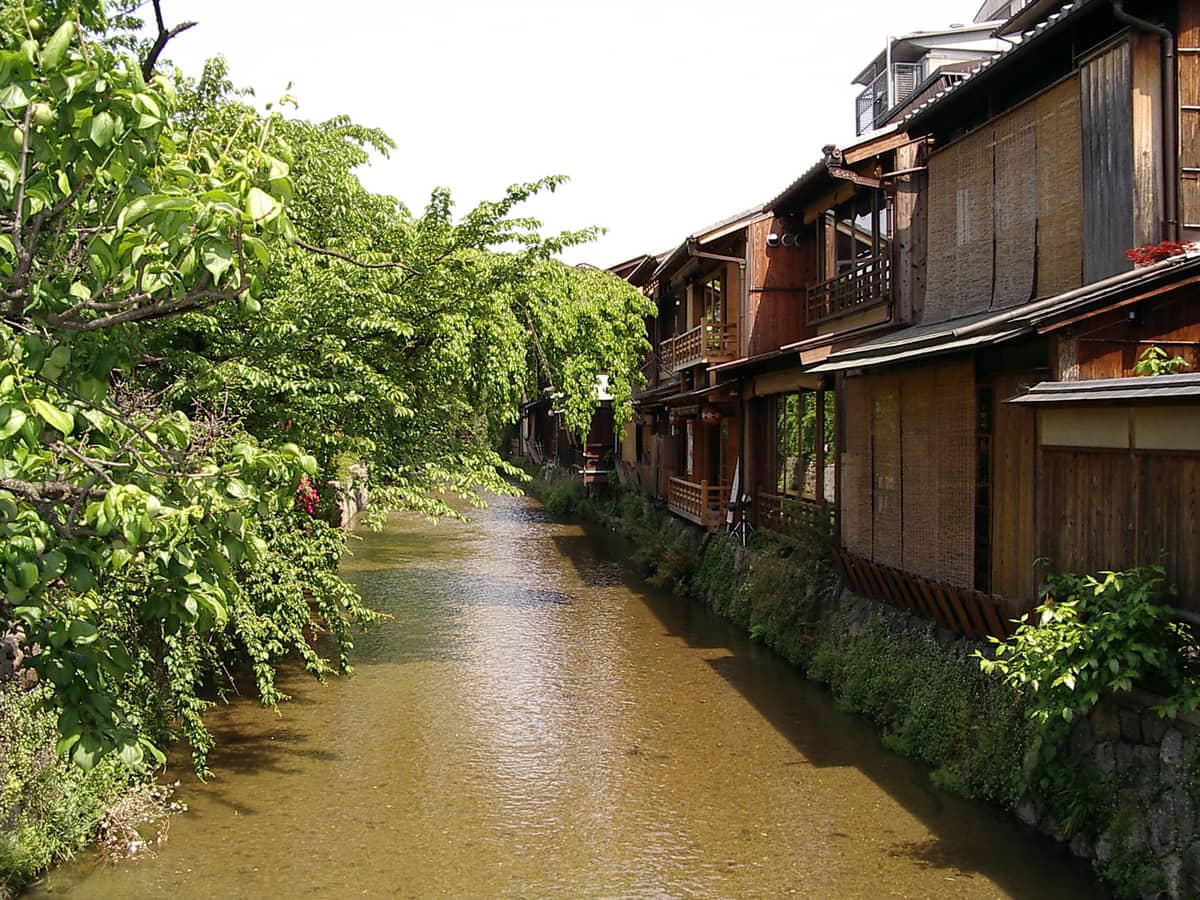
Gion Shirakawa is a short but quietly spectacular stretch of canal-side promenade running through the northern part of Kyoto'sGion district. The Shirakawa Canal itself is narrow enough to throw a stone across, but the street that follows its eastern bank is considered one of the most intact examples of Edo-period townscape in Japan. Wooden ochaya (teahouses), stone lanterns, stone-slab paving, and overhanging cherry and willow trees compress a great deal of visual beauty into a very short walk.
Unlike many of Kyoto's celebrated attractions, Gion Shirakawa asks nothing of you on arrival: no entrance gate, no ticket, no queuing system. The promenade is public and open at all hours. That accessibility is part of what makes it so rewarding, and also what fills it with crowds during peak periods. Understanding when to come makes all the difference.
💡 Local tip
The core promenade runs along Shinbashi-dori between Shijo-dori to the south and Higashioji-dori to the north. The most photogenic block is the stretch just north of Shijo-dori, where the stone path, lanterns, and teahouse facades line up cleanly along the canal.
How the Atmosphere Changes Through the Day
Morning light at Gion Shirakawa arrives slowly. The canal sits between low rooftops and the surrounding streets filter sunlight at an angle that keeps much of the promenade in gentle shadow until well after 8am. By around 7am, delivery workers are moving quietly along the stone path, and the occasional maiko in full dress may pass on her way home from a late engagement. The air carries a faint smell of damp stone and the slightly earthy note of the canal itself. Foot traffic is minimal, and the whole scene feels like something preserved in amber.
Midday brings tour groups and casual visitors, and the promenade can feel narrow when multiple groups converge on the same photogenic bend in the canal. The stone pavement offers no shade, and in Kyoto's summer months (July and August), midday heat in the low 30s Celsius makes a long linger uncomfortable. Still, the architecture is rewarding at any hour, and a slow walk from one end to the other takes under twenty minutes even if you stop frequently.
Dusk is when Gion Shirakawa earns its reputation. As the stone lanterns along the path begin to glow and the teahouse interiors warm with light, the canal reflects a version of Kyoto that feels genuinely old. The sounds shift: the daytime ambient noise of the city softens, and you start to hear koto music drifting from behind closed screens, the clatter of wooden geta on stone, and the low conversation from ochaya entrances. This is the hour the photographers wait for, and with good reason.
Tickets & tours
Hand-picked options from our booking partner. Prices are indicative; availability and final rates are confirmed when you complete your booking.
Wabi-Sabi Walking Tour with Kyoto Gion Tea Ceremony Experience
From 62 €Instant confirmationFree cancellationGion Walking Tour and Dinner with a Maiko in Kyoto
From 236 €Instant confirmationFree cancellation3-hour Gion guided walking tour and dinner with a geisha
From 168 €Instant confirmationFree cancellationEvening food tour in Kyoto's geisha district Gion
From 163 €Instant confirmationFree cancellation
The Canal, the Architecture, and Why It Matters
The Shirakawa Canal is a small distributary of the larger Kamo River system that runs through Kyoto's center. In the context of Gion's development, waterways like this served both practical and aesthetic functions: they supplied water to the machiya townhouses and teahouses that lined their banks, and their banks were cultivated over generations as places of informal beauty.
The ochaya teahouses along Shinbashi-dori are among the best-preserved examples of the building type in Kyoto. Their facades are characterized by fine-slatted wooden screens (koshi) at ground level, ochre-toned plaster walls, and tiled rooflines. These buildings are not museums: many remain operating establishments where geiko and maiko entertain private guests. The culture of the Gion district, including the role of these teahouses in the karyukai (the flower and willow world), is explored in more detail in theKyoto geisha guide.
The weeping cherry trees that arch over the canal are among the most famous in Kyoto. They are not large trees by cherry-blossom standards, but their position directly above the water creates reflections and a sense of enclosure during peak bloom (typically late March to early April, though exact timing shifts by year) that makes this one of the most sought-after cherry blossom locations in the city. The willows that line the canal in summer are nearly as attractive in their own way, trailing long green fronds into the water and turning the path a deep, cool green.
Cherry Blossom Season: What to Expect Realistically
Gion Shirakawa at cherry blossom peak is genuinely beautiful, but it is also genuinely crowded. On a typical Saturday at full bloom, the path along the canal is shoulder-to-shoulder by 9am and remains that way until well after dark. If your aim is a quiet photograph with the blossoms reflected in the canal and no strangers in the frame, your window is roughly 6am to 7am. Arriving even thirty minutes later will mean navigating around tripods and tour groups. For fuller seasonal planning, theKyoto cherry blossom guidecovers bloom timing, alternate viewing spots, and logistics in detail.
During the blossom season, the city sometimes organizes evening illumination events around the canal, with the lanterns supplemented by additional lighting in the trees. These are atmospheric and worth attending, but they draw very large crowds and the path becomes extremely congested after 7pm. If you are not specifically after the illumination experience, a weekday evening visit during non-peak season will give you a more relaxed sense of the place.
⚠️ What to skip
During peak blossom season and on autumn evenings, the stone promenade can be extremely congested. It is a narrow path with no overflow space. People traveling with strollers or those with mobility concerns should plan for limited maneuverability. The stone-slab surface is uneven in sections and can be slippery when wet.
Getting There and Moving Around the Area
The most direct approach to Gion Shirakawa is from Keihan Gion-Shijo Station, which sits about two to five minutes on foot to the south depending on your exit. Exit the station, cross Shijo-dori, and walk north along the canal path. If you are arriving by bus, the Shijo Kawaramachi stop on Shijo-dori is roughly ten minutes away on foot. The area is entirely walkable and the surrounding streets of Gion reward slow exploration beyond the canal itself.
Gion Shirakawa connects naturally to several other worthwhile stops in the immediate area.Hanamikoji Streetruns south from Shijo-dori and is the most famous geisha-district street in Kyoto, lined with ochaya and traditional restaurants.Ishibe-koji Lane, a narrow private-feeling alley that runs parallel to Hanamikoji a few blocks east, is quieter and feels even more preserved. Together, these three streets make up one of the most coherent walking circuits in Gion.
Cycling through the area is possible but not recommended during busy periods. The stone paving is narrow, other visitors take unpredictable paths while looking at phones or cameras, and local residents use these same streets for daily movement. Walking is always faster and safer here.
Photography Tips and Practical Details
The classic Gion Shirakawa photograph is taken from the stone bridge over the canal looking east along the promenade, with the ochaya facades and a cherry tree or willow in the mid-ground. The light for this shot is best in the hour after sunrise (soft, warm, no harsh shadows) or in the thirty minutes around sunset (golden tones on the plaster walls). Midday light is flat and the shadows from surrounding rooftops create inconsistent exposure across the scene.
Smartphone cameras handle the canal reflections well in low light if you steady the phone against a railing or low wall. The stone bridge parapet makes a good support. For longer exposures showing the lit lanterns in the water at night, a small tripod is useful, but be aware that setting one up in a busy moment will obstruct foot traffic. Be considerate of other visitors and of nearby residents.
ℹ️ Good to know
Photography of private individuals, including anyone entering or leaving an ochaya teahouse, requires their consent. Photographing geiko or maiko without permission is considered intrusive and is strongly discouraged by local community guidelines. Treat the area as a living neighborhood, not a set.
If you are planning a longer evening in Gion, the adjacent Yasaka Shrinestays open late, its stone lanterns and ceremonial gates lit after dark, and provides a natural endpoint to a Gion evening walk. The shrine is about ten minutes on foot east of Shirakawa. Those interested in the broader cultural context of the district can also find useful information in theKyoto first-timer guide.
Who Should Consider Skipping This
Gion Shirakawa is a short walk. If you are visiting Kyoto on a tight schedule and prioritizing major architectural or temple experiences, this is a detour rather than a destination in its own right. The canal is atmospheric, but it does not teach you much about Japanese history or Buddhism or garden design. It rewards sensory attention and a slow pace. Travelers who find crowded streets stressful and cannot visit early in the morning may find it more frustrating than enjoyable, particularly during spring blossom season or on autumn weekends.
Visitors with significant mobility limitations should note the uneven stone-slab paving, the absence of ramps or curb cuts along much of the promenade, and the general narrowness of the path during busy periods. The surrounding neighborhood has similarly challenging terrain in places. A flat, accessible alternative for canal-adjacent atmosphere is the Kamo River embankment a few minutes' walk west.
Insider Tips
- The block of Shinbashi-dori immediately north of Shijo-dori is the most preserved and most photographed. But the stretch continuing north toward Sanjo-dori is quieter and has an equally good ratio of ochaya facades to canal views — fewer people bother to walk the full length.
- Rain is not a reason to stay away. The stone paving deepens in color when wet, the plaster walls take on a richer tone, and the canal reflections become sharper. A light rain on a non-peak weekday evening may be the best possible condition for visiting.
- If you want a coffee or a quiet seat near the canal, a handful of small cafes on the surrounding streets open by 8am. Settling in with a coffee before the crowds arrive and then walking the promenade when you finish is a more relaxed approach than arriving mid-morning with the tour groups.
- The willows are at their best in early summer (June), when they reach full length and the light is long. This period is less visited than cherry blossom season and produces a completely different but equally striking set of colors along the water.
- Look for the small stone markers and old wooden signboards on some of the teahouse walls. A few carry the names of establishments with histories going back several generations. They are easy to walk past without noticing.
Who Is Gion Shirakawa For?
- Slow travelers who want to absorb the texture of old Kyoto rather than tick off landmarks
- Photographers, especially those willing to arrive early or stay until dark
- Cherry blossom visitors who want a more intimate and architecturally rich setting than a park
- Couples looking for a genuinely atmospheric evening walk in Gion
- Repeat visitors to Kyoto who have already covered the major temples and want to spend time in the city's quieter registers
Nearby Attractions
Other things to see while in Gion:
- Gion Corner
Gion Corner offers two nightly performances showcasing seven classical Japanese art forms, from tea ceremony to maiko dance, inside a compact theatre steps from Gion's lantern-lit streets. It is one of the few places in Kyoto where visitors can experience the breadth of traditional performing arts in a single sitting, without needing to book multiple separate events.
- Hanamikoji Street
Hanamikoji Street is the main artery of Gion Kobu, Kyoto's best-preserved geisha district. A one-kilometre stretch of wooden machiya townhouses, lantern-lit ochaya teahouses, and the occasional glimpse of a geiko or maiko at dusk, it distills old Kyoto into a single walk. Entry is free and the street is open around the clock.
- Maruyama Park
Designated a National Place of Scenic Beauty, Maruyama Park is Kyoto's oldest public park and its most democratic green space: free to enter, open around the clock, and set directly beside Yasaka Shrine in the Gion district. Whether you arrive at dawn for quiet reflection or after dark during cherry blossom season, the park shows a different face each time.
- Yasaka Shrine
Yasaka Shrine stands at the eastern end of Shijō Street in Kyoto's Gion district, free to enter at any hour of the day or night. Dedicated to Susanoo-no-mikoto and dating to at least the 9th century, it anchors one of Japan's most storied neighborhoods and serves as the ceremonial heart of the Gion Matsuri festival every July.