Geisha in Kyoto: Where to See Geiko & Maiko (2026 Guide)
Kyoto is the only city in Japan where the geisha tradition survives at scale. This guide covers the five geisha districts, every major dance performance, licensed cultural experiences, and the etiquette rules that matter — so you can engage with this world respectfully and on your own terms.
Plan and book this trip
Tools from our partner Travelpayouts help you compare flights and hotels. If you book through them, we may earn a commission at no extra cost to you.
Flights
Hotels map
TL;DR
- Kyoto has five active geisha districts (hanamachi): Gion Kobu, Gion Higashi, Pontochō, Miyagawachō, and Kamishichiken.
- The most reliable street-sighting spots are Hanamikoji Street inGion and the Shijo end of Pontocho Alley — visit at dusk, ideally on weekends.
- Spring (April–May) is peak season for major odori dance performances; autumn (November) has Gion Odori. Both require advance tickets.
- Street sightings are never guaranteed. Official theater shows and licensed dinner experiences are the most reliable and respectful options.
- Photography is banned on some private alleys in Gion. Chasing or touching geiko and maiko is considered seriously disrespectful — and increasingly attracts fines.
Geiko, Maiko, and Geisha: Getting the Terminology Right
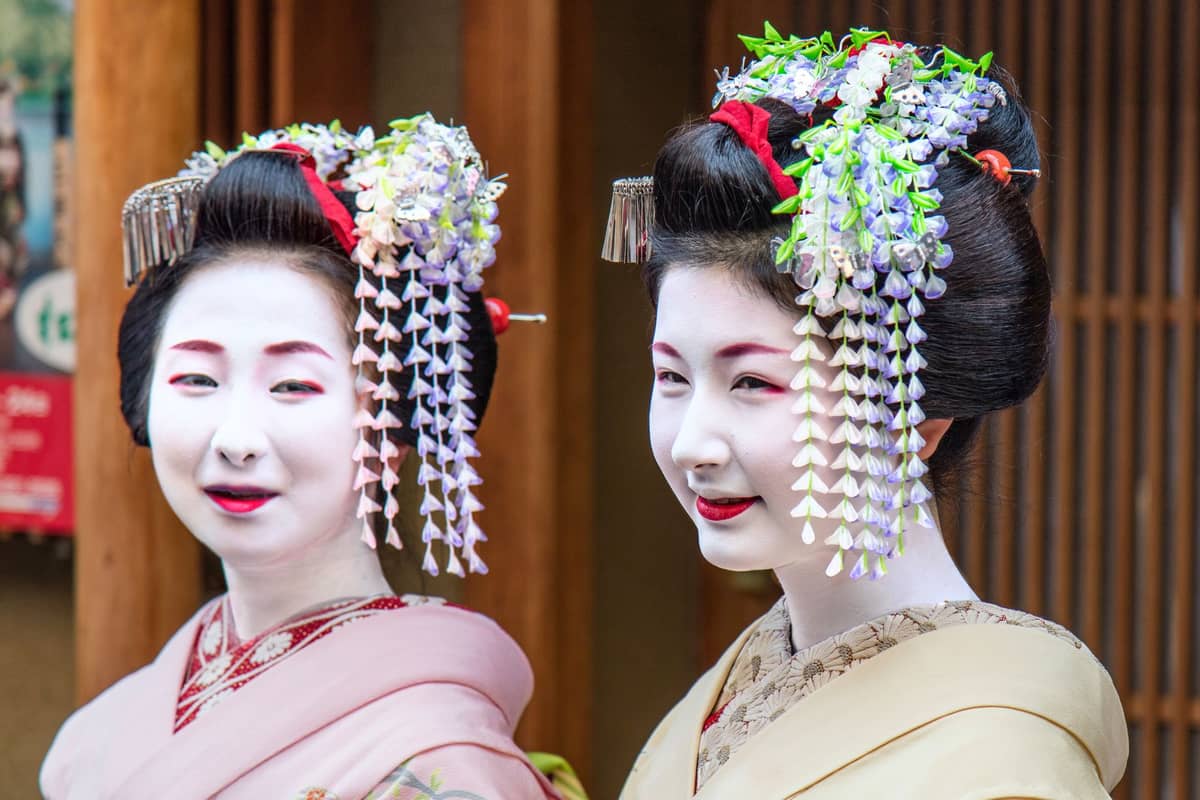
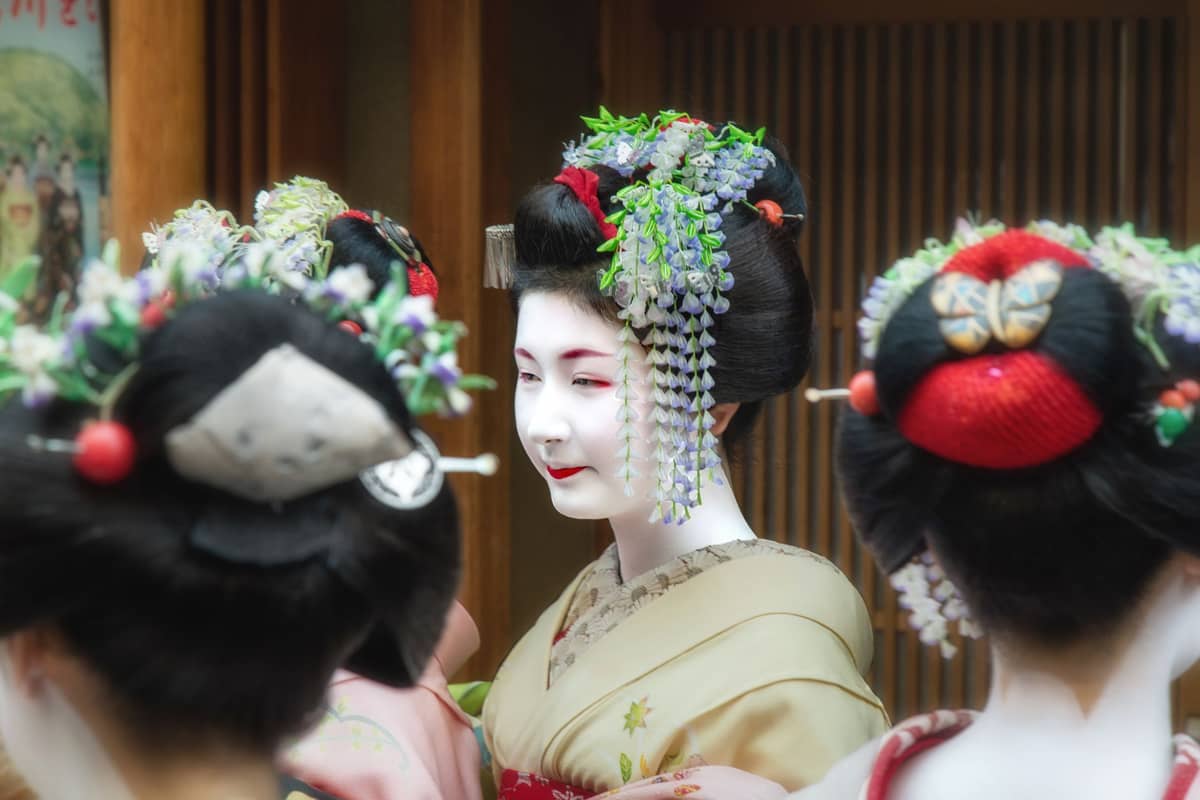
In Kyoto, the word 'geisha' is essentially a generic term that the rest of Japan and the world borrowed. Locally, two specific terms are used: geiko refers to a fully qualified practitioner of traditional arts, and maiko is her apprentice, typically aged 15 to 20. The distinction matters, both out of cultural respect and because the two look quite different. Maiko wear longer trailing kimono, more elaborate hair ornaments (kanzashi), and heavier white makeup with red accents, while geiko dress with more restrained elegance. If you see someone in full regalia on a Gion street at dusk, there is a reasonable chance she is a maiko — geiko tend to dress more subtly when traveling between engagements.
One persistent misconception is the conflation of geisha with sex work, a misunderstanding rooted in post-WWII history and Western popular culture. Modern geiko and maiko are trained performing artists, skilled in traditional dance (nihon buyo), shamisen music, tea ceremony, flower arrangement, and the subtle social arts of ozashiki (banquet) entertainment. Training begins early and lasts years. Gion Kobu alone maintains one of the most demanding apprenticeship systems in Japan, and the number of active practitioners across Kyoto's five districts is relatively small — precise current counts should be verified with municipal or cultural sources, as the community has shifted significantly over recent decades.
Kyoto's Five Hanamachi: The Geisha Districts Explained
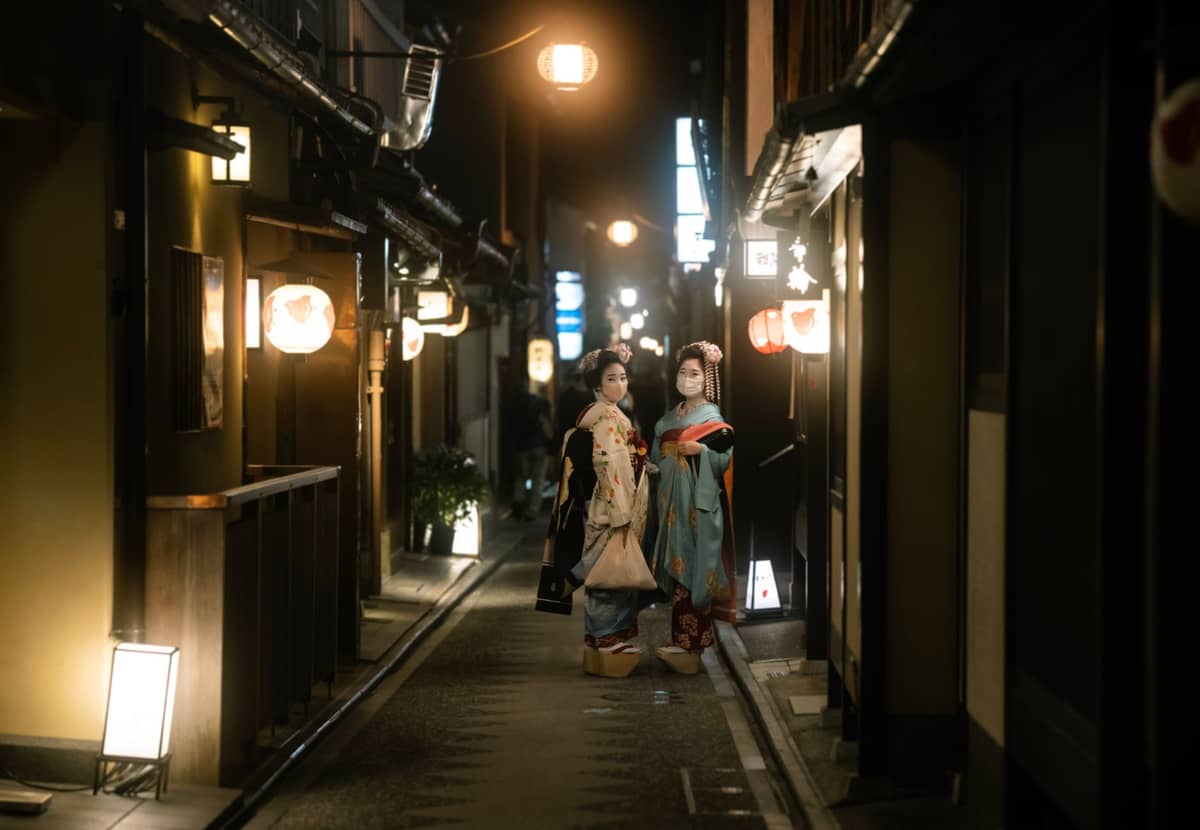
Kyoto's geisha world is organized into five hanamachi (literally 'flower towns'). Each has its own theater, teahouse network, and distinct character. Understanding the differences helps you decide which areas to visit. The most famous — and most crowded — isHanamikoji Street in Gion Kobu, but it is far from the only option.
- Gion Kobu The largest and most prestigious hanamachi, home to Miyako Odori in April and the Gion Kobu Kaburenjo Theater. Hanamikoji-dori is the main street for evening sightings, between Shijo-dori and Kennin-ji Temple. Expect crowds here, especially on weekends.
- Gion Higashi Smaller and quieter than Gion Kobu, located just east of Yasaka Shrine. Hosts Gion Odori in early November (typically November 1–10, two daily performances). A better option if you want atmosphere without the tourist scrum.
- Pontochō A narrow lane running north-south between Shijo and Sanjo along the Kamo River. Atmospheric in the evening, especially in summer when restaurants extend platforms (kawayuka) over the river. The Shijo end is best for chance sightings. Hosts Kamogawa Odori in May.
- Miyagawachō South of Gion along Miyagawa-suji, this hanamachi is often overlooked by tourists, which makes it more relaxed. Hosts Kyo Odori in spring. The preserved machiya streetscape here is among the most intact in the city.
- Kamishichiken Kyoto's oldest hanamachi, near Kitano Tenmangu Shrine in the northwest. Has a distinct, old-Kyoto atmosphere. Hosts Kitano Odori in late spring and the popular Kamishichiken Beer Garden in summer, where maiko and geiko serve guests directly.
ℹ️ Good to know
Gion Kobu and Gion Higashi are separate districts despite sharing the 'Gion' name. They have different management, different theaters, and different performance calendars. Most tourists visit Gion Kobu without realizing Gion Higashi exists one block away — and with far fewer crowds.
Where and When to Spot Geiko and Maiko on the Street
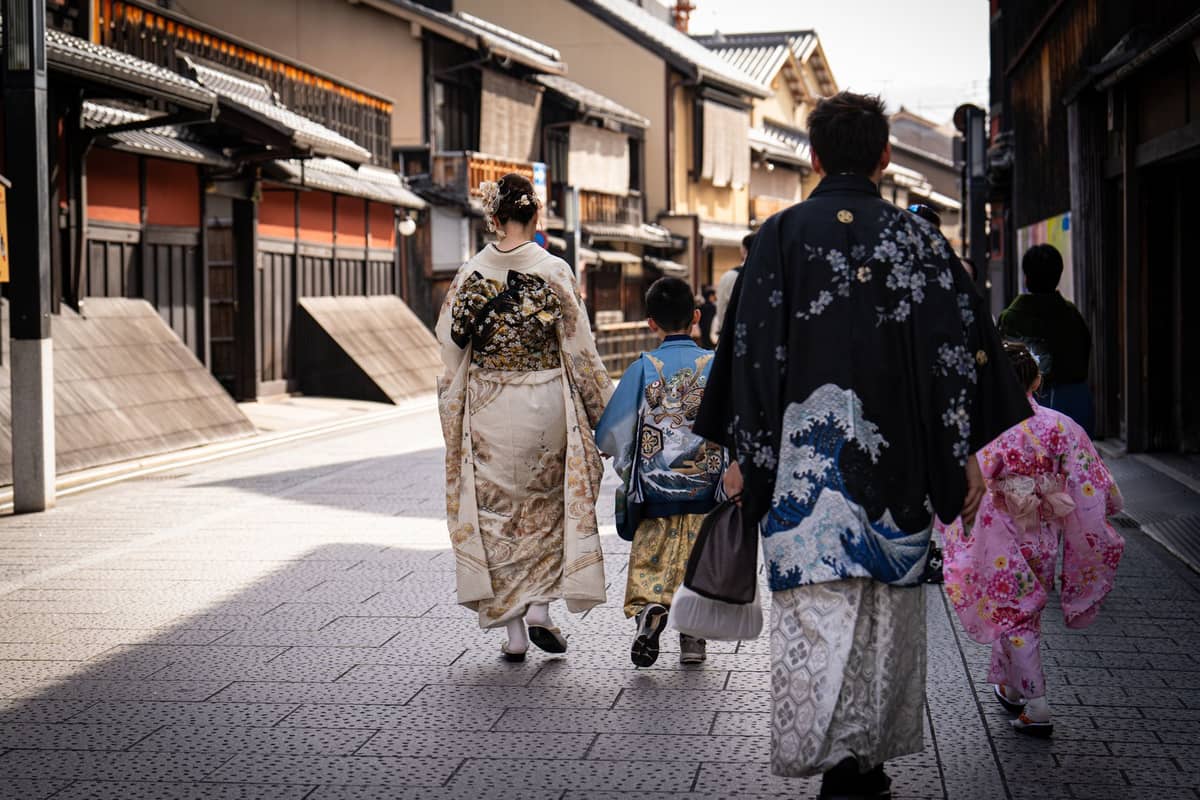
The honest reality: street sightings are never guaranteed, even in the right place at the right time. Geiko and maiko are not there for tourist photography — they are professionals moving between private engagements. When you do see them, you have a matter of seconds as they walk from an okiya (lodging house) to an ochaya (teahouse). That said, some spots and times are considerably better than others.
The best window is roughly 5:30 to 7:30 PM, when practitioners move to evening engagements. Hanamikoji-dori in Gion Kobu sees the most activity — particularly the stretch between Shijo-dori andGion Shirakawacanal. Weekend evenings tend to have more movement than weeknights. Holidays around Obon (mid-August) and the New Year period also bring activity, though sightings then depend on whether banquets are being held.
Two additional public events are worth planning around. Hassaku on August 1st is a traditional occasion when maiko and geiko pay formal visits to their teahouses and teachers, dressed in formal black tomesode kimono — a rare sight. Setsubun at Yasaka Shrine in early February also draws public appearances. Both are worth checking against current event calendars before your trip.
⚠️ What to skip
Photography is prohibited on several private alleys in Gion, marked with signage. Beyond the legal issue, aggressively following, blocking, or touching geiko and maiko is considered deeply disrespectful and has drawn increasing attention from local authorities. Keep your distance, do not call out to them, and never reach out to touch their kimono or kanzashi. Violations have led to warning notices and, in some cases, fines.
Official Performances: The Most Reliable Way to See Geiko and Maiko
If you want a genuine, respectful, and close encounter with geiko and maiko artistry, official theater performances are the right choice. These are not tourist gimmicks — they are formal events attended by Kyoto locals and cultural enthusiasts who book months in advance. The seasonal odori (dance) performances are the pinnacle.
- Miyako Odori (April, Gion Kobu) The most famous of the seasonal dances, held throughout April at the Gion Kobu Kaburenjo Theater (currently performed at an alternate venue during renovations — confirm current location before booking). Features elaborate sets and full casts of Gion Kobu geiko and maiko. Tickets typically range from around ¥4,500 to ¥7,000 depending on seat tier and whether a tea ceremony is included. Sells out weeks in advance during the peak cherry blossom period.
- Kamogawa Odori (May, Pontochō) Held in May at the Pontochō Kaburenjo Theater. Combines traditional dance with theatrical narrative. Slightly less famous than Miyako Odori but still high quality and popular. Book early.
- Kyo Odori (Spring, Miyagawachō) Miyagawachō's spring performance, usually held in April. Smaller venue, more intimate atmosphere. Tickets and exact dates vary — check the official Miyagawachō website for current schedules.
- Kitano Odori (Late Spring, Kamishichiken) Held in late March or early April at Kamishichiken Kaburenjo, near Kitano Tenmangu Shrine. Includes an optional tea service by maiko. The setting near the plum and cherry blossom trees of the surrounding area adds to the experience.
- Gion Odori (November 1–10, Gion Higashi) The main autumn performance. Two daily shows (typically around 13:30 and 16:00) at Gion Kaikan. A shorter program than the spring odori, but a genuinely good option for visitors in November.
For a year-round option, Gion Cornerat Yasaka Hall offers a tourist-oriented program that includes a condensed maiko dance performance alongside demonstrations of other traditional arts: tea ceremony, kado (flower arranging), koto music, and puppet theater. It runs most evenings and requires no advance booking, making it the most accessible entry point. The program is explicitly designed for visitors and is somewhat condensed, but it delivers genuine artistry in a comfortable, air-conditioned setting.
✨ Pro tip
For the seasonal odori, book tickets directly through the official hanamachi websites or authorized ticketing partners as early as possible — ideally months ahead for April performances. Popular seat tiers and tea ceremony combinations sell out fast. Some performances offer same-day tickets at the door if you are flexible about seat position.
Dinner with Maiko and Licensed Cultural Experiences
Beyond theater, a growing number of licensed operators offer structured experiences where guests can meet, converse with (through an interpreter), and observe a maiko during a traditional meal. These are distinct from the private ozashiki banquets hosted at teahouses, which require an introduction through an existing client and are not accessible to most travelers. The licensed dinner experiences are the next best thing.
Typical formats involve a multi-course meal at a cultural venue, a maiko performance, and a short question-and-answer session. Sessions usually run around 90 minutes and are scheduled in the evening, often at around 18:00 and 20:30. Prices vary significantly by operator and meal quality — budget anywhere from around ¥15,000 to ¥30,000 per person at the upper end. Verify current pricing and availability directly with operators, as these programs change seasonally.
The Kamishichiken Beer Garden in summer is a more casual and affordable way to interact with geiko and maiko. Held in the garden of Kamishichiken Kaburenjo on selected evenings in July and August, guests can eat, drink, and enjoy a relaxed atmosphere while maiko and geiko circulate among tables. It sells out quickly each year — watch for booking announcements in late spring.
Seasonal Strategy: When to Plan Your Visit
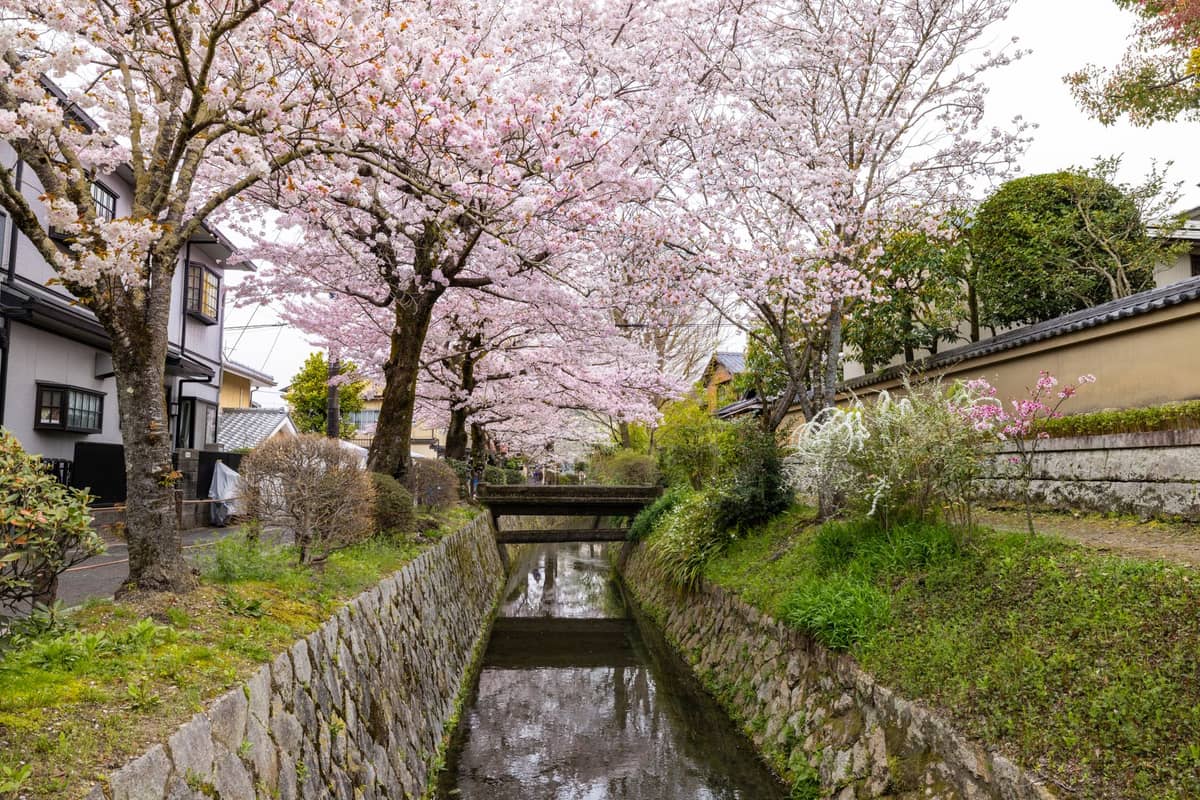
The geisha calendar is inseparable from Kyoto's broader seasonal rhythm. If seeing a major odori performance is your priority, spring is the only window. April concentrates the most events — Miyako Odori runs the full month — but it also coincides with cherry blossom season, meaningHigashiyamaand Gion will be at peak crowding. If you want the performances without the worst of the tourist pressure, aim for early April rather than the Golden Week holiday (late April to early May).
Autumn is the second-best season. Gion Odori runs in early November,Kyoto's autumn foliagepeaks in mid-November, and the crowds, while significant, are more spread out than spring. Summer is the hardest season logistically: Kyoto's basin geography traps heat and humidity, and temperatures routinely reach 33°C in August. The trade-off is the Hassaku sightings and the Kamishichiken Beer Garden. Winter brings few formal performances but also the quietest streets — if a peaceful walk through Gion is the goal, January and February reward you with that rare opportunity.
- April: Miyako Odori (Gion Kobu), Kyo Odori (Miyagawachō), Kitano Odori (Kamishichiken)
- May: Kamogawa Odori (Pontochō)
- July–August: Kamishichiken Beer Garden; Hassaku public appearances (August 1)
- Early February: Setsubun public appearances at Yasaka Shrine
- November 1–10: Gion Odori (Gion Higashi)
For full context on navigating Kyoto's seasons, the best time to visit Kyoto guidecovers crowd patterns, weather trade-offs, and major festivals across all twelve months.
FAQ
What is the difference between geisha, geiko, and maiko?
All three refer to practitioners of traditional Japanese performing arts, but the terms are used differently. 'Geisha' is a general Japanese term used nationwide. In Kyoto specifically, fully qualified practitioners are called 'geiko' and their apprentices are called 'maiko.' Maiko are typically aged 15 to 20 and are identifiable by their longer trailing kimono, elaborate hair ornaments, and heavier makeup. Geiko dress more modestly and carry themselves with greater formality.
Where is the best place to see geisha in Kyoto?
Hanamikoji-dori in Gion Kobu is the most popular spot, particularly between dusk and 7:30 PM. The Shijo-dori end of Pontocho Alley is also worth checking at the same time. For guaranteed sightings without relying on chance, book tickets to one of the seasonal odori dance performances (Miyako Odori in April is the most famous) or a licensed dinner-with-maiko experience.
Can tourists attend geisha performances in Kyoto?
Yes. All five hanamachi host public dance performances (odori) during specific seasons, most of which are open to tourists who purchase tickets through official channels. Gion Corner in Gion runs year-round tourist-oriented shows that include maiko dance. Private ozashiki banquets at teahouses are not generally accessible to tourists without an introduction, but licensed cultural operators run structured dinner experiences as an alternative.
Is it rude to photograph geiko and maiko on the street?
Taking a photo from a respectful distance without blocking their path is generally tolerated in public spaces. However, chasing, crowding, or touching geiko and maiko is widely considered disrespectful, and photography is explicitly banned on some private alleys in Gion. Signage marks these areas. The local community and city authorities have both spoken out against harassment, and violations can attract fines. The better approach is to attend a theater performance where photography rules are clearly communicated.
How much does it cost to attend Miyako Odori?
Tickets for Miyako Odori typically range from around ¥4,000 for a basic seat to ¥7,000 or more for premium seating with a tea ceremony included. Prices have varied slightly from year to year, so confirm current pricing on the official Gion Kobu website before booking. Tickets sell out well in advance, especially during the cherry blossom period in early April.