Maruyama Park: Kyoto's Oldest Urban Park in the Heart of Gion
Designated a National Place of Scenic Beauty, Maruyama Park is Kyoto's oldest public park and its most democratic green space: free to enter, open around the clock, and set directly beside Yasaka Shrine in the Gion district. Whether you arrive at dawn for quiet reflection or after dark during cherry blossom season, the park shows a different face each time.
Quick Facts
- Location
- 473 Maruyama-cho, Higashiyama-ku, Kyoto 605-0071
- Getting There
- Keihan Gion-Shijo Station (7–10 min walk); Hankyu Kyoto-Kawaramachi Station (15 min walk); City Bus 'Gion' stop (2 min walk)
- Time Needed
- 45–90 minutes for a relaxed visit; longer during cherry blossom season
- Cost
- Free. No admission fee. Open 24 hours, every day of the year
- Best for
- Cherry blossom viewing, quiet morning walks, garden photography, budget travelers
- Official website
- kyoto-maruyama-park.jp
What Maruyama Park Actually Is
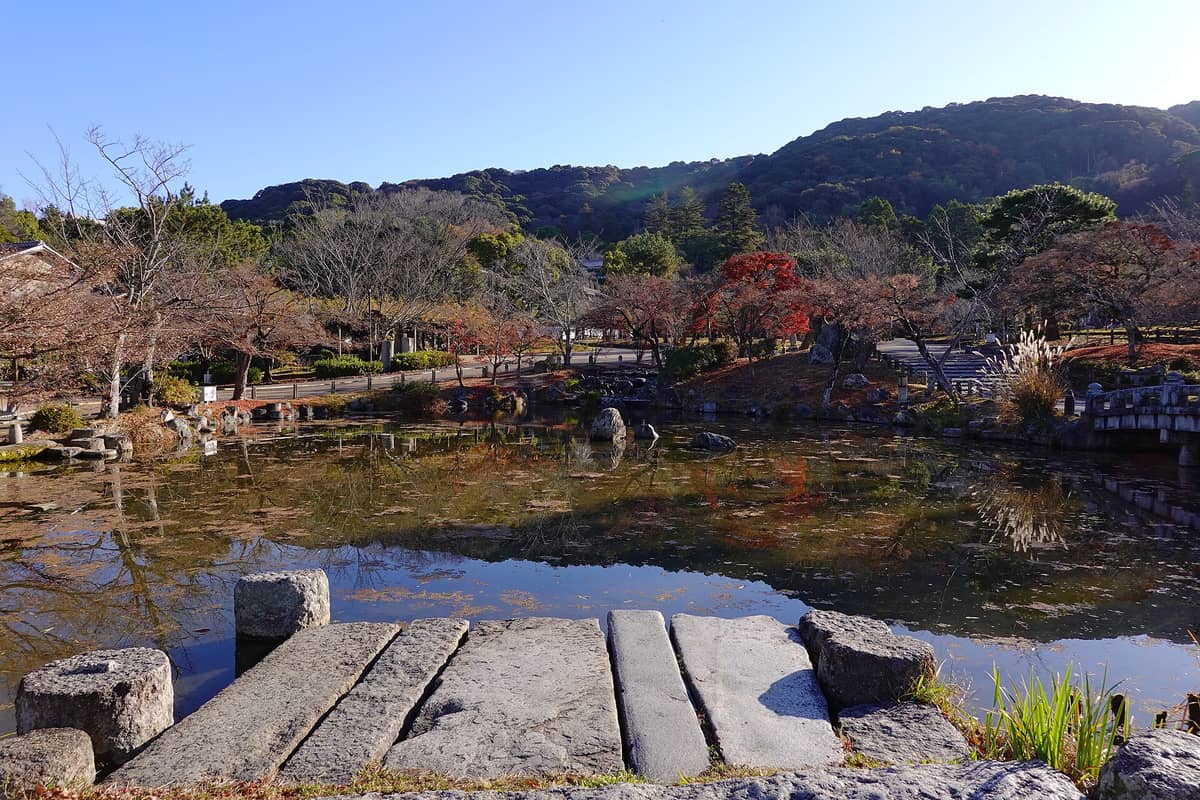
Maruyama Park (円山公園) occupies a quiet fold of land directly east of Yasaka Shrine, where the urban grid of Gion gives way to garden paths, a central pond, and a weeping cherry tree that has become one of the most recognized images in all of Kyoto. Opened on 25 December 1886, it holds the distinction of being Kyoto's oldest public park. In 1889 it passed from Kyoto Prefecture to Kyoto City, becoming the city's first official urban park. By 1931, the Japanese government had designated it a National Place of Scenic Beauty, a status that reflects not just the planting but the deliberate design behind it.
The park's current layout was formalized between 1913 and 1914 under the Maruyama Park Improvement Plan, with overall architecture directed by Takeda Goichi and landscape design by Ogawa Jihei VII, one of the most influential garden designers of the Meiji and Taisho eras. Ogawa shaped the central stream, the gentle hillside contours, and the waterfall feature that anchor the garden's composition. The result is not a wild park or a purely ornamental one, but something in between: a designed landscape meant to be walked through rather than viewed from a fixed point.
ℹ️ Good to know
Maruyama Park is free to enter and open 24 hours a day, every day of the year. No ticket, no gate, no reservation required.
The Weeping Cherry Tree: Kyoto's Most Famous Bloom
At the center of the park stands a solitary weeping cherry tree (shidare-zakura) that draws enormous crowds each spring. This is the second-generation tree; the original planted here became famous across Japan, and when it died, a descendant grown from its seed was planted in its place and has now matured into an equally dramatic form. When it blooms, typically in late March to early April depending on the year, the branches cascade downward in long arcs of pale pink blossoms, and the tree is lit up after dark by floodlights, creating a scene that photographers queue for well before sunset.
Cherry blossom season at Maruyama Park is genuinely spectacular, but it is also one of the most crowded outdoor experiences in Kyoto. Food stalls line the central paths, blue plastic tarps cover every patch of grass as picnic groups stake their spots from mid-morning, and by evening the noise and foot traffic bear little resemblance to the park's usual calm. If you want the tree without the crowd, arrive before 7:30 am. The light is soft, the vendors haven't set up yet, and the reflections in the pond below are clearest. For a broader view of Kyoto's cherry blossom options, theKyoto cherry blossom guide covers timing and alternatives across the city.
💡 Local tip
During cherry blossom season, the park is illuminated at night. The lit weeping cherry is striking, but the crowds are at their densest between 7 pm and 10 pm. Aim for the first hour after illumination begins, or go well after 10 pm when groups start to thin.
Tickets & tours
Hand-picked options from our booking partner. Prices are indicative; availability and final rates are confirmed when you complete your booking.
Kyoto Coast, Amanohashidate and Ine Bay 1-Day Trip from Osaka or Kyoto
From 46 €Instant confirmationFree cancellationKyoto Sanzen-in, Arashiyama and Bamboo Grove Full Day Tour
From 47 €Instant confirmationFree cancellationKyoto Arashiyama insider walking tour
From 66 €Instant confirmationFree cancellationMatcha green tea tour in Kyoto's Uji Market
From 130 €Instant confirmationFree cancellation
How the Park Feels at Different Times of Day
Outside of cherry blossom season, Maruyama Park operates on a much quieter rhythm. Early mornings bring local residents doing tai chi on the lawns, dog walkers on the outer paths, and the occasional monk cutting through from the direction of Chion-in. The air carries the smell of damp soil and cedar from the surrounding hillside trees. Birdsong is audible, particularly in the wooded upper sections of the park where the paths climb toward a small waterfall feature.
By mid-morning in autumn and spring, tour groups begin arriving from Yasaka Shrine, filtering through the western entrance. The central pond area gets busy but never unbearable; the park is large enough that the upper paths and the eastern garden sections remain relatively uncrowded throughout the day. In summer, the shade from the mature trees makes the park noticeably cooler than the surrounding streets, and it functions as a transit point for people walking between the Gion shopping district and the Higashiyama temple trail.
Evenings in autumn bring a different atmosphere: the maples along the hillside paths turn orange and red, the crowds from the day's temple visits have dispersed, and the park takes on a quieter, more local character. Couples sit on benches near the pond. Older visitors move slowly along the flat central paths. It is one of the few places in Kyoto where the pace genuinely slows after 5 pm outside of a seasonal event.
Layout and What to Walk Through
The park is roughly oval in shape and sits on gently sloping terrain, with the lowest point near the western entrance from Yasaka Shrine and the land rising toward the east and north. The main central area is an open lawn with the famous weeping cherry at its heart and a rectangular pond to the south. Vendors and small tea stalls cluster around this zone, and it is where most visitors spend the majority of their time.
Beyond the central lawn, the park branches into wooded sections with narrower paths. A small stream, engineered by Ogawa Jihei as part of the 1913 improvement, runs through a rocky garden toward the east, accompanied by manicured plantings that show the designer's hand most clearly. A waterfall structure sits higher up the slope. These areas are quieter and worth exploring even on a busy day, as most visitors don't venture past the central cherry tree.
The western edge of the park opens directly onto the grounds of Yasaka Shrine, so the two sites are best visited together. The shrine is active throughout the day and hosts major festivals including theYasaka Shrinegrounds festivals that spill into the park itself. The northern boundary of Maruyama Park backs toward Chion-in temple, whose massive sanmon gate is visible from the upper park paths.
Getting There and Getting Around the Area
The most straightforward approach is from Keihan Gion-Shijo Station, a 7 to 10 minute walk east along Shijo-dori and then up through the Gion entertainment district. If you're coming by bus, the Gion stop on Kyoto City Bus is a 2-minute walk from the main western entrance. The park sits at a natural crossroads: the famous stone-paved lanes ofNinenzaka and Sannenzakaare a 10-minute walk south, and Kiyomizu-dera is about 20 minutes on foot from the park's southern edge.
Because the park is free and central, it works well as a rest stop during a longer Higashiyama walk rather than a standalone destination. TheHigashiyama districtrunning south from here is one of Kyoto's most cohesive historic walking routes, connecting temples, craft shops, and preserved streetscapes over a comfortable two to three hour walk.
💡 Local tip
Photography tip: the pond reflection of the weeping cherry is sharpest in calm morning conditions before noon. Wind in the afternoon disrupts the water surface. In autumn, the reflection of the maple-covered slope works best on clear days between 10 am and 2 pm when the light hits the east-facing hillside directly.
Seasonal Variations and When to Visit
Spring (late March to mid-April) is by far the most visited period, centered on the cherry blossoms. Autumn (mid-November) is the second peak, when maple foliage colors the upper slopes and the park is far less crowded than during sakura season. Summer is warm and humid, with afternoon temperatures often reaching 32°C or above, but the tree canopy provides shade, and the park sees fewer tourists than the main temple circuits. Winter visits are quiet and occasionally dramatic: if snow falls on the bare branches and garden stones, the park takes on a completely different character, and the lack of crowds means you'll have the pond area largely to yourself.
For context on how the seasons affect visiting Kyoto more broadly, thebest time to visit Kyoto guidebreaks down each month in detail. Autumn foliage specifically is covered in theKyoto in autumn guide, which identifies Maruyama Park as one of the more accessible spots for fall color in the central city.
Honest Expectations: Who This Is and Isn't For
Maruyama Park is not a destination that rewards a lengthy dedicated visit outside of cherry blossom season. The garden design is interesting but not on the level of Kyoto's famous temple gardens, which tend to be more enclosed, more intentional in their spatial composition, and more removed from foot traffic. If you've already visited Kokedera (the Moss Temple) or the raked-gravel gardens at Ryoan-ji, Maruyama Park will feel more like a pleasant city park than a refined garden experience. It is a public space that happens to be historically significant and beautifully planted, not a contemplative garden.
Travelers with limited time in Kyoto who prioritize iconic architectural or spiritual sites may find this works better as a 20-minute through-walk than a focused visit. On the other hand, anyone who needs a free, open, and easily accessible green space in the center of Kyoto, whether to rest, eat something from a nearby stall, or simply sit down, will find Maruyama Park genuinely useful. Families with young children tend to do well here: the flat central area has space to move, there is no entry fee to worry about, and access in and out is easy.
Insider Tips
- The park has several small food stalls and vendors near the central area that sell matcha soft serve, yakitori, and seasonal snacks. Quality varies, but they're convenient if you're mid-walk and don't want to backtrack to Gion's main streets.
- During the cherry blossom illumination period, enter from the northern end near Chion-in rather than the main western gate from Yasaka Shrine. The northern path is less congested and gives you a better downhill view of the lit weeping cherry from above.
- The upper wooded paths in the northeast section of the park lead toward a small waterfall and stream garden that most visitors skip entirely. This is the area where Ogawa Jihei's landscape work is most visible — worth 10 minutes even on a busy day.
- If you're in Kyoto for autumn foliage, check the maple trees along the eastern slope of the park before committing to a visit. Peak color here typically runs about a week behind Eikan-do and the northern temple circuit, so it can serve as a useful fallback when those sites are at maximum crowds.
- The park's 24-hour access means you can visit on your way back from a late dinner in Gion. After 10 pm on non-festival nights, the central pond area is quiet, the lights reflect on the water, and you'll likely have the space largely to yourself.
Who Is Maruyama Park For?
- Cherry blossom and autumn foliage seekers looking for a free, central viewing spot
- Budget travelers who want a genuine Kyoto experience without an admission fee
- Families needing open, accessible green space in the middle of a temple-heavy itinerary
- Photographers targeting early-morning golden hour shots of the weeping cherry and pond
- Walkers using the park as a junction on the broader Higashiyama pedestrian route
Nearby Attractions
Other things to see while in Gion:
- Gion Corner
Gion Corner offers two nightly performances showcasing seven classical Japanese art forms, from tea ceremony to maiko dance, inside a compact theatre steps from Gion's lantern-lit streets. It is one of the few places in Kyoto where visitors can experience the breadth of traditional performing arts in a single sitting, without needing to book multiple separate events.
- Gion Shirakawa
Gion Shirakawa is a free, open-air canal promenade in Kyoto's historic Gion district. Stone-paved paths run alongside the narrow Shirakawa Canal, past traditional ochaya teahouses, weeping cherry trees, and willow branches that trail into the water. It is one of the most photographed streetscapes in Japan, and one of the few places in Kyoto that rewards a visit at any hour of the day.
- Hanamikoji Street
Hanamikoji Street is the main artery of Gion Kobu, Kyoto's best-preserved geisha district. A one-kilometre stretch of wooden machiya townhouses, lantern-lit ochaya teahouses, and the occasional glimpse of a geiko or maiko at dusk, it distills old Kyoto into a single walk. Entry is free and the street is open around the clock.
- Yasaka Shrine
Yasaka Shrine stands at the eastern end of Shijō Street in Kyoto's Gion district, free to enter at any hour of the day or night. Dedicated to Susanoo-no-mikoto and dating to at least the 9th century, it anchors one of Japan's most storied neighborhoods and serves as the ceremonial heart of the Gion Matsuri festival every July.