Ishibe-koji Lane: Kyoto's Most Atmospheric Stone Alley
Tucked behind Kodai-ji temple in the Higashiyama district, Ishibe-koji Lane is a narrow, stone-paved passage lined with traditional machiya townhouses, lantern-lit inns, and discreet restaurants. Free to walk at any hour, it offers a rare glimpse of old Kyoto that the bigger sightseeing streets rarely deliver.
Quick Facts
- Location
- Higashiyama Ward, Kyoto (near Kodai-ji temple)
- Getting There
- Higashiyama Yasui bus stop (about 5 min walk) or Gion-Shijo Station, Keihan Line (15 min walk)
- Time Needed
- 15–30 minutes for the lane itself; allow extra time for nearby sights
- Cost
- Free. Open 24 hours.
- Best for
- Photographers, couples, slow walkers who want old Kyoto without the crowds
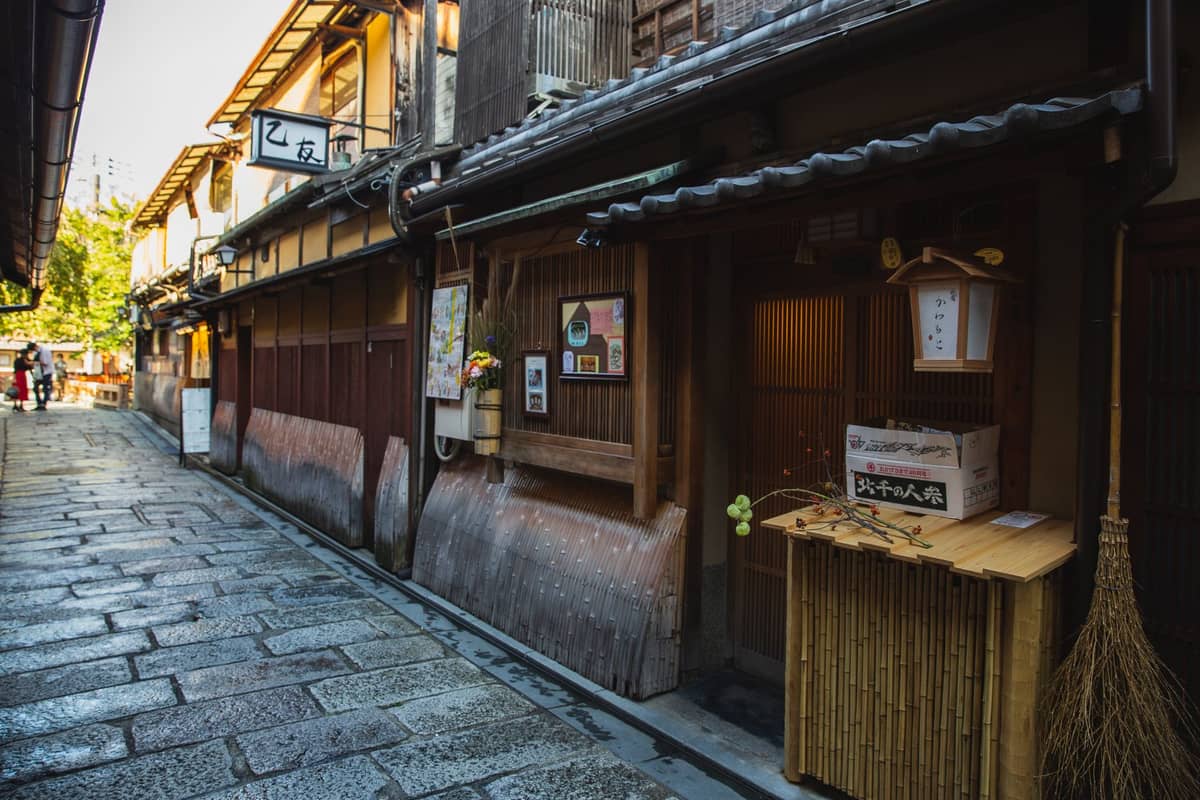
What Is Ishibe-koji Lane?
Ishibe-koji Lane (石塀小路) is a short, narrow stone-paved alley in Kyoto's Higashiyama Ward, running roughly parallel to the more visited Nene-no-Michi path near Kodai-ji temple. The lane is a public thoroughfare, free to enter at any hour, and widely considered one of the best-preserved examples of traditional townscape architecture left in the city.
Unlike the souvenir-shop corridors of Ninenzaka and Sannenzaka a short walk to the north, Ishibe-koji is lined almost entirely with functioning businesses: small ryokan inns, kaiseki restaurants, and a handful of tea houses, most of which occupy buildings that genuinely date from an earlier era of Kyoto urban life. Stone walls give the lane its name (ishibe roughly translates to stone wall or stone-paved), and the textured cobblestone underfoot, worn smooth in places, lends the place a tactile quality you notice immediately.
💡 Local tip
The lane has two entry points: one near Kodai-ji temple to the south, and one emerging onto Nene-no-Michi to the north. Walk the full length in either direction for the best experience. It takes just a few minutes end to end if you keep moving.
How the Lane Changes Through the Day
Early mornings, roughly between 7 and 9 am, are when Ishibe-koji feels closest to what it must have been decades ago. The lane is almost empty. Staff from the ryokan sweep their stoops, lanterns from the night before are still softly lit, and the only sounds are distant temple bells and the occasional footstep on stone. The morning light catches the mossy stone walls at a low angle, making them appear almost luminescent. This is by far the best window for photography.
By mid-morning, particularly during cherry blossom season in early April or autumn foliage season in November, the lane receives a steady stream of visitors. It never reaches the gridlock of Ninenzaka, partly because there is nothing to buy here except an experience, but it does get noticeably busier between 10 am and 3 pm. Weekdays are quieter than weekends by a meaningful margin.
Evening is arguably the lane's second-best period. After around 6 pm, the stone lanterns along the walls glow amber, the restaurants begin seating guests, and the street takes on a cinematic quality that draws photographers back repeatedly. In summer the heat of the day lingers in the stone pavement, but the relative quiet makes it worthwhile. In winter the cold clears the lane quickly after dark, and if there has been light snow, the effect on the cobblestones and stone walls is extraordinary.
Tickets & tours
Hand-picked options from our booking partner. Prices are indicative; availability and final rates are confirmed when you complete your booking.
Kyoto Coast, Amanohashidate and Ine Bay 1-Day Trip from Osaka or Kyoto
From 46 €Instant confirmationFree cancellationKyoto Sanzen-in, Arashiyama and Bamboo Grove Full Day Tour
From 47 €Instant confirmationFree cancellationKyoto Arashiyama insider walking tour
From 66 €Instant confirmationFree cancellationMatcha green tea tour in Kyoto's Uji Market
From 130 €Instant confirmationFree cancellation
The Architecture and Atmosphere Up Close
The buildings along Ishibe-koji are mostly traditional machiya townhouses, adapted over generations for use as inns and restaurants while retaining their original wood-lattice facades, low overhanging eaves, and sliding screen doors. The stone walls that line sections of the lane are constructed from stacked flat stones, some worn and weathered, with moss filling the gaps in ways that suggest decades of slow growth.
Noren, the short fabric dividers that hang across business entrances, are changed seasonally and give the lane subtle punctuation. In autumn some establishments use deep indigo or rust-colored noren that echo the foliage visible above the rooflines. The lane is narrow enough that you could almost reach both walls simultaneously, which creates an enclosed, intimate atmosphere unlike any of the wider pedestrian streets in the area.
The overall streetscape sits within the broader Higashiyama district, which preserves more traditional urban fabric than almost any other part of central Kyoto. Ishibe-koji is one of the more intact examples within that district, partly because it functions as a working street rather than a pure heritage preservation zone.
Getting There and Finding the Lane
The easiest approach is by bus to the Higashiyama Yasui stop on Higashiyama-dori, from which the lane entrance near Kodai-ji is roughly a five-minute walk south and then east. If you are coming from central Kyoto by train, Gion-Shijo Station on the Keihan Electric Railway is the closest station, approximately 15 minutes on foot through the Gion district.
Many visitors combine Ishibe-koji with a walk along Ninenzaka and Sannenzaka to the north, or time the visit around a morning at Kiyomizu-dera temple, which is about 15 minutes on foot uphill. The logical route is to visit Kiyomizu-dera early, walk down through Sannenzaka and Ninenzaka, and arrive at Ishibe-koji before the midday crowds build.
ℹ️ Good to know
The lane's official address is in Shimokawaracho, Higashiyama Ward. On Google Maps, search for 石塀小路 or 'Ishibe-koji Lane Kyoto' for the most reliable pin location. The two entrances are not always clearly marked with English signage.
Photography Tips
The lane is narrow enough that wide-angle lenses compress the perspective pleasingly, but a standard 35mm or 50mm equivalent gives more natural proportions. The stone texture and wooden facades respond well to overcast light, which diffuses the harsh contrasts that direct midday sun creates. On bright days, shoot from the shaded end toward the light for better depth.
Evening lantern light is warm and low in intensity, so a camera or phone that handles low light without excessive noise will serve you better than one that struggles in dim conditions. Tripods can be used but be considerate of the few guests entering and leaving the restaurants. Avoid photographing guests at inn entrances without clear consent, which is both courteous and consistent with the general etiquette norms across Kyoto's historic districts.
⚠️ What to skip
This is a residential and working street, not a public park. Keep your voice low, especially in the early morning and evening. Some sections of the lane pass directly in front of inn entrances. Guests have a reasonable expectation of privacy.
Practical Considerations and Accessibility
The cobblestone and stone-paved surface is uneven in places. It is manageable for most walkers but can be slippery when wet, particularly in the rainy season (June and early July) or after autumn rain. Flat, closed-toe shoes with grip are a better choice than sandals or heels. Strollers and wheelchairs will find some sections difficult due to surface irregularities and the lack of any formal ramped access.
Weather affects the experience more than most visitors expect. TheKyoto weatherin August is hot and humid, and the lane's enclosed nature traps heat; early morning visits are especially important in summer. Conversely, the lane in winter with frost or light snow on the stone surfaces and bare maple branches above the rooflines offers a quality of quiet that the busier seasons simply cannot match.
There are no public restrooms on the lane itself. The nearest facilities are typically at Kodai-ji temple (admission required) or at the Yasaka Shrine complex, roughly 5 minutes north on foot. Plan accordingly before entering.
Who May Want to Skip This
If your primary goal in Kyoto is seeing temple gardens, major historic interiors, or festival events, Ishibe-koji is unlikely to register as a highlight. It is a street, and the experience is almost entirely atmospheric. Visitors who need constant stimulus or clear narrative content from sightseeing often find it underwhelming compared to nearby attractions with curated exhibitions or garden paths. It is also genuinely short: most people complete the lane in under 15 minutes even at a slow pace.
Travelers on a tight schedule who have not yet visited the bigger draws in the area should prioritize those first. See theKyoto 3-day itineraryfor a realistic picture of how to fit Higashiyama sights together efficiently.
Insider Tips
- Arrive before 8 am on a weekday morning for the best chance of having the lane almost entirely to yourself. Even during peak cherry blossom and autumn foliage seasons, the very early morning window stays remarkably quiet.
- The lanterns along the lane are typically lit from dusk onward. If you want the classic golden-lantern shot without other visitors in frame, arrive just after the restaurants open for dinner service, around 6 pm, before evening walkers arrive from nearby Maruyama Park.
- The lane connects naturally to Nene-no-Michi, the broad stone path named after the wife of Toyotomi Hideyoshi. Exiting onto Nene-no-Michi and then walking north toward Maruyama Park makes a logical, mostly flat 15–20-minute circuit with very little backtracking.
- Rain is not a reason to avoid the lane. Wet stone and wood take on deeper tones, the moss in the wall joints becomes more vivid, and the number of visitors drops noticeably. Bring a compact umbrella and the lane transforms into something more intimate than it is on a clear midday.
- The businesses along Ishibe-koji cater to a high-end market; casual dining is not available here. If you want to eat on the lane, reservations at the kaiseki restaurants are typically required well in advance, particularly during the autumn and spring peak seasons.
Who Is Ishibe-koji Lane For?
- Photographers who want traditional Kyoto streetscapes with manageable crowd levels
- Couples looking for a quieter, more romantic walk than the main Higashiyama shopping streets offer
- Repeat visitors to Kyoto who have already covered the major temple circuit and want something more low-key
- Travelers who are combining a morning at Kiyomizu-dera with an afternoon loop through lower Higashiyama
- Anyone staying in Higashiyama for whom an early morning walk before the rest of the city wakes is logistically easy
Nearby Attractions
Other things to see while in Higashiyama:
- Kiyomizu-dera
Kiyomizu-dera is a UNESCO World Heritage Buddhist temple perched on the forested slopes of Higashiyama in eastern Kyoto. Its vast wooden stage, supported by 139 pillars without a single nail, overlooks a valley of maples and cedars that shifts dramatically with the seasons. This guide covers exactly what to expect, when to go, and how to make the most of a visit.
- Kyoto National Museum
The Kyoto National Museum holds one of Japan's most significant collections of pre-modern Japanese and East Asian art, spanning painting, sculpture, ceramics, textiles, and calligraphy. Housed in a landmark Meiji-era building beside Sanjusangen-do, it rewards slow, careful visitors far more than rushed ones.
- Ninenzaka & Sannenzaka
Ninenzaka and Sannenzaka are two interconnected stone-paved lanes in Higashiyama that form part of the historic approach to Kiyomizu-dera. Free to walk and open around the clock, they offer a rare glimpse of preserved historic streetscape amid traditional teahouses, pottery shops, and matcha cafes.
- Sanjusangen-do Temple
Sanjusangen-do is a 13th-century Buddhist temple hall in Higashiyama, Kyoto, stretching 120 meters and housing 1,001 statues of Kannon. It is one of the most visually overwhelming religious spaces in Japan, and one of the most accessible. Here is everything you need to know before you visit.